Tag: Education

  • Hands on Science in the Early Years

    Hands on Science in the Early Years

    Hands on science activities to engage students in scientific inquiry and investigation are key in the early years to develop skills and knowledge in all areas of science. No one knows this better than Mrs Suzanne Clarke who is the founder of the mini-scammers science club at Mitchelton State School, a feeder club for SC@M (Science Club at Mitchie).

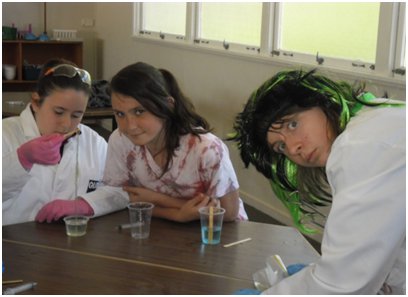
    Hands on learning in the early years.

    Established just this year, the junior science club encourages students in the early years to formulate hypothesis, carry out experiments and discuss their findings with their peers directly mirroring the similar process used in later years. Student work in multi-aged groups to manipulate materials and equipment, generate solutions and compare their results. As Mrs Clarke highlights “this method of discovery learning engages all children and promotes the use of multiple intelligences

  • Weekly Science Picks

    Weekly Science Picks

    The midlife crisis is more complicated than first thought. It might be time to stop blaming troubled marriages and feeling obsolete in a sea of younger colleagues. A study published in the Proceedings of the Natural Academy of Sciences has revealed that chimpanzees and orangutans also experience a midlife crisis.

    Having a midlife crisis may not just be the result of a troubled marriage or the thought that life may be halfway over. It might be part of primate biology. That’s right, hardwired into us.

    Economist Andrew Oswald told ABC Science that it might be beneficial.

    “Maybe discontent lights a fire under people, causing them to achieve more for themselves and their family.”

    A shiny new red sports car might just indeed lead to better things.

    Danielle Spencer runs a science club at Mitchelton State School in Queensland and explored where gender stereotypes in science began. Where does the perception that men do the “hard” sciences and women do the “soft” sciences come from? A group of 45 primary school students were surveyed and it was found that a majority of students thought that science was accessible to both genders.

    When asked why there are more men than women in engineering roles, the students responded with gender based answers like “Girls like dancing and other jobs.” and “Women are more suited to caring and developing jobs like childcare and nursing.”. There was no response that challenging this observation. This was despite 75% of the group thinking that science was accessible to them. It is disheartening to hear.

    Students were asked whether their science club should be split into a boys only and girls only science club, there was overwhelming support for a combined science club. There was an appreciation and acknowledgement that irrespective of gender, everyone had a valuable contribution. At the moment this cohort of students believe that science is something that everyone can do. The question remains though, how do we get adults to believe this?

    As this week drew to a close, attention focused on NASA’s Jet Propulsion Laboratory in Pasadena, California. A story broke at NPR reporting that the Curiosity Rover may have found some exciting news. Project Scientist at the Mars Science Laboratory, John Grotzinger was quoted to saying:

    “We’re getting data from SAM as we sit here and speak, and the data looks really interesting.”

    SAM, the Sample Analysis at Mars  is a miniaturised chemistry lab. On board is a Gas Chromatograph, Quadrupole Mass Spectrometer, Tunable Laser Spectrometer as well as sample processing systems that allow heating and chemically treating samples. Normally these instruments would fill the space in a laboratory but on Curiosity it’s around the size of a microwave. SAM is being used to collect information about the past and present chemistry of Mars. As well as this SAM is also identifying organic and inorganic chemical molecules known to be important to life on Earth.

    So what has SAM found? Nothing has been confirmed but it does sound like there is something especially when Grotzinger says:

    “This data is gonna be one for the history books.”

    We will have to wait at least several weeks before NASA makes an announcement.

    New Zealand’s volcano, Mount Tongariro made it into this week’s news with an eruption on Wednesday. Luckily there have been no reports of damage or injuries. However, a group of travellers and journalists hiking at the time witnessed and filmed the eruption.


  • The Gender Myth and Science. Our Response at SC@M

    The Gender Myth and Science. Our Response at SC@M

    Girls are just not as good at science as boys. Men do hard sciences, women do soft sciences. Gender stereotypes have existed long-term throughout the spectrum of sciences. Most people have witnessed it first-hand. Patients question expert female doctors, yet implicitly trust their male counterparts. Laboratories are full of female scientists with male leads. Why do we trust the judgement of men in science before females? Just where do these gender stereotypes come from and when do children start believing in them?

    SC@M (Science Club at Mitchelton State School) began mid-2012, attracting 45 students from Grades 4-7. Of the applicants, 21 were girls, 24 were boys with their ages ranging from 9-12 years. Included in the SC@M application process, students were asked a series of gender and science related questions to elicit their current opinions. Not surprisingly, some of our SC@M applicants did indeed hold some gender stereotypical views, which were compelling to examine. Unexpectedly, it was a minority of applicants that held these views.

    Question 1:  Boys understand science easier than girls. Do you agree with this statement? Why or why not?

    Agree             n = 15 Disagree               n =30
    Boys like it moreBoys listen more, girls talk too muchAll the famous scientists seem to be maleMost scientists on TV are male Boys and girls learn the sameGirls listen better so they understand moreBoth girls and boys can be good at scienceYou just have to work hard

     
    Question 2:  Men are better at science jobs than women. Do you agree with this statement? Why or why not?

    Agree            n = 12 Disagree             n = 33
    Women are not as good at maths Most scientists are men Men are braver Men think it’s more fun

    Men can deal with more energy correlations and stuff

    Boys do technology stuff

    They are equal, we have equal rights It just depends on how hard you push yourself Men may be stronger but science doesn’t require strength I have only ever been taught science by ladies

    Notably, of the children who agreed with these statements, several described the dominance of male scientists portrayed by the media. Doesn’t every Australian know of Dr. Karl? He hosts radio talk-back science shows and Sleek Geeks on ABC TV, is the science-guru guest on numerous morning shows and the author of over 30 books. Many would consider Dr Karl as the face of Australian science. This misrepresentation of science and gender subtly endorses the view that boys are simply better at science.

    It was pleasing to note that the majority of our applicants disagreed with these statements and most suggested that science was accessible to both genders. Given current research suggests girl’s interest in science diminishes towards late high school, it would be worthwhile to re-examine this same cohort of children at a later stage to determine any change.

    Question 3: Currently there are more men in some science jobs (like engineering) than women. Why do you think this is so?

    Typical responses
     Men like it more. Women don’t want to get dirty.Men are stronger.Boys just like building things.

    Women have a family.

    It’s too hard for girls.

    Girls like dancing and other jobs.

    Women are more suited to caring and developing jobs like childcare and nursing.

    There has always been more men in engineering.

    Although 75% of applicants thought that science was accessible for them, the majority of children responded with gender-biased statements when responding to Question 3. Sadly, none of the applicants provided an opposing side. Women are under-represented in engineering fields and other physical sciences. We need strategies to encourage girls to enter these fields, not allow them to simply accept that “it is just too hard for girls

  • Weekly Science Picks

    Weekly Science Picks

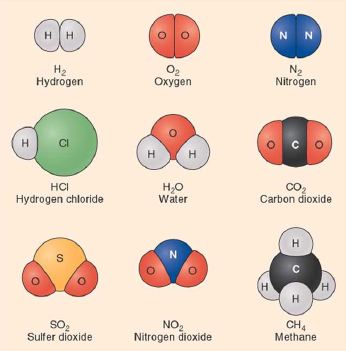
    Chemical Structures, Photo credit: www.southtexascollege.edu

    This past week was made notable by the Nobel Prizes awarded. So much great research being done, it can make your head spin. Chinese literature took center stage, and for peace…the European Union… Be sure to catch up on all the action here.

    Just some of the stories that grabbed me, motivated me and infuriated me are listed below. I think they’re worth a read; let us know what you think.

    Ocean acidification is one of the topics I think people hear or read the headline and move on, not giving it a second thought. Or maybe that;s just my opinion. I think we all need to take a hard look at the amount of CO2 humans are pumping into the air. And think about how our own individual actions, in our neighborhoods, whether we live near an ocean or not, affect marine life and what the consequences of these impacts might mean.

    Ocean Acidification by Liz O’Connell

    Will ocean acidification spell a watery grave for vital parts of marine ecosystems? Marine ecologist Jane Lubchenco, head of the National Oceanic and Atmospheric Administration, named ocean acidification global warming’s “equally evil twin.”

    Again, I may be on my Public Service Announcement soap box here, but biodiversity doesn’t receive the attention it deserves either. The section that caught my attention most was the section in the article describing ‘We have the science: policy is the next step’. I believe this concept is something that we, as communicators of science, need to be vigilant in spreading.

    Explainer: what is biodiversity and why does it matter? by Steve Morton, Andy Sheppard, and Mark Lonsdale

    To halt the decline in biodiversity across the continent, we must translate accumulated knowledge on biodiversity into government policy. This can be done through programs and on-the-ground management. Tough decisions need to be made about where to invest, what to manage, and which approach to take.

    Climate change. Carbon capture and storage (or sequestration) is a huge topic as the world looks for ways to reduce CO2 levels, keeping greenhouse gases in check and prevent global temperatures from rising 2°C. Speaking of we have the science: policy is the next step… significant work needs to be made on this front.

    Carbon capture: 130 plants need ‘to avoid dangerous climate change’ by Adam Vaughan

    More than a hundred carbon capture and storage projects (CCS) musst be built to avoid dangerous global warming, an international CCS  group said this week, as fears were raised over whether UK projects would benefit from an EU fund for 12 demonstration plants.


    A.D.H.D. This is something we need to look at as a nation, and I’m so very curious what the experiences of other countries surrounding this issue are. We have to fix the environment. What kind of policy do we want where we dope kids up to get though to complete an education? You have to read this article to understand what I am referring to. In some instances, medication may be warranted, but I feel this doctor may be going beyond his Hippocratic Oath; especially when he doesn’t know the harm he may be doing.

    It is a constant argument and debate here in the U.S. about academic performance and teacher effectiveness. We like band-aids and pills to fix problems. Who thinks this is a good idea? I don’t believe this is good for the patient without A.D.H.D. or good for society.

    Attention Disorder or Not, Pills to Help in School by Alan Schwarz

    “I don’t have a whole of choice,” said Dr. Anderson, a pediatrician for many poor families in Cherokee County, north of Atlanta. “We’ve decided as a society that it’s too expensive to modify the kid’s environment. So we have to modify the kid.”

  • My mega grab-bag of astronomy resources for teachers, students, telescope beginners and space fans

    My mega grab-bag of astronomy resources for teachers, students, telescope beginners and space fans

    Whether you are a parent, teacher, student or simply an interested enthusiast, here are a number of interesting sites, podcasts, and social media people for you to draw on as you get going in amateur astronomy.

    Podcasts provide an amazing resource – all free. Most are available via iTunes, the original publishers’ websites, or a raft of other podcast aggregators. There are very good apps to allow you to download podcasts to your smartphone for listening when suitable – Podcruncher is my choice for the iOS platform – brilliant app and service. Just don’t bother trying to use the Apple Podcasts app – it’s a total lemon. Good podcast apps also allow you to increase the playback speed up to double normal (Podcruncher goes in quarter increments) and surprisingly you learn to follow it. In fact, it can get so listening at normal speed is far too slow!

    Many of these links also have Twitter accounts (where noted), so you can keep right up to the minute!

    Astronomy podcasts:

    In Australia there is the wonderful StarStuff, an independent project run by Stuart Gary but sponsored by the ABC, with the 30-minute podcasts at ABC. @abcstarstuff


    Canberra’s Steve Nerlich produces Cheap Astronomy, regular 10-minute shows of varying complexity. @cheapastro

    Overseas, despite a truly ugly website, the fantastic Naked Scientists from UK’s Cambridge University have a stack of brilliant podcasts on general, science, archaeology, earth sciences, oceans, Africa, great kitchen-friendly experiments, and the monthly 60-minute Naked Astronomy, steered by Ben Valsler.

    Tony Darnell works in the Space Telescope Science Institute and as a hobby runs Deep Astronomy, with videos and podcasts generally about 10-minutes.

    There are a stack of NASA video and audio podcasts. Of interest are the space telescope ones for Hubble, Spitzer, Chandra, plus This Week @ NASA, Universe, Earth…where to stop? You’ll be amazed at how much NASA is doing – for an agency that altogether too many people think has shut up shop!

    365 Days of Astronomy is a real mixed bag of 10-minute podcasts – one for every day of the year. And it’s well worth looking back over previous episodes. Following are some specific ones worth checking out.
    Teachers could start with four of the best called ‘Wonders From Class’ by Diane Turnshek from Carnegie Mellon Uni. Over four podcasts and with great passion, she describes how she engages and interests her students with the field of astronomy. Part 1Part 2Part 3, and Part 4. Some others for beginning viewing and then a bit more:
    Common Q&As about telescope use – from RapidEye Observatory
    8 Telescope Tips for Beginners – by Telescope Man
    Buying your first telescope – Telescope Man again
    Have a plan – by Ed Sunder of flinstonestargazing.com
    How to be an armchair astronaut – From Riding With Robots – now there’s a site to spend some time at!
    Armchair astronauts exploring the solar system – by Doug Ellison ofunmannedspaceflight.com @doug_ellison
    Exploring space with your computer – a guide to computer simulation tools by Bruce Irving of JPL
    Moving onto photographing what you see:
    Introduction to astrophotography – by Adam Pender
    Webcam astrophotography – by Alexander Hobson
    Amateur astrophotography for beginners – by Richard Drumm
    Astroimaging under light polluted skies – by Robert Vanderbei
    Expanding further – into spectroscopy:
    Basic spectroscopy for amateurs  and Part 2 – by Mark DeVito and Tom Field

    And if you’d like to go a bit further, you can subscribe to an entire university astronomy course via podcast – all the learning but no horrible assignments or exams! Here’s one in audio format from Ohio State Uni. There are others too, including video. Check iTunes, or iTunesU, the app for which includes study notes and the ability to record your own notes as you go along.

    Observing podcasts:

    The Sydney Observatory posts a monthly podcast summarising the night sky viewing for the month – great for Southern Hemisphere viewers and East Coast Australians in particular. They have the added benefit of a transcript so you can print and highlight the key bits as a night sky viewing plan. @sydneyobs

    NASA’s Jet Propulsion Lab has a short monthly video podcast, plus there’s a stack of related brain food on their site.

    Observing with Webb – another USA podcast by Rod Webb, but many of the sights will be visible here, just in different locations.

    Telescope Man – look for the monthly viewing summaries. No nonsense, best viewing tips, with catalogued numbers if you have a go-to scope, but based on Texas. Plenty of other good beginner podcasts too.

    Non-podcast observing resources:

    The Hayden Planetarium (part of the American Museum of Natural History and headed up by none other than Neil deGrasse Tyson @neiltyson) has a good monthly sky report. You can see a lot of what they discuss, but of course not all. You’ll also find their 3D atlas to the Universe.

    Slooh has several large telescopes around the world and you can view the feeds for free. They have guest speakers during regular events. @slooh

    Heavens Above allows you to register and enter your location, then get schedules of when key objects will pass over your patch of the sky – from GPS satellites to the International Space Station. Find out why the brightness scale goes backwards, planet and comet locations, and more.

    If you just want to focus on passes of manned vehicles like the ISS or Soyuz, then check the RSS subscription for your location at NASA Human Spaceflight.

    Stellarium – a free public domain computer planetarium. Free-standing once installed with no need of web access, so you can switch to red mode and take your notebook computer out with you.

    Celestia – another free planetarium. This one lets you explore off-planet, and even check out various space missions.

    Eyes on the Solar System – NASA’s mission tracking simulator. Go for a ride along with every NASA space mission past and present. A great way to piggy back onto the Mars Curiosity rover and relive her descent to Mars last August!

    Non-podcast astronomy resources:

    NASA’s Breaking News is a good resource, and has a useful RSS feed – check out Google Reader for how to collate key websites simply via RSS feeds, and Feedler Pro is a great app for viewing your Google Reader subscriptions on iThings. @NASA

    NASA also has a comprehensive education section, with specialist information for teachers at different levels, students and a kids club. Too much to list and it seems to grow every time you return. It’s not all about the US either – they have an international Scientist for the Day competition running right now for school students.

    It’s hard to go past Space.com for some of everything you want, and great RSS and Twitter feeds. They have a good shop too – from meteorites to kids’ spacesuits, genuine gone-to-space memorabilia to clothing. I mean, you’ve got to look the part for your classes right? @spacedotcom

    With broadband, giant televisions with network sockets, and a high definition feed from NASA TV, there’s never been a better time for live viewing rocket launches, spacewalks, and more. Keep an eye on the schedule for education shows too. Be warned though, spacewalks are REALLY long and slow-mo. Some younger viewers will have a short attention span for them. But launches…Phroar! Crank up the volume.

    The Square Kilometre Array is the project to build the world’s biggest radio telescope – right here in Australia. And in South Africa. It will be the biggest science project ever in our history. Good video clips explaining the project.

    Bad Astronomy blogger Phil Plait sorts the facts from the nonsense. @BadAstronomer

    Universe Today by Fraser Cain, who also does weekly virtual star parties with Dr Pamela Gay via Google+, YouTube and Cosmoquest. Also does the Astronomy Cast podcast.

    The Space Tweep Society has great articles, photos and videos from spacefans on Twitter who travel the world to attend Tweetups – key space events like launches – and hang out with other fans who use Twitter to share their experiences with their followers. The travels to Russia are brilliantly recounted.

    Registax allows you to stack multiple photos or frames from a video clip to produce a single sharp picture. Free!

    Galaxy Zoo is a citizen science website that allows anyone to help the scientists categorise galaxies as seen by Hubble. There have been a number of people credited on scientific journals for the new wonders they discovered on Galaxy Zoo! And now on a spin-off you might help find exoplanets…

    Tweeps you should follow:

    @NASAKepler – the search for exoplanets
    @SpaceflightNow – space news up to the moment, from Florida
    @Nightskyonline – Australian amateur astronomer, alerts to sights
    @SpaceX – the future of manned missions
    @elonmusk – the boss of SpaceX – a real-life Tony Stark
    @MarsRovers – updates from Opportunity on Mars
    @MarsCuriosity – updates from the Mars Science Laboratory herself
    @matt_heverley – lead Mars Curiosity rover driver
    @marsroverdriver – Scott Maxwell, formerly driving Opportunity, now Curiosity
    @spaceroboticist – Vandi Thomas – there are women driving Curiosity too
    @NASAWebbTelescp – the future of space telescopes, being built now
    @twisst – alerts of ISS passes over your location
    @Aussie_Starman – Mark Rigby, head of the Brisbane Planetarium
    @NASAJuno – Juno is heading to Jupiter
    @carolynporco – the wonderful head of the Cassini mission around Saturn
    @PULSEatParkes – high school students taking over The Dish at Parkes!
    And all the other ones named earlier.
    Apps:

    Lastly, iPhone and iPad apps are simply brilliant for finding out exactly what you are looking at in the sky.
    Star Walk – virtual planetarium, my favourite, $3 – worth every cent!
    Distant Suns – virtual planetarium, free
    SkyOrb – virtual planetarium, free
    Pocket Universe – first off the line with this whole virtual planetarium approach, $2
    3D Sun – know about and watch solar flares before anyone else, free
    Cassini – find out what this probe is doing around Saturn, free
    APOD – astronomy picture of the day – website and iPhone app, free
    Exoplanet – the latest on every exoplanet discovered, free
    NASA – their own app, and simple access to NASA TV – never miss another launch! Free
    Mars Images – what it says on the box, free
    ISS Spotter –  brilliant way to make sure you don’t miss passes of the Space Station – live maps and smart alarms, free
    Mission Clock – don’t miss your dose of roar, $5
    Meteor Counter – help scientists monitor meteor density, free, great activity for families.

    Anyway, that’s enough for now. But rest assured, it is only scratching the surface. There’s a whole world of astronomy resources out there online for you.
  • EduWiki 2012: Wikipedia as an educational resource, now and in the future

    EduWiki 2012: Wikipedia as an educational resource, now and in the future

    What do Dictator novelImplicit self-esteem and Nuclear energy policy in the United States have in common? Each of these Wikipedia articles has been improved by university students in exchange for course credit.

    Wikipedia educational assignments – where improving the free online encyclopaedia is integral to the course – already happen in many universities in the USA, Canada and other countries. In the UK, lecturers in the universities of Hull, Southampton, Portsmouth and Imperial College, London have been experimenting with Wikipedia assignments.

    It seems that everybody gains from this sort of assignment. The students get a real experience of publication, and are motivated to find reliable sources, write neutrally, avoid plagiarism and seek feedback from Wikipedia’s internal review processes. Wikipedia, and its enormous global audience, get improved articles in academic subjects. The lecturers get help in creating a distinctive and demanding educational experience.

    To avoid the potential pitfalls, these courses need planning and coordination beforehand between the lecturers and the Wikipedia contributors. Ambassadors – experienced Wikipedians – assist the courses online or in person. The Wikimedia education portal has tips, case studies and supporting materials.

    These projects treat Wikipedia as a set of educational processes, not as a static, fixed resource.

    The saying about sausages and legislation is that people who enjoy them shouldn’t watch them being made. With anything that claims to be knowledge, the opposite is true. Learners need to see the process behind it: whether the idea just popped into someone’s head, or survived rigourous testing against alternative explanations; whether it was published directly or went through some sort of review. On Wikipedia, the writing, editing and review processes are all open and on public view. By exploring and taking part in these processes, learners have a chance to develop high-level skills of research and collaboration.

    At school level, there are opportunities not only to teach many subjects using Wikipedia’s freely reusable text, images and other media but also to teach a critical understanding of Wikipedia itself. Those of us who write Wikipedia don’t want readers to treat the site as a final authority: we want them to view it critically, as a medium with weaknesses and strengths, just as newspapers, books or television should be read critically.

    What would be ideal now is if educators and other staff from universities and schools could get together in a room with Wikimedia contributors, discussing the educational projects we’re each working on and the opportunities for the future. That’s exactly why Wikimedia UK and the University of Leicester are hosting a one-and-a-half-day EduWiki conference on the 5th and 6th of September.

    There will be speakers from the USA, Canada and Germany as well as the UK, talking about educational activities that use Wikipedia or other wiki projects.

    The EduWiki conference takes place on 5 and 6 September at the University of Leicester. More about this – on the Source page.

  • Harvard and MIT offer free online education materials

    Harvard and MIT offer free online education materials

    Harvard University and the Massachusetts Institute of Technology (MIT) announced last week the launch of edX, a transformational partnership and initiative in online education. EdX presents a not-for-profit joint venture between these two institutions that will collaborate to “enhance campus-based teaching and learning and build a global community of online learners

  • Turning Information into Action

    Turning Information into Action

    We hear…but do we comprehend? What connection does our brain make to statements transmitted through our auditory canal such as global warming is increasing at 0.13°C per year? Or there are 495 dead zones covering 95,000 square miles of our world’s oceans as a result of increased runoff from agriculture? We see…but are those images stored in our brain, to recall in decision making when confronted with a particular behavior choice? For instance when the image of a little girl sifting through a rubbish pile looking for a bite to eat burns onto our retinas, do we remember that later when we casually toss out half our dinner plate in a Styrofoam takeout container? How many of us in the developed world actually comprehend that our actions contribute directly to global warming?

    Until every human makes this connection and takes steps to modify behavior, only then will we see the beginnings of a response to addressing this issue of global warming. Easier said than done, right? Many organizations have started to tackle this problem; how do we solve it?

    Social media has “connected