Category: Education

  • Classic vs. Modern Education – The Argument Against Choice

    Classic vs. Modern Education – The Argument Against Choice

    The Ongoing Controversy

    In the continuing controversy about what type of education is best, both proponents of classical education and proponents of tech education make some excellent points. Economics is only one aspect of the controversy. According to one statistics, as many as one in five undergraduate degrees don’t produce earnings any greater than a high school diploma. However, a college degree does prove helpful in gaining employment. The unemployment rate of four-year graduates is only 4.5 percent, as compared to the 24 percent among those with only a high school diploma.

    According to one article the cost of a traditional four-year college degree has risen by more than 538 percent since 1985. While many degrees produce a relatively low increase in wage-earning power, overall, a college graduate earns an average of $1.3 million dollars more over a lifetime than those without degrees. However, 40 percent of new graduates are saddled with an average of $22,000 dollars in school loan debt and the interest on that debt often translates into much more.

    A technical education usually costs about half the price of a four-year degree, and in many cases, results in more earning power. Technical education schools also tend to partner with businesses and focus on providing skills that are in high demand in the professional world. Another benefit of an alternative education focused on technology is that, like classical education, it teaches the necessary skills for people to work on a team.

    Social Considerations

    The history of classical education and the inclusion of such subjects as philosophy and political science can be traced back to ancient Rome. All free citizens were expected to study grammar, logic and rhetoric in order to participate in civic affairs including public debates and military service. In democratic countries, a literate and informed citizenry is the basis for public education. While economic rewards are an important consideration in choosing an educational path, money, as they say, isn’t everything.

    While technical education is more focused on productive skills, supporters of classical education point to a number of worthwhile educational objectives that are equally important. A classical education focuses on improving oral and written communication skills, framing issues in historical context, exposure to art and literature and civic responsibility. To achieve those goals, in addition to their major course of study, students are required to take courses in the sciences and humanities. Most people would agree that that increased knowledge of the natural world, ourselves, and our humanity provides both individual and social benefits.

    Timing is Everything

    There was a time when a person chose a single career within their lifetime, and even worked at the same company for their entire career. However, there are many studies nowadays that show how people today can expect to have an average of seven careers in their lifetimes. Largely due to technological innovation and advancement, choice in education has become not just a one-time life decision, but a series of choices over time.

    In the controversy surrounding classical versus technological education, the good news is that there is no need to choose one at the expense of the other. Because technical education costs less and provides more earning power more quickly, many young people may opt for it as only their first rather than their only choice. They may choose to complete their classical educations while working, without the need to accumulate debt.

    Further, many employers offer tuition credits to employees taking courses that can potentially benefit their businesses. In fact, technology is developing so rapidly that many employers rely on their employees taking courses periodically from educational programs focused on rapidly changing technology and providing the skills and knowledge required to utilize it.

    All education is valuable, as evidenced by the many four-year colleges that now offer practical professional internships in addition to a liberal arts education. More than ever, today’s workforce is composed of lifelong learners. They must have the skills to effectively problem-solve in an increasingly complex world in which technology has expanded the definition of community to include other cultures and societies as well as their own. That’s why when it comes to education, it’s no longer a matter of which type, but of when.

  • Learning trends among students at universities

    Learning trends among students at universities

    Introduction

    To study in today’s world is a vastly different thing than studying in the past. With the rise of the Internet, information has become available at a faster and easier way than ever. New learning trends are evolving, with technology being the main culprit. The aim of this article is to analyze how different learning trends are evolving, and which predispositions enabled them to evolve.

    Methods of learning

    A lot of thought has been put into researching new methods of learning, and accessing the efficiency of well known, thoroughly used existing methods of learning. Surprisingly, the „tried and true“ methods, such as rereading, keywords, highlighting and summarizing were all found to be very ineffective methods of learning. The methods which involved the student most, either by presenting them with a challenge or making use of their own ability of critical thinking were found to be the best methods for quick, easy, and satisfying learning.
    With the rise of technology, a new and efficient method of learning is quickly becoming widely accepted, and that is online learning. Taking virtual classes, and even whole virtual schools are becoming commonplace today, and this method has proven to be effective as it has a lot of room to maneuver, and by the use of software it can duplicate real world environments and situations for a fraction of the cost. 50% of students said that they enjoyed the materials learned in virtual classes, as opposed to the 32% of students that said the same about traditional class methods.

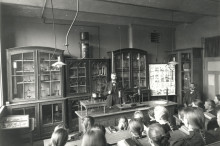
    classroom

    Accessing information

    Accessing information is now easier than it was ever before, largely due to technological advances. The modern student has a lot more tools at his disposal than, for example, a student just 50 years ago. These tools allow quick, easy, cheap and reliable access to information in ways never thought possible before. Quick access to information has largely reduced the time necessary to acquire learning materials, and because of that, has increased the efficiency of learning by a large margin. A quick Internet search has replaced reading through dozens of books for information, and studies show that more and more students rely on the Internet as their main source of information. As this research paper shows, students are using online information not just for school, but it is also their main source of information for everyday situations.

    Technology and learning

    Technology has changed the way we perceive the world around us. Today quickly accessing information and being connected has become an elementary human right, and it is technology that laid the path to quick information access. Whereas before students were limited to the use of books, notebooks, paper and other physical media, now it is possible to have all the knowledge required saved up on your smartphone or computer. Various portable devices, such as tablets and laptops, have enabled students to carry the equivalent of thousands of books in their bag. This kind of easy information access is unprecedented, and has, as such, made learning today quicker than ever.

    Classroom 1

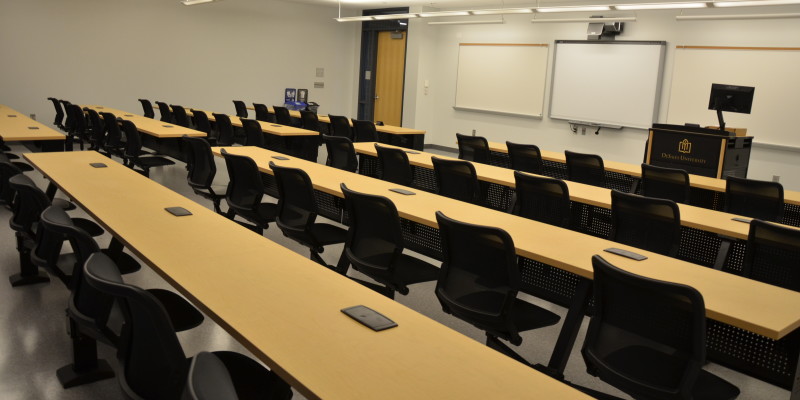
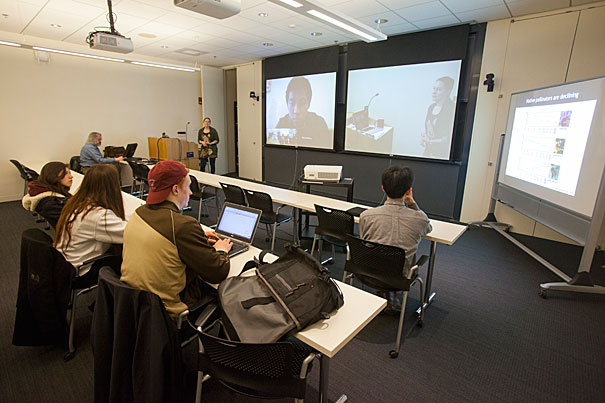
    Classrooms today come equipped with smartboards, Wi-Fi, and other utilities, which make the learning process much easier and the information presented easier to comprehend and absorb. Students are using their smartphones and smartwatches, such as the so-called cheating watch especially designed for learning, as a way to quickly check information, or to recap on a passed lecture, with many of them actually recording lections and posting them on the Internet. A recent study has shown that a staggering 53% of students would like their schools to let them use their mobile phones in the facility, as a method to improve their learning.

    Conclusion

    Technology is changing everything around us, and even basic things, such as learning, are adapting and evolving in ways never before thought possible. New learning methods are making a positive change by increasing the overall happiness and interest of the students themselves, and by making the knowledge easier for lecturers to present.

    References:

  • Programming, Software Development, Computational Thinking or Coding

    Programming, Software Development, Computational Thinking or Coding

    No matter the terminology used, right now educators worldwide are attempting to integrate new ways of thinking into the curriculum. This is no easy task, as timetable pressures, teacher training concerns and equipment funding shortages all make introducing a complex subject all the more difficult.

    Instead of seeing Computational Thinking as a problem subject to be integrated, it is regretful that we can’t embrace it as an opportunity to change how we view many projects. Rather than a dry exploration of syntax and logic, Computational Thinking skills could enable students to build interactive narratives to teach literature and language skills, games to assess maths and spelling and unleash the digital creativity skills we desire in our graduates. A student versed in coding has better design skills than a student who only consumes information, better development skills than a student who never attempts to build anything, and better debugging skills than a student who has never had to fix a broken program.

    In essence, we must continue teaching the 3 Rs, reading, writing and arithmetic, but also consider teaching the 3 Ds: Design, Develop and Debug. This is not without its challenges, namely what do we teach and how do we teach it? Before suggesting some of the tools that we use to promulgate Computational Thinking, let us preface it with the fact that these are mostly Microsoft technologies. Writing as the Microsoft Ireland Academic Team, this will not be a surprise to you, but please note they are also free technologies and you do not have to pay to enjoy and use them in the classroom.

    Probably the most popular programming language for teaching younger students is Scratch from MIT. A block based language that eschews typing complex syntax structures in favour of a Lego-esque design, Scratch is loved by students aged 7 to 77. For students that have reached a high level of competency in Scratch, Kinect for Windows can be added to the mix. The Kinect is a special camera that can track the human body in 3D space. We developed free software called Kinect2Scratch that enables Kinect games and fitness programs to be developed in Scratch with ease.

    For students who want to explore more complex computer science concepts, TouchDevelop is a simple but powerful programming language that avoids typing errors by allowing users choose commands from a palette of contextually aware commands. It works best on a touch screen tablet or laptop, and is compatible with virtually all tablet OS, including iOS, Android & Windows. It can also run on traditional laptops and PCs with a keyboard and mouse, but really excels when used on a touch screen. It is free and available from www.TouchDevelop.com.

    Finally, if students enjoy Minecraft and learning through creative world building, introduce them to programming through Project Spark. A beautiful rendering interactive game creation tool, Project Spark hides a deep and powerful Computational Thinking environment under the guise of a game creation and playing tool. Available free on Xbox One and Windows 8, download it from the Windows Store to start building and learning. We developed a free course for all Project Spark learners.

    Source and image.


  • How to Get Skills in Cyber Security?

    How to Get Skills in Cyber Security?

    We were talking before, though our cyber security sessions, that a career in cyber defence is the quite challenging one and it requires a lot of hard work and time to put your skills and expertise at a competitive level. So, the question here would get addressed to problems related to education and work experience in cyber security. Today it’s not sufficient to have a degree in some field; very often it’s more important to gain a proven track record as an evidence you are capable of doing some job. In this brief talk, we plan to discuss all the possibilities that a cyber defence career can offer to us and also review some common requirements you need to satisfy in order to get successful in such a business.

    Why is Cyber Career so Challenging?

    As mentioned before, cyber security or simply cyber is related to computers, web and mobile technologies. It is well-known that the entire IT sector relies on very skilled and highly competitive people. But, what is the case with cyber?

    In cyber, you need someone who is familiar with computers, web and mobile devices, but not only that. Such a person must know how to protect all of these from threats, risks and attacks. So, you need extremely bright individuals to contribute here.

    It is also well-known that people are not born with such a skill; they need to master their fields of interest through their lives. That’s exactly the case with cyber! Requirements are high, every single day something new appears and what you need to have for such a career is an excellent learning curve which will allow you to cope with the change and successfully adopt and apply new things.

    So, cyber is a quite challenging area and it needs a lot of effort and time in order to expertise everything, but for someone who has an affinity for such a job, it can become a life-long passion.

    What is also good to get mentioned here is the fact that there is a big cyber skill shortage in the world. We live in a cyber era; everything is getting so cyber; the need for cyber experts is great and very often people are hesitating to choose that career, because they are aware it requires a lot of hard work and serious involvement.

    On the other hand, this could be encouraging to young people who are talented for computers to try to find their place in cyber, because such a career can offer them a very competitive environment, a good position on the Lobar Market and a suitable financial compensation to their efforts.

    How Important is an Educational Background in Cyber?

    The educational background is pretty significant everywhere, but as you know it is not necessary of crucial importance when it comes to your career. Sometimes skills are more important than your degree.

    Good schools and good high education providers can affect your future work experience and help you develop some skills and work habits. Here we would like to highlight a significance of education in everyone’s life as well as in cyber profession.

    For instance, the majority of skills in cyber career can be gained through hard work, but what would make you outstanding in your job is a constant capacity to learn which can be easily adopted through education in your childhood.

    Later, in your life and career, you can get recognized through your practical experience and efforts, but even then you need to be capable to study and use your mind for problem-solving tasks.

    So, your education can be seen as a good preparation to your career, but if you stop working hard after finishing your school, then your education will mean nothing though your life.

    Could Your Hard Work get Recognized?

    Cyber field is amazing because it offers you an opportunity to develop a lot of skills through your work experience and to get approved for that. There are many cyber certificates that can make an internationally recognized expert out of you and they can make you competitive at global Lobar Market.

    The best known certificate in cyber area is so called “Certified Information Systems Security Professional

  • Kids love the volcano experiment

    Kids love the volcano experiment

    Experiments are great. What better way is there to spend time with your kids, have fun with them and teach them a thing or two about science? Even better when they’re messy and dramatic like the “volcano experiment”. As an experiment you can do at home, it’s simple, cheap, safe and fun. To learn how, follow this easy step-by-step guide.

    The ingredients or “parts of the volcano

  • Internet Research: Skills Your Students Should Have

    Internet Research: Skills Your Students Should Have

    Internet research is the practice of using Internet information, especially free information on the World Wide Web, in research. Internet research has had a profound impact on the way ideas are formed and knowledge is created. Common applications of Internet research include personal research on a particular subject, students doing research for academic projects and papers, and journalists and other writers researching stories.

    Research is a broad term. Here, it is used to mean “looking something up on the Web“. It includes any activity where a topic is identified, and an effort is made to actively gather information for the purpose of furthering understanding. It may include some post-collection analysis like a concern for quality or synthesis. It is:

    (1) focused and purposeful (so not recreational browsing),
    (2) uses internet information or internet-based resources (like internet discussion forums),
    (3) tends towards the immediate (drawing answers from information you can access without delay),
    (4) and tends to access information without a purchase price.

    Search tools

    The most popular search tools for finding information on the internet include Web search engines, meta search engines, Web directories, and specialty search services. A Web search engine uses software known as a Web crawler to follow the hyperlinks connecting the pages on the World Wide Web. A Meta search engine enables users to enter a search query once and it runs against multiple search engines simultaneously, creating a list of aggregated search results. A Web directory organizes subjects in a hierarchical fashion that lets users investigate the breadth of a specific topic and drill down to find relevant links and content. Specialty search tools enable users to find information that conventional search engines and meta search engines cannot access because the content is stored in databases.

    Website Authorship

    When using the Internet for research, countless websites appear for whatever search query is entered. Each of these sites has one or more authors or associated organisations. Who authored or sponsored a website is very important to the accuracy and reliability of the information presented on the website.

    Top Online Research Skills

    At the end, we should mention some top internet research skills every student would have:

    1. Check Your Sources

    The Skill: Evaluating information found in your sources on the basis of accuracy, validity, appropriateness for needs, importance, and social and cultural context.

    The Challenge: While most students know not to believe everything they read online, the majority also don’t take the time to fully evaluate their sources.

    The Solution: The following benchmarks for evaluating a website should be discussed: currency (Is the information up to date?), security (Does the site ask for too much personal information or prompt virus warnings?), scope (Is the information in-depth?), and authority (Does the information come from a trusted expert?).

    2. Ask Good Questions

    The Skills: Developing and refining search queries to get better research results.

    The Challenge: Students will enter a search term, say, “Abraham Lincoln,

  • The Science of Translation

    The Science of Translation

    Language is a fascinating and complex part of human society. Not even the most esteemed linguists can put a number on how many languages there are in the world – not to mention the various dialects within those languages (Linguistic Society, 2014).

    What’s most interesting – and what poses the biggest challenges for translators – is that words don’t always have the same meaning in every language. As such, words are not ‘just words’ – they have a cultural and historical background, that only those who grew up immersed in the language can truly understand.

    This ambiguity across languages and dialects is a huge challenge for scientists, in particular, and has been the focus of several research projects. If a scientific study is in French, how can one be certain that its English or Chinese counterpart, for example, holds the same meaning as the original author intended?

    Studies into Translation

    Naturally, a lot of scientific translations have been done. Almost every significant study or piece of research done around the world is likely to have been translated into another language for scholars to read.

    Several studies have looked at the discrepancies, and consequences, that have arisen from poor translation.  Examples include a study conducted in 2011 (Shuttleworth, M.) investigated the translations of 1354 sections of text published across 62 Scientific American articles in several different languages, while Sharkhas (2009) did a quality assessment of English-Arabic translations in popular science. Both found that the key discrepancies related to cultural variations and semantic differences.

    The Translator journal published a very interesting special issue that looked at some of the key studies surrounding science and translation in 2011, which included Shuttleworth’s study.

    Machine translations

    Millions, perhaps billions, of dollars have been thrown into computer-generated translators over the past few decades. But you only need to have a little experience of using the popular Google Translate tool to know that there is still a long way to go. Unfortunately we’re still not at a stage where scientists can put full faith into automated translators.

    Despite how incredibly far we have come over the last 40 years, the same problems exist in translation – language is just too complex.  Philipp Koehn, a machine translation researcher at the University of Edinburgh School of Informatics told the BBC, “Language is always ambiguous, so you can’t always use rules, and new vocabulary is always coming in, so you need someone to continually maintain those rules.” (BBC, 2012)

    The future of translation

    Considering how much has been achieved in the science of translation over the past few decades, there is no doubting we are moving forward and getting closer to more accurate translations.

    There is still a while to go until scientists can fully trust computer-generated translations, however, because in many cases there can significant consequences to poor translations. Imagine if a medical textbook given to new doctors mixed up some key theories?

    So, while travelers, businesses and language students already have access to fantastic tools for everyday translations that are close to reliable, scientists will keep on researching and developing for many years to come.

    Other useful References:
    http://www.simpletranslation.com/
    http://www.ncbi.nlm.nih.gov/pmc/articles/PMC3204888/

  • 10 Tips for Making Online Video a Joined-Up Experience

    10 Tips for Making Online Video a Joined-Up Experience

    Today, video plays an ever-increasing role in education. However, there is a major difference between an ad hoc, disjointed approach to video and a joined-up approach that sees video embraced as an integral part of university life. Here are a few things to look for from an online video platform:

    1. Ease of use

    An intuitive user interface is essential to maximise adoption. Staff and students should not have to worry about file formats and streaming and should be able to click a couple of buttons to upload, download or view content. Look for user-friendly video authoring tools, editing tools and support for sharing via social media sites.

    2. Multi-device support

    Choose a video solution that works seamlessly on mobile platforms too, so that the viewer has the best possible experience on a wide range of devices.

    3. Protect students and staff

    Ensure that a robust set of security controls are built in. Check for varying levels of access control, a range of user authentication options, and moderation of uploaded content. A flexible digital rights management solution is also essential.

    4. Accessible and discoverable rich media content

    Choose a solution that supports multiple content input options – manual uploading, in batch or via an API. It should allow you to organise content into meaningful categories and offer a good search function that extends to custom metadata. The ability to perform in-video search across libraries of transcribed content is useful.

    5. Consider the cloud

    Hosting your own video library can take up a lot of storage space. A cloud deployment removes the costs associated with adding more storage on campus, provides scalability and flexibility, enables automated updates for adding new functionality, and enables videos to be stored securely in the cloud by your platform provider.

    6. Integration and future-proofing

    Make sure that your video solution can be easily integrated into your existing technology framework and that it adapts to current workflows, such as your Learning Management System.

    7. Market your content externally

    Choose a video solution that makes it easy to market your university’s achievements and USPs to attract new students and to publicise research. A good platform will allow you to undertake live events online, record and broadcast them as VOD content, feed your content to third-party partners (e.g. YouTube/ iTunesU) and create RSS feeds.

    8. Measurement drives learning

    Use the analytics feature to undertake back-end analysis of how effective your rich media content is at engaging viewers and learn from what works and what does not. Some basic analytics and metrics include bandwidth monitoring and tracking individual students’ viewing of coursework videos.

    9. Support for distance/blended learning courses

    As the number of blended and distance learning courses continues to rise, it is useful to choose a solution that supports remote learning (e.g. support for webcam recording).

    10. Ease of integrating third-party licensed video content

    More and more third parties are now licensing professionally produced video content for use in classrooms digitally. Choose a platform that makes it easy for lecturers to incorporate educational video
    programming from content rights owners.

    Video allows you to reach and engage today’s YouTube generation with new and exciting teaching and learning techniques. The trick is to make your video solution an integral, joined-up part of your university’s culture in order to benefit from the resulting step-change in learning that can be achieved.

    Source and image.

  • The Importance of Mathematics Teaching in Australian Education

    The Importance of Mathematics Teaching in Australian Education

    There is a concerning question nowadays in Australia which started as a debate of University lecturers who said high school physics is at a very low level of quality and focused on the history of physics at the expense of rigorous mathematical analysis and problem-solving. As a result, they said, students often arrive at university with a distorted view of what physics is and whether they are good at it.

    Introduction

    To define the goals of mathematics teaching, it is necessary to consider what mathematics is and does and what might be the purposes for teaching mathematics to school students. The basic argument is that the emphasis in school mathematics should be predominantly on practical and useable mathematics that can enrich not only students’ employment prospects but also their ability to participate fully in modern life and democratic processes.

    The Goals of Mathematics Teaching

    There is a broad consensus among policy makers, curriculum planners, school administrations and business and industry leaders that mathematics is an important element of the school curriculum. Rubenstein (2009), for example, offers a compelling description of the importance of mathematics from the perspective of mathematicians, as well as the challenges Australia is facing due to the decline in mathematics enrolments in later year university mathematics studies.

    Part of the context in which this debate is being conducted is that schools are confronting the serious challenge of disengaged students. In their report on the national Middle Years Research and Development Project, Russell, Mackay and Jane (2003) made recommendations for reform associated with school leadership and systematic school improvement, especially emphasising the need for more interesting, functionally relevant classroom tasks which can enhance engagement in learning. Additionally, there is said by some to be a serious decline in the number of students completing later year university level mathematics studies, thereby threatening Australia’s future international competitiveness and capacity for innovation. These claims feed calls for more mathematical rigour at secondary level, as preparation for more advanced learning in mathematics. Unfortunately, these claims are presented by the protagonists as though teachers must adopt one perspective or the other.

    In one of the major presentations at the Teaching Mathematics? Make it count conference, Ernest (2010) delineated both perspectives. He described the goals of the practical perspective as follows: students learn the mathematics adequate for general employment and functioning in society, drawing on the mathematics used by various professional and industry groups. He included in this perspective the types of calculations one does as part of everyday living including best buy comparisons, time management, budgeting, planning home maintenance projects, choosing routes to travel, interpreting data in the newspapers, and so on. Ernest also described the specialised perspective as the mathematical understanding which forms the basis of university studies in science, technology and engineering.

    Conclusion

    A necessary corollary to incorporating these dual perspectives in mathematics teaching and learning in pedagogy is a consideration of the ways that teachers might engage their students in more productive learning. The research strongly suggests that teachers incorporate both types of mathematical actions in tasks for their students to undertake when learning mathematics.

    References:

    [1] Peter Sullivan, Australian Education Review – Teaching Mathematics: Using research-informed strategies, 2011.

  • New Reforms in Computer Science will Examine Teacher’s Skills

    New Reforms in Computer Science will Examine Teacher’s Skills

    As a new National Curriculum says children in schools will start learning the principles of computer programming from kindergarten. But there are concerns teachers would be seriously unable to go through the ambitious reform agenda without meaningful retraining.

    The new technologies Curriculum gives a considerable boost to the role of computer science in primary and secondary school education. Some of the authors of the Curriculum said students would be taught to write computer code from year 3 which should give them a competitive edge in the emerging digital economy.

    In general, code is a set of instructions used to manage computer software.

    The British Government announced it would become the first country to mandate computer programming in its schools.

    On the other hand, Australia’s new curriculum was ”reasonably comparable” to Britain’s and ”has kids at least starting to get some of the ideas of programming right from kindergarten”.

    Making teachers competent and confident enough to teach the content would be the main challenge.

    There are over 9000 schools in Australia. Experts believe teachers in each of those schools should be capable to transfer their technical knowledge and skills and also the philosophical underpinnings of computer science.

    Indeed, it is a huge job to get everyone up to scratch on this stuff. Basically, this is a very significant challenge, because many specialist teachers can not do everything that’s in the Curriculum.

    It is up to the states and territories to decide whether or not they implement the Curriculum. It is just a waiting game to find out what happens and what decisions they make.

  • Where does the Sun Go at Night?

    Where does the Sun Go at Night?

    Most of us are curious beings and we attempt to make meaning from our lives, our world, the universe and all the ‘stuff’ within. Children are no different and they often have built elaborate ideas for why things happen. Quite often though, the ideas are disorganised or have no scientific basis. These preconceived misconceptions may be deeply rooted and very difficult to shift. This is particularly so for concepts regarding space.

    As a diagnostic assessment to my current space unit, I wanted to assess my student’s preconceived ideas about the Earth, Sun and moon system.  By Grade 7 (age 11- 12), students will have completed two previous science units on space and have observed phenomena from the sun and moon on countless occasions. Despite this, a significant portion of both classes I assessed (n = 46) had a limited understanding of scientific explanations and had built their own misunderstandings for various phenomena such as day / night, moon phases, seasons and the tides.


    Question Correct Most Common Misconception Sample  Responses
    Where does the Sun go at   Night? n = 11 the sun moves to the other side of the earth(n= 21). the sun goes behind the moon   (n=7)to space behind the cloudsthe sun and the moon both shine on different parts of the EarthThe sun rotates around our planet so when the sun passes us we have   daylight.It goes around the galaxy
    Why does the moon change shape   at night? n = 10 The clouds are covering it(n=7) the moon has different partsthe moon is a planet so it will keep movingbecause of the seasonsbecause the dark side changes each nightit’s getting lateonly some of it can light upit came out earlier and the sun rotates around itother planets get in between the moon and the sun
    Why can you see the moon during   the day? n = 4 clear sky (n = 4) Because there are no clouds to cover it upYou might not be fully around to see itThe moon might be moving to Europe* several children provided no response to this question (n=24)
    Why do we have seasons? n = 3 We are closer to the sun in summer    (n = 10) if we are facing the Sun that’s summer, if we are not facing the Sun that’s   winterit gives the universe time to blend togetherthe weather causes themin winter the moon is out more so its colder, in summer the Sun is   out more so its warmerit happens when the moon goes around the earthglobal warming caused themsometimes the planet doesn’t always orbit the sunthey change when the moon orbits around the earth
    Why do we have tides? n = 7 The moon is a water magnet / magnetic forces (n = 7) The moon makes light waves that moves the waterThe waves push the waterWhen two plates under the ocean move it causes the water in the ocean   to moveThe windThe moon changes shapeThe earth turning


    Now other than being highly entertaining to read, identifying children’s misconceptions is an important part of science teaching. Whilst admittedly some of the above responses may have been guesses, the children were asked to provide their best reason.   The responses included here are a sample of the wide variety provided by the children.

    For children to alter their preconceived ideas, they must face an unsettling period of cognitive dissonance. Teachers must expose the children to enough examples that challenge the child’s way of thinking. Mostly in science, this is done through experiential learning. When children witness with their own eyes something that is in conflict with their preconceived misconceptions they begin to alter their understandings to a more accurate scientific accurate way of thinking.

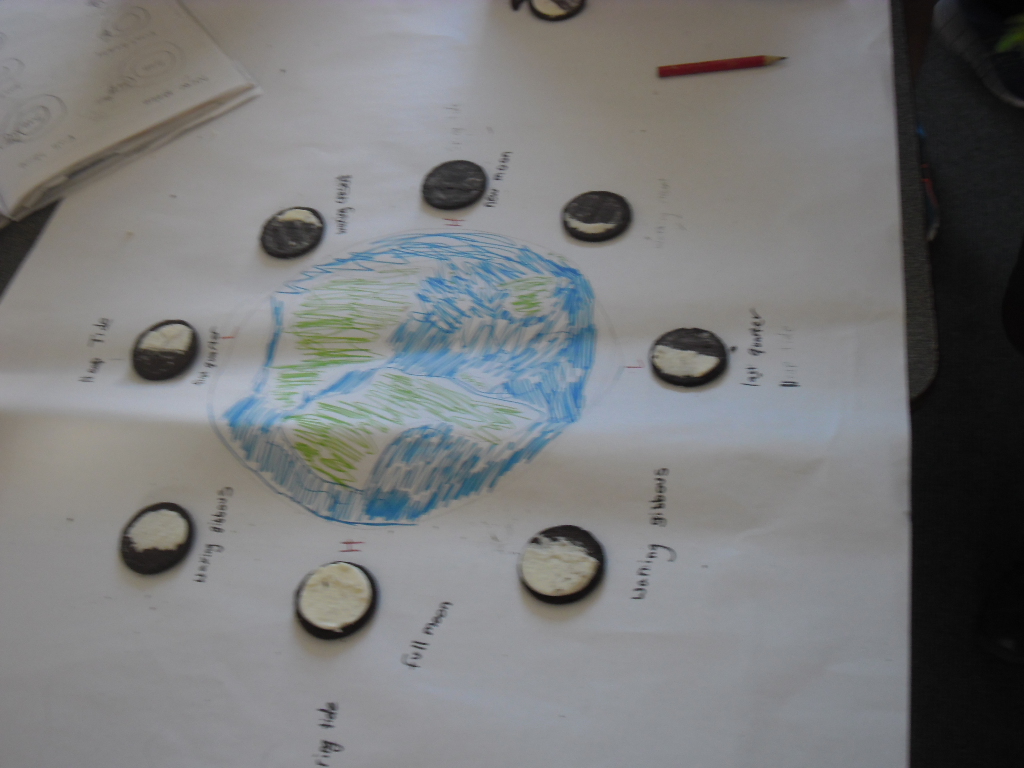
    The challenge then for learning concepts about the Earth, Sun and moon system is to provide the children with a variety of models to demonstrate space phenomena. Polystyrene balls become model Earths, torches become suns, Oreo biscuits can become moons.  Thankfully there is a wide range of interactive resources available to support the learning as well. One of my favourites would be the Sun Moon Scope on http://www.solarsystemscope.com/sunmoonscope/ which enables the children to select any date of the year to observe the trajectory of the Sun and determine the moon phase.  With this resource, children can see cyclical change in moon phases.SAM_1741 Oreo Moon Phases

    Obviously, it is my aim that by the summative assessment stage of this unit most of the children will be able to answer the diagnostic assessment questions with greater scientific accuracy and clarity. Reminds me though of the study by the Australian Academy of Science earlier this year, where some 40% of those people surveyed did not know that it takes one year for the Earth to orbit the Sun. Seems some misconceptions are hard to shift.  Just as I tell the children, we must keep on learning.

  • The Most Useful Science Student Books for AU Universities

    The Most Useful Science Student Books for AU Universities

    Student life can be a bit of a struggle – you are at your prime, young and energetic, and you need to balance studying, fun and work, all the while trying to make ends meet on an often limited budget. Be that as it may, Australia still has some of the best universities in the world, which offer great learning opportunities to their students. When it comes to science there are a lot of options to choose, but keeping in mind that students often have to make due on a tight budget I will look into some useful general textbooks that cover all the important basics and some cost-effective purchase options. These are all textbooks that offer great information on the core principles in their respective fields and can give students a very strong scientific foundation which they can expand upon as they progress in their studies. Within this article I am going to focus just on two science fields: Bioscience and Chemistry.

    Biosciences Textbooks

    Biosciences are particularly interesting scientific branches that offer deeper insights into the way we are built, how our bodies work and how our body chemistry can be manipulated to improve health and fight disease. They also offer great career opportunities. Some great bioscience textbooks include:

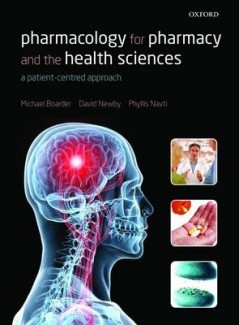
    • Pharmacology for Pharmacy and the Health Sciences – a great choice for those that want to learn about the clinical use of drugs and their effects on the human body on a cellular level. This textbook can help you built a solid knowledge base in pharmacology.
    • Essentials of Human Nutrition – a good overall choice for those who wish to familiarize themselves with the field of nutrition. The textbook gives a broad overview of the field.
    • Chemistry for the Biosciences – an overview of the core concepts of chemistry and how they affect the biological world. The textbook contains numerous analogies and real world examples which help those studying biological and biomedical science get a good understanding of this crucial information and allow them to later build upon this knowledge.

    jekkle1jekkle4jekkle2jekkle3

    Chemistry Textbooks

    Chemistry is an integral part of our daily lives and even laymen will cross paths with some of its laws during simple daily tasks. Some great textbooks every chemistry student should have by his or her side include:

    • Inorganic Chemistry, Sixth Edition – a comprehensive and easy to read textbook that covers all the fundamental principles as well as practical applications.
    • Organic Chemistry: a mechanistic approach – this textbook provides a great insight into the nature of organic compounds and their reactions and serves as an introduction into more complex subjects and deeper research.
    • Atkins’ Physical Chemistry, Tenth Edition – an easy to read textbook that will allow you to quickly find all the information you need on physical chemistry. It contains information on areas such as thermodynamics, quantum theory, molecular structure and chemical kinetics.

    Many of these books you can find online and the best thing is that you can actually get used textbooks from older students, or you can get eBook versions which are significantly cheaper or you can even rent textbooks for a limited time, e.g. for a month when preparing an exam.

    All in all, these textbooks will provide you with enough material to develop a strong understanding of the basic scientific principles that you will need to call upon many times during your studies.

  • Reading pleasure and e-tools

    Reading pleasure and e-tools

    It happens all too often: as soon as we leave our early childhood behind and cross the borderline between primary and secondary education, we lose all or part of our interest in books. From the age of 12-14 children’s visits to the public library, for instance, drop dramatically, leaving those who keep reading a minority. Over the last decades, numerous researchers have analysed this phenomenon. Their conclusions are more or less the same: the leap into puberty makes boys and girls either turn much more into themselves, or it diverts their attention to the outside world. In both cases puberty changes their interests and emotional household, averting many from reading literature. The ever-broadening world of gaming, TV, internet and social media offers children a host of instant and flashy challenges with which the slow and silent world of books cannot compete. Moreover, in some schools reading education to young adolescents focuses too little on the pleasure of reading and too much on analysis. As a result children lose every (remaining) interest in reading. They get bored from the start or are insufficiently challenged. That being said, many teachers who do try to enhance reading pleasure in their classrooms, do not always succeed – “It is so difficult to bring books to life for Nintendo-children

  • CERN Physicist Explains the Origins of the Universe, for Beginners

    CERN Physicist Explains the Origins of the Universe, for Beginners

    How did the universe begin — and how is it expanding? CERN physicist Tom Whyntie has created a new TED-ED three animated video that explains how the universe began, why it’s expanding, and other basic phenomena that concern cosmologists and particle physicists. He shows how cosmologists and particle physicists explore these questions by replicating the heat, energy, and activity of the first few seconds of our universe, from right after the Big Bang.
    Lesson by Tom Whyntie, animation by Hornet Inc.

    View full lesson: http://ed.ted.com/lessons/the-beginning-of-the-universe-for-beginners-tom-whyntie