The concept of time as a way to measure the duration of events is basically intuitive. Some researchers believe that this Newtonian idea of time as an absolute quantity and fourth dimension in spacetime is incorrect. They propose to replace these concepts of time with a completely new view: time as a measure of the numerical order of change.
Einstein never interpreted time as a fourth dimension of space. By this theory, space is not 3D + T, space is 4D. With clocks we measure numerical order of material change. This numerical order is the only time that exists in a physical world. 4D space is a medium of quantum information transfers.
Scientists at the Scientific Research Centre Bistra in Ptuj, Slovenia, theorize that this Newtonian idea of time as an absolute quantity, along with the idea that time is the fourth dimension of spacetime, are not accurate. They propose to replace these concepts of time with a view that say that time is a measure of the numerical order of change.
This view doesn’t mean that time does not exist, but that time has more to do with space than with the idea of an absolute time. So while 4D spacetime is considered to consist of three dimensions of space and one dimension of time, this view suggests that it’s more correct to imagine spacetime as four dimensions of space. In other words, the Universe is “timeless.
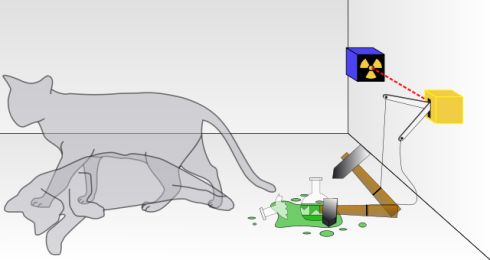
Diagram of Schrödinger’s cat theory. Image credit: Dhatfield
Since Erwin Schrödinger’s famous 1935 cat thought experiment, physicists around the world have tried to create large scale systems to test how the rules of quantum mechanics apply to everyday objects. Scientists have only managed to recreate quantum effects on much smaller scales, resulting in a nagging possibility that quantum mechanics, by itself, is not sufficient to describe reality.
Researchers Alex Lvovsky and Christoph Simon from the University of Calgary recently made a significant step forward in this direction by creating a large system that displays quantum behaviour, publishing their results in Nature Physics.
Understanding Schrödinger’s cat
Quantum mechanics is without doubt one of the most successful physics theories to date. Without it the world we live in would be remarkably different: driving and shaping our modern world making possible everything from computers, mobile phones, nuclear weapons, solar cells and our everyday appliances. At the same time it presents us with conundrums that are at the far end of reason; challenging even the greatest minds to comprehend.
In contrast to our everyday experience, quantum physics allows for particles to be in two states at the same time — so-called quantum superpositions. A radioactive nucleus, for example, can simultaneously be in a decayed and non-decayed state.
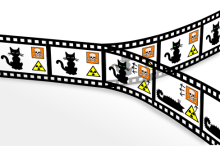
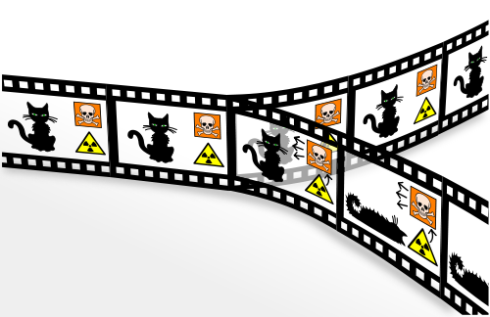
Schrödinger’s Cat; visualization of the separation of the universe due to two superposed and entangled quantum mechanical states. (image credit: Christian Schirm)
Applying these quantum rules to large objects leads to paradoxical and even bizarre consequences. To emphasize this, Erwin Schrödinger, one of the founding fathers of quantum physics, proposed in 1935 a thought experiment involving a cat that could be killed by a mechanism triggered by the decay of a single atomic nucleus. If the nucleus is in a superposition of decayed and non-decayed states, and if quantum physics applies to large objects, the belief is that the cat will be simultaneously dead and alive.
Schrödinger’s thought experiment involves a (macroscopic) cat whose quantum state becomes entangled with that of a (microscopic) decaying nucleus. While quantum systems with properties akin to ‘Schrödinger’s cat’ have been achieved at a micro level, the application of this principle to everyday macro objects has proved to be difficult to demonstrate. The experimental creation of such micro-macro entanglement is what these authors successfully achieved.
Photons help to illuminate the paradox
The breakthrough achieved by Calgary quantum physicists is that they were able to contrive a quantum state of light that consists of a hundred million photons and can even be seen by the naked eye. In their state, the “dead” and “alive” components of the “cat” correspond to quantum states that differ by tens of thousands of photons.
While the findings are promising, study co-author Simon admits that many questions remain unanswered.
“We are still very far from being able to do this with a real cat,” he says. “But this result suggests there is ample opportunity for progress in that direction.”
Seeing quantum effects requires extremely precise measurements. In order to see the quantum nature of this state, one has to be able to count the number of photons in it perfectly. This becomes more and more difficult as the total number of photons is increased. Distinguishing one photon from two photons is within reach of current technology, but distinguishing a million photons from a million plus one is not.
Decoherence: the emergence of the classical world from the quantum
Why don’t we see quantum effects in everyday life? The current explanation is that it is to do with decoherence.
Physicists see quantum systems as fragile. When a photon interacts with its environment, even just a tiny bit, the superposition is destroyed. This interaction, could be as a result of measurement or an observation, or just a random interaction. Superposition is a fundamental principle of quantum physics that says that systems can exist in all their possible states simultaneously. But when measured, only the result of one of the states is given.
This effect is known as decoherence and it has been studied intensively over the last few decades. The idea of decoherence as a thought experiment was raised by Erwin Schrödinger, in his famous cat paradox. Unfortunately for non-physicists decoherence only provides an explanation for the observance of wave function collapse, as the quantum nature of the system “leaks” into the environment. It does not tell us where the line is, if one does exist, between the quantum and everyday worlds.
Although Schrodinger’s thought experiment was originally intended to convey the absurdity of applying quantum mechanics to macroscopic objects, this experiment and related ones suggest that it may apply on all scales.
If you are interested in the history and foundation of quantum mechanics then I highly recommend Quantum: Einstein, Bohr and the great debate about the nature of reality, by Manjit Kumar (2009), and The Age of Entanglement: when quantum physics was reborn, by Louisa Gilder (2008). Both are well-researched and captivating brilliant accounts of science science and scientists.
Nobel prizewinner Samuel Ting, early Thursday morning (March 4, 2:00 AEDT), announced the first results from the Alpha Magnetic Spectrometer (AMS) search for dark matter. The findings, published in Physical Review Letters, provide the most compelling direct evidence to date for the existence of this mysterious matter.
In short, the AMS results have shown an excess of antimatter particles within a certain energy range. The measurements represent 18 months of data from the US$1.5 billion instrument.
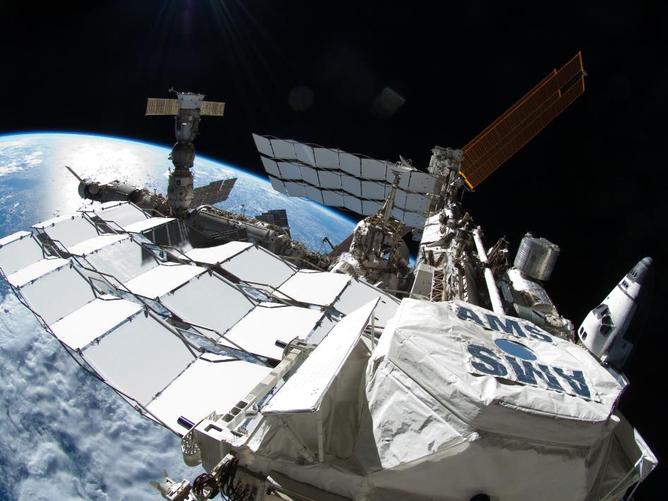
The AMS experiment is a collaboration of 56 institutions, across 16 countries, run by the European Organisation for Nuclear Research (CERN). The AMS is a giant magnet and cosmic-ray detector complex fixed to the outside of the International Space Station (ISS).
Dark matter matters
The visible matter in the universe, such as you, me, the stars and planets, adds up to less than 5% of the universe. The other 95% is dark, either dark matter or dark energy. Dark matter can be observed indirectly through its interaction with visible matter but has yet to be directly detected.
Cosmic rays are charged high-energy particles that permeate space. The AMS is designed to study them before they have a chance to interact with Earth’s atmosphere.
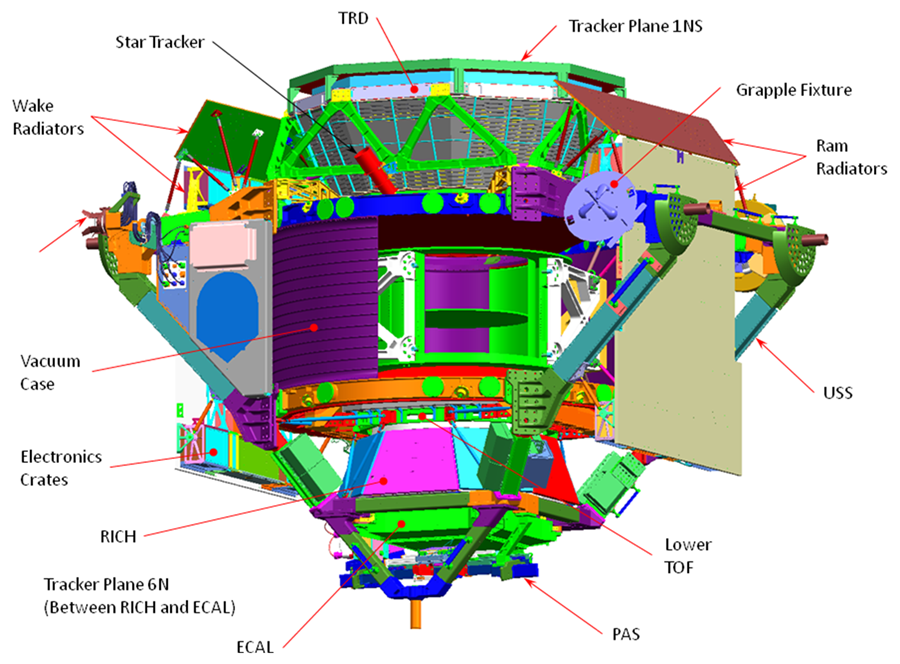
Magnet bends in opposite directions charged particles/antiparticles. Transition Radiation Detector (TRD) identifies electrons and positrons among other cosmic-rays. Time-of-Flight System (ToF) warns the sub-detectors of incoming cosmic-rays. Silicon Tracker (Tracker) detects the particle charge sign, separating matter from antimatter. Ring-Imaging Cherenkov Detector (RICH) measures with high precision the velocity of cosmic-rays. Electromagnetic Calorimeter (ECAL) measures energy of incoming electrons, positrons and γ-rays. Anti-Coincidence Counter (ACC) rejects cosmic rays traversing the magnet walls. Tracker Alignment System (TAS) checks the Tracker alignment stability. Star Tracker and GPS defines the position and orientation of the AMS-02 experiment. Electronics transform the signals detected by the various particle detectors into digital information to be analyzed by computers. Diagram credit AMS Collaboration.
An excess of antimatter within the cosmic rays has been observed in two recent experiments – and these were labelled as “tantalising hints
It was a late February night in 1987 when, standing on top of a Chilean mountain range, Ian Shelton saw something which no one had seen for centuries. Looking up in disbelief, he watched a star explode some 160 thousand light years away. Rushing to another observatory to check with someone else, he was initially met with stark disbelief. But there was no doubt. Shelton had seen a supernova explosion with his own eyes.
Named SN 1987A, this was the death of a massive star in the Tarantula nebula. Distant enough to not even be in our own galaxy, but in the Large Magellanic Cloud – one of the Milky Way’s smaller satellite galaxies, the discovery was reported independently by Albert Jones in New Zealand. This began decades of fascinating observations for astronomers, as many began to watch this supernova expand over the years, in real time.
Supernova which are close enough to see with the naked eye are rare beasts. This was, and still is, the only one close enough and visible enough to see properly with modern telescopes, giving us some of the best information we’ve ever had about how an exploding supernova interacts with the dusty interstellar clouds which surround it.
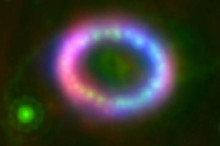
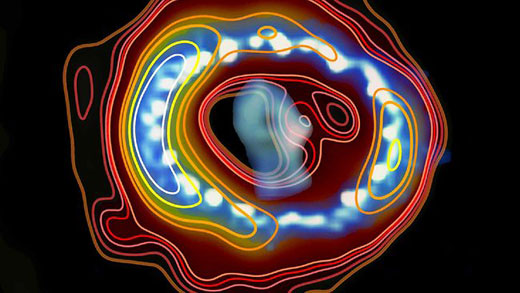
The latest observations of this literally awesome event come courtesy of a team of astronomers working in Australia and Hong Kong, led by Giovanna Zanardo at the International Centre for Radio Astronomy Research (ICRAR). Using CSIRO’s Australia Telescope Compact Array in New South Wales, the researchers have published the highest resolution images of the stellar explosion’s aftermath ever taken.
Portrait of a Dying Star
High resolution images are wonderful in astronomy. The higher the resolution, the more you can learn about what you’re seeing. Zanardo and her colleages compared their observations with other images and data taken at optical and x-ray wavelengths. On doing so, they gained some fresh insight into exactly what happens shortly after a star explodes.
In the centre of the explosion, stellar ground zero, they discovered a pulsar wind nebula. This is a pocket of intensely hot material emitted by a neutron star*, the last remains of the exploding star’s core, proving that SN 1987A did not create a black hole.
Referred to in technical jargon as a “compact source”, a neutron star is a tiny ball of incredibly dense material. With a mass up to over 3 times the mass of the Sun, these bizarre little objects truly are compact. An average neutron star has a radius of just 12 km, which is comparable with the size of Sydney. Yes, you read that correctly. The mass of a star compressed into something with a size similar to a large city.
This discovery actually answers a long standing puzzle about SN 1987 A. Supernovae like SN 1987A are normally expected to form neutron stars, because of the near-unimaginable pressures which occur inside an exploding star. But for several years, despite looking carefully, no astronomers could find any trace of a neutron star amid the stellar debris. But the star which caused this supernova would not have been massive enough to collapse into a black hole, leading theoreticians to try and devise explanations for why there was no neutron star to be seen.
If Zanardo’s team are right, and they have indeed found a pulsar wind nebula inside the shattered remnants of this dead star, then it has to be generated by something. Unless I’m mistaken, this may be some of the most convincing evidence yet for the missing neutron star!
Seeing Clearly in Invisible Light
Discovering all of this, however, was far from easy. Radio images at centimetre wavelengths are difficult to capture with detail. Exceptionally good weather conditions are needed. Zanardo explains, “For this telescope, these [observations] are usually only possible during cooler winter conditions, but even then the humidity and low elevation of the site makes things very challenging.
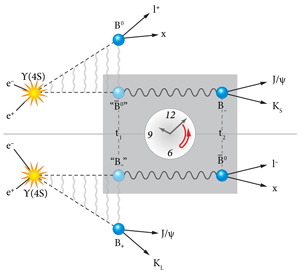
Electron-positron collisions at SLAC produce a Υ(4s) resonance that results in an entangled pair of B mesons. Source: http://physics.aps.org/articles/v5/129
Recall the outrageously cool movie from the 1980s, Back to the Future? Marty McFly and Doc Brown were stretching scientific boundaries, righting the future, all while making sure not to meet their future selves. Fast-forward and time travel may be closer than we think. (Close, relatively speaking of course.)
If you like exceptions to the rule, well, you’re in luck because the Department of Energy’s (DOE) SLAC National Accelerator Laboratory has achieved something quite impressive – the BaBar experiment.
The BaBar experiment investigates the most fundamental questions about the universe by getting back to basics with elementary particles. It’s a global collaboration of physicists delving into the nature of antimatter, the relationship of quarks and leptons and crossing over into areas of physics yet to be explored.
Earlier this week, scientists working on the BaBar project made the first direct observation of a violation to the concept known as time reversal symmetry. Their work was published in Physical Review Letters if you want to journey into the world of B mesons.
How did they do it?
Data from billions of particle collisions, nearly 10 years worth, were poured over and sifted through by researchers on this project. They examined a chain of particle transformations in which B mesons flipped between two different states called B-zero and B-even. This quantum entanglement of B mesons enables information about the first decaying particle to be used to determine the state of its partner at the time of the decay. This allowed the team to find that these transformations happened six times more often in one direction than the other.
Largely by thinking there was something wrong with the picture they were looking at was how missing pieces of the puzzle were filled in, according to the physics coordinator for BaBar, Fabio Anulli of the National Institute for Nuclear Physics in Rome. The BaBar data they had showed evidence of change-parity symmetry violation, so this was a good place to start looking. In fact, just looking at the data in a slightly different way allowed them to the see time violation.
Given the abundance of data the BaBar team had to work with, they were able to measure the T-violation to the 14 sigma level – a high level of statistical significance. Basically meaning there is only 1 chance in 1043 that this effect is not real. Recall the Higgs boson discovery this past summer; that was granted a 5 sigma level. The results demonstrate that the direction of time matters, at least for some elementary particle processes. This provides a strong confirmation that a few subatomic processes like to do things on their own schedule – they have a preferred direction of time, changing into one another much more often in one way, than they change in the other. Time does not run the same forwards as backwards.
The findings – full of futuristic possibilities
What does this mean for the future? This discovery may rock our world in ways we haven’t even conceived of yet. It could have implications for business, for communications, for me getting to Brisbane instantaneously without first stopping for a layover at LAX. We may have perhaps inched closer to that time travelling ease marvelously displayed in Star Trek. Stay tuned.
Discoveries such as this make us think about the beauty of science. The vectors and numbers and B mesons – scientists work that stuff out to provide the beautiful possibilities that are so important to the human race. It may be small now, but we’re definitely on to something bigger. Think how many picture frames we may just be able to tilt to get the answers we seek.
Ah, the weekend! Time to kick back, relax, and look back over everything that’s happened over the past few days. And I’m rather happy to say that some quite interesting things have happened, including the Leonid meteor shower which peaked on Friday night (though if you step outside after dark and watch the sky, you may still see a few stragglers). So what else has caught my eye this week, science-wise?
Well first off, the Curiosity Rover has been busy over on the planet next door. I can’t help but find everything about the Curiosity rover exciting, especially as it’s paving the way for actual manned exploration to another planet. As many people will agree, no matter how sophisticated a rover can be, it will never be as good as a team of properly equipped geologists exploring a site in person. As it turns out, this idea just came a step closer to being reality…
The findings demonstrate that Mars’ atmosphere, though just 1 percent as thick as that of Earth, does provide a significant amount of shielding from dangerous, fast-moving cosmic particles.
Some people may recall the death of an aged tortoise nicknamed Lonesome George, so called because he was thought to be the last surviving member of his species. I know I do, and was rather saddened by it. While it may be an inescapable part of the way life on our planet works, there’s something quite humbling about being forced to simply watch a species go extinct and not be able to do anything about it. But then, was George’s death really the end of the story? As it happens, perhaps not…
“These giant tortoises are of crucial importance to the ecosystems of the Galapagos Islands, and the reintroduction of these species will help preserve their evolutionary legacy,” said Danielle Edwards, postdoctoral research associate at Yale and lead author on the study.
Lisa Grossman at New Scientist discusses the phenomenon of rogue planets – planets roaming interstellar space after being forcibly ejected from their home systems. It’s a concept which I’ve thought about in great detail in the past, as have many others, including astrophysicists, astrobiologists, and science fiction authors.
The wanderers are no longer gravitationally linked, but they are headed in the same direction. “Like when you kick a clod of sand, the grains don’t stick together anymore but they have the same common motion,” Delorme says.
In chemistry, I’ve always held a certain fascination with noble gas compounds. Molecules formed from atoms which aren’t supposed to react and form molecules always seemed rather exotic and curious. Several of these compounds have been predicted involving Xenon, one of the heaviest noble gasses. And there may be a lot of Xenon trapped inside the Earth this way…
“In addition to providing a likely solution to the missing xenon paradox and clarifying essential aspects of xenon chemistry, our study may result in practical applications,” says [Artem R.] Oganov. “For example, the ability of xenon to form strong chemical bonds with oxygen and other elements, and to be trapped in crystalline defects, suggests their use as non-classical luminescence centers and active sites for catalysis”.
And to end on a humourous note, XKCD wrote a comic this week describing the Apollo Spacecraft and Saturn V rockets using only the 1000 most commonly used words in the English language. The result was slightly hilarious and rather enlightening about how often writers like myself use words which aren’t in that top 1000. A testament to XKCD’s popularity is how many people in the online space and astronomy communities mentioned it – including at least one astronaut!
Lots of fire comes out here. This end should point toward the ground if you want to go into space. If it starts pointing toward space you are having a bad problem and you will not go into space today.
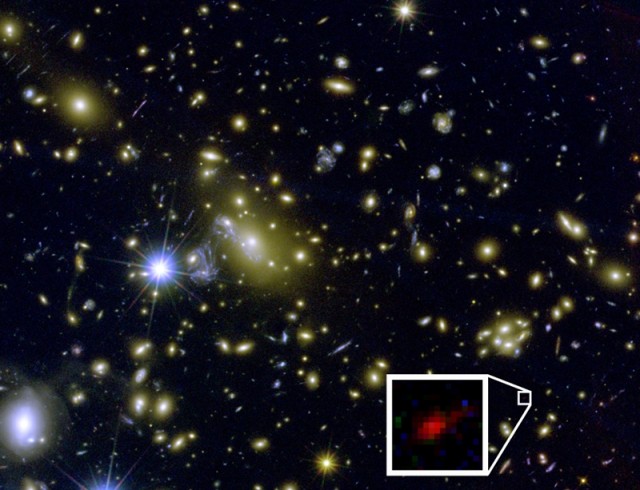
Image credit: The CLASH team/Space Telescope Science Institute
The tiny object in that inset may not look like much. A blurry smudge of red pixels. Not nearly as dramatic as the stunning bouquet of galaxies all around it. But in astronomy, not everything is quite so straightforward. That small red smudge is probably the most exciting thing in this whole image. You see, it too is a galaxy. An unimaginably ancient one.
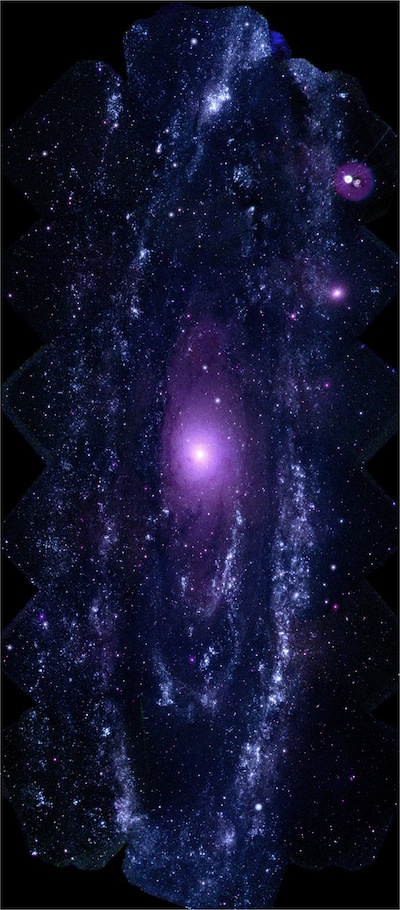
An ultraviolet image of the nearby Andromeda Galaxy – possibly similar to what we might see of MACS 1149-JD if we could get a more detailed view… Credit: NASA/Swift/Stefan Immler (GSFC) and Erin Grand (UMCP)
The light that made this unassuming red dot left its source less than 500 million years after the Big Bang and the birth of the Universe. The photons that make up that light have been travelling for over 13.2 billion years. This galaxy was blazing brightly as the oldest known stars in our own galaxy, the Milky Way, were just starting to shine. Back when the gas which would one day become the Sun was still drifting silently amongst stars which are now long dead, and before planet Earth was even a whisper of interstellar dust. Before a massive star forged the iron atoms in your blood, and before a supernova scattered those atoms into space. Before anything we know from the world around us existed, even the stars we see as we look up to the night sky, this galaxy was shining in the dark.
The Universe was a much smaller place back then. Over the billions of years these photons have been travelling, the Universe itself has expanded with them in the midst of it – stretching them out, redshifting them to longer and longer wavelengths. The light we see here as red was probably ultraviolet once, when it left the galaxy which created it.
Ancient galaxies like these are difficult to see, purely because they’re so distant. So few photons make it this far that only the most sensitive telescopes can make them out, and even then they need a helping hand. The bloom of galaxies in this image is a massive galaxy cluster called MACS J1149+2223. A collection of galaxies bound together by gravity, clusters like these are some of the largest and most massive objects in the Universe. With that much mass gathered together, gravity starts to do some interesting things, and one of the most interesting is gravitational lensing. Because the gravity of all of those galaxies distorts spacetime, it actually causes the space around the galaxies to act like a titanic lens. A gravitational lens. The ancient red galaxy in this image is only visible because it’s magnified, not only by the Hubble Space Telescope, but by that gravitational lens too.
It would be naive to assume that this galaxy, dubbed MACS 1149-JD, is special somehow. Instead, it’s most likely to be one of a huge number of primordial galaxies. Except that this one just happened to be in the right place at the right time. A whole population of these ancient galaxies were likely shining brightly at the time, full of hot stars which were driving the reionisation epoch – the time when the Universe went from being an opaque, dark fog, to a clear place where photons could travel long distances. The photons in this image may well have been some of the first photons to have travelled through that ancient and newly transparent Universe.
An international group of researchers announced in the journal Nature that they had succeeded in creating tin-100. This experiment helps us understand how heavy elements have formed. A few minutes after the Big Bang the universe contained no other elements than the lightest; hydrogen and helium.
We, the objects around us, the Earth and the other planets all contain heavier elements; carbon, oxygen, silicon, tin, iron etc. These elements came into existence later than hydrogen and helium. They formed through the fusion of atomic nuclei inside of stars. Elements heavier than iron owe their existence to gigantic stellar explosions called supernovas. Tin-100 is a very unstable, yet important, element for the understanding the formation of these heavier elements.
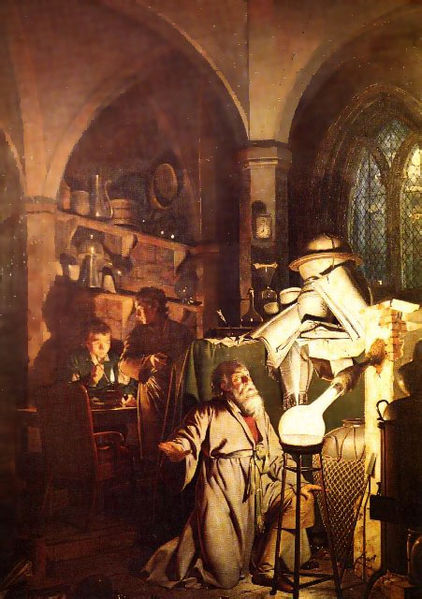
The inspiration of creating new elements can be traced to alchemical traditions. Alchemy is an arcane tradition, that can be viewed as a proto-science, a precursor to chemistry and nuclear physics. It’s prime objective was to produce the mythical philosopher’s stone, which was said to be capable of turning base metals into gold or silver, and also act as an elixir of life that would confer youth and immortality upon its user.
The Alchemist, 1771 painting by Joseph Wright of Derby. Image credit: Wikipedia, image copyright has expired.
It did bring to chemistry many ideas and provided procedures, equipment, and terminology that are still in use. It also provided the inspiration for the creation of new elements. Now we understand to create new elements requires a combination of precision equipment and experimental procedures coupled with a sound understanding of quantum theory.
So what is tin-100 and why is it useful to understand the astrophysics of heavy element formation?
Most people will recognise that matter around us is composed of atoms. Atoms of carbon, hydrogen, oxygen for example form the building blocks to make organic molecules and silicon and oxygen bond together to make common beach sand and are fused together to make glass. The familiar metals are solids made of one type of atom, for example gold and aluminium, or combinations, bronze being made of copper and tin atoms.
Atoms in turn are a central nucleus of protons and neutrons surrounded by a swarm of electrons. The number of protons distinguishes one element from another. This atomic number is used to designate an element 1 for hydrogen, 8 for oxygen and 50 for tin, for example. Stable tin comprises 112 nuclear particles – 50 protons and 62 neutrons. The neutrons act as a kind of buffer between the electrically repelling protons and prevent normal tin from decaying. Each atom will contain an equal number of electrons to its protons. Remove or add an electron and the atom becomes an ion, a charged particle.
The strange quantum world of the nuclei
Quantum mechanics which, amongst other things, explains how the electrons form into shells around the nucleus. Elements which have filled outer shells, helium, neon, argon, xenon are ‘noble’ gases, chemically inert – not the least reactive. Nuclei are also complex quantum objects.
As far as we know, nuclei are the smallest objects that can be split up into their constituents. They are therefore the smallest entities which emergent properties – patterns that arise from complexity – can be studied. Nuclear scientists study these emergent phenomena and are using them to decipher the nature of the nuclear force. In contrast to the structure of atoms, for which the fundamental interaction between the electrons and the nucleus – the electromagnetic force – is known with great precision, the interaction between the nucleons – the strong nuclear force – is not so well known.
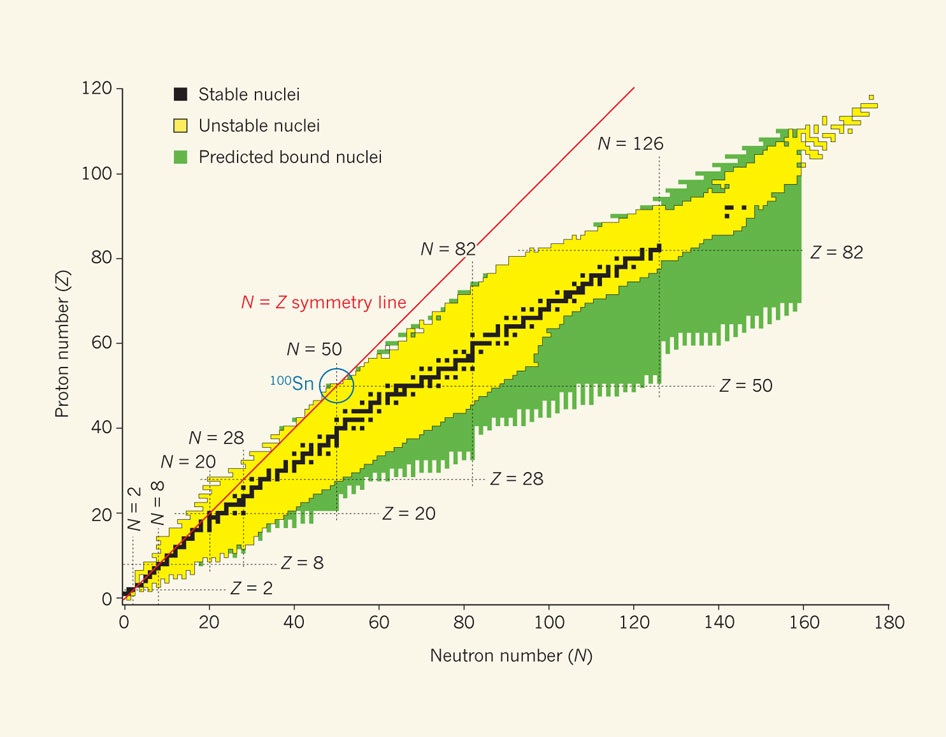
In nature not all combinations of nucleons are stable. As a general rule the more protons present then more neutrons are required to stablise the nuclei. A useful graphical presentation of this is the Segre table of radionuclides.
Location of nuclei as a function of their neutron number (N) and proton number (Z). Image credit Daniel Bazin Michigan State University.
If the shell structure of electrons was difficult at first for scientists to come to terms with, then the shell structure exhibited by nucleons is not only unexpected it is complex enough not to be discussed in many quantum physics texts. It was first thought that such densely packed and strongly interacting objects as the nucleons would exhibit a liquid-like behavior, much like the flow of electrons in a good conductor such as a metal.
That is what makes these experiments so exciting.
Stability and magic numbers
Magic numbers are the number of protons or neutrons that form full shells in an atomic nucleus. The term is thought to have been coined by the physicist Eugene Wigner. The model has been used to explain – at least for stable nuclei – the observed sequence of magic numbers: 2, 8, 28, 50, 82 and 126.
Nuclei that have a magic number of neutrons or protons are more tightly bound than there non-magic counterparts. This intrinsic simplicity makes them prime candidates for testing proposed models of nuclear structure. Even more attractive are the doubly magic nuclei. The lighter nuclei helium-4, oxygen-16 and calcium-40 do follow the magic number sequence.
However because of the repulsion between protons the line of stable nuclei veers away from the symmetry line. As a result tin-100 represents the largest nuclei to follow the sequence. It is bound but unstable. It is very close to the edge of nuclear stability, where the nuclear force between the protons and neutrons can no longer bind them into a nucleus. Unfortunately, what makes this nucleus so attractive to study is what also makes it so difficult.
How to make a new element
In nature elements heavier than iron come into being only in powerful stellar explosions – supernovas. These include, for example, the precious metals gold and silver and the radioactive uranium. The cauldron of a supernova gives rise to a whole array of high-mass atomic nuclei. these decay to stable elements via different short-lived intermediate stages.
There are two ways to create new elements in the laboratory. The first is is to fuse two nuclei in a manner that minimises the loss of protons or α-particles (helium-4 nuclei). The second is is more brutal, fragmenting a small part off a heavier nuclei in a collision.
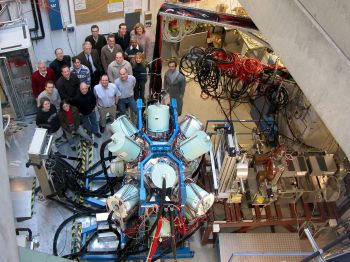
The detector set-up at GSI. Photo credit: GSI
In these experiments energetic xenon-124 is sheared by making it collide with a target beryllium foil leaving a residue that is composed of 50 neutrons and 50 protons. Out of the 120,000,000,000,000 xenon-124 accelerated in the experiment, only 259 tin-100 nuclei were identified. These results were sufficient though for the decay of tin-100 to be studied with great precision.
The results, excitedly for the researchers, demonstrated a ‘superallowed Gamow-Teller decay‘. This type of β-decay is beyond the scope of this essay to explain, needless to say it does provide new experimental depth to the models of nuclear chemistry. It is an important decay transition that occurs in the collapse of supernovae. It also is important in putting boundaries on the possible mass of the neutrino. Both of which are important validations of the current nuclear theories as well as providing real experimental data to fine tune the theoretical models.
This allows more real models of nuclear synthesis to be constructed. Allowing a deeper understanding of how the atoms that make up our universe were created.
Now other laboratories around the world will work on improving the production rates of tin-100 and other exotic nuclei, based on these experiments. Allowing the emergent properties of these nuclei can be studied in more detail. Giving us greater understanding of the forces that bind these particles together – to make us!
Originally conceived over 20 years ago, there’s a project being undertaken by scientists and engineers across the whole world to help us all better understand the mysteries of the galaxy and the very beginnings of the Universe. It’s estimated to be completed by around 2024,costing $1.85 billion AUS (€1.5 billion). Once completed, it’s set to be the most complex and technologically advanced machine ever built by humanity. It will use enough optic fibre to wrap twice around the Earth and will need a computer capable of performing 10^18 operations per second – about three million times the number of stars in our galaxy. It will produce over 980 Exabytes of data every day (equivalent to about 15 million 64GB iPods) and to cope with that, it will need to handle data transfer rates over 10 times as high as the current global internet traffic. No, it isn’t a starship. But it might just be the next best thing.
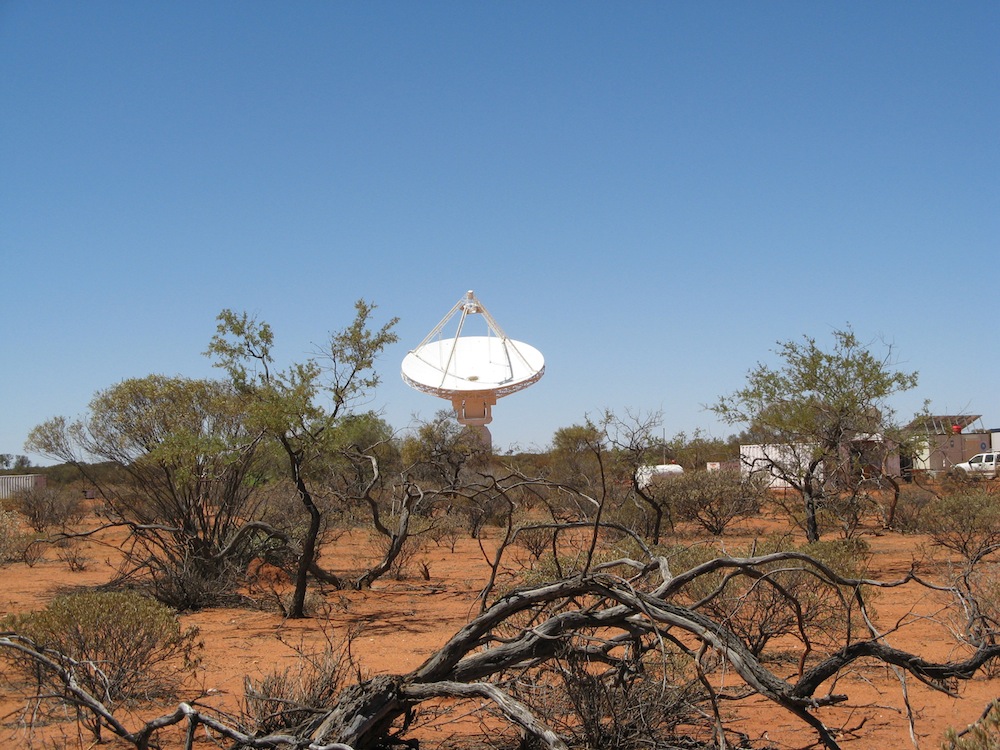
One of the first components of the SKA, constructed in Western Australia. Credit: Dave DeBoer, CSIRO.
The Square Kilometre Array (SKA) is one of the most ambitious scientific projects ever devised, and when completed it will comprise a huge number of telescope antennae which will work as one to form a single radio telescope so powerful that it could detect an airport radar on a planet 50 light years away. The sensitivity of any telescope is defined by the area it uses to collect data. With optical telescopes, this is the size of the mirror, and with radio telescopes it’s typically the size of the dish. The SKA gets its name because when fully constructed, all of the detectors and antennae that make it up will have a combined area of one square kilometre, or one million square metres. To put that properly into perspective, the Green Bank Telescope is currently the largest steerable single dish radio telescope, and its area is just under 8000 square metres.
Being astronomy’s answer to the large hadron collider, the SKA is a staggeringly large international collaboration. I was lucky enough to attend a major meeting regarding the planning of the SKA (the headquarters are to be based here in the UK in Manchester), and the myriad different languages and nationalities represented was impressive to say the least. Over 24 major organisations from countries spanning 5 continents are involved in the project, ranging from universities to industrial engineering companies. New technologies, both software and hardware, are still being developed as a result of this project. Based on the huge data storage and transfer requirements of a machine as complex as the SKA, many of those new technologies are likely to feed straight back into society by offering profound improvements to computing resources like the internet. In fact, as the world’s largest project for sorting and storing data, the SKA is expected to be literally bigger than Google!
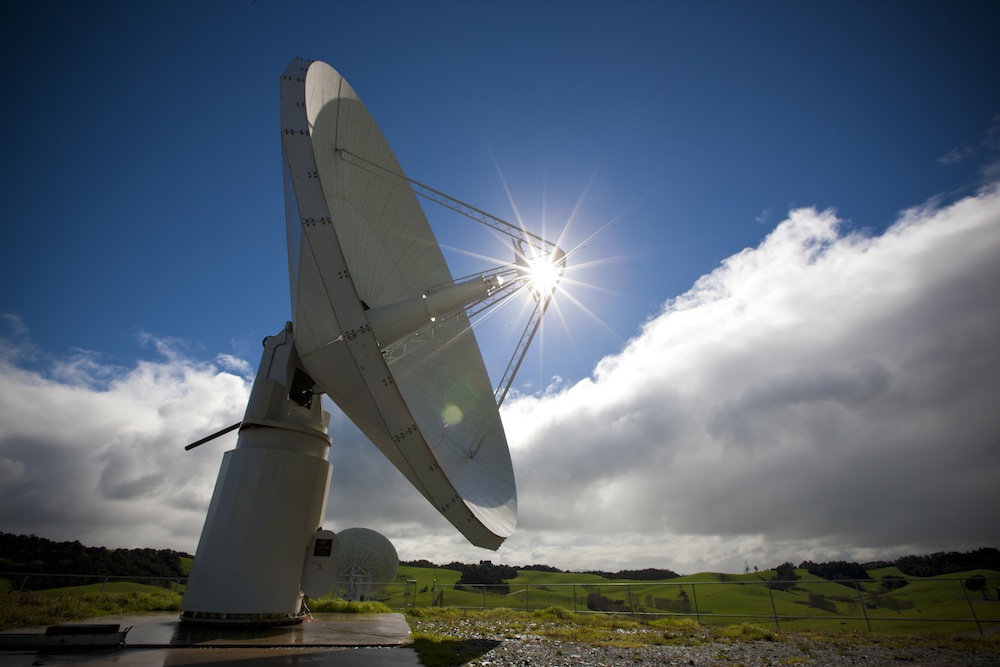
The Warkworth antenna in New Zealand – an important part of early SKA science. Credit: Alex Wallace.
The most difficult decision, understandably, has been where precisely to build it. Humanity has an unfortunate tendancy to fill the atmosphere of our planet with noise, bouncing radio waves to and fro and filling the air with radio frequency chatter. A radio telescope array this sensitive needs to be placed somewhere quiet to gain the full benefits, and the most recent decision has been to effectively split the SKA into two components, to be built in Southern Africa and Australia. While this may seem like an odd thing to do, it actually makes perfect sense. The SKA actually has three types of antenna operating at different frequencies. Intended to cover a huge range of radio frequencies (from 70 to 100000 MHz), three types of antenna are needed, because no single technology can actually operate across such a wide range. So the decision was made to build the lowest frequency detectors across Australia, centred at Murchison in outback Western Australia. Murchison is blessed with being one of the few places on our planet which isn’t flooded with FM radio at the low end of the frequency scale. From a radio astronomer’s point of view, it’s the quietest place on Earth.
This is set to be complemented by the higher frequency steerable dishes which are set to be constructed across Africa. Both South Africa and Australia have put extensive efforts into developing the SKA, and Australian-developed technology is still set to be implemented in the African telescopes. This will mean a huge influx to the African astronomical community and numerous African nations won’t lose out on the economic boost from contributing to such a prestigious project. It’s an ideal situation where everyone wins.
All in all, it’s an exciting time to be an astronomer. An epic project like this is likely to attract all manner of researchers from across the world to both continents. Just maybe, it could also finally help us to answer the really big questions, like how the galaxy formed, how the Universe began, and whether or not there’s anyone else out there.
It’s official. As was the subject of a press conference here in Europe this morning, the LHC has discovered a new particle. Is it the much talked about Higgs boson? Evidently it’s far too early to say with certainty. But whatever it is, it’s a brand new subatomic particle, it’s consistent with a Higgs boson signature, and it’s enough to make CERN physicists quite excited.Whatever it may turn out to be, it’s brand new and never seen before.
This is physics at its most fundamental. The standard model of particle physics is probably our best depiction of how the universe operates at subatomic scales, but our picture is incomplete. A jigsaw puzzle with missing pieces which must still be searched for. One of those pieces is a piece so basic that for a long time it was simply overlooked. Why do objects have mass at all? The existence of the Higgs boson in the Standard Model seeks to address that question. It posits that all the universe is filled with a so-called Higgs Field. Any particles, protons or neutrons for instance, passing through that field will interract with it, and it will interract via Higgs bosons. Any particle which exists in this field will effectively be surrounded by a cluster of these Higgs bosons. The more bosons, the stronger the interraction, and the more massive that particle will be.
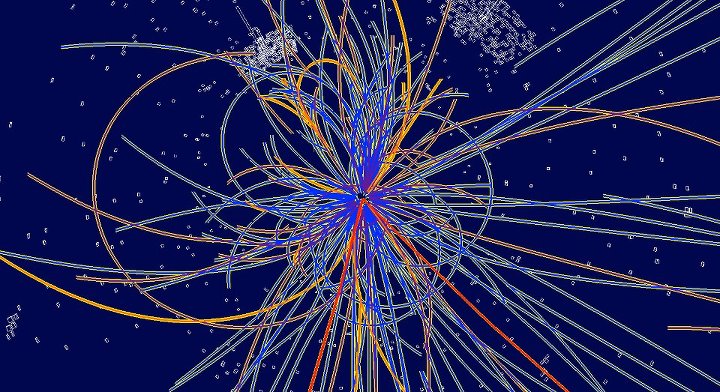
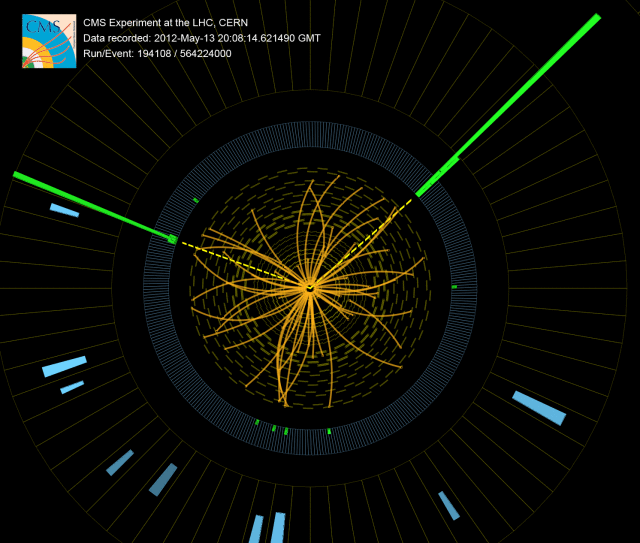
Simulation of Higgs Boson decay.
But exactly what it is that’s been discovered is still being analysed. Amid a press conference full of journalists asking pointed questions about “the Higgs boson”, scientists were noticeably hesitant to outright say that this is what they’ve discovered. And for good reason too, because science doesn’t work like that, no matter how many people might want to run through the streets naked shouting ‘Eureka’. In all of this, only one thing is certain – a new particle has been discovered with a mass of approximately 126 giga electron volts (126 GeV), with a statistical significance of 4.9 standard deviations (4.9 σ).
Peter Higgs himself, declined to make any comment twice during the conference, simply stating that it would not be appropriate to answer detailed questions at this stage. The other members of the panel too, agree that it’s very difficult to say anything definitively right now and that “Higgs-like” would be a better description of what they’ve found. It’s compatible with a Higgs boson detection, but the “uncertainties are still large”. While definitely being “consistent with a Higgs boson”, interestingly it’s noted that they cannot say if this is the Higgs boson (i.e. the one required by the Standard Model), rather at this stage it may be a Higgs boson. Scientifically speaking, it’s far better to only make statements on what’s known to be true, rather than to make brash announcements which may prove to be incorrect a few months later.
Whatever happens after the months of data analysis which are due to follow is that we’re set to unravel a lot more about the fundamentals of the universe. This discovery is on the very edge of human understanding. It may help to refine our knowledge of the Standard Model of particle physics, or it may hint that this particular Higgs boson is not a part of the standard model – a prospect which ATLAS experiment director Fabiola Gianotti seemed visibly quite excited by.
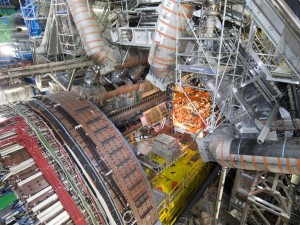
The ATLAS instrument, a detector in the LHC.
Rolf Heuer stressed the fact that the most exciting thing here is the fact that they have a discovery of something brand new, perhaps suggesting that we shouldn’t get too caught up in our expectations and simply enjoy the excitement of there being something never before seen in physics in the process of being analysed. Moreover, this could be the very first fundamental scalar particle, and the first gauge boson which actually has any mass. If it does turn out to be a Higgs boson, then this holds the additional thrill that this particle has a relationship to the state of the universe itself, embodying the substance to all other particles which exist.
In the meantime, as the LHC prepares to power down for a couple of years of maintenance, this discovery will certainly stoke the fires of curiosity in thousands of scientists worldwide. The data are still being picked apart too, for things which are completely unknown. Perhaps even more brand new physics is still waiting to be found. It’s an exciting time in physics right now!
Australian researchers helped design and build parts of the ATLAS detector and helped analyse the results.
Researchers using two huge detectors at the Large Hadron Collider announced the results of their searches at a joint scientific seminar in Geneva and Melbourne, where the International Conference on High Energy Physics is being held.
In a joint seminar today at CERN and the “ICHEP 2012
A pulse of particles speeds into the vacuum chamber. Positrons, 20,000,000 antimatter particles, clumped in a pulse one nanosecond deep. Like a silent, angry swarm they are targeted into a porous silica target. The positrons are confined by a magnetic field, increasing their interaction with the silica. Some attract electrons and synthesize into positronium, a hybrid unstable ‘molecule’. Before it can decay the positronium is excited first by a burst of ultra-violet laser light. Then a second burst, this time in the infrared. With each excitation the positronium puffs-up. The still bound, positron and electron orbit further and further away from each other. Decreasing their opportunity to meet. Increasing the lifetime of the positronium. Eventually they meet. They annihilate. Mutually destructing in a soundless flash of energy. A pair of gamma rays to remind us of a nanosecond long courtship.
Producing positronium, binding the negatively charged electron with its antimatter equivalent, the positively charged positron, is not a normal occurrence in our world. If this experiment sounds a little like science fiction, the reason for doing it is part of an even more exotic tale. This laboratory experiment is to produce ‘long-lived’ positronium is so that the researchers can measure the effect of gravity on it. Published in January 2012, this success represents 10 years of hard work for Allen Mills and his team from the University of California, Riverside.
The positron is the antimatter version of the electron. It has the identical mass to the electron, but a positive charge. The researchers are trying to find whether matter and antimatter behave the same way under gravity. That is, do they weigh differently? If they find such behaviour it would truly rock the physics world.
Antimatter. The idea of it is weird. The idea of weighing it is stranger still.
The weirdness of antimatter
Antimatter has been one of the most fascinating fields of research ever since the prediction of its existence by Paul Dirac in 1929. Paul Dirac solved the basic equations of quantum mechanics. In doing so he found their solution implied the existence of antimatter particles. At the time most physicists, Dirac included, thought the idea was preposterous.
Within a short time, experimenters looking at cosmic rays bombarding the Earth found particles that behaved like electrons, but with a positive charge. In 1932 Carl Anderson carried out the definitive experiments demonstrating the existence of the anti-electron, naming it the positron, and being awarded the Nobel Prize in 1936 for his discovery.
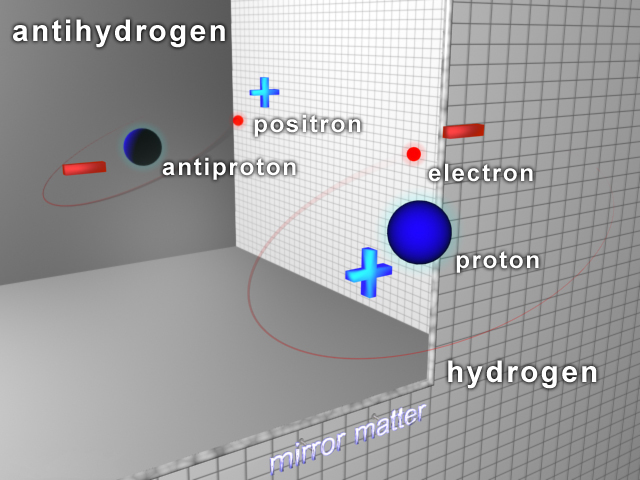
3D image of Antihydrogen. Source: NSF
Dirac had postulated in 1931 that each of the fundamental particles has an equivalent antimatter partner. Furthermore, when matter and its antimatter opposite come into contact they annihilate each other, releasing energy into two equal energy photons. Their energy is given by Einstein’s famous equation E=mc². This latter relationship has been much exploited by science fiction writers. Matter – antimatter reactions powered the star-ship USS Enterprise in the 60s hit TV show Star Trek.
Work with high-energy antiparticles is now commonplace in physics and materials science. Anti-electrons are used regularly in the medical technique of positron emission scanning tomography. Perhaps more importantly, the equivalence model of matter and antimatter has been fully incorporated into the Standard Model of Particle Physics. Matter particles and their anti-matter pairs have the same mass and equal, but opposite charge.
The most important point in all of this focusses on when our universe came into being, the Big Bang. Models of the Big Bang predict that equal amounts of matter and antimatter were formed initially. Ordinary matter is clearly what our observable Universe is made of today. Where is the antimatter? A glaring, niggling, imbalance that begs for an explanation.
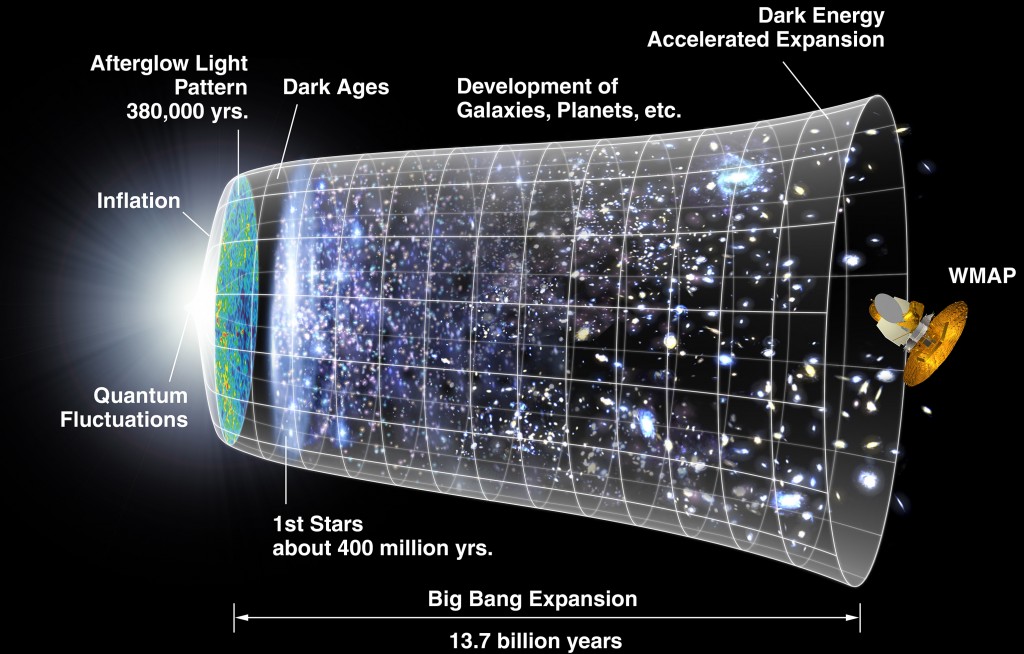
Timeline of the Universe: Big bang to present time. Source: NASA/WMAP Science Team
This imbalance could be explained by a slight difference in one of the fundamental properties of particle-antiparticle pairs (such as charge or mass). There isn’t yet any experimental evidence for such a difference. Another alternative might be a difference in their gravitational attractiveness. It is widely expected that the gravitational interaction of matter and antimatter should be identical. If they were not, then this could explain the preponderance of matter in our universe.
Elementary antimatter particles naturally occur in radioactive decays and in cosmic radiation. Some of them, such as the positron and the antiproton, have been studied extensively and even compared to their matter equivalents. Measurements with charged antiparticles are difficult because gravity is a far weaker force than the electromagnetic force. The first experiments to measure the gravitational attraction of antimatter were at the University of Stanford and CERN in 1974 and 1993 respectively. Both used charged antimatter particles. The experiments were marred by stray electric fields and did not produce satisfactory results.
Trying to do experiments like this requires precision and reproducible backgrounds. The world is a rather messy place to measure these relationships. Neutral positronium, such as in Mill’s experiments, or an anti-atom could be used to test the effect of gravity on antimatter for the first time, because it is immune to stray electromagnetic fields that have hampered the previous studies with charged antimatter particles.
Does antimatter fall down?
Understanding gravity has proven to be a little more complicated than falling apples. To the Greek philosopher and polymath Aristotle, the concept that heavy objects fell faster than light objects was obvious. His elegant, but fanciful, notion persisted well into the Middle Ages. The Italian physicist, mathematician, and astronomer Galileo Galilei successfully challenged Aristotle’s impractical theories of motion. Experiments using the swing of pendulums proved him correct. Observing their swing rates was more practical than the dropping of objects from the Leaning Tower of Pisa, as Galileo had originally proposed.
Galileo also put forward the basic principle of relativity, that the laws of physics are the same in any system that is moving at a constant speed in a straight line, regardless of its particular speed or direction. Hence, there is no absolute motion or absolute rest. This principle is central to Einstein’s special theory of relativity.
The key point under consideration here is the correlation between inertial mass and gravitational mass. This is the correlation between the forces measured on a mass when it is falling under gravity or being accelerated. The earliest experiments were done by English natural philosopher Isaac Newton and improved upon by the German mathematician and astronomer Friedrich Wilhelm Bessel in the 1820s.
The problem is that Newton’s theories and his mathematical formulae did not and do not explain the equivalence of the behavior of various masses under the influence of gravity, independent of the quantities of matter involved. The observation that the gravitational mass and the inertial mass is the same for all objects is unexplained within Newton’s Theories. The experiments of Galileo Galilei, decades before Newton, established that objects that have the same air or fluid resistance are accelerated by the force of the Earth’s gravity equally, regardless of their different inertial masses. Yet, the forces and energies that are required to accelerate various masses is completely dependent upon their different inertial masses, as can be seen from Newton’s Second Law of Motion, F = ma.
Precision measurements by the Hungarian physicist Loránd Eötvös originally in 1885, and then again with improved instruments and precision between 1906 and 1909, established the universality of Newton’s law of gravitation. These were followed with a series of similar but more accurate experiments, these included experiments with different types of materials, on moving ships and in different locations around the Earth. These experiments demonstrated the equivalence of gravitational and inertial mass for ordinary matter. In turn, these experiments led to the modern understanding of the equivalence principle encoded in general relativity, which states that the gravitational and inertial masses are the same.
So far, so good, for understanding the behaviour of ordinary matter. Rather than disembodied logic alone, the combination of experiment, measurement, and sound reasoning proving to be the correct way to discern the laws that represent reality.
Gravity is now best described by general relativity. General relativity is a classical theory that does not imply the existence of antimatter. In the 1980s a quantum-mechanical formulation of gravity allowed for non-Newtonian contributions to the force which might lead to a difference in the gravitational force on matter and antimatter.
A number of theories propose how differential interactions between matter and antimatter may be explained. It must also be pointed out that numerous models and experiments with matter have been used to derive upper limits on the possible differences in the nature of such gravitational attractions.
Direct investigation of antimatter, experimentally, is characterised by an almost complete lack of data.
The experimenters
Allen Mills is not alone in his quest to measure the weight of antimatter.
In 2011 the AEgIS collaboration at CERN, had funding approved to use antihydrogen to measure any difference in the gravitational force on matter and antimatter. CERN is Europe’s particle-physics research lab located near Geneva in Switzerland. Perhaps currently best known for its search for the Higgs boson, the co-called God particle. The funding scale of the AEgIS experiment (Antimatter Experiment: Gravity, Interferometry, Spectroscopy) is more modest. It’s goal, to create a horizontal beam of antihydrogen and to study its free fall in the Earth’s gravitational field with a matter wave interferometry apparatus, is scientifically equally far-reaching.
The quest to create, trap and study antihydrogen is now entering its third decade at CERN.
In 2002, the ATHENA experiment at CERN’s Antiproton Decelerator was the first to produce copious amounts of cold antihydrogen, the simplest atomic antimatter system. The ATHENA (AnTiHydrogEN Apparatus) experiment had the objective to produce, to store and to study antihydrogen at extremely low temperatures, at less than 1 Kelvin temperature. The goal was to compare the energy levels of antihydrogen and hydrogen with extreme accuracy. The ATHENA set-up was used as a proof of concept in this case for the successor experiment AEgIS.
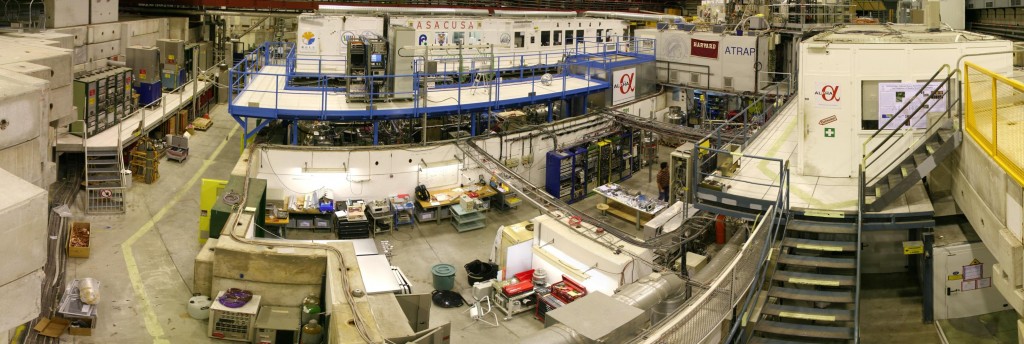
Experimental area of CERN's Antiproton Decelerator Hall, showing ALPHA experiment. Source: CERN/Mikkel D. Lund
The antiprotons supplied by the Antiproton Decelerator were trapped and cooled, and brought into overlap with positrons from a radioactive sodium source in a cylindrical Penning trap. The produced anti-atoms, no longer confined in the charged-particle trap, drifted radially outward and annihilated on the electrodes. ATHENA’s sophisticated detector allowed the temporally and spatially resolved reconstruction of these annihilation events.
During the data taking periods in 2003 and 2004, the experimental parameters were optimized in order to maximize the antihydrogen production rate, and the temperature and internal quantum states of the anti-atoms were determined. ATHENA was not configured to measure the gravitational attraction of antihydrogen. Data taking with ATHENA has now ended.
It was collaborators from the ATHENA experiment, along with new groups from other institutes, that have designed the successor experiment, AEgIS, with the aim of performing gravitational studies with antimatter. The AEgIS proposal was submitted in January 2008 and approved by the CERN Research Board in December 2008. Construction began in early 2010.
Meanwhile the CERN group has been building on its expertise for the production and trapping of antihydrogen. A new experimental collaboration called ALPHA (Antihydrogen Laser PHysics Apparatus) is another successor to ATHENA. In late 2010 the ALPHA group managed, 38 times to confine single antihydrogen atoms for 172 milliseconds. At the time the spokesperson Jeffrey Hangst said, “We’re ecstatic. This is five years of hard work.”
By July 2011 they had confined seven antihydrogen anti-atoms for 1,000 seconds, extending their earlier results by nearly four orders of magnitude. To compare with these CERN successes, Mills, in his late 2011 experiment, produced 12 positronium atoms that did not annihilate until they hit the chamber wall. This journey of a few centimetres takes about a microsecond.
Based on these results Mills believes he can produce a collimated, long-lived beam for the direct measurement of the gravitational free fall of positronium atoms.
Kudos and plaudits
We have in 2012 then, two experiments, both different in their experimental make-up. Both are trying to measure the gravitational free-fall of antimatter: one using antihydrogen, one using positronium. Assuming that both will be successful, then one will be used as a confirmation of the results of the other.
This is how great science is done. Great scientists are nonetheless people. People are competitive. In years to come, the science textbooks will record, and perhaps laud, who was first to measure the weight of antimatter.