After the successful organisation of workshop and seminar on Open Access Indian Academy of Sciences (IAS), Bangalore and Indian National Science Academy (INSA), New Delhi at Bangalore and Pune in 2002 and 2003 respectively, the M S Swaminathan Research Foundation (MSSRF) had organised two workshops on Open Access at Chennai in 2004. In these workshops, researchers and policy makers from Indian Council of Agricultural Research (ICAR) and others from various State Agricultural Universities in India have participated. However, there was no activity on Open Access in Agriculture in India. During 2006 in the first AGRIS workshop on open access in agricultural sciences and technology held at ICRISAT, Hyderabad, the participants had decided to suggest the establishment of the two pilot open access information repositories in the agricultural domain in India and in 2009, the ICRISAT has formally launched its Open Access Repository for its scientific publications mandating every researcher at ICRISAT to send a authors final copy for deposit upon acceptance of the publication. In the same year (2009), the National Agricultural Innovation Project (NAIP) supported consultation on enhancing Open Access in Indian agriculture was held at ICRISAT. In the consultation, the researchers from ICAR and the Agricultural Research Service Scientists’ Forum (ARSSF) agreed to build Open Access agricultural research publications repository either within Agropedia, a digital knowledge repository with the open platform for learning and sharing information related to Indian agriculture or establishment of institutional repositories so that the researches in ICAR would be be able to deposit their research articles for wider reach.
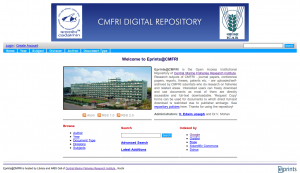
The fall out of the meeting held at ICRISAT in on Open Access (2009) resulted in establishment of Eprints@IARI, an Open Access Institutional Repository of Indian Agricultural Research Institute (IARI). and OpenAgri, an open access agricultural research repository in 2009 and 2010 respectively. These developments made for the establishment of Eprints@CMFRI, an Open Access Institutional Repository of Central Marine Fisheries Research Institute (CMFRI); DSpice@IISR, an Open Access Institutional Repository of Indian Institute of Spices Research (IISR) and E-Repository@IIHR, an Open Access Institutional Repository of Indian Institute of Horticultural Research (IIHR)
In the National Agricultural Research System (NARS) of India, apart from the ICAR and NAIP established repositories, exclusive thesis repository for agricultural sciences in India was initiated in 2008 under the name ‘Krishiprabha‘. It houses all the doctoral dissertations submitted to various agricultural universities in India (NARS). It is now housing, 7624 dissertations and is hosted by Chandhary Charan Singh Haryana Agriculture University, Hissar. However, it is only open to the consortium partners and other constituents of the NARS. Whereas, the ETD@UASD, thesis repository established by University of Agricultural Sciences, Dharwad in 2011 is freely available to public for download and use. It has total 1119 thesis submitted to the university since year 2005. Under the NAIP’s Rice Knowledge Management Portal (RKMP), India Rice Research Repository (i3R) is established in 2010.
Though the efforts are being made to make agricultural research publicly available since 2004 in India, the pace at which it needs to be taken forward is very slow and the concept of Open Access had not reached all the stakeholders of National Agricultural Research System (NARS) especially, the researchers and the research managers. The records in Eprints@IARI are 229; Dspice@IISR 497; E-Repo@IIHR 193. The only most populated repository in ICAR/NARS is Eprints@CMFRI with 8978 records. The ICAR needs a policy on ‘Open Access’ and the researchers and the research managers should consider Open Access as an important agenda for taking forward the movement of making all the publicly funded research publicly available and accessible in India.
To take forward the concept of Open Access and to advocate it, Open Access India (OAIndia) an online group is formed by the researchers, librarians and students in NARS. The OAIndia is quite active on facebook with ~2290 members and is involving its members to discuss and debate on ‘Open Access’ – why it is needed and what needs to be done and what are the bottlenecks and how to overcome them and is now looking for establishment of its online repository which would harvest all the publicly available research information (meta-data) and make it accessible to all the stakeholders in NARS.
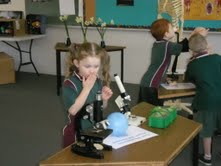
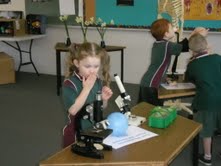
A young scientist on the brink of discovery during National Science Week
In my last post, I talked about the role of imagination in science and early childhood education and the U.S. efforts on encouraging students to pursue careers focused on STEM (Science, Technology, Education and Mathematics). I also mentioned that I would be featuring a primary school in Brisbane, Australia to gain an understanding of their science curriculum. If Australia was worried about their place in the global rankings of science and math test scores and working to get kids interested in science at an early age, they only need look at the example being set by Mitchelton State School. It starts with passionate and committed teachers.
SC@M
The Science Club at Mitchelton (SC@M) came about as an initiative of teacher Ms. Danielle Spencer. After completing an Education Queensland scholarship-funded Graduate Certificate in Primary Science, she wanted to start a club at Mitchelton dedicated to promoting students’ interest and involvement in science, and particularly to encourage girls to participate. With the support of Principal Roger Sheehan, Ms. Spencer worked collaboratively with Ms. Katie McIntyre, Head of Curriculum, and the two educators laid out the objectives for the new science club:
1) Promote science and a love of scientific enquiry within Mitchelton State School.
2) To provide opportunities and facilities that support scientific interest.
3) To liaise with external groups with similar objectives and aims.
4) To encourage girls interest in science.
To join SC@M, students were asked to submit an application containing a series of questions about their views on science, why they wanted to join and what they wanted to do in the science club. For some of the questions they were asked whether they agreed with a statement and why or why not. For example, ‘Science has too much math in it’ and ‘Men are better at science jobs than women’. I find it fascinating the children were questioned about their views on the gender imbalances in science. This area is a personal research interest for Ms. Spencer. Once the application portion was complete, students agreed to commit, with the support and consent of their parents, to attend each week for one lunch break and participate fully (and safely) in all activities.
Each term would be dedicated to a different area of scientific knowledge including physics, biology, chemistry and earth science driven by the children’s interests. To ensure that student activities are developmentally appropriate for the students, Mitchelton established SC@M to focus on Years 4 to 7. However, they are finding the younger kids want to join the science club too; so discussions are underway to assess the feasibility of adding a second period to the week allowing them to participate in activities geared toward their age and comprehension level. Less than two months old, I’m not sure the school was prepared for the level of enthusiasm displayed by the students to participate in SC@M once National Science Week came around and more children applied for the club. Thirty-nine children are now participating in the science club, and if numbers keep increasing they may have to initiate a cut off and place children on a waiting list.
National Science Week
National Science Week started 15 years ago, but this was Mitchelton’s first year participating in the nationwide event (August 11-19th) and to really shine the spotlight on it, they organised a Science Expo at the school to run for the whole week. The event included hands-on activities allowing the students to investigate the properties of slime, rocks and sound; exploring world‘s not seen by the naked eye with microscopes; and discovering natural events such as tornadoes in a bottle and exploding volcanoes. The entire school took part in the Science Expo with a poster design contest, a competition to name the school’s new skeleton, and a scientist dress-up day. The kids listened to a brief presentation from one of the SC@M coordinators and then were free to explore and interact with the exhibits for 45 minutes. Many of the children were having so much fun they did not want to leave when their time was up.
Mitchelton opened up the Science Expo to the public for two afternoons so parents and members of the community could engage in scientific exploration with their children and others. Here the SC@M members chaired the different science stations and provided their expertise and scientific rationale to the public. In addition, the school invited members of the high school community to share the experience by presenting a Science Show to the students and hosted a representative of the Young Scientists Association. On the final day of Science Week, a group of visiting scientists presented science demonstrations at a school-wide event. These activities involving the high school students and the visiting scientists clearly demonstrate Mitchelton’s holistic thinking on identifying and building the scaffolding necessary to show students that a pathway to continue their pursuit of science does exist.
The science club is the highlight of my week, just love it! – Danielle Spencer, Teacher at Mitchelton State School
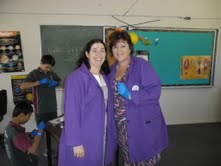
Teachers' commitment to science: Ms. Katie McIntyre (left) and Ms. Danielle Spencer
Australia Places National Emphasis on Early Childhood and Science
I wanted to know if the same emphasis on early childhood instruction is placed on teachers, kids and schools in Australia, as in the U.S. Ms. McIntyre stated, “There is certainly a huge emphasis placed on early childhood development, and in more recent times, Queensland education has focused on increasing students participation in a pre-prep program similar to other states.” This has resulted in the establishment of a large number of independently run pre-prep centres housed in primary schools. She went on to say teachers are finding that the Australian Curriculum is expecting more of students at a younger age and they are adapting their teaching practice to this requirement. While the prep curriculum remains play-based, there is a growing emphasis on explicit instruction in literacy and numeracy. This is similar to what is happening with the early childhood curriculum in the U.S., though I will have to leave my compare/contrast analysis for another posting and get back to science.
Both Ms. Spencer and Ms. McIntyre agree the Australian Curriculum endorses and provides a hands-on approach to engage children in science and develop that passion for it. Ms. McIntyre indicated that in addition to exposing children to science, it’s also essential “to develop the attributes of curiosity that are necessary to the investigations around science.” One way Mitchelton incorporates this active learning involves activities from CSIRO – The Commonwealth Scientific and Industrial Research Organisation. Ms. Spencer has used numerous activities from CSIRO, (e.g. The Helixand Scientriffic magazines) in her classroom and feels CSIRO provides a valuable resource for science teachers in Australia. She appreciates that the activities are enquiry-based and directly linked to the different strands of the Australian Curriculum. Having that link between CSIRO and the national curriculum is vital. I believe this level of collaboration demonstrates a complete feedback loop where the local level works with the state and national levels to influence and advance the science curriculum and grow the interest and passion for careers in science.
It’s inspiring to hear and see the students at Mitchelton wanting to be involved and, in fact, demanding more science in their school day. In addition to joining SC@M, several students who displayed an increased aptitude for scientific enquiry were encouraged to enter national science competitions such as the 60Second Science Video Competition (organised by Brendan O’Brien and sponsored by the Department of Education and Early Childhood Development in Melbourne, Victoria), and the NATA Young Scientist of the Year Award. At this writing, I am pleased to report that Mitchelton swept the primary school award category for the entire state of Queensland. The winners and notable mentions are:
1st Place: Xanthe Czerniawski
Runner-Up: Jessamy Bryant, Jacob Schofield & Hunter Griffiths
Highly Commended: Amelia Czerniawski
Highly Commended: Amelia & Claudia Czerniawski
Well done, kids!
How Australia Must Inspire its Young Scientists
The Australian Curriculum has identified science and math as two of the core priorities to prepare students for further study in science and technology careers, though Ms. Spencer worries the problem Australia faces “is the declining involvement in math and science carers.” She states this is particularly notable with girls and has been the basis for numerous national studies and strategic reports. Both Ms. McIntyre and Ms. Spencer feel that the primary school setting could use more resources and funding as they are limited to the types of scientific experiments they can instruct children in. We all understand budgets are tight, but earlier exposure to quality science activities could raise the interest level of children, providing long-term benefits. Where do you put the money for the greatest return on long-term investment?
The other investment that must be made is in teachers. Teachers who continue their professional development, who pass their love of learning for exploration and discovery in the pursuit of science, (and any discipline, really) is how kids will continue on with careers in science and technology. It’s not a guarantee of course, but teachers are that spark to the kindling that starts the fire of learning in students. It’s up to the students to carry the torch. It would be interesting to follow up later and see how many of this inaugural group of SC@M members are working to cure diseases, attempting to solve our energy problems and tackling our food security issues. Or maybe they go on to design buildings, work in government to protect our natural resources with laws and regulations, or use their social media gadgets to communicate the stories of science to others. But we’ll have to wait a few years for that. In the meantime, let’s hope their curiosity in learning continues and prepares them well for the avenues they choose to travel. They have a head start at Mitchelton.
Special thanks to Mitchelton State School staff – Roger Sheehan, Danielle Spencer, and Katie McIntyre – for their gracious participation in the Q&A and photos for this article and the commitment they demonstrate in providing an enriched, quality education for the children in the community they serve.
So much science, so little time… – Photo credit, Leo Reynolds
Sigh, my photo caption sums it all up…
But here are the news stories that caught my eye and I hope you find them interesting as well. Maybe reading them will inspire your own work or to dig deeper for answers. In any case, enjoy!
This is one of my favorite topics because it offers up rampant debate on so many topics – society, education, cognition. You’re just going to have to read it for yourself.
So what is the Internet doing to our thinking? It is hard to say. Current research has a hard time keeping up with the break-neck pace of online culture, and only the more conventional mediums like television and newspapers have been evaluated in any rigorous sense.
Newspapers might be old school, but they do have an online media presence as well these days. This article was published in The Australian this week and concerns Australia’s own CSIRO. Genetically modified crops and foods have been a part of our collective diet for many years, whether or not some want to admit it. And they are here to stay. I am of the opinion that they play an important role in our food security given a number of ever changing variables in our environment. The usual characters are depicted in this piece and it will be interesting to follow this story and hear the response from CSIRO.
SCIENTISTS from three countries are warning a CSIRO-led push to make Australia the first nation in the world to introduce genetically modified wheat crops could pose a significant health threat to humans and other animals.
If you haven’t heard, NYC Mayor Mike Bloomberg has banned sugary soft drink sales in cups larger than 16 0z. in his efforts to personally tackle the obesity epidemic. I feel some disclaimers are in order: One, this story did appear on www.bloomberg.com, but you could have found it in a variety of online publications; and two, I serve on the Mayor’s Best Practices Partnership to identify strategies to combat childhood obesity. That being said, I find the details of the ban interesting as you can see in the quote below. I personally do not see the need for a a 32 oz. soda, but people who want their sugary fix will do some quick addition, carry more cans or bottles and walk to get more refills. Oh, how long must we wait for data on this?!
Restaurants, movie theaters and other outlets have six months to comply or face a $200 fine each time there’s a violation, the health department said. The ban doesn’t apply to convenience stores and groceries that don’t act primarily as purveyors of prepared foods, which are regulated by New York state. The rules do allow consumers to buy as many of the smaller drinks as they want and to get refills.
To continue with the discussion on obesity, this is an interesting read which once again highlights the genetics vs. environment debate.
The chemist says, “Smell ‘A’ generates a pattern in the nose, a unique set of activated receptors, and these are different for every smell we encounter. Smell ‘B’ has a different pattern. Your brain will instantly recognize each, even if the only time you ever smelled it was 40 years ago. In the same way, we can tune or teach our nanoparticle array to recognize many healthy tissues, so it can immediately recognize something that’s even a little bit ‘off,’ that is, very subtly different from normal. It’s like a ‘check engine’ light, and assigns a different pattern to each ‘wrong’ tissue. The sensitivity is exquisite, and very powerful.”
The Media & Learning Conference taking place in Brussels on 14 and 15 November 2012 is aimed at anyone who wants to find new and effective ways to use media to enhance the learning process. It has three main themes; mapping future trends and developments in media-enhanced learning in all sectors, boosting skills and competences in media production, use and re-use of media-enhanced content and tracking the importance of media literacy and wisdom as fundamental building blocks in the creation of innovative, inclusive and futureproof education and training.
The conference programme is now available online. Keynote speakers include Xavier Prats Monné, Deputy Director-General for Education at the European Commission and Guus Wijngaards who will present his take on the educational media trends of the future based on the recent highly rated NMC Horizon Report. Andrew Keen, author of “Digital Vertigo: How Today’s Online Social Revolution Is Dividing, Diminishing, and Disorienting Us
Gas flame used for flame test of copper sulphate. Photo Credit: Søren Wedel Nielsen
Imagination in Science
In my policy work in early childhood education, I get to travel and observe a few child care centers in the NYC area every year as part of our Excellence in Teaching Awards. Well, I should say I did, until the funding for this awards program was cut. Minor point.
In those visits last year, some really stellar (read well-funded) classrooms had water tables, sand boxes, aquariums, terrariums, birds, blocks, paints; tools to inspire and ignite the creativity of young minds as they explore and try to make sense of the world around them. Imagination is the most vivid and active during the early years. It must be cultivated and continued in practice.
Let’s think about the role of imagination in science. The process of imagination is on display everywhere in an early childhood classroom. But by the time they reach middle school, students seem to burn out and tire of science. Tired of memorizing facts and figures they see no point in bothering to retain because they will never use that information again. They see no purpose for being able to regurgitate that Cu is the symbol for the chemical element of copper; that 454 grams equals 1 pound; that kinetic energy is defined as the work needed to accelerate a body of a given mass from rest to its stated velocity. All of this information could be looked up if it were required in the future. Where is the imagination? What is driving the curiosity?
The United States is losing a great majority of future scientists as a result of its education system and the way it teaches science. It’s alarming when you hear the statistics: American students ranked 21st out of 30 in science, and 25th out of 30 in math compared to other students in developed countries (2006 PISA comparison). Or on the 2009 NAEP math test 4th graders showed absolutely no improvement in scores, while 8th graders showed modest progress at best. That’s why this emphasis on STEM – Science, Technology, Engineering and Mathematics – is so crucial. If we are to “stem” this brain drain of our youth, we must begin to see and teach science in a new light.
Why We Should Care
Science and math form the basis of our society. Who envisioned and built streets to make transportation easier, or built homes for improved shelter? That couldn’t have been done with basic principles and understanding of either science or math.
Think about who designed your Starbucks cup containing your triple soy latte this morning.* Or the person who envisioned the design of the clothes you are wearing and the manufacturing process that went into producing the items that fit your style. Or the energy and transportation logistics required to get those Levi’s into the stores for you to purchase.
Whether kids are interested in studying particle physics, fashion design, or aeronautical engineering in terms of a future career, doesn’t much matter. Society requires this mix of disciplines to function. And the teaching and promotion of science and technology, and the process we use in the curriculum to increase students’ interest and learning, is how we begin to turn this tide.
We need to show the applications of science to connect with children. Give them the means to see the direction of their studies laid out in front of them so that they can understand the relevant connections between classroom content and career pathways, thus providing learning opportunities for students.
I think we are not seeing the forest for the trees; we are more focused on getting to the endpoint – maintaining a competitive status, being a global leader, creating more jobs – than we are focused on how we get there along the way. Perhaps that is the missing component; something we should be sharing with children as we try and teach them about protons, electrons and neutrons. That if they can understand these concepts, understand the relationships, they may be better able to think about the application of these concepts into nuclear medicine and how it might lead to a career as in the field of molecular medicine, or they may apply this knowledge to working on nuclear-powered submarines.
We start our kids in gymnastics, karate, soccer (football) and rugby when young; why isn’t the same emphasis placed on science education in schools? Science is fun! But I’m wired differently and a bit of a nerd, so you may differ with my opinion (but you probably do not, since you are reading Australian Science). Kids don’t just like winning at sports, they like winning. There’s more to competition than just winning, of course: learning what went right, what went wrong, how to improve, working with others, pulling your own weight, being a leader – these are things important to competition, whether it is athletics or academics. And a healthy balance of the two is important.
Young muscle memory needs to be exercised early and often for excellence to take hold. But conditioning a young mind is different from pushing a young mind. Beginning down the path with the mindset that your young child is going to win the Nobel Prize in physics and anything less is unacceptable, probably isn’t ideal. But if parents and schools can start exposing kids to science at an earlier age – simple building blocks, water tables, modeling clay, activities requiring counting and measuring, nature trips. I’m talking things that are age appropriate of course, those activities that give kids a chance to explore on their own terms the world around them. Encouragement, support, resources – that’s how you grow a future scientist, that’s how you improve a nation, a society. Without science, what chance do we have as a species for survival?
In the U.S., much time and resources are spent on “teaching to the test”. Meaning, teachers are prepping their students for standardized tests. Not munch learning is taking place as little information is retained that way. Would it be better to have a two-week “camp
Wikipedia educational assignments – where improving the free online encyclopaedia is integral to the course – already happen in many universities in the USA, Canada and other countries. In the UK, lecturers in the universities of Hull, Southampton, Portsmouth and Imperial College, London have been experimenting with Wikipedia assignments.
It seems that everybody gains from this sort of assignment. The students get a real experience of publication, and are motivated to find reliable sources, write neutrally, avoid plagiarism and seek feedback from Wikipedia’s internal review processes. Wikipedia, and its enormous global audience, get improved articles in academic subjects. The lecturers get help in creating a distinctive and demanding educational experience.
To avoid the potential pitfalls, these courses need planning and coordination beforehand between the lecturers and the Wikipedia contributors. Ambassadors – experienced Wikipedians – assist the courses online or in person. The Wikimedia education portal has tips, case studies and supporting materials.
These projects treat Wikipedia as a set of educational processes, not as a static, fixed resource.
The saying about sausages and legislation is that people who enjoy them shouldn’t watch them being made. With anything that claims to be knowledge, the opposite is true. Learners need to see the process behind it: whether the idea just popped into someone’s head, or survived rigourous testing against alternative explanations; whether it was published directly or went through some sort of review. On Wikipedia, the writing, editing and review processes are all open and on public view. By exploring and taking part in these processes, learners have a chance to develop high-level skills of research and collaboration.
At school level, there are opportunities not only to teach many subjects using Wikipedia’s freely reusable text, images and other media but also to teach a critical understanding of Wikipedia itself. Those of us who write Wikipedia don’t want readers to treat the site as a final authority: we want them to view it critically, as a medium with weaknesses and strengths, just as newspapers, books or television should be read critically.
What would be ideal now is if educators and other staff from universities and schools could get together in a room with Wikimedia contributors, discussing the educational projects we’re each working on and the opportunities for the future. That’s exactly why Wikimedia UK and the University of Leicester are hosting a one-and-a-half-day EduWiki conference on the 5th and 6th of September.
There will be speakers from the USA, Canada and Germany as well as the UK, talking about educational activities that use Wikipedia or other wiki projects.
The EduWiki conference takes place on 5 and 6 September at the University of Leicester. More about this – on the Source page.
The food grain production in India is reaching an all-time record of 252.56 million tonnes for the year 2011-12. However, as per the report of Sainath (2012) the daily per capita availability of food grains has fallen from 474.9 grams during 1992-96 to 440.4 grams during 2007-2010. This needs a great attention as the population is increasing and there is growing demand for food and nutritional requirements in the country. The one of the United Nation‘s ‘Millennium Development Goals‘ is reduction of extreme poverty and hunger in the world. Hence, it is the responsibility of the country’s National Agricultural Research System (NARS) to make interventions in the sustainable agriculture and to feed its burgeoning population with the recommended nutritional requirements.
When we see at the Indian agriculture, it is rainfed and is very much dependent on the monsoon. Apart from this, it is also facing tough competition from various biotic and abiotic factors and global climatic changes. Marketing of the produce is also a big challenge due to volatile local and global markets. The NARS having the responsibility for the agricultural research, education and extension is looking at the possible interventions for sustainable agriculture and food security. It needs to advise the farmers and policy makers at various levels in the value chain of agricultural production. As agriculture being the principal occupation in the country, timely communication of agricultural information assumes a greater priority as it would help in taking informed decisions. Therefore, use of Information and Communication Technologies (ICTs) in NARS, assumes an important role in all the efforts towards sustainable food production and food security.
Increased use of ICTs would benefit farming in making available the right information at right time. However, the affordability of hardware and software had become the major constraints for the wide adoption of ICTs in the developing countries and in India. This situation could easily be overcome by the adoption of Free Open Source Software (FOSS) products/applications. The FOSS applications developed by the community developers/programmers, who believe in the philosophy that the software should be freely available to all in world to modify, improve, adapt and share. The adoption of FOSS would increase the access to ICTs by overcoming the price barrier compared to the expensive commercial/proprietary software packages. The FOSS products which are built on open standards and protocols allow sharing of information/knowledge across all the technologies and help in collaborating with everyone in the country and world. The advantage with the FOSS is that there would be flexibility in choosing wide variety of software flavors and could migrate from one platform to another easily.
In NARS, however the use/adoption of FOSS products/applications is minimal. Even if at all they are being used, it is because of convenience and not because of FOSS philosophy. Many of the institutions in NARS don’t train its students during their degree programmes and train their staff by capacity building programmes because of lack awareness and availability of FOSS trainers in the system. Many believe and argue that proprietary software is easy to use and they are more secure when compared to FOSS and moreover they say that they would get commercial technical support for all the proprietary software. In the NARS since the first establishment of Agricultural Research Information System units which are now renamed as Agricultural Knowledge Management Units (AKMU) centers, had established ICT infrastructure with proprietary software and now they are hesitating to switch over to FOSS. And the decision makers in the institutions prefer to be in the system they are familiar with rather than exploring the available FOSS products. When funds are earmarked for the procurement of software and progress is measured in terms of the money spent, the institutions continue to use proprietary software in NARS.
Under National Agricultural Innovation Project (NAIP) Component – I, though considerable efforts have been made for the use and development of FOSS products, not many of the institutions have adopted the application of FOSS. As it can be seen that under the AGROWEB-Digital Dissemination System for Indian Agricultural Research (ADDSIAR) project, though there is a mention of use of open source software for content management, not all the projects partners have adopted/used FOSS. In the ADDSIAR project, the ICAR could built its website on Drupal; and the IARI and NAARM institutes could built their websites on Joomla. The NAARM had used Moodle for its e-learning initiatives for its students. The other projects in which we could see use and adoption of FOSS are the ‘Rice Knowledge Management Portal’ (RKMP) by DRR and ‘Agropedia‘ being developed on AgriDrupal under NAIP project lead by IIT Kanpur. It is surprising that under another NAIP project, Strengthening Statistical Computing for NARS proprietary software SAS is being used for training & capacity building NARS researchers but there is no use of FOSS statistical software ‘R‘. In the precision farming and plant genetic resource conservation and exploration projects too, where Geographic Information Systems (GIS) software is extensively used, there is no mention of using FOSS software like OSGeo which could be effectively used. However, in most of the GIS trainings programmes, commercial proprietary software is used rather than FOSS. In the Project Information & Management System of ICAR, to add the projects, one has to use only Internet Explorer and other Internet browsers do not work.
In NARS, about 100 scholarly societies are registered and they publish scholarly journals and organize conferences, seminars, and symposiums. All of them uses email for the paper submission and makes available them in printed books/CD-ROMs to all the attendees. However, the non attendees never get access to the abstracts, papers, and proceedings. When, the conference proceedings are managed and made available online, then the there would be greater reach of information and research outputs. The FOSS products from Public Knowledge Project’s Open Conference Systems (OCS) and Open Journal Systems (OJS) could effectively used by these scholarly societies for the conference and journal publication. In NARS, only KAU‘s Journal of Tropical Agriculture, UASD‘s Karnataka Journal of Agricultural Sciences and ‘Indian Agricultural Research Journals‘ of ICAR’s NAIP project are using OJS and OCS is never used till date. Similarly the FOSS products viz., AgriDrupal, AgriOcean DSpace and VocBench from the ‘Agricultural Information Management Standards‘ of Food and Agricultural Organization could be used in NARS for the knowledge dissemination. During the past year, we could only see only one short course on FOSS in development of agricultural information and communication management system organized by CIRG.
This shows that NARS needs sensitization and capacity building in use and application of FOSS in agricultural research. For this, a new initiative FOSKIARD (Free and Open Software and Knowledge Initiatives in Agricultural Research for Development) has been taken up by FOSS evangelists in NARS. It intends to conduct sensitization & capacity building workshops at various institutes of NARS and impress upon the NARS managers for the need of creation of central AKMU computer labs with FOSS operating systems like Ubuntu. From the workshops it is expected that the agricultural researchers, FOSS developers, free knowledge advocates and legal experts can meet, interact and could work for the development of applications of FOSS products relevant to agriculture for sharing agricultural information and research outputs for public good.
Harvard University and the Massachusetts Institute of Technology (MIT) announced last week the launch of edX, a transformational partnership and initiative in online education. EdX presents a not-for-profit joint venture between these two institutions that will collaborate to “enhance campus-based teaching and learning and build a global community of online learners
However, the situation in the field of agricultural sciences is that earlier to the establishment of ‘Eprints@IARI’, an institutional repository of the Indian Agriculture Research Institute (IARI) in 2009 only the Journal of Tropical Agriculture from Kerala Agricultural University and Karnataka Journal of Agricultural Sciences from University of Agricultural Sciences, Dharwad are the two Open Access Journals available. The National Agricultural Research System (NARS) comprising all the 97 ICAR institutes and 47 State Agricultural Universities (SAUs) is the largest system of the world. When the Council of Scientific and Industrial Research (CSIR) had adopted Open Access policy and made all its journals Open Access and has established institutional repositories for all its laboratories in 2009, the Indian Council of Agricultural Research (ICAR) in the year 2010, as a part of e-Publishing & Knowledge System in Agricultural Research project under National Agriculture Innovation Project (NAIP), launched its two flagship journals on Open Journal Systems and declared them as Open Access. It is now offering hosting support to scholarly societies on its ‘epubs‘ platform for their journals. Under another NAIP project, a thesis repository, ‘KrishiPrabha‘ was established for NARS. However, unlike ‘Shodhganga’ it is only available to NARS institutions for online viewing and without full-text download permission. In the NARS, more than 100 scholarly societies are functioning and the use of the community developed tools & techniques for sharing and enriching the research information on the web by these societies is uncommon. Though under the NAIP, the entire NARS is being provided with the access to relevant corporate journals under the project Consortium for e-Resources in Agriculture. The access to the enormous outputs from Indian agricultural research which had aided in the advancement of agricultural science are being restricted for sharing openly with the world.
At this backdrop, seeing the slow pace of growing Open Access momentum in India, a group of agricultural researchers formed a voluntary group called ‘Open Access India’ (OAIndia) in July 2011 on ‘Facebook’ with an aim to take up the advocacy on ‘Open Access’ and to make agricultural information openly available, accessible and effectively used for farming in the country. Till date the group had grown to the membership of 1990 and to have a wider reach, OAIndia had created its page on Facebook, and groups on Linkedin, on Google groups and on openaccessweek.org. The group is listed in the Open Access Directory as one among the 15 groups formed on Facebook on Open Access.
The aims & objectives of ‘OAIndia’ are as follows:
Advocacy – sensitizing the researchers, policy makers and general public on the need to make data & information generated through public funds openly available.
Development of community e-infrastructure, capacity building and framework for ‘Open Access’ policies for sharing data & information.
In the NARS, researchers have generated extensive data and are stored in data books and project reports. Many a times, much of the data exists as unpublished (Grey Data) and once the researcher leaves the organization, the data is lost. Timely release of this data would help the researchers to carry forward the research for attaining the important scientific goals without ‘reinventing the wheel’ and in the light of recently approved National Data Sharing and Accessibility Policy for India, the discussion on the development of data standards, collection & analysis, sharing, archiving and rewarding policies assumes a considerable importance. To take forward its aims and objectives, the OAIndia had started consultations with various agencies working for the open knowledge to seek support for the creation of community owned Open Repository for all the researchers to voluntarily archive data & information whose institution did not have any infrastructure for the same.
Now, the OAIndia now had become partner with MyOpenArchive an international Non-Profit Organization for advocating “green road
There is no doubt in the mind of Australia’s Chief Scientist, Professor Ian Chubb, the future will be shaped by science technology, engineering and mathematics. Unfortunately, he finds that at present the standing of science, as an expert authority, is being challenged. Furthermore, Ian Chubb finds that the science message is getting lost in the white noise of the mainstream media. I was heartened to hear his positive words about science communication, social media, science and technology education and innovative Australian workplaces.
It was refreshing to see Australia’s Chief Scientist out and about and addressing public forums such as this one. Although judging by the faces, the suits and the overheard conversations at the drinks and nibbles prior to the address, I think this was definitely a speech to the science and technology faithful. That is a pity, his words were worth exposure and considered comment in the mainstream Australian media.
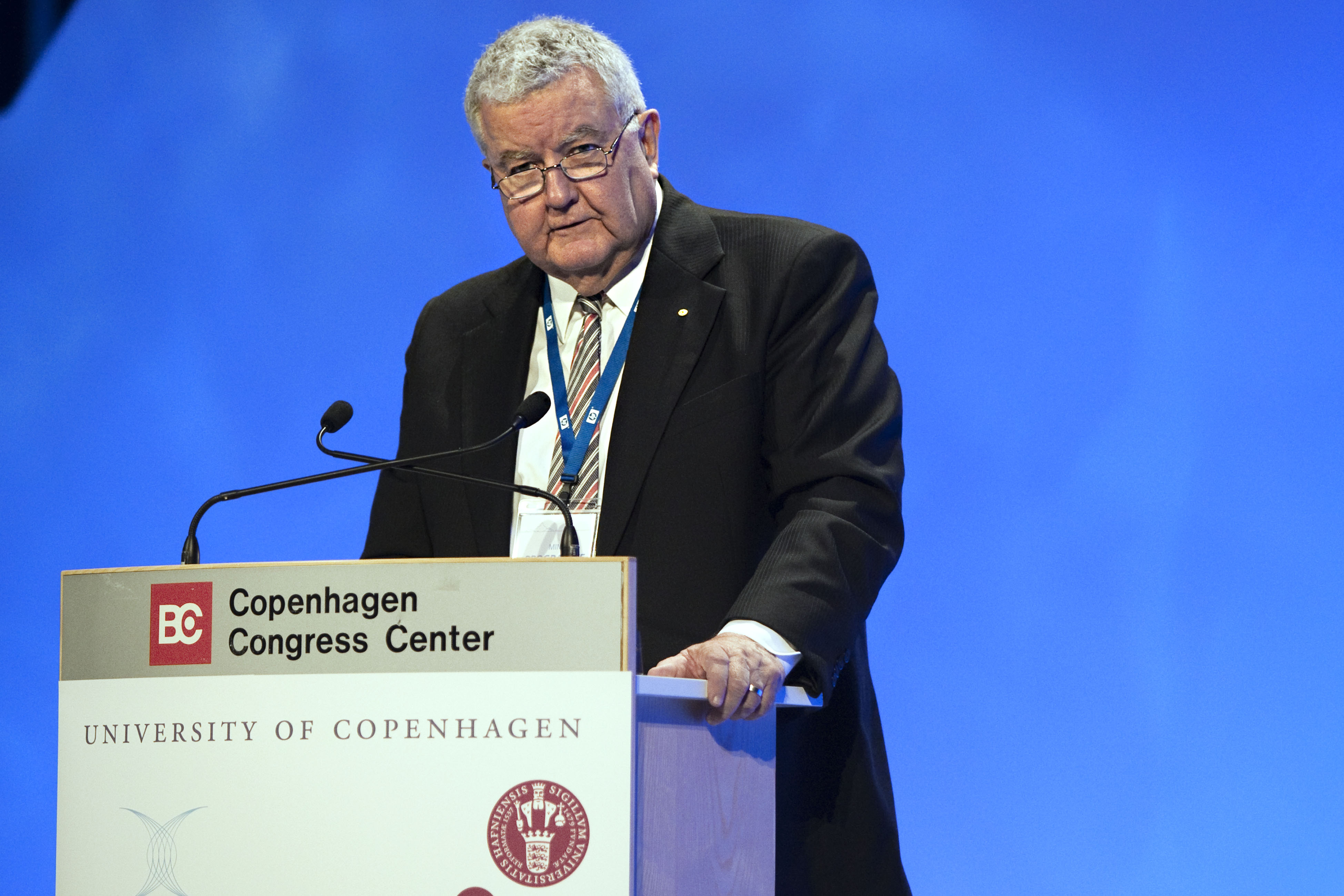
Prof. Ian Chubb at the Climate congress, Copenhagen 2009, March 10-12. Opening session.
Professor Ian Chubb emphasises Mathematics, Engineering and Science provide the enabling skills and knowledge that underpin every aspect of modern life. They help us understand the natural world and enable us to respond as humans to this world with a constructed view aimed at improving the lot of human kind.
In Australia, as in many economies, we have observed a decline in the number of people choosing a career in these disciplines. Not only that, the STEM subjects (Science Technology Engineering and Mathematics), as he called them, are taken for granted or simply ignored. Although it is obvious without at least an appreciation of these subjects, a modern citizen is hampered in their ability to critically evaluate and make informed decisions about the issues that are shaping their future. Among his many roles as Australia’s Chief Scientist, Professor Ian Chubb has been charged with examining this decline and offering strategies to address it.
Professor Ian Chubb is eminently suited to this task. He was appointed to the position of Chief Scientist on 19 April 2011 and commenced the role on 23 May 2011. Prior to his appointment as Chief Scientist, Professor Ian Chubb was Vice-Chancellor of the Australian National University. Professor Chubb’s research focused on the neurosciences. Although he jokingly said on the night he would prefer not to be quizzed, on science specifics, by such an informed audience. He has co-authored some 70 full papers and co-edited one book all related to his research. In 1999 Professor Chubb was made an Officer of the Order of Australia (AO) for “service to the development of higher education policy and its implementation at state, national and international levels, as an administrator in the tertiary education sector, and to research particularly in the field of neuroscience
For as long as I can remember, I have wanted to travel to the land down under. I remember that my frequent response to the question “what do you want to do today?
On January 11th 2012, Google has launched the second annual international online Science Fair, a a unique opportunity for young people to engage with the scientific community at large. This competition encourages students to be curious, ask questions, get engaged with their peers, and perform science experiments to answer those questions. The organisers believe that science fairs help students to explore their vision and curiosity through science. It allows any student with an Internet connection and a Google account (more…)





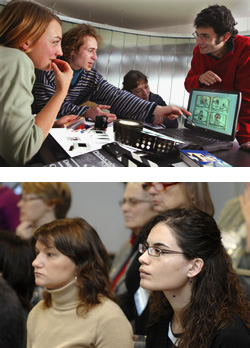 The Media & Learning Conference taking place in Brussels on 14 and 15 November 2012 is aimed at anyone who wants to find new and effective ways to use media to enhance the learning process. It has three main themes; mapping future trends and developments in media-enhanced learning in all sectors, boosting skills and competences in media production, use and re-use of media-enhanced content and tracking the importance of media literacy and wisdom as fundamental building blocks in the creation of innovative, inclusive and futureproof education and training.

 What do