In industrialised countries, the Internet has increasingly become embedded in everyday life: from the purchase of a train ticket to the consultation of a bibliographical catalogue, the Net can be seen today as an “invisible technology
Category: Education
-
Seriously, NAPLAN to include Science?
In the last few weeks in Australian politics there have been critical discussions regarding the inclusion of science in NAPLAN (the National Assessment Program in Literacy and Numeracy). Without entering too much into the debate regarding the reported advantages or disadvantages of NAPLAN, it is heartening to hear that science is at the forefront of political agenda.
NAPLAN is a series of standardised testing given to all Australian students in Grades 3, 5, 7 and 9. Beginning in 2008, these pencil/pen and paper tests assess children in set skills relating to reading, language conventions, writing and numeracy. ACARA, Australian Curriculum Assessment and Reporting Authority, claim that “NAPLAN tests identify whether all students have the literacy and numeracy skills that provide the critical foundation for their learning, and for their productive and rewarding participation in the community
-
Creative Commons Announces “School of Open
Just in time to celebrate Open Education Week, here comes a new initiative, the School of Open, a learning environment focused on increasing our understanding of “openness
-
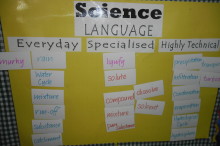
Talking the Language of Science
I have mentioned before that part of the reason why I like science so much is that you get to play with stuff. It might come as no surprise then that I begin each year with a game called “Mrs Spencer Says
-
SignMedia: online learning tool for deaf media professionals
SignMedia is an online learning resource that uses sign language to teach vocational written English to deaf media professionals. The project was proud to be a finalist in the recent MEDEA Awards 2012.
The world of broadcast media offers an increasingly rich source of employment for deaf graduates and professionals across Europe, but the focus on communication through written English still proves to be a barrier for sign language users. Essential production documentation contains challenging technical English, as do many of the instructions and descriptors used in software, hardware and on technological equipment.
The SignMedia project aims to break down these barriers with an innovative and accessible online learning resource that uses Sign Language video and interactive tasks. It has pushed boundaries further in eLearning design, bringing video narrative, and an immersive, alternative reality to deaf online education for the first time. To create an authentic media experience for the users, the learning takes place within a fictional deaf production company whilst working on the soap opera ‘Beautiful Days’. All learning
activities are designed around authentic media documentation taken from the production process, such as Risk Assessments, Call Sheets, Treatments and Scripts, thus enabling deaf users to develop language skills that are directly transferrable to their place of work.The use of Sign Language videos and deaf presenters to teach written English is in itself an innovation. For many years, deaf people have been taught through the spoken word, but recent developments have seen a rise in sign bilingualism across Europe – a teaching method that promotes deaf culture and uses sign language as a method of delivery. Within the SignMedia learning tool, we were determined that Sign Language users would not feel like an afterthought, an ‘added extra’.
The visual medium of Sign Languages also means that print dictionaries are of limited use. As a result, it is a real challenge to make specialist language items and neologisms accessible to the wider deaf community and younger generations. This presents an obvious disadvantage to Sign Language users who wish to break into the media industry. SignMedia addresses this need with the inclusion of a signed glossary with language items selected by deaf and hearing media industry professionals.
Target users have described the tool as engaging, unique and fun. We were especially delighted when feedback revealed that the ‘alternative reality’ learning environment removed the threat and pressure that many deaf people have experienced in formal education. There has also been a powerful response to the Sign Language videos, with deaf adults revealing that they have understood English grammatical concepts for the first time after watching the clips.
The SignMedia project recognises the immense potential of combining the shared visual modalities of e-learning, media and Sign Language. The result is a product that uses contemporary media developments to reflect the vibrancy, creativity and professional aspirations of the deaf community. SignMedia was supported by Leonardo da Vinci Development of Innovation and the consortium included deaf and hearing teams from the University of Wolverhampton (UK), University of Klagenfurt (Austria), University of Turin (Italy) and Mutt&Jeff Pictures (UK). Visit the resource.By Christine Jolly, University of Wolverhampton, UK
-

We’re Just Playing. Science by Stealth
One of my students asked me the other day why I like science so much. “Easy
-
Hands on Science in the Early Years
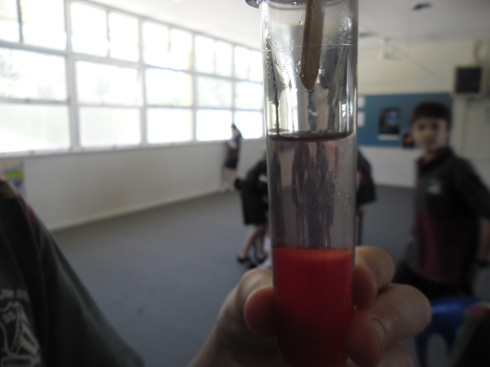
Hands on science activities to engage students in scientific inquiry and investigation are key in the early years to develop skills and knowledge in all areas of science. No one knows this better than Mrs Suzanne Clarke who is the founder of the mini-scammers science club at Mitchelton State School, a feeder club for SC@M (Science Club at Mitchie).
Hands on learning in the early years. Established just this year, the junior science club encourages students in the early years to formulate hypothesis, carry out experiments and discuss their findings with their peers directly mirroring the similar process used in later years. Student work in multi-aged groups to manipulate materials and equipment, generate solutions and compare their results. As Mrs Clarke highlights “this method of discovery learning engages all children and promotes the use of multiple intelligences
-

Citizen Science

Monarch butterfly (Danaus plexippus), Source: Wikipedia Commons Citizen Scientists
An interesting report released last week from the UK Environmental Observation Framework reveals the benefit of citizen scientists to governmental environmental organisations. The Nerc Centre for Ecology and Hydrology and the Natural History Museum in London, reviewed 234 projects – ranging from small surveys to large-scale programmes. The results found the involvement of volunteers offers “high value to research, policy and practice”.
Given the increasing number of complex scientific problems facing our communities, states and countries; coupled with the ever dwindling supply of cash on hand to fund research projects, it behooves governments to dial into this untapped source of volunteer environmental monitors and data collection specialists. People enjoy going to their local botanical gardens, taking the kids and grandkids to learn about the natural world surrounding them. A large majority of the population love their parks for taking walks and having picnics and for exercise. They want to see these lands, with the flora and fauna contained within them protected. People volunteer for things they believe in and causes they want to see sustained. That is the movement around science and the environment and why the citizen scientist movement is growing.
Scientists should be working with their governmental departments, or university outreach extension centers, to coordinate community science volunteer days. Measuring leaf litter in a forest, or tree ring growth, or monitoring a stream for the presence of certain harmful bacteria or toxic chemicals, or tallying the number of a threatened bird species are a few such projects that could be undertaken by community members. Scientists and their research teams and graduate assistants could customize their research projects with a component where they served as project managers working with the community to accomplish a piece of the data collection puzzle.
The Value – Minuses and Pluses
Of course, not every project will be appropriate for citizen scientists and a fair amount of training may have to be done, given the nature of the project. And the report touches on the fact that although the quality of the data collected by citizen scientists could be excellent, it may not be fully recognized by all researchers or policymakers. This seems to be an area that would require some policy work in setting up standards to ensure the legitimacy and recognition of such projects undertaken with contributions from citizen scientists. That minus shouldn’t be so hard to turn into a plus. Volunteer-collected data possesses a bevy of potential benefits. The use of smartphones continues to increase among consumers and with that comes development technologies in the form of apps that could play an easier role in data collection. A scientist could quite easily dispatch his volunteer army with marching orders to perform observations of the monarch butterfly (Danaus plexippus) over a 5-acre area of the park and have his/her data collection completed within a month’s time. And of course, the benefit that every bureaucrat or department chair loves to hear: it’s a cost-effective way to collect environmental data and could help meet the demands of increasing governmental reporting and compliance requirements.
Getting Started
I think it’s up to each and every one of us to identify the actions we can take that will help continue to make our environment habitable. And becoming involved in a citizen scientist program seems like an ideal way to start to make a difference in your community. Whether you are a scientist or a volunteer, the guide, produced alongside the report by the UK Environmental Observation Framework, is a great place to begin identifying and mapping out strategies for a collaborative citizen science project.
-

Weekly Science Picks
 The midlife crisis is more complicated than first thought. It might be time to stop blaming troubled marriages and feeling obsolete in a sea of younger colleagues. A study published in the Proceedings of the Natural Academy of Sciences has revealed that chimpanzees and orangutans also experience a midlife crisis.
Having a midlife crisis may not just be the result of a troubled marriage or the thought that life may be halfway over. It might be part of primate biology. That’s right, hardwired into us.
Economist Andrew Oswald told ABC Science that it might be beneficial.
“Maybe discontent lights a fire under people, causing them to achieve more for themselves and their family.”
A shiny new red sports car might just indeed lead to better things.
Danielle Spencer runs a science club at Mitchelton State School in Queensland and explored where gender stereotypes in science began. Where does the perception that men do the “hard” sciences and women do the “soft” sciences come from? A group of 45 primary school students were surveyed and it was found that a majority of students thought that science was accessible to both genders.
When asked why there are more men than women in engineering roles, the students responded with gender based answers like “Girls like dancing and other jobs.” and “Women are more suited to caring and developing jobs like childcare and nursing.”. There was no response that challenging this observation. This was despite 75% of the group thinking that science was accessible to them. It is disheartening to hear.
Students were asked whether their science club should be split into a boys only and girls only science club, there was overwhelming support for a combined science club. There was an appreciation and acknowledgement that irrespective of gender, everyone had a valuable contribution. At the moment this cohort of students believe that science is something that everyone can do. The question remains though, how do we get adults to believe this?
As this week drew to a close, attention focused on NASA’s Jet Propulsion Laboratory in Pasadena, California. A story broke at NPR reporting that the Curiosity Rover may have found some exciting news. Project Scientist at the Mars Science Laboratory, John Grotzinger was quoted to saying:
“We’re getting data from SAM as we sit here and speak, and the data looks really interesting.”
SAM, the Sample Analysis at Mars is a miniaturised chemistry lab. On board is a Gas Chromatograph, Quadrupole Mass Spectrometer, Tunable Laser Spectrometer as well as sample processing systems that allow heating and chemically treating samples. Normally these instruments would fill the space in a laboratory but on Curiosity it’s around the size of a microwave. SAM is being used to collect information about the past and present chemistry of Mars. As well as this SAM is also identifying organic and inorganic chemical molecules known to be important to life on Earth.
So what has SAM found? Nothing has been confirmed but it does sound like there is something especially when Grotzinger says:
“This data is gonna be one for the history books.”
We will have to wait at least several weeks before NASA makes an announcement.
New Zealand’s volcano, Mount Tongariro made it into this week’s news with an eruption on Wednesday. Luckily there have been no reports of damage or injuries. However, a group of travellers and journalists hiking at the time witnessed and filmed the eruption.
-
Setting up a science club in a primary school: Why you should!
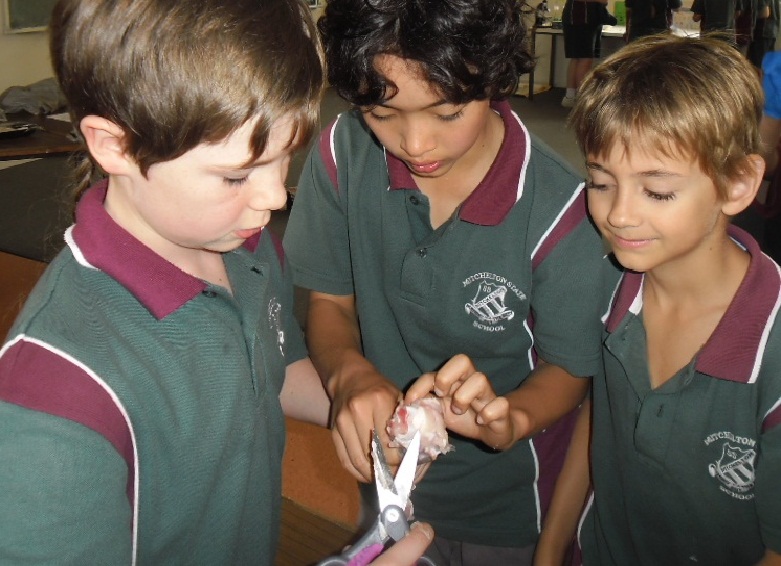
 Last week, I dissected a chicken leg and while many may believe such a thing is not extraordinary having done it so many times, the ordinary became the extraordinary when I saw it through the eyes of a child in our recently established science club.
The research on extra-curricular clubs is growing and with it there is mounting evidence of the benefit to students. In 2010 Blomfield and Barber from Murdoch University published an article which asserted that “Extracurricular participation was positively associated with higher academic track enrolment, university aspirations, and school belonging, and negatively associated with skipping school
-
The Gender Myth and Science. Our Response at SC@M
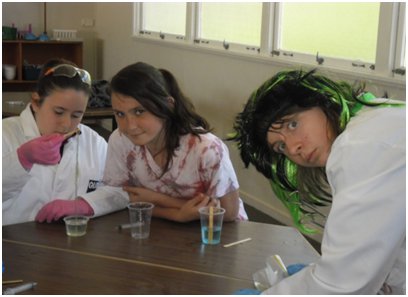
Girls are just not as good at science as boys. Men do hard sciences, women do soft sciences. Gender stereotypes have existed long-term throughout the spectrum of sciences. Most people have witnessed it first-hand. Patients question expert female doctors, yet implicitly trust their male counterparts. Laboratories are full of female scientists with male leads. Why do we trust the judgement of men in science before females? Just where do these gender stereotypes come from and when do children start believing in them?
SC@M (Science Club at Mitchelton State School) began mid-2012, attracting 45 students from Grades 4-7. Of the applicants, 21 were girls, 24 were boys with their ages ranging from 9-12 years. Included in the SC@M application process, students were asked a series of gender and science related questions to elicit their current opinions. Not surprisingly, some of our SC@M applicants did indeed hold some gender stereotypical views, which were compelling to examine. Unexpectedly, it was a minority of applicants that held these views.
Question 1: Boys understand science easier than girls. Do you agree with this statement? Why or why not?
Agree n = 15 Disagree n =30 Boys like it moreBoys listen more, girls talk too muchAll the famous scientists seem to be maleMost scientists on TV are male Boys and girls learn the sameGirls listen better so they understand moreBoth girls and boys can be good at scienceYou just have to work hard
Question 2: Men are better at science jobs than women. Do you agree with this statement? Why or why not?Agree n = 12 Disagree n = 33 Women are not as good at maths Most scientists are men Men are braver Men think it’s more fun Men can deal with more energy correlations and stuff
Boys do technology stuff
They are equal, we have equal rights It just depends on how hard you push yourself Men may be stronger but science doesn’t require strength I have only ever been taught science by ladies Notably, of the children who agreed with these statements, several described the dominance of male scientists portrayed by the media. Doesn’t every Australian know of Dr. Karl? He hosts radio talk-back science shows and Sleek Geeks on ABC TV, is the science-guru guest on numerous morning shows and the author of over 30 books. Many would consider Dr Karl as the face of Australian science. This misrepresentation of science and gender subtly endorses the view that boys are simply better at science.
It was pleasing to note that the majority of our applicants disagreed with these statements and most suggested that science was accessible to both genders. Given current research suggests girl’s interest in science diminishes towards late high school, it would be worthwhile to re-examine this same cohort of children at a later stage to determine any change.
Question 3: Currently there are more men in some science jobs (like engineering) than women. Why do you think this is so?
Typical responses Men like it more. Women don’t want to get dirty.Men are stronger.Boys just like building things. Women have a family.
It’s too hard for girls.
Girls like dancing and other jobs.
Women are more suited to caring and developing jobs like childcare and nursing.
There has always been more men in engineering.
Although 75% of applicants thought that science was accessible for them, the majority of children responded with gender-biased statements when responding to Question 3. Sadly, none of the applicants provided an opposing side. Women are under-represented in engineering fields and other physical sciences. We need strategies to encourage girls to enter these fields, not allow them to simply accept that “it is just too hard for girls
-
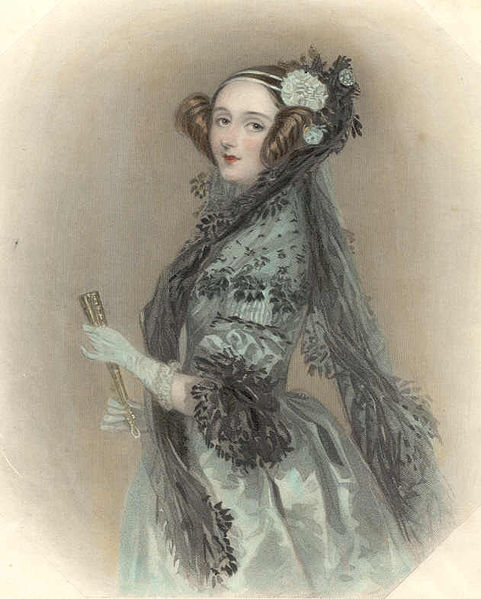
Ada Lovelace Day: celebrating women in science, technology, engineering and maths
In the 1800s, Ada Lovelace, an English mathematician, worked with inventor Charles Babbage on a plan for an “analytical engine.
-

The “POLI
This article is part of Media and Learning month’s newsletter, dedicated series on lecture capture. It is provided by the Lifelong Learning project REC:all, which aims to explore new ways in which lecture capture can become more pedagogically valuable and engaging, and which is investigating a variety of learning design, technical and legal issues related to lecture capture. Marta Cabedo Fabrés from Universitat Politècnica de València (UPV), Spain – describes how.
The new educational paradigm due to the Bologna process, presents a teaching model in which the professor acts as facilitator of learning and the students assume an active and autonomous role. Based on these points the Universitat Politècnica de València (UPV) has developed and implemented a number of tools (POLIMEDIA, POLITUBE and POLICONECTA) and a Virtual Learning Environment (POLIFORMAT), in order to adapt to the European Higher Education Area and to improve teaching quality.
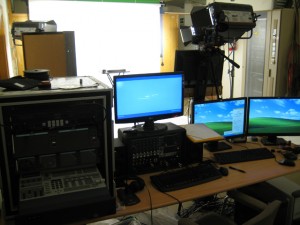 POLIMEDIA is a system designed at the UPV for creating multimedia content (videos, instruction clips, knowledge clips, etc.), and POLITUBE is a free access portal enabled by the UPV to store educational videos that are used to support and complement classroom teaching.
The materials and resources available in POLITUBE and POLIMEDIA, after a rigorous review, are recognized as learning objects and become part of Riunet (UPV institutional repository). Riunet provides access from the Internet to the scientific, academic and corporate production of this university following the international movement of Open Access.
POLIFORMAT is a tele-education platform used in the UPV. It is based on Sakai and it offers a standardised interface for accessing to a Web 2.0 toolkit. It facilitates autonomous and collaborative learning to students.
Each subject has its own space in POLIFORMAT and it is accessible only to teachers and students enrolled in the subject. The tools available include news, calendar, repository of resources, tasks, contents, on-line exams, chat, internal mail, discussion forum, wiki and student’s personal space. Some of these tools can be activated during a specified period of time, according to the needs of the subjects.
POLICONECTA is a videoconferencing tool developed at the Lifelong Learning Center of the UPV for distance learning. It is based on
the use of commercial software Adobe Connect, and allows virtual meetings, video conferencing and remote lectures, which can be
recorded. It also includes the ability to share documents, applications or a whiteboard.For the delivery of courses or seminars at a distance UPV makes more than 30 classrooms available which are properly equipped with multiple cameras, microphones, projector, monitors, and interactive whiteboard. Some classrooms also have “Paper Show” (a special notebook that records what you write or draw with a pen in a computer). The only equipment required by students is a broadband Internet connection, headphones and a microphone.
All tools and platform described in this article have already been used with a high degree of acceptance by more than 250 lecturers and approximately 36000 students at the UPV. In the last six years more than 3000 videos have been produced using these technologies and actual experiences show that the use of lecture captures results in a substantial improvement of teaching quality. Find out more.
UPV’s experience in lecture capture will be presented during the REC:all workshop taking place on 13 November.
-

My mega grab-bag of astronomy resources for teachers, students, telescope beginners and space fans
Whether you are a parent, teacher, student or simply an interested enthusiast, here are a number of interesting sites, podcasts, and social media people for you to draw on as you get going in amateur astronomy.
Podcasts provide an amazing resource – all free. Most are available via iTunes, the original publishers’ websites, or a raft of other podcast aggregators. There are very good apps to allow you to download podcasts to your smartphone for listening when suitable – Podcruncher is my choice for the iOS platform – brilliant app and service. Just don’t bother trying to use the Apple Podcasts app – it’s a total lemon. Good podcast apps also allow you to increase the playback speed up to double normal (Podcruncher goes in quarter increments) and surprisingly you learn to follow it. In fact, it can get so listening at normal speed is far too slow!
Many of these links also have Twitter accounts (where noted), so you can keep right up to the minute!
Astronomy podcasts:
In Australia there is the wonderful StarStuff, an independent project run by Stuart Gary but sponsored by the ABC, with the 30-minute podcasts at ABC. @abcstarstuff

Canberra’s Steve Nerlich produces Cheap Astronomy, regular 10-minute shows of varying complexity. @cheapastroOverseas, despite a truly ugly website, the fantastic Naked Scientists from UK’s Cambridge University have a stack of brilliant podcasts on general, science, archaeology, earth sciences, oceans, Africa, great kitchen-friendly experiments, and the monthly 60-minute Naked Astronomy, steered by Ben Valsler.
Tony Darnell works in the Space Telescope Science Institute and as a hobby runs Deep Astronomy, with videos and podcasts generally about 10-minutes.

There are a stack of NASA video and audio podcasts. Of interest are the space telescope ones for Hubble, Spitzer, Chandra, plus This Week @ NASA, Universe, Earth…where to stop? You’ll be amazed at how much NASA is doing – for an agency that altogether too many people think has shut up shop!
365 Days of Astronomy is a real mixed bag of 10-minute podcasts – one for every day of the year. And it’s well worth looking back over previous episodes. Following are some specific ones worth checking out.
Teachers could start with four of the best called ‘Wonders From Class’ by Diane Turnshek from Carnegie Mellon Uni. Over four podcasts and with great passion, she describes how she engages and interests her students with the field of astronomy. Part 1, Part 2, Part 3, and Part 4. Some others for beginning viewing and then a bit more:
Common Q&As about telescope use – from RapidEye Observatory
8 Telescope Tips for Beginners – by Telescope Man
Buying your first telescope – Telescope Man again
Have a plan – by Ed Sunder of flinstonestargazing.com
How to be an armchair astronaut – From Riding With Robots – now there’s a site to spend some time at!
Armchair astronauts exploring the solar system – by Doug Ellison ofunmannedspaceflight.com @doug_ellison
Exploring space with your computer – a guide to computer simulation tools by Bruce Irving of JPL
Moving onto photographing what you see:
Introduction to astrophotography – by Adam Pender
Webcam astrophotography – by Alexander Hobson
Amateur astrophotography for beginners – by Richard Drumm
Astroimaging under light polluted skies – by Robert Vanderbei
Expanding further – into spectroscopy:
Basic spectroscopy for amateurs and Part 2 – by Mark DeVito and Tom FieldAnd if you’d like to go a bit further, you can subscribe to an entire university astronomy course via podcast – all the learning but no horrible assignments or exams! Here’s one in audio format from Ohio State Uni. There are others too, including video. Check iTunes, or iTunesU, the app for which includes study notes and the ability to record your own notes as you go along.
Observing podcasts:
The Sydney Observatory posts a monthly podcast summarising the night sky viewing for the month – great for Southern Hemisphere viewers and East Coast Australians in particular. They have the added benefit of a transcript so you can print and highlight the key bits as a night sky viewing plan. @sydneyobs
NASA’s Jet Propulsion Lab has a short monthly video podcast, plus there’s a stack of related brain food on their site.
Observing with Webb – another USA podcast by Rod Webb, but many of the sights will be visible here, just in different locations.
Telescope Man – look for the monthly viewing summaries. No nonsense, best viewing tips, with catalogued numbers if you have a go-to scope, but based on Texas. Plenty of other good beginner podcasts too.
Non-podcast observing resources:
The Hayden Planetarium (part of the American Museum of Natural History and headed up by none other than Neil deGrasse Tyson @neiltyson) has a good monthly sky report. You can see a lot of what they discuss, but of course not all. You’ll also find their 3D atlas to the Universe.
Slooh has several large telescopes around the world and you can view the feeds for free. They have guest speakers during regular events. @slooh
Heavens Above allows you to register and enter your location, then get schedules of when key objects will pass over your patch of the sky – from GPS satellites to the International Space Station. Find out why the brightness scale goes backwards, planet and comet locations, and more.
If you just want to focus on passes of manned vehicles like the ISS or Soyuz, then check the RSS subscription for your location at NASA Human Spaceflight.
Stellarium – a free public domain computer planetarium. Free-standing once installed with no need of web access, so you can switch to red mode and take your notebook computer out with you.
Celestia – another free planetarium. This one lets you explore off-planet, and even check out various space missions.
Eyes on the Solar System – NASA’s mission tracking simulator. Go for a ride along with every NASA space mission past and present. A great way to piggy back onto the Mars Curiosity rover and relive her descent to Mars last August!
Non-podcast astronomy resources:
NASA’s Breaking News is a good resource, and has a useful RSS feed – check out Google Reader for how to collate key websites simply via RSS feeds, and Feedler Pro is a great app for viewing your Google Reader subscriptions on iThings. @NASA
NASA also has a comprehensive education section, with specialist information for teachers at different levels, students and a kids club. Too much to list and it seems to grow every time you return. It’s not all about the US either – they have an international Scientist for the Day competition running right now for school students.
It’s hard to go past Space.com for some of everything you want, and great RSS and Twitter feeds. They have a good shop too – from meteorites to kids’ spacesuits, genuine gone-to-space memorabilia to clothing. I mean, you’ve got to look the part for your classes right? @spacedotcom
With broadband, giant televisions with network sockets, and a high definition feed from NASA TV, there’s never been a better time for live viewing rocket launches, spacewalks, and more. Keep an eye on the schedule for education shows too. Be warned though, spacewalks are REALLY long and slow-mo. Some younger viewers will have a short attention span for them. But launches…Phroar! Crank up the volume.

The Square Kilometre Array is the project to build the world’s biggest radio telescope – right here in Australia. And in South Africa. It will be the biggest science project ever in our history. Good video clips explaining the project.
Bad Astronomy blogger Phil Plait sorts the facts from the nonsense. @BadAstronomer
Universe Today by Fraser Cain, who also does weekly virtual star parties with Dr Pamela Gay via Google+, YouTube and Cosmoquest. Also does the Astronomy Cast podcast.
The Space Tweep Society has great articles, photos and videos from spacefans on Twitter who travel the world to attend Tweetups – key space events like launches – and hang out with other fans who use Twitter to share their experiences with their followers. The travels to Russia are brilliantly recounted.
Registax allows you to stack multiple photos or frames from a video clip to produce a single sharp picture. Free!
Galaxy Zoo is a citizen science website that allows anyone to help the scientists categorise galaxies as seen by Hubble. There have been a number of people credited on scientific journals for the new wonders they discovered on Galaxy Zoo! And now on a spin-off you might help find exoplanets…
Tweeps you should follow:
@NASAKepler – the search for exoplanets
@SpaceflightNow – space news up to the moment, from Florida
@Nightskyonline – Australian amateur astronomer, alerts to sights
@SpaceX – the future of manned missions
@elonmusk – the boss of SpaceX – a real-life Tony Stark
@MarsRovers – updates from Opportunity on Mars
@MarsCuriosity – updates from the Mars Science Laboratory herself
@matt_heverley – lead Mars Curiosity rover driver
@marsroverdriver – Scott Maxwell, formerly driving Opportunity, now Curiosity
@spaceroboticist – Vandi Thomas – there are women driving Curiosity too
@NASAWebbTelescp – the future of space telescopes, being built now
@twisst – alerts of ISS passes over your location
@Aussie_Starman – Mark Rigby, head of the Brisbane Planetarium
@NASAJuno – Juno is heading to Jupiter
@carolynporco – the wonderful head of the Cassini mission around Saturn
@PULSEatParkes – high school students taking over The Dish at Parkes!
And all the other ones named earlier.
Apps:Lastly, iPhone and iPad apps are simply brilliant for finding out exactly what you are looking at in the sky.
Star Walk – virtual planetarium, my favourite, $3 – worth every cent!
Distant Suns – virtual planetarium, free
SkyOrb – virtual planetarium, free
Pocket Universe – first off the line with this whole virtual planetarium approach, $2
3D Sun – know about and watch solar flares before anyone else, free
Cassini – find out what this probe is doing around Saturn, free
APOD – astronomy picture of the day – website and iPhone app, free
Exoplanet – the latest on every exoplanet discovered, free
NASA – their own app, and simple access to NASA TV – never miss another launch! Free
Mars Images – what it says on the box, free
ISS Spotter – brilliant way to make sure you don’t miss passes of the Space Station – live maps and smart alarms, free
Mission Clock – don’t miss your dose of roar, $5
Meteor Counter – help scientists monitor meteor density, free, great activity for families.Anyway, that’s enough for now. But rest assured, it is only scratching the surface. There’s a whole world of astronomy resources out there online for you.
