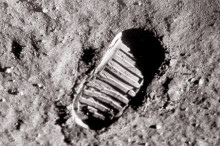
I hope everyone’s enjoying a nice weekend! It’s my turn again for the weekly science picks, and this week is the 44th anniversary of the Apollo 11 moon landing. On July 20th 44 years ago, human beings took their first small steps onto the surface of an object in the solar system other than the Earth. While we may not have returned to the Moon since NASA’s Apollo program, it’s important to realise the leaps and bounds which human technology and scientific knowledge have made since then.
And speaking of those leaps and bounds…
Astronomers have managed to determine the colour an exoplanet would appear if were able to see it with our own eyes. Planet HD 189733b, one of the most well studied worlds out there in our galaxy, is a beautiful azure blue planet. But don’t let the similarity to our own planet’s colour fool you. The blue colour of HD 189733b is because it’s a hot jupiter, orbiting scorchingly close to its parent star, and that colour is because the rain on this world is made of glass!
With 2012 firmly behind us, with no more reflections and no more top ten lists, let’s begin…
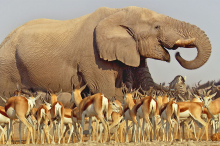
The BBC. As warm and comforting as mother’s milk. A beacon for the rest of the world to follow. Journalistic integrity, and more bang for your buck than any other establishment I can think of. There is nothing the BBC does so well as documentaries, namely nature documentaries. BBC Africa is the latest in the long line of documentaries, in the grand tradition of nature documentaries. Then there is David Attenborough. A man no one can find fault with. And the voice of Mother Nature! If you have a chance to catch this series, do not miss it. If your country is not fortunate enough to be bestowed with the British Broadcasting Corporation… then emigrate!
In some parts of this world the rains predict disease, and a hot, dry, dusty wind is the harbinger of a meningitis outbreak that is yet to come. Now, from where you sit, Google will soon predict the next great epidemic.
At this time of year, ever since that 2009 paper was published on flu trends, seasonal influenza and how we predict it, is a recurring topic.
It seems we are always moments away from the next great flu epidemic. This year saw a novel coronavirus make the rounds. A virus that usually causes nothing more serious and common than a cold, was the source of severe respiratory illnesses in the Middle East, with reported cases coming from Qatar, Saudi Arabia and Jordan, and resulting in 5 fatalities.
The curious case of the novel coronavirus is a new strain of virus that has not been previously identified in humans. The hypothesis is that it jumped the species barrier, but, as of yet, a definitive origin has not been identified.
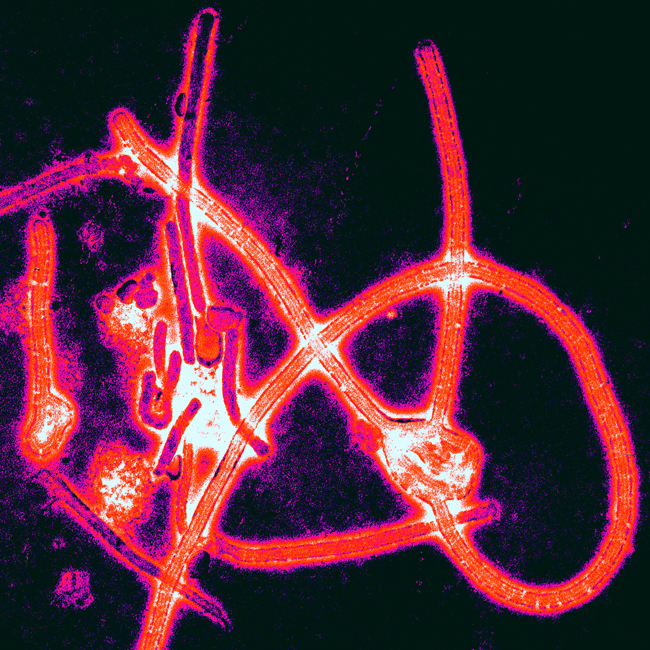
When a disease will decide to jump the species barrier is hard to predict. Some of the most serious afflictions of humans in recent times have had their origin in animal diseases. HIV/AIDS and ebola being the prime example. Seasonal influenza is another — causing tens of millions of respiratory illnesses and up to half a million deaths worldwide each year.
In mankind’s eternal struggle against disease, as the adage goes, prevention is better than a cure. But how do we prevent disease? How do we mitigate for an oncoming plague or pestilence? A part of this prevention is predicting it.
Currently, we can only really predict an epidemic when it is currently in motion. Hospitalizations are the only way we can really track a disease. When it is possibly already too late. When people are already sick.
In the week the world was supposed to end, the European Centre for Disease Control (ECDC) released its weekly report on influenza surveillance, like it had done since week 40 of this year. The report aggregates data on influenza-like illnesses reported in primary health care facilities, as well as virological and clinical data.
Flu surveillance, in Europe and similarly in the US, is based on nationally organised sentinel networks of physicians, mostly general practitioners (the first person you go see when you’re ill), covering at least 1 to 5% of the population in their countries. Each sentinel physician reports the weekly number of patients seen with influenza-like illnesses and acute respiratory illnesses.
The report is essentially there to tell us when a flu epidemic is going to break out. In week 49, ECDC announced that the season of influenza transmission had begun.
Along with the direct methods of detecting and monitoring disease, in recent years new and innovative non-direct methods have been tested. From sales of over-the-counter medication to online activity. The idea is to try and record health-seeking behaviour… ie before the disease has taken hold in a population.
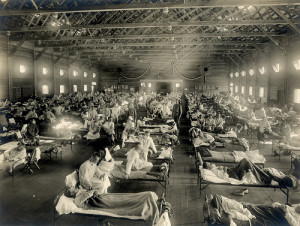
Emergency hospital during influenza epidemic, Camp Funston, Kansas.
Monitoring disease, 140 characters at a time…
Flu is a disease very amenable to being searched and turning up in social media. Health-seeking behaviour — in this day and age, we google every ailment. However, diseases which are more serious probably won’t follow this social pattern.
The concept is essentially trying to “predict the present
This first week of October there seemed to be a recurring theme — one of birthdays. On the 1st Nigeria celebrated 52 years of independence, followed closely Germany celebrating unity on the 3rd. But possibly the oldest this week had to be the birthplace of tropical medicine — the London School.
“On the 2nd October 1899 the London School of Tropical Medicine at Royal Albert Dock opened its doors to 11 students. An inaugural address was given by Patrick Manson which discussed issues around the lack of training in Tropical diseases and the need to increase knowledge and awareness.
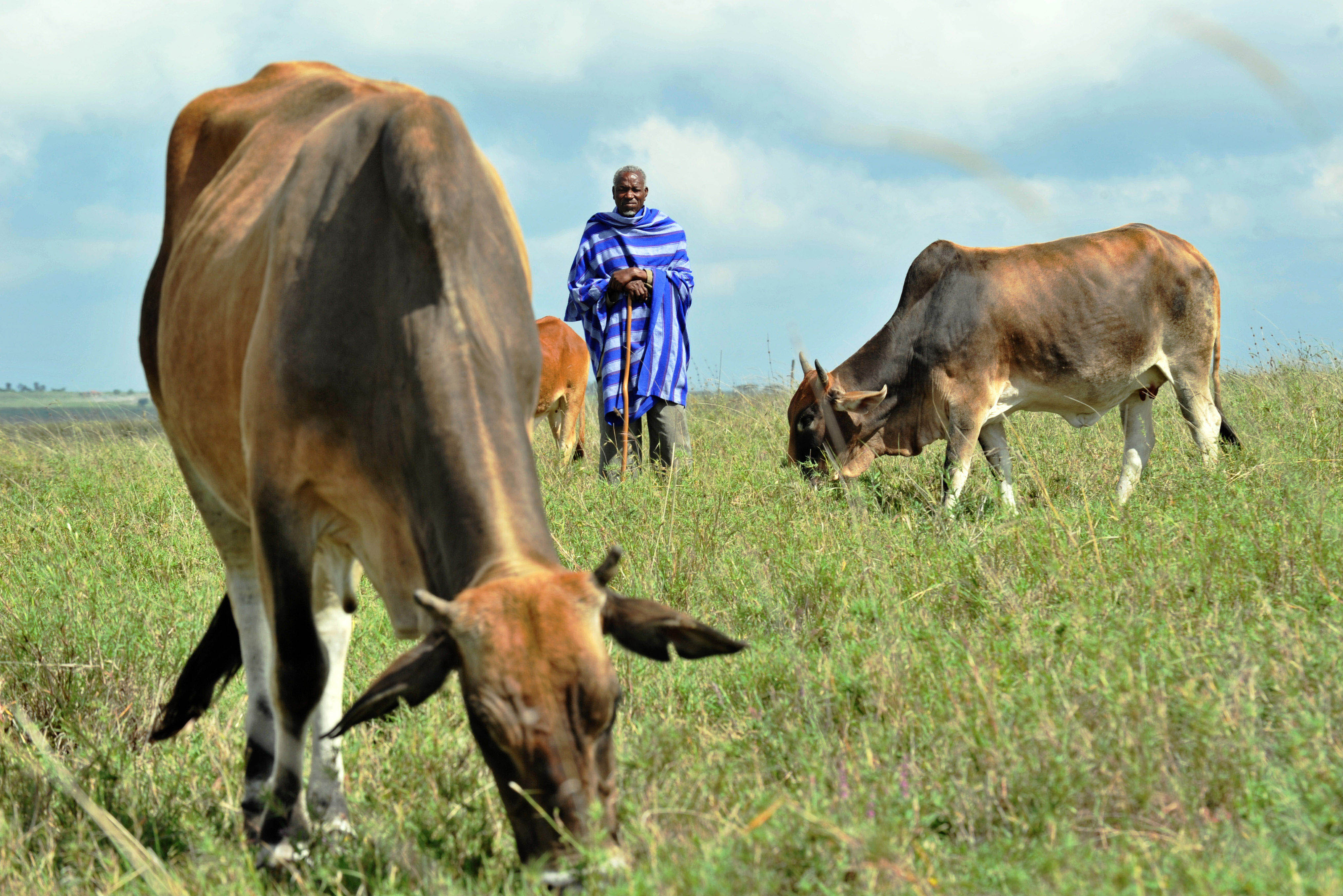
Karamoja region in northern Uganda is one of pastoral communities and closely dispersed ethnic groups that rely on livestock for their livelihood. It is within a semi-arid place like this that economies based on meat, milk, and blood from cattle thrive. In communities such as this one, cattle plague will always be the number one fear.
The morbillivirus rinderpest goes by many names — cattle plague in the old english or “loleoo
“…the last big outbreak I experienced in Uganda [was] in 2007. When MSF arrived a lot of the staff in the hospital had died and the rest had run away because they were scared.