

“2 genes predict voter turnout

 Skills learned in science have a carryover effect into other areas of life, and ultimately have an impact in their chosen profession – influencing their thought process and how they carry out decisions. Whether kids choose science as a major in university and continue with it through to the job market, even at the earliest levels of schooling, science engages students to become leaders. Why? Because they are inquiring to learn about the environment around them, to find out what makes it tick, and to correct or enhance any “ticks


Imagine the scene — from the mouth and nose, through the pharynx into the trachea, separating into the left and right main bronchi at the larynx. This is the start of your airway. This is to be the site of inflammation, or rather, the site of battle. Across the landscape that is the airways, two sides are about to go to war. Invading pathogens versus human inflammatory cells. This war will eventually lead to pneumonia.
To treat pneumonia we need to pin down the exact invading pathogen and treat accordingly. The most common types of infectious agents are viruses and bacteria. But of all the microorganisms that can cause pneumonia, most cases are down to only about two dozen species. Identifying the infecting agent, the actual cause of pneumonia, relies on a lengthy process; from a full patient history and examination, to imaging studies and epidemiological information, together with bacteriological tests.
Despite all of this, in up to 50% cases of pneumonia, the causative pathogen remain unidentified.
In and amongst the invading pathogens are other organisms that are just bystanders — colonizing the airway. Other commensal organisms in and amongst our instigators of war. In diagnosing pneumonia many are implicated and detecting these organisms in the airway does not necessarily mean they are the cause of infection. As such, any commensal organism that falls within a certain spread of criteria is thought to be the causative agent.
The key to all of this is the difference between colonization and infection.
To discriminate between the two types of organisms in a pneumonia infection — infectious and colonizing — researchers from Japan came up with the “pneumonia battlefield“. The titled “Battlefield Hypothesis


ad•ap•ta•tion [ad-uhp-tey-shuhn] – a form or structure to fit a changed environment
“The most powerful natural species are those that adapt to environmental change without losing their fundamental identity which gives them their competitive advantage.

Have you ever had a moment when person responds to you in a way that just makes you feel a little bit older than you did before? You comment, for example, about a music group to someone, only to be met with that incredulous stare that conveys the message to you that their parents liked that music, and that you must be a little older than you at first appeared.
An international research team just gave the Earth such a moment. The researchers did this, not by experimenting on musicians, rather by measuring the radioactive decay of samarium-146; one of the isotopes used to chart the evolution of the Solar System.
By using a more precise technique to remeasure the half-life of samarium-146, they shrank the chronology of early events in the solar system, like the formation of planets, into a shorter time span. It also means some of the oldest rocks on Earth would have formed even earlier. Some Australian rocks forming as early as 120 million years after the solar system formed.
Understanding how a seemingly simple measurement, such as the half-life of samarium-146, can have such far-reaching results will take us on an exhilarating journey through many areas of science.
How did our Solar System form?
According to current theory, everything in our Solar System formed from stardust several billion years ago. Some of this dust was formed in giant supernovae explosions. These explosions then supplied most of the heavy elements for the objects that make up our Solar System. The synthesis of the elements we see on Earth, in rock samples from the Moon and Mars, as well as from meteorites and asteroids, is a subject of great interest. By understanding the physics of the nucleo-synthesis of the isotopes of these elements it has become obvious that the dust and molecules that coalesced to form our solar system came from a number of different processes.

The formation of the terrestrial planets (the rocky planets Mercury, Venus, Earth, Mars and their respective moons) is generally divided into three major stages based on the different physical processes involved and their respective time scales: (1) the stardust aggregates into planetismals, like individuals forming into swarms of nomadic tribes; (2) then runaway and oligarchic growth of embryos from planetismals resulting several tens to 100 Lunar- to Mars-mass embryos embedded, like mediaeval barons, in a swarm of remnant planetismals; and (3) the final stage of terrestrial planet formation by high-velocity impacts between embryos over a span of ~10-100 million years, forming the planets as we know them.
The Allende meteorite and the age of the Solar System
The age of the Solar System can be defined as the time of formation of the first solid grains in the nebular disk surrounding the proto-Sun. This age is estimated by dating calcium-aluminium-rich inclusions in meteorites. All chronology, by convention, is referenced to T0, which is the abbreviation for the age of the oldest known solid material in the solar nebula.
Scientists have found that calcium-aluminum-rich inclusions are some of the oldest objects in the solar system. These inclusions, roughly millimetres to centimetres in size, are believed to have formed very early in the evolution of the solar system and had contact with nebular gas, either as solid condensates or as molten droplets.
Relative to planetary materials, calcium-aluminium-rich inclusions are enriched with the lightest oxygen isotope and are believed to record the oxygen composition of solar nebular gas where they grew. Calcium-aluminium-rich inclusions, at 4.57 billion years old, are millions of years older than more modern objects in the solar system, such as planets, which formed about 10-50 million years after them.
In recent research, a US team led by Justin Simon from NASA Johnson Space Centre and University of California Berkeley, studied a specific calcium-aluminium-rich inclusion found in a piece of the Allende meteorite. Allende is the largest carbonaceous chondrite meteorite ever found on Earth. It fell to the ground in 1969 over the Mexican state of Chihuahua and is notable for possessing abundant calcium-aluminium-rich inclusions.
Carbonaceous chondritic meteorites are stony meteorites that have not been modified due to melting or differentiation of the parent body. They formed in oxygen-rich regions of the early, first stage, Solar System so that most of the metal is not found in its free form but as silicates, oxides, or sulfides. Most of them contain water or minerals that have been altered in the presence of water, and some of them contain larger amounts of carbon as well as organic compounds. The Allende meteorite is a ‘pristine’ meteorite, so called because its provenance is known. It was found and sampled under conditions that precluded contamination from terrestrial chemicals and minerals.
Their findings imply that calcium-aluminium-rich inclusions formed from several oxygen reservoirs, likely located in distinct regions of the solar nebula. Calcium-aluminium-rich inclusions travelled within the nebula by lofting outward away from the sun and then later falling back into the mid-plane of the Solar System or by spiralling through shock waves around the Sun.
Through oxygen isotopic analysis, the team found that meteorite material surrounding the calcium-aluminium-rich inclusion show that late in the calcium-aluminium-rich inclusion’s evolution, it was in a nebular environment distinct from where it originated. This latter region was closer in composition to the protoplanetary disk, the environment in which the building materials of the terrestrial planets formed. A protoplanetary disk is an area of dense gas surrounding any newly formed star. In this case, the calcium-aluminium-rich inclusion formed when our Sun was quite young.

The formation of the Solar System as we know it today, was complex and dynamic process. The protoplanetary disk evolves through accretion to the star, the particles and molecules being gravitational attracted to the proto-Sun. Each particle’s attraction was mediated or dampened by collisions, the viscous drag of the gaseous nebula, coupled with an outward ‘fling’ due to their angular momentum.
Radioactive dating the age of the Solar System
Timescales of early Solar System processes rely on precise, accurate and consistent ages obtained with radiometric dating. The relative abundance of different nuclei and their correlation or non-correlation with models of their formation and their radioactive decay provide a series of clocks to determine when and how material was formed.
Recent advances in instrumentation now allow scientists to make more precise measurements. Some of these measurements are revealing inconsistencies in the ages of samples as well as clearing up existing inconsistencies.
For example, recent analysis, by Audrey Bouvier and Meenakshi Wadhwa from Arizona State University, of the meteorite, Northwest Africa 2364, found that the age of the Solar System predates previous estimates by up to 1.9 million years. They used a radioactive chronometer based on the decay of isotopes of uranium to lead.
By using this lead-lead dating technique these researchers were able to calculate the age of a calcium-aluminium-rich inclusion contained within the Northwest Africa 2364 chondritic meteorite. In lead-lead dating the lead isotope, 207Pb/206Pb ratios are measured; these lead-207 and lead-209 isotopes are the decay products of the uranium isotopes 235U and 238U respectively.
The study’s findings fix the age of the Solar System at 4.5682 billion years old, between 0.3 and 1.9 million years older than previous estimates. This relatively small revision to the currently accepted age of about 4.56 billion years is significant since some of the most important events that shaped the Solar System occurred within the first ~10 million years of its formation.
This relatively small age adjustment means that there was as much as twice the amount of iron-60, a certain short-lived isotope of iron, in the early Solar System than previously determined. This higher initial abundance of this isotope in the Solar System can only be explained by supernova injection. The researchers believe the supernova event, and possibly others, could have triggered the formation of the Solar System. By studying meteorites and their isotopic characteristics, they bring new clues about the stellar environment of our Sun at birth.
This work also helps to resolve some long-standing inconsistencies in early Solar System time scales as obtained by different high-resolution chronometers. The story is not yet complete, it will be important to conduct high precision chronologic measurements of calcium-aluminium-rich inclusions from other pristine meteorites. We also need to understand the reasons why the calcium-aluminium-rich inclusions measured previously from two other chondritic meteorites, Allende and Efremovka, have yielded younger ages.
One significant aspect of this study is that it is the first published lead-lead isotopic investigation that takes into account the possible variation of the uranium isotope composition. Earlier work conducted in Wadhwa’s laboratory by a graduate student Gregory Brennecka, in collaboration with Ariel Anbar, has shown that the uranium isotope composition of calcium-aluminium-rich inclusions, long assumed to be constant, can in fact be highly variable and this has important implications for the calculation of the precise lead-lead ages of these objects.
Using the relationship demonstrated by Brennecka and colleagues between the uranium isotope composition and other geochemical indicators in calcium-aluminium-rich inclusion, Bouvier and Wadhwa inferred a uranium isotope composition for the calcium-aluminium-rich inclusion for which they reported the lead-lead age.
This work can help researchers better understand the sequence of events that took place within the first few million years of the Solar System formation, such as the accretion and melting of proto-planetary bodies. All these processes happened extremely rapidly, and only by reaching such a precision on isotopic measurements and chronology can we find out about these processes of planetary formation.
The importance of the half-life of the isotope samarium-146
As well as the lead-lead dating technique the radioactive chronometer based on the isotope samarium-146 is one of interest for this story. Samarium-146, or 146Sm, is unstable and occasionally emits an alpha particle, a helium-4 particle, which changes the atom into a different element, neodymium-142.
As samarium-146 decays slowly—on the order of millions of years—many models use it to help determine the age of the Solar System. In particular, in models of terrestrial planetary formation, rather than dating calcium-aluminium-rich inclusions in meteorites used in studying early Solar System formation.
Although samarium-146 decays slowly, it is still short compared to the time-scale of solar system evolution. For a known number of any isotope type, the number of years it takes for this to radioactively decay by half of its number, is called its half-life. Since samarium-146 emits particles so rarely, it takes a sophisticated instrument to measure this half-life. The half-life of samarium-146 allows its use as a determinator of the time between the end of its synthesis in the early Solar System and the inclusion of it in a solid body in the solar system.
What scientists look for are disparities in the relative abundances of samarium isotopes in terrestrial rocks and in the relative abundances of samarium and neodymium and neodymium isotopes. The reason for interest in the samarium-146 to neodymium-142 is that the half-life means that samarium-146 present at the time of solidification would no longer be available for observation at the present-time; it all will have decayed to neodymium-142. Therefore the isotopic composition of neodymium will vary with the amount of samarium, which was present at solidification.
The researchers remeasured the half-life of samarium-146 using the sophisticated instrument at the Argonne Tandem Linac Accelerator System, Kanazawa University, and the University of Tsukuba in Japan. What they did was very clever and very precise.
Firstly, they synthesised samples of samarium-146, in three independent nuclear-synthesis reactions, from samples of isotopically enriched samarium-147. The different techniques gave analysis samples with different contaminants and samarium-146 levels. Secondly, they measured the decay of these samples over a period of months using highly accurate detectors.
The Argonne Tandem Linac Accelerator System was then used as a mass spectrometer, in two different experimental set-ups, to pick out the small number of samarium-146 in the samples, one in tens of billions of atoms. These measurements took into account contributions from contaminants such neodymium-146, which caused contamination problems in earlier experiments. Neodymium-146 has the same atomic mass as samarium-146, and in mass spectroscopic measurements they cannot easily be separated.
By accurately counting the number samarium-146 atoms and tracking the particles that the sample emits, the team came up with a new calculation for its half-life: just 68 million years.
This is significantly shorter than the previously used value of 102.6 and 103.1 million years of recent (1966 and 1987 respectively) measurements. At the same time the result is closer to earlier measurements of ~50 million years and 74 million years from 1953 and 1964 respectively.
A new samarium-146 half-life measurement; now what?
The new value patches some holes in current understanding. The new time scale now matches up with a recent, precise dating taken from a lunar rock, and is in better agreement with dates obtained with other chronometers.
Applying this new half-life to rocks from Greenland and Australia gives them revised ages. These rocks are now dated to be 50 million years older than previously thought. That is they were formed only 120 million years after T0, the time of solar system formation, rather than the 170 million years from previous results. Similarly rocks from Quebec were found to be over 80 million years older than previous measurements. These are now found to have formed 205 million years, rather than 287 million years, after Solar System formation. These results illustrate that the events that formed terrestrial rocks occurred at much earlier ages than we even recently thought.
Analyses of moon rock samples have also shown an increase in their ages, in this case by over 70 million years. These are now found to have formed 170 and 175 million years, rather than 242 and 250 million years respectively, after Solar System formation. These new lunar results now bring ages of these rocks, using two different chronometers, the samarium-146 and lead-lead techniques, into the same ranges.
The early days of Earth and the other terrestrial planets are looking quite different than previously thought. All this is thanks to some precision measurements of the half-life of an extinct isotope of an exotic rare-earth element, samarium.


Next week, Qantas Airlines will use cooking oil to power a flight from Sydney to Adelaide, in what will be Australia’s first biofuel-powered commercial flight. On April 13, the Airbus A330 test will consist of a “drop-in
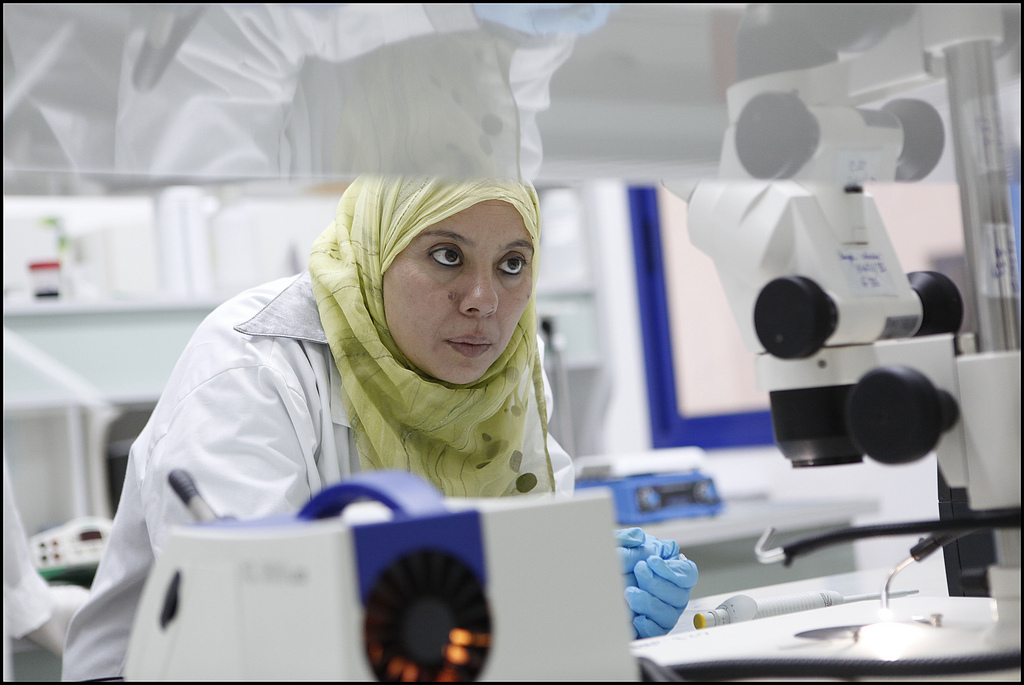
Paris, France — March 2012. The auditorium is filled to the brim — from the doors to the pulpit. High school children at the back, dignitaries at the front. Looking around you get the sense of a grand occasion in waiting. Shirts, ties and smart casuals. In true international style, headphones are available — the proceedings will be translated into French and English.
We are within the halls of the Institut Pasteur, right in the heart of Paris. A place whose name signposts the amount of history that comes along with it. In his time Louis Pasteur made some of the greatest breakthroughs in modern medicine. You get the sense something on that scale is about to happen.
Six empty chairs sit on a raised stage at the front of the auditorium, below a presentation screen with two logos and four words. The logos are unmistakable. L’Oreal and UNESCO have come together “For Women In Science
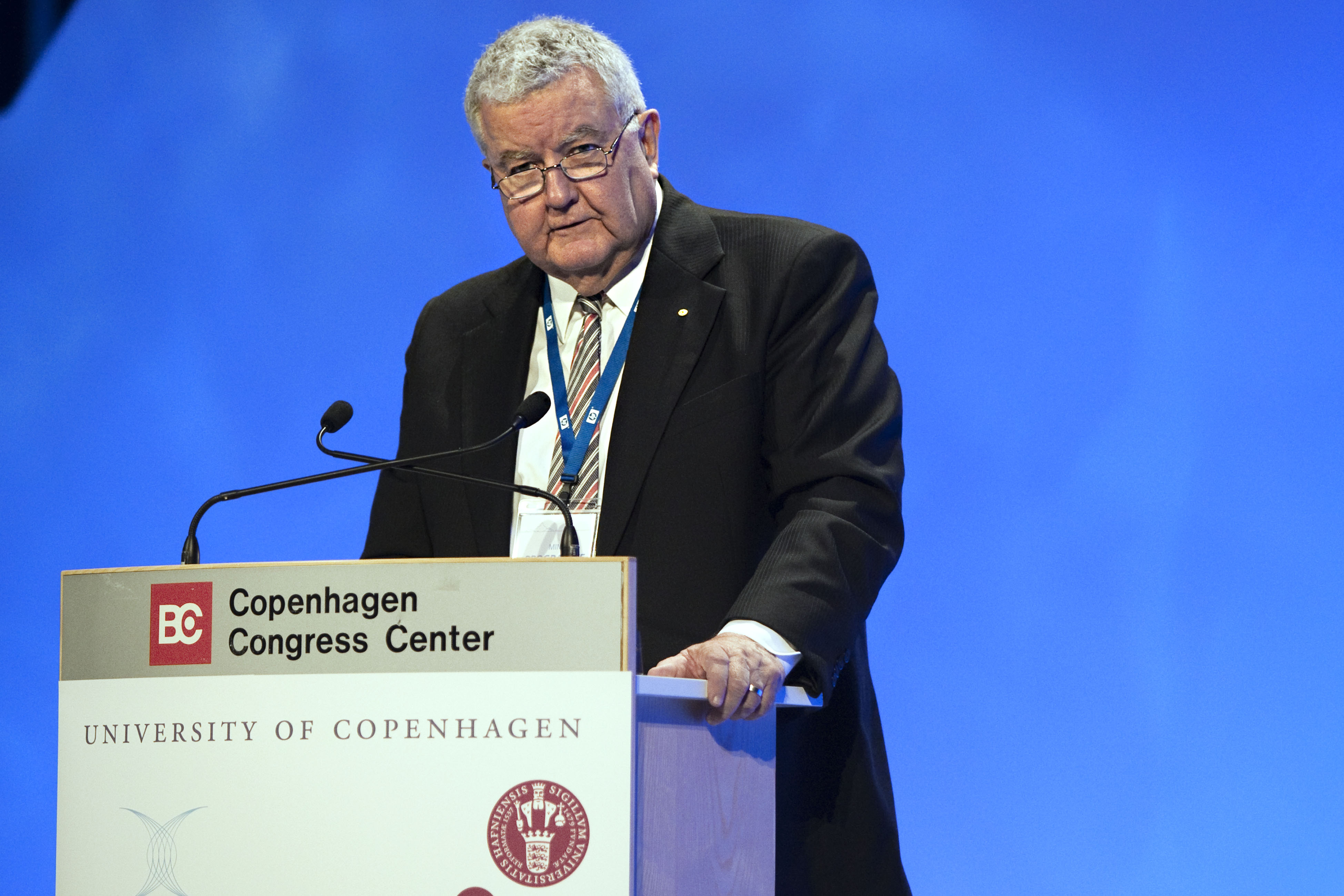
There is no doubt in the mind of Australia’s Chief Scientist, Professor Ian Chubb, the future will be shaped by science technology, engineering and mathematics. Unfortunately, he finds that at present the standing of science, as an expert authority, is being challenged. Furthermore, Ian Chubb finds that the science message is getting lost in the white noise of the mainstream media. I was heartened to hear his positive words about science communication, social media, science and technology education and innovative Australian workplaces.
These were the messages from Ian Chubb at an address he gave as part of NICTA’s Big Picture Seminar series on Wednesday March 28, 2012 at the University of Melbourne.
It was refreshing to see Australia’s Chief Scientist out and about and addressing public forums such as this one. Although judging by the faces, the suits and the overheard conversations at the drinks and nibbles prior to the address, I think this was definitely a speech to the science and technology faithful. That is a pity, his words were worth exposure and considered comment in the mainstream Australian media.
Professor Ian Chubb emphasises Mathematics, Engineering and Science provide the enabling skills and knowledge that underpin every aspect of modern life. They help us understand the natural world and enable us to respond as humans to this world with a constructed view aimed at improving the lot of human kind.
In Australia, as in many economies, we have observed a decline in the number of people choosing a career in these disciplines. Not only that, the STEM subjects (Science Technology Engineering and Mathematics), as he called them, are taken for granted or simply ignored. Although it is obvious without at least an appreciation of these subjects, a modern citizen is hampered in their ability to critically evaluate and make informed decisions about the issues that are shaping their future. Among his many roles as Australia’s Chief Scientist, Professor Ian Chubb has been charged with examining this decline and offering strategies to address it.
Professor Ian Chubb is eminently suited to this task. He was appointed to the position of Chief Scientist on 19 April 2011 and commenced the role on 23 May 2011. Prior to his appointment as Chief Scientist, Professor Ian Chubb was Vice-Chancellor of the Australian National University. Professor Chubb’s research focused on the neurosciences. Although he jokingly said on the night he would prefer not to be quizzed, on science specifics, by such an informed audience. He has co-authored some 70 full papers and co-edited one book all related to his research. In 1999 Professor Chubb was made an Officer of the Order of Australia (AO) for “service to the development of higher education policy and its implementation at state, national and international levels, as an administrator in the tertiary education sector, and to research particularly in the field of neuroscience

 The 7th Annual MIT Energy Conference held March 16-17 in Boston, MA, was an all-around inspiring event filled with conversations of hot topic scientific research and intense policy discussion. It was impressive, considering this event is entirely planned and executed by the student body, with well over 500 in attendance. From the scientific prowess of the professors working on new energy technologies, the caliber of executives leading the charge on the corporate front, to the undergraduate and graduate students pursuing their dreams to engineer a better tomorrow for society, we are indeed poised to see a radical transformation in both the technology and the policies of the energy sector.
‘Insight and Innovation in Uncertain Times’ could not have been a more appropriately named theme for the conference. The whole MIT community understands and embraces the challenges that lie ahead. And they are committed to finding solutions that include sustainable and renewable energy. The realization that we must commit to being better environmental stewards moving forward was a message that resonated throughout the panel discussions. It was enlightening to hear many of the large corporations such as BP, GE and Shell, understand the need to reduce their carbon footprint, lower their GHG emissions, and develop clean technology to power a changing world.
Biofuels, LNG, CNG, shale gas, nuclear, wind, solar, hydro – all these energy sources were highlighted throughout the day in conversations and presentations. Because it’s not just going to be one type of energy that we rely on for power; it’s going to be a combination of several, an energy portfolio that keeps the lights on and the cars rolling down the highway. And it may be different from one municipality, or a state, to another. Community planners have a big role to play in terms of energy. Many expressed the need for their seat at the table of discussion on global warming at the conference. It appears communities are starting to grasp that we must connect these three pillars – the social, economic and environmental. It is this type of holistic thinking and long-term planning, that will put not only the United States, but other countries who adopt these approaches, on the path to a secure, clean, energy future.
An energy policy is difficult to implement anywhere; to be sure, this is no small feat. But unless countries attempt to craft a decision-making framework for implementing an energy policy, progress will continue to be haltered. For the past 30 years, the US has not had a sound energy plan. Sure, the Energy Policy Acts of 1992 and 2005 were notable. But the time is ripe with the myriad of technologies we now possess to start implementing a comprehensive plan. The very nature of public policy is incremental and iterative; define the problem, identify criteria, list alternatives, analyze, evaluate, implement. If something doesn’t check out, repeat process. Mistakes will be made; it is the ability to think fast and correct those mistakes that we will learn and find the solutions needed to drive us forward. By 2050, the global population will be 9 billion. Think about that. We will have to figure out how to move that extraordinary number of people and the goods they require, safely and responsibly. Can we pull it off while being environmentally conscious at the same time? We really have no other option.
I believe that option will be met courtesy of universities such as MIT, along with corporations and policymakers partnering in innovative ways. I would also be remiss if I didn’t add it was refreshing to see so many women at the event, from students, to researchers, to corporate executives. The energy frontier is open for women to conquer, from the lab bench to the boardroom. From scientists, to policymakers, to venture capitalists, women can carve their niche in the sustainable energy field. You’ve heard the saying, “the future of tomorrow begins with today.


I long for the death of skinny jeans.
Those in the fashion business have to keep up to date with an ever-evolving scene. Trends and themes change from year to year, and for those that count, looking “last year

 We hear…but do we comprehend? What connection does our brain make to statements transmitted through our auditory canal such as global warming is increasing at 0.13°C per year? Or there are 495 dead zones covering 95,000 square miles of our world’s oceans as a result of increased runoff from agriculture? We see…but are those images stored in our brain, to recall in decision making when confronted with a particular behavior choice? For instance when the image of a little girl sifting through a rubbish pile looking for a bite to eat burns onto our retinas, do we remember that later when we casually toss out half our dinner plate in a Styrofoam takeout container? How many of us in the developed world actually comprehend that our actions contribute directly to global warming?
Until every human makes this connection and takes steps to modify behavior, only then will we see the beginnings of a response to addressing this issue of global warming. Easier said than done, right? Many organizations have started to tackle this problem; how do we solve it?
Social media has “connected

 Each year the two-day February Fourier Talks, organized by the Norbert Wiener Center in the Department of Mathematics at the University of Maryland, College Park, feature a diverse array of invited talks in the field of Harmonic Analysis and Applications. A single track of presentations from top academic, industry, and government researchers is scheduled, allowing ample time for interaction with other participants.
This year the FFT 2012 took place February 16 – 17, 2012, in the Department of Mathematics at the University of Maryland. Thursday evening featured a keynote address by Mario Livio, astrophysicist at the Space Telescope Science Institute and popular author of The Golden Ratio, Symmetry: From Human Perception to the Laws of Nature, and Is God a Mathematician? Thursday afternoon featured a talk in our Norbert Wiener Center Distinguished Lecturer Series by Gilbert Strang, of MIT, and Friday afternoon featured the Norbert Wiener Colloquium, by Peter Jones of Yale University.
You can see video of these three lectures on the proceedings page.

 The round for the 2012 Prime Minister’s Prizes for Science – Australia’s most prestigious science awards, is now open for nominations.The Prizes are a key element of the Government’s national initiative, the Inspiring Australia, to inspire a sense of national pride by the public recognition and reward of the achievements of Australians in the sciences. They honour Australians who have made significant contributions to building a more prosperous and progressive society through scientific achievements and science education.
Science and innovation are key drivers to improve Australia’s living standards, health, productivity and environment. Prime Minister Julia Gillard and Minister for Tertiary Education, Skills, Science and Research Chris Evans encouraged the science community to nominate outstanding colleagues for the Prizes. The Prizes are part of the Australian Government’s Inspiring Australia strategy to foster greater scientific engagement. The Gillard Labor Government highly regards our scientific community for the tremendous contribution it makes to build a richer, fairer, cleaner and safer nation.
In the past, the Prizes have been awarded for Australian discoveries such as wireless LAN technology and the bionic ear and for achievements in areas like immunology, quantum technology and astronomy. Past Prime Minister’s Prizes for Science recipients Elizabeth Blackburn AC and Brian Schmidt went on to be awarded Nobel Prizes in 2009 and 2011 respectively. Other past recipients include Ezio Rizzardo and David Solomon, John Shine AO, John O’Sullivan, Ian Frazer, Graeme Clark AC and the late Frank Fenner AC.
The Prime Minister’s Prizes for Science relies on nominations from across many sectors of our nation, to reward and recognise the outstanding achievements of Australian science researchers and science teachers. Closing Date for submissions is 27 April 2012, AEST 5.00 pm, and the Prizes will be announced later in the year. Further information on the Prizes and online nominations are available by visiting science prizes.
Further information on Eligibility Criteria and Selection Information can be found here, as well as the information on the Inspiring Australia Initiative.