Category: Australia

  • 2012 Winners from the 60SecondScience Video Competition

    2012 Winners from the 60SecondScience Video Competition

    Results from the 2012 60SecondScience Video Competition have been released.  For the last two years 60SecondScience has been a global science event involving students and citizens from 40 countries. These citizen and student-created videos have been downloaded and viewed well over 700,000 times, and growing daily. The competition is sponsored by DEECD Victoria, Australia. Winners below share $10,000 in cash prizes in the 2012 Competition.
    OPEN DIVISIONS

    • BEST CINEMATOGRAPHY: From Austria:  Vision 
    • BEST ANIMATION: From UK  Hamster Quantum Physics
    • INTERNATIONAL OPEN Winner: From India  Water Vapour
    • INTERNATIONAL OPEN Runner-up: From Hong Kong  Genetic Modification
    • INTERNATIONAL OPEN Highly Commended: From Slovenia Wind Turbine. Egypt Alzheimer’s.  USA Dog Colour Vision.  UK Food for Thought

    • AUSTRALIAN OPEN Winner: Doppler Effect  Runner-up: Pectin-The Movie


    STUDENT DIVISIONS

    • INTERNATIONAL Junior Winner: From Bulgaria Calcium Reaction

    • INTERNATIONAL Junior Runner-up: From West Java  Water

    • INTERNATIONAL Junior Highly Commended:  From Indonesia Fan from CD Waste

    • INTERNATIONAL High School Student Winner: From Indonesia  Frying Oil Filter

    • INTERNATIONAL High School Student Runner-up: From California  Nerve to Eat

    • INTERNATIONAL LOTE Winner: From Hong Kong  Sublimation

    • AUSTRALIAN OPEN Winner: Doppler Effect Runner-up: Pectin-The Movie


    AUSTRALIAN Primary School Students

    • VIC • winner Lemon Battery • Runner up Bicarb Highly Commended: Egg DropFire ExtinguisherFlowers

    • NSW • winner *The Mpemba Effect • Runner up Scientific Nerds Convention Highly Commended CoolingTenergy

    • QLD  • winner Floating Egg • Runner up Electroscope Highly Commended Moving WaterPepper

    • WA • winner Bouncing Egg • Runner up Longbow Energy Highly Commended RadiationSuper Suction

    • SA • winner Soluble • Runner up Sugar Content in Fruit Highly Commended Water Pressure

    • ACT • winner A Gummy Problem Runner up The Mystery of Gravity Highly Commended: Rust
    • AUSTRALIAN LOTE Primary Winner From Queensland Kan Bakuhatsu


    AUSTRALIAN Secondary School Students

    • VIC • winner Fractal Coastline • Runner up Hydro Kiss Highly Commended: Newton’s 3rd LawPain to BrainVeggie Pwr

    • NSW  • winner Nick’s Science Vid • Runner up Dissolving Sugars Highly Commended: PhotosynthesisBacteria

    • QLD • winner Igneous Rocks

    • WA • winner Nuclear Fusion • Runner up Icy Float Highly Commended: Brazil NutSodium-Water ExpWind PowerInk

    • ACT • winner * Occipital Lobe • Runner up Cerebellum Highly Commended: Hot Air Balloon Physics
    • AUSTRALIAN LOTE Secondary Winner From Victoria Lava in a Cup

    The 2012 Competition is now finalised and our 11 fabulous local and world judges have made their decisions. In 2013 the judging panel welcomes Richard Saunders and Dr. Rachael Dunlop. Judging criteria are based on science accuracy, communication and video production values.

    With assistance from Emeritus Professor John McKenzie AM, the convenor presented Australian winners with awards last Friday 7 September at BMW Edge Theatre, Federation Square as part of the ICT Week Celebrations, opened by Victorian Minister for Technology Gordon Rich-Phillips.

    The 2013 Competition opens for Registration and Uploads on 23 September 2012 and closes on 18 August 2013.
  • We Support the Petition to End the Faroe Islands’ Whale & Dolphin Slaughter

    We Support the Petition to End the Faroe Islands’ Whale & Dolphin Slaughter

    Thousands of signatures have now been presented in person to the Faroe Islands Government. Add your voice to this petition to keep up the demand until this cruel whale slaughter is banned.

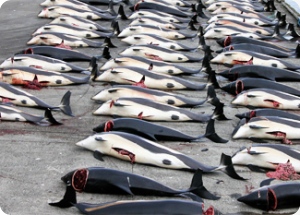
    Hundreds of pilot whales are slaughtered every year on the Faroe Islands, a small group of islands north of Europe. Faroe men go out with boats to drive these animals into a fjord using nets to block their way back to sea. The whales then beach themselves, or are pulled ashore with a blunt hook lodged in their blowholes. Once beached and defenceless these whales are killed by having their spinal cords and major blood vessels cut. It can take up to three and a half minutes for a whale to eventually die.

    Other than pilot whales, several species of dolphins are also killed using these same methods.

    Due to the harsh climate that makes it difficult to grow food on the Faroe Islands, the meat and blubber of these animals was once an important part of the diet of the Faroe people. But nowadays their food supply is diverse and plentiful, the cruel whale and dolphin hunt continues primarily for the sake of ‘tradition’.

    Please show the Faroe Islands that the international community is strongly opposed to this cruel slaughter by signing this petition to the Faroe Islands Prime Minister. Petition Tally by  August 16 2012: 81,718 signatures.

  • A Tankful of Sugar

    A Tankful of Sugar

    E=Sugar^3

    Remember those toy trucks, the 18-wheelers (tractor-trailers) that gas companies manufactured? If you grew up in the 80’s, and were a boy or had a brother, or just loved trucks, your dad probably bought one for Christmas. My brother and I would build towns out of Lincoln Logs and Legos and we would wait for the weekly delivery of gasoline from my brother’s Amoco truck to our “town’s

  • Social networks and culture among dolphins

    Social networks and culture among dolphins

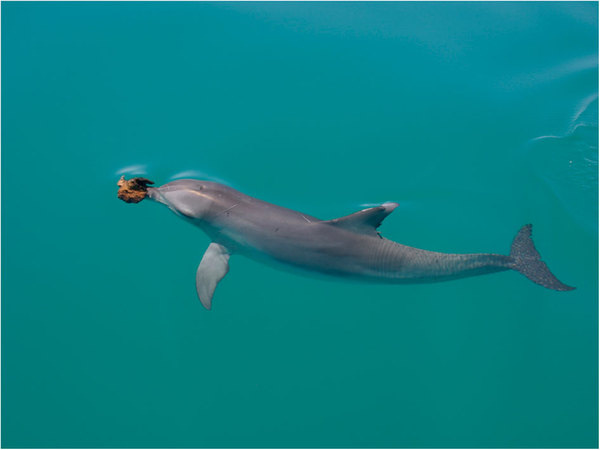
    Recently published research in Nature Communications ‘Social networks reveal cultural behaviour in tool-using using dolphins‘ is exploring social networks of dolphins. In particular, it finds evidence for homophily on a learned skill which leads that there’s an exclusion and cultural contagion even among cetaceans.

    Abstract

    Animal tool use is of inherent interest given its relationship to intelligence, innovation and cultural behaviour. Here we investigate whether Shark Bay bottlenose dolphins that use marine sponges as hunting tools (spongers) are culturally distinct from other dolphins in the population based on the criteria that sponging is both socially learned and distinguishes between groups. We use social network analysis to determine social preferences among 36 spongers and 69 non-spongers sampled over a 22-year period while controlling for location, sex and matrilineal relatedness. Homophily (the tendency to associate with similar others) based on tool-using status was evident in every analysis, although maternal kinship, sex and location also contributed to social preference. Female spongers were more cliquish and preferentially associated with other spongers over non-spongers. Like humans who preferentially associate with others who share their subculture, tool-using dolphins prefer others like themselves, strongly suggesting that sponge tool-use is a cultural behaviour.

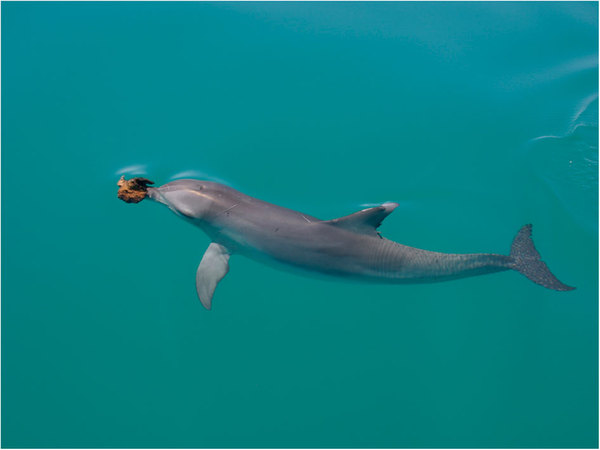
    Photo by Ewa Krzyszczyk; http://www.monkeymiadolphins.org.
    For centuries, philosophers and scientists have debated whether cultural behaviour distinguishes Homo from all other taxa12. Whether non-human animals have at least rudimentary culture is contested, partly because scholars disagree on the definition of culture and/or what type of supporting evidence is needed2. To empirically investigate whether or not a given species has ‘culture,’ the term must be operationally defined. Regardless of discipline, scholars agree that some form of social learning is a prerequisite and that culture is a source of uniformity within groups and differences between groups3, but the consensus ends here. Social learning is defined as learning (behaviour matching) that is influenced by observation of, or interaction with another animal or its products45. Some definitions of culture require more complex cognitive social learning mechanisms, such as pedagogy, theory of mind and imitation67. In most animal culture studies, examination of behavioural variation within and between groups is fairly straightforward as animals are either geographically or socially segregated2. However, ‘group’ is not easily defined in all animal societies. Like humans, Shark Bay bottlenose dolphins live in an open community, characterized by high fission–fusion dynamics where members maintain long-term preferential bonds, but associations are temporally and spatially variable across minutes, days and years8. The question is therefore whether dolphins that use sponge tools (spongers) to extract prey910 exhibit homophily (the tendency to associate with similar others), based on this socially learned foraging tactic1011.

    In Shark Bay, Australia, a subset of the community of Indo-Pacific bottlenose dolphins (Tursiops sp.) procure and wear basket sponges on their beaks while lightly scouring the seafloor for prey in deep (8–13 m) channels (Fig. 1)9101112. Sponging is the best-documented case of tool use by wild cetaceans and is unique among wildlife in that only a small subset of the population uses tools. This exceptional case of tool-use heterogeneity allows us to test for preferential affiliation based on tool-use. To date, 55 dolphins have been documented habitually using sponges in the eastern gulf of Shark Bay12, although sponging also occurs in the western gulf13. Only calves of spongers become spongers (24 offspring to date), but 8 offspring of spongers never adopted sponging. Sponging is a solitary activity, but calves accompany their mothers during sponging and vertical social learning is strongly implicated as the primary mechanism of transmission101114, consistent with mitochondrial DNA analysis1315

    Full paper link.

  • Did life’s building blocks crash land?

    Did life’s building blocks crash land?

    In 1969, on September 28, the skies near Murchison, Victoria (not to be confused with Murchison, Western Australia) were illuminated by a dramatic sight. A spectacular fireball blazed its way through Earth’s atmosphere, its outer layers heated to extreme temperatures by its speed. Residents of the town reported seeing the fireball split into three pieces before it faded from view, leaving a trail of smoke in its wake. Seconds later, a tremor was heard as meteorite fragments crashed into the ground, signalling the arrival of what would become one of the most well studied meteorites ever.

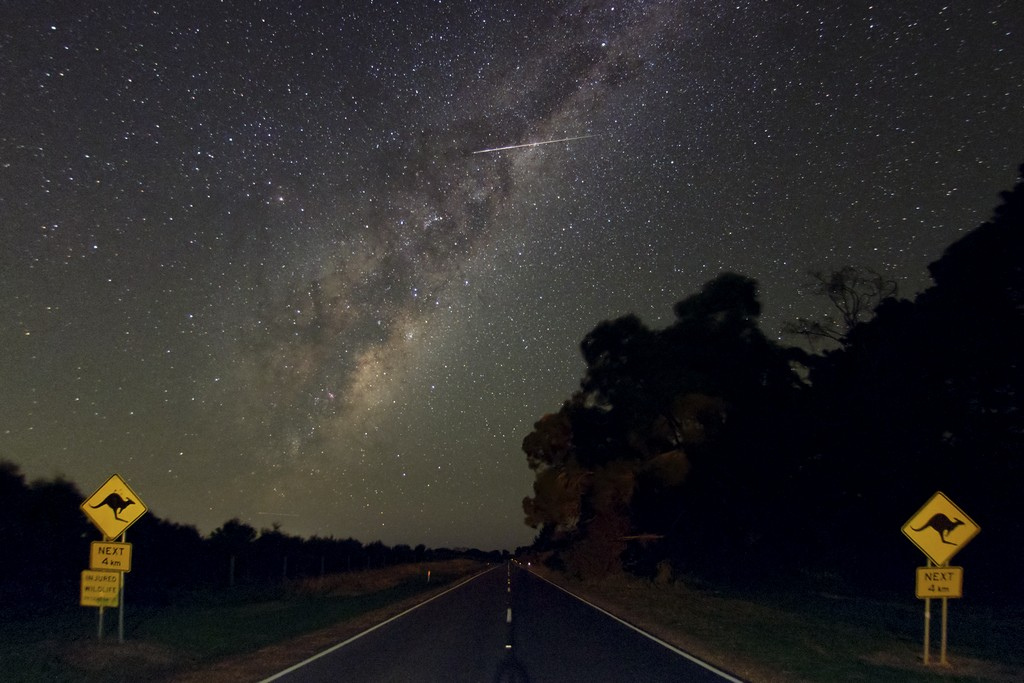
    A meteorite streaks across the Australian night sky, in front of the Milky Way. But just what might it be carrying with it? Image credit: Alex Cherney/terrastro.com

    If you like to watch the sky at night, chances are good that you’ve seen a meteor or two streaking across the night sky, and while many of them burn up in the atmosphere, it’s quite possible that one which you’ve seen might have eventually reached the ground. Meteorites strike Earth a lot more frequently than most people realise. By most estimates, a few hundred tons of meteorite material make it to our planet’s surface every day. Large meteorites like the Murchison meteorite, however, are a lot less common.

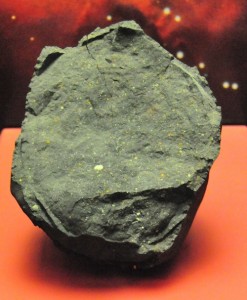
    A fragment of the famous Murchison meteorite. Image credit: Art Bromage, Wikimedia Commons

    While the Murchison meteorite shattered into fragments before it landed (known as an “airburst”), over 100 kg of meteorite have been collected from around Murchison, and scientists have been analysing those fragments ever since. This particular meteorite is a specific type known as a carbonaceous chondrite. These meteorites are fascinating to scientists, because carbonaceous chondrites are chemically very primitive – they’re thought to be very close in composition to the solar nebula from which the Sun and planets condensed 4.5 billion years ago. In other words, the meteorite which crash landed in Murchison 43 years ago was probably older than our entire planet!

    Several things about the Murchison meteorite are very interesting. For one, it shows evidence that it was altered by water. This would have happened a long time ago, wherever this meteorite originally formed, and certainly a long time before it landed on Earth. Secondly, it’s peppered with Calcium-Aluminium-Inclusions (CAIs). These humble crystals are older than the Sun itself. When they formed, the Sun itself was little more than a huge cloud of warm hydrogen gas. Most interestingly to some scientists, however, is the fact that the Murchison meteorite is full of amino acids.

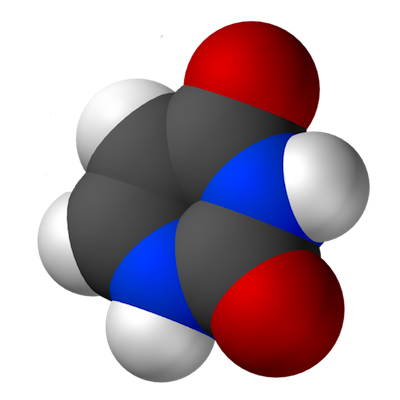
    Uracil, one of the four "nucleobases" used by DNA to encode genetic information, was discovered inside the Murchison meteorite.

    Amino acids are one of the basic building blocks of all living things. The proteins which make up almost everything in your body are made from these small molecules. To date, over 100 amino acids have been found inside the meteorite, including many of those used by life on Earth. Several things about the chemical and isotopic compositions of these molecules suggest that they didn’t come from Earth, but were in this meteorite when it landed. As an example, amino acids have two forms, referred to as left-handed and right-handed. Earth life only uses the left-handed forms, while the acids discovered in this meteorite are a mixture of the two (known to chemists as a racemic mixture). Other Earthly molecules which frequently show up as contaminants were absent from the samples analysed, suggesting that these molecules, the bare essentials of life, are extraterrestrial in origin.

    These amino acids aren’t the only familiar molecules in the Murchison meteorite either. Amongst over 14000 different molecules found inside the meteorite, the chemists who were analysing the meteorite discovered ring-shaped molecules called purines and pyrimidines. These ring molecules are from the same family as the four nucleobases which make up DNA.One of the molecules found was one called uracil, which is actually used by DNA. This same molecule is in every strand of DNA in your body.

    While some still argue over the validity of these studies, if they’re correct then the overall conclusion is a breathtaking one. This space rock is older than the Sun, and it already contained all of the basic ingredients for life to form back when Earth was nothing more than a patch of interstellar dust. We might never know exactly how life started on Earth. Though maybe in the distant past, life’s raw materials crash landed here on Earth in meteorites, just like one meteorite did in Murchison that night 43 years ago.

  • Horticultural Tourism as a form of Sustainable Tourism

    Horticultural Tourism as a form of Sustainable Tourism

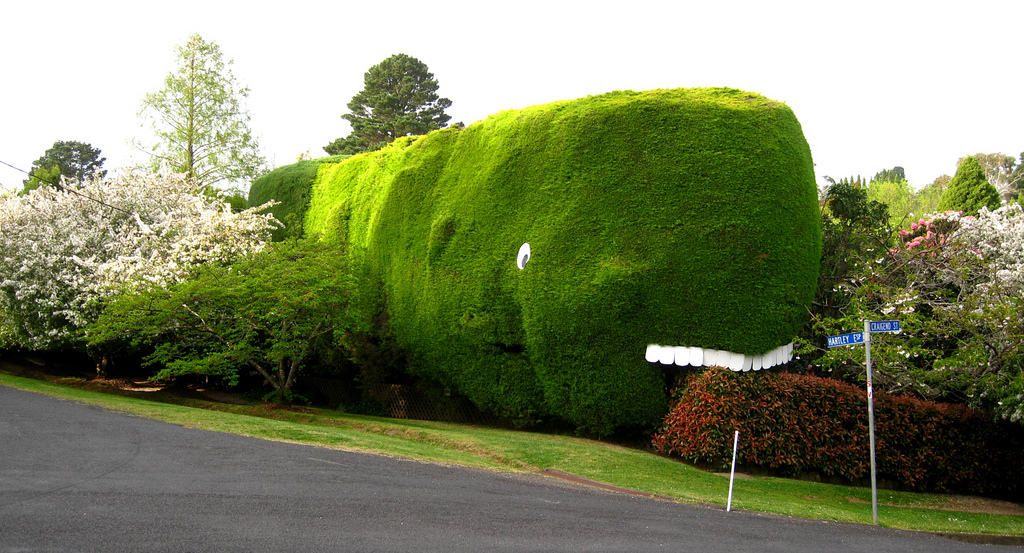
    Hedgework, source: http://www.flickr.com/photos/mithril/4382135401/in/photostream/

    Tourism industry has a significant effect on the Australian economy. The tourism industry was accounted for 2.5% of Australia’s GDP at a rate of $35 billion to the national economy in the financial year of 2010/2011.This is comparable with $94.8 million contribution of tourism a day to the Australian economy. (Australian Bureau of statistic. “Tourism Satelite account 2010-2011: Key Figures

  • BioGrid Australia links data to show bowel cancer screening is making impact on patient survival rate

    BioGrid Australia links data to show bowel cancer screening is making impact on patient survival rate

    BioGrid Australia links data to show bowel cancer screening is making impact on patient survival rate.

    Victorian researchers have been able to confirm that the national bowel cancer screening program is making a major impact on patient survival.

    Using data made available through BioGrid Australia, the researchers have shown that patients diagnosed as a result of a positive screening test have a much higher survival rate than patients presenting with symptoms.

    Maureen Turner, CEO of BioGrid Australia, said today that recent analysis from six Victorian hospitals has shown an increased number of early stage cancers diagnosed via the bowel screening programs (43% versus 19%) and a reduced number of patients with advanced cancer (4% versus 18%),² she said.

    This research is further confirmation of the value of the national bowel cancer screening program and the valuable contribution that BioGrid Australia, an innovative medical research platform, is making to furthering our understanding of cancers and other diseases,² she said.

    Dr Peter Gibbs and colleagues analysed diagnosis and survival information for 103 patients (all of whom had no symptoms of cancer) diagnosed as the result of a positive stool screening test on the national program.

    The patients attended six hospitals in Melbourne: Royal Melbourne, Royal Melbourne Private, Western Hospital, Western Private, Box Hill and Epworth Eastern. These patients were diagnosed between May 2006 and 2012 and their results were compared to 793 patients of the same age presenting with symptoms over the same timeframe.

    ³This analysis confirms that patients with a bowel cancer detected by a screening test, long before any symptoms have appeared, have a much improved outcome, with a projected five year survival of 95% compared to 73% for patients of the same age who were diagnosed with symptoms² said Dr Gibbs.

    ³This research yet again emphasises the ongoing need for and value of Australia¹s national bowel screening program which is leading to better survival rates as a direct result of earlier diagnosis.² Data available through BioGrid Australia was previously used in a campaign to extend the Australian National Bowel Cancer Screening Program to 60 and 70 year olds, by demonstrating the potential savings of early bowel cancer diagnosis.

    The research released in 2010 showed that annual bowel cancer treatment costs was likely to increase four-fold to $1 billion over 10 years by 2011, strengthening the economic case for expanding the Government¹s National Bowel Cancer Screening Program. The study by Victorian researchers supported by BioGrid Australia combined Australian screening data with treatment costs and survival rates, providing new evidence of the program¹s economic and social benefits. The researchers determined the cost of treating any one patient with bowel cancer at about $55,000 a patient.

    Due to the cost of expensive new therapies treating stage 3 (more advanced) cancers tripled from $25,000 in 1999 to $75,000 and for stage 4 (most advanced), the cost has significantly escalated 10 fold from $6,000 to $61,000. By screening leading to the detection of early stage cancers which can be dealt with by surgery alone, the substantial cost of treating later stage cancers, including the use of expensive chemotherapy drugs, are avoided. The data available through BioGrid was able to show the cost effectiveness of screening.

    The free National Bowel Cancer Screening Program was introduced in 2006. In the 2012 ­ 2013 Federal Budget, the program was expanded to include Australians turning 60 years of age from 2013 and those turning 70 years of age from 2015.

    The expansion of the screening program means that an estimated 1,000 early cancers will be detected each year and between 300 and 500 lives saved annually. This will significantly reduce the burden of bowel cancer on Australians and their families. Bowel cancer is the second most commonly diagnosed cancer in Australia, with annually more than 13,000 cases and 4,100 deaths from this disease.

    BioGrid Australia

    BioGrid Australia (www.biogrid.org.au) is an innovative medical research platform that facilitates privacy-protected research across many hospitals and medical research institutes. BioGrid provides an online Access Request System by which researchers can apply for access to specific databases.  Through this system, the data custodians approve access to their data and a Scientific Expert Review Committee assesses the proposed investigation providing formal ethics approval. Once authorised, researchers can access de-identified data for specified research.

    Issued on behalf of BioGrid Australia.

    Image source.

  • Radio quiet, please!

    Radio quiet, please!

    Originally conceived over 20 years ago, there’s a project being undertaken by scientists and engineers across the whole world to help us all better understand the mysteries of the galaxy and the very beginnings of the Universe. It’s estimated to be completed by around 2024,costing $1.85 billion AUS (€1.5 billion). Once completed, it’s set to be the most complex and technologically advanced machine ever built by humanity. It will use enough optic fibre to wrap twice around the Earth and will need a computer capable of performing 10^18 operations per second – about three million times the number of stars in our galaxy. It will produce over 980 Exabytes of data every day (equivalent to about 15 million 64GB iPods) and to cope with that, it will need to handle data transfer rates over 10 times as high as the current global internet traffic. No, it isn’t a starship. But it might just be the next best thing.

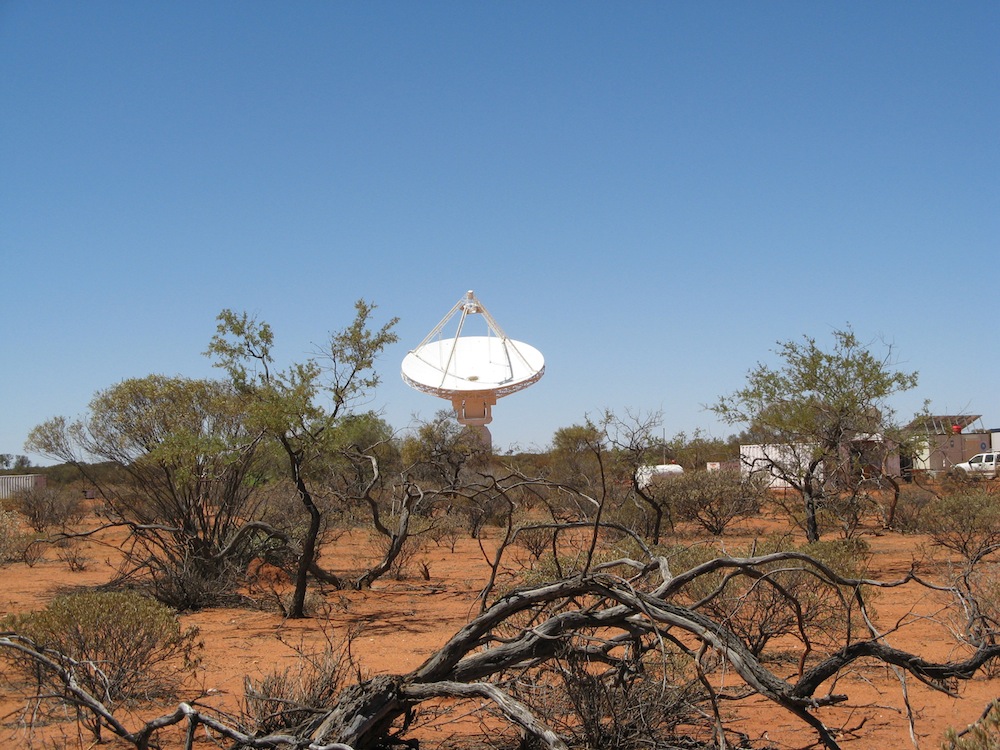
    One of the first components of the SKA, constructed in Western Australia. Credit: Dave DeBoer, CSIRO.

    The Square Kilometre Array (SKA) is one of the most ambitious scientific projects ever devised, and when completed it will comprise a huge number of telescope antennae which will work as one to form a single radio telescope so powerful that it could detect an airport radar on a planet 50 light years away. The sensitivity of any telescope is defined by the area it uses to collect data. With optical telescopes, this is the size of the mirror, and with radio telescopes it’s typically the size of the dish. The SKA gets its name because when fully constructed, all of the detectors and antennae that make it up will have a combined area of one square kilometre, or one million square metres. To put that properly into perspective, the Green Bank Telescope is currently the largest steerable single dish radio telescope, and its area is just under 8000 square metres.

    Being astronomy’s answer to the large hadron collider, the SKA is a staggeringly large international collaboration. I was lucky enough to attend a major meeting regarding the planning of the SKA (the headquarters are to be based here in the UK in Manchester), and the myriad different languages and nationalities represented was impressive to say the least. Over 24 major organisations from countries spanning 5 continents are involved in the project, ranging from universities to industrial engineering companies. New technologies, both software and hardware, are still being developed as a result of this project. Based on the huge data storage and transfer requirements of a machine as complex as the SKA, many of those new technologies are likely to feed straight back into society by offering profound improvements to computing resources like the internet. In fact, as the world’s largest project for sorting and storing data, the SKA is expected to be literally bigger than Google!

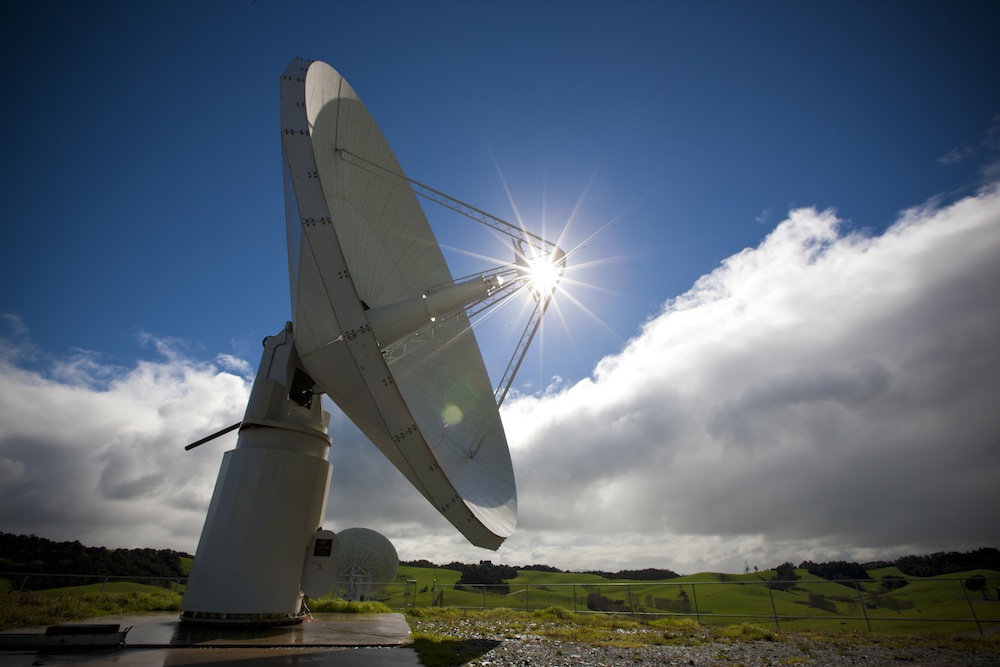
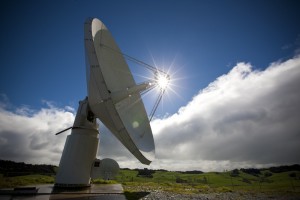
    The Warkworth antenna in New Zealand – an important part of early SKA science. Credit: Alex Wallace.

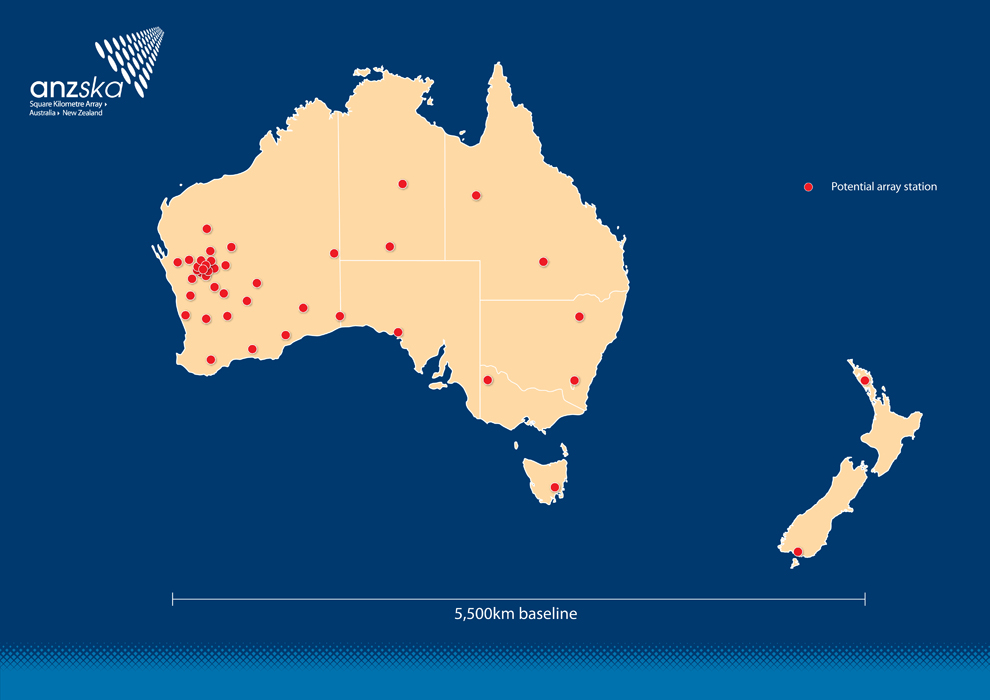
    The most difficult decision, understandably, has been where precisely to build it. Humanity has an unfortunate tendancy to fill the atmosphere of our planet with noise, bouncing radio waves to and fro and filling the air with radio frequency chatter. A radio telescope array this sensitive needs to be placed somewhere quiet to gain the full benefits, and the most recent decision has been to effectively split the SKA into two components, to be built in Southern Africa and Australia. While this may seem like an odd thing to do, it actually makes perfect sense. The SKA actually has three types of antenna operating at different frequencies. Intended to cover a huge range of radio frequencies (from 70 to 100000 MHz), three types of antenna are needed, because no single technology can actually operate across such a wide range. So the decision was made to build the lowest frequency detectors across Australia, centred at Murchison in outback Western Australia. Murchison is blessed with being one of the few places on our planet which isn’t flooded with FM radio at the low end of the frequency scale. From a radio astronomer’s point of view, it’s the quietest place on Earth.

    This is set to be complemented by the higher frequency steerable dishes which are set to be constructed across Africa. Both South Africa and Australia have put extensive efforts into developing the SKA, and Australian-developed technology is still set to be implemented in the African telescopes. This will mean a huge influx to the African astronomical community and numerous African nations won’t lose out on the economic boost from contributing to such a prestigious project. It’s an ideal situation where everyone wins.

    All in all, it’s an exciting time to be an astronomer. An epic project like this is likely to attract all manner of researchers from across the world to both continents. Just maybe, it could also finally help us to answer the really big questions, like how the galaxy formed, how the Universe began, and whether or not there’s anyone else out there.

    A map of prospective SKA sites. Credit: anzska
  • Who Doesn’t Love a (Penguin) Parade?

    Who Doesn’t Love a (Penguin) Parade?

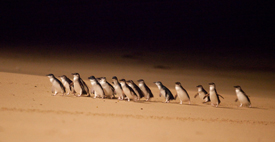
    Penguins marching home from a long day at sea.

    It’s not just 5-year old children who get excited by the sight of penguins; on no, penguins have been “all the rage

  • Bike Brisbane: Brisbane winners announcement

    Bike Brisbane: Brisbane winners announcement

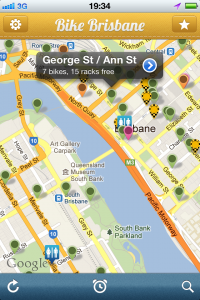
    On Thursday, the Lord Mayor announced the winners of the hack::Brisbane competition at a presentation in New Farm Park. The winners of the hack::Brisbane competition are: (more…)

  • 60 second science: Engaging with the ‘Youtube Generation’

    60 second science: Engaging with the ‘Youtube Generation’

    Being one of the International judges for the International Science Video Competition, I have talked with Brendan O’Brien, the convenor of the  “60 second science“.

    What is “60 second science”?

    60SecondScience is a fully online International Video Competition sponsored by the Department of Education (DEECD-Innovation Next Practice Division), Victoria, Australia. Since its first iteration in 2008, it has enjoyed relentless growth and appeal, from 30 Victorian school-only participants, to over 300 science videos uploaded in 2011, with over 400 registering from 22 countries. The competition links directly to required student outcomes over a number of Science, Citizenship and ICT Standards. Valuable prizes are distributed each year, as determined by a prestigious International panel of judges.

    Why is this competition used in the Science Classrooms?

    Teachers can engage the interests and skills of students in a way that increases the depth of their science knowledge as they hone their multimedia skills.  Many of today’s students are an entrenched part of  the ‘youtube generation’ and are more than comfortable with being producers of content, whereas other generations were comfortable as mere consumers of content. Many students are ‘over’ powerpoint reports by the time they get to secondary settings, and are happy to shoot video on their smart-phones, flipcams, videocameras or webcams. The competition is easily adapted to be used not as an add-on, but as a contingent element within the existing science curriculum.

    How is this Video competition used in Secondary/High School Science Classrooms?

    A.     Teachers give students the option of making a 60second video to demonstrate their understanding of a topic or unit of work they are studying/researching in any area of the secondary science curriculum. Eg Newton’s Laws, The States of Matter, Forces, Chemistry. Projectile Motion, Chemical Bonding,  This is often done as an alternative to producing a written report, poster or Powerpoint.

    B.     Teachers give the student teams the option to make a ‘prac report video’ instead of the standard ‘written’ prac report. Eg. The Law of Reflection, Heart-rate, Thermal expansion, Displacement Reactions.
    In both cases, students are required to research deeply and collaborate closely to refine their understandings and condense their knowledge to convey their key concepts and ideas into the 60second format.

    Students work with their teacher on a particular science topic or integrated study unit, and produce a video over a number of weeks as part of their weekly routine. This can be used as a science teaching strategy at any grade level. E.g. Grade 1 Temperature, Grade 3 Capillary Action, Grade 4 Mould on Bread, Grade 6 Plant Osmosis

    How does “60 second science” support Multicultural Classrooms?

    The LOTE Divisions encourage entrants to use Languages Other Than English. Eg Chinese, French, Cantonese, Malayalam, Italian.

    There are several divisions such as International Open – for professional/amateur film-makers, teachers, non-school-age citizens, International primary / elementary school division, International secondary / high school division, International LOTE – with English sub-titles and spoken in a Language Other Than English; as well as the Best Cinematography – for videos in any Division, Best Animation – for videos in any Division and for the others. The ‘Winner’ gets a Certificate and an offer of free online video production and science workshop for teachers and students.

    You can register for the competition by 1 August 2012, and upload videos by 26 August 2012. Please find all other details and contact the convenor on the official web site.