Tag: biology

  • Unknown Corals of the Deep

    Unknown Corals of the Deep

    Corals are some of the most beautiful things to be found under the sea, blossoming in clusters like gardens off tropical coasts worldwide. Easily the grandest display is to be found in Australia with the Great Barrier Reef, and it seems that the reef may contain even more diversity than was once thought. The latest surveys have found Australian corals thriving at depths far greater than was ever before thought possible.

    The Ribbon Reef lies near the Torres Strait at the edge of the Australian continental shelf, and certain parts of it are normally very difficult to get to. The University of Queensland’s Seaview Survey has been fastidiously charting the waters off the Australian coast with a diving robot, and were extremely fortunate to be able to use an unusually calm day to explore the windward side of the reef – normally a perilous exercise due to huge waves and cyclones. Exploring the depths of the reef, they found a huge surprise.

    While deepwater corals are known in other parts of the world, their appearance in the waters here was a surprise. At a depth of 125 metres, in dark waters where very little sunlight ever reaches, they found corals. Corals which had only been recorded at depths of 70 metres previously, giving Ove Hoegh-Guldberg, the chief scientist of the team, reason to suspect that the finding may be able to give a deeper understanding of how coral reefs spawn and grow.

    Hoegh-Guldberg is also quoted as saying, “What’s really cool is that these corals still have photosynthetic symbionts that supposedly still harvest the light,” which is especially remarkable because the waters in which these corals have been found are so inky and dark that human divers would have trouble seeing without artificial illumination. As well as photosynthesis, shallow water corals have reproductive cycles which are synchronised by the phases of the moon. With so little moonlight being able to penetrate to the depths at which these corals live, their spawning patterns are presently a complete mystery. It could be that these corals lead a lifestyle very different to their shallow water brethren.

    The deepwater corals have also fared far better in the storms which have caused massive damage to the shallower parts of the reef. The team are now investigating how conditions such as ocean acidification and global warming are affecting these deeper reef dwellers.

    The Seavew Survey has proven to be extremely successful so far, with a number of specimens which they’re currently investigating. Some species they’ve found are thought to be previously unknown in Australia, and others may even be newly discovered species. Hoegh-Guldberg summed up the team’s discoveries quite succinctly with the statement, “We are yet to discover many corners of the Earth.” Indeed we are. It’s exciting to know that there’s still more for us to discover about our planet!

    Image credit: InvaderXan/flickr
  • Citizen Science

    Citizen Science

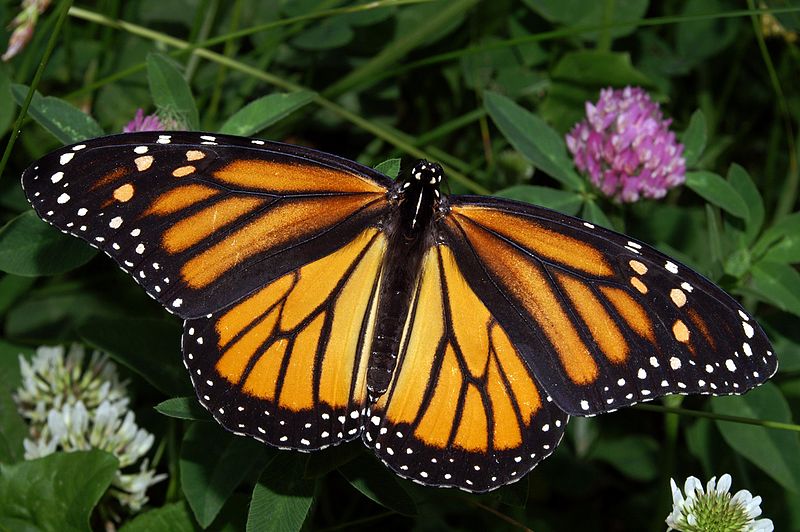
    Monarch butterfly (Danaus plexippus), Source: Wikipedia Commons

    Citizen Scientists

    An interesting report released last week from the UK Environmental Observation Framework reveals the benefit of citizen scientists to governmental environmental organisations. The Nerc Centre for Ecology and Hydrology and the Natural History Museum in London, reviewed 234 projects – ranging from small surveys to large-scale programmes. The results found the involvement of volunteers offers “high value to research, policy and practice”.

    Given the increasing number of complex scientific problems facing our communities, states and countries; coupled with the ever dwindling supply of cash on hand to fund research projects, it behooves governments to dial into this untapped source of volunteer environmental monitors and data collection specialists. People enjoy going to their local botanical gardens, taking the kids and grandkids to learn about the natural world surrounding them. A large majority of the population love their parks for taking walks and having picnics and for exercise. They want to see these lands, with the flora and fauna contained within them protected. People volunteer for things they believe in and causes they want to see sustained. That is the movement around science and the environment and why the citizen scientist movement is growing.

    Scientists should be working with their governmental departments, or university outreach extension centers, to coordinate community science volunteer days. Measuring leaf litter in a forest, or tree ring growth, or monitoring a stream for the presence of certain harmful bacteria or toxic chemicals, or tallying the number of a threatened bird species are a few such projects that could be undertaken by community members. Scientists and their research teams and graduate assistants could customize their research projects with a component where they served as project managers working with the community to accomplish a piece of the data collection puzzle.

    The Value – Minuses and Pluses 

    Of course, not every project will be appropriate for citizen scientists and a fair amount of training may have to be done, given the nature of the project. And the report touches on the fact that although the quality of the data collected by citizen scientists could be excellent, it may not be fully recognized by all researchers or policymakers. This seems to be an area that would require some policy work in setting up standards to ensure the legitimacy and recognition of such projects undertaken with contributions from citizen scientists. That minus shouldn’t be so hard to turn into a plus. Volunteer-collected data possesses a bevy of potential benefits. The use of smartphones continues to increase among consumers and with that comes development technologies in the form of apps that could play an easier role in data collection. A scientist could quite easily dispatch his volunteer army with marching orders to perform observations of the monarch butterfly (Danaus plexippus) over a 5-acre area of the park and have his/her data collection completed within a month’s time. And of course, the benefit that every bureaucrat or department chair loves to hear: it’s a cost-effective way to collect environmental data and could help meet the demands of increasing governmental reporting and compliance requirements.

    Getting Started

    I think it’s up to each and every one of us to identify the actions we can take that will help continue to make our environment habitable. And becoming involved in a citizen scientist program seems like an ideal way to start to make a difference in your community. Whether you are a scientist or a volunteer, the guide, produced alongside the report by the UK Environmental Observation Framework, is a great place to begin identifying and mapping out strategies for a collaborative citizen science project.

  • Weekly Science Picks

    Weekly Science Picks

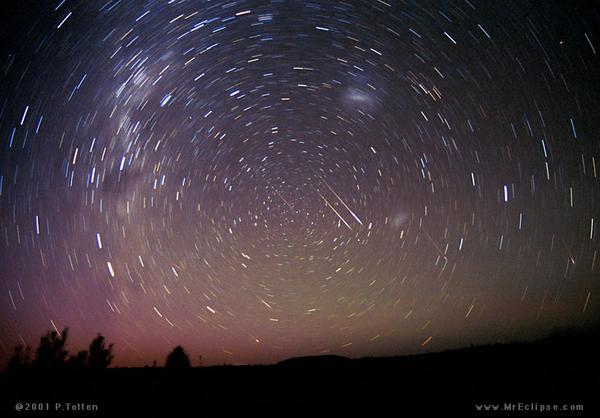
    Ah, the weekend! Time to kick back, relax, and look back over everything that’s happened over the past few days. And I’m rather happy to say that some quite interesting things have happened, including the Leonid meteor shower which peaked on Friday night (though if you step outside after dark and watch the sky, you may still see a few stragglers). So what else has caught my eye this week, science-wise?

    Well first off, the Curiosity Rover has been busy over on the planet next door. I can’t help but find everything about the Curiosity rover exciting, especially as it’s paving the way for actual manned exploration to another planet. As many people will agree, no matter how sophisticated a rover can be, it will never be as good as a team of properly equipped geologists exploring a site in person. As it turns out, this idea just came a step closer to being reality…

    Astronauts Could Survive Mars Radiation, Curiosity Rover Finds

    The findings demonstrate that Mars’ atmosphere, though just 1 percent as thick as that of Earth, does provide a significant amount of shielding from dangerous, fast-moving cosmic particles.


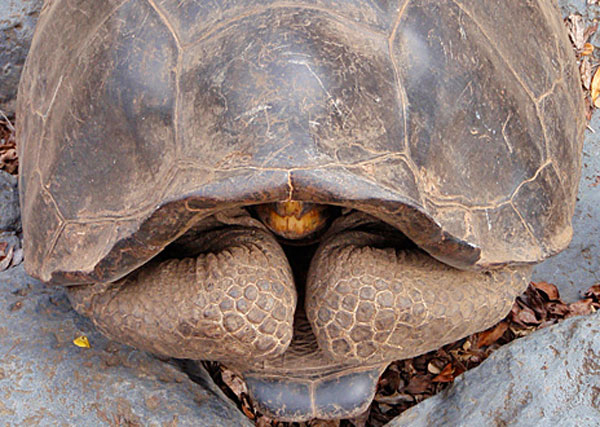
    Some people may recall the death of an aged tortoise nicknamed Lonesome George, so called because he was thought to be the last surviving member of his species. I know I do, and was rather saddened by it. While it may be an inescapable part of the way life on our planet works, there’s something quite humbling about being forced to simply watch a species go extinct and not be able to do anything about it. But then, was George’s death really the end of the story? As it happens, perhaps not…

    DNA tests show Lonesome George may not have been last of his species

    “These giant tortoises are of crucial importance to the ecosystems of the Galapagos Islands, and the reintroduction of these species will help preserve their evolutionary legacy,” said Danielle Edwards, postdoctoral research associate at Yale and lead author on the study.


    Lisa Grossman at New Scientist discusses the phenomenon of rogue planets – planets roaming interstellar space after being forcibly ejected from their home systems. It’s a concept which I’ve thought about in great detail in the past, as have many others, including astrophysicists, astrobiologists, and science fiction authors.

    Astrophile: Lonely planet roams with stellar outcasts

    The wanderers are no longer gravitationally linked, but they are headed in the same direction. “Like when you kick a clod of sand, the grains don’t stick together anymore but they have the same common motion,” Delorme says.


    In chemistry, I’ve always held a certain fascination with noble gas compounds. Molecules formed from atoms which aren’t supposed to react and form molecules always seemed rather exotic and curious. Several of these compounds have been predicted involving Xenon, one of the heaviest noble gasses. And there may be a lot of Xenon trapped inside the Earth this way…

    Professor predicts stable compounds of oxygen and ‘inert’ gas xenon

    “In addition to providing a likely solution to the missing xenon paradox and clarifying essential aspects of xenon chemistry, our study may result in practical applications,” says [Artem R.] Oganov. “For example, the ability of xenon to form strong chemical bonds with oxygen and other elements, and to be trapped in crystalline defects, suggests their use as non-classical luminescence centers and active sites for catalysis”.


    And to end on a humourous note, XKCD wrote a comic this week describing the Apollo Spacecraft and Saturn V rockets using only the 1000 most commonly used words in the English language. The result was slightly hilarious and rather enlightening about how often writers like myself use words which aren’t in that top 1000. A testament to XKCD’s popularity is how many people in the online space and astronomy communities mentioned it – including at least one astronaut!

    xkcd: Up Goer Five

    Lots of fire comes out here. This end should point toward the ground if you want to go into space. If it starts pointing toward space you are having a bad problem and you will not go into space today.


    Hope you’re having a good weekend!


  • The evolution of human mortality

    The evolution of human mortality

    How long until we live forever?

    The general consensus is that we are getting older and living longer. Despite consequences and kryptonite, it is getting easier to stay alive. Heaven can wait, it seems. Every year each baby born is expected to live 3 months longer than its predecessor of the previous year. This has been the case for the last 160 years. A stunning display of the ability we humans have to prolong the length of life. And it is this simple fact of life that economists and politicians are struggling to deal with — an ageing population and not enough resources to go around.

    But outside of this there are some interesting and important questions to pose when thinking about human mortality. Does our mortality have a basis in our genetics? Researchers, publishing in PNAS, wanted to know if this reduction of mortality was as a result of a possible genetic shift or something much simpler. They wanted to understand the evolutionary context for variation in human mortality patterns — particularly comparing those of today to hunter-gatherer populations. Modern-day hunter-gatherer populations which are used as a proxy in evolutionary terms.

    What they found was a significant decrease in human mortality. The vast majority of this mortality reduction has only occurred since 1900 and has been experienced by only about 4 of the 8,000 human generations that have ever lived. An astounding fact.

    The average age-speci

  • Weekly Science Picks

    Weekly Science Picks

    It’s been an interesting week for science news, and I’ve been lucky enough to be asked to give this week’s science picks! This made me spend a little while sipping contemplatively on a cup of vanilla iced coffee and wondering where to even start…

    The articles I’ve selected are, of course, slanted towards my own (rather geeky) interests, but all the same I hope you find them all as fascinating as I did!


    First up, the news that Star Trek style warp drives may actually be possible, at least in theory, made me exclaim “Oh wow!” out loud. Fortunately, people who spend any time with me are generally used to me talking to myself while staring at a computer screen…

    Warp Drive May be More Feasible than Thought

    “Everything within space is restricted by the speed of light. But the really cool thing is space-time, the fabric of space, is not limited by the speed of light.”
    – Richard Obousy, president of Icarus Interstellar


    Artists impression of Mimivirus, the first giant virus to be discovered. Image Credit: InvaderXan/Wikimedia Commons

    From the vastness of space to life under the microscope, biologists have been debating for years whether or not viruses qualify as a form of life. The latest evidence is that they may indeed be a life form in their own right, and an old one at that!

    Giant Viruses are Ancient Living Organisms

    They found that many of the most ancient protein folds in living organisms were present in the giant viruses, which “offers more evidence that viruses are embedded in the fabric of life,” Caetano-Anollés said.


    Heritage Daily had a fascinating article about the archaeology of the future, and what precisely our distant descendents may one day think of us and the way we lived…

    The Archaeology of the Future

    The point is that most of what survives will not be determined by conscious decisions on our part. This may not be for want of trying, as shown by the current popularity of time capsules. The most impressive of these must be the KEO satellite, due to be launched in 2014 and to return to Earth 50,000 years later.


    And speaking of what we know of the past, it’s been shown again and again that our primitive relatives, the neanderthals, were likely not the brainless savages they’re often depicted to be. Evidence suggests that neanderthals liked to collect bird feathers as ornaments.

    Neanderthals Used Feathers as ‘Personal Ornaments’

    “I think this is the tip of the iceberg,” said Prof Finlayson: “It is showing that Neanderthals simply expressed themselves in media other than cave walls. The last bastion of defence in favour of our superiority was cognition.” Neanderthals, he said, may have been “different”, but “their processes of thinking were obviously very similar”.


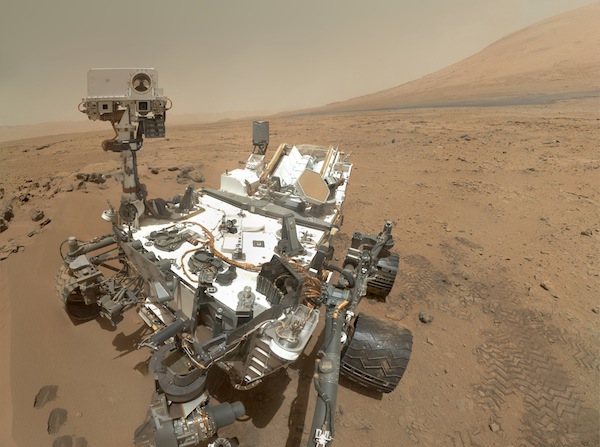
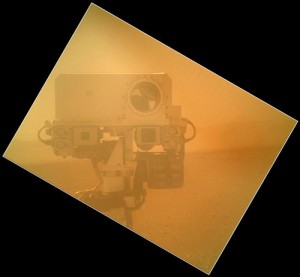
    Curiosity self-portrait. Image Credit: NASA/JPL-Caltech/Malin Space Science Systems

    As the Curiosity rover settles into its new home in Gale Crater on our neighbouring planet, one small worry is growing in the backs of the minds of certain NASA scientists. Could a blunder on the part of some engineers lead to Curiosity contaminating the surface of Mars with Earth life?

    Drill Bits on Rover Could Contaminate Mars

    John D. Rummel, a professor of biology at East Carolina University, said, partly in jest: “It will be a sad day for NASA if they do detect ice or water. That’s because the Curiosity project will most likely be told, ‘Gee, that’s nice. Now turn around.’ “


    And finally, planet hunters are scouring the sky for exoplanets. Astrobiologists are hoping to soon be able to look into the atmospheres of those planets in search of life signs, in the form of certain molecules created by living organisms. But could they be fooled by those molecules coming from somewhere else?

    Meteors Might Add Methane to Exoplanet Atmospheres

    One key gas astrobiologists looking for extraterrestrial life would concentrate on would be oxygen […] Another possibility would be methane, a colorless, odorless, flammable organic gas that microbes on Earth produce. Seeing both together in an exoplanet’s atmosphere might be an especially significant sign of life, since they would both ordinarily remove each other from the atmosphere without something like life to constantly replenish them.


    Have a good weekend!

  • New Associate EMBO Member from Australia

    New Associate EMBO Member from Australia

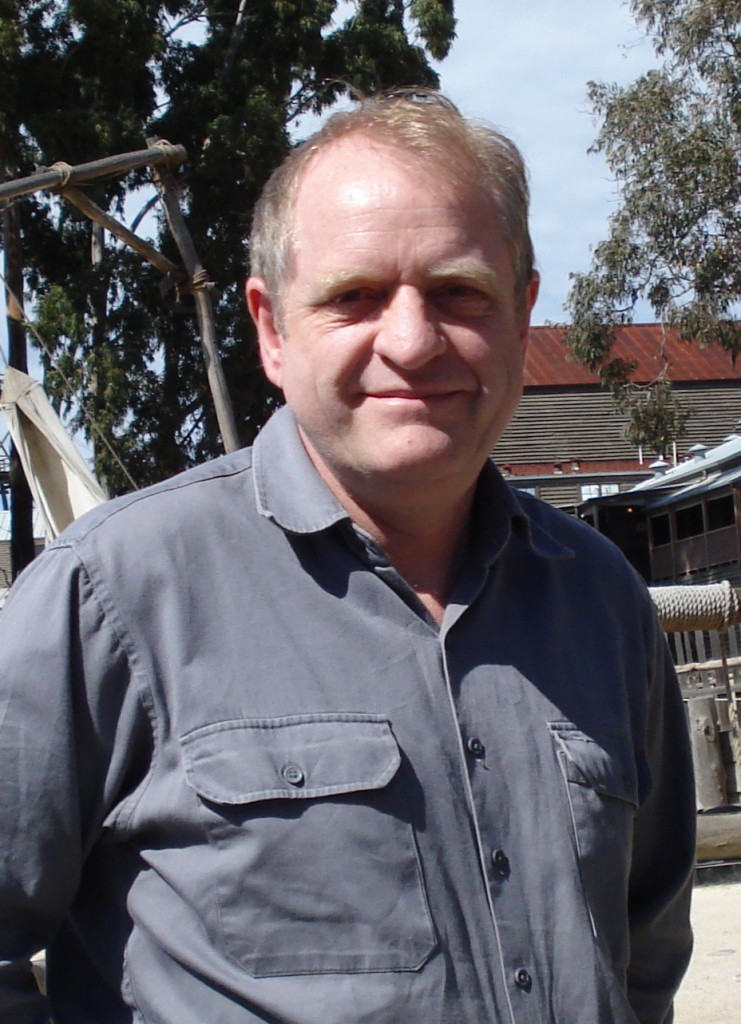
    New Associate EMBO Member from Australia – professor David L. Vaux

    Fifty-five life scientists from Europe and around the world, on 9 May 2012 in  Heidelberg, Germany, were recognised by EMBO (Excellence in Life Sciences) for their excellence in research. Forty-eight of the researchers are from Europe and neighbouring countries while seven scientists from Argentina, Australia, South Korea and the United States join as Associate Members. In total, EMBO membership now comprises almost 1,550 life scientists in the international scientific community.

    EMBO elects new members annually on the basis of scientific excellence. The new members represent a broad cross-section of the life sciences. The latest scientists to join the group come from 17 different countries and include 13 female scientists recognized for their contributions to life science research.

    The new Associate Member from Australia is professor David L. Vaux, Walter and Eliza Hall Institute, Parkville. Prof. Vaux is best known for identifying the proto-oncogene bcl-2 as an inhibitor of cell death, thus launching the field of molecular biology of apoptosis (programmed cell death). Read more about his research division Cell Signalling and Cell Death and his research overview, interests, and selected publications.

    The selected researchers will help shape the direction of the life sciences in Europe and beyond by their involvement with the activities of the organization. EMBO Members provide scientific input such as acting on advisory editorial boards of the four scientific journals of the organization, serving on selection committees for EMBO Programmes and giving general advice to the scientific community.

    A list of all new EMBO Members and Associate Members accompanies this announcement [link].