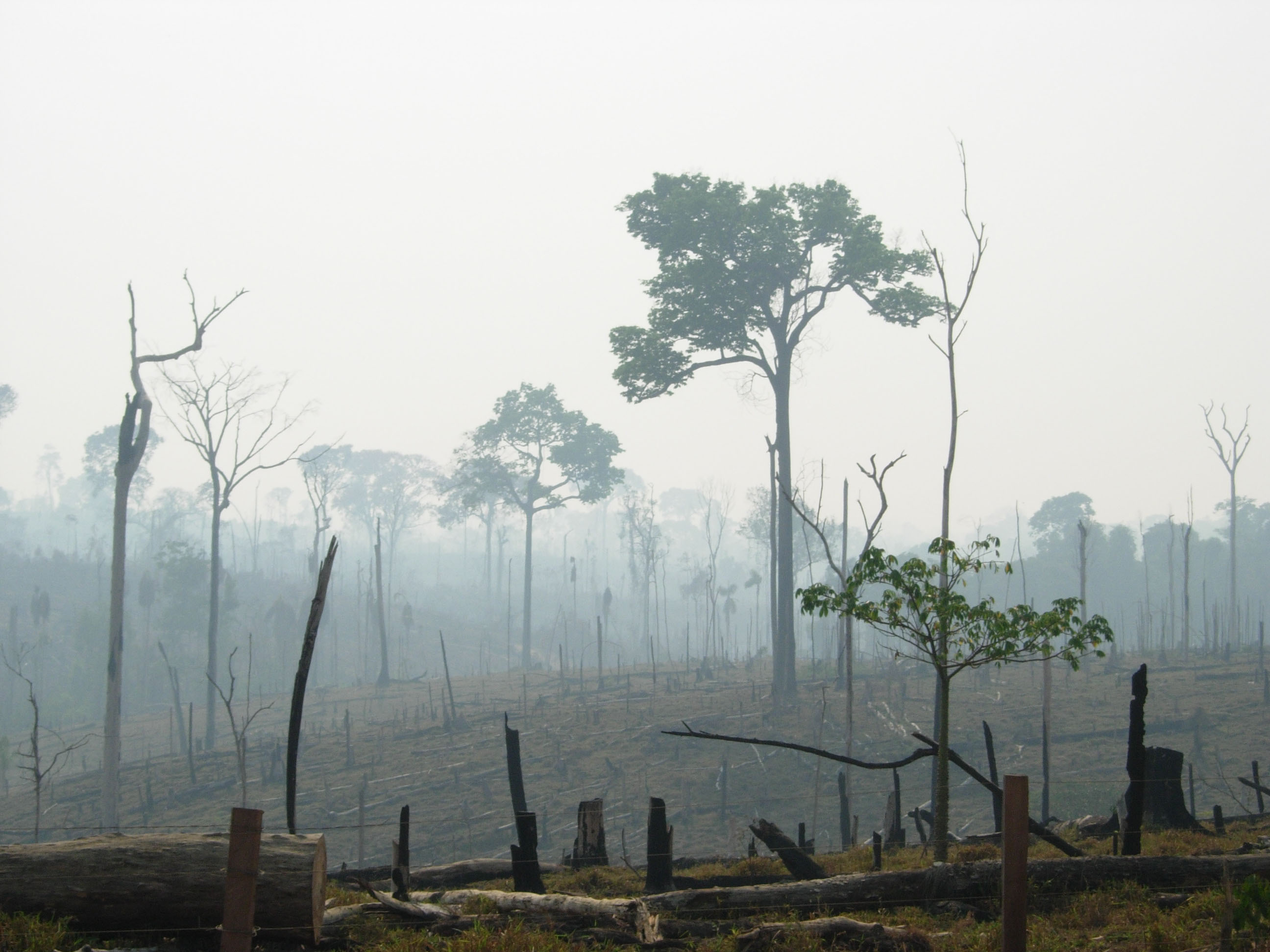
By 2050 they will all be gone. The worst is yet to come.
The Amazon rainforest contains a wider variety of plant and animal life than any other biome in the world. The region in its entirety is home to roughly 2.5 million insect species, tens of thousands of plants, and some 2000 birds and mammals. To date, at least 40,000 plant species, 2000 fishes, 1000 birds, 427 mammals, 428 amphibians, and 378 reptiles have been scientifically classified. The Brazilian Amazon harbors roughly 40% of the world’s tropical forest and a significant proportion of global biodiversity.
The numbers speak for themselves. However, over the past few years what we’re seeing is a biodiversity crisis in slow-motion. Those numbers are at risk. The largest drivers of which being climate change and habitat loss by deforestation.
Habitat loss results in species extinction, but not immediately. When habitats shrink it may take several generations after an initial impact before the last individual of a species is gone. Extinction against the clock and in slow motion.
Visualising how this occurs and estimating the impact has always been a problem for researchers. The question now is — how many species are headed for extinction as a result of past and future deforestation?
New research published today in Science describes cutting-edge statistical tools used to devise a novel strategy to estimate the expected number of local species extinctions as a function of the extent of habitat loss.
Researchers made predictions on the extent of the extinction damage based on four possible scenarios — two in which all parties comply and respect current environmental law and protected area networks; and two which rely on strong reductions and eliminations in current deforestation rates. A reflection of recent pledges by the Brazilian government and potential reductions in deforestation proposed in 2009. What researchers describe is an estimation of something much more serious than previous estimates.
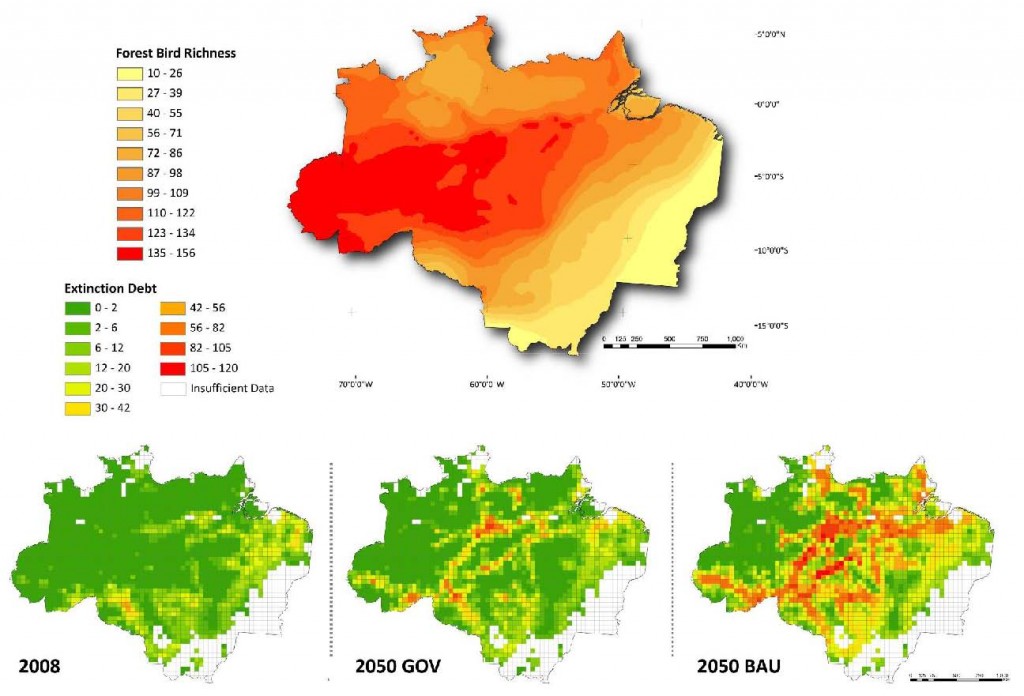
Deforestation over the last three decades in some localities of the Amazon has already committed up to 8 species of amphibians, 10 species of mammals, and 20 species of birds to future extinction. Local regions will lose an average of nine vertebrate species and have a further 16 committed to extinction by 2050. The worst is yet to come it seems. More than 80% of local extinctions expected from historical deforestation have not yet happened.
An “extinction debt


 The 7th Annual MIT Energy Conference held March 16-17 in Boston, MA, was an all-around inspiring event filled with conversations of hot topic scientific research and intense policy discussion. It was impressive, considering this event is entirely planned and executed by the student body, with well over 500 in attendance. From the scientific prowess of the professors working on new energy technologies, the caliber of executives leading the charge on the corporate front, to the undergraduate and graduate students pursuing their dreams to engineer a better tomorrow for society, we are indeed poised to see a radical transformation in both the technology and the policies of the energy sector.