Tag: Environment

  • Paper Consumption Impact in Australia

    Paper Consumption Impact in Australia

    Everyone must play their part in creating sustainable futures for the world’s commodities. Paper is a huge commodity and is consumed at exorbitant rates as outlined by Forest Ethics‘ recent research. They reported that across the world North America used on average 229kg of paper per capita annually, Western Europe got through 178.7 kilograms, Latin America 43.02, Asia 41 and Africa 7.51 kilograms per person. In Australia we use on average 230kg per person per year. It is clear that the paper industry demands exponential resources to continue to fulfill the demand and if Australia would like to achieve sustainability we must rethink our consumerist ways.

    Recycling

    Even though environmental organisations may talk of green initiatives to reduce paper consumption the idea of a paperless-society is far from being a possibility. People are still heavily reliant on paper to run a business, school or organisation and to fuel general lifestyle products such as boxes, packaging, magazines, newspapers and labels. Since European Settlement Australia has cleared almost half of its forest areas and we continue to deforest an area the size of the ACT every year. The act of paper-want is putting a heavy burden on Australia’s ecological sustainability. In 2007-2008 Clean Up Australia reported that we used 4,250, 000 tonnes of paper and of that we sent 1.9 million tonnes straight to landfill. Every office uses 10,000 sheets of A4 paper on average and 50% of that will end up as garbage. These statistics are a sobering reminder of Western waste.

    Paper production is a process that has not changed in over 2000 years. In today’s measures it takes 24 trees to produce one tonne of virgin printer paper but only 25% of each tree is used to produce the paper product. The paper industry is a greedy resource consumer that uses more water to produce a tonne of its product than any other industry. It uses a staggering 90,000 litres of water per tonne of virgin paper.

    Recycled paper not only assuages environmental impact but drastically reduces the amount of vital resources needed to produce it. Creating one tonne of recycled paper consumes 50% less energy than virgin paper which equates to only 4100 kilowatt hours of electricity per tonne as well as only requiring 25% of the amount of bleach used new office paper. It also saves:

    • 13-24 trees
    • 31,780 litres of water
    • 2.5 barrels of oil
    • 4 cubic metres of landfill
    • 27 kilograms of air pollutants

    Paper recycling plays a pivotal role in helping to reduce the environmental impact the paper industry has had on vital world resources since the European Settlement. There are initiatives that independent Governments, organisations and the likes of the European Union have put forward to curb the astonishing waste of resources which is a result of paper production. The environmental management of paper is an ever present issue which individuals, groups and continents must acknowledge before the world’s forests are depleted to a point of complete environmental hazard.

    Recycling in general benefits the environment no matter what type of item you choose. Be it paper or cans, food scraps or plastic there is worth in saving every item. Planet Arc dispels the myth in their 2006 report which was created to enlighten people from the persuasive and unrealistic myths which prohibit the proliferation of recycling across the world. They note that every commodity has ‘embodied energy’ which is the energy that it took to produce the item and the act of recycling it recovers a portion of that energy. The Australian Council of Recyclers estimated for the benefit of the report that recycling in Australia generates $3.5 billion of eco-services, recovers $912 million of commodity value and 68,400 giga-watt hours (GWh) of embodied energy.

    Both businesses and organisations can support paper recycling and environmental management by aligning their practices to an international standard such as EMAS. EMAS volunteer their time to appraise organisations that continually enhance their environmental performance. Businesses which run an Environment Management System and regularly report their performance in published form, which is verified by an independent statement, can be registered with EMAS. They are also encouraged to use the EMAS logo on their promotional material so their customers can be guaranteed that they are legally compliant.

    In small measures individuals can improve their participation in paper wastage. Do some research and make sure that you are doing your best to help the cause.

    Images by Joel Penner and Nicolas Raymond
  • The Highlights of 2013

    The Highlights of 2013

    This year our writers churned out a host of fantastic articles, including a series of posts dedicated to women in space, written by Sharon Harnett. One of the most notable of the series was all about Valentina Tereshkova, the first woman astronaut. This year was the 50th anniversary of her historic spaceflight. We also had a few great interviews, including one with Henry Reich, creator of the YouTube series Minute Physics.  We’ve managed a number of achievements. We’ve helped several science writers gain exposure and reputation world wide, we’ve appeared on ABC’s Newsline, and we’ve been listed in TED’s top 10 science and technology websites.

    So, in no particular order, here are ten of our favourite articles from 2013. We hope you’ll enjoy these stories. Stay curious and scientifically passionate!

    A Tale of Two STEM Women by Buddhini Samarasinghe

    When I first read this story, I was struck by how often we focus on happy stories like Marie Curie’s, and how the story of someone like Clara Immerwahr remains largely forgotten. She had a tremendous amount of potential, as evidenced by her being the first female to receive a Ph.D at the University of Breslau, an endeavor that is certainly not for the faint-hearted even now. One can only wonder at the ‘might-have-beens’ if she had had the same support and encouragement that Marie Curie did, if she had not married Haber, or if Haber had been a different kind of person. These examples highlight that talent alone is not enough; we need to encourage that talent by promoting equality and recognizing our own biases when it comes to women in STEM. Read more>>


    Sometimes it’s hard to be a woman (in science) by Amy Reichelt

    Obtaining a senior academic position for any aspiring young academic is one of those uphill struggles with roads lined with self doubt, setbacks and sacrifice. Some call it the way to tenure-track, in my mind it’s one of those ill-defined paths through a potentially haunted forest inhabited with monsters, gigantic poisonous spiders and creepy people who communicate by screaming. It can be harder still to even reach that point, particularly for young women. While the number of women professors in Europe, N. America and Australia has increased over the last decade, universities still have a disproportionately small number of women in senior professorial positions. Read more>>


    Spiders on Mars? No, An Australian Radio Telescope! by Elizabeth Howell

    The MWA is a powerful telescope in its own right, but what is even more exciting is it will form part of a larger project in the coming years. The Square Kilometre Array will link radio telescopes on two continents — Australia and Africa — to get a fine look at the sky in radio wavelengths. MWA is just one part of this array. There will also be dish receptors in eight countries in Africa, with the core and some mid-frequency aperture arrays in South Africa’s Karoo desert. Read more>> 


    Hopeful results in latest HIV vaccine trial, but many hurdles to overcome yet by David Borradale

    A HIV vaccine, known as SAV001-H has shown promising results in an early clinical trial, with no adverse effects reported and importantly, a significant increase reported in HIV specific antibodies in participants who received the vaccine. In this trial, 33 HIV positive participants were randomly allocated to one of two groups: half into a treatment group receiving the vaccine and half into a placebo group who did not receive the vaccine. The participants were followed up at regular periods, testing safety of the vaccine and antibody response over a one year period. Read more>>

    Are Australians Really Getting Dumber? by  Magdeline Lum

    The Australian Academy of Science has found that when it comes to science Australians are getting dumber in its latest report on science literacy. Compared to three years ago, less people in Australia know that the Earth’s orbit of the sun takes one year. Among 18-24 year olds 62% surveyed knew the correct answer, a fall from 74% three years ago. Other results would also send scientists into a tail spin of despair, with 27% of respondents saying that the earliest humans lived at the same time as dinosaurs, though an improvement from 30% of respondents in 2010 who thought this. What does this all say? If you take the face value of the press release and the ensuing media coverage, Australians are getting dumber. Read more>>

    From fables to Facebook: Why do we tell stories? by Lauren Fuge

    Storytelling is one of our most fundamental communication methods, for an obvious reason: narrative helps us cognise information. Telling intelligible, coherent stories to both ourselves and others helps our brains to organise data about our lives and our world. But when we askwhy stories are so effective at helping us cognise information, the answers are surprising: it seems that somewhere in the otherwise ruthless process of natural selection, evolution has wired our brains to prefer storytelling over other forms of communication. Read more>>


    Plastic’s Reach by Kelly Burnes

    Plastic. Seems it has extended its reach into the farthest corners of the universe. An earliest post described how plastic has changed our lives, for better…and for worse. ADD link to earlier post. That post largely reflected on the growing problem of plastic in the oceans and the effect on plant and animal life. Now, it seems that plastic threatens our freshwater lakes now too. Read more>>


    Postcard from Spitzer: weather on 2M2228 is hot and cloudy by Kevin Orrman-Rossiter

    Long distance weather reports are now a commonality. The report for 2MASSJ22282889-431026 is somewhat unusual. It forecasts wind-driven, planet-sized clouds, with the light varying in time, brightening and dimming about every 90 minutes. The clouds on 2MASSJ22282889-431026 are composed of hot grains of sand, liquid drops of iron, and other exotic compounds. Definitely not the first place to spend a summer holiday. Not that 2MASSJ22282889-431026 (or 2M2228 as it is known in The Astrophysical Journal Letters) will appear on a travel itinerary anytime soon. For 2M2228 is a brown dwarf, 39.1 light years from earth. Read more>>


    The bacteria that live inside hurricanes by Charles Ebikeme

    Seven miles above the Earth’s surface, where the weather is born, lies the troposphere – the lowest layer of Earth’s atmosphere. Up there, where the clouds dance around, are bacteria that can make it rain, and are important for the formation of clouds. The atmospheric microbiome is a concept and field of study that is gaining importance. As we come to grips with a changing climate and environment, understanding more and more our Earth ecosystem remains vital. With hurricane damage in the US and elsewhere seemingly on an exponential increase in recent decades, it is important to mitigate for the worst. Read more>>


    Quantum computing: Australian researchers store data on a single atom! by Markus Hammonds

    Computing is also an incredibly fast moving field of technology, and research is finally taking us towards the exciting world of quantum computing! Quantum computers will work using quantum bits, or qubits for short, which are analogous to the digital bits used in computers like the one which you’re using to read this article. Recently, a team of engineers at the University of New South Wales (UNSW) has successfully demonstrated, for the first time ever, how a single atom can be act as a qubit, effectively showing the first step in building an ultra fast quantum computer. And they might just have created the best qubit ever made. Read more>>

    Happy 2014 from Markus, Charles, Kevin, Kelly, and Danica!

  • Printed solar cells as easy to produce as t-shirts!

    Printed solar cells as easy to produce as t-shirts!

    Australia is really taking the initiative in alternative energy production. The latest news is that a consortium of Australian researchers have succeeded in producing printable solar cells, in a process which might just have the potential to revolutionise solar power production across the continent. Perhaps, we can only hope, the world.

    Succinctly, a new printer which has been installed at CSIRO is capable of printing solar cells the size of A3 sheets of paper – the largest ever created. Printing onto sheets of flexible plastic, it can produce these at a rate of 10 metres per minute (one new and fully functioning solar cell every 2 seconds!), and those cells can produce between 10-50 Watts per square metre, dependent upon how much light they receive. Oh, and the best part? The printer uses no brand new or special technology. In fact, it’s not a lot different to mass producing printed t-shirts!

    The group responsible refer to themselves as the Victorian Organic Solar Cell Consortium (VICOSC), and they’re made up of a collaboration between CSIRO, The University of Melbourne, and Monash University, together with a handful of industry partners. Over the past 3 years, they’ve been working on printing solar panels. Starting with a cell the size of a human thumbnail, they’ve scaled their way up to larger and larger sizes. And they have plans. Big plans.

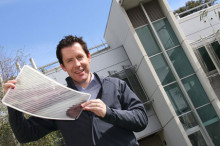
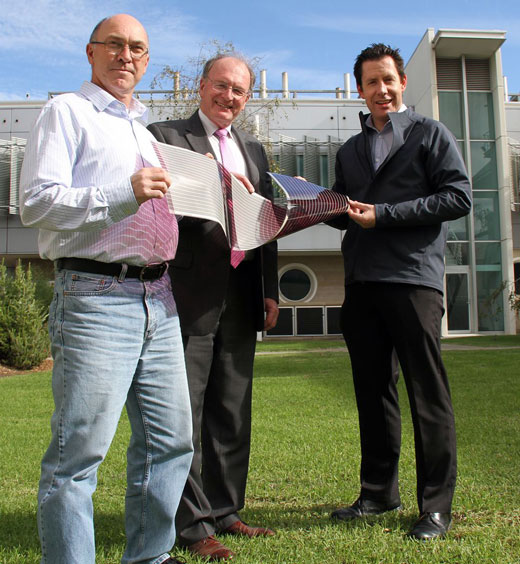
    Dr David Jones, Professor Andrew Holmes and Dr Scott Watkins, three of the researchers involved, together with one of their printed solar cells.
    Dr David Jones, Professor Andrew Holmes and Dr Scott Watkins, three of the researchers involved, together with one of their printed solar cells.

    I mentioned a little while ago in my article about wind power, that I’m a keen advocate of alternative energy. This is because, and let’s be frank here, energy based on crude oil is not sustainable in the long term. I could list dozens of reasons why this is the case, not least of which is the fact that oil reserves are limited. But the biggest factor is pollution. We really need to start taking better care of this world.

    Australia, it has to be said, receives one thing in abundance. Sunlight. Developing solar power seems like something of a no brainer, especially for more isolated areas. In fact though, the Earth receives a staggering amount of solar energy constantly.

    Sunlight hitting Earth carries with it approximately 174 petawatts (174,000,000,000,000,000 watts!) of power. Of course, for the most part we’ll never be able to harvest it. Around 30% is immediately reflected back into space (which is good, because otherwise our planet would boil). But if we could harvest just 0.01% of the solar energy hitting our planet, we would have more power than the entirety of human civilisation can currently use!

    Realistically, powering everything on our world with solar power may not be feasible. But a significant fraction of global energy needs could be easily met with solar power – particularly in areas which receive a lot of sunlight. Areas like much of Australia. The new techniques developed by VICOSC could make solar energy much more accessible to the world at large.

    Firstly, the printing techniques they use are familiar to us all. Essentially, it’s much the same as screen printing – except that they use semiconductive inks which can be printed onto either flexible plastic or steel, dependent on where precisely they’re needed. Even better, the group are currently researching new non-chorinated solvents to use, making the entire operation even more environmentally sound!

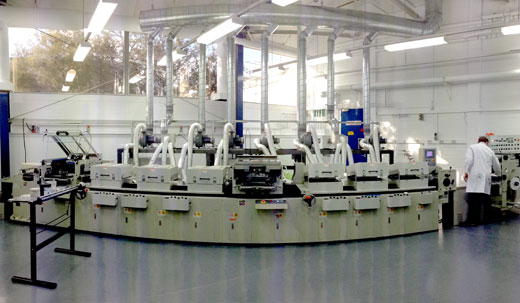
    The newly installed solar cell printer at CSIRO.
    The newly installed solar cell printer at CSIRO.

    While the new printer at CSIRO to produce these solar cells cost a total of A$200,000, the future component costs are tiny. These printed energy collectors work out at a price of just A$1 per watt! Needless to say, this is a huge improvement over any solar panels the market can currently offer.

    The group suggest a couple of particularly interesting uses for their printed solar cells. For a start, they can actually be used to improve the efficiency of existing solar cells. The two technologies absorb sunlight at different wavelengths. This means that the same area of solar cell could be able to effectively collect twice the power.

    Even more dramatically, there are plans to further scale up the printing equipment they’ve used (because why not, right?) and create much larger cells. These could be laminated onto the windows of large buildings like skyscrapers, making any city into its own power plant. Effectively a single typical skyscraper (for example, the Century Tower in Sydney) could “generate” over 100 kilowatts of power just by standing there.

    The new printed solar cells aren’t quite ready to be released to the public just yet. But it sounds like they might be soon. Currently, they’re still undergoing tests. To date, they have a theoretical maximum power of 80 watts per square metre, and the cells currently being produced have a lifetime of over 6 months.

    The current goal is to raise their useable lifetime to 2 years. But of course, given how ambitious VICOSC have been so far, I doubt they’ll stop there. Maybe we should start thinking about taking the word “alternative” out of “alternative energy”.

    Image credits: CSIRO/VICOSC

  • What do Mars and Australia have in common?

    What do Mars and Australia have in common?

    If you’re expecting a punchline to that title, then guess again. It’s no joke. Surprisingly, Australia shares some remarkably similar geology to our neighbouring planet. Specifically the Red Centre, the arid heart of Australia, is the most Mars-like place on Earth!

    It’s possible that people may have mused on the similarities already. After all, with its strikingly rich colours, the Red Centre (more often known as the Outback) certainly looks like few other places on Earth. Without any vegetation, the colour of the soil and rocks in the region could easily resemble Mars in places. But evidently, this resemblance is more than just skin deep. The clue that lead to this fascinating realisation? Another of Australia’s most beautiful and iconic of things – opals.

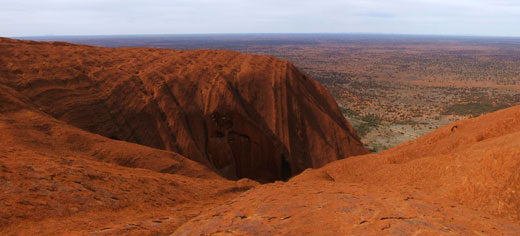
    Uluru view!
    A view from the top of Uluru, showing it’s distinctive red colour. Credit: Binarysequence/Wikimedia Commons

    Patrice Rey at the University of Sydney’s School of Geosciences was investigating how opals formed. It may be surprising to learn that opals are found in few other places on Earth, with roughly 90% of all opals worldwide having originated in Australian mines. Beautiful and sought after, there’s been a lot of mystery behind opals for a long time – specifically about how they form, why they’re found at such shallow depths under the Australian soil, and why they’re found nearly nowhere else on Earth.

    The story of these beautiful sparkly gemstones, it turns out, began around 100 million years ago. At the time, most of central Australia was covered by the Eromanga Sea. In times past, this huge epicontinental (inland) sea covered what is now known as the Eromanga Basin – spanning an area of one million square kilometres and reaching into much of what is now Queensland, the Northern territories, South Australia and New South Wales.

    During the Cretaceous period, when dinosaurs still ruled our planet, this sea would have been teeming with prehistoric life. But much like the dinosaurs, the Eromanga Sea was doomed. Around 100 million years ago, the climate of Earth began to change and the sea began to dry out. The sea dried out rapidly on geological timescales, to cover a much smaller area. The result was that the chemistry of the surrounding rocks began to change.

    As the Eromanga Sea dried out, pyrite minerals in the surrounding rocks began to release sulfuric acid, causing acid weathering on a huge scale – quite possibly the largest Earth has ever seen. The opaline silica which was created in the Australian rocks during this process would later go on to form into opals. But the big clue is the acid weathering – we only know of one other place in the Solar System where this has happened in the past. Planet Mars.

    While the predicament of prehistoric Australia is, as far as we know, unique on Earth, Mars actually shares a lot in common with this event. Except on Mars, we believe that the drying out of seas happened on a global scale. Hints of this were detected in 2008, when NASA’s twin Mars rovers, Spirit and Opportunity, detected several telltale clues in the Martian soil.

    The surface of Mars was found to hold opaline silica, iron oxides, and certain types of clay. All of these clues led areologists* to conclude that the surface of Mars had been subject to huge amounts of acid weathering. The exact same type of acid weathering which Rey and his fellow researchers have now discovered to have happened in Australia!

    An opal doublet from Andamooka, South Australia.
    An opal doublet from Andamooka, South Australia. Credit: CRPeters/Wikimedia Commons

    If you’re thinking that this means that there may be Martian opals waiting to be discovered somewhere on the planet next door, it’s hard to say. But it’s certainly a possibility! There is, however, one final step in the formation of opals. The opaline silica which was found on Mars is not yet true opal. In Australia, the surrounding rock has an impressive capability to neutralise acid. This means that after the ground in Australia became riddled with opaline silica, the surrounding conditions quickly went from acid to alkaline. When this happens before the silica trapped in rock cavities dehydrates and solidifies – voila! Opals! Of course, there’s a good chance that Mars may be home to some kinds of rock which can also neutralise acid the same way.

    So only time will tell. Perhaps someday in the future, Martian colonists may be using Mars opals to create the first ever jewellery made elsewhere in the Solar System!

    *An areologist studies the geology of Mars, seeing as technically the “geo” in geology refers to planet Earth.

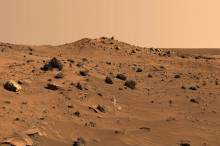
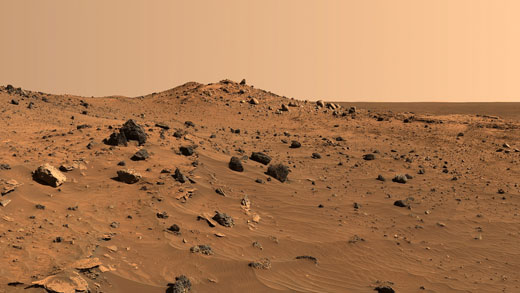
    Could there be opals hiding under the Martian soil?
    Could there be opals hiding under the Martian soil? Credit: NASA/JPL


  • Wind power: renewable energy for the cities of the future

    Wind power: renewable energy for the cities of the future

    Renewable energy? I’m a big fan! Unfortunately, so are modern wind turbines, which are the subject of intense arguments and criticism despite their many benefits. However, this view might be changed somewhat, by a new innovation by Farzad Safaei at the University of Wollongong (UOW) – a new type of wind turbine known as PowerWINDows.

    I’m actually going to come straight out and drop the neutral viewpoint on this article, because this is important. I am very much a supporter of renewable energy, and I find it quite preposterous that anyone would even think about arguing against it. Very recently, carbon dioxide levels in the atmosphere have reached 400 parts per million for the first time in recorded history. This may not seem like a lot, but Earth’s atmosphere hasn’t seen this much carbon dioxide for over 3 million years. It may sound like a cliché to say, but by continuing to burn fossil fuels we’re doing some permanent damage to our planet. And speaking as an astronomer, I can say with some authority – this is the only planet we’ve got.

    Lots of people argue against wind turbines. In my not-so-humble opinion, this is ridiculous. Nonetheless, it happens. People claim that they’re “a blight on the landscape”, that they generate noise, that they affect local wildlife, and that they have a negative impact on health. Most of these criticisms are unsubstantiated and have no basis in fact. Let’s think rationally here: all of the same things are probably true of any other form of power station. And when other power stations go wrong, the effects can be significantly worse than a broken propeller blade. Hopefully then, innovations like PowerWINDows might help to both silence the critics and make wind energy a more easily attainable power source.

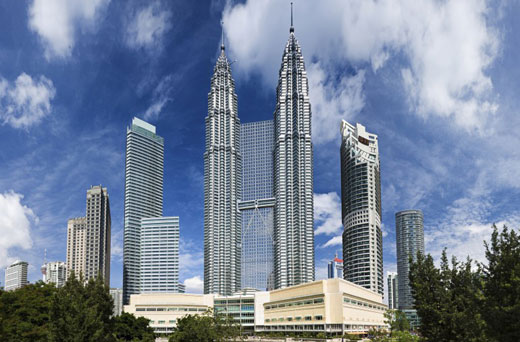
    Just imagine how much power the Petronas towers could generate...

    The basic idea with PowerWINDows is that there are none of the large rotating blades which people claim to be dangerous. The smaller, compact design allows PowerWINDows turbines to be installed on tall buildings such as skyscrapers and apartment blocks. All in all, the newly designed turbines are cheaper, quieter, and more convenient than existing wind turbine technology.

    After four years of design and testing work, UOW have signed a deal with Birdon, one of Australia’s top engineering companies, to build and test a prototype suitable for commercial production. If all goes according to plan, the new turbines may go into production sometime in the future. Just imagine how much additional power could be generated if every large city had wind turbines installed on every tall building!

    Professor Safaei’s inspiration for the idea was a desire to improve on existing wind turbines and any of their shortcomings – i.e. the criticisms made against them. His goal was to enable modular manufacturing, reduce noise and land usage, and allow easier transportation and installation. “I wanted to create a wind turbine that better integrated with living environments

  • Weekly Science Picks

    Weekly Science Picks

    Greetings one and all, and a very happy science Sunday to you! This week’s generally been quite interesting. We’ve had good news, bad news, a little heated discussion… All the kind of things which keep the science community vibrant and interesting. As for specifically what that news was, well. Please do read on…


    First up this week, sad news. After exemplary service ever since its launch in 2009 and a mission extension last year, the Kepler telescope has finally broken down. Kepler spots transiting exoplanets by staring unblinkingly at the same patch of sky, and in order to do that it needs to keep very still. Sadly, two of its four gyroscopes are out of action, meaning that Kepler may be shutting down for good.

    Kepler’s Planet-Hunting Mission May Be Over

    “Frankly, I’m absolutely delighted that we’ve got all this data, that we have been so successful, that we have found so many thousands of planetary candidates,

  • How to green the desert and reverse climate change

    How to green the desert and reverse climate change

    “Desertification is a fancy word for land that is turning to desert,

  • The Carbon Footprint of Australian Migrations

    The Carbon Footprint of Australian Migrations

    Measuring the impact of Australian migration on the Australian carbon footprint is a difficult task because of the complexity of the factors involved. However, a direct cause and effect relationship between the two exists, and it is related partially to population growth due to overseas migration, as well as to rural-urban migrations. Both of which are the consequence of the modernisation and urbanisation of Australian society. This article will present data and research findings about some of the factors that need to be taken into account when discussing the issue of the Australian greenhouse gas emissions. In conclusion it will also share some insights into some of the ways in which the Australian carbon footprint can be reduced.

    Rural-Urban Migration

    Australia is increasingly becoming an urbanised nation and the scope of migrations from rural to urban areas has recently been growing. A typically higher standard of living in urban areas, industrial development, the built environment and technological advancement; all have a considerable impact on the environment. With urbanisation, the consumption pattern in Australia is changing, and there is a significant increase in consumption per capita.

     Recently, there has been more research on how population growth and internal migration into urban areas affect the environment. Australian households are directly responsible for about 20 percent of total carbon pollution. The increasing production of consumer goods has a major impact on the environment – there is an increase of carbon dioxide emissions, or greenhouse gas (GHG) emissions, which is considered the main cause of global warming. Consumption per capita is greater in urban than in rural areas. Greater volumes of transport and removals also have their share in the increase of the carbon footprint. The increase in waste streams resulting from greater consumption causes an amplification of emissions from landfill facilities, which currently emit about 15 million tonnes of carbon pollution per year.[1]

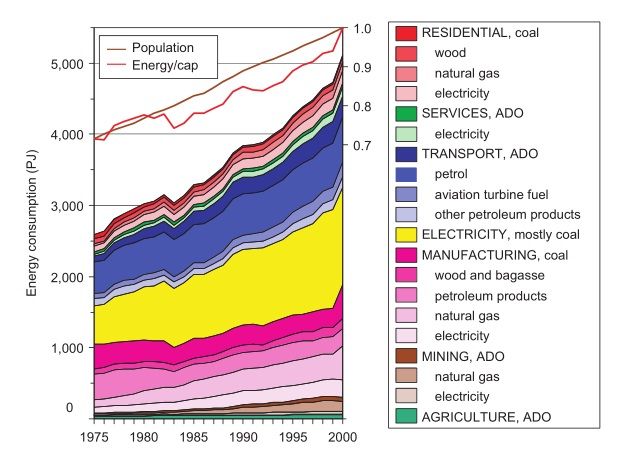
    One of the ways to analyse household greenhouse gas expenditure is to break down how much energy consumption and greenhouse gas emissions a human being requires for different needs and aspects of living (such as food or mobility). According to Dr Manfred Lenzen, Professor of Sustainability Research at Integrated Sustainability Analysis (ISA) at the University of Sydney, the analysis of energy and greenhouse gas requirements of different stages in the economy is a better way to structure the data which needs to be considered when creating policies related to the reduction of the carbon footprint.[2]

    Energy consumption in Australia 1975–2000 (Australian Bureau of Agricultural and Resource Economics 2006)*
    Energy consumption in Australia 1975–2000 (Australian Bureau of Agricultural and
    Resource Economics 2006)*

    Professor Lenzen explained to us that the main advantage of the input-output method is that it includes a complete picture of a household’s GHG responsibility.  In some information material from Professor Lenzen’s studies we see that the focus is on switching lights off, having shorter showers, or driving less. But what about our shopping habits? How much emissions were caused because of that T-shirt I just bought, or that flat-screen TV, or that surfboard, or that movie ticket, or that insurance policy? Such things are actually two thirds of the story and must not be ignored. Because if they were, policy would not be as effective as it could be. When it comes to the difference between the consumption-related carbon emissions of households in urban and in rural areas, people in the inner city drive less, so they have some advantages there. However people in rural households usually earn, and therefore spend less, which ultimately is a stronger effect, and therefore rural households cause (generally speaking) less GHG emissions.[3]

    The increased need for residential space is another large contributor to carbon pollution through the construction industry and the disposal of demolition waste. Investments into energy efficient homes and appliances provide a partial solution to this problem. According to Professor Dr Deo Prasad, Director of the UNSW Centre for a Sustainable Built Environment, most of the potential low cost greenhouse gas emissions saving opportunities are known to be in the built environment – anywhere between 40-70%, depending on which report and boundary conditions they relate to.  However, past experience suggests that market failure/barriers will prevent uptake of these opportunities, even with a price on carbon. In December last year Professor Prasad was one of the experts who launched the Low Carbon Living CRC, which brings together key property, planning, engineering and policy organisations with leading Australian researchers. Their focus was to develop new social, technological and policy tools for reducing greenhouse gas emissions in the built environment. The CRC will help unlock barriers to cost-effective carbon reduction opportunities, empower communities and facilitate the widespread adoption of integrated renewable energy. This will enable the sector to transition and contribute to Australia’s greenhouse gas emissions targets while maintaining industry competitiveness and improving quality of life.[4]

    If we look at overall CO2 emissions of countries, according to the 2012 report on trends in global CO2 emissions by the PBL Netherlands Environmental Assessment Agency, Australia is the 16th biggest polluter in the world. However, if we look at CO2 emissions per capita, Australia has earned the unflattering title of the biggest polluter on the planet in 2009, when it replaced the U.S. in the first position with 18.3 tonnes of CO2 emissions per capita. In 2011, while the U.S. CO2 emission levels per capita decreased by 2 percent; Australia’s emissions rose by 3 percent.

    Dr David Stern, Professor at the Australian National University and research associate at the Centre for Climate Economics and Policy, discusses his research findings; taking into account the differences between Australia and other countries in terms of the climate, and the type of industries we have – for example, we need less heating but the mining industry is very energy intensive – and other factors, Australia is relatively energy inefficient compared to other developed countries and progress on improving energy efficiency has been quite slow.[5]

    There is probably a lot of scope for improving energy efficiency on the consumer side of the economy – energy efficiency of houses, water heating etc. The rebound effect where savings in energy costs are used to spend on other energy using goods and services is more limited for consumers than for industry, and so the gains could be substantial without a lot of take back. Of course, reduced energy use reduces carbon emissions. The Australian government’s carbon price will probably have some effect on this but better information, building codes etc. can help. We have the Energy Efficiency Rating (EER) system for houses for example, but do people know what it means?[6]

    Professor Stern also points out that the biggest impact of immigration is going to be that immigrants are generally coming from countries with lower carbon emissions per capita than Australia. The fraction of immigrants coming from the US, Canada, Qatar etc. is small, though there are some. So, when immigrants move to Australia they will increase their emissions on average and that will increase global emissions.

    Even though population growth is often quoted as one of the main reasons for the increase in Australia’s CO2 emissions, Australian society and economy are continually evolving and new technologies which contribute to sustainability are being developed on a constant basis. Therefore it is difficult if not impossible to calculate the optimal urban population growth of Australia. Greater sustainability can be achieved mainly through the regulation of urban development and consumption patterns in urban areas – these are the two factors that the government can easily influence both through direct and indirect measures. Urban planning additionally decreases the average commuting time, which is also a significant polluting factor.

    Overseas Migration

    More than one-fifth, i.e. 23 percent of Australians were born overseas. The majority of immigrants choose to settle in major cities – according to the 2006 Census, 82 percent of overseas-born Australian residents live in major urban areas. In comparison, only 61 percent of Australia-born citizens live in urban areas.[7] Since most migrants move into urban areas, they tend to adopt average urban Australian consumption patterns.

    Net overseas migration (NOM) is the difference between the number of people leaving Australia and arriving to Australia in the long term. The influence of NOM on greenhouse gas emissions has been researched, and here are some projections of how NOM will influence air pollution in Australia in the future based on research conducted by the Australian Government Department of Immigration and Citizenship summarized in “Long-term physical implications of net overseas migration: Australia in 2050

  • Weekly Science Picks

    Weekly Science Picks

    Source: Google Doodle
    Google celebrated International Women’s Day with a Doodle
    Source: Google

    Women. This is the theme of this edition of Weekly Science Picks. Yesterday, in case you missed it, was International Women’s Day. And it is important to note the achievements of women in careers such as teaching, neuroscience and engineering because women are still in a tightly contested race with the male counterpart. But who doesn’t enjoy a little competition?

    The articles selected this week touch on another issue that is being hotly debated in the U.S. as of late – the question of if women can have it all. Many of you have perhaps heard that Sheryl Sandberg, COO of Facebook, has started down a path of empowering women with her new book released this week, “Lean In: Women, Work, and the Will to Lead”, accompanied by the creation of Lean In Circles, a social networking group to help women express issues of dealing with work and family. I’m not going to get into a debate about this right now, except to encourage some discussion of this topic among our readers, female or male, and think how it applies to life in the sciences.

    This first pick deals with exactly this topic. It is a selection of women in science from around the globe, tackling incredible and exciting challenges in the lab, and outside of it with families.

    From the frontline: 30 something science, What’s being female got to do with anything, ask the scientists who are starting labs and having kids by Heidi Ledford, Anna Petherick, Alison Abbott & Linda Nordling

    “I never thought that my life had to be limited to anything, and I want to set that example for my daughter.

  • Greenland ice core records provide a vision of the future

    Greenland ice core records provide a vision of the future

    Ice cores drilled in the Greenland ice sheet, recounting the history of the last great warming period more than 120,00 years ago, are giving scientists their clearest insight to a world that was warmer than today.

    In a paper published on January 24th 2013, in the journal Nature, scientists have used a 2,540 metre long Greenland ice core to reach back to the Eemian period 115-130 thousand years ago and reconstruct the Greenland temperature and ice sheet extent back through the last interglacial. This period is likely to be comparable in several ways to climatic conditions in the future, especially the mean global surface temperature, but without anthropogenic or human influence on the atmospheric composition.

    The Eemian period is referred to as the last interglacial, when warm temperatures continued for several thousand years due mainly to the earth’s orbit allowing more energy to be received from the sun. The world today is considered to be in an interglacial period and that has lasted 11,000 years, and called the Holocene.

    “The research results provide new benchmarks for climate and ice sheet scenarios used by scientists in projecting future climate influences.”

    Dr Mauro Rubino, CSIRO Marine and Atmospheric Research

    “The ice is an archive of past climate and analysis of the core is giving us pointers to the future  when the world is likely to be warmer”, says CSIRO’s Dr Mauro Rubino, the Australian scientist working with the North Greenland Eemian ice core research project.

    Dr Rubino says the Greenland ice sheet is presently losing mass more quickly than the Antarctic ice sheet. Of particular interest is the extent of the Greenland continental ice sheet at the time of the last interglacial and its contribution to global sea level.

    Deciphering the ice core archive proved especially difficult for ice layers formed during the last interglacial because, being close to bedrock, the pressure and friction due to ice movement impacted and re-arranged the ice layering.  These deep layers were “re-assembled

  • The Highlights of 2012

    The Highlights of 2012

    As 2012 draws to a close and the new year begins, now is a good time to wrap things up and recapitulate the year just passed. It’s been an exciting year with plenty of interesting happenings in science, technology, and education. Despite the fact that we aren’t especially keen on top 10 lists (because all of our authors are fantastic and inspirational), here are a few of the highlights from the past year. We hope you enjoy them!

    Mr Boson, I presume…? / A Brand New Boson

    The news that CERN had detected a signature matching the much sought after Higgs boson was the biggest news this year in physics. While physicists at the LHC still aren’t 100% certain what they’ve found, one thing is for certain – they’ve definitely discovered something never before seen, and it definitely seems to match what’s expected for the Higgs boson. Now it’s up to the theorists to work out if this will confirm existing theories, or if it will require brand new physics to be devised to explain it!

    “It’s a bit like spotting a familiar face from afar,

  • Breaking plates

    Breaking plates

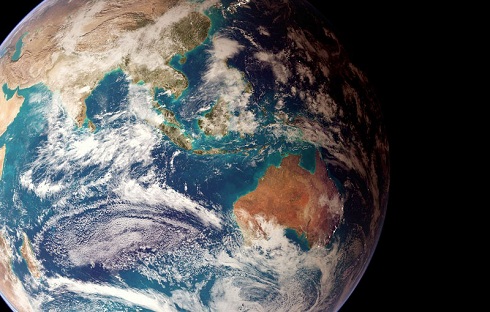
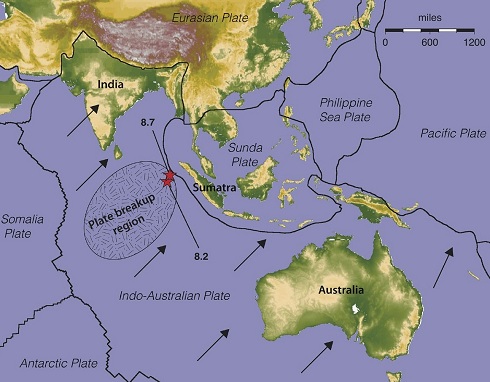
    What do Australia and India have in common? The answer is that they both share one of Earth’s tectonic plates – the drifting eggshell-like pieces of Earth’s crust, on which all of our planet’s continents sit. However, the Indo-Australian Plate is a slightly unusual one, and the two countries may not share it for much longer. Recent Earthquakes beneath the Indian Ocean suggest that this plate may be in the process of breaking in two.

    We generally think of the surface of our planet as being fixed and unchanging. The reality though, is that this isn’t true. Earth’s continents and the tectonic plates which make them up are not fixed at all, drifting slowly across the planet’s surface. For instance, as you’re reading this, most of Africa is moving slowly to the North West and quietly tearing the beginnings of a new ocean into Earth’s surface. Meanwhile, Hawaii is moving at a speed of about 7cm per year which is about as fast as your fingernails are growing.

    Of course, these movements are tiny, compared to the size of the Earth and its continents, but they still cause pressure to build up in Earth’s surface. Sometimes, seemingly without warning, that pressure continues to build up and– SNAP! Something in Earth’s crust cracks or ruptures. This jostles the plates and can cause earthquakes which rattle entire countries. Any places situated at the edges of tectonic plates are particularly prone to earthquake activity, with California and Japan being high profile examples. With enough quakes, however, dramatic changes can happen in Earth’s crust. On rare occasions, larger tectonic plates can sometimes break apart into smaller ones – and that’s exactly what’s happening somewhere beneath the Indian Ocean right now.

    Breaking point – where the Indo-Australian plate is starting to rupture and split

    April 11 this year saw two massive earthquakes strike west of Indonesia in quick succession, measuring 8.7 and 8.2 on the Richter scale. The result was a dramatic quadruple fault rupture in Earth’s crust (a rare event which is more or less exactly what it sounds like!) which caused shockwaves to reverberate around the whole planet. Around a week later quakes occurred across the world as the whole planet shivered in response.

    Geologists, alarmed by what could have caused such a major event, took to analysing the quake. What they found was remarkable. Within roughly 160 seconds, four fault lines (existing fractures in the rock) tore apart under pressure. Remarkably though, this wasn’t at a plate boundary where this kind of  activity is expected. It was right in the middle of the Indo-Australian plate. To the geologists looking at this data, this was like a smoking gun. A telltale sign that, as many had suspected, this particular tectonic plate is starting to fracture and split into two.

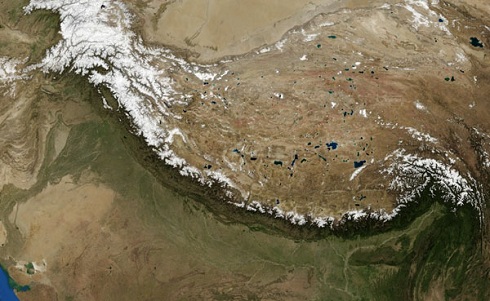
    The Indo-Australian tectonic plate is already a bit of an oddity, being a rather thin and unusual shape compared with the others. The reason being that it was formed some 43 million years ago when two smaller plates (carrying the landmasses which would eventually become India and Australia) fused together. Since then though, it’s collided with the much more massive Eurasian plate. That collision has already caused enough pressure in Earth’s crust to create the Himalayas, one of the world’s most impressively tall mountain ranges. However, the Indo-Australian plate is still trying to move northwards. The  western part of the plate is still pushing against the Himalayas, moving at about 3.7 centimetres per year, but the eastern part, including the entire continent of Australia, is moving at a much faster speed of around 5.6 centimetres per year. This is causing the whole tectonic plate to quite literally buckle, which is the root cause behind all of the quakes in the region over the past decade.

    So what does this mean for anyone who happens to be living on that plate? Well, there are not going to be any sudden apocalyptic changes. After all, according to theories, this is not actually a new event – the Indo-Australian plate began to deform around 10 million years ago! Over millions of years, a new tectonic plate boundary will start to form under what is currently the Indian Ocean. This will cause thousands of similarly large earthquakes, but over such a length of time that they won’t be much more regular than they already are for those living around South-East Asia. All the same, planetary scientists are likely to continue watching this region with interest over the coming years.

    Satellite view of the Himalayan mountain range – perhaps the most dramatic example of the force with which the Indo-Australian plate is pushing into the Eurasian plate!

    Image credits:
    Top – NASA Goddard
    Middle – Keith Koper/Uni. Utah Seismograph Stations
    Bottom –  NASA World Wind

  • Adapting Drinking Water Resources to the Impacts of Climate change in Europe – ADWICE Stakeholder Exchange Conference 2012

    Adapting Drinking Water Resources to the Impacts of Climate change in Europe – ADWICE Stakeholder Exchange Conference 2012

    The ADWICE Stakeholder Conference will take place on 2 October 2012 in Brussels, Belgium. The event will offer a platform for dialogue for understanding the vulnerability of drinking water resources, water quality and water abstraction infrastructures to local, national and European decision makers, experts and researchers, water supplier and river basin authorities.

    The one-day conference represents a valuable opportunity to share knowledge and experiences and to reflect on what kind of measures may be taken to mitigate or to adapt to it.

    The one-day conference will present and discuss the draft results of the literature study conducted by a team led by BIO Intelligent Service, in collaboration with Cranfield University, Water Research Institute (IRSA), National Institute of Hydrology and Water Management (NIHWM) and ICLEI- Europe, for the European Commission (DG ENV). The event will offer a platform to share knowledge and experiences among scientific researchers, local government leaders, national policy-makers and representatives of European institutions and to receive feedback from stakeholder while gathering illustrations and best practices. 

    The morning session will provide inputs for further work while discussing the existing knowledge. The afternoon will be dedicated to highly interactive specific discussions with invited stakeholders and experts to explore different facets of this important topic in detail.

    The conference is free of charge, though early registration is recommended to secure a place.

    For further information, visit http://adwice.biois.com/conference or contact us at adwice-conference@biois.com

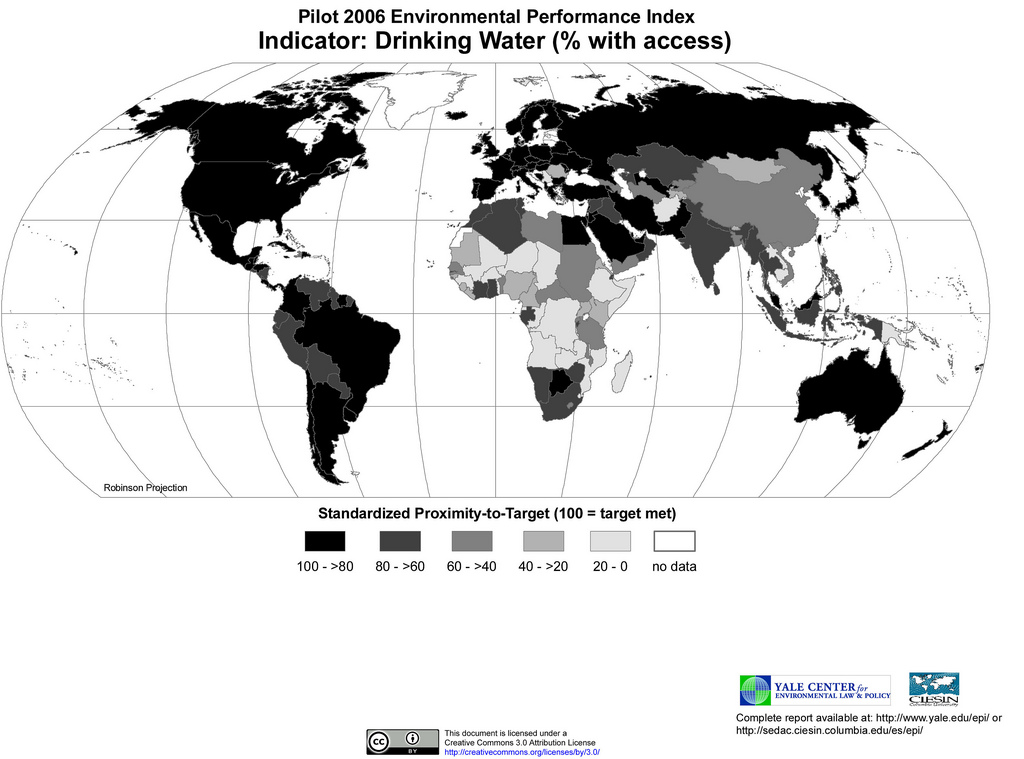
    Drinking Water expressed in % with access


    Image source

  • The Devil’s Technology

    The Devil’s Technology

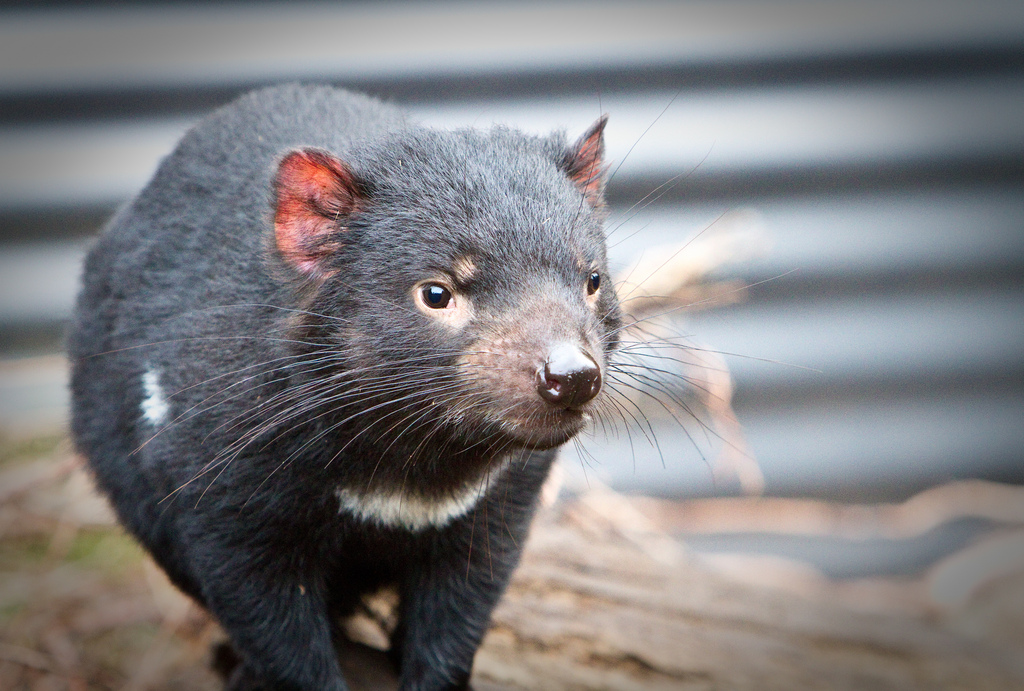
    Biotechnology is rarely considered to be good for the environment. In fact, environmental campaigners frequently claim that genetically modified organisms represent a major threat to biodiversity and ecosystems. However, the study of the Tasmanian Devil Facial Tumour disease (DFTD) using genetic technologies is an example where biotechnology has been used to create a definite environmental benefit.

    The Tasmanian Devil (Sarcophilius harrisi) is Australia’s largest surviving carnivore and endemic to the island of Tasmania. DFTD induces cancerous tumours on the face and inside the mouth of affected animals which die within months. The condition was first observed in north-eastern Tasmania in 1996. DFTD, like other cancers, is caused when mutations within a cell prompt it to switch from normal function into tumorous growth. Cancers are considered non-contagious as the tumour is contained within the body and is unable to spread to alternative hosts. Furthermore, the immune system of any alternative host would normally recognise any foreign tumour cells that managed to invade the body, and quickly kill them before the disease becomes established. However, the DFTD is exceptional in that it is readily transmitted between individuals of the same species, and this has resulted in the disease rapidly sweeping across the island and threatening the entire species with extinction.

    In order to better understand the DFTD, an international team of scientists has sequenced the entire genome of the Tasmanian Devil and identified mutations underlying DFTD. The results were recently published in the scientific journal Cell. This biotechnological research surprisingly identified that none of the tumours originated in any of the hosts examined. Instead, they were able to trace them all back to one cancerous cell from within a female devil, possibly in the early 1990s. This radical and unusual tumour had developed the ability to jump from individual to individual in a uniquely contagious manner, so spreading the disease across the species.

    The Tasmanina devil facial tumour.

    Using the genetic sequence information, the researchers were able to discount the involvement of a virus in the transmission of DFTD. Instead they were able to identify a new and radical form of transmission. Devils often bite each other in the face during eating and feeding behaviours. During biting, fragments of tumour from an affected individual become implanted in an almost vampiric manner in a new and healthy individual.

    The scientists also discovered that the DFTD tumour carries a mutation in a gene that plays a critical role in regulating the host’s immune reaction. From this, they concluded that the tumour cells are able to interfere with the host’s immune system immediately after implantation, The disrupted immune system is unable to kill the tumour, thereby ensuring the survival of the disease in the new individual.

    The results of this study have provided valuable insight into the management of the DFTD and the conservation of the Tasmanian Devil. Because the condition is only transmitted through the bite from a diseased individual, the disease can be effectively controlled by quarantining healthy populations from diseased. The condition will then be naturally eliminated as diseased individuals die off from within the affected population. Such a policy has already been implemented with the Tasmanian Department of Primary Industries, Water and Environment who have been identifying and quarantining disease free populations within the island. Individuals from the protected population may then be re-introduced into the Tasmanian Devil’s former habitat once the disease threat has passed.

    Despite the frequently cited threats that biotechnology poses to the environment, the application of gene sequencing technologies to the DFTD is an example of how biotechnology might be adopted to solve major environmental problems. In fact, the outcome of this gene sequencing project has contributed to a management plan that might yet save the Tasmanian Devil from extinction and conserve an important component of Australia’s unique biodiversity.

    Image source