When the human race inevitably expands off planet Earth, we’ll naturally want to take our internet with us – over the past 15 years or so, the internet really has become an integral part of our lives! In fact, even as you’re reading this, 300 gigawatts of electricity worldwide will have been used to transfer 640 terabytes of information across the internet to 1.5 billion desktop computers and a further billion mobile devices. In the time you’ve taken to read this paragraph, over 200 million e-mails have been sent, 6 million Facebook pages have been loaded, 1.3 million YouTube videos have been watched, and 100,000 people have posted an update to their twitter accounts.
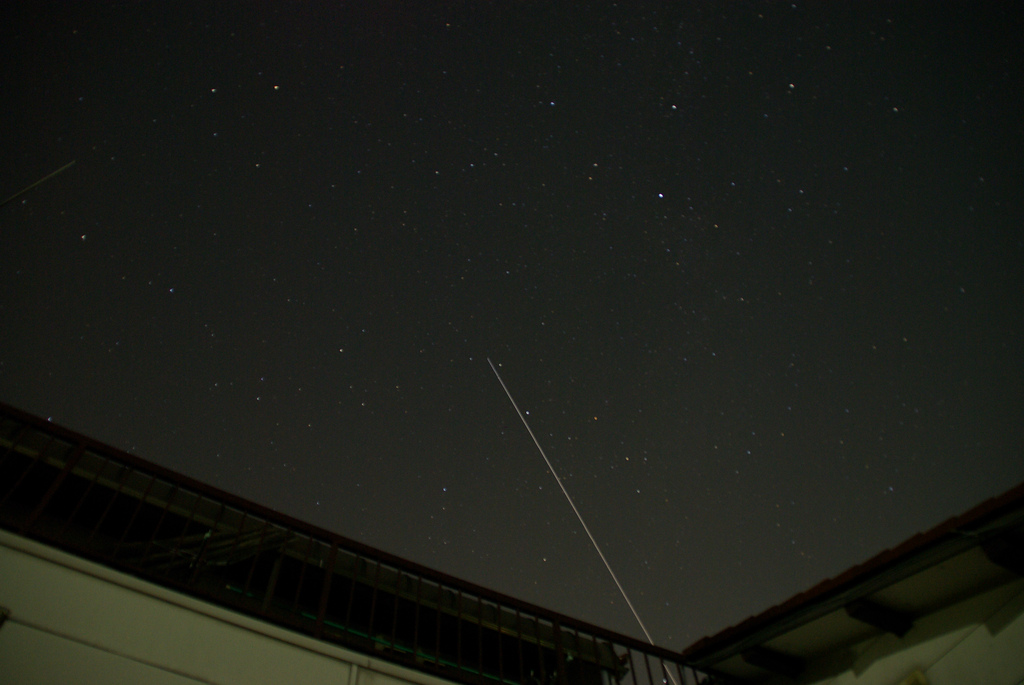
Inspite of its sprawling extent on our planet though, the internet’s first step off-world was able to fit inside just 1120 bytes. On January 22, back in 2010, astronaut TJ Creamer made a small but important piece of internet history by being the first human being ever to post to a twitter feed from orbit. Astronauts had been updating twitter feeds while in orbit for some time, but they had previously always relayed their messages via NASA back here on Earth. Since 2010, however, the International Space Station (ISS) has been upgraded to have its own internet connection. Intended for personal use by astronauts and still routed through ground based systems at NASA for security, this is how e-mails, blog posts and twitter updates are sent back home. All the same, even though it might seem a long way away, the ISS is relatively nearby in low Earth orbit.
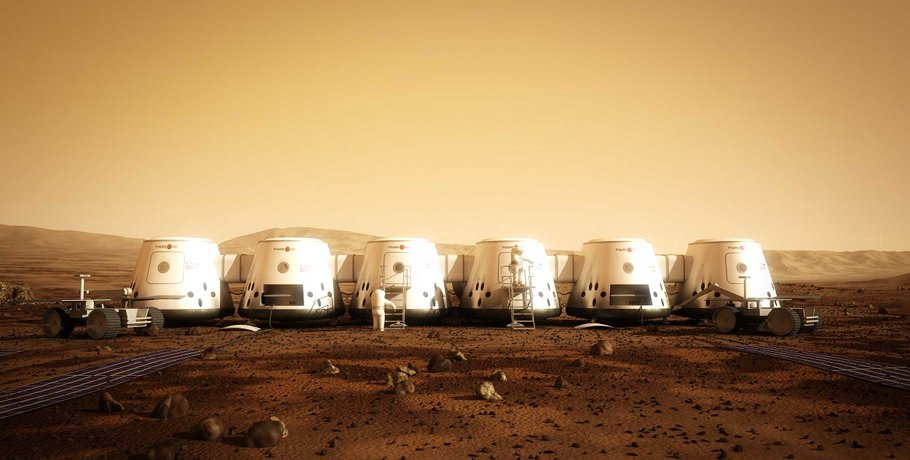
Things start to become more complicated when you consider travelling further afield, because whether we like it or not, we can’t cheat special relativity. The speed of light is the fastest any interplanetary communication (or anything, for that matter) can travel. The Moon is still close enough that interaction is possible in almost real time. Sending a message to someone on the Moon would involve a delay of a little under three seconds. Good enough to hold a conversation, but with gamers here on Earth complaining about latencies higher than 600 milliseconds, you’re obviously not going to be able to play Halo or Warcraft against a friend over that kind of distance. Travel as far as Mars and the problem becomes even more pronounced, with delays of anywhere between 3 and 22 minutes, depending on exactly where Mars is in relation to Earth. Minutes turn to hours as you continue to travel outwards (transmissions from Voyager 2 currently take over 13 hours to reach us). All things considered, using an interplanetary internet sounds like a rather good idea for communication over distances like these. While phonecalls to Mars would be essentially impossible, delays between responses to e-mails and tweets are fairly routine. You could quite easily have a twitter conversation with someone over on a neighbouring planet.
Preparing for the future, NASA and Google teamed up a few years ago to develop a new internet protocol designed to be used in space. Called Disruption-Tolerant Networking (DTN), it’s designed to work a bit differently to the internet we’re all familiar with. While our familiar TCP/IP systems rely on a constant connection to transfer data, this is obviously unfeasible in deep space. While a DTN network would still operate using a series of nodes passing information from machine to machine, the way ground-based networks do, each node needs to hold onto the data being transmitted until it has a confirmation that the message has been safely passed on.
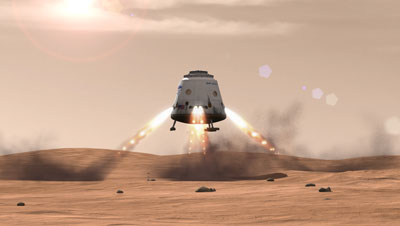
With a steadily accumulating collection of spacecraft in various parts of the solar system. Google’s Vint Cerf has expressed plans to use these old pieces of hardware, many of which have long since completed their original missions, as nodes in what will become an interplanetary internet. Indeed, spacecraft have already transmitted data amongst themselves en route back to Earth. ESA’s Mars Express probe, for instance, has served as a relay between Earth and vehicles landing on Mars, and is set to do so again when NASA’s Curiosity rover arrives at the red planet later this year. In an interview with networkworld.com last year, Cerf is quoted as saying “…if they are still functionally operable — they have power, computer, communications — they can become nodes in an interplanetary backbone. So what can happen over time, is that we can literally grow an interplanetary network that can support both man and robotic exploration.” He continued to explain how, while all space missions to date have involved point-to-point communications, future space missions will likely require “a richer communications network.” This also has an added plus that an interplanetary network infrastructure will allow scientists to receive more data from deep space missions than is currently possible.
With many astronauts already maintaining active twitter feeds from orbit, it has to be said that similar social networks may well play an important role in communications in the future. By the time that role is needed, a network infrastructure will likely be in place for it to operate on. A company like Google, processing petabytes of data and serving hundreds of millions of queries for an index containing billions of websites every day, is certainly qualified to help set up a computer network on interplanetary scales. Maybe in the future when people talk about Google Mars, they might mean it literally!
Image credits: NASA/Tracy Caldwell Dyson (top), SpaceX (bottom)