Tag: space

  • Svetlana Savitskaya – Test Pilot and Cosmonaut!

    Svetlana Savitskaya – Test Pilot and Cosmonaut!

    This article is the second in a series of articles in which I will profile every woman astronaut, cosmonaut and taikonaut who has been into space.  Last time we looked at the career of Valentina Tereshkova, the first woman in space.  Today I’m profiling cosmonaut Svetlana Savitskaya, the second woman in space. (The feature image above is a collection of drawings of women astronauts by artist Phillip J Bond.  You can find Phillip’s wonderful series on women astronauts here.)

    Svetlana Savitskaya is a record breaking Russian aviator and cosmonaut.

    Born in Moscow in 1948, Svetlana was raised in a middle class family. In high school she was a keen parachutist, and in 1970 she won 6th place in FAI (Fédération Aéronautique Internationale) World Aerobic Championship, went on to set 18 international world records in MiG aircraft, and set 3 international records in team parachute jumping. In 1974, Svetlana began a career as a pilot after urging from her  father, a Deputy Commander of the Soviet Air Defences and World War II air hero. Her father had recognised her interest in flying and parachuting and was very keen for Svetlana to pursue pilot school. Just two years after finishing pilot school Svetlana went on to become a test pilot.

    In the late 1970’s the Soviet Union realised that the US was planning to send women into space within a few years. Svetlana noted that at the time, that although the Russians had the first woman in space (Valentina Tereshkova) they wanted to keep their record intact and beat the Americans once again. So they advertised and recruited a number of women candidates for cosmonaut school. In July 1980, 32 year old Svetlana was chosen for cosmonaut training. She successfully completed the arduous training programs for both the Salyut 7 (Russian Space Station) and Soyuz space craft.

    Svetlana Savitskaya
    Svetlana Savitskaya

    After training, Svetlana was selected as a member of the 3 person crew for the Soyuz T-7 mission. This mission was to fly to the Salyut 7 space station, stay for approximately 7 days to conduct experiments and then return to Earth aboard the Soyuz T-5. The launch of Soyuz T-7 from the Baikonur Cosmodrome at 23:12 hours on 19 August 1982 was flawless. Svetlana, along with Leonid Popov and Alexander Serebrov flew aboard the Soyuz T-7 to dock with the Salyut 7 space station.

    After docking with the Salyut 7 space station, Svetlana boarded the vessel only to be greeted by a fellow cosmonaut Valentin Lebedev, who subsequently gave her an apron and told her to ‘start work’. Despite what many cosmonauts thought, Svetlana was there to conduct experiments and throughout the mission she conducted experiments on the cardiovascular system, motion sickness, eye movement as well as an electrophoresis experiment on human cells. After 7 days, 21 hours and 52 minutes Svetlana and her crew returned to earth landing safely just 112 km northeast of Arkalyk. This trip resulted in Svetlana becoming only the 2nd woman in space at that time, and it was also the first human spaceflight by mixed female and male crew.  Svetlana’s flight made her a national hero.

    Svetlana Savitskaya & other cosmonauts
    Svetlana Savitskaya (Credit Ria Novosti)

    On the 17th of July 1984, on the 50th Soyuz spaceflight, Svetlana Savitskaya became the first woman to fly a second space mission when Soyuz T12 launched a mission to conduct maintenance operations on Salyut 7. During the mission Svetlana conducted various experiments and completed repairs to the space station.  On 25 July 1984 Svetlana and Dzhanibekov donned their space suits and exited Salyut 7 to perform maintenance on the outside of the space craft.  Their tasks involved cutting, welding and soldering tests on the outside of Salyut 7. Their space walk (or Extra Vehicular Activity) lasted 3 hours and 55 minutes. Svetlana had broken one more record, the first woman to conduct a space walk.

    The mission ended a few days later after 11 days, 19 hours, 14 minutes and 36 seconds in space. After her last flight Svetlana remained an active cosmonaut and was appointed as Deputy to the Chief Designer of the Energia Project in 1987. Although Svetlana never made another space flight, she remains a symbol of her nation’s pride and achievements. Svetlana retired as a Major from the Russian Air Force and the Cosmonaut Corps in 1993.

    Svetlana is now a member of the State Duma representing the Communist Party of the Russian Federation. She also serves as the Deputy Chair of the Committee on Defense.
    Svetlana Savitskaya
    Svetlana Savitskaya (Credit Ria Novosti)

    In a 2009 interview Svetlana, somewhat unsurprisingly, revealed that she battled sexism during her career in the Russian Air Force and within the Cosmonaut Corps. She noted that the ‘Missions were tough,’ and that ‘Even among our space colleagues the men wondered why we needed to weld and said that we might burn each other’s space suits, or the spaceship’s exterior. It’s a great responsibility. My spaceflight shut everyone up!’

    Svetlana was twice awarded the Hero of the Soviet Union and has two asteroids named for her (4118 Sveta and 4003 Savitskaya), and her record of 2683 km/h in a MIG-21 in the female category remains unbroken.

    Svetlana Savitskaya quote:

    “When watching the Earth from over there, one can see the results of human activities, not just a beautiful bluish habitable planet, but because one can see just how habitable it is, with all of its floodlit streets and avenues, and its huge cities. One can see this both at night and in the daytime. And secondly, anyone over there, in orbit, should give, and actually gives, a thought to the fact that they are at an average altitude of 400 kilometres, aboard a space station or a spacecraft that have been manufactured by human mind and human civilization, so one can’t help but feel proud of them. One realizes that this planet is their home. One may even land on water, somewhere in the world Ocean, still the planet is their home. One has a natural psychological wish to return to earth, to their home. When in orbit, one thinks of the whole of the earth, rather than of one’s country, as one’s home.”
  • It’s a small world after all

    It’s a small world after all

    What we know of exoplanets has developed at the same time as the technology which we use to discover them. This is, in my opinion, the most exciting thing about the entire field of study. For instance, when we first started spotting planets around alien suns, we found huge gas giants. Hot jupiters, extremely massive and close to their parent stars. For a while, some conjectured that this type of planet may be quite common in the Universe. But since then, we’ve developed more powerful methods of searching the sky and, as it turns out, smaller planets are much more common than huge superjovian worlds. The latest piece in the puzzle comes courtesy of NASA’s Kepler space teescope. Near the end of last month, NASA announced the discovery of the smallest exoplanet ever found around a sun-like star!

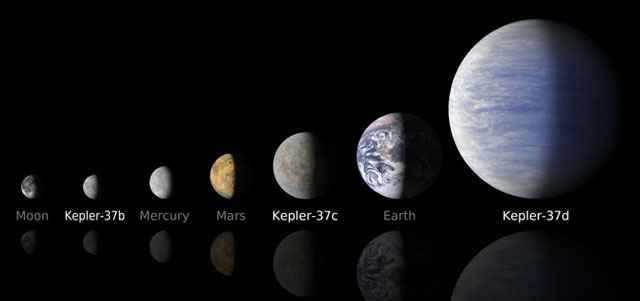
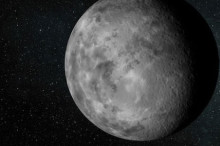
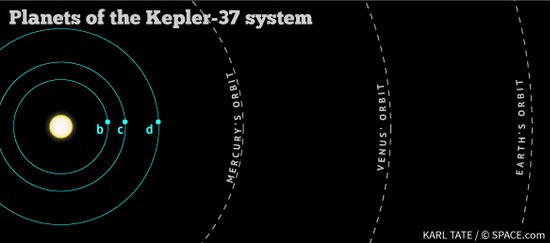
    Kepler-37b really is tiny. In fact, the whole Kepler-37 system is tiny – the entire system discovered so far can fit inside the orbit of Mercury! The innermost little world is under 100th the mass of Earth, it’s expected to have a radius of around 3867 km (assuming the same average density as the planets in our own solar system) making it smaller than Earth’s moon. One can only apprehensively wonder if this will spark yet another debate over how large an object has to be before it’s considered a planet. With such a tiny orbit, it also has a year lasting just 13 Earth days. Even though the star Kepler-37 is slightly smaller and cooler than the Sun, it’s still enough to heat the surface of tiny 37b to a roasting 700 Kelvin (nearly 430°C). Needless to say, while we all like stories which talk about potential alien life, this is unlikely to be a home for any lifeforms we might recognise.

    Tiny star system!

    Kepler-37b is very definitely the runt of the litter. Its sibling worlds, denoted by the letters c and d, are respectively slightly smaller than Earth and about twice the size of Earth. Of course, these planets are also very close to their parent star. The interesting thing is that we’re discovering more and more small worlds around other stars. More and more exoplanet astronomers are warming to the idea that small rocky planets are likely to be the most common in our galaxy. Our current technology might have trouble spotting them further than a certain distance from their parent stars, but they’re likely to be out there waiting to be found.

    The planets of Kepler-37

    Even detecting Kepler-37b was quite a notable feat. It was only possible, in fact, because of a set of rather special circumstances. The star Kepler-37 is particularly quiet, lacking the noisy sunspots and features which cause brightness variation in most stars, making it a particularly clear target. It’s also relatively bright in Kepler’s field of view.

    To learn more about this star, and hence get greater accuracy on the measurement of the planets it carries in tow, NASA astronomers used a technique known as asteroseismology. Not dissimilar to the way geologists measure earthquakes, asteroseismology is the study of vibrations within a star, measured by accurately observing pulsations in the star’s surface. All stars are constantly bubbling and boiling, and this causes the whole star to vibrate at a number of resonant frequencies – soundwaves – in exactly the same way a bell vibrates when it rings. By measuring the precise frequencies of those soundwaves, a lot can be determined about the interior of a star. Incidentally, this same technique can be used to effectively “listen” to the Sun.

    Interestingly, because Kepler-37 has such an eerily peaceful surface for a star, it was very easy to measure those vibrations, making Kepler-37 the smallest star ever to be studied this way. Normally, only large stars are observed using asteroseismology because the measurements need to be very precise. Conveniently though, the Kepler telescope was built for breathtaking precision.

    A tiny planet discovered orbiting a singing star 215 light years away. How poetic!

    Image credits:
    Top – NASA/Ames/JPL-Caltech
    Middle – Karl Tate/ © space.com
    Bottom – NASA/Ames/JPL-Caltech

  • Andromeda and the 13 Dwarfs

    Andromeda and the 13 Dwarfs

    Astronomy is quite notorious for being full of things we don’t entirely understand. Sometimes it really does feel as if the closer we look at the Universe, the less it makes sense. One thing in particular which seems to constantly evade our understanding is the way in which galaxies work. A lot of very smart people spend a lot of time taking telescope observations and creating computer simulations to try and understand how exactly a galaxy can form and evolve, and every now and again someone will discover something which doesn’t seem to fit with what they were expecting. Occasionally we find something like that which is, at least in cosmic terms, right in our back yard.

    The Andromeda galaxy  is practically a twin sister to our own Milky Way. Slightly larger than us but slightly less massive, Andromeda lies around 2.5 million light years away, and between them Andromeda and the Milky Way dominate the local group of galaxies. But Andromeda is not without fanciful tastes – it wears a skirt over a million light years in diameter, made up of dwarf galaxies.

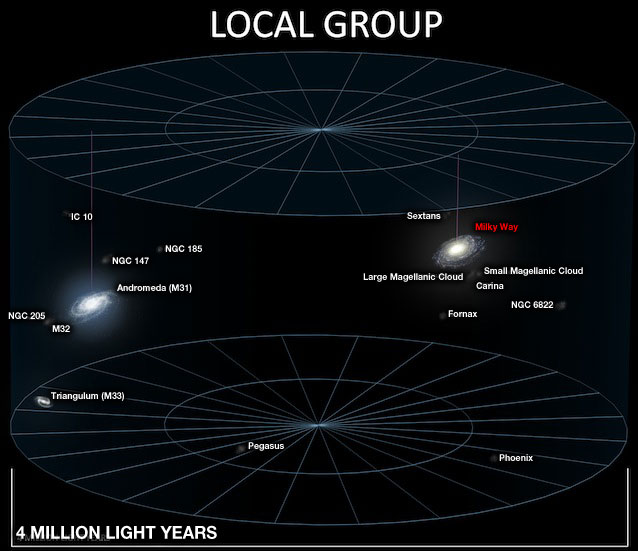
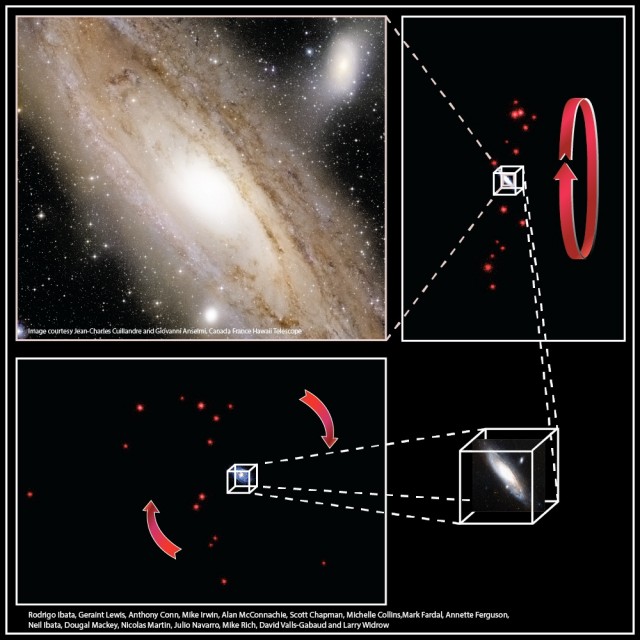
    A recent study headed by Rodrigo Ibata at the Strasbourg Astronomical Observatory, France, and Geraint Lewis at the University of Sydney, Australia, found a host of new galaxies in the local group. The image below gives you an idea of the scale involved, but it doesn’t show the full story – There are actually over 54 galaxies in the Local Group. Andromeda is surrounded by a small swarm of 27 dwarf galaxies, and 13 of those dwarf galaxies orbit in the same plane, the same way the planets orbit the Sun. This means that Andromeda is surrounded by a disk-like shape, the largest cohesive structure in the local group. And it’s still very much a mystery as to why it exists.

    The Local Group

    Even here inside the largest galaxy for millions of light years, space is mostly empty, but the vast expanses of intergalactic space are so devoid of anything that it’s difficult to fully appreciate (to get even more perspective on this, click here and look at the full image!). But even in the face of this terrifying emptiness, galaxies live out their lives. They pull on each other and interract. They form and coalesce. Large galaxies devour smaller ones whole, and every so often, large galaxies smash together and tear each other apart. But none of the theories we have today quite explain Andromeda’s skirt.

    Those 13 dwarfs orbit Andromeda once every 5.5 billion years or so, and Ibata, with his team of researchers, has suggested a couple of explanations for the disk. Firstly is that they formed in place as they are, and have been slowly twirling around Andromeda since before the Sun was born. They may have been created during a merger between two ancient galaxies, from a streamer of gas which was spun off. Or possibly, these galaxies are as old as Andromeda itself, forming at the same time amidst all of the dark matter attracted by Andromeda’s huge bulk. This would fit with the fact that those dwarf galaxies are made up of ancient stars, implying that this structure could be truly ancient.

    Or perhaps it isn’t a disk at all. Perhaps we’re seeing a slew of galaxies recently pulled into Andromeda’s gravitational grip, and it’s purely by chance that they appear to be arranged into a disk shape. It’s entirely possible, and only further research will show if the disk structure is real or not. Combined with the recently discovered halo of gas surrounding the Milky Way, it seems there may be a lot lurking out there in intergalactic space that we don’t yet understand.

    But either way, both of these hypotheses have problems with them. Neither is a perfect fit. In an interview, Nicolas Martin at the Strasbourg Astronomical Observatory explained that the fact that we don’t know why these galaxies are arranged the way they are is what makes this discovery so exciting;

    “The presence of this thin, rotating disk of dwarf galaxies around Andromeda suggests a strong connection between the host galaxy Andromeda and its satellites. There is currently no satisfactory scenario that can explain all the properties of the satellites in the disk, but they all require a strong interplay between Andromeda and the satellites themselves.”

    Andromeda's skirt

    Image credits:
    Top – Robert Gendler
    Middle – Andrew Z. Colvin/Wikimedia Commons
    Bottom – Rodrigo Ibata/PAndAS team

  • Interstellar travel: how to spot a ‘starman’ going by

    Interstellar travel: how to spot a ‘starman’ going by

    Massive objects moving at near light speeds do not occur naturally in the universe as we know it. If we detect such objects it is a reasonable to assume they are artificial artifacts from advanced intelligent life. This according to Garcia-Escartin and Chamorro-Posada, authors of a recent paper, is a low-cost, sure-fire way of searching for intelligent life outside earth.

    image
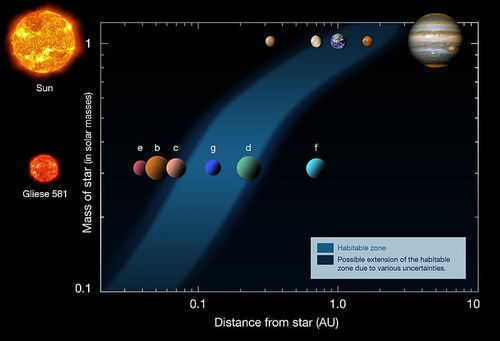
    The habitable zone of Gliese 581 compared with our Solar System’s habitable zone. Image credit NASA.

    Searching for life beyond earth is a grand and varied enterprise.

    For a start we can look for exoplanets that fall inside the habitable zone of a star. A planet found in this zone may fulfill the requirements for life: liquid water, energy, elements and other nutrients, and appropriate physical conditions. Though we have located many exoplanets in recent times they are far from earth – many light years distant. For example one star system, Gliese 581, is 20.3 light years away (192,048,720,000,000 kilometres). With three planets in its habitable zone, we know nothing about conditions on them. The techniques used to find them can tell us nothing about their ecology – if any. Being in a habitable zone does not guarantee life. It is only in recent years that we have realised how inhospitable Venus and Mars are to life – despite being in our habitable zone.

    By looking for alien signals or transmissions, as in the SETI programme, we extend our search from ‘possible life’ to intelligent life. For advanced civilisations we look for artificial illumination or interstellar probes.

    Let’s face it though, to know we are not alone will require quite good proof for most of us (apart from the misguided minority of UFO believers), and especially for the skeptical scientists.

    image
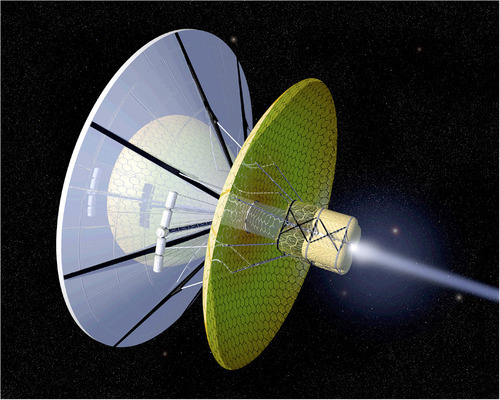
    Bussard ram-jet interstellar drive. Image credit NASA.

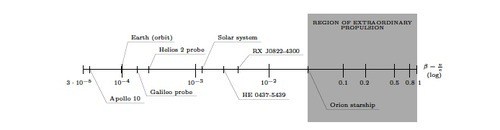
    The intriguing proposition of Garcia-Escartin and Chamorro-Posada is based on three ideas. The first is that anything travelling faster than 3.3% of light speed (5,935,890 kilometres per hour) is artificial. All known natural objects travel slower than this speed, as do our current space probes. This speed was chosen as it is the estimated speed of the nuclear propulsion ship proposed by Freeman Dyson in the Orion project. Although the propulsion technology is feasible today the technological and economic hurdle of creating such a craft is way beyond our current means. Although it is certainly not inconceivable to achieve such interstellar travel in the next 100 years.

    image
    Scales of speed with respect to the speed of light in vacuum (logarithmic scale). The fastest man-made objects are in the range of velocities from 1/100,000 c to 1/1,000 c. Examples are the fastest manned ship, Apollo 10 on entry, the Galileo probe during its descent into Jupiter and the solar probe Helios 2. For comparison, we have included the average speed of Earth during its orbit around the Sun and the motion of the Solar System with respect to the cosmic microwave background frame. The fastest natural objects, like hypervelocity star HE 0437-5439 and neutron star RX J0822-4300, move in the scale of 1/1,000 c-1/100 c. We define a region of extraordinary propulsion (REP) for speeds which would point to an artificial object. The REP starts at the estimated speed for the nuclear propulsion Orion ship, which could be built with present human technology. Source original paper, Cornell University.

    You are possibly thinking about now: “Doesn’t the mass of an object increases massively as its speed approaches light speed?” You would be correct, this consequence of Einstein’s theory of special relativity is demonstrated quite satisfactorily in particle accelerators around the world. To cover this the authors next identify a consequence of relativity theory: relativistic effects amplify the light reflected from a body travelling at near light speed – in some key situations. Allowing for the detection of ‘small’ objects.

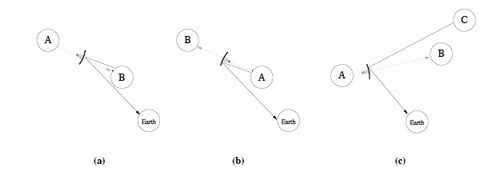
    This brings in the authors third criteria. Interstellar travel will be from one star system to another. The reflected-light magnifying effect would be greatest for the cases where earth is almost in line with the departure stellar system and the destination stellar system.

    image
    Earth’s position with respect to the ship’s trajectory. (a) Earth receives the light from the destination star reflected from an approaching ship. (b) Earth receives the light from the origin star reflected from an outbound ship. (c) Earth receives the light from a third star, which is reflected from the ship at an angle. Source original paper, Cornell University.

    The authors propose to limit the first search to star systems that are reasonably close to each other (no further than 10 light years apart) to maximise the probability of stellar travel opportunities. Considering that Gliese 581, for example, is greater than 20 light years distance from us, I suggest that this criteria is too limiting.

    The paper is an interesting, if not compelling, proposition. The authors do calculate what size an artifact would need to be, travelling at their minimum speed (3.3% light speed), to be detected at the distance of one of our closer stellar neighbours. Could such an artifact be detected by the Hubble or James Webb space telescopes, for example? What is the probability of success of such an experiment, compared to say the SETI experiments?

    One idea I did find interesting is by focussing on detecting light reflected from ships, we do not need to assume any intention by the interstellar travellers to communicate with us. The ‘signal’ is independent of alien psychology. It is also independent of propulsion technology – we aren’t looking for any ‘signature’ of any particular technology, known or unknown.

    It is an interesting paper. I’m not sure they have presented a compelling enough case to convince a funding body – yet.

  • Searching for Life on Titan

    Searching for Life on Titan

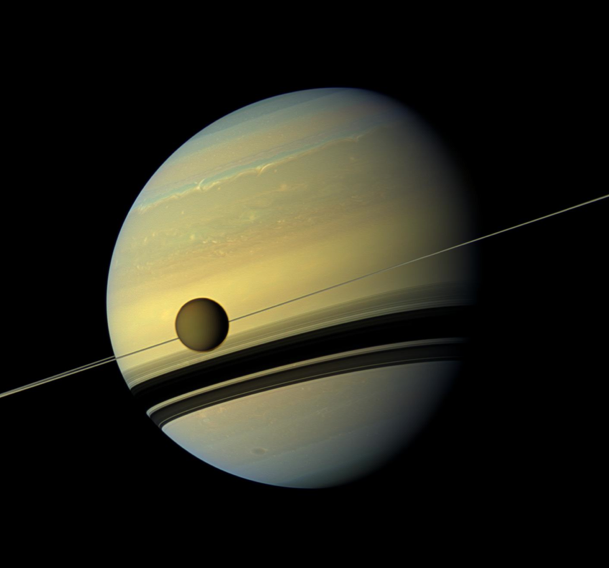
    Titan against Saturn. Credit: NASA
    Titan against Saturn. Credit: NASA

    Discovered in 1655 by Dutch astronomer Christiaan Huygens, Titan is one of Saturn’s 62 moons, named for a race of giants in Greek myth who were Saturn’s brothers and sisters. Over 5000 km in diameter, it’s roughly twice the size of our own Moon and is one of the largest moons in our solar system, second only to Jupiter’s Ganymede. It’s even bigger than the planet Mercury, and is covered with an orange haze that shields the secrets of its surface. That alone makes it interesting, but a glimpse into the workings of the planet makes it more intriguing still—astronomers even believe Titan could harbour life.

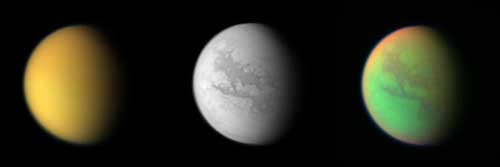
    In the 1980s, the Voyager 1 and 2 spacecraft flew past Titan; in the 2005 Huygens probe parachuted through its atmosphere and landed on the surface; and the Cassini spacecraft still studies Titan from its orbit around Saturn. Their images and measurements have revealed a vibrant alien world beneath the haze—complete with rivers, lakes, and ice volcanoes.

    Credit: NASA
    Credit: NASA

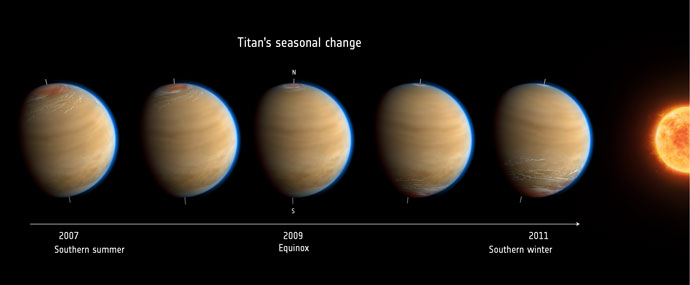
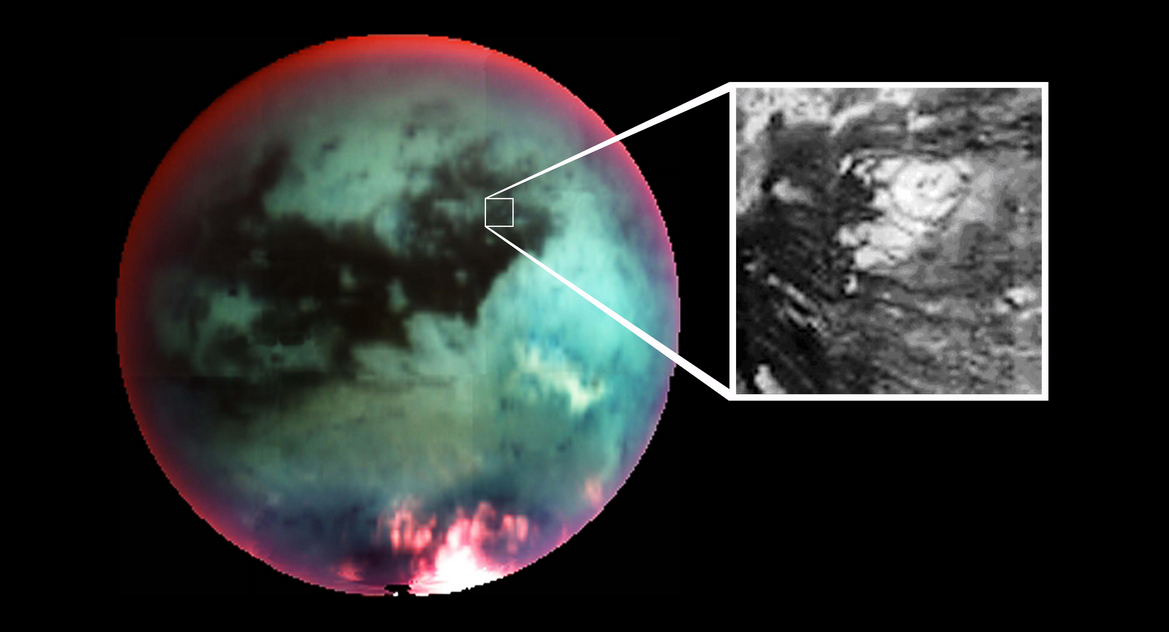
    Titan is an incredibly frigid place, with an average temperature of -178 degrees Celsius (-289 Fahrenheit)—too brutally cold for life as we know it, but still of incredible interest to astrobiologists. It’s the only moon known to have an atmosphere—a thick and cloudy one, composed primarily of nitrogen—and it also exhibits weather and changing seasons. The orange haze that shrouds its surface is made up of trace gases such as benzene and hydrogen cyanide, and at the pole closest to the sun, sunlight heats the toxic orange haze and makes it circulate towards the other pole, so the gases concentrating there. Since a year on Titan lasts almost 30 Earth years, each season is 7 years long.

    Titan's seasonal changes. Credit: NASA
    Titan’s seasonal changes. Credit: NASA

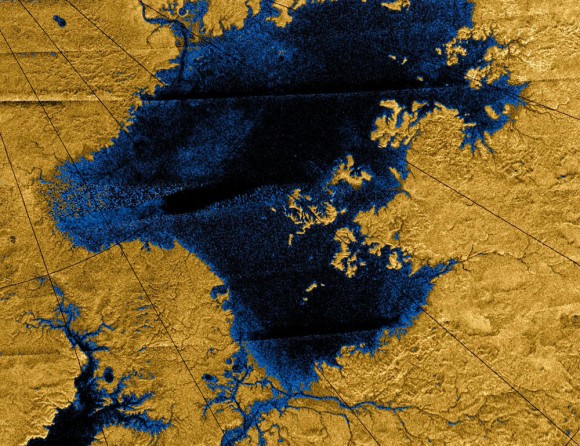
    However, unlike Earth, its weather system is methane-based—and aside from Earth, Titan is the only object in the solar system to have permanent bodies of liquid on its surface, including an enormous river system that flows 400km across the moon’s surface to meet a large sea.

    River network on Titan. Credit: Cassini
    River network on Titan. Credit: Cassini

    The darkness of the river in the image indicates a smooth surface, which in turn indicates that the river is not a dry bed, but filled with liquid—but this liquid is likely methane or ethane, which are more closely related to gasoline than water. Even though the mechanics seem to be similar, Titan’s weather would be alien to us because the skies fall with methane rain and lakes and oceans pool with liquid methane—but still, this presents possibilities of methane-based life.

    Credit: Cassini.
    Credit: Cassini.

    It is also suspected that Titan harbours cyrovolcanoes, which spew water ice and hydrocarbons into the atmosphere instead of lava. Speculations began after NASA’s Cassini spacecraft captured images of a landform on Titan’s surface called Sotra Facula. The images showed three conical features with material flowing from them, their peaks up to 1,500 metres tall, as well as several pits equally as deep. Researchers gravitated towards the idea that these landforms were cyrovolcanoes, as it would help explain a long-standing mystery of Titan’s thick, methane- and nitrogen-filled atmosphere. Calculations show sunlight would have broken the methane down long ago if something hadn’t been replenishing it, and a cyrovolcano is a good candidate—it could erupt methane, dragging it from the planet’s interior into the atmosphere.

    Sotra Facula. Credit: APOD.
    Sotra Facula. Credit: APOD.

    However, these intriguing surface features could have also been created by weather and meteorite strikes than by volcanic activity, and it is difficult to tell without further data. Researchers believe cyrovolcanoes might be fairly common on the frigid moons of the outer planets—one has been confirmed on another of Saturn’s moons, Enceladus—which is incredibly interesting, because volcanic activity would prove that Titan is an active world, and could increase the likelihood that this huge, distant moon may harbour life. While searing lava destroys life on Earth, ice volcanoes on Titan would provide a way to mix complex chemicals from the surface and the interior. It could bring life forms up to the surface so our instruments have a better chance of detecting them—because fascinatingly, Titan seems to have subsurface oceans.

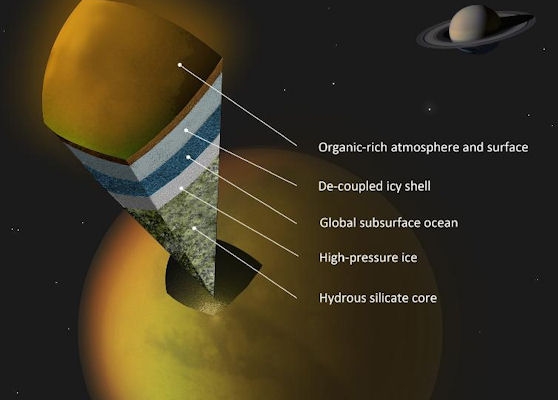
    Further data from Cassini indicates that Titan has a layer of liquid water under its icy outer shell. The evidence is tidal—as Titan orbits Saturn, the planet’s powerful gravitational pull stretches and deforms the moon, like pulling and stretching an elastic band. If Titan were solely composed of rock, this stretching would only cause bulges (tides) of about 1 metre, but instead the moon experiences tides of about 10 metres—suggesting that its interior is not entirely solid. This ocean may not be enormous or deep; just a liquid layer between the solid mantle and the external icy shell would be enough to compress and bulge as Cassini has observed. Since Titan’s ice surface is composed mostly water ice, researchers believe its ocean could be liquid water.

    However, just the presence of an ocean alone does not indicate life—researchers think that life is more likely to occur when the water comes into contact with rock, and we can’t currently tell if this exists beneath the surface.

    Possible scenario for internal structure of Titan. Credit: NASA
    Possible scenario for internal structure of Titan. Credit: NASA

    Another intriguing phenomenon is the hydrogen gas flows through its atmosphere, and yet there is a lack of the chemical on the planet’s surface—so how did it disappear? One theory suggests that hydrogen-breathing, methane-based life forms consume the gas, similar to how we consume oxygen on Earth.

    Liquid water, a possibly active interior, complex chemistry, a thick atmosphere, seasons, weather… All of these factors reflect the environment of life as we know it, so researchers have long thought that Titan is an excellent candidate to harbour life. None of these factors alone are solid evidence for life—they are just conditions necessary for it—but Titan is a fascinating place deserving of further study. Since its nitrogen-rich atmosphere is similar to Earth, just significantly colder, it also demonstrates how atmospheres of cold moons and planets behave, and thus allows us to speculate about how the atmospheres of exoplanets far from their stars might behave.

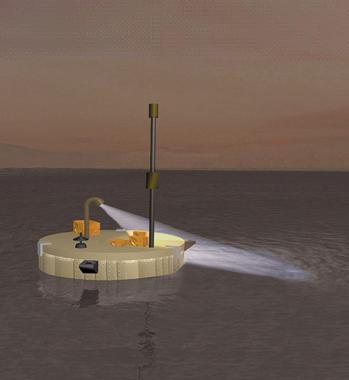
    But our questions about Titan will remain unanswered until we obtain sufficient evidence to draw conclusions—but to do this, we need data. Two possible missions have recently been proposed. The first is the Titan Mare Explorer (TiME), which would have sent a floating buoy to land in Titan’s methane sea and measure the chemistry and organic composition, study the sea’s interaction with the atmosphere, and basically perform the first nautical exploration of this extraterrestrial ocean. It also would have observed Titan’s methane cycle to help us compare it to the water cycle on Earth. TiME was proposed to launch in 2016, but unfortunately it lost its funding to a Mars mission.

    Artist's concept for the TiME lander. Credit: NASA/ESA
    Artist’s concept for the TiME lander. Credit: NASA/ESA

    Another possibility, however, is the Titan Saturn System Mission (TSSM), which is a proposed exploration of Saturn, Titan, and Enceladus—focusing on the complex phenomena the Cassini spacecraft has already noted. It is proposed to launch in 2020 and reach Titan by 2029, and during its 4-year-tenure, it would spend time circumnavigating Titan and studying its astrobiological potential. The mission consists of an orbiter and two Titan exploration probles—one that’s basically a hot air balloon, and another that land on the methane seas. One of the proposals for this second lander is the lake-lander of the discarded TiME mission, which will hopefully be included. TSSM, if it goes ahead, would be the first mission to extensively survey the organic chemistry and climate of the land, sea, and air of another world.

    If life is detected on Titan, it would undoubtedly be moving and crucial to us as a species—not only because it’s the first extraterrestrial life we have detected, but also because it would behave differently to the water-based, oxygen-breathing life we’ve developed here. Even if life has not yet developed on Titan, the chemistry for life to form is present, so just give the moon four billion years…and who knows?

  • Telescope takes temperature of Universe

    Telescope takes temperature of Universe

    CSIRO telescope takes temperature of Universe Astronomers using a CSIRO radio telescope have taken the Universe’s temperature, and have found that it has cooled down just the way the Big Bang theory predicts.

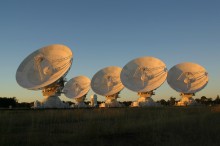
    Using the CSIRO Australia Telescope Compact Array near Narrabri, NSW, an international team from Sweden, France, Germany and Australia has measured how warm the Universe was when it was half its current age.

    “This is the most precise measurement ever made of how the Universe has cooled down during its 13.77 billion year history,” said Dr Robert Braun, Chief Scientist at CSIRO Astronomy and Space Science.

    “This is the most precise measurement ever made of how the Universe has cooled down during its 13.77 billion year history.”

    Dr Robert Braun, Chief Scientist, CSIRO Astronomy and Space Science

    Because light takes time to travel, when we look out into space we see the Universe as it was in the past — as it was when light left the galaxies we are looking at. So to look back half-way into the Universe’s history, we need to look half-way across the Universe.

    How can we measure a temperature at such a great distance?

    The astronomers studied gas in an unnamed galaxy 7.2 billion light-years away [a redshift of 0.89].

    The only thing keeping this gas warm is the cosmic background radiation — the glow left over from the Big Bang.

    By chance, there is another powerful galaxy, a quasar (called PKS 1830-211), lying behind the unnamed galaxy.

    Radio waves from this quasar come through the gas of the foreground galaxy. As they do so, the gas molecules absorb some of the energy of the radio waves. This leaves a distinctive “fingerprint” on the radio waves.

    From this “fingerprint” the astronomers calculated the gas’s temperature. They found it to be 5.08 Kelvin (-267.92 degrees Celsius): extremely cold, but still warmer than today’s Universe, which is at 2.73 Kelvin (-270.27 degrees Celsius).

    According to the Big Bang theory, the temperature of the cosmic background radiation drops smoothly as the Universe expands. “That’s just what we see in our measurements. The Universe of a few billion years ago was a few degrees warmer than it is now, exactly as the Big Bang Theory predicts,” said research team leader Dr Sebastien Muller of Onsala Space Observatory at Chalmers University of Technology in Sweden.

    Publication “A precise and accurate determination of the cosmic microwave background temperature at z=0.89”, by S. Muller et al. Accepted for publication in the journal Astronomy & Astrophysics; online at

    http://arxiv.org/abs/1212.5456

    Source: News@CSIRO blog

  • Fascinating short film about NASA’s Dawn: the very beginning of us

    Fascinating short film about NASA’s Dawn: the very beginning of us

    This fascinating video, narrated by Leonard Nemoy, gives you a glimpse into the origins of our solar system and NASA Dawn mission’s  journey to Vesta & Ceres and its hope to unveil clues as to what was going on at the very beginning of our solar system’s formation!


    NASA’s Dawn mission is a spacecraft designed to collect data from the asteroid belt. The ship itself is a marvel. Outfitted with massive solar panel wings that can power it for years, Dawn converts xenon gas into plasma, which it propels from its engine at speeds up to 78,000 miles per hour (or 21 miles per second) for maximum acceleration. In fact, Dawn is the fastest ship NASA has ever launched. Even at top speeds, Dawn required four years to reach its first stop, the asteroid Vesta, the brightest asteroid in the solar system and the only one visible to the naked eye. Departing Earth in 2007, the ship reached Vesta in July of 2011 and departed last September for the asteroid Ceres, which it will reach in February of 2015.  Via OpenCulture.

    For those visually driven – please take a look at the beautiful interactive map of our stellar neighborhood. With over 100,000 stars in an interactive visualisation, you can take a walk through the stellar neighborhood.

  • Weekly Science Picks

    Weekly Science Picks

    Another week, another collection of weekly science picks! Those of us over here in Northern Europe have been enjoying snowy weather this past few days, with more expected on the way. At the same time, many of us have been keeping a concerned eye on the recent events in Australia – the bush fires being among them.

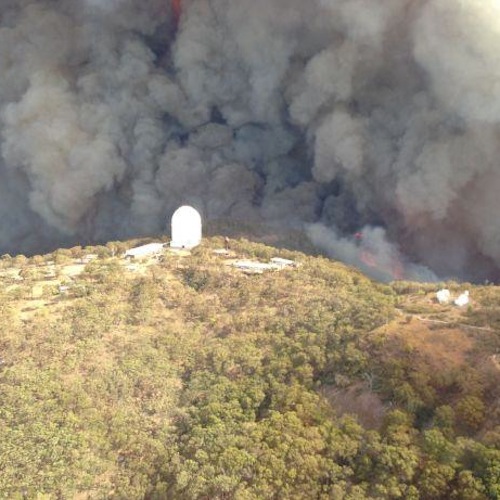
    The Anglo-Australian Telescope in peril

    Among the many areas hit by the fires was Siding Spring Observatory. While some buildings were destroyed and others damaged, all of the telescopes appear to be ok. Details on the entire event from a first hand perspective are given by astronomer Amanda Bauer on her blog, Astropixie.

    SSO: As the smoke clears

    from all accounts i’ve received, heard, and read, the area surrounding coonabarabran  is a “disaster zone,” which is heart-breaking news.  fire service crews will be working overnight, taking advantage of milder conditions, to put containment lines around the edges of the fire, hoping to protect coona before the winds change.


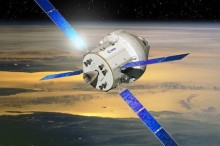
    Orion, the spacecraft being developed to replace the Space Shuttle and ease the pressure on Russia’s Soyuz craft, has been a troubled undertaking. As with virtually all NASA projects lately, it’s been hampered by repeated budgetary problems. The latest development in the story is that Europe has now formally agreed to assist in developing the Orion craft, with the long term goal of deep space missions, to the Moon and Mars.


    Europe and US agree details for Orion astronaut spacecraft


    The current plan calls for Europe to build the prototype module for 2017 and a number of components that would be needed for the second vehicle in 2021, although a formal go-ahead to complete this additional model is some years off.


    Depressingly, there is still an obvious gender gap in science, though it’s at least heartening to know that this is an issue which some are paying serious attention to. Many are going what they can to fix the problem, while others are disappointingly willing to argue that nothing should be done. One article which caught my eye this week was written by an anonymous senior scientist, arguing that we should be taking a more aggressive approach to tackling this problem. I for one, wholeheartedly agree!


    Sexual discrimination in science: why we must act now


    Can it be that women are treated less fairly than men? A deceptively simple piece of research led by Jo Handelsman at Yale University has recently suggested that they are… I should point out here that there was no statistically significant difference between the responses from male or female faculty, nor were there differences between levels of faculty, suggesting this is not a hierarchical bias.


    Back in space, new plans for the International Space Station involve blowing something up. Nevada-based Bigelow Aerospace have been contracted to develop an inflatable habitat module for the space station, with the intention of using the new SpaceX Dragon craft to send it up into orbit. Private companies are evidently becoming major players in human spaceflight.


    NASA buys blow-up habitat for space station astronauts


    Bigelow hopes the tests done in orbit will prove that inflatable capsules are safe and reliable for space tourists and commercial research, an idea almost as old as NASA itself. The space agency began investigating the concept of expandable spacecraft in 1958. Space stations like this would be easier to launch and assemble than those with metal components, so would be cheaper.


    On a final note, while many of us tend to consider invertebrate animals as being inferior, there’s evidence that some of them may be more self aware than we give them credit for. While some research has concluded that fish don’t feel pain in any meaningful way, crustaceans like crabs and prawns probably do. It’s probably about time we extended the laws on humane treatment of animals to cover invertebrates too.


    Why crustaceans might be feeling crabby


    A study has revealed that the shore crab, a close relative of the species we use for food, responds to electric shocks and then goes on to avoid them. Previous research has shown that prawns and hermit crabs also react to painful situations.

    Snow!

    Whether you’re dealing with fire or ice nearby, stay safe and have a good week!

    Image credits:
    Top – NSW Rural Fire Service
    Bottom – Electron Microscopy Unit, Beltsville Agricultural Research Center, Maryland.
    Featured – ESA

  • The Highlights of 2012

    The Highlights of 2012

    As 2012 draws to a close and the new year begins, now is a good time to wrap things up and recapitulate the year just passed. It’s been an exciting year with plenty of interesting happenings in science, technology, and education. Despite the fact that we aren’t especially keen on top 10 lists (because all of our authors are fantastic and inspirational), here are a few of the highlights from the past year. We hope you enjoy them!

    Mr Boson, I presume…? / A Brand New Boson

    The news that CERN had detected a signature matching the much sought after Higgs boson was the biggest news this year in physics. While physicists at the LHC still aren’t 100% certain what they’ve found, one thing is for certain – they’ve definitely discovered something never before seen, and it definitely seems to match what’s expected for the Higgs boson. Now it’s up to the theorists to work out if this will confirm existing theories, or if it will require brand new physics to be devised to explain it!

    “It’s a bit like spotting a familiar face from afar,

  • Weekly Science Picks

    Weekly Science Picks

    By now, I think it’s safe to say that if you’re reading this, it means the world didn’t end on Friday. Which is rather a good thing, because a lot of interesting things have been happening recently! Even though I’ve been busy as can be, writing papers and trying to finish off a thesis there have still been a few fascinating little gems to catch my eye in the news this week…


    Firstly, NASA have announced a new prototype space suit, with new and improved technology. Intended to be easier to put on, amongst other things, the most exciting part of the news is that these new suits are intended for deep space missions, focussing on safety “during spacewalks and potential surface activities”! Oh, but there’s just one thing which everyone’s noticed…

    Nasa’s New Space Suit Looks Exactly Like Buzz Lightyear

    NASA-Z1-suit

    Nasa said one of the key differences was that the new suit has a one-piece design, into which the wearer crawls in through a hole in the back, as opposed to the trousers-top-helmet version currently in use on the International Space Station.


    Meanwhile, in Switzerland, physicists have been puzzled by the results they’ve seen from the LHC. While there’s now little doubt that they’ve detected a signature which matches what they’d expect from “a Higgs-like boson”, it seems like there’s more going on than they realised…

    Two Higgs Bosons? CERN Scientists Revisit Large Hadron Collider Particle Data

    Yesterday researchers at the Atlas experiment finally updated the two-photon results. What they seem to have found is bizarre—so bizarre, in fact, that physicists assume something must be wrong with it. Instead of one clean peak in the data, they have found two.


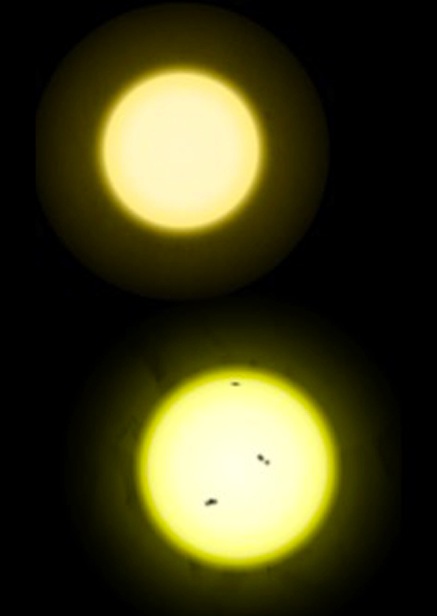
    The Sun, compared to Tau Ceti
    The Sun, is slightly larger and more active than Tau Ceti. Credit: R.J. Hall/Wikimedia Commons

    Finally, one star near to Earth which has always garnered much attention from science fiction writers is Tau Ceti – right in our neighbourhood at a mere 12 light years away. For a long time, many have speculated on the potential for life-sustaining worlds around the Sun’s slightly more orange neighbour, and now it looks like there may well be. While we’re still waiting for confirmation, there may be 5 planets around Tau Ceti, and two of those might be candidates for sustaining life!

    Nearby Tau Ceti may host two planets suited to life

    The highlight of this alien solar system is Tau Ceti e, which has a mass of over four Earths and a year just under half as long as ours. It orbits in the star’s habitable zone, the region where liquid water is thought to exist. “It is in the right place to be interesting,” says [Hugh] Jones.


    Short but sweet, that’s all for this week. I hope everyone has a lovely Christmas (or whichever of this season’s holidays and festivals you choose to celebrate). See you next time!

  • Interview: Keri Bean—Mars meteorologist, Curiosity Rover team member

    Interview: Keri Bean—Mars meteorologist, Curiosity Rover team member

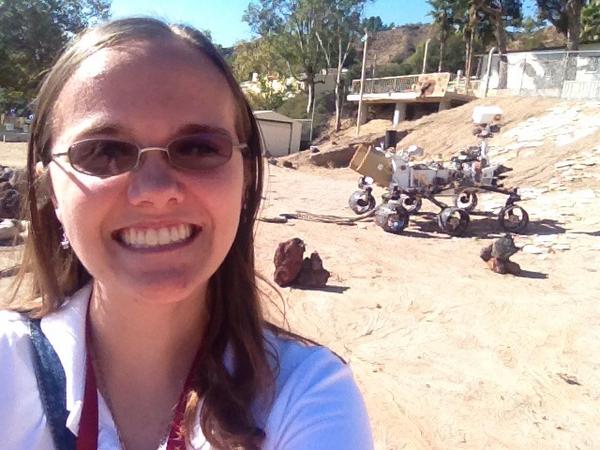
    Keri Bean in the NASA JPL Mars Yard, with the Curiosity test-bed twin ‘Maggie’

    Keri Bean is a meteorologist specialising in the atmospherics of other planets. She is on the team operating the Curiosity Rover for NASA’s Mars Science Laboratory mission. Prior to MSL, Keri has had roles in the missions for other Mars rovers Spirit and Opportunity, a prototype Moon rover, the Phoenix Mars Lander, and the Hubble Space telescope. And she’s just 25 years old! That’s a pretty incredible CV to rack up already.

    In this interview, Keri talks with me about her work on MSL and the other missions, plus how and why she got into space science. It all started when a tornado hit her pre-school.

    Australian Science on SoundCloud.

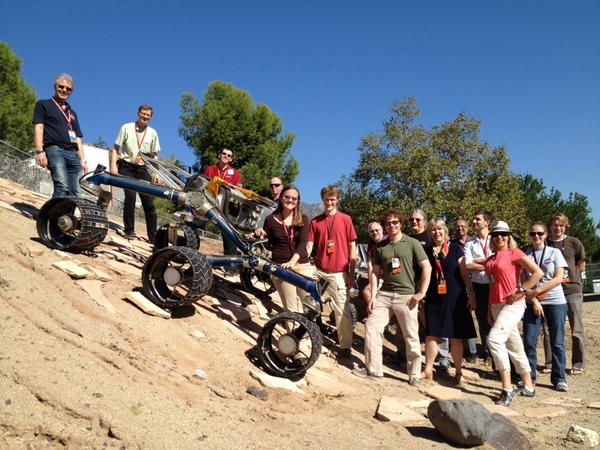
    Keri (centre) with many of the MSL team and ‘Scarecrow’, the other Curiosity test rover (Scarecrow is lighter than Curiosity so that it mirrors the lower Mars gravity).

    A GIF of the partial solar eclipse by Mars moon Phobos, as captured by the Curiosity rover—an image capture task coordinated by Keri.

    A photo of Phobos (highly zoomed it, and hence quite grainy) taken by Curiosity just after dusk on 21 September using one of its Mastcams, showing its ‘potato’ shape.

    The ‘Chariot’ Lunar rover prototype for which Keri worked on camera design (and which James May managed to have a minor accident with when filming an episode of Top Gear!).

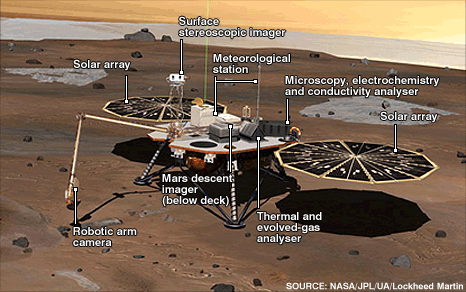
    The Mars Phoenix Lander.

  • Weekly Science Picks

    Weekly Science Picks

    It seems the rate of everything has increased exponentially. A very bold, vague, yet intriguing statement, you might say.

    During the course of the past 2 weeks, Hurricane Sandy devastated the East Coast of America, followed closely by a nor’easter. So my science picks for this week center on the themes of natural disasters, planning, global warming and Space, and the rate of which we have to increase our thinking and innovation in order to get ahead of these issues, before they become serious problems.

    So let’s get started.

    I was out of town when Hurricane Sandy struck. My neighborhood in Brooklyn was pretty much untouched. While I heard reports from friends not having power, and subways and airports being closed, it wasn’t until watching the hurricane relief telethon that I realized the magnitude of destruction. And I chose the following article by our very own Charles Ebikeme because it is important to remember that Haiti has yet to recover from several rounds of natural disasters. The U.S. will rebuild. Considering a large portion of the Haitian population still remains housed in tents from the earthquake, will they be able to rebuild? Before the next natural disaster strikes?

    Sandy’s aftermath by Charles Ebikeme

    While most of the focus of western media centred on the damage Sandy caused in America, especially this close to a Presidential election; there were few news outlets that reported what had passed in the Caribbean — outside the death tolls and damaged infrastructure. Indeed, as it is becoming more and more apparent, it is always the blogosphere that provides an adequate source of information. Hurricane Sandy’s progression was followed by bloggers on the ground, giving another side of the story we don’t often get to see.

    But it is in Haiti, a country that has yet to recover from tropical storm Isaac that hit in August of this year, as well as the earthquake of 2010, that felt the worst of Sandy’s wrath. 1.8 million people in Haiti are affected by the storm, according to the United Nations relief agency.

    This next story appears in the current issue of Scientific American and drives home the point why immediate action on climate change, energy and planning (community planning) is necessary to attempt to prevent incidences such as Sandy, or at least lessen the amount of destruction as much as possible. Obama won re-election this week. And while there is no shortage of issues to tackle, the President needs to implement an energy policy for this country. And it’s called global warming, so I hope the world can come together within the next four years and knock out a sound plan.

    Global Warming: Faster Than Expected? by John Carey

    The potential for faster feedbacks has turned some scientists into vocal Cassandras. Those experts are saying that even if nations do suddenly get serious about reducing greenhouse gas emissions enough to stay under the 450-ppm limit, which seems increasingly unlikely, that could be too little, too late. Unless the world slashes CO2 levels back to 350 ppm, “we will have started a process that is out of humanity’s control,

  • Payload

    Payload

    Source: http://www.payloadfilm.com/about/

    Science Fiction

    This may not be the usual topic for a blog post normally displayed on Australian Science, but when our editor Danica mentioned she saw this great Aussie short and asked if one of us writers wanted to do a narrative, I jumped at it. The next 17:55 of my lunch break left me in awe.

    A movie doesn’t have to be a full length feature to have an impact or drive home a message. And Payload really packs a punch. There were so many messages; messages of a society that travelled down a drainpipe. Clarke’s Town is a place that would have just about every council of the United Nations mired in details and confusion and working round the clock. The issues raised in this fictional setting being human trafficking, prostitution, the sale of human organs or body parts, smuggling, security, poverty, gender, food, clothing, education… corruption is everywhere. You get a sense of normalcy among the Carter clan, but that normalcy is faced against the outside operations of a world that does not make sense,which is far bigger than the Carters. Sacrifice is the only way for survival.

    Clarke’s Town is a functioning spaceport, which is a character in and of itself in this story. This spaceport, this crawler, is painted as an escape to freedom and perhaps to normalcy – from dystopia to utopia. Is that why the mother never came back? Is Davinia “Dave” Carter now saved from what one can only suspect was to be a dreadful and despairing existence? Simon Carter may have been doing what he had to do, but he is Davinia’s hero. The main characters – Simon, Adam Carter (the father) and Kate Henshaw – each went through a visible transformation, almost a metamorphosis of sorts. They took what little there was of a moral high ground when it came to the reasoning of right and wrong (no matter how wrong). With Davinia, as she says goodbye to Simon at the spaceport, she leaves you with the thought that her transformation, her payload, is yet to come. I find it rather apropos the meaning of the name Davinia/David is “beloved”.

    I’m having a hard recalling when exactly was the last time a movie moved me as much as this little motion picture has. From the setting, to the haunting yet soothing tones of the music, it makes you think what society, our world, would be like without some of the resources we take for granted every day. More so, I think it makes you think about some of the countries, or communities, in this world just struggling to gain access to basic resources.

    Writer and director Stuart Willis mentioned extending Payload into a feature – set 10 years later when Earth is being evacuated. Will answers be given to the questions raised in the short? My synapses are already firing up hypothetical synopses. If there were a motion picture category for the Nobel Prize, I would say award it to Mr. Willis straight away.

    Watch the movie.

  • Weekly Science Picks

    Weekly Science Picks

    Doesn’t time fly? I don’t know about anyone else, but my week has absolutely flown past. As I take a moment to relax and consider picking a few favourite topics from this week’s news, I realise that perhaps this is because it’s been an exciting week, full of interesting discoveries and unusual events. In fact, I’ve had quite a lot to choose from, but I eventually managed to trim it down to these few articles which particularly caught my eye…


    First and foremost, a planet has been discovered in our neighbouring star system, Alpha Centauri. This is something which I find thrilling for various personal reasons. An interesting discussion of the discovery itself and some of its implications are given by Paul Gilster in the blog Centauri Dreams:

    There was a sense of exhilaration in the air on Tuesday as the buzz around an Alpha Centauri planet built, and when the embargo was lifted, reports of the find filled the social media as the early articles began to appear online. Just how big a deal is Centauri B b? A skeptic could point out that while finding an Earth-mass planet is significant, it must still be confirmed, and in any case, this is an Earth-mass planet that is nothing like a clement, habitable world.


    From a neighbouring star to a neighbouring planet, the Curiosity rover has been finding some very curious shiny objects in the martian soil. Wired Science gives a brief overview of what’s been happening on the red planet:

     NASA’s Curiosity rover took three scoops from a small Martian sand dune and found several bright particles in the soil. Scientists think these are unrelated to the odd bright object that Curiosity saw last week, which turned out to be plastic that fell from the probe, and are probably indigenous Martian mineral flecks.


    Closer to home, this week saw a world record being broken by Austrian skydiver Felix Baumgartner, who leapt from a balloon at an altitude of 39 km. A fantastic achievement and a daredevil stunt! However, could more of an effort have been made to add some depth to the stunt and give us all some more background about it? Science historian Amy Shira Teitel at Vintage Space takes a detailed look at the full background and a few tricks which were missed with respect to communicating the science behind such a stunt:

    In the 1960s, pilots were pushing the envelope of supersonic flight at high altitudes. But this was a dangerous approach. While it’s easy to fly fast in the thin upper atmosphere it’s harder to control an aircraft. With no air for control surfaces to push against, aircraft tend to tumble, and when aircraft tumble pilots tend to eject. Tests with dummies showed that when falling from high altitudes, human bodies tended to get into a flat spin. It would be like rolling down a hill really fast but without the hill, and the G-forces would certainly be fatal.

    Image: AP Photo/Red Bull Stratos, Luke Aikins

    And finally, there was a rather informative little discussion piece by Dave Hone in the blog Lost Worlds. In emphasising some of the difficulties faced in palaeontology, he poses a rhetorical question – did Tyrannosaurus Rex have feathers?

    Note that there is a rather important scientific distinction here, no facts have changed since the 70s, but we have many more facts. And the best interpretation of all of the available data is now a little different to that which we had before. The fossil record is incomplete and we have to extrapolate from the available evidence and apply parsimony the best way we can.


    I hope you’re having a good weekend!