It is with a heavy heart that I must say, this is my final set of Weekly Science Picks here on Australian Science. In fact, it’s to be the final set of Weekly Science Picks. Unfortunately, running a site like this one is a costly affair, and it’s been an honour to be a writer here over the past year and a half. Scientific progress will, of course, always carry on and I hope there will always be places to discuss new findings, implications, and effects of it on human culture and society.
So, proudly then, here are the final set of news stories which caught my eye this week. Make no mistake – there’s been some pretty cool news recently!
Firstly, and in my opinion most excitingly, is a medical breakthrough which could actually revolutionise surgery in the future. And anyone who knows me will know that I don’t use words like “revolutionise” lightly. Quite simply, the device is a small pen, developed by the Australian Research Council Centre of Excellence for Electromaterials Science (ACES), which will be able to deposit stem cells and growth factors directly into injuries. This means that this pen could help injured tissue – bones, muscle, and even nerves – to regrow. Oh, and did I mention it works using 3D printing technology?
The BioPen prototype was designed and built using the 3D printing equipment in the labs at the University of Wollongong and was this week handed over to clinical partners at St Vincent’s Hospital Melbourne, led by Professor Peter Choong, who will work on optimising the cell material for use in clinical trials.
For a long time humans were considered unique in that we use tools where other animal species don’t. But since that old idea, more and more animals – from birds to octopodes – have been shown to use tools in their daily lives. The most recent addition to this collection of smart creatures is the crocodile which has been found to use lures while hunting. Perhaps this might help show that reptiles are smarter than we give them credit for!
Relatively less is known about crocodiles and alligators than many animals, because, as large predators, they are difficult to raise in the lab and study up close in the wild. Their cold-bloodedness also makes them slow. “They operate on a different time scale; they do things more slowly,” Burghardt said. “Sometimes we don’t have the patience to let them strut their stuff, as it were … so this kind of study is important.”
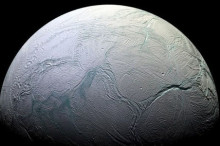
A huge plume of water has been spotted, gushing from the surface of Enceladus, Saturn’s tiny snowball moon. While the exact source of Enceladus’ warmth is still something of a mystery, this sighting means that its activity is quite clear – this water plume is reaching an altitude of around 201 km above the surface of the tiny world. That’s nearly ten times as high as Olympus Mons, the solar system’s largest mountain (which itself dwarfs Everest, the heighest mountain on Earth).
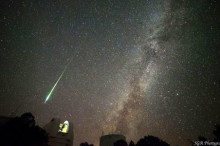
After the Perseid meteor shower last weekend, it seems that lots of exciting things have been discussed this week. Here are a few of the things which caught my eye.
The first of my picks is homegrown here on Australian Science, if you’ll pardon the pun. A sustainable food source for space travellers and outposts is one which has a lot of scientists and engineers scratching their chins, as does dealing with waste products. Which makes the prospect of using a form of bacteria to recycle waste and generate a food supply a very interesting one…
Bacteria offer an attractive ingredient for space food. Quick and easy to grow, exponentially and to large numbers, and can provide the basic nutrients. And it was in search for astronaut space food that another discovery was made.
There’s been a lot of talk this week about the Hyperloop – a high speed transit system conceived by everyone’s favourite space entrepreneur, Elon Musk. I must say, the concept looks quite exciting.
The design of Hyperloop has been considered from the start with safety in mind. Unlike other modes of transport, Hyperloop is a single system that incorporates the vehicle, propulsion system, energy management, timing, and route. Capsules travel in a carefully controlled and maintained tube environment making the system is immune to wind, ice, fog, and rain. The propulsion system is integrated into the tube and can only accelerate the capsule to speeds that are safe in each section. With human control error and unpredictable weather removed from the system, very few safety concerns remain.
Poor Voyager 1. For a startlingly long time now, we’ve been unsure about whether or not it’s actually left the Solar System and the protective influence of the Sun’s solar wind. In fairness, this is because it’s truly an explorer and, in a manner which would make any Star Trek fan proud, going where no one has gone before. All the same, the most recent buzz is that Voyager 1 may have indeed left the Solar System. In fact, it looks like it did so last year. (Though this study will no doubt remain contentious, there are a few of us who suspected this was the case).
“It’s a somewhat controversial view, but we think Voyager has finally left the solar system, and is truly beginning its travels through the Milky Way,” lead author Marc Swisdak of the University of Maryland said in a statement.
Interestingly though, some recent archaeological discoveries suggest that, despite the achievements of human technology, the first technology wasn’t created by modern humans at all. The exact nature of our extinct cousins, the neandertals, is shrouded in mystery, but it looks as though the first specialised bone tools ever created on Earth were made by them, and not us homo sapiens.
How widespread this new Neandertal behavior was is a question that remains. The first three found were fragments less than a few centimeters long and might not have been recognized without experience working with later period bone tools. It is not something normally looked for in this time period. “However, when you put these small fragments together and compare them with finds from later sites, the pattern in them is clear,” comments Shannon McPherron. “Then last summer we found a larger, more complete tool that is unmistakably a lissoir like those we find in later, modern human sites or even in leather workshops today.”
I hope everyone has a good week!
Image: A luminous Perseid meteor over the McDonald Observatory, Texas. Credit and copyright: Sergio Garcia Rill/SGR Photography.
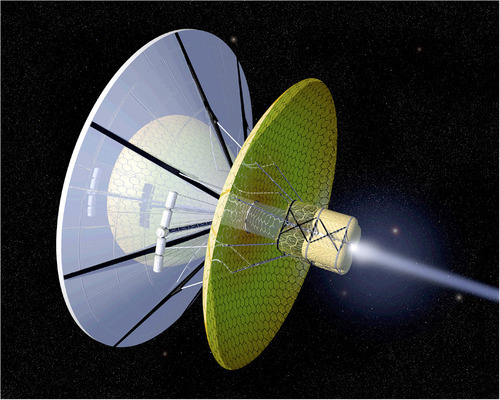
Massive objects moving at near light speeds do not occur naturally in the universe as we know it. If we detect such objects it is a reasonable to assume they are artificial artifacts from advanced intelligent life. This according to Garcia-Escartin and Chamorro-Posada, authors of a recent paper, is a low-cost, sure-fire way of searching for intelligent life outside earth.
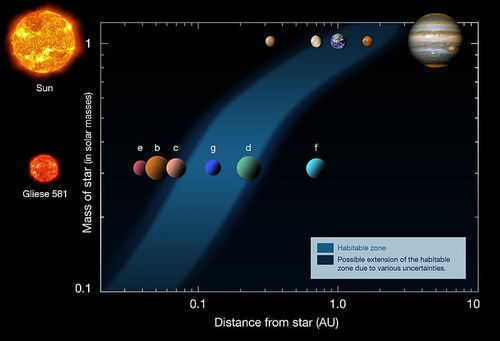
The habitable zone of Gliese 581 compared with our Solar System’s habitable zone. Image credit NASA.
Searching for life beyond earth is a grand and varied enterprise.
For a start we can look for exoplanets that fall inside the habitable zone of a star. A planet found in this zone may fulfill the requirements for life: liquid water, energy, elements and other nutrients, and appropriate physical conditions. Though we have located many exoplanets in recent times they are far from earth – many light years distant. For example one star system, Gliese 581, is 20.3 light years away (192,048,720,000,000 kilometres). With three planets in its habitable zone, we know nothing about conditions on them. The techniques used to find them can tell us nothing about their ecology – if any. Being in a habitable zone does not guarantee life. It is only in recent years that we have realised how inhospitable Venus and Mars are to life – despite being in our habitable zone.
By looking for alien signals or transmissions, as in the SETI programme, we extend our search from ‘possible life’ to intelligent life. For advanced civilisations we look for artificial illumination or interstellar probes.
Let’s face it though, to know we are not alone will require quite good proof for most of us (apart from the misguided minority of UFO believers), and especially for the skeptical scientists.
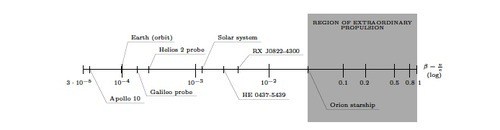
The intriguing proposition of Garcia-Escartin and Chamorro-Posada is based on three ideas. The first is that anything travelling faster than 3.3% of light speed (5,935,890 kilometres per hour) is artificial. All known natural objects travel slower than this speed, as do our current space probes. This speed was chosen as it is the estimated speed of the nuclear propulsion ship proposed by Freeman Dyson in the Orion project. Although the propulsion technology is feasible today the technological and economic hurdle of creating such a craft is way beyond our current means. Although it is certainly not inconceivable to achieve such interstellar travel in the next 100 years.
Scales of speed with respect to the speed of light in vacuum (logarithmic scale). The fastest man-made objects are in the range of velocities from 1/100,000 c to 1/1,000 c. Examples are the fastest manned ship, Apollo 10 on entry, the Galileo probe during its descent into Jupiter and the solar probe Helios 2. For comparison, we have included the average speed of Earth during its orbit around the Sun and the motion of the Solar System with respect to the cosmic microwave background frame. The fastest natural objects, like hypervelocity star HE 0437-5439 and neutron star RX J0822-4300, move in the scale of 1/1,000 c-1/100 c. We define a region of extraordinary propulsion (REP) for speeds which would point to an artificial object. The REP starts at the estimated speed for the nuclear propulsion Orion ship, which could be built with present human technology. Source original paper, Cornell University.
You are possibly thinking about now: “Doesn’t the mass of an object increases massively as its speed approaches light speed?” You would be correct, this consequence of Einstein’s theory of special relativity is demonstrated quite satisfactorily in particle accelerators around the world. To cover this the authors next identify a consequence of relativity theory: relativistic effects amplify the light reflected from a body travelling at near light speed – in some key situations. Allowing for the detection of ‘small’ objects.
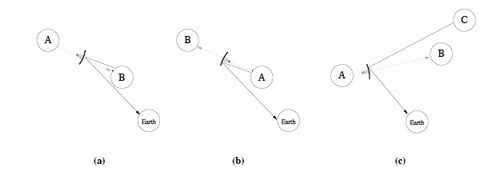
This brings in the authors third criteria. Interstellar travel will be from one star system to another. The reflected-light magnifying effect would be greatest for the cases where earth is almost in line with the departure stellar system and the destination stellar system.
Earth’s position with respect to the ship’s trajectory. (a) Earth receives the light from the destination star reflected from an approaching ship. (b) Earth receives the light from the origin star reflected from an outbound ship. (c) Earth receives the light from a third star, which is reflected from the ship at an angle. Source original paper, Cornell University.
The authors propose to limit the first search to star systems that are reasonably close to each other (no further than 10 light years apart) to maximise the probability of stellar travel opportunities. Considering that Gliese 581, for example, is greater than 20 light years distance from us, I suggest that this criteria is too limiting.
The paper is an interesting, if not compelling, proposition. The authors do calculate what size an artifact would need to be, travelling at their minimum speed (3.3% light speed), to be detected at the distance of one of our closer stellar neighbours. Could such an artifact be detected by the Hubble or James Webb space telescopes, for example? What is the probability of success of such an experiment, compared to say the SETI experiments?
One idea I did find interesting is by focussing on detecting light reflected from ships, we do not need to assume any intention by the interstellar travellers to communicate with us. The ‘signal’ is independent of alien psychology. It is also independent of propulsion technology – we aren’t looking for any ‘signature’ of any particular technology, known or unknown.
It is an interesting paper. I’m not sure they have presented a compelling enough case to convince a funding body – yet.
Another week, another collection of weekly science picks! Those of us over here in Northern Europe have been enjoying snowy weather this past few days, with more expected on the way. At the same time, many of us have been keeping a concerned eye on the recent events in Australia – the bush fires being among them.
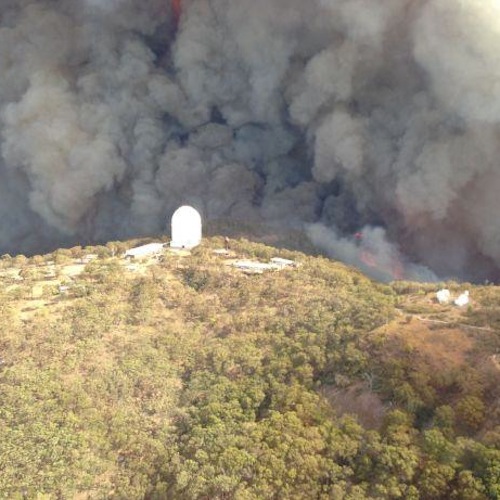
Among the many areas hit by the fires was Siding Spring Observatory. While some buildings were destroyed and others damaged, all of the telescopes appear to be ok. Details on the entire event from a first hand perspective are given by astronomer Amanda Bauer on her blog, Astropixie.
from all accounts i’ve received, heard, and read, the area surrounding coonabarabran is a “disaster zone,” which is heart-breaking news. fire service crews will be working overnight, taking advantage of milder conditions, to put containment lines around the edges of the fire, hoping to protect coona before the winds change.
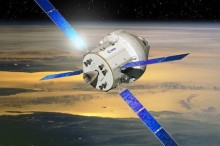
Orion, the spacecraft being developed to replace the Space Shuttle and ease the pressure on Russia’s Soyuz craft, has been a troubled undertaking. As with virtually all NASA projects lately, it’s been hampered by repeated budgetary problems. The latest development in the story is that Europe has now formally agreed to assist in developing the Orion craft, with the long term goal of deep space missions, to the Moon and Mars.
The current plan calls for Europe to build the prototype module for 2017 and a number of components that would be needed for the second vehicle in 2021, although a formal go-ahead to complete this additional model is some years off.
Depressingly, there is still an obvious gender gap in science, though it’s at least heartening to know that this is an issue which some are paying serious attention to. Many are going what they can to fix the problem, while others are disappointingly willing to argue that nothing should be done. One article which caught my eye this week was written by an anonymous senior scientist, arguing that we should be taking a more aggressive approach to tackling this problem. I for one, wholeheartedly agree!
Can it be that women are treated less fairly than men? A deceptively simple piece of research led by Jo Handelsman at Yale University has recently suggested that they are… I should point out here that there was no statistically significant difference between the responses from male or female faculty, nor were there differences between levels of faculty, suggesting this is not a hierarchical bias.
Back in space, new plans for the International Space Station involve blowing something up. Nevada-based Bigelow Aerospace have been contracted to develop an inflatable habitat module for the space station, with the intention of using the new SpaceX Dragon craft to send it up into orbit. Private companies are evidently becoming major players in human spaceflight.
Bigelow hopes the tests done in orbit will prove that inflatable capsules are safe and reliable for space tourists and commercial research, an idea almost as old as NASA itself. The space agency began investigating the concept of expandable spacecraft in 1958. Space stations like this would be easier to launch and assemble than those with metal components, so would be cheaper.
On a final note, while many of us tend to consider invertebrate animals as being inferior, there’s evidence that some of them may be more self aware than we give them credit for. While some research has concluded that fish don’t feel pain in any meaningful way, crustaceans like crabs and prawns probably do. It’s probably about time we extended the laws on humane treatment of animals to cover invertebrates too.
A study has revealed that the shore crab, a close relative of the species we use for food, responds to electric shocks and then goes on to avoid them. Previous research has shown that prawns and hermit crabs also react to painful situations.
Whether you’re dealing with fire or ice nearby, stay safe and have a good week!
Image credits:
Top – NSW Rural Fire Service
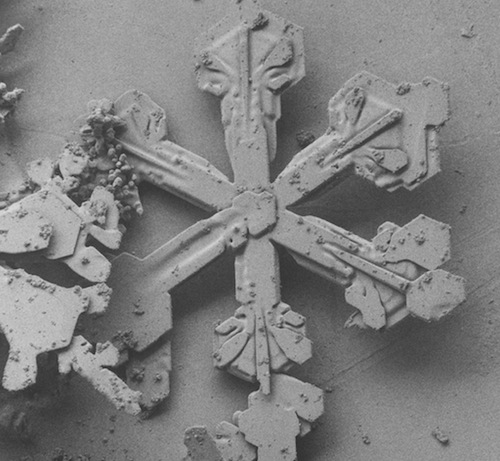
Bottom – Electron Microscopy Unit, Beltsville Agricultural Research Center, Maryland.
Featured – ESA
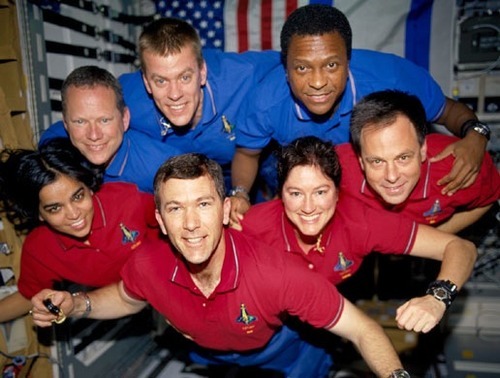
The 28th and last flight (STS-107) of the space shuttle Columbia was ten years ago. Launched on January 16, 2003 Columbia was destroyed at about 0900 EST on February 1, 2003 while re-entering the atmosphere after its 16-day scientific mission. The destruction of the shuttle killed all seven astronauts on board.
The traditional “in-flight” picture of the crew. This picture was taken from a camera recovered from the crash debris. Photo credit NASA.
An illustrious career
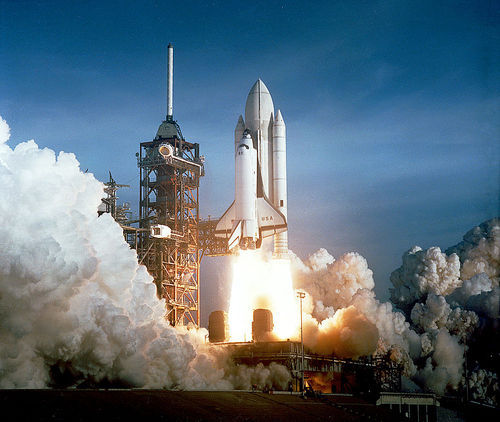
Columbia was the first of the space shuttles to fly, it was successfully launched on April 12, 1981, the 20th anniversary of the first human spaceflight by Yuri Gagarin in Vostok 1, and returned on April 14, 1981, after orbiting the Earth 36 times. The first flight of Columbia (STS-1) was commanded by John Young, a Gemini and Apollo veteran who was the ninth person to walk on the Moon in 1972, and piloted by Robert Crippen, a rookie astronaut who served as a support crew member for the Skylab and Apollo-Soyuz missions.
Columbia has an illustrious career as part of the US space program, featuring many ‘firsts’. It was the first true manned spaceship. It was also the first manned vehicle to be flown into orbit without benefit of previous unmanned “orbital” testing; the first to launch with wings using solid rocket boosters. It was also the first winged reentry vehicle to return to a conventional runway landing, weighing more than 99-tons as it was braked to a stop on the dry lakebed at Edwards Air Force Base, California.
NASA PHOTO: The April 12, 1981 launch at Pad 39A of STS-1, just seconds past 7 a.m., Columbia carries astronauts John Young and Robert Crippen into an Earth orbital mission scheduled to last for 54 hours, ending with unpowered landing at Edwards Air Force Base in California.
Its second flight, STS-2 on November 12, 1981 marked the first re-use of a manned space vehicle. A year later it became the first 4-person space vehicle – bumping this to six on its sixth flight (STS-9) on November 28, 1983. This flight also featured both the first flight of the reusable laboratory ‘Spacelab’ and the first non-American astronaut on a space shuttle, Ulf Merbold. STS-93, launched on July 23, 1999, was commanded by Eileen Collins, the first female Commander of a US spacecraft.
Space Shuttle Columbia flew 28 flights, spent 300.74 days in space, completed 4,808 orbits, launched 8 satellites and flew 201,497,772 km in total, including its final mission. Its penultimate flight (STS-109) was the third of the highly publicised servicing and upgrade flights to the Hubble Space Telescope.
The fatal flight
The rockets fire. Amidst the thundering fiery roar the shuttle lifts majestically from the launch pad. Unnoticed at the time, at 81.9 seconds after launch a foam insulating block disintegrates upon hitting the leading edge of the shuttles left-wing. The launch continues as scheduled. One hour after launch Columbia was in orbit and the crew began to configure it for their 16-day mission in space.
The next day, routine analysis of high-resolution video from the tracking cameras reveals the debris strike. Multiple groups within the mission team review the tapes. They assess the possibility of damage and decide that an image is required of the wing. They make a request to the NASA ground management for imaging of the wing in-orbit.
However, it was considered “of low concern” that the carbon matrix could be damaged by the foam block. The engineers were over-reacting. The Space shuttle Program managers declined to get the Columbia imaged – or alert the shuttle crew. In fact the crew were told that the impact was a “turn-around issue”, something they had seen before and would be a maintenance check only. Titanic-like the mission continued.
Scientifically the mission was great success. The shuttle crew worked around the clock to ensure that maximum scientific value was achieved. Including an investigation of the web-spinning abilities of the Golden orb spider under low gravity. An experiment designed by students from Glen Waverley Secondary College, in Melbourne Australia.
The morning of re-entry all appears calm and normal in the mission control room. As re-entry started the crew are seen to be in good spirits and looking forward to coming home.
Then while travelling at Mach 24.1, during the 10-minute fiery re-entry, when the leading edge reaches temperatures in excess of 1550 Celsius, the damaged thermal protection panels on the wing overheated – then failed catastrophically. The wing and shuttle disintegrating.
The nearly 84,000 pieces of debris from the shuttle are stored in a 16th floor office suite in the Vehicle Assembly Building at the Kennedy Space Center.
Two other died in the search for the debris: Jules Mier (Debris Search Pilot) and Charles Krenek (Debris Search Aviation Specialist).
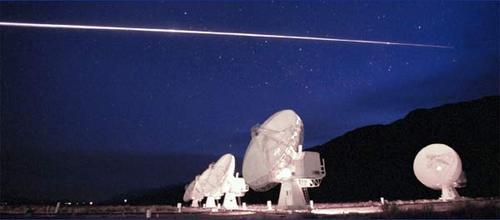
NASA PHOTO: Final descent, Columbia streaking over the Owens Valley Radio Observatory in Big Pine, California
Is spaceflight perilous? Or an unforgiving adventure?
It is rather remarkable that NASA had launched men into space sixteen times during the the Mercury and Gemini programs without a casualty – although there had been some scary moments.
Compared to the cramped and tiny Mercury capsule the Apollo command module was, in spaceflight terms, a luxury liner. So when a spark ignited the oxygen atmosphere of the Apollo 1 capsule on January 27, 1967 killing three astronauts it was shocking for both NASA and the public. The last communication from the Apollo 1 capsule was not revealed for a long time to the public:
Fire! We’ve got a fire in the cockpit! We’ve got a bad fire…..get us out. We’re burning up…..
The last sound was a scream, shrill and brief. After this nothing at NASA would be quite the same again.
The fatal Apollo 1 fire was also unexpected. At the time of the fire the crew of Gus Grissom, John Young and Roger Chaffee were perched atop an empty Saturn V rocket involved in routine testing of the capsule control systems.
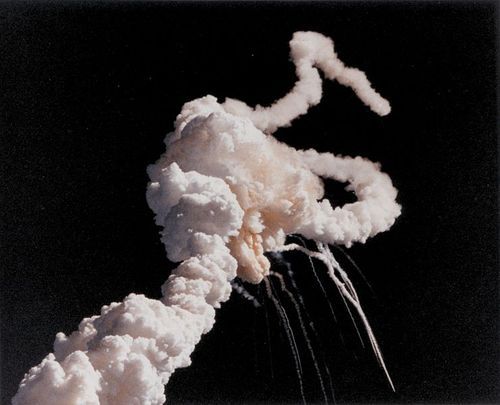
The 1986 Challenger disaster was equally shocking – and far more public. The explosion 73 seconds after lift off claimed shuttle crew and vehicle. The cause of explosion was determined to be an o-ring failure in the right solid rocket booster. Cold weather was determined to be a contributing factor. The subsequent investigation and changes delayed the next shuttle launch to late 1988.
Space Shuttle Challenger’s smoke plume after its in-flight breakup, resulting in its crash and the deaths of all seven crew members. Photo credit NASA.
You could say that space exploration in itself is not inherently dangerous. But to an even greater degree than aviation, it is terribly unforgiving of any carelessness, incapacity or neglect. Gus Grissom has been quoted as saying during the pioneering Mercury missions:
If we die we want people to accept it. We hope that if anything happens to us it will not delay the program. The conquest of space is worth the risk of life.
I’m not sure that Gus Grissom would have accepted these deaths as an acceptable risk of human spaceflight.
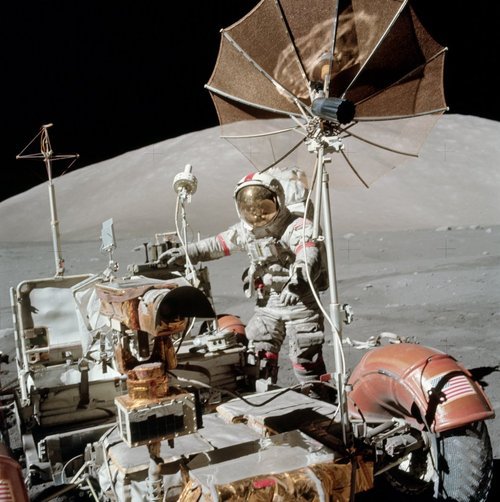
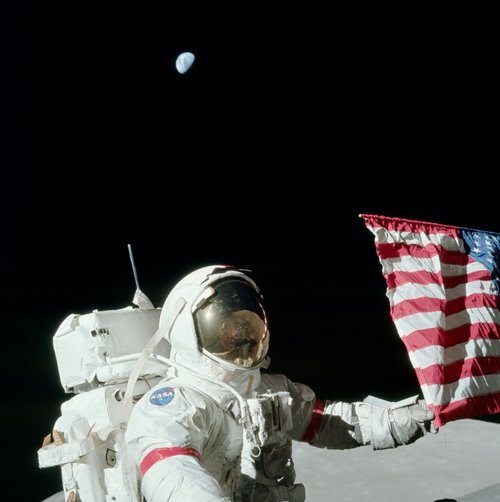
Apollo 17 Commander, Eugene Cernan, next to the lunar rover. Image credit NASA.
After kangaroo hopping back to the lunar rover, Eugene and Jack drove back to the lunar module, Challenger. There they dusted each other off and loaded the last of their 100kg of lunar rock samples. Jack cleaned up inside While Eugene parked the rover a kilometre and a half away so the takeoff could be televised. Then hopping and skipping in the low lunar gravity he made the most of his last moments on the moon. Once back at the lunar module, one foot on the Challenger’s landing pad, Eugene Cernan lifted his other from the moon, and said:
As I take these last steps from the surface for some time to come, I’d just like to record that America’s challenge of today has forged man’s destiny of tomorrow.
The next day, December 14, 1972, they blasted off from the moon, ending the sixth and last human exploration of the moon for the 20th century.
The last of the lunar Apollos
The Apollo program was a child of the cold war between the USA and Soviet Russia. It was invigorated by President Kennedy’s 1961 challenge to put man on the moon and return him safely before the decade was over. Once the landing of Apollo 11 was achieved in July 1969, the Apollo and NASA budgets came under savage scrutiny. It was the time of the war in Vietnam, budget problems for the 1972 fiscal year and followed the scare of Apollo 13.
The final two scheduled Apollo missions, 18 and 19, were finally cancelled in September 2, 1970. Apollo 20 had already been cancelled on January 2 so that its Saturn V rocket could be used as the launch vehicle for the Skylab space-station in 1973.
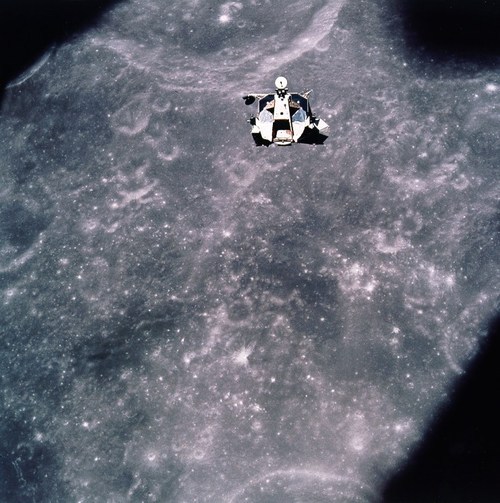
The first part of the return journey as the Lunar module, Challenger, approaches Apollo 17 Command Service Module, America, after blasting off the lunar surface. Photo credit NASA
The Apollo program was an incredible, successful human feat. It remains the only program to have placed humans beyond low-earth orbit and onto another celestial body. Apollo 8 was the first manned spacecraft to orbit another celestial body, while Apollo 11 landed the first humans on another world. The program returned 382 kg of lunar rocks and soil to Earth, contributing to the understanding of lunar geology.
It laid the foundation for NASA’s current human spaceflight capability, and funded construction of its Johnson Space Center and Kennedy Space Center. Apollo also spurred advances in many areas of technology incidental to rocketry and manned spaceflight and the start of huge opportunities for technology transfer, leading to more than 1,500 successful spinoffs related to areas as disparate as heart monitors, solar panels, and cordless innovation. More recently, we’ve seen a fledgling private-sector American space industry complete its first cargo delivery to the international space station.
Stepping up, walking tall
There is a marvelous fascination with human exploration. The Apollo missions are a great representation of that drive and curiosity. Apollo 17 astronauts, Eugene Cernan, Harrison Schmitt and Ron Evans, exemplified those attributes.
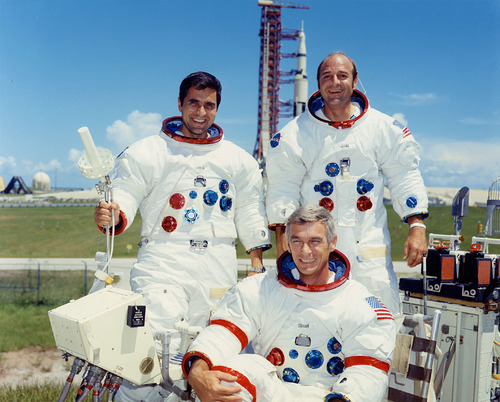
Publicity shot of the Apollo 17 crew with their Saturn V vehicle in the background. (L-R): jack Schmitt, Eugene Cernan (seated) and Ron Evans.
Eugene Cernan is ‘Captain America’ to a tee. A US Navy pilot who, like much of America, was caught up in the early space race. In 1962 he watched, captivated, on TV the launch of John Glenn. Who in the third manned Mercury capsule became the first American to orbit the earth. Cernan at the time lacked the coveted ‘test-pilot’ wings to be selected in the September 1962 second group of astronauts, which included Apollo 11 commander, Neil Armstrong. Cernan was picked, in October 1963, for the third astronaut group – which included the other Apollo 11 astronauts Buzz Aldrin and Michael Collins.
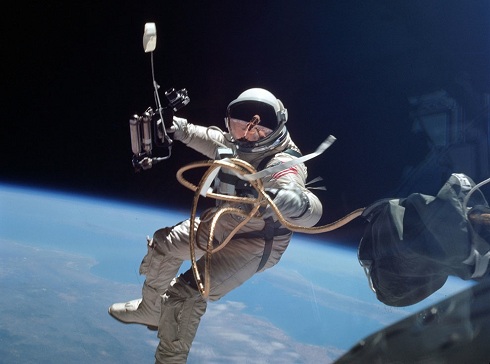
Cernan became the second American astronaut, after Ed White on June 3 1965, to perform an extra-vehicular activity – a spacewalk. His Gemini 9 spacewalk lasted 2 hours and nine minutes, travelling 57,600 km, and rated as one most difficult achievements of his life. The brutal mechanics of Newton’s third law in action in space making seemingly simple tasks into exhausting and challenging experiences, resulting in fogging his helmet and pushing his heart rate to 188 bpm. His experiences made NASA rethink the training required for future extra-vehicular activities.
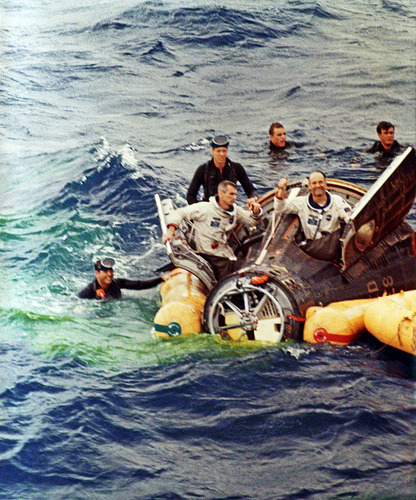
Gemini 9 splashdown with Eugene Cernan (L) and a smiling Tom Stafford (R).
On January 27, 1967 Tom Stafford, John Young and Cernan were in an altitude chamber “trying to bring a new, untried, stubborn spacecraft up to launch standards”. Meanwhile, in an identical craft, Apollo 1 astronauts veteran Gus Grissom, first American spacewalker Ed White and Cernan’s closest friend the rookie Roger Chaffee, were conducting similar tests atop a Saturn rocket at Cape Kennedy. Minutes later they were dead, killed in a fire – a tragedy stunning the close-knit space community.
In May 1969, Cernan, as part of the Apollo 10 crew along with Tom Stafford and John Young achieved a number of records and a “dry-run” for the Apollo 11 landing two months later. As befitting a crew of test pilots they set the record for the highest speed attained by a manned vehicle at 39,897 km/h during the return from the Moon on May 26, 1969 and hold the record of being the humans who have traveled to the farthest point away from home, some 408,950 kilometres. Cernan and Stafford came within 15.6km of the lunar surface in their lunar module Snoopy.
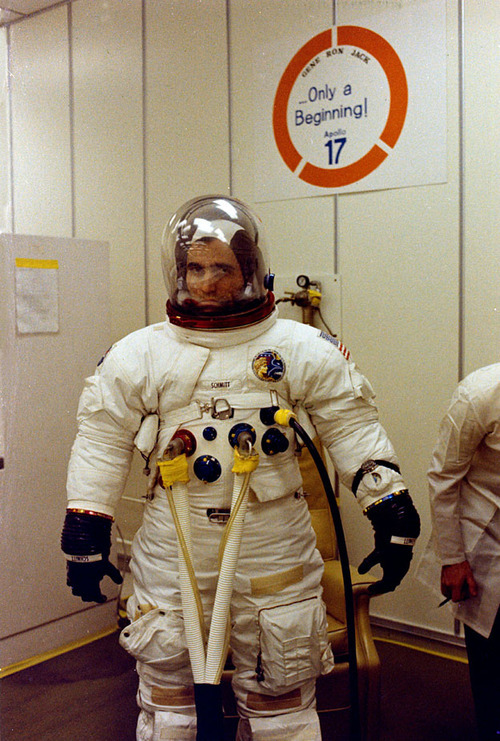
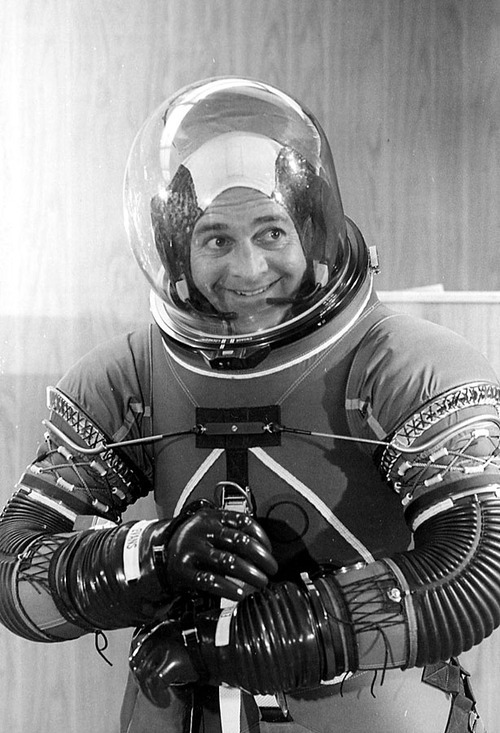
Jack Schmitt being suited up for dress rehearsal prior to launch. Photo credit NASA.
Harrison “Jack” Schmitt is a geologist and one of the NASA group 4 astronauts, “the scientists“, that were announced on June 28, 1965. His and their story is worthy of is own post, coming in January 2013.
Ron Evans having a suit fitting during the pre-launch phase. Photo credit NASA.
Ron Evans was picked as a Command Module specialist from the beginning of his NASA career. Chosen in April 1966, one of the group 5 astronauts, he was support crew for Apollo 1 and back-up command module pilot for Apollo 14. I found him notable for his almost invisibility in memoirs of the time. In both Deke Slayton’s and Eugene Cernan’s fascinating autobiographies Ron Evans is there an accepted, uncontroversial part of the missions, without a strong personality, extremely competent – obviously the perfect man for the pilot seat of the command module America.
Adventures in the Taurus-Littrow valley
A moon landing was the payoff for all the hard-work, according to Cernan, “the ultimate dream for any pilot.” Following the tradition began by Neil Armstrong on Apollo 11, Cernan, as Commander, was first out on the moon. As he skipped around Schmitt quipped, “Hey, whose been tracking up my lunar surface?” and then stepped out onto a geologist’s paradise – the moon.
The primary objectives for Apollo 17 were: to sample lunar highland material older than the impact that formed Mare Imbrium and investigate the possibility of relatively young volcanic activity in the same vicinity. The Taurus-Littrow valley was selected with the prospects of finding highland material in the valley’s north and south walls and the possibility that several craters in the valley surrounded by dark material could be linked to volcanic activity
Cernan and Schmitt had a three-day lunar surface stay, conducting three periods of extra-vehicular activity, either moonwalking or driving around in the third Lunar Roving Vehicle. They amassed over 22 hours on the surface during these periods in which they collected lunar samples and deployed scientific instruments.
Eugene Cernan on the first EVA, suits still pristine and the Earth above his head. Evocative shot by Jack Schmitt. Photo credit NASA.
The largest haul of lunar rocks was collected by the two moon-walkers as well as deploying the Apollo lunar surface experiments package (ALSEP), a feature of all manned lunar missions. The stations ran from deployment until they were turned off on 30 September 1977 due to: budgetary considerations, the power packs could not run both the transmitter and any other instrument, and the ALSEP control room was needed for the attempt to reactivate Skylab.
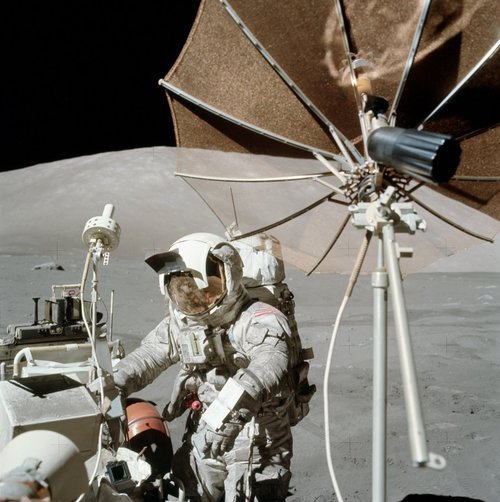
They also carried out gravimeter experiments to learn about the moon’s internal structure. The gravimeter was used to obtain readings at the landing site in the immediate vicinity of the lunar module, as well as various locations on the mission’s roving routes.
Eugene Cernan next to the lunar rover vehicle. Photo credit NASA.
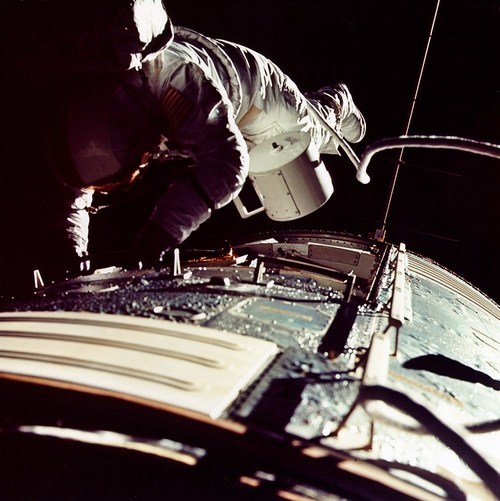
Meanwhile the command module also housed a series of scientific experiments. A special bay housed three experiments (as well as cameras and altimeter) for use in lunar orbit: a lunar sounder, an infrared scanning radiometer, and a far-ultraviolet spectrometer. The film canisters were recovered by Ron Evans in a spacewalk after docking with the returned lunar module.
Ron Evans on his space-walk to retrieve film canisters from the outside of the service module prior to separation of the command module and return to earth. Photo credit NASA.
Splashdown in the Pacific on December 19, 1972 brought this “first phase” of human space exploration to a close – I now wait for the second phase to begin and wonder who might it be?
Ah, the weekend! Time to kick back, relax, and look back over everything that’s happened over the past few days. And I’m rather happy to say that some quite interesting things have happened, including the Leonid meteor shower which peaked on Friday night (though if you step outside after dark and watch the sky, you may still see a few stragglers). So what else has caught my eye this week, science-wise?
Well first off, the Curiosity Rover has been busy over on the planet next door. I can’t help but find everything about the Curiosity rover exciting, especially as it’s paving the way for actual manned exploration to another planet. As many people will agree, no matter how sophisticated a rover can be, it will never be as good as a team of properly equipped geologists exploring a site in person. As it turns out, this idea just came a step closer to being reality…
The findings demonstrate that Mars’ atmosphere, though just 1 percent as thick as that of Earth, does provide a significant amount of shielding from dangerous, fast-moving cosmic particles.
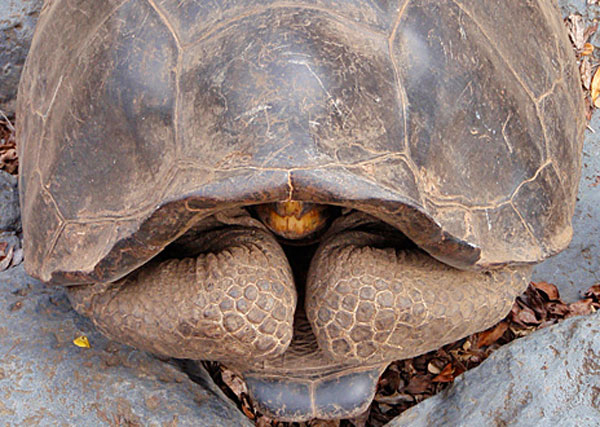
Some people may recall the death of an aged tortoise nicknamed Lonesome George, so called because he was thought to be the last surviving member of his species. I know I do, and was rather saddened by it. While it may be an inescapable part of the way life on our planet works, there’s something quite humbling about being forced to simply watch a species go extinct and not be able to do anything about it. But then, was George’s death really the end of the story? As it happens, perhaps not…
“These giant tortoises are of crucial importance to the ecosystems of the Galapagos Islands, and the reintroduction of these species will help preserve their evolutionary legacy,” said Danielle Edwards, postdoctoral research associate at Yale and lead author on the study.
Lisa Grossman at New Scientist discusses the phenomenon of rogue planets – planets roaming interstellar space after being forcibly ejected from their home systems. It’s a concept which I’ve thought about in great detail in the past, as have many others, including astrophysicists, astrobiologists, and science fiction authors.
The wanderers are no longer gravitationally linked, but they are headed in the same direction. “Like when you kick a clod of sand, the grains don’t stick together anymore but they have the same common motion,” Delorme says.
In chemistry, I’ve always held a certain fascination with noble gas compounds. Molecules formed from atoms which aren’t supposed to react and form molecules always seemed rather exotic and curious. Several of these compounds have been predicted involving Xenon, one of the heaviest noble gasses. And there may be a lot of Xenon trapped inside the Earth this way…
“In addition to providing a likely solution to the missing xenon paradox and clarifying essential aspects of xenon chemistry, our study may result in practical applications,” says [Artem R.] Oganov. “For example, the ability of xenon to form strong chemical bonds with oxygen and other elements, and to be trapped in crystalline defects, suggests their use as non-classical luminescence centers and active sites for catalysis”.
And to end on a humourous note, XKCD wrote a comic this week describing the Apollo Spacecraft and Saturn V rockets using only the 1000 most commonly used words in the English language. The result was slightly hilarious and rather enlightening about how often writers like myself use words which aren’t in that top 1000. A testament to XKCD’s popularity is how many people in the online space and astronomy communities mentioned it – including at least one astronaut!
Lots of fire comes out here. This end should point toward the ground if you want to go into space. If it starts pointing toward space you are having a bad problem and you will not go into space today.
The Soviet Union launched Sputnik 1 into an elliptical low Earth orbit on October 4, 1957. This surprise precipitated the space age and triggered the space race. The success ushered in new technological, political, military, and scientific developments.
On April 12, 1961, Yuri Gagarin became the first person in history to leave the Earth’s atmosphere and venture into space. His flight aboard a Soviet Vostok rocket lasted 108 minutes, at the end of it he had ignited the manned space race.
Who were men who responded to these Soviet firsts, launching America into space and then onto the moon?
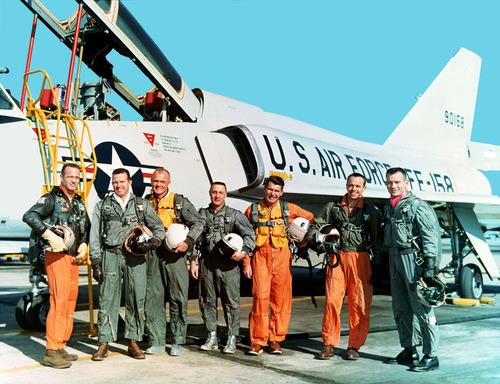
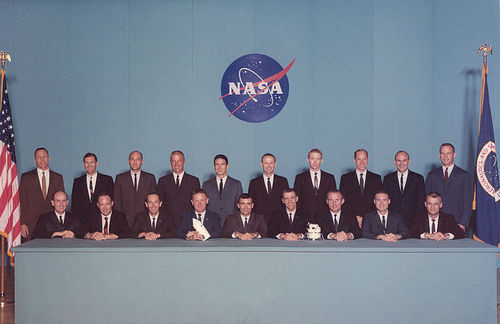
NASA selected the first US astronauts, the Original Seven (also referred to as the Mercury Seven and Astronaut Group 1), on April 9, 1959. This was the only astronaut group with members who flew on all classes of NASA manned orbital spacecraft of the 20th century — Mercury, Gemini, Apollo, and the Space Shuttle.
The Mercury Seven stand in front of a F-106 Delta Dart. Photo credit NASA.
The first American launched into space was Alan Shepard, followed by Gus Grissom. Their ballistic flights were followed by orbital flights by John Glenn then Scott Carpenter, each managing three orbits. Wally Schirra made six orbits and Gordon Cooper completed the Mercury project with 22 orbits. Cooper was the first American travelling in space for over a day and the last American to be launched solo into Earth orbit. Deke Slayton, was grounded in 1962 due to a heart arrhythmia, but reinstated in 1972 and flew on the Apollo-Soyuz Test Project in 1975.
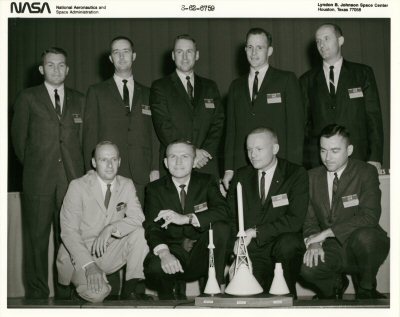
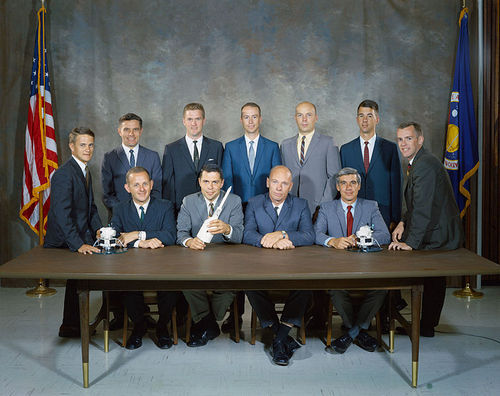
The New Nine. Back row: See, McDivitt, Lovell, White, & Stafford. Front row: Conrad, Borman, Armstrong, & Young. Photo credit NASA.
With the announcement of the Gemini program and planning of the Apollo program a second group of astronauts were selected by NASA and announced on September 17, 1962. The New Nine augmented the original Mercury 7. While the original seven had been selected to accomplish the simpler task of orbital flight, the new challenges of rendezvous and lunar landing led to the selection of candidates with advanced engineering degrees (for four of the New Nine) as well as test pilot experience.
The Fourteen (seated, left to right) Aldrin, Anders, Bassett, Bean, Cernan, and Chaffee. Standing (left to right) are Collins, Cunninham, Eisele, Freeman, Gordon, Schweickart, Scott and Williams. Photo credit NASA.
Group 3 was the first group to include candidates with no test pilot background. They are the only ones of the first 19 NASA astronaut groups to have no members at all fly on the Space Shuttle.
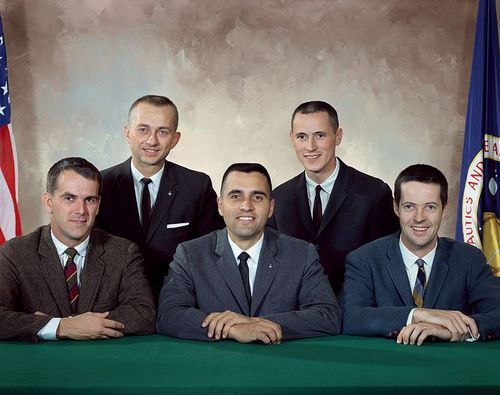
The fourth group of astronauts, the Scientists, selected by NASA in June 1965, came as a rude shock to the existing astronauts. While the astronauts of the previous three groups were required to have college and some advanced degrees, they were chosen for their test pilot expertise. The six members of this group, on the other hand, were chosen for their research and academic backgrounds. Doctorate degrees were required and minimum flight time requirements were waived for this group.
Scientist-Astronauts: Front row, L-R: Michel, Schmitt, and Kerwin. Back row, L-R: Garriot, and Gibson. Photo credit NASA.
John Young labelled the next astronaut group, selected by NASA in April 1966, the “Original Nineteen” in parody of the original seven Mercury astronauts. Of the six Lunar Module Pilots that walked on the Moon, three came from this group (Charles M Duke Jr, James B Irwin, and Edward D Mitchell). This group is also distinctive in being the only time when NASA hired a person into the astronaut corps who had already earned astronaut wings, X-15 pilot Joseph “Joe” H Engle.
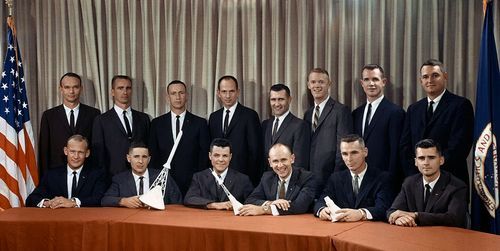
The final group of this era, the second group of scientist-astronauts, were appointed by NASA on August 11, 1967. They were labelled the “excess Eleven” with only five, including the first Australian born astronaut Philip Chapman, given formal assignments in the Apollo Program, and these were all non-flying. These were: Joseph P Allen, Chapman, Anthony W England, Karl G Henize, and Robert A R Parker. Chapman resigned from NASA in July 1972 due to lack of space-flight opportunities. Three others, Donald L Holmquest, Anthony A Llewellyn, and Brian T O’Leary resigned earlier from the group for various reasons.
The Excess Eleven civilian scientists. Seated at the table, L to R: Chapman, Parker, Thornton, and Llewellyn. Standing, L to R: Allen, Henize, England, Holmquest, Musgrave, Lenoir, and O'Leary. Photo credit NASA.
Assignments for the group were delayed by the requirement to spend a full year to become qualified as jet pilots (as were the Group 4 scientists before them). This requirement for scientists to be trained as jet pilots was eventually lifted with the creation of the Mission Specialist position in the Shuttle Program. The seven members (Allan, England, Henize, William “Bill” Lenoir, Story Musgrave, Parker, and William E Thornton) of Group 6 who stayed with the program after Apollo went on to form the core of Shuttle Mission Specialists, accomplishing a total of 15 flights.
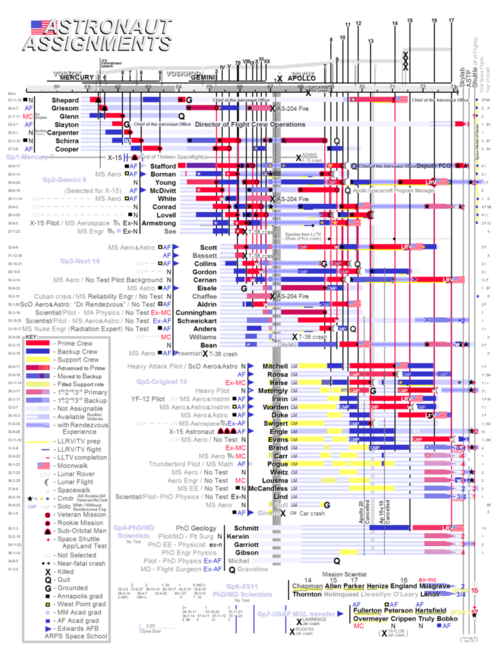
This chart organizes each NASA astronaut group by order of their assignment to fly. Codes as explained in the legend illustrate each person's skills and accomplishments. Image credit: Tdadamemd
In all 66 men became NASA astronauts during this first era of manned space exploration. No women were included – although there was an unofficial group called the First Lady Astronaut Trainees– not being jet test pilots there were ineligible to become astronauts.
Was this a “boys’ own adventure”? Was this a period of great social upheaval in the USA? Did this era cement in the US politicians and public the image of supremacy and isolationism in space endeavors? Yes, is the answer to all three questions.
There are a myriad of stories from these groups’ exploits. These stories have a contemporary relevance as we reach an era of: new commercial space opportunities (leisure, exploration and mining), new entrants (China and India), and find the US and Europe hampered by self-imposed budget challenges and hurdles.
Whether you are a parent, teacher, student or simply an interested enthusiast, here are a number of interesting sites, podcasts, and social media people for you to draw on as you get going in amateur astronomy.
Podcasts provide an amazing resource – all free. Most are available via iTunes, the original publishers’ websites, or a raft of other podcast aggregators. There are very good apps to allow you to download podcasts to your smartphone for listening when suitable – Podcruncher is my choice for the iOS platform – brilliant app and service. Just don’t bother trying to use the Apple Podcasts app – it’s a total lemon. Good podcast apps also allow you to increase the playback speed up to double normal (Podcruncher goes in quarter increments) and surprisingly you learn to follow it. In fact, it can get so listening at normal speed is far too slow!
Many of these links also have Twitter accounts (where noted), so you can keep right up to the minute!
Astronomy podcasts:
In Australia there is the wonderful StarStuff, an independent project run by Stuart Gary but sponsored by the ABC, with the 30-minute podcasts at ABC. @abcstarstuff
Canberra’s Steve Nerlich produces Cheap Astronomy, regular 10-minute shows of varying complexity. @cheapastro
Overseas, despite a truly ugly website, the fantastic Naked Scientists from UK’s Cambridge University have a stack of brilliant podcasts on general, science, archaeology, earth sciences, oceans, Africa, great kitchen-friendly experiments, and the monthly 60-minute Naked Astronomy, steered by Ben Valsler.
There are a stack of NASA video and audio podcasts. Of interest are the space telescope ones for Hubble, Spitzer, Chandra, plus This Week @ NASA, Universe, Earth…where to stop? You’ll be amazed at how much NASA is doing – for an agency that altogether too many people think has shut up shop!
And if you’d like to go a bit further, you can subscribe to an entire university astronomy course via podcast – all the learning but no horrible assignments or exams! Here’s one in audio format from Ohio State Uni. There are others too, including video. Check iTunes, or iTunesU, the app for which includes study notes and the ability to record your own notes as you go along.
Observing podcasts:
The Sydney Observatory posts a monthly podcast summarising the night sky viewing for the month – great for Southern Hemisphere viewers and East Coast Australians in particular. They have the added benefit of a transcript so you can print and highlight the key bits as a night sky viewing plan. @sydneyobs
NASA’s Jet Propulsion Lab has a short monthly video podcast, plus there’s a stack of related brain food on their site.
Observing with Webb – another USA podcast by Rod Webb, but many of the sights will be visible here, just in different locations.
Telescope Man – look for the monthly viewing summaries. No nonsense, best viewing tips, with catalogued numbers if you have a go-to scope, but based on Texas. Plenty of other good beginner podcasts too.
Non-podcast observing resources:
The Hayden Planetarium (part of the American Museum of Natural History and headed up by none other than Neil deGrasse Tyson @neiltyson) has a good monthly sky report. You can see a lot of what they discuss, but of course not all. You’ll also find their 3D atlas to the Universe.
Slooh has several large telescopes around the world and you can view the feeds for free. They have guest speakers during regular events. @slooh
Heavens Above allows you to register and enter your location, then get schedules of when key objects will pass over your patch of the sky – from GPS satellites to the International Space Station. Find out why the brightness scale goes backwards, planet and comet locations, and more.
If you just want to focus on passes of manned vehicles like the ISS or Soyuz, then check the RSS subscription for your location at NASA Human Spaceflight.
Stellarium – a free public domain computer planetarium. Free-standing once installed with no need of web access, so you can switch to red mode and take your notebook computer out with you.
Celestia – another free planetarium. This one lets you explore off-planet, and even check out various space missions.
Eyes on the Solar System – NASA’s mission tracking simulator. Go for a ride along with every NASA space mission past and present. A great way to piggy back onto the Mars Curiosity rover and relive her descent to Mars last August!
Non-podcast astronomy resources:
NASA’s Breaking News is a good resource, and has a useful RSS feed – check out Google Reader for how to collate key websites simply via RSS feeds, and Feedler Pro is a great app for viewing your Google Reader subscriptions on iThings. @NASA
NASA also has a comprehensive education section, with specialist information for teachers at different levels, students and a kids club. Too much to list and it seems to grow every time you return. It’s not all about the US either – they have an international Scientist for the Day competition running right now for school students.
It’s hard to go past Space.com for some of everything you want, and great RSS and Twitter feeds. They have a good shop too – from meteorites to kids’ spacesuits, genuine gone-to-space memorabilia to clothing. I mean, you’ve got to look the part for your classes right? @spacedotcom
With broadband, giant televisions with network sockets, and a high definition feed from NASA TV, there’s never been a better time for live viewing rocket launches, spacewalks, and more. Keep an eye on the schedule for education shows too. Be warned though, spacewalks are REALLY long and slow-mo. Some younger viewers will have a short attention span for them. But launches…Phroar! Crank up the volume.
The Square Kilometre Array is the project to build the world’s biggest radio telescope – right here in Australia. And in South Africa. It will be the biggest science project ever in our history. Good video clips explaining the project.
Bad Astronomy blogger Phil Plait sorts the facts from the nonsense. @BadAstronomer
Universe Today by Fraser Cain, who also does weekly virtual star parties with Dr Pamela Gay via Google+, YouTube and Cosmoquest. Also does the Astronomy Cast podcast.
The Space Tweep Society has great articles, photos and videos from spacefans on Twitter who travel the world to attend Tweetups – key space events like launches – and hang out with other fans who use Twitter to share their experiences with their followers. The travels to Russia are brilliantly recounted.
Registax allows you to stack multiple photos or frames from a video clip to produce a single sharp picture. Free!
Galaxy Zoo is a citizen science website that allows anyone to help the scientists categorise galaxies as seen by Hubble. There have been a number of people credited on scientific journals for the new wonders they discovered on Galaxy Zoo! And now on a spin-off you might help find exoplanets…
Tweeps you should follow:
@NASAKepler – the search for exoplanets
@SpaceflightNow – space news up to the moment, from Florida
@Nightskyonline – Australian amateur astronomer, alerts to sights
@SpaceX – the future of manned missions
@elonmusk – the boss of SpaceX – a real-life Tony Stark
@MarsRovers – updates from Opportunity on Mars
@MarsCuriosity – updates from the Mars Science Laboratory herself
@matt_heverley – lead Mars Curiosity rover driver
@marsroverdriver – Scott Maxwell, formerly driving Opportunity, now Curiosity
@spaceroboticist – Vandi Thomas – there are women driving Curiosity too
@NASAWebbTelescp – the future of space telescopes, being built now
@twisst – alerts of ISS passes over your location
@Aussie_Starman – Mark Rigby, head of the Brisbane Planetarium
@NASAJuno – Juno is heading to Jupiter
@carolynporco – the wonderful head of the Cassini mission around Saturn
@PULSEatParkes – high school students taking over The Dish at Parkes!
And all the other ones named earlier. Apps:
Lastly, iPhone and iPad apps are simply brilliant for finding out exactly what you are looking at in the sky. Star Walk – virtual planetarium, my favourite, $3 – worth every cent! Distant Suns – virtual planetarium, free SkyOrb – virtual planetarium, free Pocket Universe – first off the line with this whole virtual planetarium approach, $2 3D Sun – know about and watch solar flares before anyone else, free Cassini – find out what this probe is doing around Saturn, free APOD – astronomy picture of the day – website and iPhone app, free Exoplanet – the latest on every exoplanet discovered, free NASA – their own app, and simple access to NASA TV – never miss another launch! Free Mars Images – what it says on the box, free ISS Spotter – brilliant way to make sure you don’t miss passes of the Space Station – live maps and smart alarms, free Mission Clock – don’t miss your dose of roar, $5 Meteor Counter – help scientists monitor meteor density, free, great activity for families.
Anyway, that’s enough for now. But rest assured, it is only scratching the surface. There’s a whole world of astronomy resources out there online for you.
It’s been an interesting week for science news, and I’ve been lucky enough to be asked to give this week’s science picks! This made me spend a little while sipping contemplatively on a cup of vanilla iced coffee and wondering where to even start…
The articles I’ve selected are, of course, slanted towards my own (rather geeky) interests, but all the same I hope you find them all as fascinating as I did!
First up, the news that Star Trek style warp drives may actually be possible, at least in theory, made me exclaim “Oh wow!” out loud. Fortunately, people who spend any time with me are generally used to me talking to myself while staring at a computer screen…
“Everything within space is restricted by the speed of light. But the really cool thing is space-time, the fabric of space, is not limited by the speed of light.”
– Richard Obousy, president of Icarus Interstellar
Artists impression of Mimivirus, the first giant virus to be discovered. Image Credit: InvaderXan/Wikimedia Commons
From the vastness of space to life under the microscope, biologists have been debating for years whether or not viruses qualify as a form of life. The latest evidence is that they may indeed be a life form in their own right, and an old one at that!
They found that many of the most ancient protein folds in living organisms were present in the giant viruses, which “offers more evidence that viruses are embedded in the fabric of life,” Caetano-Anollés said.
Heritage Daily had a fascinating article about the archaeology of the future, and what precisely our distant descendents may one day think of us and the way we lived…
The point is that most of what survives will not be determined by conscious decisions on our part. This may not be for want of trying, as shown by the current popularity of time capsules. The most impressive of these must be the KEO satellite, due to be launched in 2014 and to return to Earth 50,000 years later.
And speaking of what we know of the past, it’s been shown again and again that our primitive relatives, the neanderthals, were likely not the brainless savages they’re often depicted to be. Evidence suggests that neanderthals liked to collect bird feathers as ornaments.
“I think this is the tip of the iceberg,” said Prof Finlayson: “It is showing that Neanderthals simply expressed themselves in media other than cave walls. The last bastion of defence in favour of our superiority was cognition.” Neanderthals, he said, may have been “different”, but “their processes of thinking were obviously very similar”.
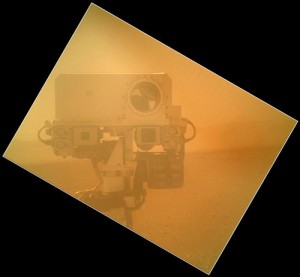
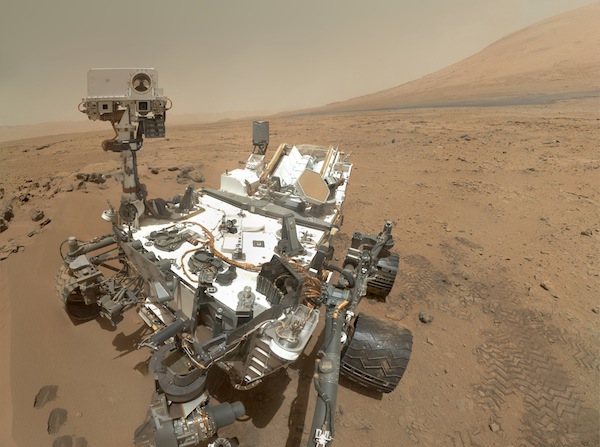
Curiosity self-portrait. Image Credit: NASA/JPL-Caltech/Malin Space Science Systems
As the Curiosity rover settles into its new home in Gale Crater on our neighbouring planet, one small worry is growing in the backs of the minds of certain NASA scientists. Could a blunder on the part of some engineers lead to Curiosity contaminating the surface of Mars with Earth life?
John D. Rummel, a professor of biology at East Carolina University, said, partly in jest: “It will be a sad day for NASA if they do detect ice or water. That’s because the Curiosity project will most likely be told, ‘Gee, that’s nice. Now turn around.’ “
And finally, planet hunters are scouring the sky for exoplanets. Astrobiologists are hoping to soon be able to look into the atmospheres of those planets in search of life signs, in the form of certain molecules created by living organisms. But could they be fooled by those molecules coming from somewhere else?
One key gas astrobiologists looking for extraterrestrial life would concentrate on would be oxygen […] Another possibility would be methane, a colorless, odorless, flammable organic gas that microbes on Earth produce. Seeing both together in an exoplanet’s atmosphere might be an especially significant sign of life, since they would both ordinarily remove each other from the atmosphere without something like life to constantly replenish them.
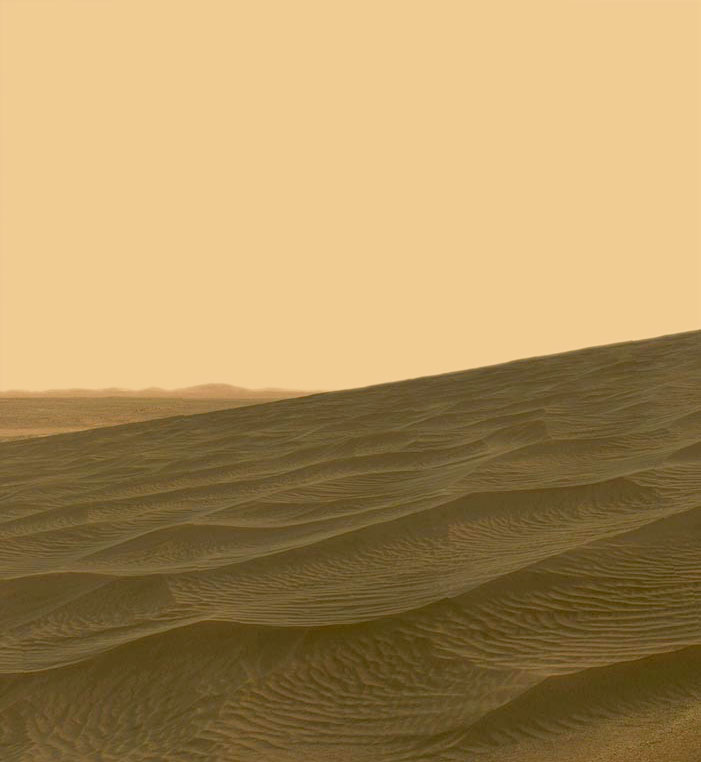
Mars is full of secrets and mysteries. The classic definition of a desert world, our planet’s arid sibling is a parched wilderness of dunes and planetwide dust storms. With a thin carbon dioxide atmosphere and only 38% the gravitational pull of Earth, there are a lot of puzzles about this cold and frosty little planet, and a lot of scientists who are longing to solve them.
El Dorado, Gusev Crater. Mars is a world of dust and dunes…
By now, anyone keeping up with the news is bound to have heard that NASA’s Curiosity rover made a flawless descent through the atmosphere of Mars and is now busy eyeing up its new home in the Gale Crater. As was discussed previously here on Australian Science, a big question still on everyone’s mind is the same one which David Bowie sang about back in 1971. Is there life on Mars? However, it seems that NASA’s plans are not to answer this question directly. John Grotzinger, project scientist for the Curiosity mission, is quoted as saying; “Curiosity is not a life detection mission. We’re not actually looking for life; we don’t have the ability to detect life if it was there.” Instead, the main objective of Curiosity is to look for signs of life.
The trouble is that looking for life directly is a difficult task. Back here on Earth, new discoveries are still being made frequently, with life being found in environments and habitats where no one was expecting. There’s a lot which we still don’t fully understand about life here on our own world. When we’re talking about another planet, it’s safe to say that all bets are off. As a result, Curiosity’s goal is to look for the various elements and chemical compounds which life might use – or might have used once upon a time when the planet may have been more hospitable. The focus has shifted from the search for life on Mars right now, to life which may once have lived there.
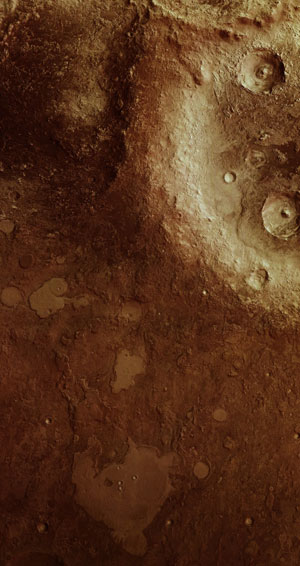
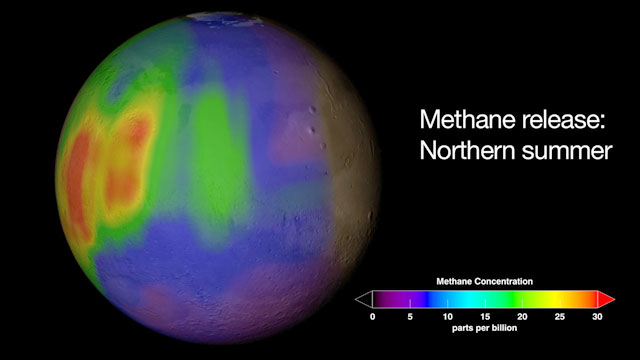
Arabia Terra – one of the three locations on Mars where methane plumes have been spotted.
One point which is worth remembering right now, however, is that there’s one big unsolved mystery about Mars. A gaseous mystery. Large quantities of methane have been detected in the martian atmosphere, which gives rise to a real puzzle. Methane is destroyed by sunlight, and with the thin atmosphere found on Mars, any methane should be rapidly broken apart by solar ultraviolet. The only possible conclusion is that the methane seen on Mars is being replenished somehow. There are only really two possibilities for how this might happen.
One scenario sees the martian methane caused by a geological process called serpentinisation. This is where a type of mineral known as olivine (more familiar to us as the gemstone peridot) chemically reacts with water and carbon dioxide. The reaction creates methane and a green mineral called serpentine (commonly found in certain parts of Western Australia and Tasmania), and releases methane gas. If this is the process which is occurring, it would mean that not only is there a suitable amount of water somewhere under the surface of Mars, but there must also be geological activity for that water to continue being brought into contact with further olivine to react with. This would suggest that there are things which we don’t know about current geological processes on Mars.
The other possibility, more radically, is that this methane is being produced by life. Here on Earth, bacteria known as methanogens are responsible for most of the methane present in Earth’s atmosphere. In fact, on Earth, methane is so regularly produced by living organisms that it can used as an indicator of biological activity.
When three distinct plumes of methane were discovered on Mars in 2009, it was noted that there was an equal probability of either of those two scenarios being the source of the methane – and that both would be huge revelations in our understanding of our neighbouring world. So maybe the Curiosity rover isn’t set up to hunt for life, and maybe it won’t be directly looking for it. But I, for one, do hope it finds some clues about the origin of the mysterious martian methane. Just as any scientist should, I love a good mystery!
The three methane plumes seen on Mars at South-East Syrtis Major, Nili Fossae and Arabia Terra.
Image credits:
Top – NASA JPL/Cornell
Middle – ESA/DLR/FU Berlin (G. Neukum)
Bottom – NASA
Do you wish to become a Martizen, a citizen of Mars, anytime in the near future? If you are serious about this then Dutchman, Bas Lansdorp is your man.
Bas Lansdorp is a person with an audacious ambition. Through his company, Mars One, he plans to establish the first human settlement on Mars by April 2023. In addition to this he intends that a new team of four settlers will join the Martian settlement every two years. By 2033 there will be over twenty people living, working, and they believe, flourishing on Mars, their new home.
If the Mars one publicity is believable, and on this point there is no real reason to doubt it, organizing a manned mission to Mars has been Bas Lansdorp’s dream for many years. Bas has been working on Mars One with partner Arno Wielders since January 2011. During 2011 they had confidential discussions with possible equipment suppliers to ensure that there was reality in their idea. In May 2012 they announced their vision to the world.
Like any large entrepreneurial venture their success will predicated on the skill, experience and credibility of the venture and the people involved. To be credible they will need to be convincing in, at least, these four aspects of the venture; technological; financial; psychological; and finally ethical. They will need to be convincing in a way that engages and excites both investors and participants.
It is rocket science
Getting to Mars is not trivial, if it were, well I expect there would be more than the spectacular array of NASAsuper, and superannuated rovers there currently is on Mars. Mars One have developed and made integral to their model a simple theme to get to and live on Mars: buy already developed technology from existing component manufacturers.
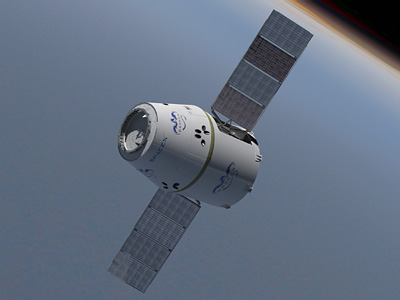
Take the Falcon Heavy lifter from SpaceX, to boost the components into low earth orbit. Combine a SpaceX Dragon capsule as the landing stage, add a transit living module from Thales Alenia Space and attach to two propellant stages which are a variant of the SpaceX Falcon 9 upper stage rockets and you have the vehicle to get from low earth orbit to orbit around Mars via a Hohmann transfer trajectory.
The seven-month trip to mars will be Spartan, similar to, but more cramped, than current conditions experienced on the International Space Station. This is where rigorous training will first pay off:
“Showering won’t be an option; instead they will have to make do with wet wipes like the International Space Station astronauts. Tinned food only, constant noise from the ventilators and equipment and a regimented routine of three hours of exercise a day to keep up muscle mass all add to their trials. If they are hit by a solar storm they will have to take refuge in the shelter area of the rocket, which provides the best protection, for as long as several days.”
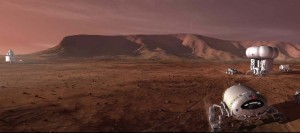
When the first 4 settlers land on Mars in April 2023 they will arrive at an established site. They will be picked up from their SpaceX Dragon capsule and taxied to the settlement by two robotic Mars rovers designed and built by MDA Space Missions. To get to this point is an ambitious and tight timeline.
2013
Settler selection begins. Replica of Mars settlement is built on an Earth desert to help the settlers prepare and train, and for a realistic environment in which to test the equipment. The settler selection and the preparations in the simulated Mars base will be broadcast on television and online for the public to view.
2014
Preparation for the supplies mission. Production of the first Mars communication satellites.
2016
January launch of the supplies mission, landing in October, includes the first habitat module (modified Dragon capsule) and 2500kg of supplies.
2018
First robotic rover lands (again in a modified Dragon capsule) to enable the pick of the specific settlement site.
2021
A total of 2 robot rovers, 2 living units, 2 life support units and 2 supply units are now all present at the Mars settlement site.
2022
All H2O, O2, and atmosphere production will be ready before a go-ahead to launch the settlers.
2023
First 4 settlers arrive at the Mars settlement.
2025
Second group of 4 settlers arrive, to be no doubt enthusiastically greeted by the pioneering first four.
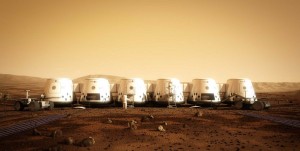
Once arrived there will be work for the settlers to connect up the various habitats. However once complete they will have substantial living space, 50m²+ each, equipped with showers, flushing toilets and kitchens. The living units are a Dragon capsule with an inflatable living section supplied by ILC Dover, who have supplied NASA with space suits and landing bags for the previous Mars rovers Opportunity and Spirit. The inflatable living sections are to be covered in Martian regolith to provide adequate radiation shielding.
Mars One
When moving around on the Mars surface the settlers will be wearing Mars suits, similar to the suits worn by the Apollo astronauts on the Moon. These suits will be made by Paragon Space Developments, the same company who provide NASA with ‘extra-vehicular’ suits, for when astronauts work in space outside the International Space Station.
By focussing on proven existing technologies Mars One are certainly presenting a reliable low cost technology solution. It is also deceptively simple. Let us remind ourselves this is a first, these conditions will be new.
For example the first step to settlement, safely landing the settlers on Mars, is unproven at present. NASA has described the process of entering the Red Planet’s atmosphere and slowing down to land as “six minutes of terror.” Computer graphics of Mars landings, in full colour and exquisite detail do not provide the simple fact that landing payloads that are large enough to bring humans and sustain their survival on the Red Planet is still beyond our capability. Currently NASA expects to have testable solutions to this some time in 2014.
Similarly we could look at the Mars suits and pose, repairs? replacements? These will be an absolute necessity for survival, however you won’t be able to buy a replacement online or wander down to high street shops to get an upgraded model or new one for a growing Martizen child.
Competent and knowledgeable engineers and specialists, as well as countless armchair experts, will no doubt be picking apart the technology of the Mars One mission, as I have just briefly done. There is no doubt that each step of the timetable above has a myriad of ‘first-time’ problems that will require solutions, some of which can be inferred some which will only become apparent as the experience proceeds. I hope that all involved have read Gregory Benson’s 1999 novel, The Martian Race, a gripping primer to life on Mars.
Show me the money
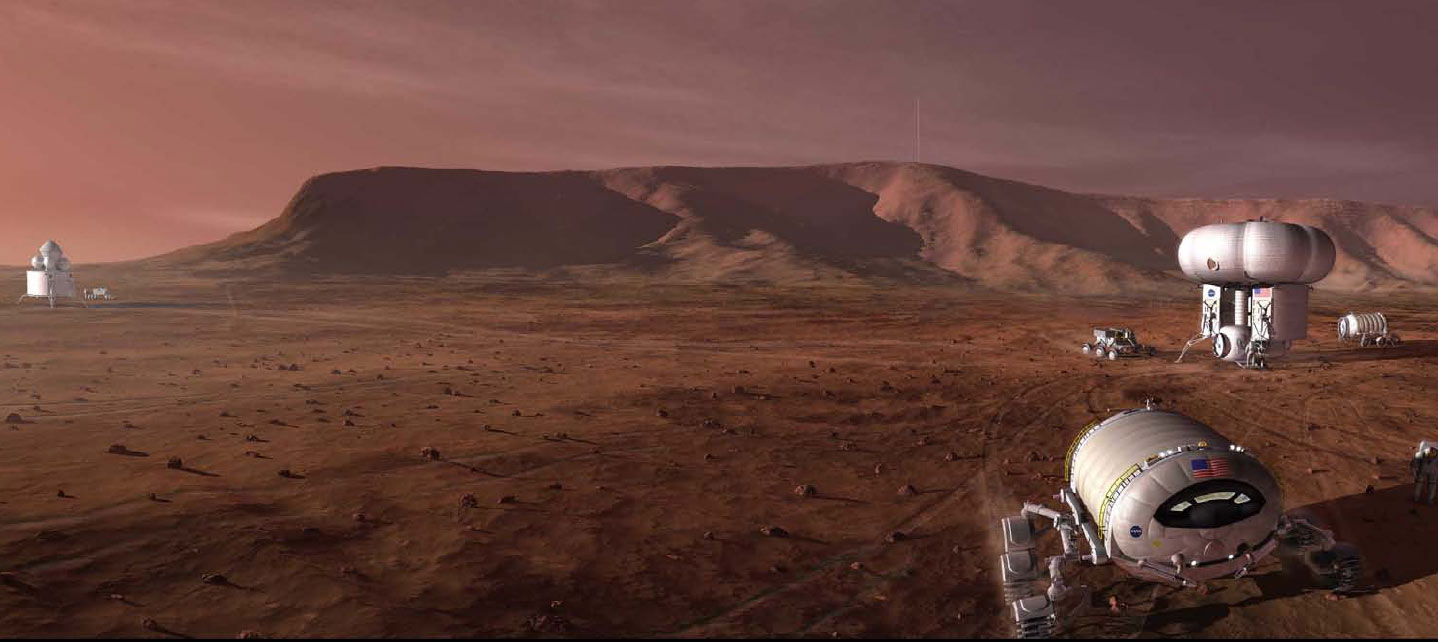
Mars manned mission. Image credit: NASA
Getting to Mars is not cheap. Since the late 1940s there have been many proposals for manned exploration and settlements on mars. A commonality is that they are all pitched 10-20 years in the future and large sums of money are mentioned. To put this into today’s context on August 6 (EDT), 2012 NASA’s Mars rover, Curiosity, will land on Mars. This mission will place an 899kg six-wheeled, un-manned science laboratory on Mars; for the approximate mission cost of US$2.5B. It is expected that a 2030s NASA mission to Mars will be of the order of US$20B. Mars One says it will cost them US$6B to put the first four settlers on Mars.
In many ways focusing on the mission cost is a furphy. NASA mission budgets come from USA public purses and there is always great argument in the US Senate about the value of such publically funded scientific enterprise. In the US this argument is always balanced by the technology and enterprise that this brings to US companies and the economy. Mars One have no such public funding in mind. They intend to buy the above technologies based on price and quality, not through political or national preferences.
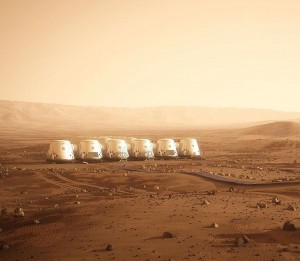
Colonisation of Mars 2023, Mars One. Image Credit: Ariukux
The ability to fund such a mission will depend on what value it returns for investors. Here is the Mars One point of difference; funding will be via sponsorship and as the World’s largest media event. If I were a settler having ILC Dover and Paragon Space Development would be more reassuring than IKEA on my Living and Life Support Modules. As for the thought of a 7 months trip to Mars eating McDonalds pre-prepared ‘meals’ that would be unpalatable. Choose the sponsors wisely Mars One.
There are no stated scientific or economic goals. Instead they see it this way:
“A manned mission to Mars is one of the most exciting, inspiring and ambitious adventures that mankind can take on. We see this as a journey that belongs to us all, and it is for this reason that we will make every step one that we take together. This will also be our way to finance the mission: the mission to Mars will be the biggest media event ever! The entire world will be able to watch and help with decisions as the teams of settlers are selected, follow their extensive training and preparation for the mission and of course observe their settling on Mars once arrived. The emigrated astronauts will share their experiences with us as they build their new home, conduct experiments, and explore Mars. The mission itself will provide us with invaluable scientific and social knowledge that will be accessible to everyone, not just an elite select few.”
To assist in making this worldwide media frenzy Mars One has enlisted Paul Römer as an ambassador. An established expert on grasping the attention of a global public, he was the co-creator of the worldwide phenomenon “Big Brother” – the television program that revolutionized reality television.
The 24/7 Martizen lab-rat
More than the tangibles of this venture, I believe it will be the intangible elements that make this a standout human endeavour. Especially the ethics and psychology of the Martizen being media fodder 24/7. A previous article has already questioned the ethics of such, admitedly voluntary, surveillance.
The psychology of such surveillance is fascinating and worrying. Even the most extroverted of people have private lives. Only the totally naive display ‘real’ faces through the public media. Media such as facebook display a mixture unconscious representations, as well as carefully and foolishly contrived facets of our lives. In many cases events are morphed and selectively recorded on media such as facebook and twitter. It is one thing to post to your facebook friends, it is quite a different thing to know that all that you do will be on display for a public you do not know.
It is hopefully obvious that the narcissist, wastrel, celebrity personalities that populated the many versions of Big Brother are not what will make a great four-person team on Mars. I also am happy to be labelled an ‘elitist’ and state that public participation via stringent selection processes, such as voting-off someone you don’t like, will be a disaster for a serious mission.
I am unsure how history’s first off-world conception, birth and death will go as media events. I can appreciate the lure for marketers of such landmark voyeuristic events, I am at the same time unsure how the participants of such private events will feel.
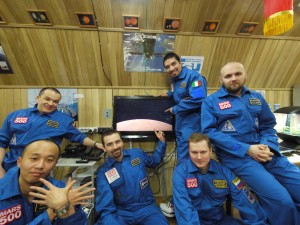
Mars500 crew. Photo credit ESA
There is psychologically a world of difference between the isolation that would be experienced in genuine remote exploration, think Antarctica, to the pseudo-isolation of contrived event that has a definite endpoint, think Big Brother and Survivor. The Marsonauts of Mars500 ended with smiling faces after their 17 month long isolation experiment. The European Space Agency’s Directorate of Human Spaceflight has a long tradition of conducting research on the physiological and psychological aspects of spaceflight. In light of this, ESA undertook the Mars500 cooperative project with the Russian Institute for Biomedical Problems (IBMP) in Moscow, in 2010-11. This all male crew experiment is instructive, and illuminating for Mars One, however no matter how ‘isolated’ Moscow may feel, like the people in the Big Brother household, they could if they chose leave at any stage.
Despite this a key science project during Mars500 was to determine the implications of personal values held by individual crew-members for compatibility within the group as a whole or otherwise, and for individual coping strategies and adaptation during long lasting confinement. On a human exploration mission to Mars, the psychological resilience of the crew will play a critical role for the maintenance of health and performance and hence the success of the mission. One factor impacting on psychological resilience is the personal values of crew members defining their motivational goals and attitudes. Crew member selection is for real, not a game where if a poor choice is made they leave the set or you re-boot the computer.
It’s a one-way trip
That is one clear distinction this is a one-way journey. Since returning astronauts from the surface of Mars is one of the most difficult, and expensive, parts of a Mars mission, the idea of a one-way trip to Mars has been proposed several times. The notion of settlers, rather than expedition astronauts changes the technology and psychology of the mission.
A one-way trip scenario has been proposed seriously a number of times since 1998. Including a 2004 proposal by Paul Davies. Another organisation, Mars to Stay, proposed that astronauts sent to Mars for the first time should stay there indefinitely, both to reduce mission cost and to ensure permanent settlement of Mars. Among many notable Mars to Stay advocates, former Apollo astronaut Buzz Aldrin is a particularly outspoken promoter who has suggested in numerous forums “Forget the Moon, Let’s Head to Mars!”
During a 2009 public hearing of the U.S. Human Space Flight Plans Committee at which Robert Zubrin presented a summary of the arguments in book The Case for Mars, dozens of placards reading “Mars Direct Cowards Return to the Moon” were placed throughout the Carnegie Institute.The passionate uproar among space exploration advocates – both favourable and critical – is an indication of the interest in Mars exploration.
I find the Mars to Stay idea appealing and compelling for both economic and safety reasons. More emphatically, I find it a representation of the spirit of human exploration and discovery. Also personally it is a fulfilment of the ultimate mandate by which manned space programs (US, European, Russian, Chinese, Indian, Japanese etc.) are sold, at least philosophically and long-term, as a step to colonizing other worlds. I hope that Mars One either credibly fulfils this trust or propels alternative programs that deliver human settlement on Mars via a well-defined (i.e. non-suicidal) exploration program.
On May 11, a Dragon will mate with the International Space station. Rather than some mythical creature, this Dragon is of human artifice. The Dragon’s rendezvous and berthing with the International Space Station presages a new chapter in human exploration of space.
The significance of this event is Dragon is a reusable spacecraft, developed, and built by the American company Space Exploration Technologies, SpaceX, as it is more commonly known. Established in 2002, SpaceX has developed a new family of launch and cargo and crew capsules from the ground up.
The commercial race to space
NASA has now “set it sights on exploring once again beyond low earth orbit.




 It’s been an interesting week for science news, and I’ve been lucky enough to be asked to give this week’s science picks! This made me spend a little while sipping contemplatively on a cup of vanilla iced coffee and wondering where to even start…