Category: Environmental science

  • The Potential Impact of Climate Change on Fraser Island

    The Potential Impact of Climate Change on Fraser Island

    Fraser Island is on UNESCO’s World Heritage list. It’s the largest sand island on the planet, boasts gorgeous freshwater lakes, towering rainforests, and the idyllic 75 Mile Beach. It’s no surprise that the island attracts some 380,000 tourists per year.

    Fraser Island is also an important cultural site to the local Butchulla people, who believe the spirits of ancestors still roam the beautiful rainforest trees and sand dunes. The lakes hold a particularly special place, with creeks such as Wanggoolba and Eli being important sacred sites.

    But is this natural paradise and cultural shrine at risk? Many experts believe that Fraser Island is increasingly under threat due to climate change. We take a look at how this phenomenon is affecting the island, from changes we’re already seeing in the present day to potential consequences in the coming years.
    graph

    Sea Level Rise

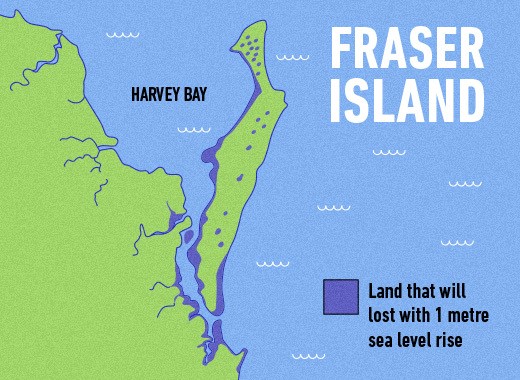
    10,000 years ago Fraser Island was part of Australia’s mainland, but rising sea levels indicate that much of the island could disappear completely. It’s likely that the popular Parallel Dune ridges will be submerged, with the land that’s less than 10m above sea level being lost.

    Experts speaking at the Sixth Biennial Fraser Island Conference have estimated that the rising sea levels will have an even greater impact on the island than on the Great Barrier Reef (though the state government insists there is no hard data), an area that is widely known to be at great risk. “It’s the most ‘erodible’ surface, it’s all sand, it’s not rock or anything else,” said John Sinclair, organiser of the event.

    The Great Sandy Strait can be expected to widen, which will lead to potentially dangerous changes to currents and tidal flows. Furthermore, coastal erosion will lead to changes in wind velocity and increased storm occurrences, again dangerous for both locals and tourists alike.
    Fraser island

    Climate Warming and Variation

    Fraser Island is known as an overlap zone in the region, allowing certain species to thrive in cooler temperatures compared to areas further north. Increasing temperatures, however, will translate to species such as the blackbutt and tallowwood disappearing. Fish species such as the Tailor may also opt to migrate to cooler climes. This will undoubtedly lead to lower biodiversity in the region.

    Climate change on Fraser Island won’t just be limited to an increased average temperature. It will also potentially lead to greater climate variability in the region. This could result in increased occurrences of frost, which even if sporadic will have a potentially catastrophic effect on the region’s flora and fauna.

    Wind Patterns

    Climate change has already led to an indisputable increase of northerly winds, which has led to a neutralisation of the region’s south-easterly winds. While this may seem trivial, this trend leads to increased vegetation on the island’s famous sand dunes. Noam Levin, a scientist who has been studying the region, has highlighted a significant decrease in the number of dunes since the 1980s. Furthermore, the increased algae have a negative impact on both fishing and swimming, spoiling the island’s previously pristine waters.

    Perhaps even more worrying is that the combination of increasing temperatures and stronger winds will lead to a higher frequency of fires. Not only that, we can also expect them to be more severe and dangerous both to humans and local wildlife.

    Lake Deterioration

    Dr Wade Hadwen (Fraser Island Defenders Organisation) has highlighted that the island’s lakes are slowly deteriorating. The reasons behind this are two-fold. We first have the aforementioned build-up of algae, which has led to a downturn in water quality. However, the issue can also be attributed to man-made pollution from roads situated near the lakes.

    Tourism Impact

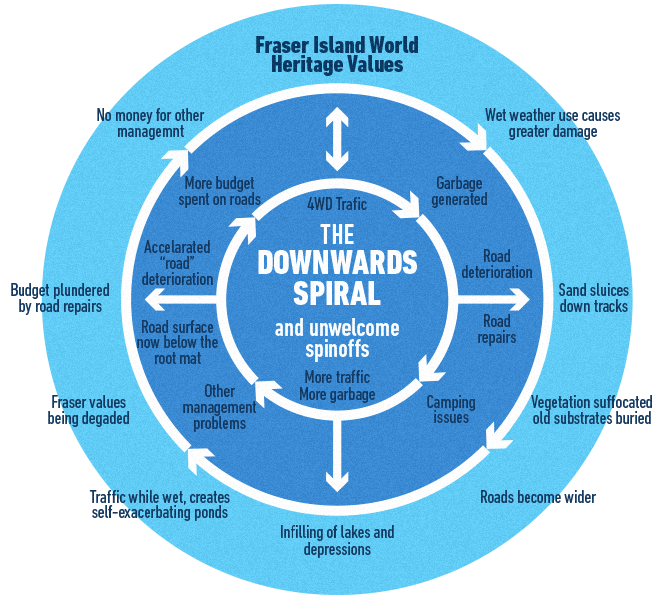
    Almost four hundred thousand visitors arrive at Fraser Island on a yearly basis. It’s expected that this number will only rise. Environmental degradation has not only come as the result of climate change, but also the sheer number of tourists. For instance, water and soil quality have seen a downturn, while the number of 4WD vehicles has led to increased erosion.

    What Can We Do?

    The potential impact of climate change on Fraser Island makes for bleak reading. But despite this, there’s plenty that we can do in order to preserve the natural beauty of this World Heritage site.

    Monitor, Research, Mitigate: As noted by the state’s comment on the impact on the Great Barrier Reef, some of the data collection is still in its infancy. It’s important that we continue to monitor the progression of certain issues (e.g. erosion of sand dunes) to ascertain the gravity of environmental changes.

    Adaptation and Management: The number of tourists landing on Fraser Island isn’t necessarily an issue, however, it’s important that they are managed correctly. Considering that the island’s primary revenue stream is no longer sand mining and logging, progress has already been made. Tourism is more sustainable, as long as the correct measures are in place.

    Tourists should be taught to engage with Fraser Island in an environmentally focused way. Instead of planning individual journeys, for example, visitors could work closely with experienced tour agencies to ensure a responsible visit to the island. Additional information should also be provided in situ to ensure both tourists and locals alike are aware of the risks of human impact.

    Small tweaks can also lead to big changes. For example, experts agree that run-off from sand roads is impacting the lakes. Roads should be relocated further away. While this adds a touch of inconvenience, it’s a small price to pay.

    Additionally, government agencies should increase investment in sewage management and the installation of environmentally friendly toilet units. This will ensure popular camping areas are kept clean and that degradation of soil quality is kept at a minimum.

    Increased Research & Knowledge Share: At present there is a distinct lack of ‘cross-fertilisation’ of knowledge when it comes to the management of World Heritage sites. Best practices can only be created and adhered to if all involved parties are aware of the latest research and recommendations.

    Furthermore, additional academic research is required to ensure the correct action can be taken. The opening of funded doctorate positions is a step in the right direction. The availability of in-depth research will allow both governments and communities to take the correct action.

  • Creative Solutions for the World’s Waste Problems

    Creative Solutions for the World’s Waste Problems

    The consequences of the planet’s waste issues are manifold: an unnecessarily high carbon footprint, overflowing landfills, and an increasingly negative impact on our economy. And while the figures both worldwide and in Australia are alarming, there are creative solutions we can implement to tackle the overall problem. Some of these are a little complicated and require the kit and knowledge from companies or government organisations, while others are solutions that need to be implemented by our local authorities to really be effective.

    E-Waste

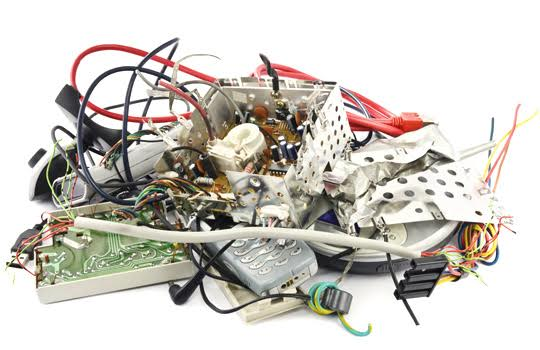
    It wouldn’t be an understatement to describe e-waste as one of the greatest threats to our environment today – some consider Australia’s situation to be in crisis. According to a study by a group of UN organisations, electronic waste is due to increase by a third in the next five years. That’s essentially a line of 40-tonne vehicles one after the other taking up 75% of the equator. A frightening prospect, that’s for sure.

    electronic waste

    Active and Responsible Recycling

    It’s said that individuals wait for two years before donating or throwing away electronic products they no longer use. The reason for this is that we just don’t know what to do with our old DVD players or that laptop gathering dust. Don’t just send your unwanted goods to ‘big name’ recycling companies or to the original manufacturers – often, these outfits will outsource their recycling efforts. The result? Landfills in foreign countries being flooded with our junk.

    That’s why we should make a dedicated effort to recycle our unwanted electronics and furniture personally. Go to Craigslist, Freecycle.org, or your local equivalent. If you want to send your smartphone to a third-world country, cherry-pick a company that outlines its entire process. The last thing you want to do is add to the waste problem!

    Incentivise Collection of Goods

    There is a great opportunity for recycling old circuit boards, mobile, and other electronic equipment that’s otherwise ignored – and that’s by offering incentives to the collection of specific items that can be put to good use. Companies in India, often backed by international donors and investors, already do this on a small scale.

    Attero, a start-up based in New Delhi, for example, pays informal collectors a fee that’s a little higher than what they’d get for extracting gold from circuit boards. This not only limits a dangerous practice, but also allows for a more environmentally friendly solution.

    Food Waste

    It’s heart breaking to think that 1 in 8 of us dotted around the globe are dying of hunger when there’s so much food that’s simply wasted. And the problem is more than marginal. In Australia alone, over $8 billion worth of food waste is created each year. 40% of food in the United States ends up in the bin.

    And don’t think the problem is limited to ‘evil’ manufacturers and distributors – most waste actually occurs after we’ve bought it. The problem really is down to us, which luckily also gives the individual power to turn things around.

    food waste


    Understand (and Ban?) Expiration Dates

    People are unnecessarily terrified by expiration dates. We often refuse to eat food that’s gone past the date printed on the packet, which leads to ridiculous amounts of waste. The detail you need to understand, however, is that the expiration date is often merely a suggestion of when to use the product by in order to keep freshness.

    In terms of safety, you can often go weeks or months without consumption having a negative effect. Just do your research on the type of product (canned beans vs. milk, for example) and you’ll learn which dates should be kept to by the latter and which can be ignored.

    Perhaps food manufacturers would be well served to only print dates on items that actually need a so-called ‘Use By’ date. Milk and meats being primary examples where an expiration date actually helps. EU ministers have actually shown that ‘Best Before’ dates actually add to the confusion, leading to people throwing away perfectly good food. Perhaps an all-out ban would be a preferable solution, despite seeming a little counterintuitive?

    Expired Food Restaurants

    Trader Joe’s ex-president Doug Rauch has come up with an ingenious idea to stop food going to waste and helping educate consumers on the true meaning of ‘expired’. He is opening a new set of stores where most of the stock is built from foods past the so-called expiration date. Eggs, milk, bread, and other produce will all be available for significant discounts.

    His first Daily Table opened in September 2014 and has already garnered plenty of buzz online and in the traditional press. We expect his big name in the business sphere to drive the venture forward and hopefully lead to further expansion across the US and abroad.

    Household Waste

    We’re sorry to break it to you, but plenty of the world’s health problems are squarely down to you. Household waste accounts for a large percentage of the damage we do to the environment, with landfills overflowing with materials that just don’t break down.

    It gets worse. According to a World Bank investigation, we’re going to be filling the planet with even more trash by 2025. The accompanying report is downright scary: municipal solid waste currently stands at 1.3 millions tonnes. This figures is expected to double in just over a decade. So is there anything we can do about it?

    waste

    Eat Organic Foods (And No, Not From Supermarkets)

    The ‘natural food’ market isn’t just a hipster fad gone wrong. While the health benefits may be overstated (yet verifiably present!), the improved taste and lack of waste through packaging can’t be denied. The excuses often seen from people are that the food is just too expensive – but that’s probably because you’re going to expensive supermarkets or ‘boutique’ grocery stores.

    The trick in finding organic food that’s decently priced is by purchasing a farm share or, better yet, growing your own. Farm shares give you a weekly supply of local seasonal goodies, with most items being cheaper than ‘regular’ food at a supermarket. You can also grow your own produce, which can even be done if you only have a small flat: herbs work particularly well in city apartments that run low on space.

    Using Technology

    Environmental issues often cover the front pages on newspapers across the world. They’re a hot topic that the general public has really started to care about. This has resulted in growing demand for environmental products that help reduce our waste and carbon footprint. And there are plenty of effective solutions out there.

    Sweden is leading the way in the new wave of waste-to-energy solutions, whereby rubbish is used as a fuel to generate power. The European country has become so efficient in the process that it’s now importing rubbish from other countries. Sweden has gone from 38% of household waste being recycled to a staggering 99% in less than 40 years.

    Innovative bins that use solar energy to compact waste are now becoming more common in major towns and cities across the world, with London being a prime example of a city adopting this solution. Sustainable waste management company Solar Bins Australia, for example, uses the BigBelly Solar Compactor, which allows bins to store five times more rubbish.

    The recycling process relies on people being able to personally sift through their rubbish appropriately – or does it? ArrowBio, for example, offers an integrated solution for municipal solid waste. Its process can sort and recover materials, allowing for their reuse (such as energy). French Pellenc ST has even introduced infrared technology that can sort and identify materials such as polymers, fibres, organic materials, and metal – it’s now being used in countries such as England, France, and the United States.

    Adopt the 3 R’s

    Finally, try and adopt the three R’s in everything you do: Reduce, Reuse, Recycle. Before you buy something, ask yourself if you really need it. Instead of recycling old electronics, see whether they can be given a new lease of life elsewhere in your friend and family circle. And always leave the bin as your last resort.

    eco

    Resources Cited:

    http://www.designforchange.org.au/content/blog/53/food-waste
    http://www.foxnews.com/leisure/2014/01/22/trader-joe-ex-president-to-open-store-selling-expired-food/
    http://rmcp.earthworksaction.org/recycle.cfm
    https://www.pedalpeople.coop/index.php?page=43
    http://www.epa.gov/osw/wycd/catbook/tip12.htm
    http://rmcp.earthworksaction.org/how_we_recycle#.U_ujaLywLEU
    http://www.crserecycling.com/our-technology/processing-technology.html
    http://www.nytimes.com/2005/10/24/technology/24junk.html?_r=0
    http://www.step-initiative.org/index.php/id-2013-12-15-world-e-waste-map-reveals-national-volumes-international-flows.html

  • Are synthetics overcoming the natural materials?

    Are synthetics overcoming the natural materials?

    In 1935, Percy L. Julian (1899-1975) synthesized physostigmine, the compound that was only available in its natural source, the Calabar bean, now used in the treatment of glaucoma. This pioneering research opened a door to widespread usage of chemical materials; however, it also started a “synthetic versus natural

  • Guide to the Most Important Green Building Certification Systems in the World

    Guide to the Most Important Green Building Certification Systems in the World

    Here in Australia, the GBCA are working towards a greener and more sustainable future. The past decade has seen tremendous growth within the building industry, as companies such as the GBCA and others have been working towards designing and creating a greater percentage of buildings that are certified as green and sustainable. When looking at how this has been accomplished, there are a plethora of green building certification systems throughout Australia and all over the world that have helped to create a new standard of quality within the industry. Here’s a brief look at what some of these systems are.

    LEED Gold Certification

    LEED Gold Certification

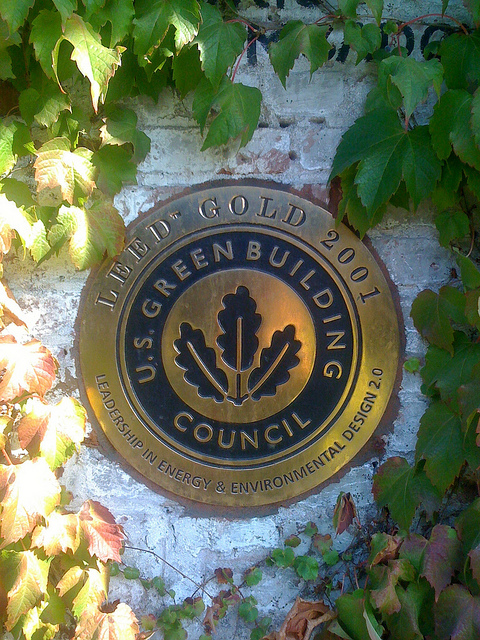
    The LEED certification system is one of the foremost rating systems in the world. In fact, LEED is the first green certification system to be utilized by Embassy TechZones in Serbia for their recent Business Park in Indjija and has rated the Pixel Building in Melbourne with the highest green rating out of 44,000 buildings in the world.

    In general, the LEED rating system helps to utilize sustainability in the design and construction of a building. This is accomplished through energy and water conservation, the reduction of greenhouse gas emissions, reducing the amount of waste sent to landfills, lowering the operating costs and providing incentives to building owners, such as tax rebates.

    Green Star

    Similar to LEED, Green Star is a rating system that is considered to be one of the best in all of Australia. This system rates a myriad of different types of buildings on how green and sustainable they are, including schools, hospitals, industrial facilities, offices, apartment buildings and more. They are an independent third-party analyst, so the ratings are never skewed in the favor of any particular building.

    This rating system utilizes a wide range of different factors for analysis in determining the sustainability level of a certain building. Each of these rating tools are designed specifically for different building types. For example, the ratings for an office are based on 8 factors, including management, indoor environment quality, energy, transport, water, materials, land use and ecology and emissions.

    NatHERS

    While not quite as large as the LEED and Green Star building certification systems, NatHERS focuses its system on house designs to ensure that they, at the very least, have the minimum amount of sustainability levels that have been set by the BCA, or Building Code of Australia. To ensure that a house is as energy efficient and green as possible, they provide a detailed analysis and rating at the very beginning of the design stage.

    Their rating extends from zero to ten stars, with the latter being the best that a house can achieve when it comes to energy efficiency. NatHERS determines the heating and cooling potential of a house by rating the shading, house location, house type, glazing type and building materials that are to be used in the construction of the house.

    NABERS

    NABERS, or National Australian Built Environment Rating System, measures and rates the environmental performance of buildings within Australia, such as hotels, offices and shopping centres. While they differ a bit from the aforementioned certification systems, as they focus primarily on grading how the building performs after its been completed instead of during its initial design and creation, they offer up a comprehensive set of rating tools that work well in determining the sustainability levels of a building.

    In 2010, the Commercial Building Disclosures ruling in Australia made it clear that all offices utilizing a floor area of more than 2,000 square meters must provide NABERS with their energy levels so that they can give the building an indoor performance rating. Their rating system is similar to that of Green Star, while they focus mostly on rating the water consumption, waste generation, indoor environment quality and energy bills of a building.

    Overall, these are merely just a few of the huge variety of green building certification systems that are present in the world and growing more numerous by the minute. With more and more businesses deciding to go the route of ensuring that their buildings meet these certification standards, the world’s environmental future is looking better with each passing day.

    Photos by Pierre, Sam Biebe on Flickr

  • Paper Consumption Impact in Australia

    Paper Consumption Impact in Australia

    Everyone must play their part in creating sustainable futures for the world’s commodities. Paper is a huge commodity and is consumed at exorbitant rates as outlined by Forest Ethics‘ recent research. They reported that across the world North America used on average 229kg of paper per capita annually, Western Europe got through 178.7 kilograms, Latin America 43.02, Asia 41 and Africa 7.51 kilograms per person. In Australia we use on average 230kg per person per year. It is clear that the paper industry demands exponential resources to continue to fulfill the demand and if Australia would like to achieve sustainability we must rethink our consumerist ways.

    Recycling

    Even though environmental organisations may talk of green initiatives to reduce paper consumption the idea of a paperless-society is far from being a possibility. People are still heavily reliant on paper to run a business, school or organisation and to fuel general lifestyle products such as boxes, packaging, magazines, newspapers and labels. Since European Settlement Australia has cleared almost half of its forest areas and we continue to deforest an area the size of the ACT every year. The act of paper-want is putting a heavy burden on Australia’s ecological sustainability. In 2007-2008 Clean Up Australia reported that we used 4,250, 000 tonnes of paper and of that we sent 1.9 million tonnes straight to landfill. Every office uses 10,000 sheets of A4 paper on average and 50% of that will end up as garbage. These statistics are a sobering reminder of Western waste.

    Paper production is a process that has not changed in over 2000 years. In today’s measures it takes 24 trees to produce one tonne of virgin printer paper but only 25% of each tree is used to produce the paper product. The paper industry is a greedy resource consumer that uses more water to produce a tonne of its product than any other industry. It uses a staggering 90,000 litres of water per tonne of virgin paper.

    Recycled paper not only assuages environmental impact but drastically reduces the amount of vital resources needed to produce it. Creating one tonne of recycled paper consumes 50% less energy than virgin paper which equates to only 4100 kilowatt hours of electricity per tonne as well as only requiring 25% of the amount of bleach used new office paper. It also saves:

    • 13-24 trees
    • 31,780 litres of water
    • 2.5 barrels of oil
    • 4 cubic metres of landfill
    • 27 kilograms of air pollutants

    Paper recycling plays a pivotal role in helping to reduce the environmental impact the paper industry has had on vital world resources since the European Settlement. There are initiatives that independent Governments, organisations and the likes of the European Union have put forward to curb the astonishing waste of resources which is a result of paper production. The environmental management of paper is an ever present issue which individuals, groups and continents must acknowledge before the world’s forests are depleted to a point of complete environmental hazard.

    Recycling in general benefits the environment no matter what type of item you choose. Be it paper or cans, food scraps or plastic there is worth in saving every item. Planet Arc dispels the myth in their 2006 report which was created to enlighten people from the persuasive and unrealistic myths which prohibit the proliferation of recycling across the world. They note that every commodity has ‘embodied energy’ which is the energy that it took to produce the item and the act of recycling it recovers a portion of that energy. The Australian Council of Recyclers estimated for the benefit of the report that recycling in Australia generates $3.5 billion of eco-services, recovers $912 million of commodity value and 68,400 giga-watt hours (GWh) of embodied energy.

    Both businesses and organisations can support paper recycling and environmental management by aligning their practices to an international standard such as EMAS. EMAS volunteer their time to appraise organisations that continually enhance their environmental performance. Businesses which run an Environment Management System and regularly report their performance in published form, which is verified by an independent statement, can be registered with EMAS. They are also encouraged to use the EMAS logo on their promotional material so their customers can be guaranteed that they are legally compliant.

    In small measures individuals can improve their participation in paper wastage. Do some research and make sure that you are doing your best to help the cause.

    Images by Joel Penner and Nicolas Raymond

  • Disposable Nappies: Are They Stinking Up Our Planet?

    Disposable Nappies: Are They Stinking Up Our Planet?

    Disposable nappies may seem highly convenient when babies are abound, but there is an uglier side to keeping our bubs clean: disposable nappies pose serious issues for the natural environment that will last well into the future.

    Disposable Nappies: A Brief Background

    The idea of the disposable nappy first came to light in the early 20th Century. Its technology and ‘absorbent’ methods saw much development in the 1930s-1950s and many began to turn to the disposable in response to problems associated with reusable nappies (such as poor hygiene and skin rashes).

    The first “official

  • 5 Eco-friendly Inventions that Australia can be Proud of

    5 Eco-friendly Inventions that Australia can be Proud of

    Australia is one of the world’s most eco-friendly countries. We have banned plastic bags in South Australia, put a tax on carbon and most homes have a government-issued recycling bin. However, much of the country’s environmental efforts happen behind the scenes – in construction, building and mining.

    Here we look at five of the best eco-friendly Australian inventions.

    Solar roof tiles

    As the Earth’s natural resources are diminishing and the price of them rises, solar energy is set to be a big part of the world’s future. Solar energy is also significantly better for the environment. In 2013, Australia’s Climate Commission’s Solar Energy report found that 2.5 million or 10 per cent of Australians were already using solar energy.

    Australian company B-Pods hopes to increase that number further with the invention of Tractile Solar Energy Roof Tiles. Designed to blend in with whatever type of roof tiles you have, Tractile also offer the added benefit of powering electricity and hot water through one unit. The invention, which was a finalist in the 2006 Australian Design Awards, has already been patented in 28 different countries.

    Mechanical joining systems

    A University of Technology Sydney report found that almost 70 per cent of greenhouse gas emissions in Australia come from the transport and energy industries (UTS, 2008), providing huge leeway for improvement.

    Australian inventor, Dean Cameron, saw that there were inefficiencies and wastage when exporting his previous creation – sewage systems, so he sought to find a solution. After being inspired by the strong force that clams use to cling on to rocks, he created Joinlox – a mechanical joining system that works in a similar way to Velcro.

    The system, which won him Inventor of the Year in 2006 on ABC show, New Inventors, has a variety of applications – but one of its features is that it doesn’t require any eco unfriendly machinery or adhesives to use. The system is reusable, reducing the need for replacing and throwing out materials, and is cheaper to transport – reducing greenhouse gas emissions.

    Here’s more info on their reusable joints.

    Waste sifting system

    Research has shown that up to 10-15 per cent of a building’s material can go to waste during the construction phase (Skoyles ER. Skoyles JR., (1987)).

    FlipScreen, created by Australian inventor Sam Turnbull, is a mesh attachment that joins onto construction equipment and machinery. Instead of small bits of waste, such as woodchips and rubble, being left on the ground, FlipScreen collects up that waste in the mesh sift so that it can be reused or recycled.

    Biodegradable temporary coatings

    The effects of harmful chemicals used in building and construction on our environment are immense. Among many of the negative effects is the impact on aquatic life. Chemicals are often washed into the sewers, which deliver the toxic water into our oceans and rivers – harming and killing sea life. Those chemicals can then also make their way back into our bodies through the food and water that we consume.

    John Gregory from goGreen Enterprises developed a biodegradable, environmentally-friendly temporary coating that can be used to protect surfaces such as bathtubs, countertops and window frames while construction work is conducted around them. Containing no chemicals or harsh toxins, the patented one4allTM coating both saves money and minimises environmental impact.

    Building insulation system

    There is no doubt that air conditioning is considered an essential part of life in many parts of Australia, but they require huge amounts of fossil fuels to run and release ozone-depleting gases called hydrofluorocarbons (Parliament of Australia, 2008). Between 2008 and 2012 alone, the Sydney Morning Herald reported that 1.7 million air conditioners were installed in Australia, and one air conditioner could use as much energy to run as 40 fans.

    Now, an invention by Sydney-based Rex Lehmann, helps to minimise the need for cooling and insulation with his SkyCool coating system. Painted onto the roof of a building, it works by deflecting heat, before it can enter. A study by the University of Technology Sydney found that the coating could reduce air conditioning costs by up to 50 per cent (Geoffrey, 2007).

    Conclusion

    When it comes to protecting our environment, every little bit counts. While environmentally-friendly products have long been considered the more expensive solution, these Australian inventions show that you can actually cut down costs – and your carbon footprint – by implementing them.

    This is what makes these particular inventions so clever and innovative – they break down the barrier that prevents businesses and individuals from choosing eco-friendly solutions by ensuring there is a cost benefit to go with them.

  • Ocean Chemistry Unbalanced

    Ocean Chemistry Unbalanced


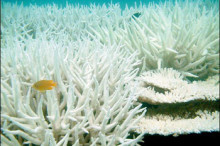
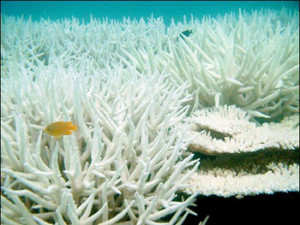
    Coral reef after a bleaching event. Source: © 2003. Reef Futures. Courtesy Ray Berkelmans, Australian Institute of Marine Science. Via www.lerner.org.
    Coral reef after a bleaching event. Source: © 2003. Reef Futures. Courtesy Ray Berkelmans, Australian Institute of Marine Science. Via www.lerner.org.

    Ocean acidification is a decrease in the pH of the oceans, caused by the uptake of CO2 from the atmosphere. It’s a problem; a real problem. One that marine ecologist Jane Lubchenco, head of the National Oceanic and Atmospheric Administration called global warming’s “equally evil twin.

  • Brisbane Air Pollution – Stats, Causes & Solutions

    Brisbane Air Pollution – Stats, Causes & Solutions

    A study of air pollution shows Brisbane has one of the lowest levels of particulate matter – less than 20 micrograms per cubic meter and a diameter of less than 10 micrometers (PM10) in The Economists index of the most polluted cities in the world’s biggest economies.

    Air pollution is a constant reminder of how fragile our environment is to us. It is one of the major environmental problems faced by many large industrialized cities worldwide over the last couple of centuries after the beginning of the industrial revolution. Air pollution in general is a combination of six of the most common components introduced into the air from industrial and natural sources. The components are ozone, particulate matter, nitrogen oxides, sulfur dioxide and lead. Thankfully, in most of the major industrialized cities the levels of these components are trending down due to technological advances and the enforcement of tough environmental laws. In the case of Brisbane, which is following the same trend has seen significant improvement in the air quality in the region.

    Between the years 1996 – 2012 there has been large variability in the levels of PM10 due to brushfires and dust storms, but the levels have been trending down since 2010 with the help of brushfire management programs. Ozone, which is indicative of smog, has been trending down in the same time period since 1996 and appears to be stabilizing. Nitrogen dioxide also has been trending down for a much longer period of 22 years. The Clean Air Strategy put in place by Council in 1996 is behind these improvements in air quality there.

    These pollutants come from many sources in Brisbane; with the vast majority of them emitted in the air from human activities and the rest come from natural sources. Motor vehicles, electricity generation, industrial activities, bushfires and large-scale vegetation burning are the main sources of air pollution. Seventy percent of the smog in Brisbane is generated from vehicle emissions that react photochemically to the ozone and the number of vehicles on the road is estimated to increase by 30% by 2026. Electricity generating power plants produces air pollution from the burning of fossil fuels such as coal or natural gases. The end result is the emission of carbon dioxide, a greenhouse gas. Industrial activities are the primary source of pollution including particulate matter, organic chemicals and nitrogen oxides with some particulate matter coming from bushfires and controlled large-scale vegetation burning. There is also a concern for indoor pollution since we spend 90% of our time indoors.

    Now there is a large-scale effort by the government, industries and citizens of Brisbane to improve and maintain air quality at acceptable levels. The city council is urging citizens to report vehicles emitting smoke for more than 10 seconds to the Department of Transport and Main Roads, buy more fuel efficient vehicles, use public transportation, and walk or cycle to their destinations. Furthermore, citizens who own aging vehicles need to properly maintain them so that they will burn fuel as efficiently as possible to keep air pollution within acceptable levels. Air quality in homes and offices can be improved and maintained at acceptable level by ventilating the enclosed area regularly, ensuring flues for gas heaters and stoves are properly maintained, using low or solvent-free cleaners and by using low or non-toxic interior paint. Finally, to reduce air pollution from fossil-fuel burning plants; electricity need to be produce by other means such as solar power and wind power.

    All the latest data seems to indicate Brisbane’s air is already clean for a large city despite recent high growth. The city is clearly moving in the right direction in achieving the goal set by the City Council’s Clean Air Strategy in 1996, that is, making Brisbane the city with the cleanest air in Australia by 2026. For example, Brisbane’s air pollution level did not exceed the national guidelines set in 2010 for air pollution levels. Brisbane had no occurrences of exceedances; while Melbourne and Perth each had four exccedances and Sydney had ten exceedances for ozone level. Another set of data that indicate the Clean Air Strategy is working is the growth rate for the number of complaints filed is slowing down and stabilizing for both residential and industrial complaints where more than 70% of these complaints are residential. Finally, a breakdown of the data for residential complaints reveal that backyard burning makeups 39% of these complaints followed by 18% for asbestos and overspray, 10% for odors, 9% for dust, and 6% for smoke. The number of complaints would drop significantly for residential complaints if the city council got tougher on these violators, especially for backyard burning, and if that does happen the city will reach this goal set through the Council’s Clean Air Strategy much sooner.

    References:

    1. http://www.economist.com/blogs/graphicdetail/2013/01/daily-chart-11

    2. http://www.brisbane.qld.gov.au/environment-waste/natural-environment/air-
    quality/clean-air-update/index.htm

    3. http://www.brisbane.qld.gov.au/environment-waste/natural-environment/air-
    quality/types-of-pollution/index.htm

    4. http://www.portbris.com.au/environment/air-quality

  • Printed solar cells as easy to produce as t-shirts!

    Printed solar cells as easy to produce as t-shirts!

    Australia is really taking the initiative in alternative energy production. The latest news is that a consortium of Australian researchers have succeeded in producing printable solar cells, in a process which might just have the potential to revolutionise solar power production across the continent. Perhaps, we can only hope, the world.

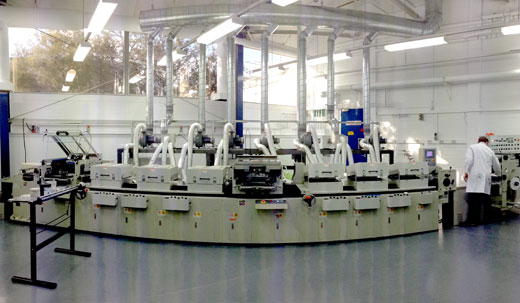
    Succinctly, a new printer which has been installed at CSIRO is capable of printing solar cells the size of A3 sheets of paper – the largest ever created. Printing onto sheets of flexible plastic, it can produce these at a rate of 10 metres per minute (one new and fully functioning solar cell every 2 seconds!), and those cells can produce between 10-50 Watts per square metre, dependent upon how much light they receive. Oh, and the best part? The printer uses no brand new or special technology. In fact, it’s not a lot different to mass producing printed t-shirts!

    The group responsible refer to themselves as the Victorian Organic Solar Cell Consortium (VICOSC), and they’re made up of a collaboration between CSIRO, The University of Melbourne, and Monash University, together with a handful of industry partners. Over the past 3 years, they’ve been working on printing solar panels. Starting with a cell the size of a human thumbnail, they’ve scaled their way up to larger and larger sizes. And they have plans. Big plans.

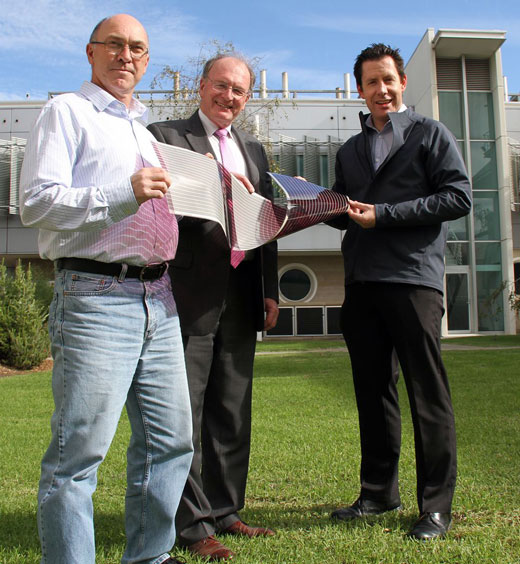
    Dr David Jones, Professor Andrew Holmes and Dr Scott Watkins, three of the researchers involved, together with one of their printed solar cells.
    Dr David Jones, Professor Andrew Holmes and Dr Scott Watkins, three of the researchers involved, together with one of their printed solar cells.

    I mentioned a little while ago in my article about wind power, that I’m a keen advocate of alternative energy. This is because, and let’s be frank here, energy based on crude oil is not sustainable in the long term. I could list dozens of reasons why this is the case, not least of which is the fact that oil reserves are limited. But the biggest factor is pollution. We really need to start taking better care of this world.

    Australia, it has to be said, receives one thing in abundance. Sunlight. Developing solar power seems like something of a no brainer, especially for more isolated areas. In fact though, the Earth receives a staggering amount of solar energy constantly.

    Sunlight hitting Earth carries with it approximately 174 petawatts (174,000,000,000,000,000 watts!) of power. Of course, for the most part we’ll never be able to harvest it. Around 30% is immediately reflected back into space (which is good, because otherwise our planet would boil). But if we could harvest just 0.01% of the solar energy hitting our planet, we would have more power than the entirety of human civilisation can currently use!

    Realistically, powering everything on our world with solar power may not be feasible. But a significant fraction of global energy needs could be easily met with solar power – particularly in areas which receive a lot of sunlight. Areas like much of Australia. The new techniques developed by VICOSC could make solar energy much more accessible to the world at large.

    Firstly, the printing techniques they use are familiar to us all. Essentially, it’s much the same as screen printing – except that they use semiconductive inks which can be printed onto either flexible plastic or steel, dependent on where precisely they’re needed. Even better, the group are currently researching new non-chorinated solvents to use, making the entire operation even more environmentally sound!

    The newly installed solar cell printer at CSIRO.
    The newly installed solar cell printer at CSIRO.

    While the new printer at CSIRO to produce these solar cells cost a total of A$200,000, the future component costs are tiny. These printed energy collectors work out at a price of just A$1 per watt! Needless to say, this is a huge improvement over any solar panels the market can currently offer.

    The group suggest a couple of particularly interesting uses for their printed solar cells. For a start, they can actually be used to improve the efficiency of existing solar cells. The two technologies absorb sunlight at different wavelengths. This means that the same area of solar cell could be able to effectively collect twice the power.

    Even more dramatically, there are plans to further scale up the printing equipment they’ve used (because why not, right?) and create much larger cells. These could be laminated onto the windows of large buildings like skyscrapers, making any city into its own power plant. Effectively a single typical skyscraper (for example, the Century Tower in Sydney) could “generate” over 100 kilowatts of power just by standing there.

    The new printed solar cells aren’t quite ready to be released to the public just yet. But it sounds like they might be soon. Currently, they’re still undergoing tests. To date, they have a theoretical maximum power of 80 watts per square metre, and the cells currently being produced have a lifetime of over 6 months.

    The current goal is to raise their useable lifetime to 2 years. But of course, given how ambitious VICOSC have been so far, I doubt they’ll stop there. Maybe we should start thinking about taking the word “alternative” out of “alternative energy”.

    Image credits: CSIRO/VICOSC

  • Wind power: renewable energy for the cities of the future

    Wind power: renewable energy for the cities of the future

    Renewable energy? I’m a big fan! Unfortunately, so are modern wind turbines, which are the subject of intense arguments and criticism despite their many benefits. However, this view might be changed somewhat, by a new innovation by Farzad Safaei at the University of Wollongong (UOW) – a new type of wind turbine known as PowerWINDows.

    I’m actually going to come straight out and drop the neutral viewpoint on this article, because this is important. I am very much a supporter of renewable energy, and I find it quite preposterous that anyone would even think about arguing against it. Very recently, carbon dioxide levels in the atmosphere have reached 400 parts per million for the first time in recorded history. This may not seem like a lot, but Earth’s atmosphere hasn’t seen this much carbon dioxide for over 3 million years. It may sound like a cliché to say, but by continuing to burn fossil fuels we’re doing some permanent damage to our planet. And speaking as an astronomer, I can say with some authority – this is the only planet we’ve got.

    Lots of people argue against wind turbines. In my not-so-humble opinion, this is ridiculous. Nonetheless, it happens. People claim that they’re “a blight on the landscape”, that they generate noise, that they affect local wildlife, and that they have a negative impact on health. Most of these criticisms are unsubstantiated and have no basis in fact. Let’s think rationally here: all of the same things are probably true of any other form of power station. And when other power stations go wrong, the effects can be significantly worse than a broken propeller blade. Hopefully then, innovations like PowerWINDows might help to both silence the critics and make wind energy a more easily attainable power source.

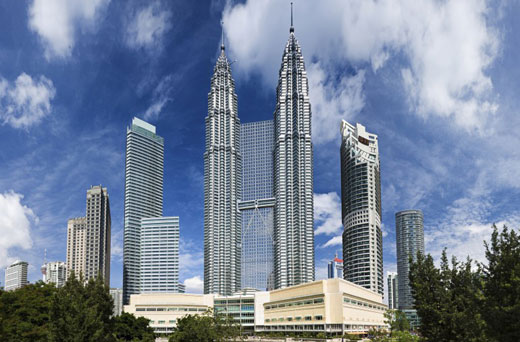
    Just imagine how much power the Petronas towers could generate...

    The basic idea with PowerWINDows is that there are none of the large rotating blades which people claim to be dangerous. The smaller, compact design allows PowerWINDows turbines to be installed on tall buildings such as skyscrapers and apartment blocks. All in all, the newly designed turbines are cheaper, quieter, and more convenient than existing wind turbine technology.

    After four years of design and testing work, UOW have signed a deal with Birdon, one of Australia’s top engineering companies, to build and test a prototype suitable for commercial production. If all goes according to plan, the new turbines may go into production sometime in the future. Just imagine how much additional power could be generated if every large city had wind turbines installed on every tall building!

    Professor Safaei’s inspiration for the idea was a desire to improve on existing wind turbines and any of their shortcomings – i.e. the criticisms made against them. His goal was to enable modular manufacturing, reduce noise and land usage, and allow easier transportation and installation. “I wanted to create a wind turbine that better integrated with living environments

  • How to green the desert and reverse climate change

    How to green the desert and reverse climate change

    “Desertification is a fancy word for land that is turning to desert,

  • Asteroids, extinctions, and biodiversity: Wiping the slate clean for new life to flourish

    Asteroids, extinctions, and biodiversity: Wiping the slate clean for new life to flourish

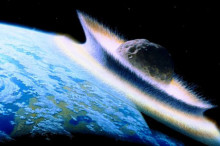
    The recent meteor strike in Russia has been a rather sobering reminder that Earth has been regularly battered during its history, by space rocks. Actually, the amount of meteoritic material constantly landing on Earth is startling – on average, over 100 tons every day which we don’t even notice. Now, most of that is in the form of tiny rock fragments and dust; with most being small enough to be vapourised as they burn up in Earth’s atmosphere, relatively few meteorites ever end up on the ground. The part which may make us uneasy, however,  is the fact that occasionally something larger crosses Earth’s path. Something much larger.

    We already know with some degree of certainty that a gigantic asteroid impact may have played a role in wiping the dinosaurs off the face of our world, and we also know it’s not the only such large impact in Earth’s history. Now there’s evidence of another huge impact – and this one was in Australia!

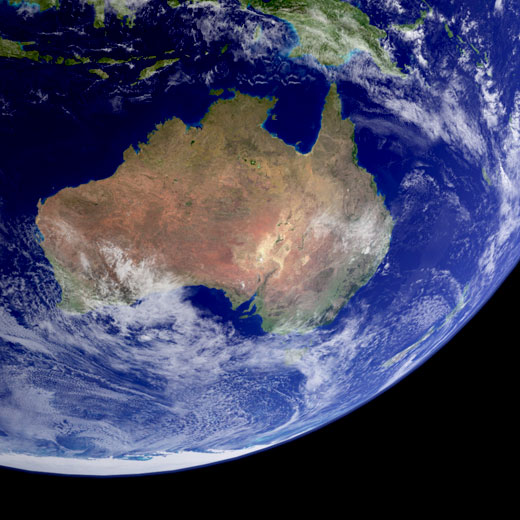
    With a diameter spanning around 200 km in South Australia’s East Warbuton basin, an ancient impact site has been uncovered. Created by an asteroid which was probably between 10-20 km in diamater, affecting an area of terrain of around 30,000 km, this impact zone is the third largest currently known. When this particular asteroid struck Earth some 360 million years ago, its effects would have been profound and global.

    Andrew Glikson, a visiting fellow at the Australian National University, first started investigating the area after hearing about structural abnormalities in the rocks there. He spent time in a crystallography lab, studying the orientation of crystals in rocks collected from the site, and found that the most likely cause for what he was seeing was the result of the rocks being subjected to a huge shock. Given the extent and area of the shocked rocks, the most likely explanation is a giant extraterrestrial impact.

    Earth looks so peaceful from orbit...

    The most well known giant impact, known as the Chicxulub Impact Event, occurred about 66 million years ago causing the Cretaceous-Tertiary extinction event, and quite probably being the final nail in the coffin of the dinosaurs. This newly discovered Australian impact site, however, is much older. In fact, when this asteroid struck Earth, it was around 100 million years before any dinosaurs had even evolved. In fact, it would have likely been during the Carboniferous Period in Earth’s geologic history. Interestingly enough, there was a minor extinction event during the Carboniferous. A minor extinction caused by a change in Earth’s climate.

    Glikson went on to explain that this impact was likely one of part of a cluster which caused a number of impacts around that time. This cluster of impacts was very likely behind an extinction event. Simply, a huge impact like the one discovered in the middle of Australia would cause devastation. The effects locally would be severe, splattering molten rock into the air which would then rain back down to the ground hundreds of kilometres away, and a blast wave of superheated air would cause widespread forest fires near the impact zone – particularly in the oxygen rich atmosphere of Earth’s Carboniferous forests.

    The global repercussions of such an impact, however, would be much worse. A huge amount of dust would be thrown up into Earth’s atmosphere, choking out the sunlight. This would cause Earth’s surface to cool, and the reduced light would make plants die off. A big enough impact – or a series of them – would throw enough dust into the skies that this could happen on a global scale. With the food chain cut off at the plants which are its source, a mass extinction would follow as animals would have trouble finding food to survive on.

    These events are mercifully rare. A giant impact may happen on Earth once every ten million years or so. Interestingly enough though, researchers in a different study have found evidence that extinction events on planet Earth may actually be beneficial to biodiversity.

    Kale Sniderman, part of a group of researchers working at the University of Melbourne and the University of Tasmania, focussed on an event much more recent than the East Warburton impact. Instead, he and the others looked at the last ice age, around one million years ago and together they constructed a hypothesis that extinction events may be even more important for biodiversity than rapid evolution. While their work concerns species which went extinct during ice ages as opposed to impact events, a suitably large meteor strike may be a factor in what causes an ice age to begin.

    The traditional view of most biologists is that some areas have greater biodiversity due to evolution in those places progressing more rapidly. Evolution has always been the only thing emphasised in biodiversity studies, but Sniderman and his colleagues have taken the first step in overturning this picture.

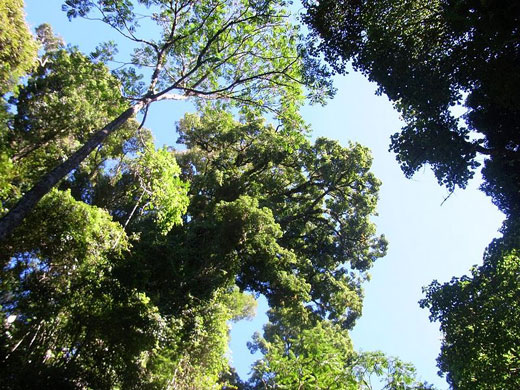
    League Scrub

    Their work looked at regions in South Africa and Australia – notable as two of the most diverse areas on planet Earth. South Western Australia is known among botanists for having a huge variety of plants, particularly tough leaved shrubs and trees. The very tip of the South African cape is even more diverse, populated by very similar types of plant. For a long time, biologists have theorised that the diversty in these rather similar areas was down to the dry, arid summer conditions and the nutrient poor soils in these areas. The exact connection, however, has never been entirely apparent.

    As it happens, the status may not be quite so quo here. Studying fossils from an ancient lake in South Eastern Australia, it was found that plant life in Australia tended to die off as the continent has gradually become drier – a process taking millions of years. In particular, during the last ice age, a huge amount of rainforest plants died off. This allowed other hardier plants to fill the space they’d left and plant diversity expanded as they did so – creating what was described by University of Tasmania’s Greg Jordan as “a remarkable number of tough-leaved, shrubby plants.” Thinking about this process logically, it seems to make perfect sense. In any place on Earth where there’s a vacant ecological niche, life will typically evolve to try and fill that niche. Where an extinction occurs, a huge niche will suddenly become empty. This would prompt a veritable explosion of new life forms to fill in the gap.

    This study not only gives new insight into how extinction events can affect diversity of life forms, but also has implications for current and future climate change, and how species may be able to cope with it. As I mentioned previously when talking about the Great Barrier Reef, Australian wildlife is already suffering from climate change. However, at least for plant life on land, there’s a good chance that the species most easily affected by rapid environmental changes may have already died off during the last ice age.

    To loop this discussion back to the beginning, if an extinction due to an ice age could help to boost biodiversity, logically an extinction due to an asteroid impact event could do the same. To my knowledge, there are no studies in this context concerning what happened to biodiversity after the Chicxulub impact event (though I’ll admit that I may be wrong on this), but it would be very interesting to see what such studies might find. Similarly, it would be interesting to know if any such flourishes of biodiversity occurred after the newly discovered East Warbuton impact too. It could be that only certain types of extinction event can boost diversity of life on a planet. That said, if the same thing can occur after an asteroid impact then it may have implications reaching beyond Earth.

    If a giant impact event could serve to actually boost life on a planetary scale, then it may imply that once life has taken hold on a planet, it’s more robust than we’ve been giving it credit for. The implications for astrobiologists and the search for life elsewhere in the galaxy are quite clear.

    To end on an aside, a large enough asteroid strike even on Earth today would cause widespread fires kilometres away from the impact site. Back in the Carboniferous Period, around the time when the East Warbuton impact occurred, the situation would have been much more dramatic; the oxygen content of Earth’s atmosphere was up to 15% higher then, than it is today. In such a combustible atmosphere, where fires could have been started by a simple lightning strike, a large asteroid impact could cause a widespread inferno. However, South Africa (one of the places considered in the biodiversity study) is home to a number of species which have evolved specifically to survive fires. In particular, the highly diverse Fynbos region is known for a number of plants for which fire is actually an integral part of their lifecycle. Some seeds belonging to protea species simply don’t germinate unless they’re exposed to the intense heat of a wildfire. Provided they could gather sufficient amounts of sunlight under the darkened skies, plants like these may be able to rapidly repopulate an area after an impact event.

    Life on Earth, evidently, has resilience which can still surprise us.

    nature

    Image credits:
    Top – Artists impression of a large scale impact event – Don Davis/NASA
    Upper Middle – Australia seen from orbit – NASA
    Lower Middle – League Scrub sub tropical rainforest, near Bowraville NSW, Australia – Peter Woodard/Wikimedia Commons
    Bottom – Garden – https://croatia-real.estate