The American Chemistry Council sponsors an initiative “Plastics Make it Possible.
Category: Environmental science
-
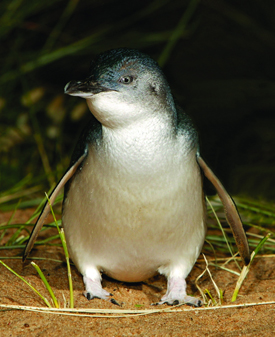
Who Doesn’t Love a (Penguin) Parade?
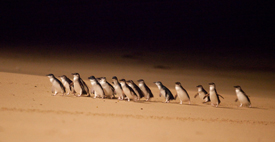
Penguins marching home from a long day at sea. It’s not just 5-year old children who get excited by the sight of penguins; on no, penguins have been “all the rage
-
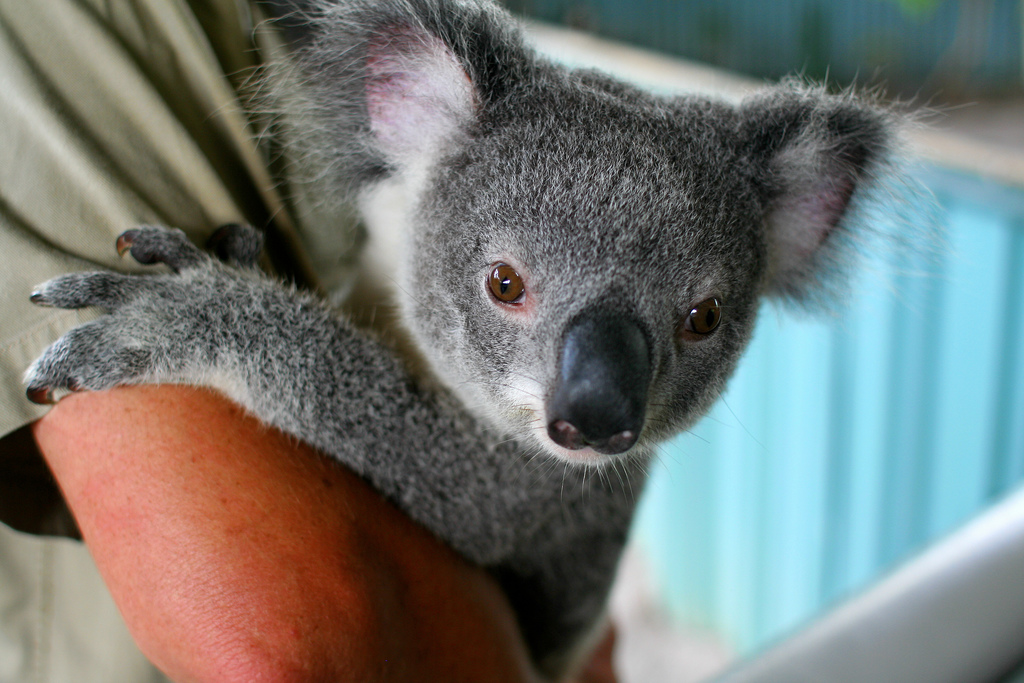
Saving Australia’s Koalas
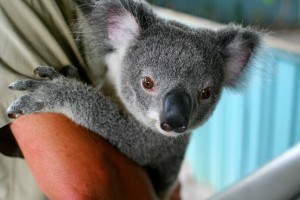 In an emergency room at Beerwah, Queensland, the phone rings almost 100 times a day.
The emergency room is one at the Australian Wildlife Hospital, providing veterinary care for sick and injured wildlife — admitting anywhere in the region of 30 different species on a daily basis — with injuries resulting from accidents, acts of deliberate cruelty, or conflict.
Arethusa came into the emergency room suffering from fractured ribs and internal abdominal bleeding. Frodo came in with a gunshot wound, sustaining a fractured skull and significant damage to the stomach and intestines. Travis and his mother were run over by a hit and run vehicle.
These four were koalas, but the hospital deals in animals common to the Australian landscape — from Brushtail Possums to Bearded Dragons.
The koalas themselves, cute cuddly creatures, with a sleepy demeanour, renowned as a representation of Australia have recently been in the news for being endangered and for a curious case of koala chlamydia. Koalas are in serious decline, suffering from many of the effects the veterinarians at the Australian Wildlife Hospital see on a daily basis — as well as habitat destruction, domestic dog attacks, bushfires and disease. The Australian Koala Foundation estimates that there are less than 80,000 koalas left in the wild, possibly as few as 43,000.
Over the past few years researchers have been distilling and putting together a case to add another reason for koala decline to the list. Roughly 600 koalas per year are seen to at the hospital, and most present with other primary conditions. A number of koalas, however, have presented at the hospital with serious illness associated with regenerative anaemia and now trypanosome infections.
The trypanosome is a parasite we commonly associate with African Trypanosomiasis (as well Chagas disease). In reality, the trypanosome also infects rats, cattle, and even kangaroos.
To say little is known about systemic and blood parasites of native wildlife in Australia would be an understatement. Researchers are only just beginning to understand the diversity of trypanosomes in Australian marsupials. Much is still to be learnt. Their evolutionary biology, transmission, and resulting potential impact on the wildlife. The possibility that indigenous wildlife trypanosomes can act as a reservoir for human pathogenic infections is all to be seen.
What we do know is that, in Australia, the introduction of trypanosomes are as a direct result of human activities. Being almost certainly responsible for introducing trypanosomes from one wildlife population to another. The vector — what transmits the parasite from animal to animal — of Australian trypanosomes is not known. Although, researchers have the flea in mind as the usual suspect.
To date around 10 trypanosome species and genotypes have been identi
-
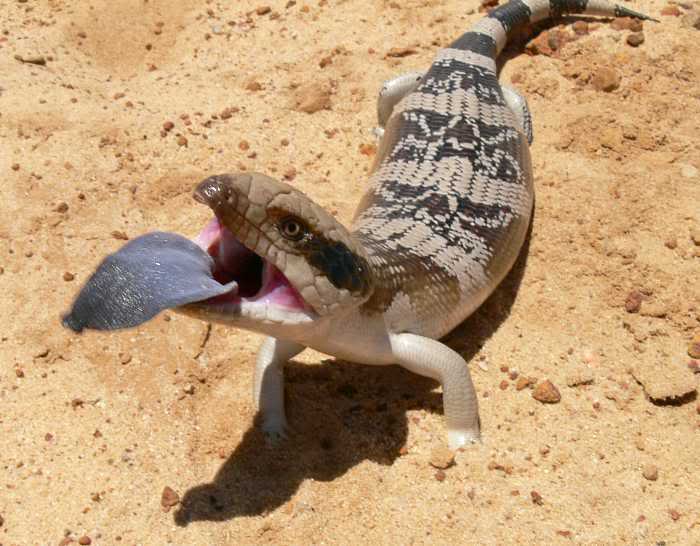
The social network of solitary lizards
 Burra, South Australia. Dirt roads link sparsely populated towns and communities once home to copper miners that lived in tiny dugouts along the banks of the creek. Burra is a place capsulated by hot, dry summers and cool moist winters. Across the arid place a grey-brown reptile with short limbs and a large cumbersome head shuffles along the dirt in search of the place it calls home. No other living thing is in sight. For all intents and purposes, this lizard is the last being in existence.
The Pygmy Bluetongue Lizard is the smallest of the genus Tiliqua and, unlike the other members of the genus, it has a pink tongue. Its home is a vertical burrow constructed by spiders. The bluetongue lizard is generally territorial and lives a life of solitude. The solitary lizards rarely leave home, and when they do rarely for any great amount of time, taking solace within their holes for many months at a time and rarely encountering a neighbour outside of mating season.
The lizard’s use of wolf and trapdoor spider holes as a home is only a recent discovery. It really makes no modifications to its lodging, using it for day time shelter, retreat sites for hiding, ambush sites for hunting passing prey, basking sites for thermoregulation, and birthing sites. Really from cradle to the grave.
At the height of the mining boom, the population of miners living in the Burra region was in the area of 5000, approximately the number of lizards that currently roam the grasslands near Burra today. Bluetongue lizards are now endangered and under threat from climate change, the changing of the natural soil under its feet due to ploughing of native grassy understorey, and — most importantly — from parasites.
The lizards are host to an ixodid tick, Bothriocroton hydrosauri, and an oxyurid nematode, Pharyngodon wandillahensis. Two parasites that don’t really go out of their way to be parasitic.
How a host acts can be very beneficial for a parasite or pathogen. Parasites evolve to get the most out of their host… by hook or by crook. Some parasites go to great lengths to change the behaviour of their hosts. The Tom & Jerry dynamic witnessed in Toxoplasma gondii, and zombie ants are the more popular examples.
One of the challenges of disease ecology in a wildlife setting is to identify and map how different parasites and pathogens spread and establish a foothold within a population. From influenza to measles to HIV to foot and mouth to real or hypothetical diseases, the modelling is all very similar. The patterns of contact among hosts within a population are likely to play a central role in how parasites spread. A good social network is key to any disease transmission.
Why would the bluetongue lizard make a good animal to study the spread of disease through a population, given its less than social nature? And the more pertinent question of how can a parasite remain successful with an anti-social host? These were the questions that faced researchers at Flinders University in South Australia.
The spread of parasites is one that often relies on the modification of host behaviour, but in the case of the tick and the nematode, the parasite takes advantage of the lizard’s less than social nature.
The tick requires three hosts, and each developmental stage of the tick is on a different host. Larvae, nymphs and adult females each attach to a host, feed and then detach. The detached larvae and nymphs then moult to the next developmental stage. Whereas the female lay eggs that hatch into larvae.
Tick activity and development occur in the spring and summer months when the weather is warm and the lizards are at their most adventurous (lizard activity is at its peak). The tick adopts a ‘sit and wait’ strategy to find its next host. Once detached from its host, it will move less than half a metre to find the next host. It simply waits for the lizard to find it.
The oxyurid nematode has a more astute strategy. Lizards use their tongues to sense environmental cues, and the bluetongue lizard uses its tongue to inspect scats other lizards use to mark their territory. This is when transmission occurs.
Both tick and nematode are working against the clock. The tick must be found by a lizard within a relatively short amount of time (40 days). Whereas the eggs of the nematode are thought to have no more than 10 days to find its next host before they die.
The parasites rely on the more adventurous lizards within the population to be mobile enough to disperse the disease. Those that act as dispersers, wandering from neighbouring settlements. These dispersing lizards behave more cautiously, and are more likely to inspect any scats with its tongue as they move through occupied habitat. And thus, more likely to encounter a parasite.
These parasites, unlike most, have to rely on the rare occasions of interpersonal contact patterns between lizards. These parasites have to rely on the social network of antisocial, solitary lizards.
-
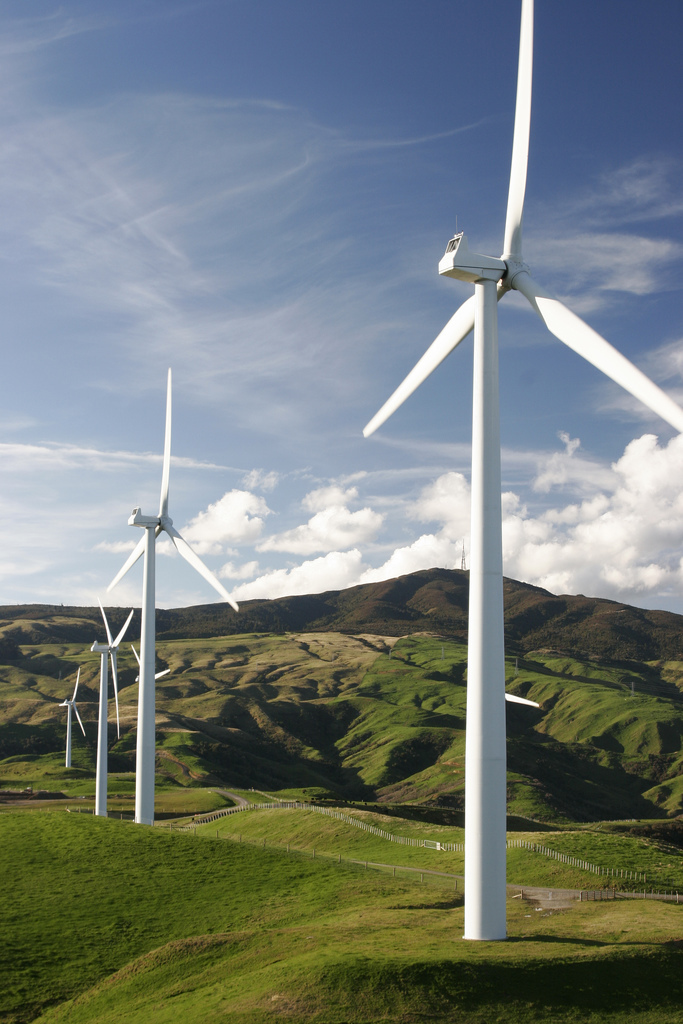
The Future of Energy
 The 7th Annual MIT Energy Conference held March 16-17 in Boston, MA, was an all-around inspiring event filled with conversations of hot topic scientific research and intense policy discussion. It was impressive, considering this event is entirely planned and executed by the student body, with well over 500 in attendance. From the scientific prowess of the professors working on new energy technologies, the caliber of executives leading the charge on the corporate front, to the undergraduate and graduate students pursuing their dreams to engineer a better tomorrow for society, we are indeed poised to see a radical transformation in both the technology and the policies of the energy sector.
‘Insight and Innovation in Uncertain Times’ could not have been a more appropriately named theme for the conference. The whole MIT community understands and embraces the challenges that lie ahead. And they are committed to finding solutions that include sustainable and renewable energy. The realization that we must commit to being better environmental stewards moving forward was a message that resonated throughout the panel discussions. It was enlightening to hear many of the large corporations such as BP, GE and Shell, understand the need to reduce their carbon footprint, lower their GHG emissions, and develop clean technology to power a changing world.
Biofuels, LNG, CNG, shale gas, nuclear, wind, solar, hydro – all these energy sources were highlighted throughout the day in conversations and presentations. Because it’s not just going to be one type of energy that we rely on for power; it’s going to be a combination of several, an energy portfolio that keeps the lights on and the cars rolling down the highway. And it may be different from one municipality, or a state, to another. Community planners have a big role to play in terms of energy. Many expressed the need for their seat at the table of discussion on global warming at the conference. It appears communities are starting to grasp that we must connect these three pillars – the social, economic and environmental. It is this type of holistic thinking and long-term planning, that will put not only the United States, but other countries who adopt these approaches, on the path to a secure, clean, energy future.
An energy policy is difficult to implement anywhere; to be sure, this is no small feat. But unless countries attempt to craft a decision-making framework for implementing an energy policy, progress will continue to be haltered. For the past 30 years, the US has not had a sound energy plan. Sure, the Energy Policy Acts of 1992 and 2005 were notable. But the time is ripe with the myriad of technologies we now possess to start implementing a comprehensive plan. The very nature of public policy is incremental and iterative; define the problem, identify criteria, list alternatives, analyze, evaluate, implement. If something doesn’t check out, repeat process. Mistakes will be made; it is the ability to think fast and correct those mistakes that we will learn and find the solutions needed to drive us forward. By 2050, the global population will be 9 billion. Think about that. We will have to figure out how to move that extraordinary number of people and the goods they require, safely and responsibly. Can we pull it off while being environmentally conscious at the same time? We really have no other option.
I believe that option will be met courtesy of universities such as MIT, along with corporations and policymakers partnering in innovative ways. I would also be remiss if I didn’t add it was refreshing to see so many women at the event, from students, to researchers, to corporate executives. The energy frontier is open for women to conquer, from the lab bench to the boardroom. From scientists, to policymakers, to venture capitalists, women can carve their niche in the sustainable energy field. You’ve heard the saying, “the future of tomorrow begins with today.
-
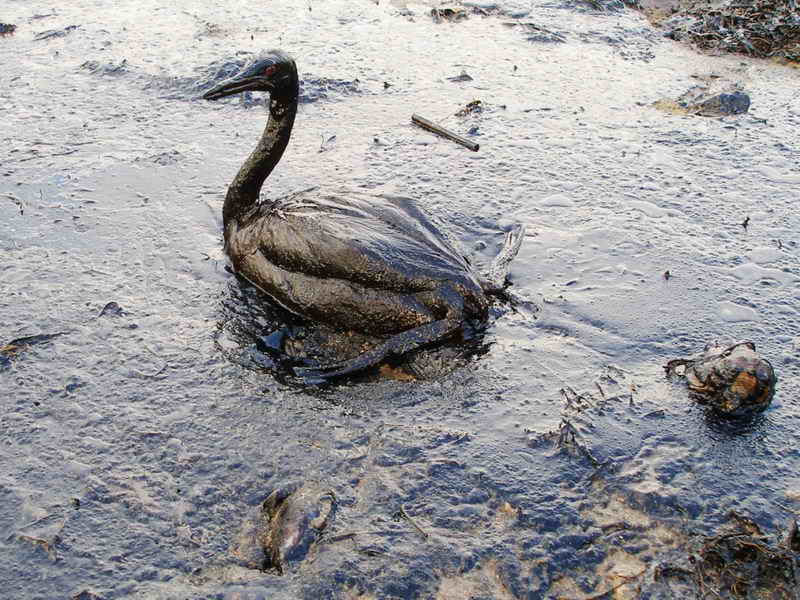
Effects of a crude oil spill on ecology
Image source: en.wikipedia.org When mistakes are made by people or when people are careless that way causing leaking of oil of an oil tanker into the ocean oil spills can occur. Oil spill can also happen if equipment breaks down.
Basics:
An oil spill is the release of a liquid petroleum hydrocarbon into the environment, especially marine areas, due to human activity, and is a form of pollution. The term is mostly used to describe marine oil spills, where oil is released into the ocean or coastal waters. Oil spills may be due to releases of crude oil from tankers, offshore platforms, drilling rigs and wells, as well as spills of refined petroleum products (such as gasoline, diesel) and their by-products, heavier fuels used by large ships such as bunker fuel, or the spill of any oily refuse or waste oil. Another significant route by which oil enters the marine environment is through natural oil seeps. [1]
Oil wastes that enter the ocean come from many sources, some being accidental spills or leaks, and some being the results of chronic and careless habits in the use of oil and oil products. Most waste oil in the ocean consists of oily stormwater drainage from cities and farms, untreated waste disposal from factories and industrial facilities, and unregulated recreational boating.

Image source: aussieloans.com.au It is estimated that approximately 706 million gallons of waste oil enter the ocean every year, with over half coming from land drainage and waste disposal; for example, from the improper disposal of used motor oil. Offshore drilling and production operations and spills or leaks from ships or tankers typically contribute less than 8 percent of the total. The remainder comes from routine maintenance of ships (nearly 20 percent), hydrocarbon particles from onshore air pollution (about 13 percent), and natural seepage from the seafloor (over 8 percent).Oil spills present the potential for enormous harm to deep ocean and coastal fishing and fisheries. The immediate effects of toxic and smothering oil waste may be mass mortality and contamination of fish and other food species, but long-term ecological effects may be worse. Oil waste poisons the sensitive marine and coastal organic substrate, interrupting the food chain on which fish and sea creatures depend, and on which their reproductive success is based. Commercial fishing enterprises may be affected permanently.Wildlife other than fish and sea creatures, including mammals, reptiles, amphibians, and birds that live in or near the ocean, are also poisoned by oil waste. [2]
The most damaging oil spill ever to occur in North American waters was the Exxon Valdez accident of 1989. More than most tanker accidents, this one was very preventable. It was caused when an intoxicated captain gave temporary command of the supertanker to an unqualified and inexperienced subordinate, who quickly erred in his navigation and ran the ship aground onto a well known reef. The spilled oil affected about 1,200 mi (1,900 km) of shoreline of Prince William Sound and its vicinity, causing especially great ecological damages in tidal and subtidal habitats. Large numbers of sea mammals and birds were also affected in offshore waters. An estimated 5,000-10,000 sea otters (Enhydra lutris) were present in Prince William Sound, and at least 1,000 of these charismatic mammals were killed by oiling. About 36,000 dead seabirds of various species were collected from beaches and other places, but the actual number of killed birds was probably in the range of 100,000-300,000 birds. At least 153 bald eagles (Haliaeetus leucocephalus) died from poisoning when they scavenged the carcasses of oiled seabirds. [3]
Petroleum hydrocarbons affect plants chemically and physically. Although plants sometime survive fouling by producing new leaves, even relatively non-toxic oils can stress or kill plants if oil physically prevents plant gas-exchange. Plant sensitivity to fouling varies among species and among populations within a species, age of the plant, and season of spill. Physical disturbance and compaction of vegetation and soil associated with clean-up activities following an oil spill appear to have detrimental effects on the US Gulf coast marshes. Other techniques, including the use of chemicals such as cleaners or bioremediation, may be necessary to address the problem. Clean-up may also be beneficial when timely removal prevents oil from migrating to more sensitive habitats. [4]
In 1986 more than 8 million liters of crude oil spilled into a complex region of mangroves, seagrasses, and coral reefs just east of the Caribbean entrance to the Panama Canal. This was the largest recorded spill into coastal habitats in the tropical Americas. Many population of plants and animals in both oiled and unoiled sites had been studied previously, thereby providing an unprecedented measure of ecological variation before the spill. Documenation of the spread of oil and its biological begun immediately. Intertidal mangroves, algae, and associated invertebrates were covered by oil and died soon after. More surprisingly, there was also extensive mortality of shallow subtidal reef corals and infauna of seagrass beds. After 1.5 years only some organisms in areas exposed to the open sea have recovered. [5]
To determine carefully the effects on the marine and estuarine benthos of Number 2 fuel oil spilled by the barge FLORIDA off West Falmouth, Massachusetts, we sampled for many months along an onshore-offshore gradient of pollution, and less intensively at unoiled sites. Analyses of hydrocarbons established that pollution was greatest and most persistent in the intertidal and subtidal zones of Wild Harbor River, less severe in degree and duration at stations farthest from shore. A variety of concurrent analyses showed that disturbance of the fauna was most severe and longest lasting at the most heavily oiled sites, and least severe but perceptible at lightly oiled stations. Patterns of disturbance were not related to granulometry of the sediments. Plants, ctustaceans, fish, and birds suffered both high mortality immediately after the spill, and physiological and behavioral abnormalities directly related to high concentrations of the fuel oil. Five years after the spill its effects on the biota were still detectable, and partly degraded #2 fuel oil was still present in the sediments in Wild Harbor River and estuary. [6]
Conclusion:
Oil spills causes great damage to eco system. The damage dometimes cannot even be repaired and that is what makes it worse. The unfortunate thing is that oil spill mostly happens because of people’s lack of care and attention.
References:
[1] http://en.wikipedia.org/wiki/Oil_spill
[2] http://www.waterencyclopedia.com/Oc-Po/Oil-Spills-Impact-on-the-Ocean.html#b
[3] http://science.jrank.org/pages/4849/Oil-Spills-Ecological-damages-oil-spills.html
[4] ”The effects of oil spill and clean-up on dominant US Gulf coast marsh macrophytes: a review” by: S.R. Pezeshkia, M.W. Hesterb, Q. Linc, J.A. Nyman
[5] ”Ecological Effects of a Major Oil Spill on Panamanian Coastal Marine Communities” by: J. B. C. Jackson, J. D. Cubit et.al.
[6] ”Anatomy of an oil spill : long-term effects from the grounding of the barge Florida off West Falmouth, Massachusetts” by: Sanders, Howard L.; Grassle, J. Frederick; Hampson, George R.; Morse, Linda S.; Garner-Price, Susan; Jones, Carol C. -

Cruise Ship Pollution
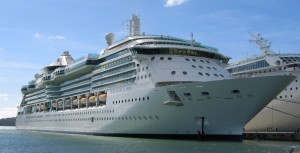 Besides being a great touristic attraction and money makers cruise ships also have their bad sides one of them being pollution. Tourists are often unaware of how serious the pollution is. Environmentalists are trying to fight it with all means.
Basics:
The environmental impact of shipping includes greenhouse gas emissions and oil pollution. Carbon dioxide emissions from shipping is currently estimated at 4 to 5 percent of the global total, and estimated by the International Maritime Organisation (IMO) to rise by up to 72 percent by 2020 if no action is taken.[1]
The cruise ship industry is a significant and growing contributor to the United States economy, providing more than $32 billion in benefits annually and generating more than 330,000 U.S. jobs, but also making the environmental impacts of its activities an issue to many. Although cruise ships represent a small fraction of the entire shipping industry worldwide, public attention to their environmental impacts comes in part from the fact that cruise ships are highly visible and in part because of the industry’s desire to promote a positive image. [2]Cruise tourism continues to be a major international growth area. In terms of achieving sustainable tourism it is, therefore, a sub-sector within which socio-economic, cultural and environmental considerations need to be continually analysed, addressed and monitored. The environmental impacts of cruise tourism are categorised in this paper and potential strategies that can be employed by both cruise line operators and cruise tourism destinations are explored. Secondary evidence of action by both parties suggests that the industry is taking a number of belated positive steps. However, decision-makers in cruise tourism destinations, particularly those outside North America, need to work closely with operators to facilitate both integrated waste management and intergenerational and intra-societal equity rather than merely accept the prospect of short-term economic gain.[3]
Bulk metal analyses of surficial sediments collected around the Norwegian Crown cruise ship grounding site in Bermuda indicated significant but localized contamination of reef sediments by copper and zinc, caused by the stripping of the tri-butyltin (TBT)-free antifouling (AF) paint (Intersmooth 460) from the underside of the hull. Highest copper and zinc values were found in heavily compacted and red-pigmented sediments inside the impact scar and were comparable to levels found close to slip ways of local boat yards where AF paints from hull stripping and cleaning processes are washed into the sea. The re-distribution of AF contaminated sediments by storms and deposition on nearby reefs constitutes a significant ecological risk that could delay recovery processes and reduce the effectiveness of remediation efforts. Whilst the ecotoxicological effects of AF paint particles interspersed with sediment is unknown, and in need of further study, it is argued that the significance of AF paint contamination of grounding sites has been overlooked.[4]
Cruise ships represent less than 1% of the global merchant fleet yet it has been estimated that they are responsible for 25% of all waste generated by merchant vessels. This volume of waste produces pressures on the environment, particularly with respect to ship-generated waste disposal at home ports and ports of call. Southampton, home port for both Cunard and P&O, and a port of call for Royal Caribbean Cruises, is the focus of this study. This paper investigates current waste management and disposal options for cruise ship generated waste and the associated impacts of this waste for ports. It is concluded that all cruise vessels should vigorously pursue a waste reduction strategy and for ports to provide adequate recycling, reduction and re-use facilities for cruise ship generated waste, optimising use of local facilities whenever possible.[5]Conclusion:
Cruise ship pollution ranges from chemical contamination to ship-generated waste. In recent times the big ships have their own recycling facilities but that is not enough to lower the effects of all cruise ship pollution. This is the topic that should be dealt with more seriously and as soon as possible.
References:
[1] http://en.wikipedia.org/wiki/Environmental_impact_of_shipping
[2] http://en.wikipedia.org/wiki/Cruise_ship_pollution_in_the_United_States
[3] ‘Environmentally sustainable cruise tourism: a reality check’ by David Johnson
[4] ‘Chemical contamination of a coral reef by the grounding of a cruise ship in Bermuda’ by Ross J Jones
[5] ‘The impact of cruise ship generated waste on home ports and ports of call: A study of Southampton’ by Nickie Butt -
Endangered Species in Indonesia
Indonesia the fourth most populous country in the world and with its amazing nature is a popular destination for tourists. Its breathtaking beaches and impressive shrines leave no man indifferent. Unfortunately, there is the dark side to this story of a beautiful country – the endangered species in Indonesia.
Introduction
Indonesia has the greatest biological diversity in Asia. A vast mosaic of 13,667 islands, Indonesia links two biogeographic regions known as the Sunda subregion, an area stretching from southern Burma and Thailand south to northern Indonesia and Borneo, with Oceania to the south and east. The political boundaries of Indonesia have little to do with ecosystems or ethnic cultures. The giant island of Borneo, for example, has been divided among several Asian countries. Indonesia claims the southern twothirds, known as Kalimantan, while Malaysia rules two states in the north and west, Sabah and Sarawak, and the small independent country of Brunei lies on the northwestern coast. Likewise, New Guinea, whose Melanesian tribes have inhabited the island for thousands of years, has been divided between Indonesia, which rules with a strong military presence in the western half, Irian Jaya, and Papua New Guinea in the east, an independent nation. Politically, Indonesia has been in turmoil for decades, with a series of presidents who have grown rich on foreign aid and siphoning off profits from exploitation of timber, oil and minerals. [1]
Endangered Species in Indonesia
Southeast Asia, which includes Indonesia, has the highest relative rate of deforestation of any major tropical region, and could lose three quarters of its original forests by 2100 and up to 42% of its biodiversity. Here, we report on the current state of its biota and highlight the primary drivers of the threat of extinction now faced by much of the unique and rich fauna and flora of the region. Furthermore, the known impacts on the biodiversity of Southeast Asia are likely to be just the tip of the iceberg, owing to the paucity of research data. The looming Southeast Asian biodiversity disaster demands immediate and definitive actions, yet such measures continue to be constrained by socioeconomic factors, including poverty and lack of infrastructure. Any realistic solution will need to involve a multidisciplinary strategy, including political, socioeconomic and scientific input, in which all major stakeholders (government, non-government, national and international organizations) must participate.[2]
 Indonesia is famous for its great biodiversity. It is estimated that as many as 300,000 animal species are inhabit its many ecosystems. This equates to 17% of worldwide fauna species, these across only 1.3% of the world’s landmass. With 515 species, Indonesia has more species of mammal than any other nation. There are 1539 bird species and 50% of all the world’s fish species can be found in its marine and freshwater systems.
However, Indonesia also has the most endangered species. The World Conservation Union (IUCN, 2003) lists as endangered 147 mammals, 114 birds, 91 fish and 2b invertebrate species. Major conservation efforts are vital if these species are not to become extinct in the near future.
Trade in wild animals is a serious threat to many species in Indonesia. Over 95% of animals sold in markets are taken directly from the wild and not from captive breeding stocks. More than 20% of animals sold at market die in transportation. Despite this, many endangered and protected species are traded freely, with the rarer species commanding higher prices.[3]The Endangered Species:
Although Indonesia contains Asia’s most extensive tropical rainforests, the nation has lost 26 percent of its primary forest since the 1990s. Wildlife struggles to find habitat in the face of logging, mining and agriculture, especially oil-palm plantations. The following species are among the best-known endangered ones:
Gibbons
On Kalimantan and Sumatra, three subspecies of agile gibbons suffer decline due to habitat loss. Siamang gibbons struggle for habitat and are taken from the wild to be sold as pets.
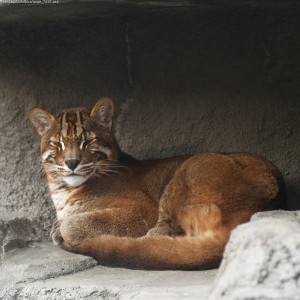
Asian Golden Cat
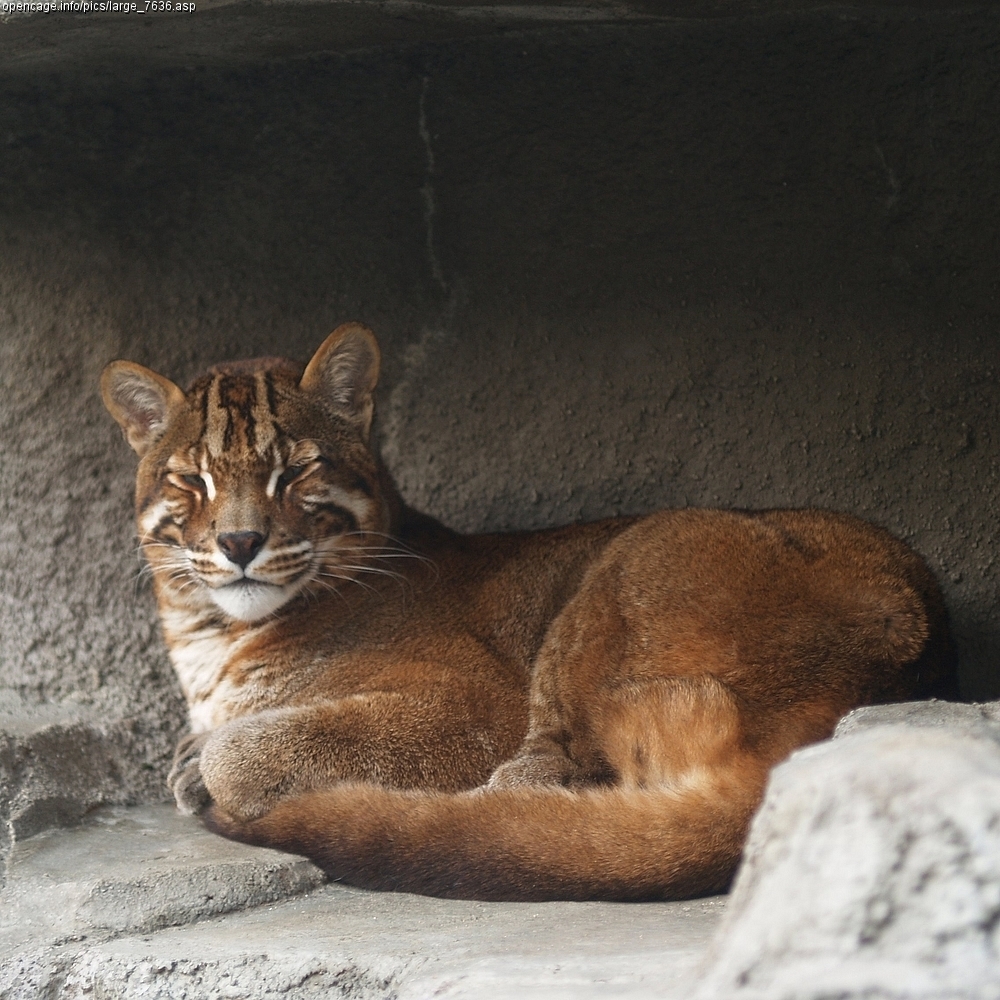
Named for its shiny reddish-brown coat, Sumatra’s Asian, or Temmnick’s, golden cat hunts for habitat while it is hunted for its fur.
Babirusa
Indonesia’s islands house a hippopotamus relative, the babirusa, though it looks more like a pig. It is hunted for meat and often shot by farmers if raiding their fields.
Javan Rhinoceros
With only 60 left, the Javan rhinoceros is one of the most endangered animals on Earth. Indonesia’s Ujung Kulon National Park protects the species.
Wondiwoi Tree Kangaroo
Wondiwoi tree kangaroo are critically endangered and might already be extinct. No one has reported a sighting in recent years. Hunting has been the primary source of their decline.[4]Conclusion:
All the information mentioned above are more than alarming. Indonesian government together with its scientists and inhabitants has to join in the efforts to save Indonesian flora and fauna. A huge responsibility lies on their back as the destruction of their nature could also have a significant influence on whole world’s environment.
References:
[1] http://www.endangeredspecieshandbook.org/forest_indonesia.php
[2] http://www.sciencedirect.com/science/article/pii/S0169534704002666
[3] http://www.profauna.org/content/en/indonesian_animal_facts.html
[4] http://www.ehow.com/facts_5584897_endangered-animals-indonesia.html


