Category: Research

  • Internet Society: Global Internet User Survey Reveals Attitudes, Usage, and Behavior

    Internet Society: Global Internet User Survey Reveals Attitudes, Usage, and Behavior

    A worldwide survey of more than 10,000 Internet users in 20 countries conducted by the Internet Society revealed attitudes towards the Internet and user behavior online. The Global Internet User Survey is one of the broadest surveys of Internet user attitudes on key issues facing the Internet. This year’s survey covered areas such as how users manage personal information online, attitudes toward the Internet and human rights, censorship, and the potential for the Internet to address issues such as economic development and education.

    “Today’s online users have high expectations for the Internet and its impact on our lives and society, while also expressing concerns over censorship and excessive governmental controls,” said Lynn St. Amour, President and CEO of the Internet Society. “As part of realizing the Internet Society’s vision of an Internet that is for everyone, this survey uniquely focuses on users and their experiences, attitudes, and opinions on how to meet the challenges and opportunities facing the Internet and society in general. We are committed to the Internet’s continued open growth and evolution, not only for those who enjoy the Internet today, but until everyone is able to access and benefit from an open Internet.”

    Key Findings

    Key findings from this year’s survey cover a broad range of topics.

    The Internet and Human Rights:

    • Eighty-three percent of respondents agreed or agreed strongly that access to the Internet should be considered a basic human right.
    • Eighty-nine percent agreed or agreed strongly that Internet access allows freedom of expression on all subjects, and 86 percent agreed or agreed strongly that freedom of expression should be guaranteed.
    • Sixty percent of respondents agreed or agreed strongly that Internet access has contributed significantly to civil action and political awareness in their country.

    Internet censorship:

    • Thirty percent of users agreed strongly that censorship currently exists on the Internet.
    • Sixty-six percent of respondents agreed or agreed strongly that governments in countries with no Internet censorship have a responsibility to keep the Internet free of censorship in countries where the Internet is being censored/controlled/shut down.
    • More than 70 percent of users agreed or agreed strongly that more government involvement would make the Internet too controlled or would limit content they can access.
    • More than two-thirds agreed or agreed strongly that increased government control would inhibit the growth of the Internet and/or stifle innovation.

    Online privacy and identity:

    • Even when users know they are sharing personal data with a site or service, most users (80 percent) do not always read privacy policies and a significant fraction (12 percent) of respondents admitted that they never read privacy policies.
    • Of users who logged into online services, only half reported that they logged out.
    • Nineteen percent of respondents were aware of circumstances in which personal data was used in a way they did not expect. The most commonly reported consequences were: unsolicited communications, stolen personal data, private data becoming public, impersonation, and financial loss.

    The Internet and economic and societal issues:

    • Nearly two-thirds of respondents agreed or agreed strongly that the Internet would play a significant role in solving global problems, including reducing child mortality (63 percent), improving maternal health (65 percent), eliminating extreme poverty and hunger (61 percent), and preventing the trafficking of women and children (69 percent).
    • An even higher percentage of respondents agreed or agreed strongly that the Internet would increase global trade and economic relationships (81 percent), improve the quality of education (80 percent), and improve emergency response during a natural disaster (77 percent).
    • A majority of respondents felt strongly that the Internet plays a significant role in making improvements to business, science, and technology in areas such as: expanding the availability of goods and services (66 percent), allowing entrepreneurs to conduct business across all countries (65 percent), and advancing science and technology and creating a technologically recognized workforce (61 percent).

    Attitudes towards the Internet:

    • Ninety-eight percent of users agreed or strongly agreed the Internet is essential for their access to knowledge and education.
    • More than 80 percent agreed or agreed strongly that the Internet plays a positive role for their individual lives as well as society at large.
    • Nearly 75 percent of users strongly agreed that access to the Internet allows them to seek any information that interests them.

    General Internet usage:

    • Internet users nearly universally (96 percent) indicated they accessed the Internet at least once a day.
    • More than 90 percent of Internet users surveyed globally indicated they use social media, with a majority (60 percent) using it daily, an increase of 10 percent over 2011.
    • Connection speed (73 percent) and reliability (69 percent) ranked slightly above more affordable monthly fees (68 percent) among factors that would increase usage. Other factors included more content in their local language (50 percent) and more online availability of government and/or community services (49 percent)

    The Internet Society’s Global Internet User Survey (GIUS) provides reliable information relevant to issues important to the Internet’s future. As an ongoing effort, the survey provides information, informs and supports the activities of the global Internet Society community, and makes the data it collects openly available for all. While other ICT surveys focus on economic, infrastructure, or other Internet use indicators, the GIUS focuses on users, which are the source of innovation that has driven the Internet’s development, evolution, and dramatic growth over the past four decades. The first GIUS in 2011 gathered the responses of 6,088 Internet users in 11 countries.

    This year, the GIUS was conducted on behalf of the Internet Society from July to August 2012 by Redshift Research, a leading business market research firm. The survey questionnaire engaged 10,789 Internet users in 20 countries: Argentina, Brazil, Chile, China, France, Germany, India, Indonesia, Italy, Kenya, Peru, Philippines, Poland, Russia, Saudi Arabia, South Africa, South Korea, Spain, UAE, and the United States. Of the respondents, 53 percent were male and 47 percent were female. Results from the survey varied across countries; future reports will provide additional insight into these variations.

    The complete questionnaire, full results—including results by country—and more information on survey methodology are available at: http://www.internetsociety.org/survey
    Press release – source. 

    Image source.

  • Turn Back Time

    Turn Back Time

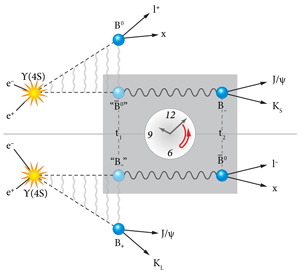
    Electron-positron collisions at SLAC produce a Υ(4s) resonance that results in an entangled pair of B mesons. Source: http://physics.aps.org/articles/v5/129

    Recall the outrageously cool movie from the 1980s, Back to the Future? Marty McFly and Doc Brown were stretching scientific boundaries, righting the future, all while making sure not to meet their future selves. Fast-forward and time travel may be closer than we think. (Close, relatively speaking of course.)

    If you like exceptions to the rule, well, you’re in luck because the Department of Energy’s (DOE) SLAC National Accelerator Laboratory has achieved something quite impressive – the BaBar experiment.

    The BaBar experiment investigates the most fundamental questions about the universe by getting back to basics with elementary particles. It’s a global collaboration of physicists delving into the nature of antimatter, the relationship of quarks and leptons and crossing over into areas of physics yet to be explored.

    Earlier this week, scientists working on the BaBar project made the first direct observation of a violation to the concept known as time reversal symmetry. Their work was published in Physical Review Letters if you want to journey into the world of  B mesons.

    How did they do it?

    Data from billions of particle collisions, nearly 10 years worth, were poured over and sifted through by researchers on this project. They examined a chain of particle transformations in which B mesons flipped between two different states called B-zero and B-even. This quantum entanglement of B mesons enables information about the first decaying particle to be used to determine the state of its partner at the time of the decay. This allowed the team to find that these transformations happened six times more often in one direction than the other.

    Largely by thinking there was something wrong with the picture they were looking at was how missing pieces of the puzzle were filled in, according to the physics coordinator for BaBar, Fabio Anulli of the National Institute for Nuclear Physics in Rome. The BaBar data they had showed evidence of change-parity symmetry violation, so this was a good place to start looking. In fact, just looking at the data in a slightly different way allowed them to the see time violation.

    Given the abundance of data the BaBar team had to work with, they were able to measure the T-violation to the 14 sigma level – a high level of statistical significance. Basically meaning there is only 1 chance in 1043 that this effect is not real. Recall the Higgs boson discovery this past summer; that was granted a 5 sigma level. The results demonstrate that the direction of time matters, at least for some elementary particle processes. This provides a strong confirmation that a few subatomic processes like to do things on their own schedule – they have a preferred direction of time, changing into one another much more often in one way, than they change in the other. Time does not run the same forwards as backwards.

    The findings – full of futuristic possibilities

    What does this mean for the future? This discovery may rock our world in ways we haven’t even conceived of yet. It could have implications for business, for communications, for me getting to Brisbane instantaneously without first stopping for a layover at LAX. We may have perhaps inched closer to that time travelling ease marvelously displayed in Star Trek. Stay tuned.

    Discoveries such as this make us think about the beauty of science. The vectors and numbers and B mesons – scientists work that stuff out to provide the beautiful possibilities that are so important to the human race. It may be small now, but we’re definitely on to something bigger. Think how many picture frames we may just be able to tilt to get the answers we seek.


  • Weekly Science Picks

    Weekly Science Picks

    Ah, the weekend! Time to kick back, relax, and look back over everything that’s happened over the past few days. And I’m rather happy to say that some quite interesting things have happened, including the Leonid meteor shower which peaked on Friday night (though if you step outside after dark and watch the sky, you may still see a few stragglers). So what else has caught my eye this week, science-wise?

    Well first off, the Curiosity Rover has been busy over on the planet next door. I can’t help but find everything about the Curiosity rover exciting, especially as it’s paving the way for actual manned exploration to another planet. As many people will agree, no matter how sophisticated a rover can be, it will never be as good as a team of properly equipped geologists exploring a site in person. As it turns out, this idea just came a step closer to being reality…

    Astronauts Could Survive Mars Radiation, Curiosity Rover Finds

    The findings demonstrate that Mars’ atmosphere, though just 1 percent as thick as that of Earth, does provide a significant amount of shielding from dangerous, fast-moving cosmic particles.


    Some people may recall the death of an aged tortoise nicknamed Lonesome George, so called because he was thought to be the last surviving member of his species. I know I do, and was rather saddened by it. While it may be an inescapable part of the way life on our planet works, there’s something quite humbling about being forced to simply watch a species go extinct and not be able to do anything about it. But then, was George’s death really the end of the story? As it happens, perhaps not…

    DNA tests show Lonesome George may not have been last of his species

    “These giant tortoises are of crucial importance to the ecosystems of the Galapagos Islands, and the reintroduction of these species will help preserve their evolutionary legacy,” said Danielle Edwards, postdoctoral research associate at Yale and lead author on the study.


    Lisa Grossman at New Scientist discusses the phenomenon of rogue planets – planets roaming interstellar space after being forcibly ejected from their home systems. It’s a concept which I’ve thought about in great detail in the past, as have many others, including astrophysicists, astrobiologists, and science fiction authors.

    Astrophile: Lonely planet roams with stellar outcasts

    The wanderers are no longer gravitationally linked, but they are headed in the same direction. “Like when you kick a clod of sand, the grains don’t stick together anymore but they have the same common motion,” Delorme says.


    In chemistry, I’ve always held a certain fascination with noble gas compounds. Molecules formed from atoms which aren’t supposed to react and form molecules always seemed rather exotic and curious. Several of these compounds have been predicted involving Xenon, one of the heaviest noble gasses. And there may be a lot of Xenon trapped inside the Earth this way…

    Professor predicts stable compounds of oxygen and ‘inert’ gas xenon

    “In addition to providing a likely solution to the missing xenon paradox and clarifying essential aspects of xenon chemistry, our study may result in practical applications,” says [Artem R.] Oganov. “For example, the ability of xenon to form strong chemical bonds with oxygen and other elements, and to be trapped in crystalline defects, suggests their use as non-classical luminescence centers and active sites for catalysis”.


    And to end on a humourous note, XKCD wrote a comic this week describing the Apollo Spacecraft and Saturn V rockets using only the 1000 most commonly used words in the English language. The result was slightly hilarious and rather enlightening about how often writers like myself use words which aren’t in that top 1000. A testament to XKCD’s popularity is how many people in the online space and astronomy communities mentioned it – including at least one astronaut!

    xkcd: Up Goer Five

    Lots of fire comes out here. This end should point toward the ground if you want to go into space. If it starts pointing toward space you are having a bad problem and you will not go into space today.


    Hope you’re having a good weekend!


  • The Gender Myth and Science. Our Response at SC@M

    The Gender Myth and Science. Our Response at SC@M

    Girls are just not as good at science as boys. Men do hard sciences, women do soft sciences. Gender stereotypes have existed long-term throughout the spectrum of sciences. Most people have witnessed it first-hand. Patients question expert female doctors, yet implicitly trust their male counterparts. Laboratories are full of female scientists with male leads. Why do we trust the judgement of men in science before females? Just where do these gender stereotypes come from and when do children start believing in them?

    SC@M (Science Club at Mitchelton State School) began mid-2012, attracting 45 students from Grades 4-7. Of the applicants, 21 were girls, 24 were boys with their ages ranging from 9-12 years. Included in the SC@M application process, students were asked a series of gender and science related questions to elicit their current opinions. Not surprisingly, some of our SC@M applicants did indeed hold some gender stereotypical views, which were compelling to examine. Unexpectedly, it was a minority of applicants that held these views.

    Question 1:  Boys understand science easier than girls. Do you agree with this statement? Why or why not?

    Agree             n = 15 Disagree               n =30
    Boys like it moreBoys listen more, girls talk too muchAll the famous scientists seem to be maleMost scientists on TV are male Boys and girls learn the sameGirls listen better so they understand moreBoth girls and boys can be good at scienceYou just have to work hard

     
    Question 2:  Men are better at science jobs than women. Do you agree with this statement? Why or why not?

    Agree            n = 12 Disagree             n = 33
    Women are not as good at maths Most scientists are men Men are braver Men think it’s more fun

    Men can deal with more energy correlations and stuff

    Boys do technology stuff

    They are equal, we have equal rights It just depends on how hard you push yourself Men may be stronger but science doesn’t require strength I have only ever been taught science by ladies

    Notably, of the children who agreed with these statements, several described the dominance of male scientists portrayed by the media. Doesn’t every Australian know of Dr. Karl? He hosts radio talk-back science shows and Sleek Geeks on ABC TV, is the science-guru guest on numerous morning shows and the author of over 30 books. Many would consider Dr Karl as the face of Australian science. This misrepresentation of science and gender subtly endorses the view that boys are simply better at science.

    It was pleasing to note that the majority of our applicants disagreed with these statements and most suggested that science was accessible to both genders. Given current research suggests girl’s interest in science diminishes towards late high school, it would be worthwhile to re-examine this same cohort of children at a later stage to determine any change.

    Question 3: Currently there are more men in some science jobs (like engineering) than women. Why do you think this is so?

    Typical responses
     Men like it more. Women don’t want to get dirty.Men are stronger.Boys just like building things.

    Women have a family.

    It’s too hard for girls.

    Girls like dancing and other jobs.

    Women are more suited to caring and developing jobs like childcare and nursing.

    There has always been more men in engineering.

    Although 75% of applicants thought that science was accessible for them, the majority of children responded with gender-biased statements when responding to Question 3. Sadly, none of the applicants provided an opposing side. Women are under-represented in engineering fields and other physical sciences. We need strategies to encourage girls to enter these fields, not allow them to simply accept that “it is just too hard for girls

  • First research to successfully predict the responses of children with autism to treatment models

    First research to successfully predict the responses of children with autism to treatment models

    Research Fellow Dr Giacomo Vivanti and his team of researchers at the Olga Tennison Autism Research Centre (OTARC) at La Trobe University have successfully profiled children with autism in order to predict how well they will respond to a particular form of developmental therapy.

    Dr Cheryl Dissanayake, Director of OTARC, says that Dr Vivanti¹s research, published last week in the Journal of Autism and Development Disorders, is the first of its kind to profile children in order to predict treatment responses.
    This research is important because it is the first step towards being able to identify which intervention programs are best suited to specific children, says Dr Dissanayake.

    The autism intervention model being studied by Dr Vivanti and his team is the Early Start Denver Model (ESDM), which is being implemented at the Victorian Autism Specific Early Learning and Care Centre: The Margot Prior Wing of the La Trobe Community Childrens Centre since 2010. (See details of the ESDM, below.)
    There is little doubt that all children in the Margot Prior Wing benefit from the ESDM, but what we’re trying to understand is why some children make more gains than others.

    ŒChildren are making gains across four cognitive areas after one year of therapy. And some children in our sample are moving from a severe autism diagnosis to a less severe diagnosis.

    However, not all children improve to the same degree under the ESDM, and Dr Vivanti says that the challenge is to better understand how to match children to the programs that are best suited to their specific needs.

    We are working on the issue of what works for whom and why? says Dr Vivanti.  The paper published this week details the initial results of the OTARC research, and uses the profiling model developed by Dr Vivanti to predict the responses of children at the Margot Prior Wing to the ESDM therapy.

    The paper shows that Dr Vivantis profiling model has been highly successful in predicting treatment outcomes for children undergoing the ESDM intervention, although the sample size was relatively small, with 21 children participating in the study.

    The next step in the research, says Dr Dissanayake, is to assess whether the predictors of treatment success used by Dr Vivanti will work equally well when used in other types of early intervention programs.

    We really want to get to the stage where we can say, this group of children will do better in program A, whereas these other children will do better in program B so that we can prospectively match treatments to individual children, says Dr Dissanayake.
    REPORT: Autism intervention model normalises brain signals in children with autism

    An American study provides strong evidence for the effectiveness of an autism intervention model known as the Early Start Denver Model (ESDM), currently in use at the Margot Prior Wing of La Trobe Childrens Centre.

    It’s been known for some time that ESDM leads to significant positive changes in the development of children with autism, says Dr Cheryl Dissanayake, Director of the Olga Tennison Autism Research Centre (OTARC) at La Trobe.

    The latest American research builds on this by demonstrating that ESDM may actually normalise brain signals of young children receiving the therapy in terms of the way that they respond to faces and objects.

    What this means is that children receiving ESDM showed the same pattern of response to faces and objects as typically developing kids. They are still autistic, but the ESDM seems to be changing the way their brain responds to other people.

    Ultimately, this means that they will relate to other people in a more normal manner, says Dr Dissanayake.

    The ESDM has been in use at the Victorian Autism Specific Early Learning and Care Centre: The Margot Prior Wing of the La Trobe Community Children’s Centre since 2010. The model in its original form relies on one-on-one delivery, but the Margot Prior Wing has adapted the model for delivery in a group setting.

    The ESDM is a developmentally-based behavioural intervention model for children between 12 and 60 months of age. It is a naturalistic play-based approach delivered by specially trained therapists in collaboration with the childs parents or guardians. The therapy is based on strict adherence to a manual that guides treatment.

    The American research, published last week in the Journal of the American Academy of Child and Adolescent Psychiatry, provides further evidence in support of the ESDM.

    The La Trobe University centre is one of six Autism Specific Early Learning and Care Centres funded by the Federal Government, and one of just two centres that deliver a group-based ESDM. Research is currently taking place at the Margot Prior Wing to assess the effectiveness of the ESDM in a group setting, as well as to understand why some children make greater gains in response to the ESDM than others.

    Image.

  • How Have Marsupials Evolved?

    How Have Marsupials Evolved?

    The phylogenetic relationships between two orders of marsupials have been intesively debated. Authors benefited from recent sequencing projects which provided two marsupial genomes: this of the South American opossum (Monodelphis domestica) and the one of a kangaroo, the Australian tammar wallaby (Macropus eugenii). Retroposons are suitable and homoplasy-free markers: their insertion sites are random; parallel insertions or exact excisions are very rare.

    Thus, if one finds a retroposon in the homologous genomic loci of both species this indicates a common ancestry; on the contrary: if the marker is missing in one of the species, it means prior divergence. Moreover, one retroposon can insert into another: this situation is called transposition into transposition. These nested mobile elements insertions provide precious information about the relative times during which given retroposon families integrated into genomes: young elements can insert into older ones, but the reciprocal is impossible.

    After complete screening of the opposum and kangaroo genomes, authors found ~8,000 and ~4,000 nested retroposon insertions, respectively. Then, the frequencies and time scales of SINEs (Short INterspersed Elements) were calculated (using TinT software) and 3 groups identified:

    1. SINEs specific to the lineage leading to opossum => phylogenetically informative markers present in the opossum lineage;
    2. SINEs specific to the lineage leading to kangaroo => phylogenetically informative markers present in the kangaroo lineage;
    3. SINEs active in both species => phylogenetically informative markers present in both lineages .

    Also, ~220,000 genomic loci containing retroposons were detected using three different strategies. After screening and experimental confirmation, a total of ~440 marsupial sequences were aligned and analyzed to reveal 53 informative markers. Ten of those confirmed again the monophyly of marsupials. The other 43 phylogenetically informative retroposon markers provide significant support for most of the basal splits within marsupials.

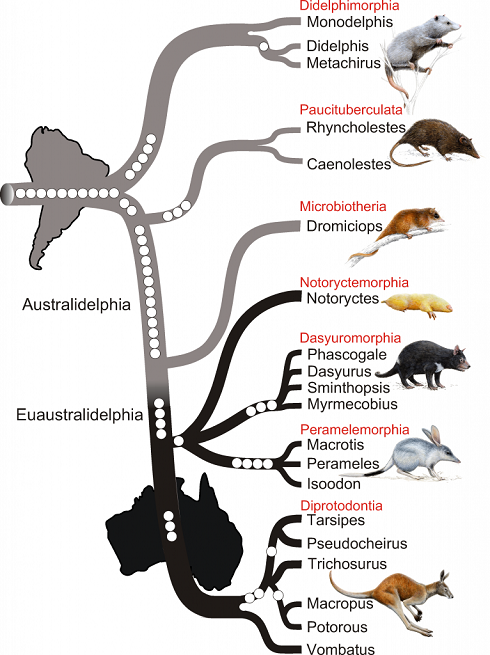
    Phylogenetic tree of marsupials derived from retroposon data.
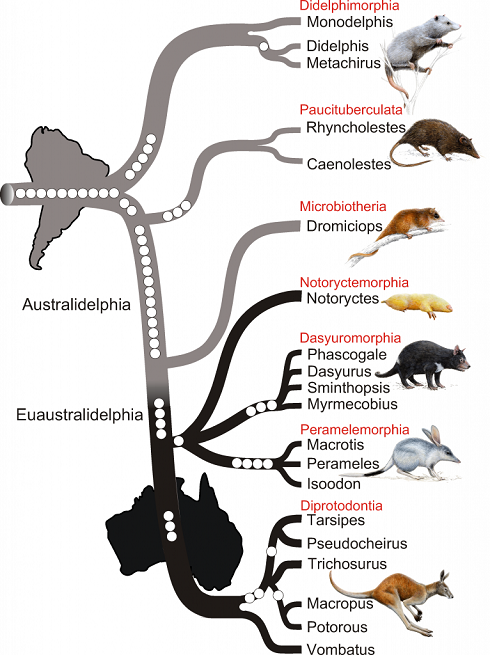
    Phylogenetic tree of marsupials derived from retroposon data.

    Authors did not find any loci containing elements present in opossum plus Paucituberculata but absent in kangaroo, which would have supported the alternative of a close relationship between Didelphimorphia and Paucituberculata. They screened for markers that would support the alternative hypothesis of Paucituberculata being the sister to all marsupials: experimental verification showed that all of the putative elements were also present in the order Paucituberculata (Rhyncholestes), thus supporting the monophyly of marsupials, but not the basal divergence.

    Furthermore, 13 of the original 53 markers were present in the South American Microbiotheria and the 4 Australasian orders but not in either Didelphimorphia or Paucituberculata: this significantly supports the monophyly of Australidelphia. The branch separating Australidelphia from Didelphimorphia and Paucituberculata is one of the strongest supported as well. Nevertheless, poor fossil record from South America, Antarctica, and Australia does not allow to assess Australidelphian early realtionships and biogeography.

    Two competing hypotheses exist regarding Microbiotheria: the latter are either excluded from the Australasian order (based on nuclear protein-coding genes) or embeded into it (completely or partially based on mitochondrial data). No reliable marsupial phylogeny is established up to now. In the present study, authors provide evidence for 4 independent diagnostic retroposon insertions which allow to place Microbiotheria within South America marsupials. Thus, authors propose the new name Euaustralidelphia for the monophyletic grouping of the four Australasian orders Notoryctemorphia, Dasyuromorphia, Peramelemorphia, and Diprotodontia. In total, 18 out of the initial 53 retroposon markers provide significant support for the monophyly of each of the five multi-species marsupial orders.

    Authors conclude: “the retroposon marker system identified a clear separation between the South American and Australasian marsupials. Thus, the current findings support a simple paleobiogeographic hypothesis, indicating only a single effective migration from South America to Australia, which is remarkable given that South America, Antarctica, and Australia were connected in the South Gondwanan continent for a considerable time.”

    Nilsson MA, Churakov G, Sommer M, Tran NV, Zemann A, Brosius J, & Schmitz J (2010). Tracking marsupial evolution using archaic genomic retroposon insertions. PLoS biology, 8 (7) PMID: 20668664

    (This was originally published on the author’s personal blog. Image is from the original article.)

  • Tasting colours and seeing sound: Synaesthesia

    Tasting colours and seeing sound: Synaesthesia

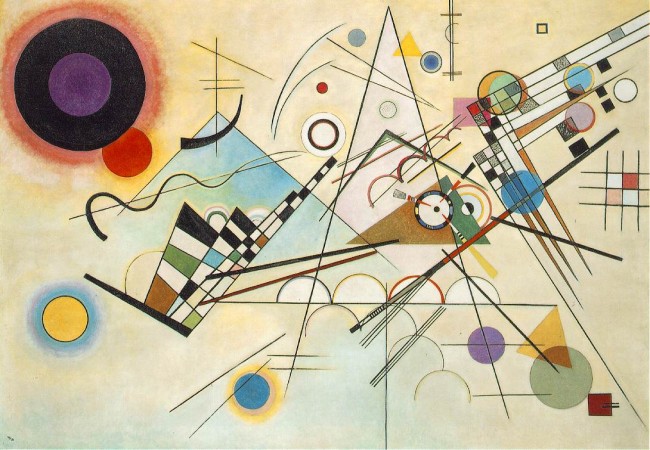
    Kandinsky: “Composition 8”

    One hears a sound but recollects a hue, invisible the hands that touch your heartstrings,

  • The Continuing Saga of the Genetically Modified Plant

    The Continuing Saga of the Genetically Modified Plant

    Mutant Fruits, Photo Source: Wikipedia

    GM (Genetically Modified) Foods

    “Jack! Did you see that potato move?! He’s a GM, that one, he’s sprouted eyes and I bet he’ll grow legs next! He’s gonna round up his buddies and take over the farm!

  • Singing Mice Show Signs of Learning

    Singing Mice Show Signs of Learning

    Like songbirds and humans, male mice have brain circuits and behaviors they may use to learn some of their sounds.

    Guys who imitate Luciano Pavarotti or Justin Bieber to get the girls aren’t alone. Male mice may do a similar trick, matching the pitch of other males’ ultrasonic serenades. The mice also have certain brain features, somewhat similar to humans and song-learning birds, which they may use to change their sounds, according to a new study.

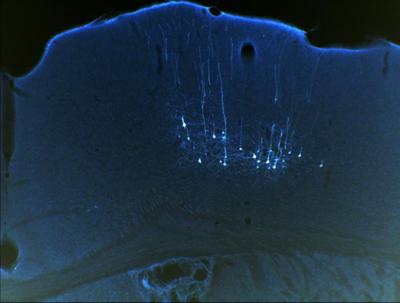
    This image shows the motor cortex neurons that directly project to the brainstem and ultimately control the larynx of male mice. Credit: Gustavo Arriaga and Erich Jarvis, Duke.

    “We are claiming that mice have limited versions of the brain and behavior traits for vocal learning that are found in humans for learning speech and in birds for learning song,” said Duke neurobiologist Erich Jarvis, who oversaw the study. The results appear Oct. 10 in PLOS ONE and are further described in a review article in Brain and Language.

    The discovery contradicts scientists’ 60-year-old assumption that mice do not have vocal learning traits at all. “If we’re not wrong, these findings will be a big boost to scientists studying diseases like autism and anxiety disorders,” said Jarvis, who is a Howard Hughes Medical Institute investigator. “The researchers who use mouse models of the vocal communication effects of these diseases will finally know the brain system that controls the mice’s vocalizations.”

    Jarvis acknowledged that the findings are controversial because they contradict scientists’ long-held assumption about mice vocalizations. His research suggests the vocal communication pathways in mice brains are more similar to those in human brains than to sound-making circuits in the brains of chimpanzees and other non-human primates. The results also contradict two recent studies suggesting mice do not match pitch or have deafness-induced vocalization changes.

    “This is a very important study with great findings,” said Kurt Hammerschmidt, an expert in vocal communication at the German Primate Center who was not involved in the study. He is cautious about some of the claims but suggested that if mice can learn vocalizations they could become a good model to study the genetic foundation of the evolution of language.

    Jarvis, his former graduate student Gustavo Arriaga, and a colleague from Tulane University tested male mice for vocal learning traits as part of a larger project to study speech evolution in humans. Vocal learning appears to be unique to humans, songbirds, parrots and hummingbirds and scientists define it with five features related to brain structure and behavior. Since scientists have never found the features in other animals, “I almost expected every experiment in mice to fail,” Arriaga said.

    In the study, funded by HHMI, NSF and NIH, Arriaga first used gene expression markers, which lit up neurons in the motor cortex of the mice’s brain as they sang. Arriaga then damaged these song-specific neurons in the motor cortex and observed that the mice couldn’t keep their songs on pitch or repeat them as consistently, which also happened when the mice became deaf.

    Arriaga also used an injectable tracer, which mapped the signals controlling song as they moved from the neurons in the motor cortex to those in the brainstem and then to the muscles in the larynx. “This direct projection from the mice’s forebrain to the brainstem and muscles was the biggest surprise,” Jarvis said.

    “The evidence of direct projection from these motor cortex regions is a great finding,” Hammerschmidt said. “And I think it is important to try to understand whether these projections are really able to work in a similar way like such projections known in birds and humans.” The question is whether mice can learn a vocalization the way other species do. The researchers found that when two male mice were placed in the same cage with a female, the males’ pitch began to converge after seven to eight weeks. Arriaga and Jarvis tested 24 male mice and did the experiment twice to confirm the result.

    Hammerschmidt is skeptical. Jarvis and Arriaga’s “pitch convergence story is less convincing,” he said. Scientists have observed pitch convergences in non-vocal learners and the number of tested animals in this study could be too low to determine whether the discovered effect is reliable, he said.

    Jarvis disagrees, but added that more work does need to be done to know if mice can learn other features of vocalizations or if their learning is limited to just pitch.

    “Our results show that mice have the five features scientists associate with vocal learning. In mice, they don’t exist at the advanced levels found in humans and song-learning birds, but they also are not completely absent as commonly assumed,” he said. His team is now searching mouse brains for genes specific to the brain circuits for vocal behavior. So far, these genes have only been found in songbirds and humans but, based on these results, could be in mice too, Jarvis said.

    Citations:

    “Of mice, birds, and men: the mouse ultrasonic song system has some features similar to humans and song-learning birds,” Arriaga, G. et. al. (2012) PLOS ONE. 7(10): e46610. doi:10.1371/journal.pone.0046610

    “Mouse vocal communication system: are ultrasounds learned or innate?” Arriaga, G. et. al. (2012) Brain and Language.

    Source.

  • A long time ago in a galaxy far, far away

    A long time ago in a galaxy far, far away

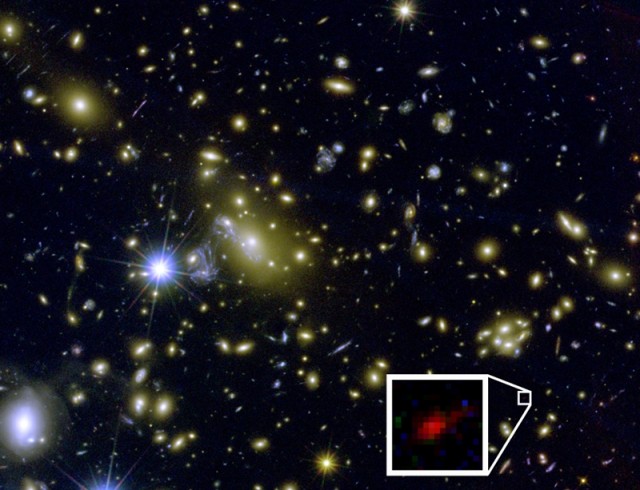
    Feast your eyes on this image…

    Image credit: The CLASH team/Space Telescope Science Institute

    The tiny object in that inset may not look like much. A blurry smudge of red pixels. Not nearly as dramatic as the stunning bouquet of galaxies all around it. But in astronomy, not everything is quite so straightforward. That small red smudge is probably the most exciting thing in this whole image. You see, it too is a galaxy. An unimaginably ancient one.

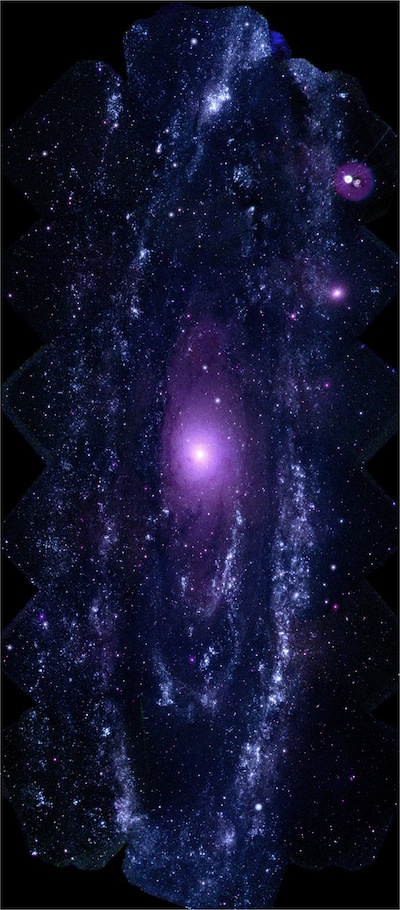
    An ultraviolet image of the nearby Andromeda Galaxy – possibly similar to what we might see of MACS 1149-JD if we could get a more detailed view… Credit: NASA/Swift/Stefan Immler (GSFC) and Erin Grand (UMCP)

    The light that made this unassuming red dot left its source less than 500 million years after the Big Bang and the birth of the Universe. The photons that make up that light have been travelling for over 13.2 billion years. This galaxy was blazing brightly as the oldest known stars in our own galaxy, the Milky Way, were just starting to shine. Back when the gas which would one day become the Sun was still drifting silently amongst stars which are now long dead, and before planet Earth was even a whisper of interstellar dust. Before a massive star forged the iron atoms in your blood, and before a supernova scattered those atoms into space. Before anything we know from the world around us existed, even the stars we see as we look up to the night sky, this galaxy was shining in the dark.

    The Universe was a much smaller place back then. Over the billions of years these photons have been travelling, the Universe itself has expanded with them in the midst of it – stretching them out, redshifting them to longer and longer wavelengths. The light we see here as red was probably ultraviolet once, when it left the galaxy which created it.

    Ancient galaxies like these are difficult to see, purely because they’re so distant. So few photons make it this far that only the most sensitive telescopes can make them out, and even then they need a helping hand. The bloom of galaxies in this image is a massive galaxy cluster called MACS J1149+2223. A collection of galaxies bound together by gravity, clusters like these are some of the largest and most massive objects in the Universe. With that much mass gathered together, gravity starts to do some interesting things, and one of the most interesting is gravitational lensing. Because the gravity of all of those galaxies distorts spacetime, it actually causes the space around the galaxies to act like a titanic lens. A gravitational lens. The ancient red galaxy in this image is only visible because it’s magnified, not only by the Hubble Space Telescope, but by that gravitational lens too.

    It would be naive to assume that this galaxy, dubbed MACS 1149-JD, is special somehow. Instead, it’s most likely to be one of a huge number of primordial galaxies. Except that this one just happened to be in the right place at the right time. A whole population of these ancient galaxies were likely shining brightly at the time, full of hot stars which were driving the reionisation epoch – the time when the Universe went from being an opaque, dark fog, to a clear place where photons could travel long distances. The photons in this image may well have been some of the first photons to have travelled through that ancient and newly transparent Universe.

    The scientific paper is available from Nature – DOI: 10.1038/nature11446

  • Weekly Science Picks

    Weekly Science Picks

    It’s been an interesting week for science news, and I’ve been lucky enough to be asked to give this week’s science picks! This made me spend a little while sipping contemplatively on a cup of vanilla iced coffee and wondering where to even start…

    The articles I’ve selected are, of course, slanted towards my own (rather geeky) interests, but all the same I hope you find them all as fascinating as I did!


    First up, the news that Star Trek style warp drives may actually be possible, at least in theory, made me exclaim “Oh wow!” out loud. Fortunately, people who spend any time with me are generally used to me talking to myself while staring at a computer screen…

    Warp Drive May be More Feasible than Thought

    “Everything within space is restricted by the speed of light. But the really cool thing is space-time, the fabric of space, is not limited by the speed of light.”
    – Richard Obousy, president of Icarus Interstellar


    Artists impression of Mimivirus, the first giant virus to be discovered. Image Credit: InvaderXan/Wikimedia Commons

    From the vastness of space to life under the microscope, biologists have been debating for years whether or not viruses qualify as a form of life. The latest evidence is that they may indeed be a life form in their own right, and an old one at that!

    Giant Viruses are Ancient Living Organisms

    They found that many of the most ancient protein folds in living organisms were present in the giant viruses, which “offers more evidence that viruses are embedded in the fabric of life,” Caetano-Anollés said.


    Heritage Daily had a fascinating article about the archaeology of the future, and what precisely our distant descendents may one day think of us and the way we lived…

    The Archaeology of the Future

    The point is that most of what survives will not be determined by conscious decisions on our part. This may not be for want of trying, as shown by the current popularity of time capsules. The most impressive of these must be the KEO satellite, due to be launched in 2014 and to return to Earth 50,000 years later.


    And speaking of what we know of the past, it’s been shown again and again that our primitive relatives, the neanderthals, were likely not the brainless savages they’re often depicted to be. Evidence suggests that neanderthals liked to collect bird feathers as ornaments.

    Neanderthals Used Feathers as ‘Personal Ornaments’

    “I think this is the tip of the iceberg,” said Prof Finlayson: “It is showing that Neanderthals simply expressed themselves in media other than cave walls. The last bastion of defence in favour of our superiority was cognition.” Neanderthals, he said, may have been “different”, but “their processes of thinking were obviously very similar”.


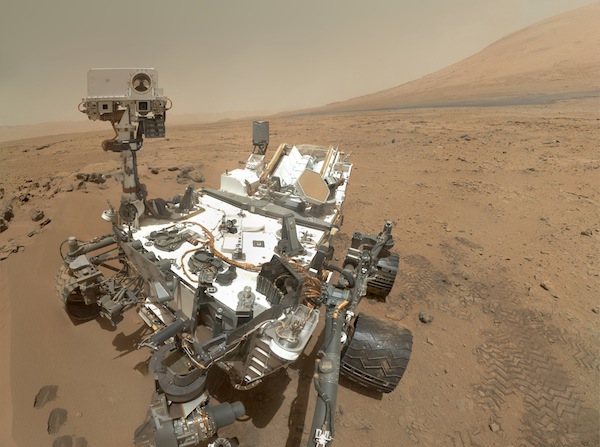
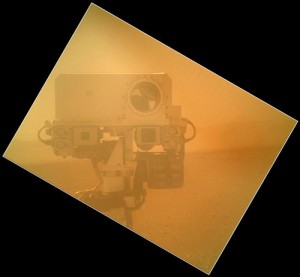
    Curiosity self-portrait. Image Credit: NASA/JPL-Caltech/Malin Space Science Systems

    As the Curiosity rover settles into its new home in Gale Crater on our neighbouring planet, one small worry is growing in the backs of the minds of certain NASA scientists. Could a blunder on the part of some engineers lead to Curiosity contaminating the surface of Mars with Earth life?

    Drill Bits on Rover Could Contaminate Mars

    John D. Rummel, a professor of biology at East Carolina University, said, partly in jest: “It will be a sad day for NASA if they do detect ice or water. That’s because the Curiosity project will most likely be told, ‘Gee, that’s nice. Now turn around.’ “


    And finally, planet hunters are scouring the sky for exoplanets. Astrobiologists are hoping to soon be able to look into the atmospheres of those planets in search of life signs, in the form of certain molecules created by living organisms. But could they be fooled by those molecules coming from somewhere else?

    Meteors Might Add Methane to Exoplanet Atmospheres

    One key gas astrobiologists looking for extraterrestrial life would concentrate on would be oxygen […] Another possibility would be methane, a colorless, odorless, flammable organic gas that microbes on Earth produce. Seeing both together in an exoplanet’s atmosphere might be an especially significant sign of life, since they would both ordinarily remove each other from the atmosphere without something like life to constantly replenish them.


    Have a good weekend!

  • The (nuclear) alchemists of Darmstadt and the doubly magic tin-100 nucleus

    The (nuclear) alchemists of Darmstadt and the doubly magic tin-100 nucleus

    An international group of researchers announced in the journal Nature that they had succeeded in creating tin-100.   This experiment helps us understand how heavy elements have formed.  A few minutes after the Big Bang the universe contained no other elements than the lightest; hydrogen and helium.

    We, the objects around us, the Earth and the other planets all contain heavier elements; carbon, oxygen, silicon, tin, iron etc.  These elements came into existence later than hydrogen and helium.  They formed through the fusion of atomic nuclei inside of stars.  Elements heavier than iron owe their existence to gigantic stellar explosions called supernovas.  Tin-100 is a very unstable, yet important, element for the understanding the formation of these heavier elements.

    A multinational team headed by nuclear physicists from the Technische Universitat Munchen, the Cluster of Excellence Origin and Structures of the Universe and the GSI in Darmstadt carried out these precision experiments.  They shot xenon-124 ions at a sheet of beryllium to create the tin-100 atoms.  The subsequently measured the half-life and decay energy of tin-100 and its decay products using specially developed particle detectors.

    What is our world made from?

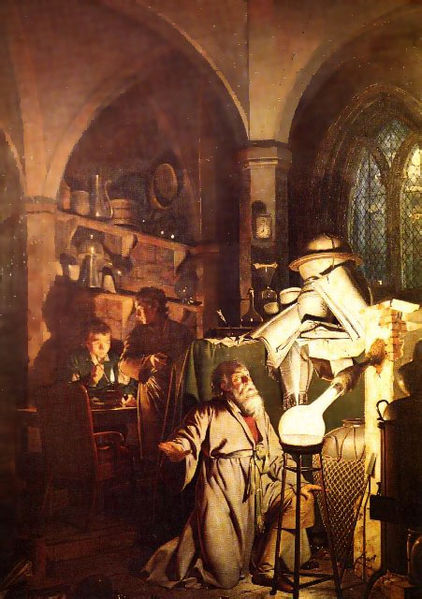
    The inspiration of creating new elements can be traced to alchemical traditions.  Alchemy is an arcane tradition, that can be viewed as a proto-science, a precursor to chemistry and nuclear physics.  It’s prime objective was to produce the mythical philosopher’s stone, which was said to be capable of turning base metals into gold or silver, and also act as an elixir of life that would confer youth and immortality upon its user.

    The Alchemist, 1771 painting by Joseph Wright of Derby. Image credit: Wikipedia, image copyright has expired.

    It did bring to chemistry many ideas and provided procedures, equipment, and terminology that are still in use.  It also provided the inspiration for the creation of new elements.  Now we understand to create new elements requires a combination of precision equipment and experimental procedures coupled with a sound understanding of quantum theory.

    So what is tin-100 and why is it useful to understand the astrophysics of heavy element formation?

    Most people will recognise that matter around us is composed of atoms.   Atoms of carbon, hydrogen, oxygen for example form the building blocks to make organic molecules and silicon and oxygen bond together to make common beach sand and are fused together to make glass.  The familiar metals are solids made of one type of atom, for example gold and aluminium, or combinations, bronze being made of copper and tin atoms.

    Atoms in turn are a central nucleus of protons and neutrons surrounded by a swarm of electrons.  The number of protons distinguishes one element from another.  This atomic number is used to designate an element 1 for hydrogen, 8 for oxygen and 50 for tin, for example.  Stable tin comprises 112 nuclear particles – 50 protons and 62 neutrons.  The neutrons act as a kind of buffer between the electrically repelling protons and prevent normal tin from decaying.  Each atom will contain an equal number of electrons to its protons.  Remove or add an electron and the atom becomes an ion, a charged particle.

    The strange quantum world of the nuclei

    Quantum mechanics which, amongst other things,  explains how the electrons form into shells around the nucleus.  Elements which have filled outer shells, helium, neon, argon, xenon are ‘noble’ gases, chemically inert – not the least reactive.  Nuclei are also complex quantum objects.

    As far as we know, nuclei are the smallest objects that can be split up into their constituents.  They are therefore the smallest entities which emergent properties – patterns that arise from complexity – can be studied.  Nuclear scientists study these emergent phenomena and are using them to decipher the nature of the nuclear force.  In contrast to the structure of atoms, for which the fundamental interaction between the electrons and the nucleus – the electromagnetic force – is known with great precision, the interaction between the nucleons – the strong nuclear force – is not so well known.

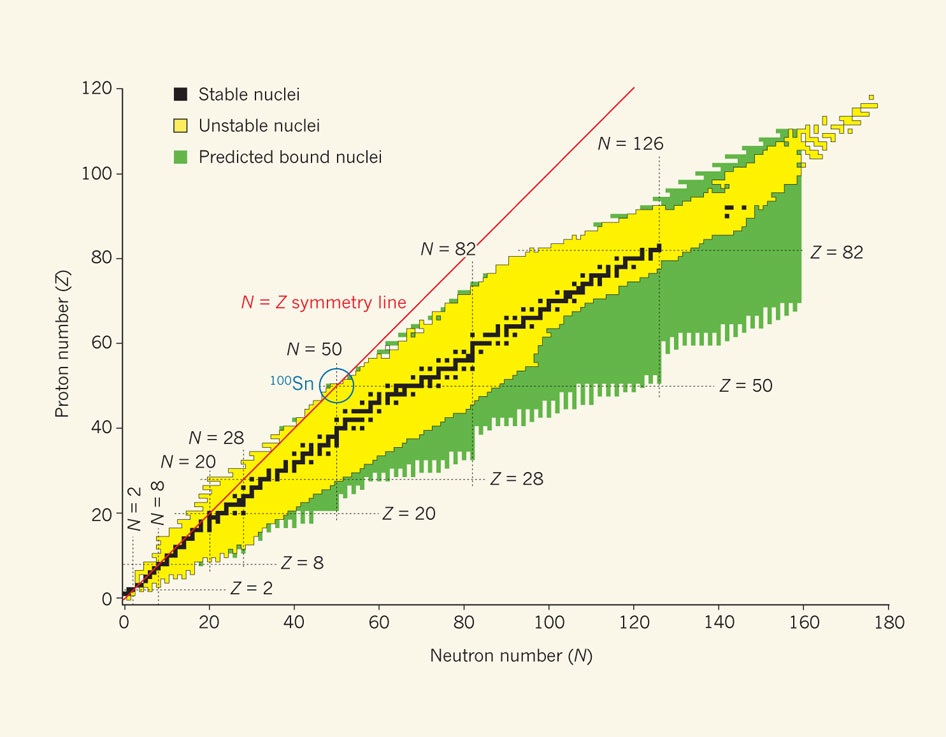
    In nature not all combinations of nucleons are stable.  As a general rule the more protons present then more neutrons are required to stablise the nuclei.  A useful graphical presentation of this is the Segre table of radionuclides.

    Location of nuclei as a function of their neutron number (N) and proton number (Z). Image credit Daniel Bazin Michigan State University.

    If the shell structure of electrons was difficult at first for scientists to come to terms with, then the shell structure exhibited by nucleons is not only unexpected it is complex enough not to be discussed in many quantum physics texts.  It was first thought that such densely packed and strongly interacting objects as the nucleons would exhibit a liquid-like behavior, much like the flow of electrons in a good conductor such as a metal.

    That is what makes these experiments so exciting.

    Stability and magic numbers

    Magic numbers are the number of protons or neutrons that form full shells in an atomic nucleus.  The term is thought to have been coined by the physicist Eugene Wigner.  The model has been used to explain – at least for stable nuclei – the observed sequence of magic numbers: 2, 8, 28, 50, 82 and 126.

    Nuclei that have a magic number of neutrons or protons are more tightly bound than there non-magic counterparts.  This intrinsic simplicity makes them prime candidates for testing proposed models of nuclear structure.  Even more attractive are the doubly magic nuclei.  The lighter nuclei helium-4, oxygen-16 and calcium-40 do follow the magic number sequence.

    However because of the repulsion between protons the line of stable nuclei veers away from the symmetry line.  As a result tin-100 represents the largest nuclei to follow the sequence.  It is bound but unstable.  It is very close to the edge of nuclear stability, where the nuclear force between the protons and neutrons can no longer bind them into a nucleus.  Unfortunately, what makes this nucleus so attractive to study is what also makes it so difficult.

    How to make a new element

    In nature elements heavier than iron come into being only in powerful stellar explosions – supernovas.  These include, for example, the precious metals gold and silver and the radioactive uranium.  The cauldron of a supernova gives rise to a whole array of high-mass atomic nuclei.  these decay to stable elements via different short-lived intermediate stages.

    There are two ways to create new elements in the laboratory.  The first is is to fuse two nuclei in a manner that minimises the loss of protons or α-particles (helium-4 nuclei).  The second is is more brutal, fragmenting a small part off a heavier nuclei in a collision.

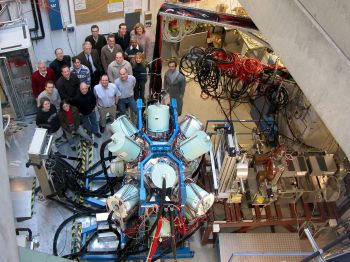
    The detector set-up at GSI. Photo credit: GSI

    In these experiments energetic xenon-124 is sheared by making it collide with a target beryllium foil leaving a residue that is composed of 50 neutrons and 50 protons.  Out of the 120,000,000,000,000 xenon-124 accelerated in the experiment, only 259 tin-100 nuclei were identified.  These results were sufficient though for the decay of tin-100 to be studied with great precision.

    The results, excitedly for the researchers, demonstrated a ‘superallowed Gamow-Teller decay‘.  This type of β-decay is beyond the scope of this essay to explain, needless to say it does provide new experimental depth to the models of nuclear chemistry.  It is an important decay transition that occurs in the collapse of supernovae.  It also is important in putting boundaries on the possible mass of the neutrino.  Both of which are important validations of the current nuclear theories as well as providing real experimental data to fine tune the theoretical models.

    This allows more real models of nuclear synthesis to be constructed.  Allowing a deeper understanding of how the atoms that make up our universe were created.

    Now other laboratories around the world will work on improving the production rates of tin-100 and other exotic nuclei, based on these experiments.  Allowing the emergent properties of these nuclei can be studied in more detail.  Giving us greater understanding of the forces that bind these particles together – to make us!

  • An outdated appetite control system in a rapidly evolving world?

    An outdated appetite control system in a rapidly evolving world?

    Imagine yourself for a moment waiting for a meal at your favourite restaurant, local takeaway store or at home counting down the time until the oven buzzer sounds. You know you’re hungry, but we seldom think or care about the complex series of processes that go on inside our bodies that drive that hunger.

    And why should we care?

    In the developed world, for the lucky majority at least, calorie-dense food has never been more accessible. Want a pizza? Just use an app from your smartphone to order one delivered any time, day or night. The one big problem with this–human appetite has evolved over tens of thousands of years when food was tough to come by, and we had to work physically hard for a meal, now we just go to the fridge. However the series of long developed processes that drive appetite have not caught up in this time of plenty thereby contributing to the modern day upsurge in obesity.

    Obesity as a global problem

    Obesity is a global disease on the increase, the World Health Organisation estimates that by 2015 there will be an astounding 700 million adults classified as obese. From a health viewpoint this is particularly worrying as obesity is a major risk factor for cardiovascular diseases, Type-2 diabetes and some cancers.

    Also concerning, is the number of people in developing countries at risk, where the bane of obesity joins established under-nutrition. Dr Ranjan Yajnik, the director of the diabetes unit at King Edward Memorial Hospital in Pune, was recently reported by ABC News saying, “Populations which have faced under-nutrition for a long time are now exposed to the over-nutrition of the modern world through globalisation and westernisation”.

    In short, it’s the modern world and how we live in it which is driving up rates of obesity.

    An unbalanced system?

    In broad terms, the body is wired to protect against starvation and low food availability, by increasing biological and sensory processes that promote the need to eat. This makes sense, after all starvation is an immediate threat to survival and was by far one of the greatest concerns of our ancient ancestors. As excessive food was less of a concern, the regulatory processes to protect against excess consumption and weight gain appear less effective, leading to the body favouring weight gain over weight loss.
    Combine this with the increased availability of highly palatable foods, and the ability to stop eating when full is increasingly difficult. According to Dr. Joanne Harrold and colleagues, in a recent paper published in the journal Neoropharmacology, this may be especially true for many obese people, who may “possess an over-responsiveness to the reward effects of eating, which results in the appetite system of these people being effectively overwhelmed

  • Did life’s building blocks crash land?

    Did life’s building blocks crash land?

    In 1969, on September 28, the skies near Murchison, Victoria (not to be confused with Murchison, Western Australia) were illuminated by a dramatic sight. A spectacular fireball blazed its way through Earth’s atmosphere, its outer layers heated to extreme temperatures by its speed. Residents of the town reported seeing the fireball split into three pieces before it faded from view, leaving a trail of smoke in its wake. Seconds later, a tremor was heard as meteorite fragments crashed into the ground, signalling the arrival of what would become one of the most well studied meteorites ever.

    A meteorite streaks across the Australian night sky, in front of the Milky Way. But just what might it be carrying with it? Image credit: Alex Cherney/terrastro.com

    If you like to watch the sky at night, chances are good that you’ve seen a meteor or two streaking across the night sky, and while many of them burn up in the atmosphere, it’s quite possible that one which you’ve seen might have eventually reached the ground. Meteorites strike Earth a lot more frequently than most people realise. By most estimates, a few hundred tons of meteorite material make it to our planet’s surface every day. Large meteorites like the Murchison meteorite, however, are a lot less common.

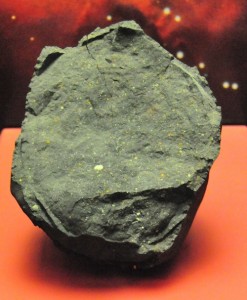
    A fragment of the famous Murchison meteorite. Image credit: Art Bromage, Wikimedia Commons

    While the Murchison meteorite shattered into fragments before it landed (known as an “airburst”), over 100 kg of meteorite have been collected from around Murchison, and scientists have been analysing those fragments ever since. This particular meteorite is a specific type known as a carbonaceous chondrite. These meteorites are fascinating to scientists, because carbonaceous chondrites are chemically very primitive – they’re thought to be very close in composition to the solar nebula from which the Sun and planets condensed 4.5 billion years ago. In other words, the meteorite which crash landed in Murchison 43 years ago was probably older than our entire planet!

    Several things about the Murchison meteorite are very interesting. For one, it shows evidence that it was altered by water. This would have happened a long time ago, wherever this meteorite originally formed, and certainly a long time before it landed on Earth. Secondly, it’s peppered with Calcium-Aluminium-Inclusions (CAIs). These humble crystals are older than the Sun itself. When they formed, the Sun itself was little more than a huge cloud of warm hydrogen gas. Most interestingly to some scientists, however, is the fact that the Murchison meteorite is full of amino acids.

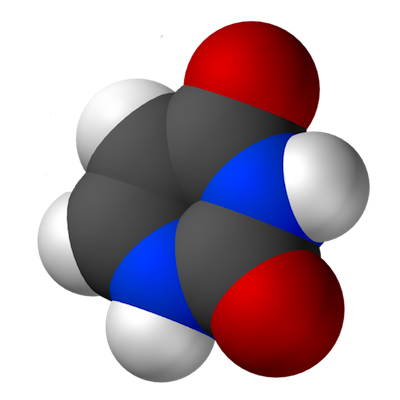
    Uracil, one of the four "nucleobases" used by DNA to encode genetic information, was discovered inside the Murchison meteorite.

    Amino acids are one of the basic building blocks of all living things. The proteins which make up almost everything in your body are made from these small molecules. To date, over 100 amino acids have been found inside the meteorite, including many of those used by life on Earth. Several things about the chemical and isotopic compositions of these molecules suggest that they didn’t come from Earth, but were in this meteorite when it landed. As an example, amino acids have two forms, referred to as left-handed and right-handed. Earth life only uses the left-handed forms, while the acids discovered in this meteorite are a mixture of the two (known to chemists as a racemic mixture). Other Earthly molecules which frequently show up as contaminants were absent from the samples analysed, suggesting that these molecules, the bare essentials of life, are extraterrestrial in origin.

    These amino acids aren’t the only familiar molecules in the Murchison meteorite either. Amongst over 14000 different molecules found inside the meteorite, the chemists who were analysing the meteorite discovered ring-shaped molecules called purines and pyrimidines. These ring molecules are from the same family as the four nucleobases which make up DNA.One of the molecules found was one called uracil, which is actually used by DNA. This same molecule is in every strand of DNA in your body.

    While some still argue over the validity of these studies, if they’re correct then the overall conclusion is a breathtaking one. This space rock is older than the Sun, and it already contained all of the basic ingredients for life to form back when Earth was nothing more than a patch of interstellar dust. We might never know exactly how life started on Earth. Though maybe in the distant past, life’s raw materials crash landed here on Earth in meteorites, just like one meteorite did in Murchison that night 43 years ago.