When the human race inevitably expands off planet Earth, we’ll naturally want to take our internet with us – over the past 15 years or so, the internet really has become an integral part of our lives! In fact, even as you’re reading this, 300 gigawatts of electricity worldwide will have been used to transfer 640 terabytes of information across the internet to 1.5 billion desktop computers and a further billion mobile devices. In the time you’ve taken to read this paragraph, over 200 million e-mails have been sent, 6 million Facebook pages have been loaded, 1.3 million YouTube videos have been watched, and 100,000 people have posted an update to their twitter accounts.
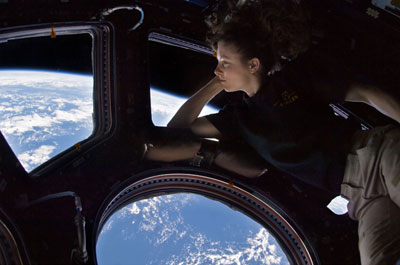
Astronaut Tracy Caldwell Dyson enjoying a view from the ISS Cupola window.
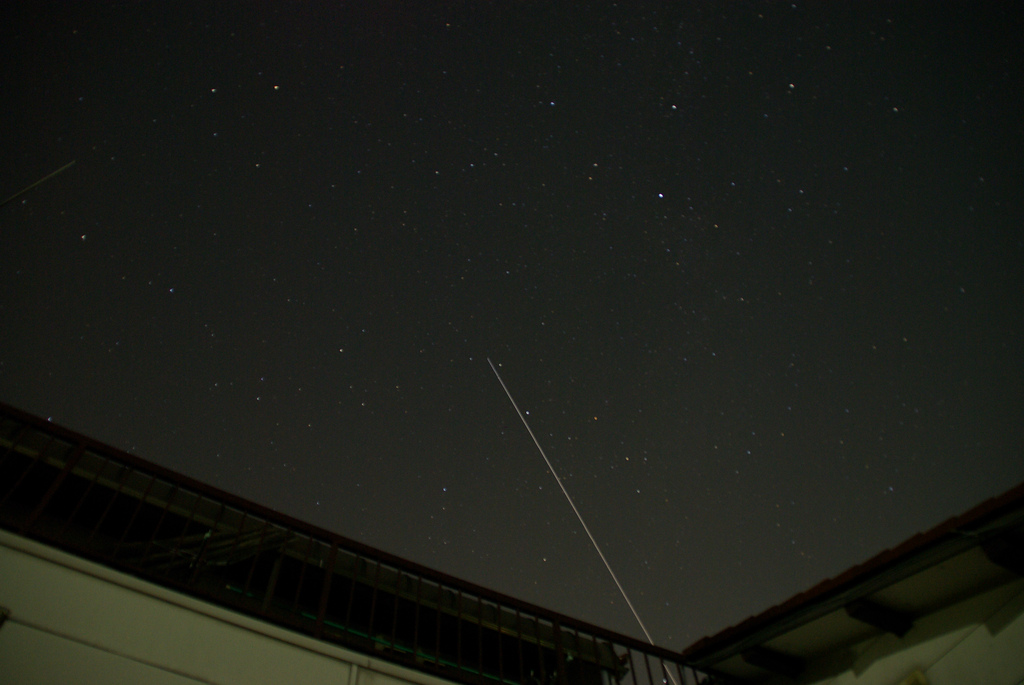
Inspite of its sprawling extent on our planet though, the internet’s first step off-world was able to fit inside just 1120 bytes. On January 22, back in 2010, astronaut TJ Creamer made a small but important piece of internet history by being the first human being ever to post to a twitter feed from orbit. Astronauts had been updating twitter feeds while in orbit for some time, but they had previously always relayed their messages via NASA back here on Earth. Since 2010, however, the International Space Station (ISS) has been upgraded to have its own internet connection. Intended for personal use by astronauts and still routed through ground based systems at NASA for security, this is how e-mails, blog posts and twitter updates are sent back home. All the same, even though it might seem a long way away, the ISS is relatively nearby in low Earth orbit.
Things start to become more complicated when you consider travelling further afield, because whether we like it or not, we can’t cheat special relativity. The speed of light is the fastest any interplanetary communication (or anything, for that matter) can travel. The Moon is still close enough that interaction is possible in almost real time. Sending a message to someone on the Moon would involve a delay of a little under three seconds. Good enough to hold a conversation, but with gamers here on Earth complaining about latencies higher than 600 milliseconds, you’re obviously not going to be able to play Halo or Warcraft against a friend over that kind of distance. Travel as far as Mars and the problem becomes even more pronounced, with delays of anywhere between 3 and 22 minutes, depending on exactly where Mars is in relation to Earth. Minutes turn to hours as you continue to travel outwards (transmissions from Voyager 2 currently take over 13 hours to reach us). All things considered, using an interplanetary internet sounds like a rather good idea for communication over distances like these. While phonecalls to Mars would be essentially impossible, delays between responses to e-mails and tweets are fairly routine. You could quite easily have a twitter conversation with someone over on a neighbouring planet.
Preparing for the future, NASA and Google teamed up a few years ago to develop a new internet protocol designed to be used in space. Called Disruption-Tolerant Networking (DTN), it’s designed to work a bit differently to the internet we’re all familiar with. While our familiar TCP/IP systems rely on a constant connection to transfer data, this is obviously unfeasible in deep space. While a DTN network would still operate using a series of nodes passing information from machine to machine, the way ground-based networks do, each node needs to hold onto the data being transmitted until it has a confirmation that the message has been safely passed on.
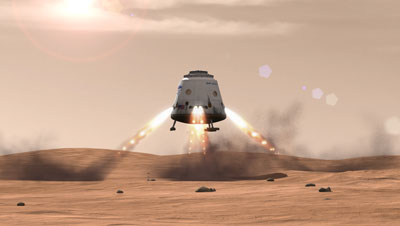
SpaceX believe it should be possible to send people to Mars within 20 years.
With a steadily accumulating collection of spacecraft in various parts of the solar system. Google’s Vint Cerf has expressed plans to use these old pieces of hardware, many of which have long since completed their original missions, as nodes in what will become an interplanetary internet. Indeed, spacecraft have already transmitted data amongst themselves en route back to Earth. ESA’s Mars Express probe, for instance, has served as a relay between Earth and vehicles landing on Mars, and is set to do so again when NASA’s Curiosity rover arrives at the red planet later this year. In an interview with networkworld.com last year, Cerf is quoted as saying “…if they are still functionally operable — they have power, computer, communications — they can become nodes in an interplanetary backbone. So what can happen over time, is that we can literally grow an interplanetary network that can support both man and robotic exploration.” He continued to explain how, while all space missions to date have involved point-to-point communications, future space missions will likely require “a richer communications network.” This also has an added plus that an interplanetary network infrastructure will allow scientists to receive more data from deep space missions than is currently possible.
With many astronauts already maintaining active twitter feeds from orbit, it has to be said that similar social networks may well play an important role in communications in the future. By the time that role is needed, a network infrastructure will likely be in place for it to operate on. A company like Google, processing petabytes of data and serving hundreds of millions of queries for an index containing billions of websites every day, is certainly qualified to help set up a computer network on interplanetary scales. Maybe in the future when people talk about Google Mars, they might mean it literally!
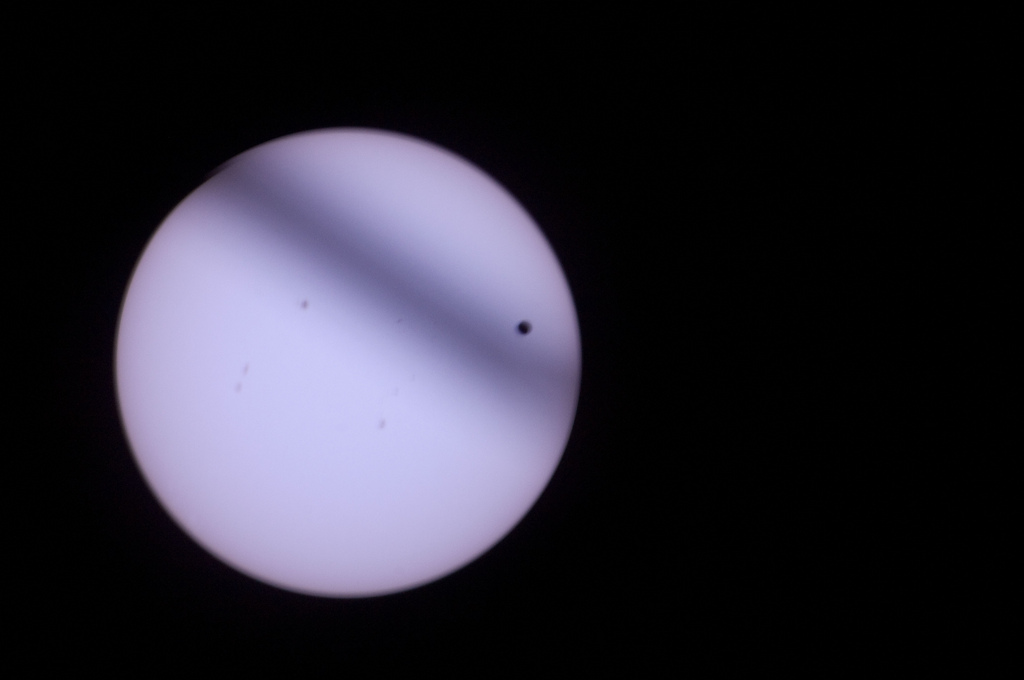
This week we have seen beautiful Venus transiting directly between the Earth and the Sun, which brought plenty of the media attention, and yesterday one of the greatest science fiction writers Ray Bradburydied during Venus transit. He was best known for his dystopian novel Fahrenheit 451 and for the science fiction stories collection The Martian Chronicles. Both the Earth and Mars lost one of their most famous citizens.
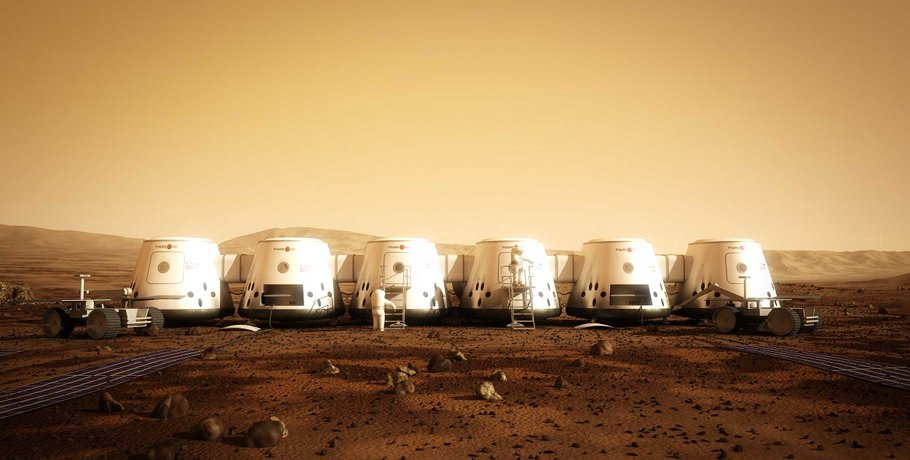
Speaking of Venus, Mars, science fiction and non-fiction, I want to share something with you that a colleague of mine drew the attention to, the other day. It is a private space start up from the Netherlands called the Mars One project, whose goal is to send four volunteer astronauts on a one-way journey to Mars. Take a look at the promotional video to get the sense of this endeavor.
The idea of the privately financed Dutch company is to establish the first human colony on Mars by 2023. ‘’A habitable settlement will be waiting for the settlers when they land. The settlement will support them while they live and work on Mars the rest of their lives.
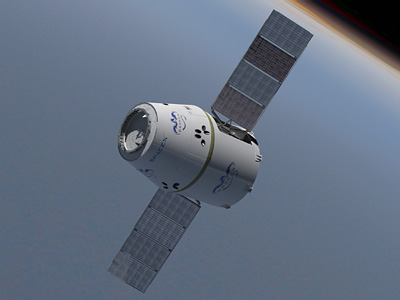
Today SpaceX#Dragon is proceeding toward rendezvous with #ISS. The International Space Station mission management team completed a thorough review of the progress of the SpaceX Dragon spacecraft and at 9:38 p.m. EDT unanimously authorized the International Space Station and Dragon flight control teams to proceed toward rendezvous and berthing about 11:20 a.m. Friday.
The SpaceX mission management team reported all spacecraft systems are ready for the final stages of rendezvous and completion of the final COTS demonstration objectives, and space station managers reported the orbiting outpost is ready for the commercial spacecraft’s arrival.
Dragon has nearly completed its fly-around of the station, crossing behind the station and beginning its final approach. NASA TV coverage will begin at 2 a.m. Source.
On May 11, a Dragon will mate with the International Space station. Rather than some mythical creature, this Dragon is of human artifice. The Dragon’s rendezvous and berthing with the International Space Station presages a new chapter in human exploration of space.
The significance of this event is Dragon is a reusable spacecraft, developed, and built by the American company Space Exploration Technologies, SpaceX, as it is more commonly known. Established in 2002, SpaceX has developed a new family of launch and cargo and crew capsules from the ground up.
The commercial race to space
NASA has now “set it sights on exploring once again beyond low earth orbit.
Have you ever had a moment when person responds to you in a way that just makes you feel a little bit older than you did before? You comment, for example, about a music group to someone, only to be met with that incredulous stare that conveys the message to you that their parents liked that music, and that you must be a little older than you at first appeared.
An international research team just gave the Earth such a moment. The researchers did this, not by experimenting on musicians, rather by measuring the radioactive decay of samarium-146; one of the isotopes used to chart the evolution of the Solar System.
By using a more precise technique to remeasure the half-life of samarium-146, they shrank the chronology of early events in the solar system, like the formation of planets, into a shorter time span. It also means some of the oldest rocks on Earth would have formed even earlier. Some Australian rocks forming as early as 120 million years after the solar system formed.
Understanding how a seemingly simple measurement, such as the half-life of samarium-146, can have such far-reaching results will take us on an exhilarating journey through many areas of science.
How did our Solar System form?
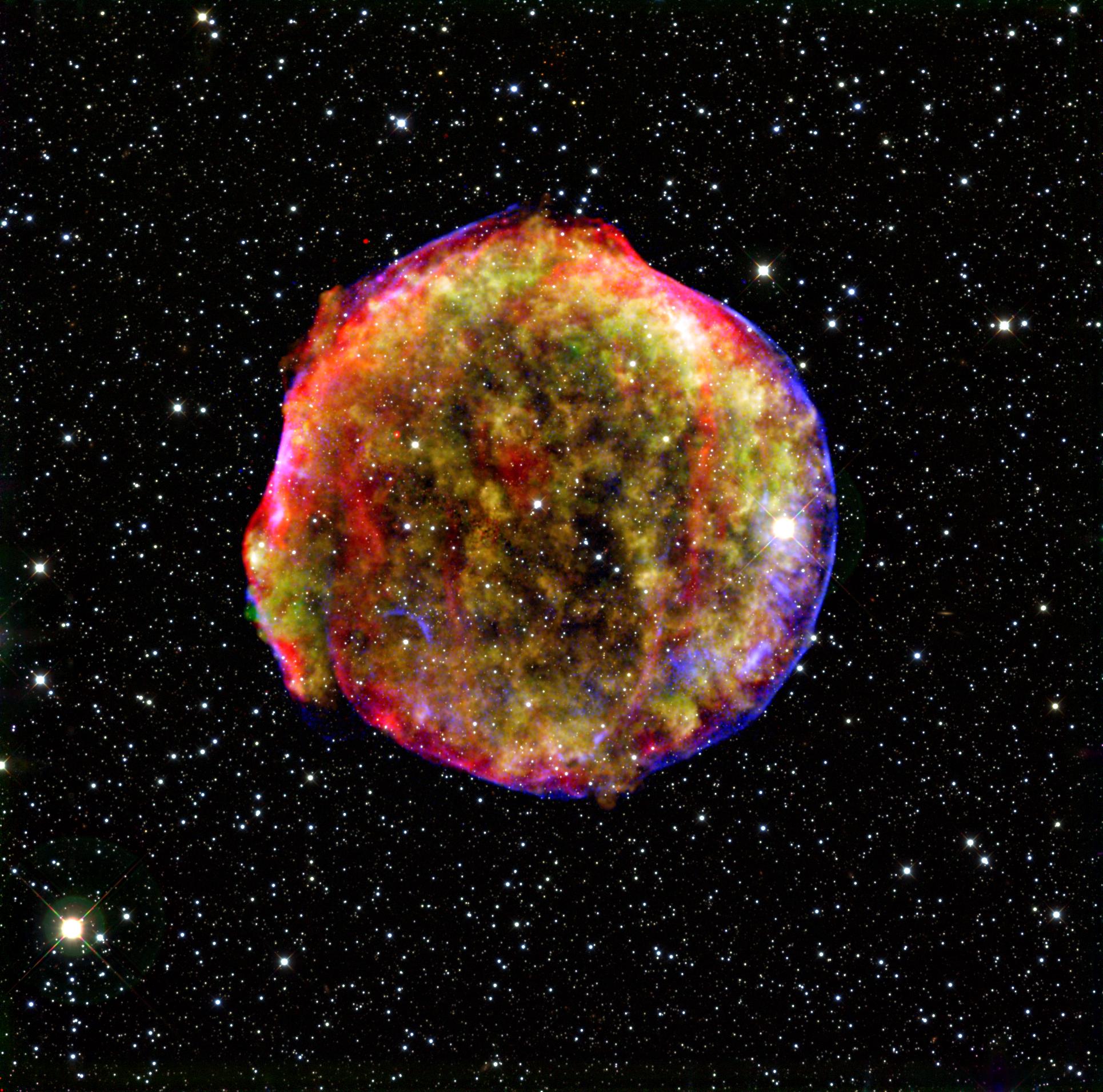
According to current theory, everything in our Solar System formed from stardust several billion years ago. Some of this dust was formed in giant supernovae explosions. These explosions then supplied most of the heavy elements for the objects that make up our Solar System. The synthesis of the elements we see on Earth, in rock samples from the Moon and Mars, as well as from meteorites and asteroids, is a subject of great interest. By understanding the physics of the nucleo-synthesis of the isotopes of these elements it has become obvious that the dust and molecules that coalesced to form our solar system came from a number of different processes.
Multiwavelength composite image of the remnant of Tycho's supernova, SN 1572. Photo credit: NASA/MPIA/Calar Alto Observatory, Oliver Krause et al.
The formation of the terrestrial planets (the rocky planets Mercury, Venus, Earth, Mars and their respective moons) is generally divided into three major stages based on the different physical processes involved and their respective time scales: (1) the stardust aggregates into planetismals, like individuals forming into swarms of nomadic tribes; (2) then runaway and oligarchic growth of embryos from planetismals resulting several tens to 100 Lunar- to Mars-mass embryos embedded, like mediaeval barons, in a swarm of remnant planetismals; and (3) the final stage of terrestrial planet formation by high-velocity impacts between embryos over a span of ~10-100 million years, forming the planets as we know them.
The Allende meteorite and the age of the Solar System
The age of the Solar System can be defined as the time of formation of the first solid grains in the nebular disk surrounding the proto-Sun. This age is estimated by dating calcium-aluminium-rich inclusions in meteorites. All chronology, by convention, is referenced to T0, which is the abbreviation for the age of the oldest known solid material in the solar nebula.
Scientists have found that calcium-aluminum-rich inclusions are some of the oldest objects in the solar system. These inclusions, roughly millimetres to centimetres in size, are believed to have formed very early in the evolution of the solar system and had contact with nebular gas, either as solid condensates or as molten droplets.
Relative to planetary materials, calcium-aluminium-rich inclusions are enriched with the lightest oxygen isotope and are believed to record the oxygen composition of solar nebular gas where they grew. Calcium-aluminium-rich inclusions, at 4.57 billion years old, are millions of years older than more modern objects in the solar system, such as planets, which formed about 10-50 million years after them.
In recent research, a US team led by Justin Simon from NASA Johnson Space Centre and University of California Berkeley, studied a specific calcium-aluminium-rich inclusion found in a piece of the Allende meteorite. Allende is the largest carbonaceous chondrite meteorite ever found on Earth. It fell to the ground in 1969 over the Mexican state of Chihuahua and is notable for possessing abundant calcium-aluminium-rich inclusions.
Carbonaceous chondritic meteorites are stony meteorites that have not been modified due to melting or differentiation of the parent body. They formed in oxygen-rich regions of the early, first stage, Solar System so that most of the metal is not found in its free form but as silicates, oxides, or sulfides. Most of them contain water or minerals that have been altered in the presence of water, and some of them contain larger amounts of carbon as well as organic compounds. The Allende meteorite is a ‘pristine’ meteorite, so called because its provenance is known. It was found and sampled under conditions that precluded contamination from terrestrial chemicals and minerals.
Their findings imply that calcium-aluminium-rich inclusions formed from several oxygen reservoirs, likely located in distinct regions of the solar nebula. Calcium-aluminium-rich inclusions travelled within the nebula by lofting outward away from the sun and then later falling back into the mid-plane of the Solar System or by spiralling through shock waves around the Sun.
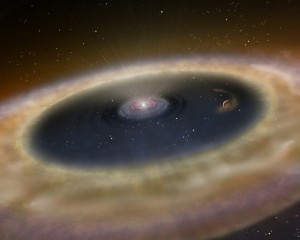
Through oxygen isotopic analysis, the team found that meteorite material surrounding the calcium-aluminium-rich inclusion show that late in the calcium-aluminium-rich inclusion’s evolution, it was in a nebular environment distinct from where it originated. This latter region was closer in composition to the protoplanetary disk, the environment in which the building materials of the terrestrial planets formed. A protoplanetary disk is an area of dense gas surrounding any newly formed star. In this case, the calcium-aluminium-rich inclusion formed when our Sun was quite young.
Artist concept of proto-planets. Image credit: NASABlueshift
The formation of the Solar System as we know it today, was complex and dynamic process. The protoplanetary disk evolves through accretion to the star, the particles and molecules being gravitational attracted to the proto-Sun. Each particle’s attraction was mediated or dampened by collisions, the viscous drag of the gaseous nebula, coupled with an outward ‘fling’ due to their angular momentum.
Radioactive dating the age of the Solar System
Timescales of early Solar System processes rely on precise, accurate and consistent ages obtained with radiometric dating. The relative abundance of different nuclei and their correlation or non-correlation with models of their formation and their radioactive decay provide a series of clocks to determine when and how material was formed.
Recent advances in instrumentation now allow scientists to make more precise measurements. Some of these measurements are revealing inconsistencies in the ages of samples as well as clearing up existing inconsistencies.
For example, recent analysis, by Audrey Bouvier and Meenakshi Wadhwa from Arizona State University, of the meteorite, Northwest Africa 2364, found that the age of the Solar System predates previous estimates by up to 1.9 million years. They used a radioactive chronometer based on the decay of isotopes of uranium to lead.
By using this lead-lead dating technique these researchers were able to calculate the age of a calcium-aluminium-rich inclusion contained within the Northwest Africa 2364 chondritic meteorite. In lead-lead dating the lead isotope, 207Pb/206Pb ratios are measured; these lead-207 and lead-209 isotopes are the decay products of the uranium isotopes 235U and 238U respectively.
The study’s findings fix the age of the Solar System at 4.5682 billion years old, between 0.3 and 1.9 million years older than previous estimates. This relatively small revision to the currently accepted age of about 4.56 billion years is significant since some of the most important events that shaped the Solar System occurred within the first ~10 million years of its formation.
This relatively small age adjustment means that there was as much as twice the amount of iron-60, a certain short-lived isotope of iron, in the early Solar System than previously determined. This higher initial abundance of this isotope in the Solar System can only be explained by supernova injection. The researchers believe the supernova event, and possibly others, could have triggered the formation of the Solar System. By studying meteorites and their isotopic characteristics, they bring new clues about the stellar environment of our Sun at birth.
This work also helps to resolve some long-standing inconsistencies in early Solar System time scales as obtained by different high-resolution chronometers. The story is not yet complete, it will be important to conduct high precision chronologic measurements of calcium-aluminium-rich inclusions from other pristine meteorites. We also need to understand the reasons why the calcium-aluminium-rich inclusions measured previously from two other chondritic meteorites, Allende and Efremovka, have yielded younger ages.
One significant aspect of this study is that it is the first published lead-lead isotopic investigation that takes into account the possible variation of the uranium isotope composition. Earlier work conducted in Wadhwa’s laboratory by a graduate student Gregory Brennecka, in collaboration with Ariel Anbar, has shown that the uranium isotope composition of calcium-aluminium-rich inclusions, long assumed to be constant, can in fact be highly variable and this has important implications for the calculation of the precise lead-lead ages of these objects.
Using the relationship demonstrated by Brennecka and colleagues between the uranium isotope composition and other geochemical indicators in calcium-aluminium-rich inclusion, Bouvier and Wadhwa inferred a uranium isotope composition for the calcium-aluminium-rich inclusion for which they reported the lead-lead age.
This work can help researchers better understand the sequence of events that took place within the first few million years of the Solar System formation, such as the accretion and melting of proto-planetary bodies. All these processes happened extremely rapidly, and only by reaching such a precision on isotopic measurements and chronology can we find out about these processes of planetary formation.
The importance of the half-life of the isotope samarium-146
As well as the lead-lead dating technique the radioactive chronometer based on the isotope samarium-146 is one of interest for this story. Samarium-146, or 146Sm, is unstable and occasionally emits an alpha particle, a helium-4 particle, which changes the atom into a different element, neodymium-142.
As samarium-146 decays slowly—on the order of millions of years—many models use it to help determine the age of the Solar System. In particular, in models of terrestrial planetary formation, rather than dating calcium-aluminium-rich inclusions in meteorites used in studying early Solar System formation.
Although samarium-146 decays slowly, it is still short compared to the time-scale of solar system evolution. For a known number of any isotope type, the number of years it takes for this to radioactively decay by half of its number, is called its half-life. Since samarium-146 emits particles so rarely, it takes a sophisticated instrument to measure this half-life. The half-life of samarium-146 allows its use as a determinator of the time between the end of its synthesis in the early Solar System and the inclusion of it in a solid body in the solar system.
What scientists look for are disparities in the relative abundances of samarium isotopes in terrestrial rocks and in the relative abundances of samarium and neodymium and neodymium isotopes. The reason for interest in the samarium-146 to neodymium-142 is that the half-life means that samarium-146 present at the time of solidification would no longer be available for observation at the present-time; it all will have decayed to neodymium-142. Therefore the isotopic composition of neodymium will vary with the amount of samarium, which was present at solidification.
The researchers remeasured the half-life of samarium-146 using the sophisticated instrument at the Argonne Tandem Linac Accelerator System, Kanazawa University, and the University of Tsukuba in Japan. What they did was very clever and very precise.
Firstly, they synthesised samples of samarium-146, in three independent nuclear-synthesis reactions, from samples of isotopically enriched samarium-147. The different techniques gave analysis samples with different contaminants and samarium-146 levels. Secondly, they measured the decay of these samples over a period of months using highly accurate detectors.
The Argonne Tandem Linac Accelerator System was then used as a mass spectrometer, in two different experimental set-ups, to pick out the small number of samarium-146 in the samples, one in tens of billions of atoms. These measurements took into account contributions from contaminants such neodymium-146, which caused contamination problems in earlier experiments. Neodymium-146 has the same atomic mass as samarium-146, and in mass spectroscopic measurements they cannot easily be separated.
By accurately counting the number samarium-146 atoms and tracking the particles that the sample emits, the team came up with a new calculation for its half-life: just 68 million years.
This is significantly shorter than the previously used value of 102.6 and 103.1 million years of recent (1966 and 1987 respectively) measurements. At the same time the result is closer to earlier measurements of ~50 million years and 74 million years from 1953 and 1964 respectively.
A new samarium-146 half-life measurement; now what?
The new value patches some holes in current understanding. The new time scale now matches up with a recent, precise dating taken from a lunar rock, and is in better agreement with dates obtained with other chronometers.
Applying this new half-life to rocks from Greenland and Australia gives them revised ages. These rocks are now dated to be 50 million years older than previously thought. That is they were formed only 120 million years after T0, the time of solar system formation, rather than the 170 million years from previous results. Similarly rocks from Quebec were found to be over 80 million years older than previous measurements. These are now found to have formed 205 million years, rather than 287 million years, after Solar System formation. These results illustrate that the events that formed terrestrial rocks occurred at much earlier ages than we even recently thought.
Analyses of moon rock samples have also shown an increase in their ages, in this case by over 70 million years. These are now found to have formed 170 and 175 million years, rather than 242 and 250 million years respectively, after Solar System formation. These new lunar results now bring ages of these rocks, using two different chronometers, the samarium-146 and lead-lead techniques, into the same ranges.
The early days of Earth and the other terrestrial planets are looking quite different than previously thought. All this is thanks to some precision measurements of the half-life of an extinct isotope of an exotic rare-earth element, samarium.
At just over two tonnes, the second stage of an Atlas V rocket, makes for an unusual ‘kinetic probe’. Nonetheless on October 9, 2009 NASA deliberately impacted a spent Centaur rocket into the lunar south polar crater Cabeus. The target area was a permanently shadowed region within this crater. The impact, not surprisingly, ejected a spectacular plume of debris, dust and vapour.
Science experiment, observe the system, perturb it, and measure what happens
The US scientists had thrown a heavy object at the Moon. They then threw all the instruments possible to monitor the impact. The prize was a decades-long search to directly find water on the Moon.
The impact would have been majestic to watch. Picture those slow motion images of Apollo astronauts on the Moon. Hold that thought and then imagine the impact. An observer could marvel at the slow motion, low gravity, return of the dust and debris cloud to the Moon’s surface. If you could see in the infra-red, the impact flash lasts for 10 seconds. There is a cloud of debris, dust, and vapour rising. At eight seconds the the ejecta cloud is 4.5km in diameter, in the ultra-violet spectrum, the plume is 10km in diameter. At 20 seconds after impact the ejecta cloud was is at its maximum diameter of 8.5km and the plume has reduced to little less than 10km.
The observer would be watching a science experiment on a grand scale.
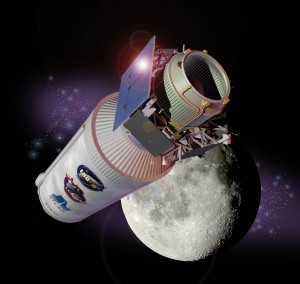
The observer in this experiment was neither you nor I, it was a trailing “shepherding spacecraft”. The Centaur had propelled NASA’s Lunar Reconnaissance Orbiter and Lunar Crater Observation and Sensing Satellite to the Moon. Shortly after launch the Lunar Reconnaissance Orbiter had separated to go on its own mission. Once in lunar orbit the Centaur had vented its remaining fuel. Control was then assumed, for the next four months, by the Lunar Crater Observation and Sensing Satellite as the shepherding satellite. During this next period the shepherding satellite maneuvered the Centaur to allow the Sun to bake-out residual water and volatiles. This was to ensure that no contaminant chemicals were passengers to the lunar impact site. The Centaur’s fuel was a volatile combination of liquid hydrogen and liquid oxygen, both chemicals that were to be scanned for in the impact cloud. The Lunar Crater Observation and Sensing Satellite also calibrated its instruments, then targeted the Centaur to impact with the Moon. Four months of meticulous preparation.
LCROSS spacecraft with Centaur stage, image credit NASA
The Lunar Crater Observation and Sensing Satellite carried nine instruments, including cameras, spectrometers and a radiometer. The spectrometers measured the reflected light at different wavelengths. These enabled the identification of the chemicals present in the ejected cloud.
Near-infrared absorbance attributeble to water vapour and ice, and ultraviolet emissions attributable to hydroxyl radicals (OH-) support the presence of water in the debris. The researchers determined from these observations that there was over 5%, by mass, of water ice in the lunar regolith of the impact site. Certainly this is small by terrestrial soil standards, but more substantial than most earlier estimates.
Over a year after the impact, in the October 22, 2010 issue of the journal Science, the results of this experiment were delivered to the world’s attention. This certainly marked a defining moment for lunar scientists, directly confirming the availability of water on the moon. It was however neither the first nor last word on this.
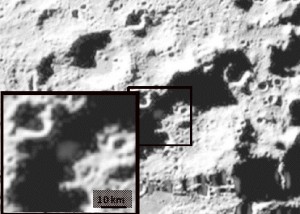
Cabeus crater LCROSS impact site, photo credit NASA
Early attempts
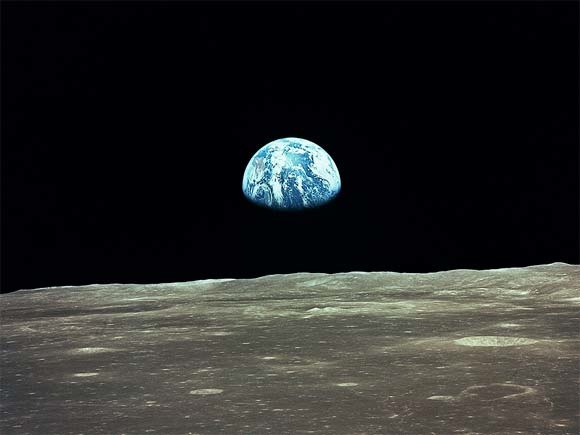
Since the first lunar sample were carried back to earth by Apollo astronauts in the late 1960s, scientists have operated under the presumption that the moon was entirely dry. In total 382kg of lunar material was bought to Earth by the Apollo missions astronauts and a further 0.32kg by the unmanned USSR Lunar missions. New analyses of these rocks with improved analytical techniques have made it possible to perform highly sensitive isotopic measurements on very small lunar grains. These analyses are revealing water in Apollo samples that were once thought to be dry.
Well before these new studies, scientists had been puzzling about why more water was not seen on the moon. It was thought that volatile materials, such as water, could be accumulating at the moon’s permanently shaded polar regions. Here they could be trapped for geological periods of time without significant loss. The in 1998, the orbiting Lunar Prospector spacecraft measured the the abundance of elements on the moon’s surface using neutron spectroscopy. This provided compelling evidence for enhanced hydrogen concentrations, and by inference water, at both of the lunar poles.
In 1999 the Cassini spacecraft flew by the moon on its way to Saturn. It turned its Visual and Infrared Mapping Spectrometer to the moon. By measuring the surface reflectance of light from the moon scientists found absorption attributed to hydroxyl and water on the sunlit surface of the moon. These results were not published until 10 years later, in October 2009. The reason was renewed interest in water on the moon.
On October 22, 2008 Chandrayaan-1 was launched on a lunar mission by the Indian Space Research Organisation. One of its major scientific missions was to look for water on the moon. It had three different instruments ready to make 2008-10 an interesting period for lunar water exploration.
Chandrayaan-1, India’s lunar water finder
The Chandrayaan-1 story is told in detail elsewhere. Here I intend to showcase the marvelous outcome of Chandrayaan-1’s water finding experiments. Perhaps the most exciting of all these was one of the simplest. This was the CHandra’s Altitudinal Composition Explorer (CHACE) on board the Moon Impact Probe.
On November 14 2008 (the birthday of the late Pandit Jawaharlal Nehru, India’s 1st Prime Minister) the Moon Impact Probe became the first Indian built object to reach the surface of the Moon. The probe was a 34kg box-shaped object containing a video image system, radar altimeter, and The CHACE mass spectrometer.
Symbolically the Indian tricolour was painted on three sides of the Moon Impact Probe. This enables India to also lay claim to having the “Indian tricolour placed on the Moon”. Needless to say that “placing” in this case was a hard landing in the Moon’s south polar region near the Shackleton crater, flying over the Malapert mountain en route.
The CHACE mass spectrometer took 650 spectra of the tenuous lunar atmosphere during its 1487 second, 98km, plunge to the lunar surface. Tenuous is right the atmosphere even on the sunlit side is only 7/10,000,000,000th of the Earth’s atmosphere.
The mass spectrometer was tuned to look find water and direct evidence of water it did find. The team leader of the experiment, Dr S M Ahmed, remembers, “We all were jumping when we saw water was literally pouring out of our instrument
A pulse of particles speeds into the vacuum chamber. Positrons, 20,000,000 antimatter particles, clumped in a pulse one nanosecond deep. Like a silent, angry swarm they are targeted into a porous silica target. The positrons are confined by a magnetic field, increasing their interaction with the silica. Some attract electrons and synthesize into positronium, a hybrid unstable ‘molecule’. Before it can decay the positronium is excited first by a burst of ultra-violet laser light. Then a second burst, this time in the infrared. With each excitation the positronium puffs-up. The still bound, positron and electron orbit further and further away from each other. Decreasing their opportunity to meet. Increasing the lifetime of the positronium. Eventually they meet. They annihilate. Mutually destructing in a soundless flash of energy. A pair of gamma rays to remind us of a nanosecond long courtship.
Producing positronium, binding the negatively charged electron with its antimatter equivalent, the positively charged positron, is not a normal occurrence in our world. If this experiment sounds a little like science fiction, the reason for doing it is part of an even more exotic tale. This laboratory experiment is to produce ‘long-lived’ positronium is so that the researchers can measure the effect of gravity on it. Published in January 2012, this success represents 10 years of hard work for Allen Mills and his team from the University of California, Riverside.
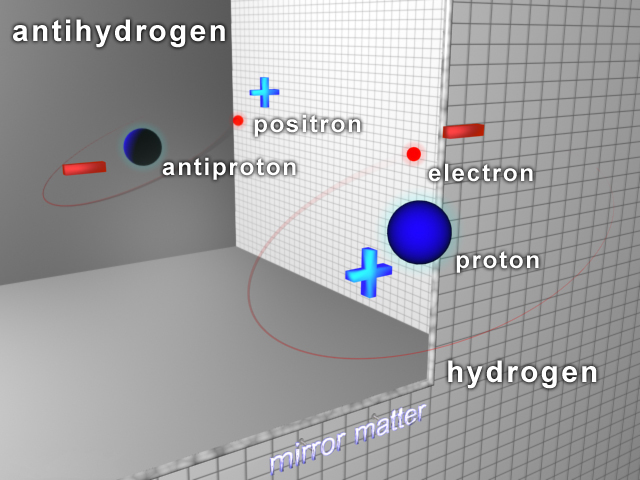
The positron is the antimatter version of the electron. It has the identical mass to the electron, but a positive charge. The researchers are trying to find whether matter and antimatter behave the same way under gravity. That is, do they weigh differently? If they find such behaviour it would truly rock the physics world.
Antimatter. The idea of it is weird. The idea of weighing it is stranger still.
The weirdness of antimatter
Antimatter has been one of the most fascinating fields of research ever since the prediction of its existence by Paul Dirac in 1929. Paul Dirac solved the basic equations of quantum mechanics. In doing so he found their solution implied the existence of antimatter particles. At the time most physicists, Dirac included, thought the idea was preposterous.
Within a short time, experimenters looking at cosmic rays bombarding the Earth found particles that behaved like electrons, but with a positive charge. In 1932 Carl Anderson carried out the definitive experiments demonstrating the existence of the anti-electron, naming it the positron, and being awarded the Nobel Prize in 1936 for his discovery.
3D image of Antihydrogen. Source: NSF
Dirac had postulated in 1931 that each of the fundamental particles has an equivalent antimatter partner. Furthermore, when matter and its antimatter opposite come into contact they annihilate each other, releasing energy into two equal energy photons. Their energy is given by Einstein’s famous equation E=mc². This latter relationship has been much exploited by science fiction writers. Matter – antimatter reactions powered the star-ship USS Enterprise in the 60s hit TV show Star Trek.
Work with high-energy antiparticles is now commonplace in physics and materials science. Anti-electrons are used regularly in the medical technique of positron emission scanning tomography. Perhaps more importantly, the equivalence model of matter and antimatter has been fully incorporated into the Standard Model of Particle Physics. Matter particles and their anti-matter pairs have the same mass and equal, but opposite charge.
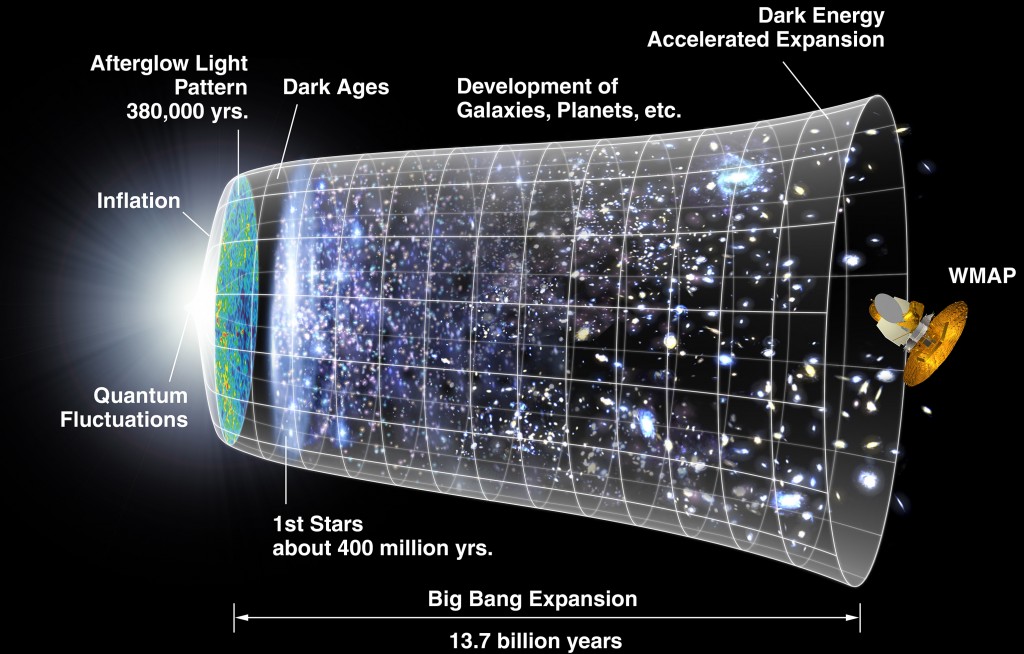
The most important point in all of this focusses on when our universe came into being, the Big Bang. Models of the Big Bang predict that equal amounts of matter and antimatter were formed initially. Ordinary matter is clearly what our observable Universe is made of today. Where is the antimatter? A glaring, niggling, imbalance that begs for an explanation.
Timeline of the Universe: Big bang to present time. Source: NASA/WMAP Science Team
This imbalance could be explained by a slight difference in one of the fundamental properties of particle-antiparticle pairs (such as charge or mass). There isn’t yet any experimental evidence for such a difference. Another alternative might be a difference in their gravitational attractiveness. It is widely expected that the gravitational interaction of matter and antimatter should be identical. If they were not, then this could explain the preponderance of matter in our universe.
Elementary antimatter particles naturally occur in radioactive decays and in cosmic radiation. Some of them, such as the positron and the antiproton, have been studied extensively and even compared to their matter equivalents. Measurements with charged antiparticles are difficult because gravity is a far weaker force than the electromagnetic force. The first experiments to measure the gravitational attraction of antimatter were at the University of Stanford and CERN in 1974 and 1993 respectively. Both used charged antimatter particles. The experiments were marred by stray electric fields and did not produce satisfactory results.
Trying to do experiments like this requires precision and reproducible backgrounds. The world is a rather messy place to measure these relationships. Neutral positronium, such as in Mill’s experiments, or an anti-atom could be used to test the effect of gravity on antimatter for the first time, because it is immune to stray electromagnetic fields that have hampered the previous studies with charged antimatter particles.
Does antimatter fall down?
Understanding gravity has proven to be a little more complicated than falling apples. To the Greek philosopher and polymath Aristotle, the concept that heavy objects fell faster than light objects was obvious. His elegant, but fanciful, notion persisted well into the Middle Ages. The Italian physicist, mathematician, and astronomer Galileo Galilei successfully challenged Aristotle’s impractical theories of motion. Experiments using the swing of pendulums proved him correct. Observing their swing rates was more practical than the dropping of objects from the Leaning Tower of Pisa, as Galileo had originally proposed.
Galileo also put forward the basic principle of relativity, that the laws of physics are the same in any system that is moving at a constant speed in a straight line, regardless of its particular speed or direction. Hence, there is no absolute motion or absolute rest. This principle is central to Einstein’s special theory of relativity.
The key point under consideration here is the correlation between inertial mass and gravitational mass. This is the correlation between the forces measured on a mass when it is falling under gravity or being accelerated. The earliest experiments were done by English natural philosopher Isaac Newton and improved upon by the German mathematician and astronomer Friedrich Wilhelm Bessel in the 1820s.
The problem is that Newton’s theories and his mathematical formulae did not and do not explain the equivalence of the behavior of various masses under the influence of gravity, independent of the quantities of matter involved. The observation that the gravitational mass and the inertial mass is the same for all objects is unexplained within Newton’s Theories. The experiments of Galileo Galilei, decades before Newton, established that objects that have the same air or fluid resistance are accelerated by the force of the Earth’s gravity equally, regardless of their different inertial masses. Yet, the forces and energies that are required to accelerate various masses is completely dependent upon their different inertial masses, as can be seen from Newton’s Second Law of Motion, F = ma.
Precision measurements by the Hungarian physicist Loránd Eötvös originally in 1885, and then again with improved instruments and precision between 1906 and 1909, established the universality of Newton’s law of gravitation. These were followed with a series of similar but more accurate experiments, these included experiments with different types of materials, on moving ships and in different locations around the Earth. These experiments demonstrated the equivalence of gravitational and inertial mass for ordinary matter. In turn, these experiments led to the modern understanding of the equivalence principle encoded in general relativity, which states that the gravitational and inertial masses are the same.
So far, so good, for understanding the behaviour of ordinary matter. Rather than disembodied logic alone, the combination of experiment, measurement, and sound reasoning proving to be the correct way to discern the laws that represent reality.
Gravity is now best described by general relativity. General relativity is a classical theory that does not imply the existence of antimatter. In the 1980s a quantum-mechanical formulation of gravity allowed for non-Newtonian contributions to the force which might lead to a difference in the gravitational force on matter and antimatter.
A number of theories propose how differential interactions between matter and antimatter may be explained. It must also be pointed out that numerous models and experiments with matter have been used to derive upper limits on the possible differences in the nature of such gravitational attractions.
Direct investigation of antimatter, experimentally, is characterised by an almost complete lack of data.
The experimenters
Allen Mills is not alone in his quest to measure the weight of antimatter.
In 2011 the AEgIS collaboration at CERN, had funding approved to use antihydrogen to measure any difference in the gravitational force on matter and antimatter. CERN is Europe’s particle-physics research lab located near Geneva in Switzerland. Perhaps currently best known for its search for the Higgs boson, the co-called God particle. The funding scale of the AEgIS experiment (Antimatter Experiment: Gravity, Interferometry, Spectroscopy) is more modest. It’s goal, to create a horizontal beam of antihydrogen and to study its free fall in the Earth’s gravitational field with a matter wave interferometry apparatus, is scientifically equally far-reaching.
The quest to create, trap and study antihydrogen is now entering its third decade at CERN.
In 2002, the ATHENA experiment at CERN’s Antiproton Decelerator was the first to produce copious amounts of cold antihydrogen, the simplest atomic antimatter system. The ATHENA (AnTiHydrogEN Apparatus) experiment had the objective to produce, to store and to study antihydrogen at extremely low temperatures, at less than 1 Kelvin temperature. The goal was to compare the energy levels of antihydrogen and hydrogen with extreme accuracy. The ATHENA set-up was used as a proof of concept in this case for the successor experiment AEgIS.
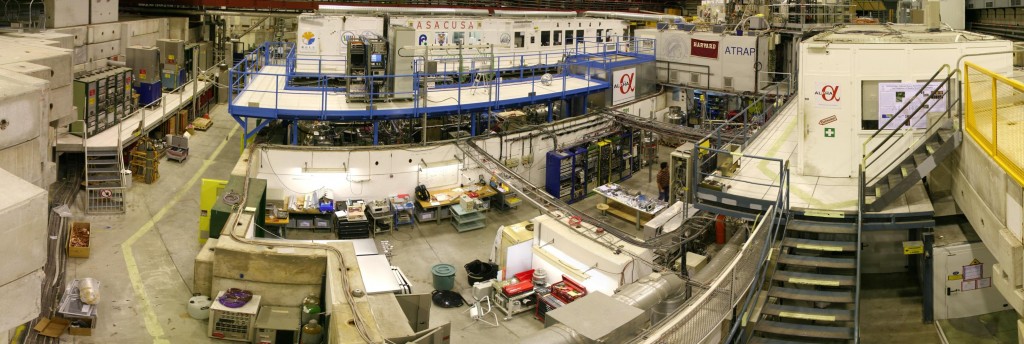
Experimental area of CERN's Antiproton Decelerator Hall, showing ALPHA experiment. Source: CERN/Mikkel D. Lund
The antiprotons supplied by the Antiproton Decelerator were trapped and cooled, and brought into overlap with positrons from a radioactive sodium source in a cylindrical Penning trap. The produced anti-atoms, no longer confined in the charged-particle trap, drifted radially outward and annihilated on the electrodes. ATHENA’s sophisticated detector allowed the temporally and spatially resolved reconstruction of these annihilation events.
During the data taking periods in 2003 and 2004, the experimental parameters were optimized in order to maximize the antihydrogen production rate, and the temperature and internal quantum states of the anti-atoms were determined. ATHENA was not configured to measure the gravitational attraction of antihydrogen. Data taking with ATHENA has now ended.
It was collaborators from the ATHENA experiment, along with new groups from other institutes, that have designed the successor experiment, AEgIS, with the aim of performing gravitational studies with antimatter. The AEgIS proposal was submitted in January 2008 and approved by the CERN Research Board in December 2008. Construction began in early 2010.
Meanwhile the CERN group has been building on its expertise for the production and trapping of antihydrogen. A new experimental collaboration called ALPHA (Antihydrogen Laser PHysics Apparatus) is another successor to ATHENA. In late 2010 the ALPHA group managed, 38 times to confine single antihydrogen atoms for 172 milliseconds. At the time the spokesperson Jeffrey Hangst said, “We’re ecstatic. This is five years of hard work.”
By July 2011 they had confined seven antihydrogen anti-atoms for 1,000 seconds, extending their earlier results by nearly four orders of magnitude. To compare with these CERN successes, Mills, in his late 2011 experiment, produced 12 positronium atoms that did not annihilate until they hit the chamber wall. This journey of a few centimetres takes about a microsecond.
Based on these results Mills believes he can produce a collimated, long-lived beam for the direct measurement of the gravitational free fall of positronium atoms.
Kudos and plaudits
We have in 2012 then, two experiments, both different in their experimental make-up. Both are trying to measure the gravitational free-fall of antimatter: one using antihydrogen, one using positronium. Assuming that both will be successful, then one will be used as a confirmation of the results of the other.
This is how great science is done. Great scientists are nonetheless people. People are competitive. In years to come, the science textbooks will record, and perhaps laud, who was first to measure the weight of antimatter.
We begin with a confession. There comes a time in every boy’s life that they realise, or rather they make peace with the fact, that they’ll never play professional sports. Basketball, rugby, football, hockey… the sport of choice changes, but the realisation stays the same.
I mention this only as an analogy. A segue into the real realisation that matters. I have come to the realisation that I will never go into space. A realisation not fueled from a fear of flying or vertigo or any other physical barrier to space flight (apparently almost half of all the medication used by astronauts are sea-sickness tablets. Sea-sickness in space is such a problem they even have a scale for it. The Garn scale. Did not know that). This realisation, not based on anything tangible and not based on any kind of pragmatism.
Allow me to explain. As a child of that generation lost between science and science fiction. Born and living through a time when space exploration was not only real — as told through NASA space shuttle launches, Hubble, Discovery, Lunar landers and the rarely mentioned, unsuccessful Beagle II — but also when space exploration was hyper-real. As told through popular culture. A love affair with space, cultivated from TV shows, movies and science fiction.
After all of this, how could a Space that has been romanticised by popular culture be frightening? How could infinite possibilities, far off worlds and the chance to understand things we haven’t even come into contact yet with… how could all of that be scary?
The answer: I am a parasitologist. What that means is that for years I have tried to understand the inner-workings of life… in one way or another, through detailed biochemistry, biology at the molecular level, stripping life down to its basic parts and trying to build it back up again. From a basic grounding in biological chemistry I have sought to apply what I had learned to things more relevant and with a more clear goal. I chose disease. Not just any disease… diseases of a tropical and infectious nature. Parasites! Diseases that not only use you, but need you to survive. Diseases that prey on our vulnerabilities as well as our strengths. Diseases that use our patterns of everyday living against us to get what they need. Diseases that go out of their way to change us to help them procreate and survive.
Apply this to space and you begin to see my problem. Still, hidden within this is a fascination… a fascination predicated on the simple question “what happens when we do encounter alien parasites?
This image of Earth’s city lights was created with data from the Defense Meteorological Satellite Program (DMSP) Operational Linescan System (OLS). Originally designed to view clouds by moonlight, the OLS is also used to map the locations of permanent lights on the Earth’s surface.
The brightest areas of the Earth are the most urbanized, but not necessarily the most populated. (Compare western Europe with China and India.) Cities tend to grow along coastlines and transportation networks. Even without the underlying map, the outlines of many continents would still be visible. The United States interstate highway system appears as a lattice connecting the brighter dots of city centers. In Russia, the Trans-Siberian railroad is a thin line stretching from Moscow through the center of Asia to Vladivostok. The Nile River, from the Aswan Dam to the Mediterranean Sea, is another bright thread through an otherwise dark region.
Even more than 100 years after the invention of the electric light, some regions remain thinly populated and unlit. Antarctica is entirely dark. The interior jungles of Africa and South America are mostly dark, but lights are beginning to appear there. Deserts in Africa, Arabia, Australia, Mongolia, and the United States are poorly lit as well (except along the coast), along with the boreal forests of Canada and Russia, and the great mountains of the Himalaya.
Credit: Data courtesy Marc Imhoff of NASA GSFC and Christopher Elvidge of NOAA NGDC. Image by Craig Mayhew and Robert Simmon, NASA GSFC. http://www.nasa.gov/