Author: Charles Ebikeme

  • Weekly Science Picks

    Weekly Science Picks

    That time of the week again, where we run down some of the more interesting science happenings on the internets.

    ISON is dead, long live ISON!

    Back at the start of this year, in mapping out what the new year would have in store for the science stories to come, comet ISON topped our list.

    “October it will pass very near Mars and possibly be visible to rovers and orbiting spacecraft. The newly discovered comet could develop a spectacular tail, becoming as bright as the full Moon as it passes by our Sun. The comet is currently falling toward the Sun from between the orbits of Jupiter and Saturn. There is a chance it won’t survive this encounter. Whatever survives will then pass nearest the Earth in late 2013 December.

  • Weekly Science Picks

    Weekly Science Picks

    Halloween week and we have a collection of scientific goodies for you to dig your teeth into. Some scary, others not, (does not contain smarties).

    Halloween’s Debt to a Demonic Virus

    “Our demons have their origins in our dread of death and the unknown. Today is Halloween, a time for costuming ourselves and confronting those fears (and, most importantly, for outsized consumption of sweets). For those of us celebrating Halloween disguised as vampires, werewolves and zombies, we owe a great debt to one of the world’s deadliest and most feared zoonotic viruses, rabies. This past summer I wrote about the fascinating microbial origins of some of our most enduring humanoid monsters in “The Bestial Virus: The Infectious Origins of Werewolves, Zombies & Vampires.

  • If a bird flies in the forest, does an insect hear it?

    If a bird flies in the forest, does an insect hear it?

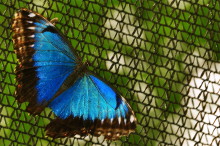
    Morpho peleides is a tropical butterfly with a brilliant blue colour. Pilots flying over rainforests have been known to spot large collections of blue morphos above the treetops, warming themselves in the sunshine. The millions of tiny scales on its wings give it a shine and a glean that it uses to scare off predators. In the 115 days of its lifetime, the butterfly will need to fight off predators including birds — who are major predators of many insects including moths, crickets and cicadas. The blue tropical butterfly has ears which researchers believe it uses to avoid predation by birds.

    Writing in the journal Biology Letters researchers provide evidence supporting the notion that the ears of an insect can function as “bird detectors

  • Weekly Science Picks

    Weekly Science Picks

    It’s been a slow week, but science never stops. Let’s have a quick look at some of the interesting science-related happenings over the past seven days.

    Eileen Pollack, a professor of creative writing at the University of Michigan, is writing a book about women in the sciences, and has a long piece in the New York Times. Worth the read.

    Why Are There Still So Few Women in Science?

    “Mostly, though, I didn’t go on in physics because not a single professor — not even the adviser who supervised my senior thesis — encouraged me to go to graduate school. Certain this meant I wasn’t talented enough to succeed in physics, I left the rough draft of my senior thesis outside my adviser’s door and slunk away in shame. Pained by the dream I had failed to achieve, I locked my textbooks, lab reports and problem sets in my father’s army footlocker and turned my back on physics and math forever.”


    Sciencemag and their “sting” operation that exposed severe lack of even cursory peer review among open-access scientific journals. It seems an alarming number of the publications tested (by submitting a conspicuously flawed paper by a non-existent author from a non-existent third-world institution) seem to be making money at the expense of authors and not even bothering to look at submitted papers.

    Who’s Afraid of Peer Review?

    “On 4 July, good news arrived in the inbox of Ocorrafoo Cobange, a biologist at the Wassee Institute of Medicine in Asmara. It was the official letter of acceptance for a paper he had submitted 2 months earlier to the Journal of Natural Pharmaceuticals, describing the anticancer properties of a chemical that Cobange had extracted from a lichen. In fact, it should have been promptly rejected. Any reviewer with more than a high-school knowledge of chemistry and the ability to understand a basic data plot should have spotted the paper’s short-comings immediately. Its experiments are so hopelessly flawed that the results are meaningless. I know because I wrote the paper. Ocorrafoo Cobange does not exist, nor does the Wassee Institute of Medicine.”


    The ever-present, ever-vocal George Monbiot in the pages of the Guardian.

    For scientists in a democracy, to dissent is to be reasonable

    “It’s as clear and chilling a statement of intent as you’re likely to read. Scientists should be “the voice of reason, rather than dissent, in the public arena”. Vladimir Putin? Kim Jong-un? No, Professor Ian Boyd, chief scientific adviser at the UK’s Department for Environment.”


    PopularScience.com will no longer accept comments on new articles. The comments, they feel, are bad for science.

    Why We’re Shutting Off Our Comments

    “Comments can be bad for science. That’s why, here at PopularScience.com, we’re shutting them off. It wasn’t a decision we made lightly. As the news arm of a 141-year-old science and technology magazine, we are as committed to fostering lively, intellectual debate as we are to spreading the word of science far and wide. The problem is when trolls and spambots overwhelm the former, diminishing our ability to do the latter.”

    Until next time…

  • Weekly Science Picks

    Weekly Science Picks

    Sundays. They were meant for science. Without any further ado…

    For all those who have always thought about doing what we here at Australian Science do — science blogging — here are some word-shaped pearls of wisdom.

    Should you write a science blog?

    “I used to think there should really be more scientists blogging. That’s because for me science journalism not so much a source of information but a source of news. It tells me where the action is and points into a direction. If it seems interesting I’ll go and look up the references, but if it’s not a field close to my own I prefer if somebody who actually works on the topic offers an opinion. And I don’t mean a cropped sentence with a carefully chosen adjective and politically correct grammar. In some research areas, quantum gravity one of them, there really aren’t many researchers offering first-hand opinions. Shame on you.

  • Red bacteria as astronaut food

    Red bacteria as astronaut food

    Like something out of Stanley Kubrick’s famed 2001: A Space Odyssey her name is Melissa. Melissa was the first of her kind. Melissa will be there when the first of us touches down on Mars. She will feed and nurture us as we begin our exploration towards the stars. MELiSSA — or Micro-Ecological Life Support System Alternative — is a bioregenerative life-support system designed by the European Space Agency. She uses microorganisms living in interconnected controllable bioreactors to recycle organic waste. Melissa is essentially an artificial ecosystem — one that turns waste into food to feed her crew.

    When long space missions start to become commonplace, when we start colonies over the horizon, one of the obstacles will be how to be self-sustaining in space. Within a closed arti

  • The language of biofilms

    The language of biofilms

    Every once in awhile, communities form. Collections of similar or diverse things come together, and in unison strive for a common goal. It is the same for mice, men, and bacteria. Humans do it and build nations. Bacteria do it and build biofilms.

    Dental plaque, the slimy coating on pipes and tanks, algal mats on a still lake — are all different types of biofilms. Biofilms for us are a nuisance because they colonise medical devices implanted in the human body.  They can be used, however, in treating sewage, industrial waste, or contaminated soil.

    When a biofilm forms, it is far from random. At its leading edge — the biofilm has purpose and direction. Imagine it as an invading army sending out the vanguards toward an unexplored territory. Highly coherent groups of bacteria migrate across the surface — swarming as one. As they advance, they create furrows for those bacteria at the back to follow. The vanguards carve out a network of trails — one that will eventually guide the exodus — the mass transit of following bacteria towards the leading edges of the biofilm.

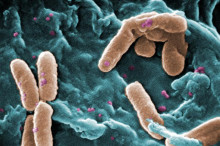
    Pseudomonas aeruginosa — the bacteria they use to eat up oil spills — is able to colonise many natural and artificial environments. It thrives on most surfaces, and easily causes a problem for implanted medical equipment like catheters. Individual bacteria show distinctive multicellular behaviour. When they grow, patterns and order emerge from seeming chaos. Australian scientists, publishing in the Proceedings of the National Academy of Sciences, describe the methods they used to visualise movements of individual bacteria, and to characterise the order within. Researchers had to develop sophisticated computer algorithms to visualise, identify and track individual bacteria. Carrying out a time lapse recording of bacteria at one frame every 2 seconds, and visually inspected a 1000-frame time series (download the movie).

    As the bio

  • Weekly Science Picks

    Weekly Science Picks

    Science Sunday… our weekly guide and collection of some of the amazing science stories that have caught our eye over the past seven days.


    Twelve Months in Two Minutes; Curiosity’s First Year on Mars

    Hard to believe Curiosity has been on Mars for twelve short months. Here at Australian Science we’ve covered the tiny rover that could since the start. Now, NASA’s Jet Propulsion Lab have given us a rover’s eye view of driving, scooping and drilling during Curiosity’s first year on Mars, from August 2012 through July 2013.

    Researcher Charged in Wife’s Cyanide Death

    Sad and shocking news coming out of the University of Pittsburg where a professor of neurological surgery at the School of Medicine was charged on with criminal homicide in connection with the death of his wife.

    “Authorities say that Ferrante poisoned Klein by mixing cyanide with creatine, CBSNews reports. According to Ferrante’s online biography, his work “has provided the basis for human trials” using creatine. Klein consumed the drink because Ferrante told her it would help them conceive a child. Police said that Ferrante had purchased cyanide with a university credit card days before and had it shipped to his lab overnight, and that he had enlisted the assistance of a lab member in buying the cyanide.

  • Life of an epidemic: Australian dengue

    Life of an epidemic: Australian dengue

    It is always a bad sign when crowds gather. On the morning of Wednesday March 21 in the year 1900, a crowd began to gather in Sydney. A thousand people had gathered outside the offices of the Board of Health in Macquarie Street. They had gathered because bubonic plague had broken out. People had already started to die from the Black Death. Panic was the only course of action.

    The Government had stockpiled Haffkine’s serum (named after the Russian bacteriologist that developed it in a makeshift laboratory in a corridor of Grant Medical College) — a new plague vaccine, and had used it to inoculate front

  • Public Health in the Age of Austerity

    Public Health in the Age of Austerity

    “Care of the public health is the first duty of the statesman

  • Australia’s evolving drug landscape

    Australia’s evolving drug landscape

    This year we saw Australia put into force a new patent law. An intellectual property system that was Australia’s most comprehensive in over two decades. It came into effect on 15 April 2013 and no one knew exactly what to expect from it.

    We have seen with cases like India, how one country’s patent laws can send ripples and disrupt the entire system. And, in the case of Thailand, how a country can take matters into its own hands to enact a public good.

    It really all centres around compulsory licensing. A compulsory license, in simple legalese, is the use of a patented innovation that has been licensed by a state without the permission of the patent title holder. This started over a decade ago, when the World Trade Organization adopted the “Declaration on the TRIPS Agreement and Public Health

  • Weekly Science Picks

    Weekly Science Picks

    Happy Sunday, Happy Science. Without further ado, here’s the list…

    We start with one of our own. Pluto, the dwarf planet that has probably gone through more drama than any other palnetary body in our solar system is back in the news as well. What do Spock and Pluto have in common?

    Pluto’s new moons named: Spock still homeless

    “The dwarf planet, Pluto, can still generate plenty of public interest – if the naming of its two recently discovered moons is anything to go by. After their discovery, the leader of the research team, Mark Showalter, called for a public vote to suggest names for the two objects. The on-line contest, aptly named ‘Pluto Rocks!‘, concluded with Vulcan as the outright favorite, after a William Shatner led push by Star Trek fans. The names Cerberus and Styx ranking second and third respectively.  The International Astronomical Union (IAU) has announced that the names Kerberos and Styx have officially been recognised for these fourth and fifth moons of Pluto. A decision that is probably correct, even if it proves not to be the most popular.”


    Science has promised us many things in its long history. Jetpacks and the promise of immortality to name just two. News this week tells us that at least science has not completely forgotten about promises made (hint: its not jetpacks). The possibility of building components of ourselves in a laboratory that will allow us to eventually live forever.

    Building a Liver From Stem Cells

    “Reporting in the journal Nature, researchers say they have created a functional liver using induced pluripotent stem cells. The team of scientists first created “liver buds” and transplanted those into mice, where the buds grew into tissue resembling the adult liver. Anthony Atala of the Wake Forest Institute for Regenerative Medicine, who was not affiliated with the work, describes what was done and whether whole, functioning, transplantable organs might be created in this way.”


    Why is the ultimate question. Search no further for a simpler answer to the universe than Ethan Siegel’s explainer on Scienceblogs.

    Why did the Universe start off with Hydrogen, Helium, and not much else?

    “This primordial, unprocessed material has actually been detected observationally, and is one of the three cornerstones of the Big Bang, along with Hubble expansion and the cosmic microwave background. And that’s where all the elements in the Universe started from! Everything you are, everything you know, and every material object you’ve ever interacted with came from this primordial sea of protons and neutrons, and was once a mere collections of hydrogen and helium atoms. And then the Universe happened…”


    And finally, over at PLoS Blogs we have an indepth look at the HPV vaccine. Something Michael Douglas should be reading.

    HPV goes up, HPV goes down, and America struggles with the vaccine’s image problem

    “It’s the “your teenage girl will have sex

  • Curious case of armadillo leprosy

    Curious case of armadillo leprosy

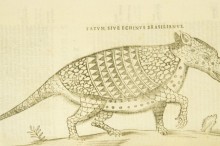
    Texans love all things armadillo. It is the state animal and Texas has become somewhat of a haven for hunting the small creature. In Louisiana and Texas, people hunt, skin and eat armadillos. Nothing exemplifies this all-things-armadillo attitude quite like the fact that barbecued armadillo and armadillo chili are popular delicacies in Texas. During the Great Depression Texans went as far as to stock their pantries with armadillos.

    Every year, a significant number of people in southern United States walk into emergency rooms presenting with lesions of unknown origin. The lesions are quite clearly as a result of leprosy, but with some patients showing no history of foreign exposure (leprosy is not endemic to the United States) how they ended up with leprosy had always been somewhat of a mystery. Leprosy is rare in the United States, with only about 150 new cases reported each year — the majority of affected people lived or worked abroad in leprosy-endemic sub-tropical regions and may have acquired their disease there.

    Leprosy is not highly infectious — caused by the slow-growing bacillus, Mycobacterium leprae, and transmitted via droplets from the nose and mouth of infected and untreated patients. It can cause nerve damage, leading to muscle weakness and atrophy, and permanent disabilities when left untreated.

    It was in a lab in Baton Rouge, Louisiana that the case was first confirmed. Whole-genome resequencing of the leprosy bacteria from one wild armadillo and three US patients with leprosy revealed that the infective strains were identical. Infected armadillos had been reported across the southern United States, in Alabama, Arkansas, Louisiana, Mississippi, Texas, and Mexico, with several case reports have suggested that armadillos may be a source of the bacteria. The building body of evidence that these small animals act as a reservoir for the disease.

    Even though leprosy is exceptionally rare in the United States, it seems exposure to armadillos in southern states is quite common. Authors publishing in the New England Journal of Medicine show that a single predominant strain is involved in most human and armadillo infections. Transmission is relatively easy, either direct or indirect, involving fomites. Although in this case the authors suppose it occurs most frequently through long-term direct contact with an infected host as the bacteria doesn’t last for long out in the environment.
    c-00521

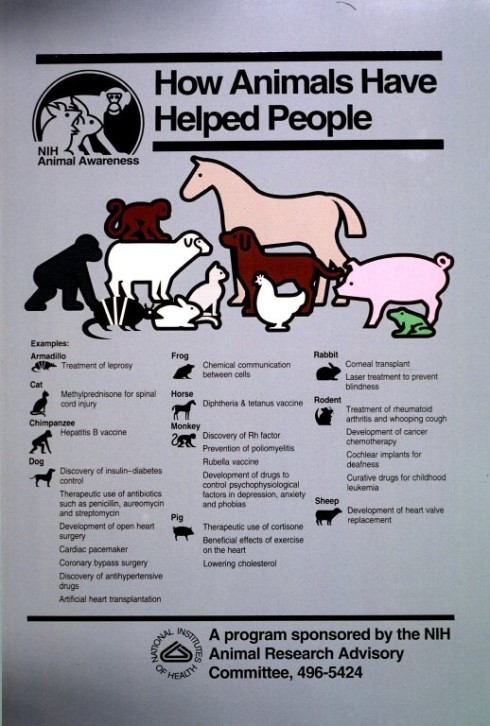
    Historically, leprosy had been hard to study. Very few animal models provided an adequate host for the disease. It grows vigorously in one animal — the armadillo, a fact discovered only in the 1970s at another federal laboratory in Baton Rouge. The nine-banded armadillo, Dasypus novemcinctus, is the only species of armadillo that occurs in North America, wondering north from Central America sometime during the early Pleistocene.

    There was a time, before sophisticated experimental techniques, when the bacteria for leprosy couldn’t be cultured. Research, especially research that deals with combating infectious diseases relies heavily on being able to culture the infectious agent in a controlled environment. They tried experimentally to transmit the bacteria to other animals such as mice — but failed. Not being able to produce enough bacteria to be truly useful is always a setback for research. Add that to the fact that mice don’t live very long and human leprosy can be over the course of two decades.

    Armadillo leprosy closely resembles the infection in humans — the lesions in its nerves was evidence of the armadillo as a suitable model animal.

    Today, it is estimated that a third of the leprosy cases that arise each year in the United States almost certainly result from contact, in one form or another, with infected armadillos. Interspecies transfer of the disease is uncommon and inefficient, but within the armadillo species transmission is efficient.

    What is becoming more and more evident is a complex problem — the ever increasing, incrementally advancing scourge of certain tropical diseases towards previously virgin areas, together with the fact that doctors have never seen these sorts of exotic diseases on a regular basis means there is frequent misdiagnosis. And as an estimated 70 percent of new emerging infectious diseases were known to have animal origins, perhaps it’s time to reflect and reframe the question.

    The microbe that causes leprosy is a fragile one. It does not grow in laboratory petri dishes, and survives only a week or two in moist soils. Its presence in armadillos predates the fact we use it as a disease model. Ironically, armadillos would have acquired it from humans sometime in the last 400 to 500 years — sometime after colonization of the New World. Now they’re giving it back…

    Image — source, source.

  • Middle East Coronavirus

    Middle East Coronavirus

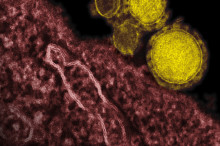
    Since the summer of last year, the perennial talk of epidemics and pandemics has focused on a novel coronavirus. A virus that belongs to a diverse group of that affects many animal species — from bats to humans. At the time the public health risks were unknown. How many could eventually possibly become infected or die? How does the virus spread? Is Human to human transmission possible?

    During the summer of 2012, in Jeddah, Saudi Arabia, the unknown coronavirus was isolated from the sputum of a patient with acute pneumonia and renal failure. To date, 55 laboratory-confirmed cases have been reported to the World Health Organisation. 31 individuals with laboratory-confirmed infection have died. Directly or indirectly most cases have been linked to four countries in the middle east; Saudi Arabia, Qatar, Jordan, and the United Arab Emirates. Now known as the Middle East Respiratory Syndrome Coronavirus (MERS-CoV), the exact scale and full parameters of a disease that the world is still understanding are slowly coming to the forefront.

    Roughly two months ago a 73 year old man from Abu Dhabi died in a Munich hospital. He died on the 18th day of his infection of septic shock from the coronavirus infection he was suffering from. It is this patient, who was admitted to the Klinikum Schwabing in Munich in March, that is the subject of newly published research revealing more about the virus’ clinical features. Publishing in the Lancet, the research highlights the need for a therapeutic approach and that more data and research are needed. Little comprehensive clinical data on the new virus exists. In all, cases have been documented in Arabian Peninsula, Tunisia, Morocco, France, Italy, Germany, and the UK. Although one case in France turned out to be a false positive. Across all the documented and reported cases this is only the fifth patient for whom the virus’s progression and characteristics have been described in a medical journal.

    Pandemic

    A question early on had always been, is this the next SARS? In the spring and summer of 2003, the global outbreak of severe acute respiratory syndrome (SARS) caused more than 8000 probable or confirmed cases and 774 deaths in 25 countries across five continents. A health scare of pandemic proportions. And that is the new state of fear with every new mysterious infection. The new coronavirus (MERS-CoV) is one which Dr Margaret Chan, the Director General of the WHO, described as “my greatest concern right now.