Author: Charles Ebikeme

  • Weekly Science Picks

    Weekly Science Picks

    That time of the week again. Time to kick back with a sunday newspaper… but since newspapers are dead we bring you a weekly run-down of all things sciencey!

    We begin in space, with aliens. Australian Science’s Markus has a piece at Discover News on the search for extra-terrestial life and the feeling of finding it.

    The Wow! Signal: Intercepted Alien Transmission?

    “SETI, the search for extraterrestrial intelligence, has seen astronomers scouring the sky for decades in hopes of receiving artificially generated radio signals sent by alien civilizations. But then, there’s a good chance we’ve already found just such a signal. And 1977 saw the most tantalizing glimpse ever.

    Nicknamed the “Wow!

  • The Great Race of Mercy

    The Great Race of Mercy

    “How the boy said, ‘mama, I’m going to die,’ and how she knew enough to say, ‘no you aren’t honey, no you never will.’ How this boy could only stare back at his father and mother and why they lied.

  • The parasitic warfare perpetrated by ladybirds

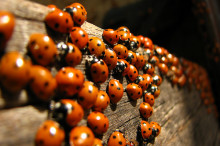
    The parasitic warfare perpetrated by ladybirds

    There is a scientific term that causes fear and alarm to those that study biodiversity. More fear and alarm than the term climate change. Biotic homogenisation — introducing a new exotic species to an area that was, until now, without admixture. Worldwide there is an increase in introduced exotic species and the potential of these species to become invasive have their impact.

    The most invasive ladybird on Earth — Harmonia axyridis — was introduced in several European countries and North America for biological pest control, and quickly turned invasive. It has been outcompeting indigenous ladybird species in many countries for a long time now. Ladybirds are quite common in use as a — what we now call — biological control agent. They have a long history of use against unwanted pest insects. For example, the Australian vedalia ladybird, Rodolia cardinalis, was released in 1888 to control scale insects.

    Harmonia axyridis is also known as the harlequin ladybird, and it has been outcompeting and threatening native species since the beginning of the 20th century. Its invasive success has until now been attributed to its enduring resistance against diverse pathogens. The same pathogens that strike down and blight the native European species, allowing the harlequin ladybird to outperform and out-survive.

    But now, Andreas Vilcinskas knows of another reason — and it is something more like parasitic warfare than simple evolutionary survival of the fittest.

    Andreas Vilcinskas goes to work every day to kill ladybirds. Or rather, he goes to work to investigate how ladybirds kill each other. And it is the parasites within that act as the smart bomb against the native species. Harmonia have within them, swimming around in their blood, spores of the parasite microsporidia. They do no harm to Harmonia, but are lethal to the native ladybird Coccinella septempunctata. What is more interesting is that this lethality comes when the native species feed on microsporidia-infested Harmonia eggs or larvae. As is convention, ladybirds often eat the eggs of other ladybirds.

    The tale of an invasive species is always something more akin to Kal-El leaving Krypton. You land in a foreign land with the realisation that you have superpowers (in comparison to the natives). The harlequin ladybird’s secret most likely lies within its blood (hemolymph). A hemolymph already shown to ward of mycobacterium and the parasite that causes malaria. Its blood, or more accurately, the metabolite harmonine within its blood, exhibits broad-spectrum antimicrobial activity. Antibacterial activity against Mycobacterium tuberculosis, and chloroquine-resistant Plasmodium falciparum strains.

    For this new reason to awe the ladybird, Andrea Vilcinskas and colleagues drew blood from the legs of 100 ladybirds. With such super blood already documented, the question being: was the harlequin ladybird’s advantage over the native species simply down to harmonine, or did the microsporidia have a significant lethal effect.

    They showed that injecting the native species with Harmonia blood — but not harmonine alone — can kill. Suggesting, that it is unlikely that the mortality caused by native species feeding on Harmonia eggs is caused by the presence of harmonine.

    It seems that native ladybird species are lethally infected with microsporidia carried by Harmonia when they feed on its eggs and larvae. The microsporidia parasitize cells by means of a spear through the plasma membrane. Within two weeks of starting their experiment all native species had died from the microsporidia.

    The most invasive ladybird on Earth lives up to its name. The worldwide invasion of the harlequin ladybird is as a result of a parasite that lies within. A parasite to which it has grown immune but to which the natives have no way of stopping. War of the Worlds gone backwards.

    Image — source.

  • The elusive atmospheric molecule

    The elusive atmospheric molecule

    Sometimes, the simplest things are the hardest to find. Out there, up there, in the atmosphere, amongst the things that fly around, are things that collide with other things and make other things. Small things crash into each other and produce other small things. The layman’s way of saying chemical reactions happen. This one, the one we are concerned with is no more important than the rest, and it involves the degradation of atmospheric pollutants.

    The story began over half a century ago when a German chemist, Rudolf Criegee, came up with a reaction. A reaction to which we are still trying to observe its smallest components. More than 50 years ago, he came up with a reaction that proposed that alkenes degrade by reacting with ozone to form a cyclic ozonide. Consequently, this ozonide falls apart and one product a carbonyl oxide called a Criegee intermediate.

    Last year marked the first sighting of things that had — up until then — gone unseen. The simplest Criegge intermediate, CH2OO — carbon and two pairs of hydrogen and oxygen — tentatively attached to one another, destined to eventually fall apart and react with other things up there. This unique configuration of three different atoms were observed with the help of a cyclic particle accelerator — a synchrotron. Not your everyday piece of lab tech.

    Criegee intermediates along with other important atmospheric elements are important as more and more we talk about climate change. And more and more we try and tease out the things up there that are relevant to our changing climate and environment. Whether the identification of the intermediate will lead to eventually finding a way to offset climate change is, at this point, speculation. The pollutants in the upper atmosphere — nitrogen dioxide and sulphur dioxide react extremely quickly with the Criegee intermediates. The story that gets bandied around is that Criegee intermediates have the potential to cool the planet by converting these pollutants into sulphate and nitrate compounds that will lead to aerosol and clouds (that to some extent will reflect solar radiation back into space and help reduce temperatures).

    A recent study, published in Science, describes detection of the simplest Criegee intermediate in the gas phase using a technique much simpler and more accessible than previously. They detected the molecular fingerprint of their chemical structures. What was once unknown now left a detectable signal. Up until now not a lot was known due in part to the fact that it couldn’t be detected directly. The fact that this new method of detection uses a machine and instrumentation more widely available to researchers opens the doors up to more investigations on the Criegee intermediates exact nature.

    The Criegee intermediates go back to the history of the ozone. One that has been formulating even long before Rudolf Criegee. And the story is far from over. The final numbers of the exact nature of the Criegee intermediates are still in the making. Now its reactivity with other compounds can be verified and tested — and perhaps provide more insight into its proposed “climate cooling

  • Weekly Science Picks

    Weekly Science Picks

    Science Sunday! What better way to spend the day than to kick back and let some of the week’s best science stories come to you.

    Firstly, right here on Australian Science, Markus tells the story of the world’s slowest experiment — that is still going.

    The World’s Slowest Experiment

    “This curious looking setup is the pitch drop experiment. Some people reading this will undoubtedly know of it. Set up at the University of Queensland in 1927 by Professor Thomas Parnell, this experiment may take a few of your ideas about what a liquid actually is and turn them on their heads. Pitch, you see, is a liquid. But if you were to see some of it up close, you might not think so. To our eyes and senses, it appears to be a solid. It’s a black, waxy looking substance, a derivative of tar which ship builders used to use to waterproof boats. You can think of it more or less like a liquid which moves in slow motion. Extremely slow motion! Pitch is so viscous and flows so slowly that you can quite easily pick up a piece of it and hold it in your hands. You can snap pieces of it off, and if you hit it with a hammer, it will even shatter. But make no mistake – pitch is not a solid.

  • Weekly Science Picks

    Weekly Science Picks

    Science Sunday! My first since the death of Google Reader. Let’s dive straight in.

    Viet Le, the scientific amasian, has a nice piece on genetically modified crops. Perhaps the time has come to have another debate on the issue of GMOs, too often dismissed out of hand.

    An “Acceptable

  • India, Novartis, and Australia’s new patent law

    India, Novartis, and Australia’s new patent law

    April 1 — about the only thing on the internet that wasn’t a huge Poisson d’Avril was the “landmark

  • 15 million mobile phones used to track malaria

    15 million mobile phones used to track malaria

    We all know that mosquitoes spread malaria. What we never quite realise is that humans also spread malaria — and quite significantly. In some places, the spread of malaria is directly linked to the mass movements of human populations. The movements of infected humans seem to increase the dispersal of parasites beyond what would be possible by mosquitoes alone.

    Fifty years ago, when we first tried to eradicate malaria, it failed — and among the main culprits (along with drug resistance and unsustainable funding) was listed movements of human populations. Historically, movements of infected people from areas where malaria was still endemic to areas where the disease had been eradicated led to a resurgence of the disease. As people and populations move, they can increase their risk for acquiring the disease, or increase the risk of transmitting it.

    As always wars and civil unrest tend to favour disease transmission, and malaria is no different. During the 1980s in Angola, 15 years of continuous war had displaced hundreds of thousands of people. As a direct result, malaria moved from sixth to first place as the leading cause of mortality. This, simply because the capital city Luanda underwent an unprecedented population increase — and the malaria endemicity rose along with it. In a population that wasn’t ready for it.

    The relationship between malaria transmission and population movement is undoubtedly complex. Population movements that either place people at risk for malaria or cause them to pose a risk to others cannot be stopped. But it seems now they can be tracked and we can mitigate for it.

    In June of 2008, the movements of approximately 15 million people in Kenya were tracked using their mobile phones. Tracked, not by governments or refugee aid organisations, but tracked by researchers from the Harvard School of Public Health. During a 12 month period, every call or text made by each individual to one of 11,920 cell towers located within the boundaries of 692 settlements was logged and recorded.

    Surveillance is a term that loses more and more of its meaning with every single advance in technology. Usually we picture more nefarious intents and purposes for tracking citizens. Within that year in Kenya, starting points and destinations of all 15 million individuals were tracked — giving each person a primary settlement to call home and mapping their movements in relation to malaria prevalence. Researchers determined where each person spent most of their time based on the location of the majority of their call and text records — this was their home base.

    Mapping that onto malaria prevalence for the entire country allowed researchers to estimate and infer an individual’s probability of being infected and the probability that visitors to the settlement will become infected. Researchers built up what was essentially a parasite movement network.

    There was some directionality to the net movements of people and parasites between settlements. Settlements can either be characterised as “source

  • The beat the mosquito’s heart didn’t skip

    The beat the mosquito’s heart didn’t skip

    It pulsed continuously without stopping. Then it repeated, as it had done many times before. Then, without delay, almost without skipping a beat, it changed direction. The action was as old as man himself, yet this time, completely and uniquely different — the perfect heartbeat. The perfect mosquito heartbeat.

    An interesting quirk of nature is how remarkably constant the number of heartbeats exist within a lifetime. An interesting quirk, more a function of the metabolic demands of the animal in question rather than any underlying feature of the heart itself. Humans, mice, insects all have the same number of total heartbeats. The human heart, from life to death, will beat roughly 3 billion times. A mouse will use up its heartbeats in about two years. An elephant, with a much slower heartbeat, will last for much longer. The mosquito’s heart beats at a rate of just over one beat every second (1.3 Hz). In one minute it will beat 82 times, of which, some of that will be in the other direction.

    The heartbeat is nothing unique to humans and has been around long before us, but we have romanticised it and given it a meaning more than its basic function. For researchers at Vanderbilt University, Nashville, Tennesee, this is also the case for the mosquito’s heart, where function and meaning is more than its basic, simple architecture.

    Dr Julian Hillyer, the lab’s director, and his team have offered the most comprehensive visualisation to date of how the mosquito’s heart beats. They filmed live restrained female Anopholese mosquitoes — the same species of mosquito responsible for life threatening malaria — through a microscope connected to a very sophisticated camera.

    The beatings of thirty mosquitoes were collected and analysed frame-by-frame to arrive at a comprehensive structure of the heart. They painstakingly dissected individual mosquitoes, injecting infinitesimally small amounts of fluorescent fluid into the mosquito, allowing them to describe the mechanics, directionality and flow involved when the insects blood (hemolymph) is propelled through the heart.

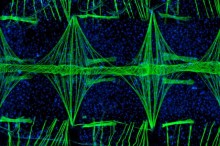
    A mosquito’s heart is very different — without veins or arteries, it pumps a clear liquid called hemolymph. The hemolymph flows from the heart into the abdominal cavity and eventually cycles back through the heart. The heart runs along the insects body as an unbranched tube, no thicker than three tenths of a millimeter. Helical twists of muscle fibres support the central tube. Their sequential contractions makes the heart in a wave-like peristaltic action. A peristaltic action that has the ability to run in both directions.

    Another set of muscles anchors the heart where ever there is a valve, at intervals, along the mosquito’s body – just underneath its cuticle shell. All of this was visualised in fluorescent detail, using different coloured flourescent dyes to highlight different structures inside the insect’s body. Winning the lab’s images the Nikon Small World photomicrography competition in 2010.

    As stunning as the images were, it was the functionality gained from the study that provided the most insight. Following and tracking tiny microscopic particles (microspheres) showed how the insect’s hemolymph entered and was expelled from the heart, and, most importantly, how the heart reverses direction.

    Most of the time, the heart pumps the mosquito’s clear hemolymph blood towards the mosquito’s head, but occasionally it reverses direction and pump fluid to the last segment of its abdomen. The direction in which the heart contracts reverses roughly 5 times every minute.

    Heartbeat reversal is not unique to the mosquito — a phenomenon that has been observed in other orders of insects. You would think that something that small would have no need for such an elaborate beating system, but perhaps it is the only way the heart can regulate the different hemolymph pressure and volumes entering it. Thus far, a conclusive “why

  • The Contagion of Violence

    The Contagion of Violence

    When Professor Plum killed Dr Black, in the library, with the candlestick it was for no other reason than murder is a disease. Murder is infectious and the contagion of violence is everywhere.

    Violence begets violence.Violence within nations and cultures. It occurs within families and between partners. It increases the risk of violence directed at children and increases the risk of the children behaving violently themselves. Violence within a community perpetuates and spreads. Children catch it from their parents, and parents can catch it from their children. Violence is highly contagious in all respects it seems.

    It was a 2012 essay by L. Rowell Huesmann that sparked off a study, appearing in Justice Quarterly. A study with a simple premise and question; if homicide is infectious, it should diffuse through communities, infecting those susceptible, and that diffusion should be detectable. Much in the same way we can track the flu from year to year, we can track the spread of murder as an epidemic. It offers an interesting way of looking at murder and homicide.

    Welcome to Newark, New Jersey. A city that houses roughly 277,000 people has a homicide and murder rate over three times greater than that of anywhere else in the US. There were 104 murders and 504 shooting victims in 2006 alone. Firearms were used in 71% of the 380 reported murders in 2011. Suffice it to say, Newark is not a safe place.

    The study took a look at how murders and homicides moved and behaved over a 26-year period (1982 to 2008) across the city. Firearms and gangs were the infectious agents; spreading from within the centre of the city and spreading south-westerly over the course of nearly three decades.

    Their main argument is that the way murders move across a community is not random. The elements required for disease to propagate itself may be relevant and can be applied to the movement of homicide. And if this is so, then it can be predicted and controlled.

    If you take a look at a map of Newark it is hard to see a pattern. Homicides occurred in all parts of the city. Almost the entire city appears to be a hot spot for murder. But analysis over the decades suggest that there was expansion of overall homicides between 1982 and 2008 with a dip in 1997 and a sharp rise in 2000. And highlighted an area of the city (North and East) that seemed largely immune to the spread of homicide. Indeed, murder was on the move.

    The criminal justice system seeks to prevent murder, but only after the fact — by deterring those that do it with the penalty that awaits them after the fact (jail and criminal prosecution). Indeed, police forces already have an eye out for certain hotspots within a location. Areas where violence is known to spark and ignite at any given moment. What they don’t know is where it will go next. The authors of the study model homicide as an infectious disease as simply a way to offer instructive understanding of how homicide works. The most telling application of this non-literal model is the fact that for homicide to spread as a disease, a population susceptible to transmission must be present. Just like every other infectious agent, except this time poverty and social inequality replace a population with no herd immunity.

    Image — source

  • Weekly Science Picks

    Weekly Science Picks

    Welcome to some of this week’s best science happenings on the interweb space!

    The first question is simple: can you name a female statistician? Epidemiologista answers its own question with a nice profile of Dr Janet Lane-Claypon: epidemiologic pioneer.

    Can you name a female statistician?

    “We read about statistics every day: be it the predicted winner of a football league, the association between the weather and mortality, or a newly discovered link between an inanimate object and cancer. Statistics are everywhere. And perhaps even more so this year, as 2013 has been hailed as the International Year of Statistics. Despite all this attention for numbers, we generally don’t know a lot about the people hiding behind their computers churning them out. With media attention for people like Nate Silver and Hans Rosling, some are now able to name at least one statistician, but, stepping it up a level, could you name a female statistician?

  • Invasion of the Asian tiger mosquito

    Invasion of the Asian tiger mosquito

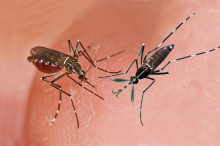
    Sometime during that glorious decade known as the 1980s, a shipment landed in Houston, Texas. A shipment carrying more than its cargo. The point of origin was Japan. The shipment was used tires. The payload was Asian tiger mosquitoes.

    Within years of landing in Texas the tiger mosquito, Aedes albopictus, rapidly displaced resident populations of Aedes aegypti mosquito. Both are important disease vectors. The native being considered the primary vector of breakbone fever — or dengue. And the Asian tiger mosquito recently emerging as the most important transmitter of chikungunya virus and yellow fever. By September 1986, the range of the Asian tiger mosquito had extended as far north as Utah. The demise of the native Aedes aegypti had already begun — representing not a transient ecological phenomenon, but the beginning of permanent colonisation, and resulting in rapid declines and extinctions of the native mosquito species.

    Aedes aegypti originated in Africa and was introduced to the Americas between the 15th and 18th centuries, during the height of the slave trade and most likely on ships transporting slaves. They quickly established across the south eastern part of the US. Then what followed was a demise in the face of stiff competition and after centuries of habitation in America. An inadvertent metaphor for the “Post-America

  • Weekly Science Picks

    Weekly Science Picks

    #Scio13

    This week Science Online kicked off in Raleigh, North Carolina. The unconference that brings together communicators of science in all their ilks — writers, bloggers, scientists themselves, filmmakers etc — the list goes on.

    “I write fiction in the form of grant proposals…

  • The bacteria that live inside hurricanes

    The bacteria that live inside hurricanes

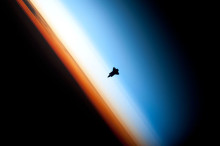
    Seven miles above the Earth’s surface, where the weather is born, lies the troposphere – the lowest layer of Earth’s atmosphere. Up there, where the clouds dance around, are bacteria that can make it rain, and are important for the formation of clouds.

    The atmospheric microbiome is a concept and field of study that is gaining importance. As we come to grips with a changing climate and environment, understanding more and more our Earth ecosystem remains vital. With hurricane damage in the US and elsewhere seemingly on an exponential increase in recent decades, it is important to mitigate for the worst. It can cost as much as $1 million per square mile for evacuation preparations alone.

    In 2010, NASA embarked on one of its largest hurricane research efforts — GRIP (Genesis and Rapid Intensification Processes). The objective was to better understand and characterise how tropical storms form and develop into major hurricanes. With a fleet of aircraft, ground-based instruments, computer models, and satellites, over a period of 6 months, GRIP collected all kinds of data on the nature, structure, dynamics, and motion of hurricanes. Invaluable data. They also collected one other thing — the microorganisms in the atmosphere.

    The problem previously, had always been the difficulty in gathering enough microbial biomass to study. And previously, most samples have comes from areas too close to the Earth’s surface to really mean anything. GRIP took things one step further — high-altitude. Over the course of 9 flights across America, the Gulf of Mexico, the Atlantic Ocean, and the Caribbean, GRIP collected bacterial and fungal samples to be analysed. Enough to answer the question: Where does the bacteria in the atmosphere come from? Authors, publishing in the Proceedings of the National Academy of Sciences (PNAS) today give a picture of the composition of the high-altitude (around 10 kilometres above sea level) bacterial and fungal flora, but also what that picture looks like in the aftermath of a hurricane.

    The bacteria that swirl around in the air originate from different areas across the Earth’s surface it seems. The organisms they sampled originated from almost all habitats (ocean, soil, freshwater… etc as they put it). Hurricane samples had a higher abundance of marine bacteria, and only in the hurricane samples was there “a substantial signal of bacteria known to be associated with human and animal feces