Author: Charles Ebikeme

  • Alien encounters and the man from Grenada

    Alien encounters and the man from Grenada

    The month of August indeed belonged to the tiny rover that could — Curiosity. We were all hooked right from the landing and until those first images of the red planet were beamed back. Not even Will.i.am could spoil it for us. We revelled in everything in between, from the missed high-fives, peanuts, Neil deGrasse Tyson’s conversation with the rover, to — yes, unfortunately — Will.i.am’s new single being broadcast from the surface. Curiosity even spawned this generation’s cultural hallmark that is the fake twitter account. If there is any one milestone that denotes you’ve reached a certain level of cultural status… it’s the fake twitter account. From Mrs Rupert Murdoch to dead literary figures, the fake twiteratti are just as important as the real ones.

    In an odd roundabout way, all of this got me thinking about a bizarre event that happened in 1977.

    The United Nations debating such topics as aliens and extra-terrestrial encounters of any kind seems like something confined to the annals of science fiction. And yet, the most significant debate any international body has had on the prospect of alien encounter happened at the 32nd session of the United Nations General Assembly, for reasons unbeknown to me and probably many at the committee.

    Member nations and delegations convened at the 32nd session of the General Assembly to listen to the man from Grenada, Sir Eric M. Gairy, the Prime Minister and Minister for External Affairs of Grenada (evidently taking his title to its farthest logic conclusion — what could be more external than space?).

    He began with a reading from the Bible — Psalm 100, then launching into an engaging speech that touched on freedom and independence of nations, human rights, wars and conflicts. It quickly took on another flavour. The smallest nation in the UN (at the time) had centre stage and was determined to make the most of it. Mr. Gairy began to speak of unidentified flying objects (UFOs) with the same unabashed enthusiasm he was getting a reputation for.

    He concluded by recommending that not only the UN take it seriously but they should set up a department to study UFOs. The UN already had a space outfit — the Of

  • The rise in representation of non-human entities

    The rise in representation of non-human entities

    It happened over ten years ago. Jimmy was incarcerated against his will, held in a cage, isolated, and denied the basic freedom he deserved. A Habeas Corpus request was put in on his behalf. A long ordeal involving lawyers and various international organisations.

    It happened again last year, in San Diego USA, Tilikum, Katina, Kasatka, Ulises and Corky were all held captive. A lawsuit was filed at a federal court, declaring that they were being held as slaves in violation of the 13th Amendment to the US Constitution (the amendment that abolished slavery and involuntary servitude after the American Civil War).

    One simple fact made these two cases unique — none of the subjects were human. Jimmy was a Great Ape. Tilikum, Katina, Kasatka, Ulises and Corky were all orcas. Those were not the first, and certainly not the last.

    In 2005, a public prosecutor, Dr. Heron Santana, was involved in the landmark, bench-setting case that would provide the framework for all those that came after. As was the case with Jimmy, a Habeas Corpus was demanded for a female chimpanzee — Suíça, 23 years old, who had lived in a zoo for four years. What transpired made Suiça the first animal to be recognized as a subject in a court of law. In the end, the Habeas Corpus was approved — unfortunately, it was on the day after she was found dead in her cage.

    Animal activism had always existed before then. But perhaps that was the spark the trend needed. Indeed, numerous examples now exist, including perhaps the most well known — the World Declaration on Great Primates, that proposes the extension of rights allowance in an equal way to all great primates: human beings, chimpanzees, bonobos, gorillas and orangutans, and identifying the three basic conditions to the relationship between humans and great primates — the right to life, individual freedom, and prohibition of torture.

    With chimps and other great apes the difference is clear — “the only difference is that they do not talk

  • Fear of Ebola

    Fear of Ebola

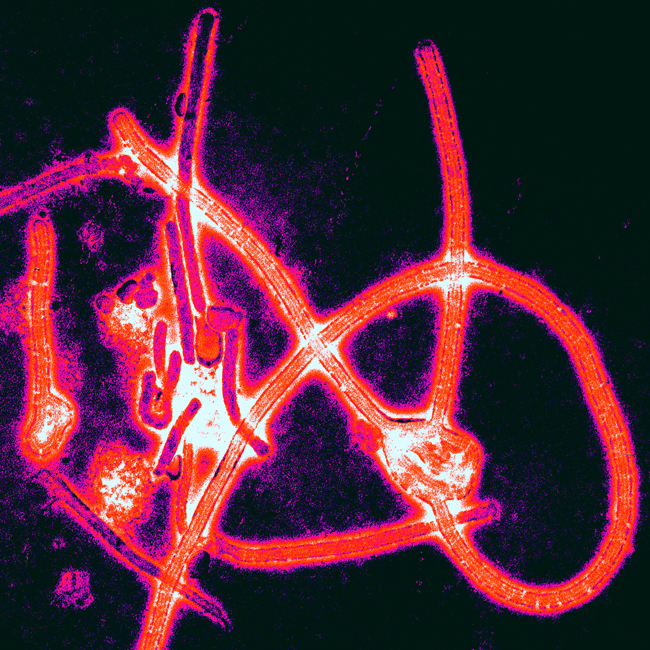
    “…the last big outbreak I experienced in Uganda [was] in 2007. When MSF arrived a lot of the staff in the hospital had died and the rest had run away because they were scared.

  • America in the time of AIDS

    America in the time of AIDS

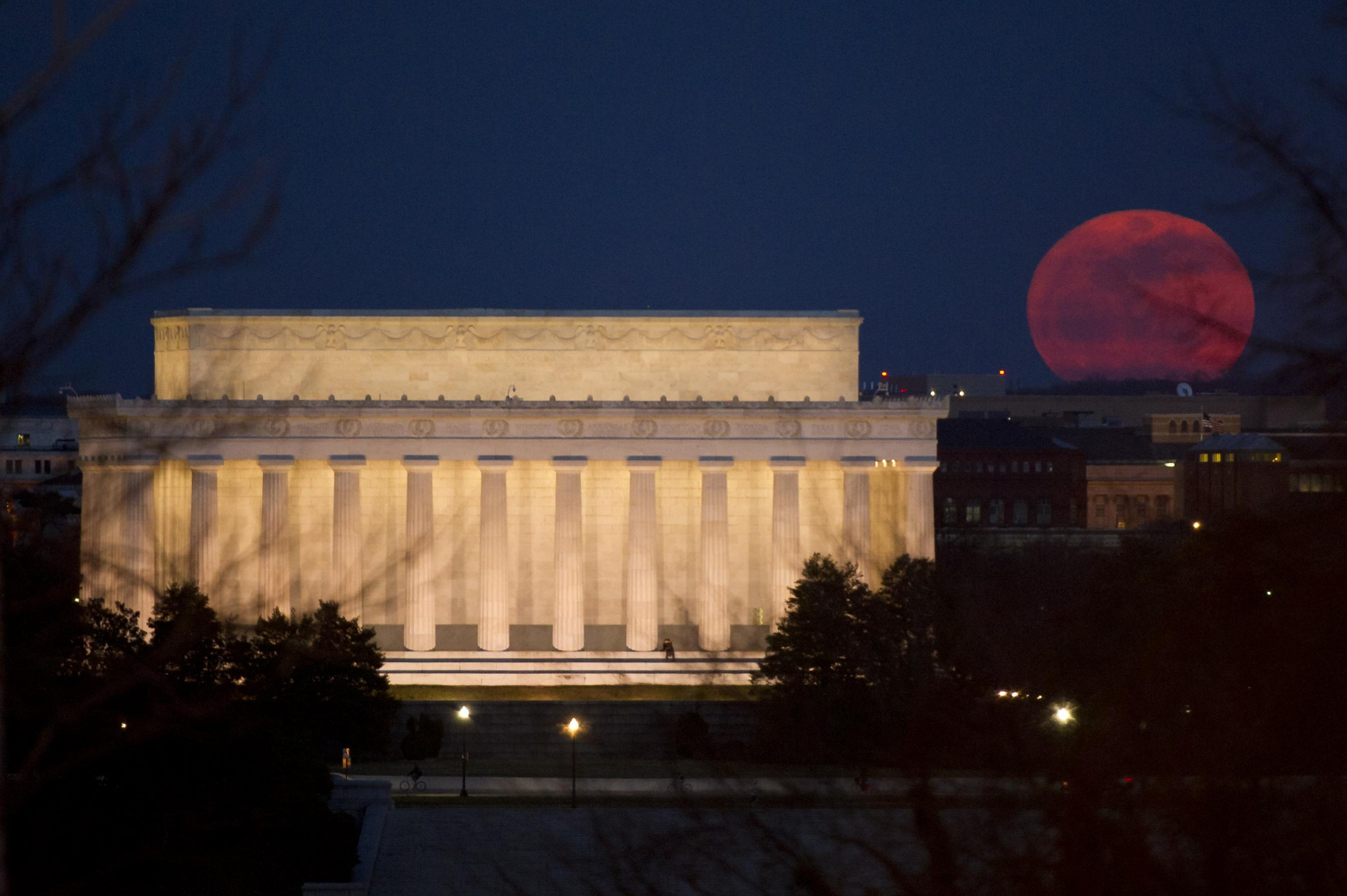
    This week the world descends on Washington DC, to discuss, evaluate, and get the state of the art of what is probably the disease of our times: HIV/AIDS; as the city prepares to host the International AIDS Conference (AIDS2012). It marks the first time in 20 years the conference has been held in the US — coming as the US lifts the ban on people entering the country with an HIV positive status.

    It is the cliché to think that sub-Saharan Africa, particularly southern Africa, typifies and exemplifies the problem we have and our struggle with HIV/AIDS. America hides an ugly truth about a disease that last year celebrated its 30th birthday (anniversary of the first case reports in the United States). Washington DC has an HIV infection rate of 3.2%. If it were a country it would rank 23rd out of 54 in percentage of people with HIV — placing it above the Democratic Republic of Congo, Ghana, and 30 other African countries, and just behind Nigeria.

    In 1995, the number of new cases in black Americans overtook the number of new cases in white Americans and other ethnicities — and it’s been that way ever since. The District of Columbia, with a population of 600,000 odd inhabitants, has a rate of prevalence of HIV/AIDS among black males that far outweighs other ethnic groups, and even the total prevalence in other American cities.

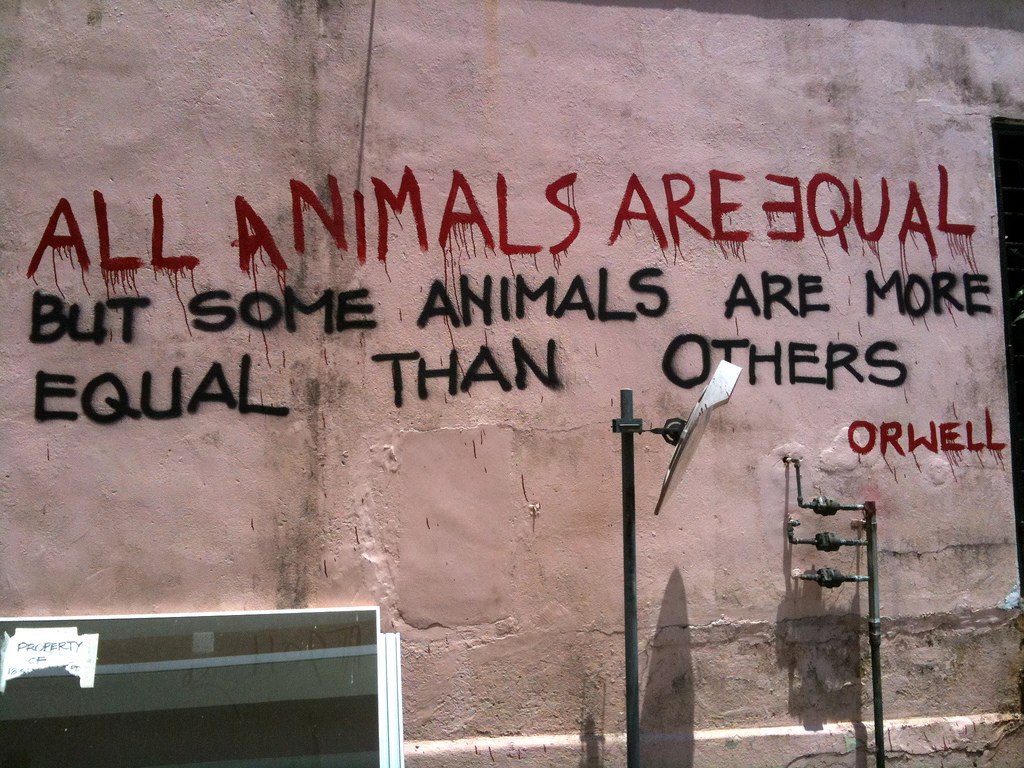
    With the number of cases around the world dropping, in general, in the US it has remained the same. If the problem in southern Africa is one of denialism… America’s problem is one of inequality. From the statistics you would be forgiven to think that poverty equals AIDS. Poverty does not equal AIDS. Inequality equals AIDS.

    The problem seems systemic, being placed squarely on the shoulders of a city that has failed its population. The Globalpost writes “for years, the District had failed to do in-depth surveillance of the AIDS epidemic and had perceived it to a problem largely limited to the gay community and injectable drug users

  • The extinction that is yet to come

    The extinction that is yet to come

    By 2050 they will all be gone. The worst is yet to come.

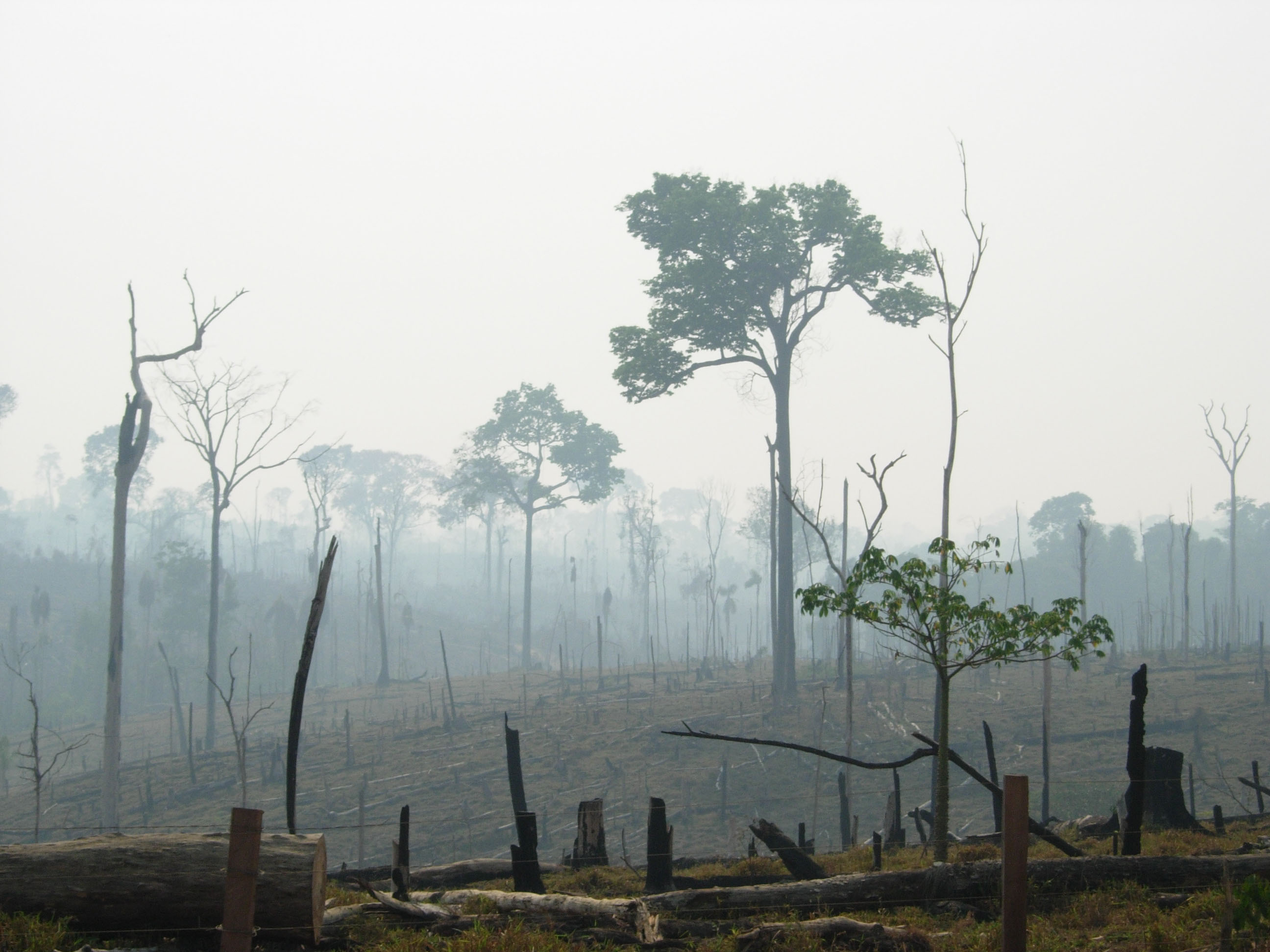
    The Amazon rainforest contains a wider variety of plant and animal life than any other biome in the world. The region in its entirety is home to roughly 2.5 million insect species, tens of thousands of plants, and some 2000 birds and mammals. To date, at least 40,000 plant species, 2000 fishes, 1000 birds, 427 mammals, 428 amphibians, and 378 reptiles have been scientifically classified. The Brazilian Amazon harbors roughly 40% of the world’s tropical forest and a significant proportion of global biodiversity.

    The numbers speak for themselves. However, over the past few years what we’re seeing is a biodiversity crisis in slow-motion. Those numbers are at risk. The largest drivers of which being climate change and habitat loss by deforestation.

    Habitat loss results in species extinction, but not immediately. When habitats shrink it may take several generations after an initial impact before the last individual of a species is gone. Extinction against the clock and in slow motion.

    Visualising how this occurs and estimating the impact has always been a problem for researchers. The question now is — how many species are headed for extinction as a result of past and future deforestation?

    New research published today in Science describes cutting-edge statistical tools used to devise a novel strategy to estimate the expected number of local species extinctions as a function of the extent of habitat loss.

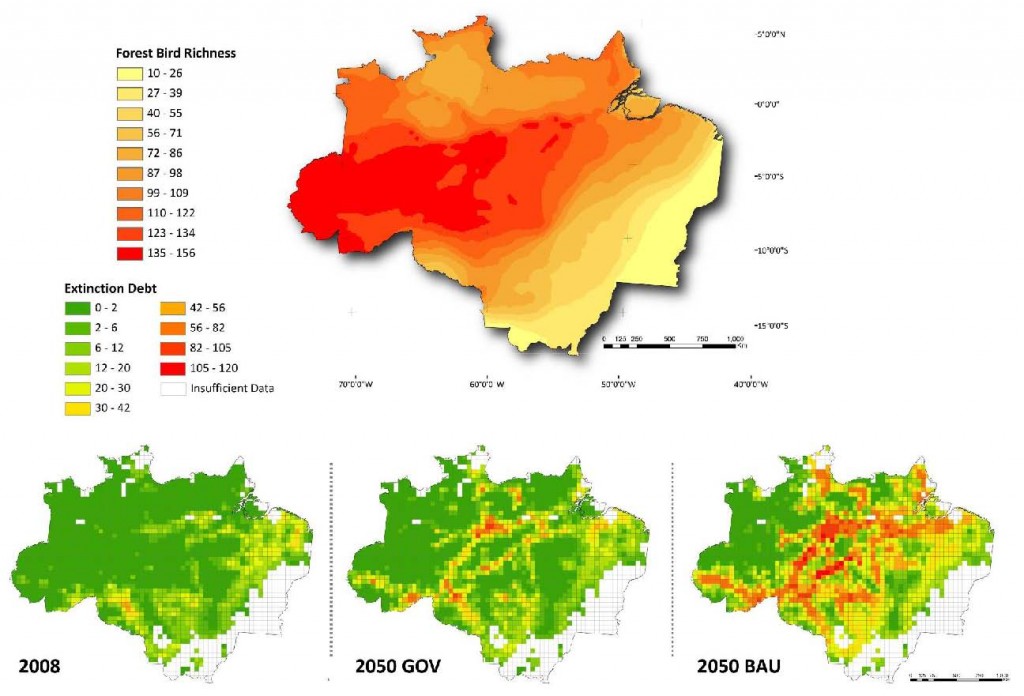
    Researchers made predictions on the extent of the extinction damage based on four possible scenarios — two in which all parties comply and respect current environmental law and protected area networks; and two which rely on strong reductions and eliminations in current deforestation rates. A reflection of recent pledges by the Brazilian government and potential reductions in deforestation proposed in 2009. What researchers describe is an estimation of something much more serious than previous estimates.

    Spatial patterns in bird species and extinction debt in the Brazilian Amazon

    Deforestation over the last three decades in some localities of the Amazon has already committed up to 8 species of amphibians, 10 species of mammals, and 20 species of birds to future extinction. Local regions will lose an average of nine vertebrate species and have a further 16 committed to extinction by 2050. The worst is yet to come it seems. More than 80% of local extinctions expected from historical deforestation have not yet happened.

    An “extinction debt

  • Mr Boson, I presume…?

    Mr Boson, I presume…?

    ATLAS proton-proton event containing four muons

    When Peter Higgs steps out onto the tarmac at an airport near the franco-swiss border, it will probably be with equal parts trepidation and elation.

    CERN, the European Organization for Nuclear Research, and the world’s leading laboratory for particle physics, is to hold a scientific seminar on July 4th, with Peter Higgs in attendance, to deliver the latest update in the search for the Higgs boson — the famed “God Particle

  • The clues to human uniqueness

    The clues to human uniqueness

    Over 2 million years ago, before the emergence of the genus Homo, within the rift valleys and savannah grasslands of Africa during the Pliocene period, a unique event took place. One that, with some hyperbole, admittedly, shaped the course of human evolution. The event was on a molecular scale but had its bearings on what we now call and search for as the “human condition

  • The pitcher plant, the beetle, and relying on rain for your next meal

    The pitcher plant, the beetle, and relying on rain for your next meal

    It’s a trap!

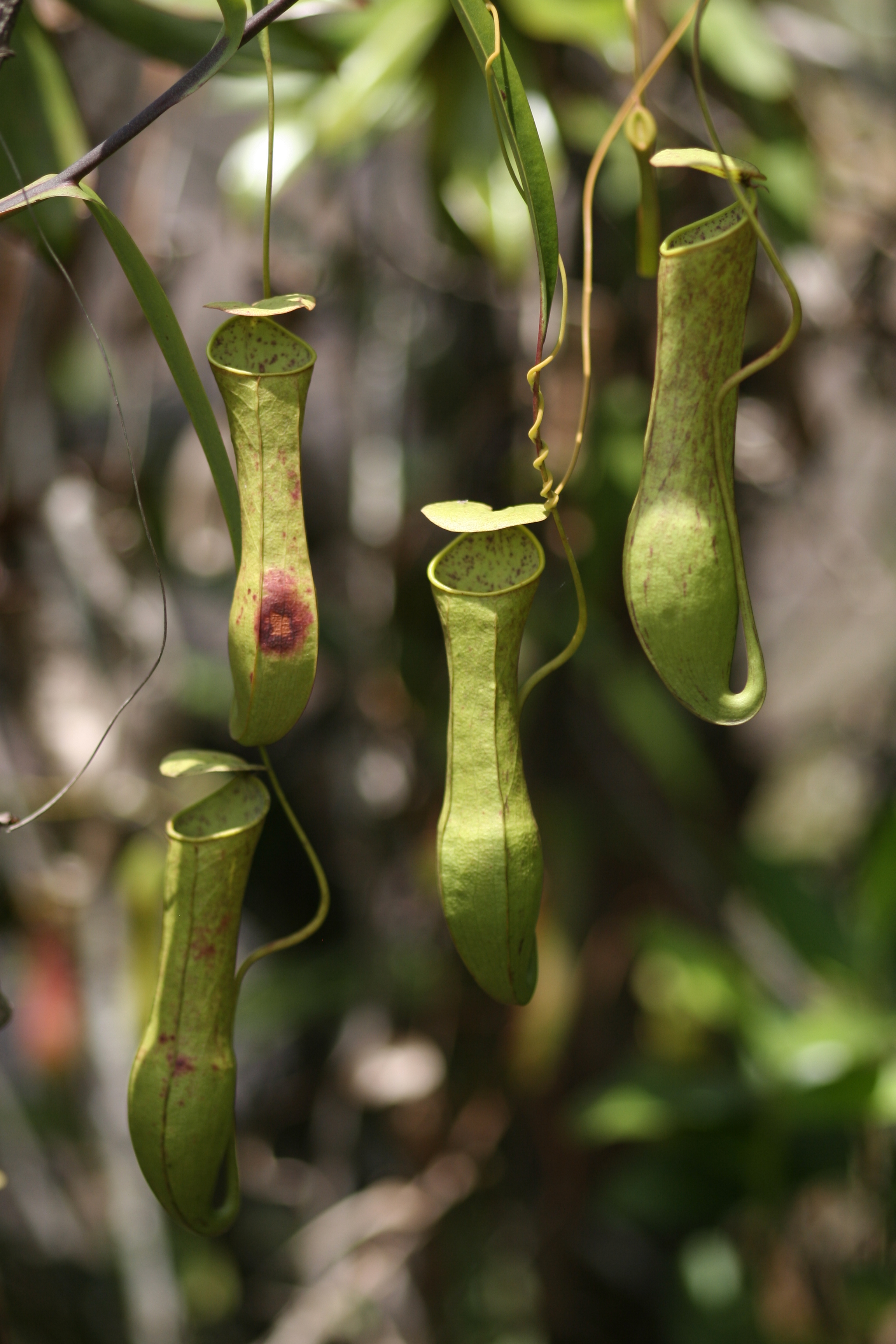
    In the fields of Brunei Darussalam in North Borneo, once a crown colony of Great Britain, lies the pitcher plant. The pitcher plant is carnivorous, capturing and devouring insects that seek to harvest its nectar.

    The pitcher plant is beguiling, attractive, and has evolved many ways to seduce its predator. Insect prey is captured within the wells of its pitcher-shaped leaves, when insects crawling along it slip on the wax crystals of the inner wall, and fall into the digestive fluids at the bottom. A dense layer of platelet-shaped wax crystals, orientated perpendicularly to the surface for a reason — to essentially make it difficult for insects to grip — especially when wet.

    The wax crystal layer is a common feature to many species of the pitcher plant. One such species, Nepenthes gracilis, is unusual in the fact that the crystals are also present on the underside of the pitcher lid.

    This was the observation that led to recently published research describing a new way the pitcher plant captures its prey.

    The lead author of the paper, published today in PLoS ONE, Dr Ulrike Bauer from the University of Cambridge’s Department of Plant Sciences, said: “It all started with the observation of a beetle seeking shelter under a N. gracilis lid during a tropical rainstorm. Instead of finding a safe — and dry — place to rest, the beetle ended up in the pitcher fluid, captured by the plant. We had observed ants crawling under the lid without difficulty many times before, so we assumed that the rain played a role, maybe causing the lid to vibrate and ‘catapulting’ the beetle into the trap, similar to the springboard at a swimming pool.”

    In effect, it’s a clever strategy on the part of the pitcher plant. At times, mostly when the weather is dry, insects have no problem gathering nectar from the plant. This allows “scout

  • The Olympics Mass Effect

    The Olympics Mass Effect

    59 Days to go.

    Simply put, for those that care about the London Olympics — the excitement is mounting. With 26 sports across 44 venues, 10,500 athletes and millions of spectators, it’s going to be a busy summer. From Box-hill to Coventry, and all across London the preparations are almost over and it’s almost time for the curtains to go up. Behind the scenes  a workforce of around 200,000 people are being amassed — comprising of around 6,000 paid full-time and temporary employees, up to 70,000 volunteers and around 100,000 contractors. A small army. Add to this another small army of reporters and media that will cover the games from every angle. The American broadcaster NBC will be sending a team of around 2,800 to London. The BBC will deliver a record 2,500 hours of live action from the games, including 26 channels dedicated to each sport. An Olympic staff (in more ways than one) that actually outnumbers Team GB itself by a considerable margin.

    As Londoners, nonplussed about it all, make a quiet exit for a few weeks, the city and those unlucky enough to be caught in it, are going to be overrun with tourists, sightseers, and everyone else.

    The amount of column inches dedicated to the Olympics, as you would expect, is significant. From the tried-and-tested stories of athletes battling against the odds to make it to London this summer. To the truly bizarre ones of the UK’s Ministry of Defence telling residents high-velocity rockets will be fitted to apartment blocks close to the Olympic Park. With round the clock surveillance, and even snipers.

    Evidently, in the run-up to the games, tensions and expectations for worse-case-scenarios are high. The threat and danger of anything sparking a problem is clearly in the forefront of the organiser’s minds. With millions of extra people added to the melting pot it’s not just an extra strain on public services. It goes beyond that — the Olympics should come with a health warning.

    Well, in fact, it does. A doctor at the Centers for Disease Control and Prevention (CDC) has told US travellers to make sure they are vaccinated against measles if they travel to London for the Olympics in July.

    “Disease knows no borders. We are concerned about Americans coming back from the Olympics this summer and unknowingly infecting others,

  • Saving Australia’s Koalas

    Saving Australia’s Koalas

    In an emergency room at Beerwah, Queensland, the phone rings almost 100 times a day.

    The emergency room is one at the Australian Wildlife Hospital, providing veterinary care for sick and injured wildlife — admitting anywhere in the region of 30 different species on a daily basis — with injuries resulting from accidents, acts of deliberate cruelty, or conflict.

    Arethusa came into the emergency room suffering from fractured ribs and internal abdominal bleeding. Frodo came in with a gunshot wound, sustaining a fractured skull and significant damage to the stomach and intestines. Travis and his mother were run over by a hit and run vehicle.

    These four were koalas, but the hospital deals in animals common to the Australian landscape — from Brushtail Possums to Bearded Dragons.

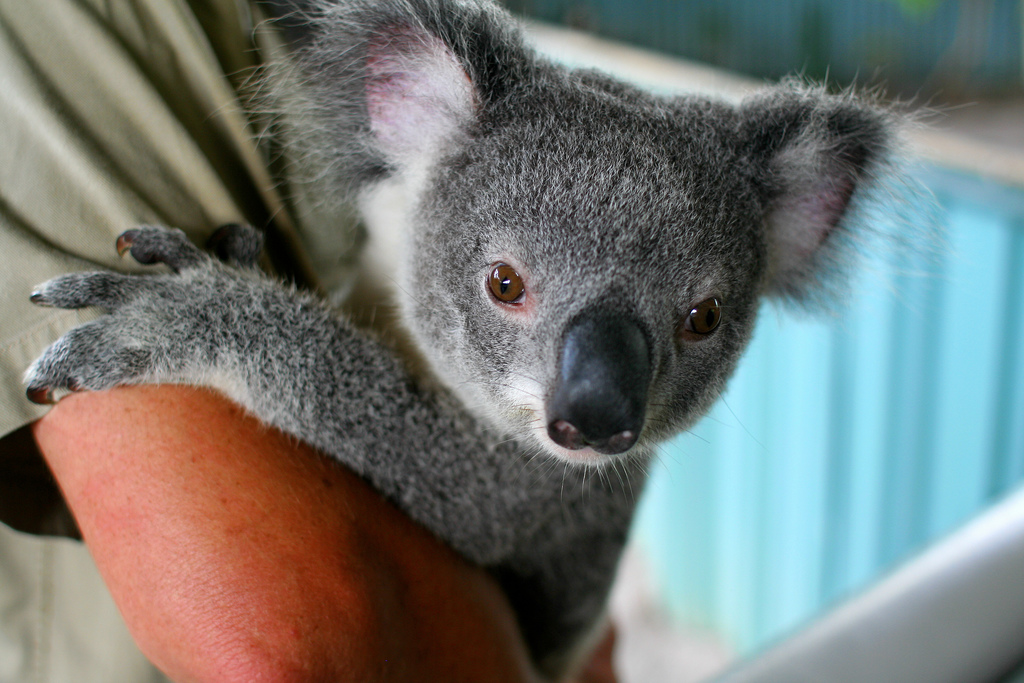
    The koalas themselves, cute cuddly creatures, with a sleepy demeanour, renowned as a representation of Australia have recently been in the news for being endangered and for a curious case of koala chlamydia. Koalas are in serious decline, suffering from many of the effects the veterinarians at the Australian Wildlife Hospital see on a daily basis — as well as habitat destruction, domestic dog attacks, bushfires and disease. The Australian Koala Foundation estimates that there are less than 80,000 koalas left in the wild, possibly as few as 43,000.

    Over the past few years researchers have been distilling and putting together a case to add another reason for koala decline to the list. Roughly 600 koalas per year are seen to at the hospital, and most present with other primary conditions. A number of koalas, however, have presented at the hospital with serious illness associated with regenerative anaemia and now trypanosome infections.

    The trypanosome is a parasite we commonly associate with African Trypanosomiasis (as well Chagas disease). In reality, the trypanosome also infects rats, cattle, and even kangaroos.

    To say little is known about systemic and blood parasites of native wildlife in Australia would be an understatement. Researchers are only just beginning to understand the diversity of trypanosomes in Australian marsupials. Much is still to be learnt. Their evolutionary biology, transmission, and resulting potential impact on the wildlife. The possibility that indigenous wildlife trypanosomes can act as a reservoir for human pathogenic infections is all to be seen.

    What we do know is that, in Australia, the introduction of trypanosomes are as a direct result of human activities. Being almost certainly responsible for introducing trypanosomes from one wildlife population to another. The vector — what transmits the parasite from animal to animal — of Australian trypanosomes is not known. Although, researchers have the flea in mind as the usual suspect.

    To date around 10 trypanosome species and genotypes have been identi

  • The social network of solitary lizards

    The social network of solitary lizards

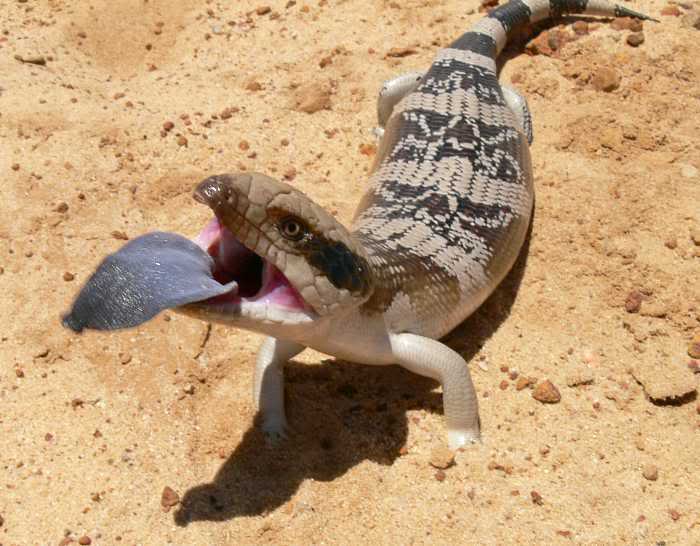
    Burra, South Australia. Dirt roads link sparsely populated towns and communities once home to copper miners that lived in tiny dugouts along the banks of the creek. Burra is a place capsulated by hot, dry summers and cool moist winters. Across the arid place a grey-brown reptile with short limbs and a large cumbersome head shuffles along the dirt in search of the place it calls home. No other living thing is in sight. For all intents and purposes, this lizard is the last being in existence.

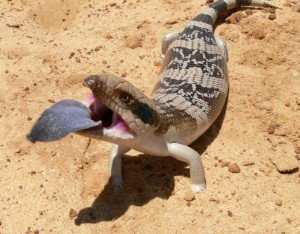
    The Pygmy Bluetongue Lizard is the smallest of the genus Tiliqua and, unlike the other members of the genus, it has a pink tongue. Its home is a vertical burrow constructed by spiders. The bluetongue lizard is generally territorial and lives a  life of solitude. The solitary lizards rarely leave home, and when they do rarely for any great amount of time, taking solace within their holes for many months at a time and rarely encountering a neighbour outside of mating season.

    The lizard’s use of wolf and trapdoor spider holes as a home is only a recent discovery. It really makes no modifications to its lodging, using it for day time shelter, retreat sites for hiding, ambush sites for hunting passing prey, basking sites for thermoregulation, and birthing sites. Really from cradle to the grave.

    At the height of the mining boom, the population of miners living in the Burra region was in the area of 5000, approximately the number of lizards that currently roam the grasslands near Burra today. Bluetongue lizards are now endangered and under threat from climate change, the changing of the natural soil under its feet due to ploughing of native grassy understorey, and — most importantly — from parasites.

    The lizards are host to an ixodid tick, Bothriocroton hydrosauri, and an oxyurid nematode, Pharyngodon wandillahensis. Two parasites that don’t really go out of their way to be parasitic.

    How a host acts can be very beneficial for a parasite or pathogen. Parasites evolve to get the most out of their host… by hook or by crook. Some parasites go to great lengths to change the behaviour of their hosts. The Tom & Jerry dynamic witnessed in Toxoplasma gondii, and zombie ants are the more popular examples.

    One of the challenges of disease ecology in a wildlife setting is to identify and map how different parasites and pathogens spread and establish a foothold within a population. From influenza to measles to HIV to foot and mouth to real or hypothetical diseases, the modelling is all very similar. The patterns of contact among hosts within a population are likely to play a central role in how parasites spread. A good social network is key to any disease transmission.

    Why would the bluetongue lizard make a good animal to study the spread of disease through a population, given its less than social nature? And the more pertinent question of how can a parasite remain successful with an anti-social host? These were the questions that faced researchers at Flinders University in South Australia.

    The spread of parasites is one that often relies on the modification of host behaviour, but in the case of the tick and the nematode, the parasite takes advantage of the lizard’s less than social nature.

    The tick requires three hosts, and each developmental stage of the tick is on a different host. Larvae, nymphs and adult females each attach to a host, feed and then detach. The detached larvae and nymphs then moult to the next developmental stage. Whereas the female lay eggs that hatch into larvae.

    Tick activity and development occur in the spring and summer months when the weather is warm and the lizards are at their most adventurous (lizard activity is at its peak). The tick adopts a ‘sit and wait’ strategy to find its next host. Once detached from its host, it will move less than half a metre to find the next host. It simply waits for the lizard to find it.

    The oxyurid nematode has a more astute strategy. Lizards use their tongues to sense environmental cues, and the bluetongue lizard uses its tongue to inspect scats other lizards use to mark their territory. This is when transmission occurs.

    Both tick and nematode are working against the clock. The tick must be found by a lizard within a relatively short amount of time (40 days). Whereas the eggs of the nematode are thought to have no more than 10 days to find its next host before they die.

    The parasites rely on the more adventurous lizards within the population to be mobile enough to disperse the disease. Those that act as dispersers, wandering from neighbouring settlements. These dispersing lizards behave more cautiously, and are more likely to inspect any scats with its tongue as they move through occupied habitat. And thus, more likely to encounter a parasite.

    These parasites, unlike most, have to rely on the rare occasions of interpersonal contact patterns between lizards. These parasites have to rely on the social network of antisocial, solitary lizards.


  • How many genes does it take to vote?

    How many genes does it take to vote?

    “2 genes predict voter turnout

  • Battlefield Theory

    Battlefield Theory

    Imagine the scene — from the mouth and nose, through the pharynx into the trachea, separating into the left and right main bronchi at the larynx. This is the start of your airway. This is to be the site of inflammation, or rather, the site of battle. Across the landscape that is the airways, two sides are about to go to war. Invading pathogens versus human inflammatory cells. This war will eventually lead to pneumonia.

    To treat pneumonia we need to pin down the exact invading pathogen and treat accordingly. The most common types of infectious agents are viruses and bacteria. But of all the microorganisms that can cause pneumonia, most cases are down to only about two dozen species. Identifying the infecting agent, the actual cause of pneumonia, relies on a lengthy process; from a full patient history and examination, to imaging studies and epidemiological information, together with bacteriological tests.

    Despite all of this, in up to 50% cases of pneumonia, the causative pathogen remain unidentified.

    In and amongst the invading pathogens are other organisms that are just bystanders — colonizing the airway. Other commensal organisms in and amongst our instigators of war. In diagnosing pneumonia many are implicated and detecting these organisms in the airway does not necessarily mean they are the cause of infection. As such, any commensal organism that falls within a certain spread of criteria is thought to be the causative agent.

    The key to all of this is the difference between colonization and infection.

    To discriminate between the two types of organisms in a pneumonia infection — infectious and colonizing —  researchers from Japan came up with the “pneumonia battlefield“. The titled “Battlefield Hypothesis

  • In the footsteps of Marie Curie: L’Oreal-UNESCO honours Women in Science

    In the footsteps of Marie Curie: L’Oreal-UNESCO honours Women in Science

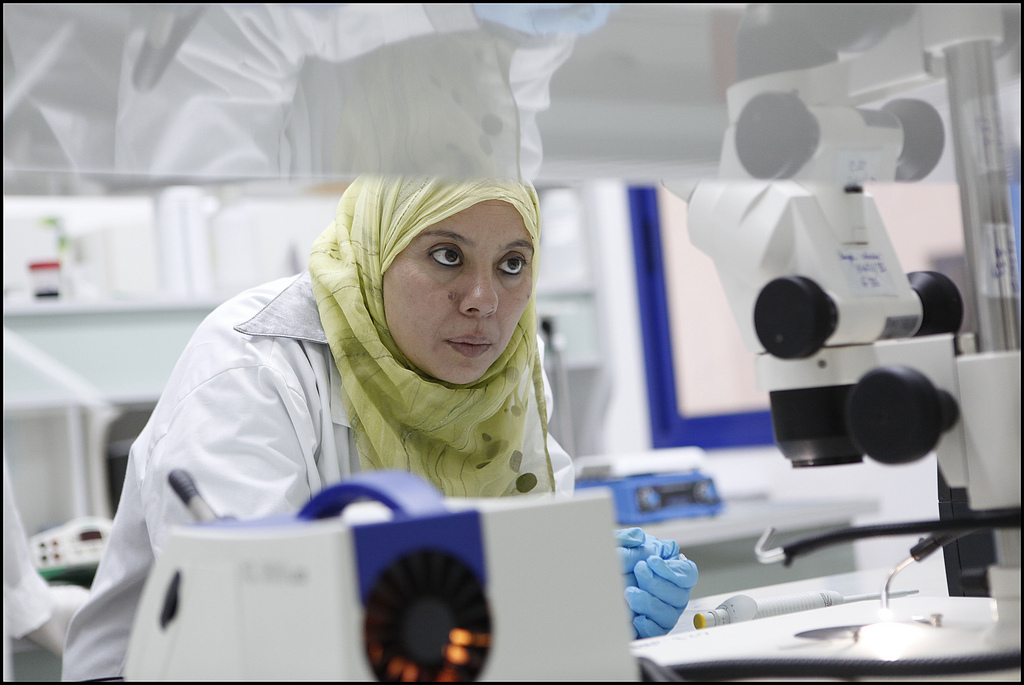
    Paris, France — March 2012. The auditorium is filled to the brim — from the doors to the pulpit. High school children at the back, dignitaries at the front. Looking around you get the sense of a grand occasion in waiting. Shirts, ties and smart casuals. In true international style, headphones are available — the proceedings will be translated into French and English.

    We are within the halls of the Institut Pasteur, right in the heart of Paris. A place whose name signposts the amount of history that comes along with it. In his time Louis Pasteur made some of the greatest breakthroughs in modern medicine. You get the sense something on that scale is about to happen.

    Six empty chairs sit on a raised stage at the front of the auditorium, below a presentation screen with two logos and four words. The logos are unmistakable. L’Oreal and UNESCO have come together “For Women In Science