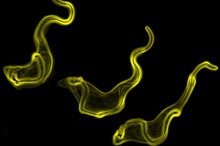
As with many parasites, the nuisance they bring is partly compensated for by new insights they provoke. The African trypanosome is perhaps unique among all of the diseases of developing worlds. The diseases of sleeping sickness, inflicted on man and cattle alike, perhaps drove early man ‘out of Africa’ — in an attempt to avoid tsetse infested areas of the Rift Valley. The Zulu word for powerlessness and useless, “N’gana
Author: Charles Ebikeme
-
Morphine Hurts
Why does Morphine cause pain?
He was diagnosed with testicular cancer at the age of 27. At the age of 39 he was in so much pain he begged his doctors to die. He was in pain because of morphine. In the 12 years he lived since he was diagnosed he had a therapeutic regimen that allowed him to have a good quality of life. His pain was controlled by bursts of sustained-relief morphine twice a day. Up until a family trip in November of 2000 there were no problems. Then the pain got inexplicably worse.
“Beating, shooting, stressful, squeezing, piercing, constant and terrifying” were the words he used to describe his torment. Any movement made it worse. In the end he had to lay “very, very still
-
Weekly Science Picks
With 2012 firmly behind us, with no more reflections and no more top ten lists, let’s begin…
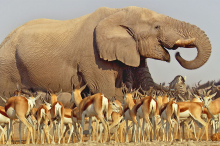
The BBC. As warm and comforting as mother’s milk. A beacon for the rest of the world to follow. Journalistic integrity, and more bang for your buck than any other establishment I can think of. There is nothing the BBC does so well as documentaries, namely nature documentaries. BBC Africa is the latest in the long line of documentaries, in the grand tradition of nature documentaries. Then there is David Attenborough. A man no one can find fault with. And the voice of Mother Nature! If you have a chance to catch this series, do not miss it. If your country is not fortunate enough to be bestowed with the British Broadcasting Corporation… then emigrate!
This time of year that virus from Norwalk is always in the news. I’ve written about it before. Norovirus is the perennial winter vomiting bug. It seems, this year’s outbreak was particularly one of note — causing over 1 million cases in the UK alone. Carl Zimmer explains why it is “possibly the best pathogen
-

2013: The Year to Come
The 21st century is now a teenager. We prospered. We suffered. But most of all, we survived. Here’s to 2012 and the year ahead. 2012 was a remarkable year, especially for science. There were world firsts and breakthroughs. The story of the Higgs boson definitely made the top of many lists. The relentless march of scientific progress is always long and 2013 will mark another chapter.
Where will the science firsts and breakthroughs come from? Of course we can never predict where the big science stories will come from. And that is part of the beauty. But at least 2012 has told us where to look.
The NASA Mars rover Curiosity still treks on. NASA’s Mars Science Laboratory Project is using Curiosity during a two-year prime mission to assess whether areas inside Gale Crater ever offered a habitable environment for microbes. So there are still much to discover on the red planet. Curiosity explores the Glenelg region during the early part of the year. Then it will venture on, a 6 to 9 month journey across the martian landscape taking in the sights and seeing what is there to discover.
In 2013 expect the comet Ison to garner some column inches towards the back end of the year. In early 2013 October it will pass very near Mars and possibly be visible to rovers and orbiting spacecraft. The newly discovered comet could develop a spectacular tail, becoming as bright as the full Moon as it passes by our Sun. The comet is currently falling toward the Sun from between the orbits of Jupiter and Saturn. There is a chance it won’t survive this encounter. Whatever survives will then pass nearest the Earth in late 2013 December.
In 2012, disaster relief made prime time news. In our ever-changing climate, disasters are becoming more of a recurring topic. Hopefully, 2013 will give us a little bit more foresight in this department. We have to mitigate better, and lessen the damage and destruction of human life.
In 2013, we shall eradicate guinea worm. Polio is also on the list, but progress is slow on that one. Smallpox, rinderpest, and guinea worm makes three. More remarkable than the other two because we will do it without any cure or drug treatment. Our science has produced no miracle cure, no vaccine, no treatment, and yet guinea worm will be gone.
We are constantly at the frontiers of science and we don’t know quite what to expect. What we can be sure of is that as the news breaks, the science will be covered by bloggers and journalists, at both ends of this new media scale. The science writing ecosphere has seen very little change in 2012. The furniture was rearranged as some writers found new homes for their blogs. But for the most part, the living room stayed the same. If anything there was a proliferation of new voices to add to the mix. PLoS Blogs added a nice mix of public health bloggers to their roster. Mind the Science Gap continues to prove to be a great experiment in letting new voices into the science writing game. A new batch of bloggers takes to its site in January for another 10 week stint. Certainly here at Australian Science we’ve added a long list of new bloggers. Expect this to continue.
So here’s looking forward to what 2013 has in store.
-
Predicting the next epidemic
In some parts of this world the rains predict disease, and a hot, dry, dusty wind is the harbinger of a meningitis outbreak that is yet to come. Now, from where you sit, Google will soon predict the next great epidemic.
At this time of year, ever since that 2009 paper was published on flu trends, seasonal influenza and how we predict it, is a recurring topic.
It seems we are always moments away from the next great flu epidemic. This year saw a novel coronavirus make the rounds. A virus that usually causes nothing more serious and common than a cold, was the source of severe respiratory illnesses in the Middle East, with reported cases coming from Qatar, Saudi Arabia and Jordan, and resulting in 5 fatalities.
The curious case of the novel coronavirus is a new strain of virus that has not been previously identified in humans. The hypothesis is that it jumped the species barrier, but, as of yet, a definitive origin has not been identified.
When a disease will decide to jump the species barrier is hard to predict. Some of the most serious afflictions of humans in recent times have had their origin in animal diseases. HIV/AIDS and ebola being the prime example. Seasonal influenza is another — causing tens of millions of respiratory illnesses and up to half a million deaths worldwide each year.
In mankind’s eternal struggle against disease, as the adage goes, prevention is better than a cure. But how do we prevent disease? How do we mitigate for an oncoming plague or pestilence? A part of this prevention is predicting it.
Currently, we can only really predict an epidemic when it is currently in motion. Hospitalizations are the only way we can really track a disease. When it is possibly already too late. When people are already sick.
In the week the world was supposed to end, the European Centre for Disease Control (ECDC) released its weekly report on influenza surveillance, like it had done since week 40 of this year. The report aggregates data on influenza-like illnesses reported in primary health care facilities, as well as virological and clinical data.
Flu surveillance, in Europe and similarly in the US, is based on nationally organised sentinel networks of physicians, mostly general practitioners (the first person you go see when you’re ill), covering at least 1 to 5% of the population in their countries. Each sentinel physician reports the weekly number of patients seen with influenza-like illnesses and acute respiratory illnesses.
The report is essentially there to tell us when a flu epidemic is going to break out. In week 49, ECDC announced that the season of influenza transmission had begun.
Along with the direct methods of detecting and monitoring disease, in recent years new and innovative non-direct methods have been tested. From sales of over-the-counter medication to online activity. The idea is to try and record health-seeking behaviour… ie before the disease has taken hold in a population.
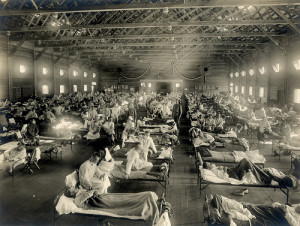
Emergency hospital during influenza epidemic, Camp Funston, Kansas. Monitoring disease, 140 characters at a time…
Flu is a disease very amenable to being searched and turning up in social media. Health-seeking behaviour — in this day and age, we google every ailment. However, diseases which are more serious probably won’t follow this social pattern.
The concept is essentially trying to “predict the present
-
Weekly Science Picks
Science Sunday! Our recurring collection of some of the week’s blogs and science articles that you may have missed.
World AIDS Day
The month of December begins, as it always does, with World AIDS Day. A day to raise awareness about HIV/AIDS and demonstrate international solidarity in the face of the pandemic. A day to reflect on how much we have accomplished and how much is still left to be done. Our very own Rayna Stamboliyska, writing in Future Challenges, asks the question “when will we live in an AIDS-free world?
-
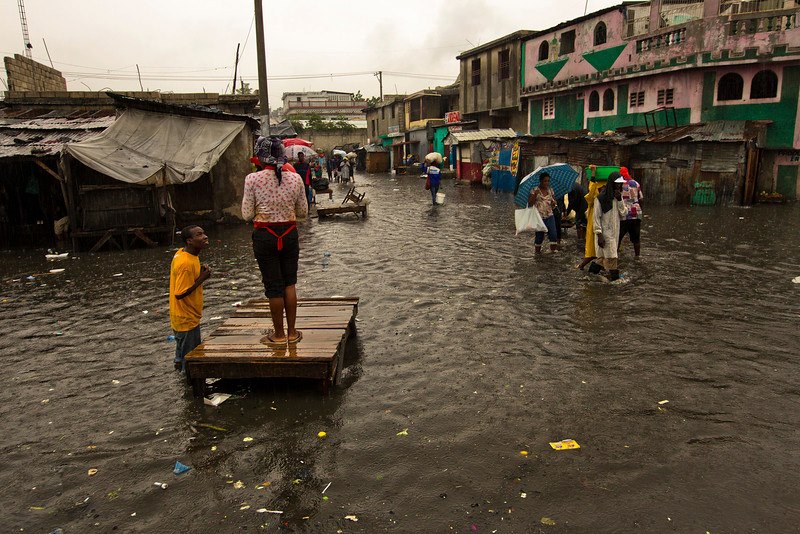
Sandy’s aftermath
Before hurricane Sandy touched down on the east coast of America, it passed through the Caribbean, causing around 80 fatalities — 60 of them occurred in Haiti, 11 in Cuba, two in the Bahamas, two in the Dominican Republic and one in Jamaica.
Hurricane Sandy started life out over central America, nonchalantly, as a collection of winds that would eventually gather momentum, speed and energy. It began its non-discriminating path through the Caribbean, eventually to hit Puerto Rico and the Dominican Republic as well. As it hit Jamaica it was a category 1, destroying around 1500 hectares of farmland. In Cuba the next day it was a category 2, destroying banana, coffee, bean and sugar crops. Sandy destroyed roughly 30% of the nation’s coffee farms. Add to that the 200,000 damaged homes. The Bahamas archipelago was next, before it would set it sights on America’s eastern seaboard.
While most of the focus of western media centred on the damage Sandy caused in America, especially this close to a Presidential election; there were few news outlets that reported what had passed in the Caribbean — outside the death tolls and damaged infrastructure. Indeed, as it is becoming more and more apparent, it is always the blogosphere that provides an adequate source of information. Hurricane Sandy’s progression was followed by bloggers on the ground, giving another side of the story we don’t often get to see.
But it is in Haiti, a country that has yet to recover from tropical storm Isaac that hit in August of this year, as well as the earthquake of 2010, that felt the worst of Sandy’s wrath. 1.8 million people in Haiti are affected by the storm, according to the United Nations relief agency.
With everyone concerned with the numbers, damage, and brute destruction, there is the underlying problem that any disaster hit area has to deal with. Namely, the aftermath. It is the aftermath of the Caribbean region we must now think about. There will be the inevitable worry about food prices from this point on. Huge crop losses in southern Haiti raise famine worries.
Prime Minister Laurent Lamothe, after assessing the damage, said “Most of the agricultural crops that were left from Hurricane Isaac were destroyed during Sandy, so food security will be an issue.”
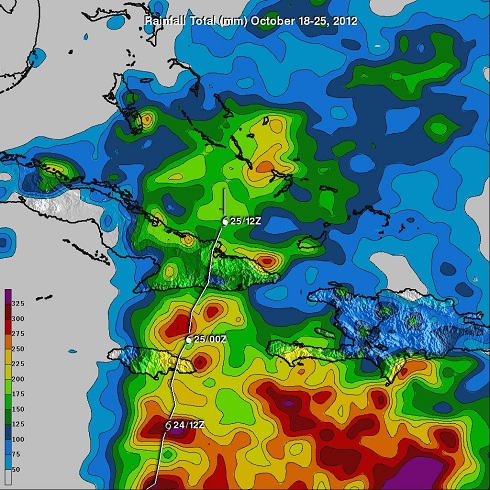
Rainfall totals for the seven-day period Oct 18-25, 2012. Image courtesy of SSAI/NASA, Hal Pierce Three days of constant rain caused rivers to overflow and the floodwaters to rise. Most of southern Haiti is underwater. In the whole Caribbean region rainfall amounts as high as 250 millimeters were measured over eastern Cuba and some extreme southern areas of Hispaniola. Haiti experienced 20 inches. Port-au-Prince receives an average annual rainfall of 54 inches.
As the rains stopped the damage is only made worse to the tune of infectious diseases such as cholera. Haiti has been fighting a cholera epidemic since 2010. A cholera outbreak that has killed over 7400 people and left up to 600 000 sick across the country.
According to the Pan American Health Organization (PAHO) and the WHO, there is an increase in cholera cases in the south and south-east, where 49 cases and 9 deaths have been recorded.
The list of infectious disease outbreaks following natural disasters is long. Although, usually there are some that are more common than others. Diarrheal diseases, acute respiratory infections, malaria, leptospirosis, measles, dengue fever, viral hepatitis, typhoid fever, meningitis, as well as tetanus and cutaneous mucormycosis have all been documented as the incidence and magnitude of natural disasters increase.
Natural disasters and infectious diseases outbreaks represent a significant challenge. But they do not necessarily go hand in hand. Disasters do not transmit infectious diseases. But the risk of infectious disease is multiplied by the change in situation — populations displaced, overcrowding, limited access to food and water, and public health breakdown.
Haiti’s Prime Minister, Laurent Lamothe said “I am launching an appeal to international solidarity to come and help the population, to help support the completion of our efforts towards saving lives and property,”
Flood disasters are the most common natural disasters throughout the world, and diarrheal diseases are the leading cause of death from displaced populations living in camps. France has promised to rebuild seven destroyed bridges and Mexico has offered food. How Haiti deals with the aftermath of Sandy will be one to follow closely.
-
Weekly Science Picks

Bob Dylan and the curse of self-plagiarism. Disclaimer: this weeks theme largely relates to Bob Dylan. Up first — here comes a story of a Hurricane!
With frankenstorm Sandy in the news, Empirical Zeal asks the question “What is the true measure of a storm?
-

Panique au village: the revolution that caused an epidemic

It boasts, struts, and flaunts with that kind of assurance that only comes from the mentality of knowing that you are right, and that even if you may be wrong, others will admire you for it. This is Paris.
Where other cities flowed and spilled out to occupy a space larger than its originality, Paris said enough is enough and contained itself. To this day only the “arrondissements
-
Giant Impact: making the moon
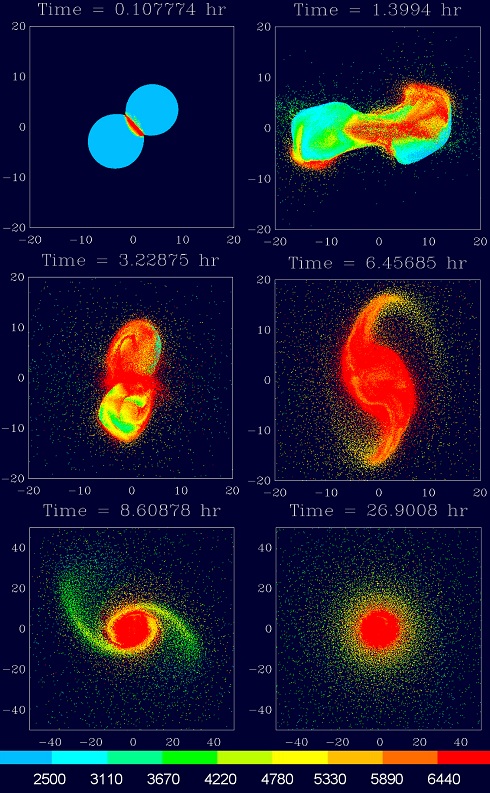
It began… where it always begins — out there — in the vastness of space. What would it look like, that void of empty nothingness? So early on in the sound of creation, indescribable things all around. Not yet planets, not yet moons. Not yet defined. A titanic mass of rock. Different. Ugly and melancholic. Mischievous and cumbersome. As immediately as it’s gone, another smaller rock — about a tenth the size of its predecessor — in the other direction. We will come to realise that they are almost on the same path. A perilous planetary orbit around our sun.
One is a destroyer. The other is to be destroyed. The larger mass continues to grow as it gobbles up remnants from a cloud of dust. A hot, violent place with molten rock mantles wrapped around a dense hot core. On the other side of our sun swings the smaller mass. Both will have the same fate. On the far side, they collide. A cataclysm of apocalyptic proportions. In the vacuum/vacuous of space not a sound is heard. The smaller rock ploughs into its destroyer, like the little man in a fight with a lot to prove. It sinks deep into its molten core. Spiralling vast amounts of debris in long arcs into orbit. Debris, drawn together by nothing more simple than gravity, clump together, forging something close to a primitive moon. And with primitive moons come primitive planets. Finally, one defines the other.
This has always been the theory… at least, more eloquently put in the form of maths, calculations, numbers and analysis. The origin of our Moon by giant impact has always been the leading theory. Leading because it is able to explain so many features of the Earth-Moon system. From it’s current spin and angular momentum to its composition. Both Earth and Moon are very similar in their oxygen, tungsten, chromium, and titanium isotopes — leading to the logical conclusion that one was formed from the other, since these isotopes vary differently in different planetary bodies and meteorites.
However, simulations have shown this not to be the case. It is the Moon that should have a similar isotopic composition to the smaller impactor in this scenario, but instead it is made up mostly of material from Earth. Researchers had been tinkering around with the permutations and combinations to find such a scenario of impact that could satisfy all conditions. But to date, none had come close.
In papers published in Science by researchers from Harvard and the Southwest Research Institute, a new model is proposed. One that adequately accounts for a similarity in composition while also coming out with an appropriate mass for Earth and Moon. One paper describes two bodies of similar mass colliding slowly, while the other describes a giant erosive impact (with a small impactor) happening really fast. Both have the same solution to the problem. That is to have the Earth-Moon system losing angular momentum over time, reaching its present state through the Sun’s gravitational influence. Thereby, in the end, both coming to a compromise in explaining the physics and the overall geo-chemistry of the Earth-Moon system.
-
The evolution of human mortality
How long until we live forever?
The general consensus is that we are getting older and living longer. Despite consequences and kryptonite, it is getting easier to stay alive. Heaven can wait, it seems. Every year each baby born is expected to live 3 months longer than its predecessor of the previous year. This has been the case for the last 160 years. A stunning display of the ability we humans have to prolong the length of life. And it is this simple fact of life that economists and politicians are struggling to deal with — an ageing population and not enough resources to go around.
But outside of this there are some interesting and important questions to pose when thinking about human mortality. Does our mortality have a basis in our genetics? Researchers, publishing in PNAS, wanted to know if this reduction of mortality was as a result of a possible genetic shift or something much simpler. They wanted to understand the evolutionary context for variation in human mortality patterns — particularly comparing those of today to hunter-gatherer populations. Modern-day hunter-gatherer populations which are used as a proxy in evolutionary terms.
What they found was a significant decrease in human mortality. The vast majority of this mortality reduction has only occurred since 1900 and has been experienced by only about 4 of the 8,000 human generations that have ever lived. An astounding fact.
The average age-speci
-
Weekly Science Picks
Happy Birthday!
This first week of October there seemed to be a recurring theme — one of birthdays. On the 1st Nigeria celebrated 52 years of independence, followed closely Germany celebrating unity on the 3rd. But possibly the oldest this week had to be the birthplace of tropical medicine — the London School.
“On the 2nd October 1899 the London School of Tropical Medicine at Royal Albert Dock opened its doors to 11 students. An inaugural address was given by Patrick Manson which discussed issues around the lack of training in Tropical diseases and the need to increase knowledge and awareness.
-
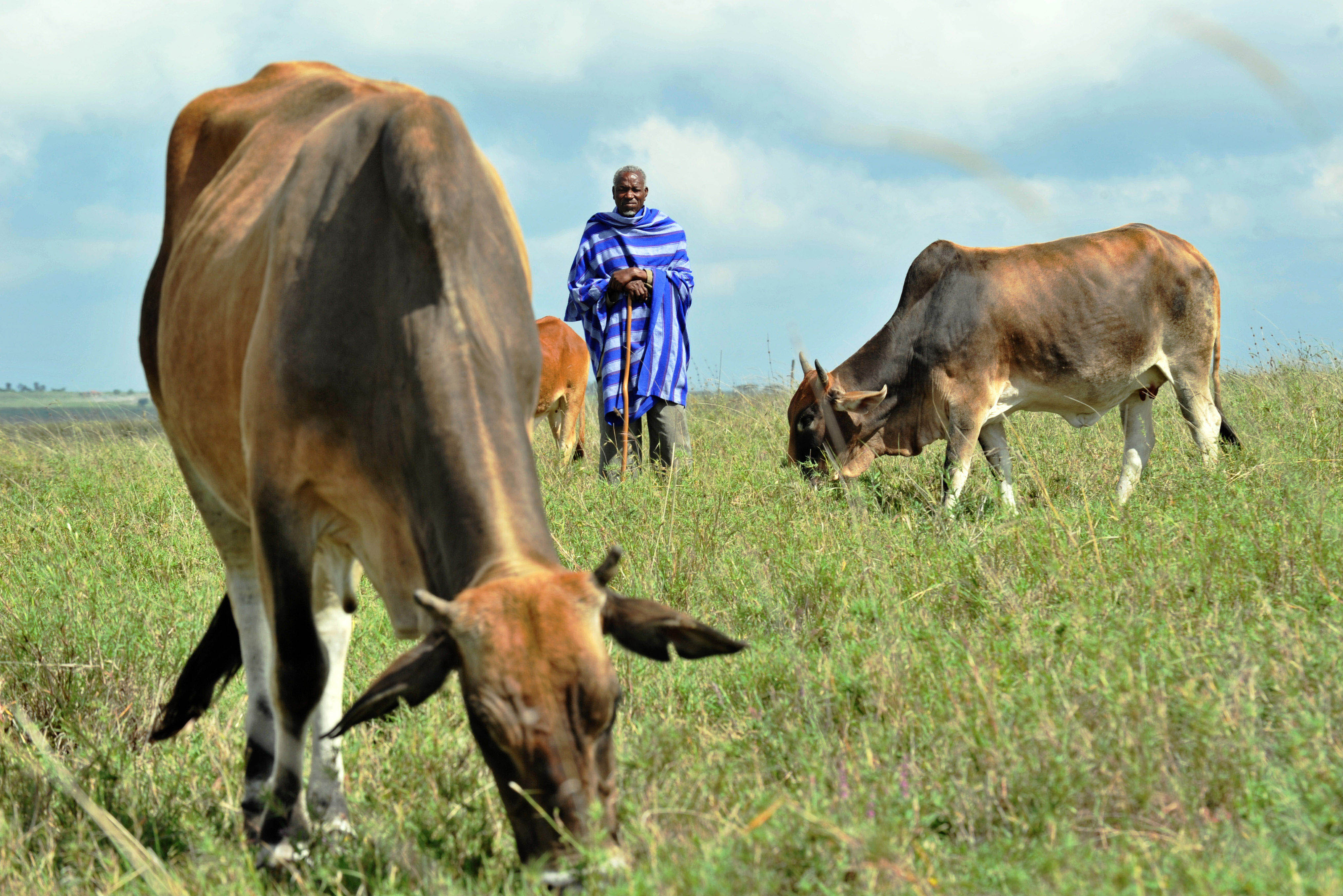
The tribe that eradicated rinderpest
Karamoja region in northern Uganda is one of pastoral communities and closely dispersed ethnic groups that rely on livestock for their livelihood. It is within a semi-arid place like this that economies based on meat, milk, and blood from cattle thrive. In communities such as this one, cattle plague will always be the number one fear.
The morbillivirus rinderpest goes by many names — cattle plague in the old english or “loleoo

