Author: Editorial Board

  • Where Are We On Recycling And Is It Enough?

    Where Are We On Recycling And Is It Enough?

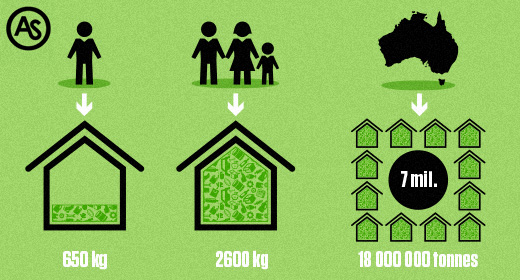
    Behind USA, Australia is the largest waste producer, per person, in the world. The average Australian citizen produces over 650 kg of waste per year, making a family of 4 produce enough waste to fill a three – bedroom house, from the floor to the ceiling! Annually, we contribute to over 18 million tonnes of waste, half of it coming from households.

    Every day, 1% of households and businesses in Australia change their waste management tactics and focus their efforts into recycling, making Australia one of the global leaders when it comes to recycling contribution. Raising awareness plays a major role to the contributing factors and it will continue to do so until we begin minimising our waste output and maximising recycling and re-production, respectively.
    recycling

    Two recent studies have shown us just how deep of an impact recycling plays on the environment and on general energy consumption.

    1. Life Cycle Assessment for Paper and Packaging Waste Management In Victoria – Melbourne’s research project, lead by a group of universities to investigate the environmental benefits of recycling waste against landfill waste.
    2. Nationwide research, commissioned by the National Packaging Covenant Council (NPCC), called Independent Assessment of Kerbside Recycling in Australia. As the most comprehensive study of recycling ever conducted in Australia, this research report measured the financial, social and environmental impact of recycling by comparing costs and benefits.

    Two different methods were used to analyze and compare the impacts of recycling and that of dumping waste into a landfill. Both studies have proven that recycling plays a major role in the preservation of the environment, while cutting down energy, thus lowering the cost of future production.

    Lowering Greenhouse Gases

    Nearly half of the greenhouse savings created by recycling were found to be from lowering the creation of methane gas: Methane gas is generated at landfills as paper waste breaks down (Around 55% of that methane gas would be held just for generating power). The rest of the greenhouse gas de-escalation occurred by getting rid of of virgin material production (If a product was made from raw material rather than recycled material, more carbon dioxide, with other greenhouse gases would have been generated).

    Energy

    Savings

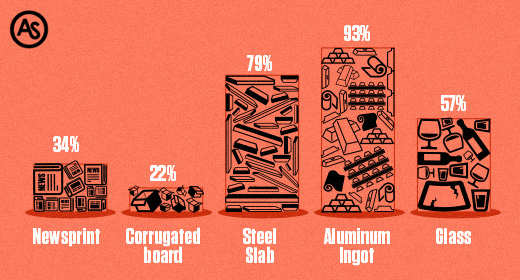
    Recycled products presented lower levels in embodied energy: energy consumed during every step of the production, from the product retrieval of the raw materials, to the processing and finally the disposal or recycling.

    Product Embodied 
Energy Savings:
    recycling

    As the initiative to recycle grows globally, Australians have been amongst the first to lead the pack. General awareness is on a high level and the will to contribute rises with it.

    A study, by the Australian Bureau of Statistics, was conducted in 2012, where 8,692 households were interviewed, The study concluded that out of the total number, 8,422 households took a part in recycling, 6,328 stated that they reused products, while only 183 households admitted that they never recycle and never reuse.

    The same study provided us with the most common objects recycled in Australia. Leading the way, paper and cardboard are the most recycled materials nationwide.
    recycling

    Paper and Cardboard

    • Over 5 million tonnes of paper and cardboard were used from 2007 to 2011, and only 2.5 million tonnes were recycled.
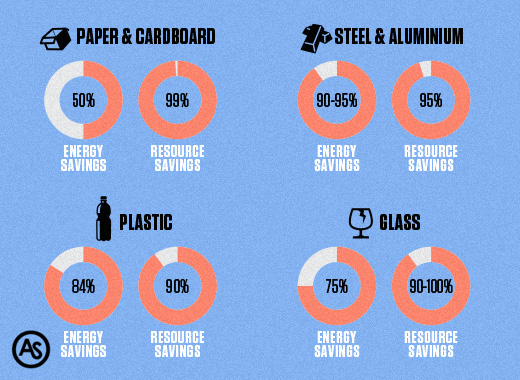
    • Making paper from recycled materials used 99% less water and 50% less energy than making it from raw materials
    • Paper breaks down very slowly in landfills due to the lack of oxygen, thus creating methane gas which has a greater greenhouse gas impact on the environment

    Steel and Aluminium

    • In 2010, only 30.3% of steel and aluminium in Australia was recycled. This means that over 50% of steel and aluminuim still goes into landfills across the nation.
    • Almost every Australian has access to recycling services, yet they do not feel the need to visit them. It has been estimated that in the same year, Australians sent enough steel and aluminium to landfills to make over 40,000 fridges!
    • Producing one aluminium can from raw material takes up as much energy as producing 20 of them from recycled materials
    • More than 2 billion cans are recycled in Australia each year
    • Energy saved from recycling one aluminium is enough to keep a TV running for over 3 hours

    Plastic

    • Australians use over 350,000 tonnes of plastic every year. In the year 2010, 288,000 tonnes were recycled.
    • While the production of plastic required coal, oil and gas, its production emits greenhouse gasses and contaminates our oceans.
    • Making plastic bottles from recycled materials uses 84% less energy than that of its production from raw materials.
    • By creating products from recycled plastic, we use 90% less water, reduce carbon dioxide by 2.5 tonnes and lower energy usage by over two thirds.

    Glass

    • Glass is made from ash, soda, limestone and sand, which make it able to be recycled an infinite amount of times.
    • Making products from recycled glass uses 75% less energy than from raw materials
    • 25% of new bottles and jars are made from recycled glass

    Organics

    • Organic materials undergo anaerobic decomposition, which generates a potent greenhouse gas – methane.
    • Food organics in landfills is the second largest source of methane
    • Around two-thirds of all waste sent to Australian landfills consists of organic materials

    On average, every Australian citizen, annually, throws out 330 kg of paper, 552 kg of aluminum cans and 414 kg of food. In today’s society, we are able to virtually recycle anything that we use on a daily basis. Extensive research and advances in technology will push that barrier even further over the course of years. Although we are making great strides towards progress, there is always room for improvement. One of the greatest initiatives taken by the government is the creation of the Perthwaste Green Recycling. Recycling plants such as this one safely exhaust every opportunity to recycle, cost – effectively. Building and using more of these plants will get us to our desired goal in a shorter amount of time.

    Between years 2007 and 2011 Australians increased their recycling efforts from 21.4 million tonnes to 27.3 million tonnes (all recycled materials – Australians throw out 18 million tonnes of waste per year). We still have to work toward removing waste from landfills and creating new products by reusing the old. By reducing landfill waste, we will preserve our environment and prevent further climate changes, simply by the removal of greenhouse gasses. Reusing waste materials and creating environmentally friendly products will only play a contributing role in saving our planet.

    Source: http://www.environment.gov.au/topics/environment-protection/nwp/reporting/national-waste-stream

    Source: http://wastech.com.au/case-studies/perth-waste/

    Source: http://www.pca.org.au/site/cms/documents/packaging-issuesandpuzzles.pdf
    Source: http://recyclingweek.planetark.org/recycling-info/

    Source: http://www.environment.gov.au/system/files/resources/cb4ad924-aaf8-4127-b8a1-31a30c2eca82/files/national-waste-policy-implementation-2013.pdf

  • Assessing the Asteroid Impact Threat: Are We Doomed Yet?

    Assessing the Asteroid Impact Threat: Are We Doomed Yet?

    “Watch therefore, for ye know not the day nor the hour,” could be still an actual description of our ability to predict asteroid threats to Earth.

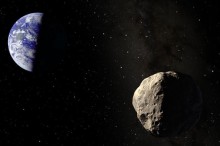
    The sentence from the Bible (Matthew 25:13) sound like a reminder of a vast number of more than 1,500 currently potentially hazardous objects, floating in space, meandering around in the Solar System. Some of them may be destined to pay our planet a close visit someday, unexpectedly, Chelyabinsk-style, as the one that hit Russia in February 2013, causing serious damages and injuring about 1,500 people. Who would have predicted that? Lately, one of the potentially hazardous asteroids, named 2014 UR116, created quite a buzz when various media reported that the 370-wide space rock may hit Earth. Its impact would cause an explosion 1,000 times greater than the Chelyabinsk meteor. But the discoverer of 2014 UR116, Vladimir Lipunov, a professor at Moscow State University, becalms the public. “This asteroid will not collide with Earth during the next 100 years,” Lipunov told astrowatch.net.

    Potentially Hazardous Asteroids (PHAs) are space rocks larger than approximately 100 m that can come closer to Earth than 0.05 AU. Currently none of the known PHAs is on a collision course with our planet, although astronomers are finding new ones all the time.

    Lipunov said it is difficult to calculate the orbit of big rocks like 2014 UR116 because their trajectories are constantly being changed by the gravitational pull of other planets. He noticed that the scientists can’t say precisely when the asteroid will approach the Earth. “We should track it constantly. Because if we have a single mistake, there will be a catastrophe. The consequences can be very serious,

  • Kangaroos eating reptiles out of house and home

    Kangaroos eating reptiles out of house and home

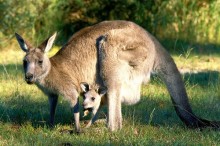
    Large numbers of kangaroos are threatening an endangered species and are eating some lizards out of house and home, new research has found.

    Australian National University (ANU) researcher Brett Howland has found large kangaroo numbers destroy the grassland habitats of reptiles.

    “When there are too many kangaroos, they over-graze grasslands until they are like a lawn, which leaves lizards with no shelter,” said Mr Howland, from the Fenner School of Environment and Society.

    “Just because kangaroos are native doesn’t mean they don’t do damage. We have to regulate their numbers if we want to retain a variety of reptiles,” he said.

    Mr Howland studied lizard populations, which provide a good yardstick for the health of grasslands. Lizards depend on grass cover for both food and shelter, they are an important part of food webs, they are food for birds and small mammals, and provide pest control by eating insects.

    “Grass over 20 centimetres tall housed the greatest number of reptiles,” Mr Howland said.

    “The current number of kangaroos in some of Canberra’s parklands, over 300 per square kilometre, removes all tall grass. We should be controlling kangaroo numbers to at most 100 kangaroos per square kilometre in grasslands on average, and even less in treed areas.”

    The study found that in areas where the grass was higher than 20 centimetres there were more than twice as many reptiles, and nearly three times as many species of reptile, than when grass was short.

    “Many reptiles are under threat – species such as the striped legless lizard are on the vulnerable list. They face possible extinction in the near future,” Mr Howland said.

    “However, there are millions of eastern grey kangaroos in Australia, making them one of the most populous large mammals in the world.”

    Without threats from Indigenous hunters and native predators such as the dingo, kangaroo numbers have skyrocketed, Mr Howland said.

    “We are still coming to grips with managing biodiversity,” he said.

    “You can’t lock a reserve up and throw away the key, that doesn’t work.”

    Source and image.

  • Scale-up in effective malaria control dramatically reduces deaths

    Scale-up in effective malaria control dramatically reduces deaths

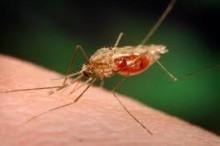
    The number of people dying from malaria has fallen dramatically since 2000 and malaria cases are also steadily declining, according to the World malaria report 2014. Between 2000 and 2013, the malaria mortality rate decreased by 47% worldwide and by 54% in the WHO African Region – where about 90% of malaria deaths occur.

    New analysis across sub-Saharan Africa reveals that despite a 43% population increase, fewer people are infected or carry asymptomatic malaria infections every year: the number of people infected fell from 173 million in 2000 to 128 million in 2013.

    “We can win the fight against malaria,

  • Unlocking the secrets of stem cell generation

    Unlocking the secrets of stem cell generation

    International scientists have carried out the most detailed study of how specialised body cells can be reprogrammed to be like cells from the early embryo.

    The findings are a major advance in stem cell science and could help usher in a new era of regenerative medicine, where a small sample of a patient’s cells could be used to grow new tissues and organs for transplant.

    “This kind of work will speed up the development of treatments for many illnesses that currently have no cure,

  • Programming, Software Development, Computational Thinking or Coding

    Programming, Software Development, Computational Thinking or Coding

    No matter the terminology used, right now educators worldwide are attempting to integrate new ways of thinking into the curriculum. This is no easy task, as timetable pressures, teacher training concerns and equipment funding shortages all make introducing a complex subject all the more difficult.

    Instead of seeing Computational Thinking as a problem subject to be integrated, it is regretful that we can’t embrace it as an opportunity to change how we view many projects. Rather than a dry exploration of syntax and logic, Computational Thinking skills could enable students to build interactive narratives to teach literature and language skills, games to assess maths and spelling and unleash the digital creativity skills we desire in our graduates. A student versed in coding has better design skills than a student who only consumes information, better development skills than a student who never attempts to build anything, and better debugging skills than a student who has never had to fix a broken program.

    In essence, we must continue teaching the 3 Rs, reading, writing and arithmetic, but also consider teaching the 3 Ds: Design, Develop and Debug. This is not without its challenges, namely what do we teach and how do we teach it? Before suggesting some of the tools that we use to promulgate Computational Thinking, let us preface it with the fact that these are mostly Microsoft technologies. Writing as the Microsoft Ireland Academic Team, this will not be a surprise to you, but please note they are also free technologies and you do not have to pay to enjoy and use them in the classroom.

    Probably the most popular programming language for teaching younger students is Scratch from MIT. A block based language that eschews typing complex syntax structures in favour of a Lego-esque design, Scratch is loved by students aged 7 to 77. For students that have reached a high level of competency in Scratch, Kinect for Windows can be added to the mix. The Kinect is a special camera that can track the human body in 3D space. We developed free software called Kinect2Scratch that enables Kinect games and fitness programs to be developed in Scratch with ease.

    For students who want to explore more complex computer science concepts, TouchDevelop is a simple but powerful programming language that avoids typing errors by allowing users choose commands from a palette of contextually aware commands. It works best on a touch screen tablet or laptop, and is compatible with virtually all tablet OS, including iOS, Android & Windows. It can also run on traditional laptops and PCs with a keyboard and mouse, but really excels when used on a touch screen. It is free and available from www.TouchDevelop.com.

    Finally, if students enjoy Minecraft and learning through creative world building, introduce them to programming through Project Spark. A beautiful rendering interactive game creation tool, Project Spark hides a deep and powerful Computational Thinking environment under the guise of a game creation and playing tool. Available free on Xbox One and Windows 8, download it from the Windows Store to start building and learning. We developed a free course for all Project Spark learners.

    Source and image.


  • ANU-CSIRO form new food, agriculture science precinct

    ANU-CSIRO form new food, agriculture science precinct

    The ANU and CSIRO have joined forces in a new collaborative precinct to help build a sustainable future for the environment, agriculture and global food supplies.

    The National Agricultural and Environmental Sciences Precinct (NAESP) was launched by the Minister for Industry the Hon Ian Macfarlane MP.

    The NAESP will bring together the best research brains from ANU and CSIRO to foster research and innovation essential to food security and environmental stewardship in the face of global population growth, land degradation and climate change.

    “The collaboration will transform the way agricultural and environmental research and innovation is conducted in Australia,

  • Science Journal Nature Will Make Its Archives Free to View Online (Kind of), Dating Back to 1869

    Science Journal Nature Will Make Its Archives Free to View Online (Kind of), Dating Back to 1869

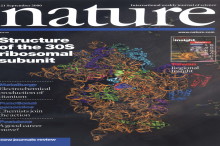
    Nature announced that it will make all of its articles free to view, read, and annotate online. That applies to the historic science journal (launched in 1869) and to 48 other scientific journals in Macmillan’s Nature Publishing Group (NPG). Other titles include Nature Genetics, Nature Medicine and Nature Physics.

    But there are a whole lot of caveats. The press release reads:

    All research papers from Nature will be made free to read in a proprietary screen-view format that can be annotated but not copied, printed or downloaded… The content-sharing policy … marks an attempt to let scientists freely read and share articles while preserving NPG’s primary source of income — the subscription fees libraries and individuals pay to gain access to articles.

    But wait, there are a few more caveats. The archives will be made available to subscribers (e.g., researchers at universities) as well as 100 media outlets and blogs, and they can then share the articles (as read-only PDFs) with the rest of the world. This is all part of a one-year experiment.

    Source and image.

  • Ancient engravings rewrite human history

    Ancient engravings rewrite human history

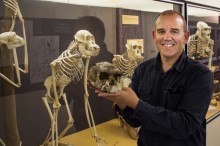
    An international team of scientists has discovered the earliest known engravings from human ancestors on a 400,000 year-old fossilised shell from Java.

    The discovery is the earliest known example of ancient humans deliberately creating pattern.

    “It rewrites human history,

  • Wanderers: A Short Sci-Fi Film About Humanity’s Future in Space, Narrated by Carl Sagan

    Wanderers: A Short Sci-Fi Film About Humanity’s Future in Space, Narrated by Carl Sagan

    Swedish animator Erik Wernquist calls his short science fiction film, Wanderers, a speculative look at “humanity’s future expansion into the Solar System,

  • New report shows universities crucial to ACT economy

    New report shows universities crucial to ACT economy

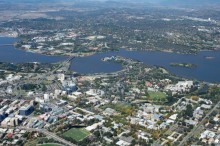
    A new report by Deloitte Access Economics, commissioned by The Australian National University (ANU) and the University of Canberra (UC), found the two leading institutions contributed more than $1.7 billion of activity to the ACT economy.

    The report underlines Canberra’s strength as a university town and demonstrates the importance of the higher education sector to the economy.

    It found that in 2012 around 38,000 students were enrolled at the two universities, accounting for 92 per cent of the tertiary students in the ACT and pushing down the ACT median age to 35 years, lower than every other state except the Northern Territory.

    The report also found every dollar of expenditure on the universities returned 80 cents of value to the local economy, and one in nine people in the ACT were university staff or students.“Canberra is Australia’s top university town, and this comprehensive report shows the benefits to the economy and society of having two great universities in the national capital,

  • Orion Test Flight a Critical Step on NASA’s Journey to Mars

    Orion Test Flight a Critical Step on NASA’s Journey to Mars

    America embarks on a long-lasting trip to Mars this Thursday.

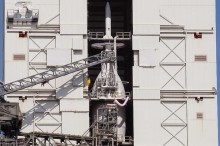
    Orion’s maiden flight, Exploration Flight Test-1 (EFT-1), slated to test spacecraft’s crucial systems is a critical first step on our journey to destinations beyond Earth never before visited by humans, like asteroids and Mars. “Everyone is very excited about this mission,

  • Australia’s living skin bared in stunning three dimensions

    Australia’s living skin bared in stunning three dimensions

    Australia’s vast and complex land surface has been exposed in new ways thanks to the most comprehensive nation-wide digital maps of our soils and landscapes yet produced.

    The entire country is now represented as a digital grid with two billion ‘pixels’ that are about 90 by 90 metres, down to a depth of two metres below the surface.

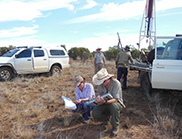
    The Soil and Landscape Grid of Australia, launched today at the National Soil Science Conference in Melbourne, is the result of a partnership between CSIRO, the University of Sydney, several federal, state and territory government agencies and the Terrestrial Ecosystem Research Network (TERN).

    The Grid draws information from the partner agency databases weaving together both historical and current data generated from sampling, laboratory sensing, modelling and remote sensing.

    The Grid also includes estimates of reliability and is designed to integrate new data in the future – even data generated by technology that has not yet been invented.

    Soil and landscape attributes such as soil water, nutrients and clay, affect the sustainability of Australia’s natural resources and the profitability of sectors such as agriculture, mining and infrastructure.

    CSIRO Research Director Mike Grundy said the Grid had already woven together hundreds of millions of dollars’ worth of past soil and landscape science into a new ‘digital tapestry’.

    “The research community has known we need better ways to make this diverse information available; new science and technology has let us make the most of the rich data we have,” Mr Grundy said.

    “From exploring new land use options, to making the most of water, to finding habitats for endangered native species, this technology has applications we are only just beginning to imagine.”

    The Grid will be beneficial to a wide range of applications and users including urban and regional planners, land managers, farming groups, scientists and engineers.

    Alexandra Gartmann, CEO at Foundation for Rural & Regional Renewal and former CEO of Birchip Cropping Group, has worked with rural industries for almost two decades. Ms Gartmann said she was excited by the new technology.

    “Knowledge is power, and our agricultural industries have a very narrow margin for error these days, so the more knowledge to reduce poor decisions, the better,” Ms Gartmann said.

    “Agribusiness will benefit from this technology, both at the farm scale — with data to inform production models and risk management decisions — and industry scale, as it draws together many years of past research and knowledge for future investment decisions.

    “The Soil and Landscape Grid is a huge leap forward. With its national datasets and consistent and comparable data, it has huge potential for regional development, informing planning and decision-making.”

    Source and image.

  • Scientists confirm new bird species in Indonesia

    Scientists confirm new bird species in Indonesia

    Scientists have confirmed a new bird species found in the tropical rainforests on the Indonesian island of Sulawesi.

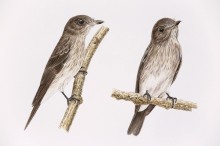
    The Sulawesi Streaked Flycatcher (Muscicapa sodhii) lives in the forest canopy of the rugged hills of Sulawesi, and has heavily streaked underparts and relatively short wings.

    Ding Li Yong, a PhD student at the Fenner School of Environment and Society, was part of an international team which described the bird as a new species.

    “As a kid I was inspired by the great naturalists Darwin and Wallace, and the early explorers who risked their lives by leaving the comforts of Europe for the tropics to collect specimens for science,