Author: Editorial Board

  • How to Dance Your Dissertation: See the Winning Video in the 2014 “Dance Your PhD

    How to Dance Your Dissertation: See the Winning Video in the 2014 “Dance Your PhD

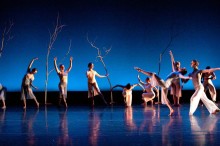
    We’ve seen how modern dance can explain key concepts in statistics (e.g. correlation and sampling error). So why couldn’t dance also illustrate the conclusions of a plant biology doctoral dissertation?

    Uma Nagendra, a graduate student at the University of Georgia, has just won the 2014 edition of the “Dance Your Ph.D.

  • ANU receives $35 million research funding boost

    ANU receives $35 million research funding boost

    The ANU has won more than $35 million in prestigious Australian Research Council (ARC) grants for 90 projects, enabling world-class research across the university.

    “These grants allow the ANU to build on its strengths and further enhance the University’s reputation as a world-leader in research,

  • Bowel cancer cases halve after screening

    Bowel cancer cases halve after screening

    The incidence of bowel cancer is dramatically lower after screening, a new report has found.

    Research involving 200,000 people found that people who had had bowel cancer screening had a 44 per cent lower risk of developing the disease in the four years following screening.

    “This is great news for the community – those who take part in screening and don’t have colorectal cancer have a substantially lower risk of developing the disease over the subsequent years,

  • WHO updates personal protective equipment guidelines for Ebola response

    WHO updates personal protective equipment guidelines for Ebola response

    As part of WHO’s commitment to safety and protection of healthcare workers and patients from transmission of Ebola virus disease, WHO has conducted a formal review of personal protective equipment (PPE) guidelines for healthcare workers and is updating its guidelines in context of the current outbreak.

    About the PPE guidelines

    These updated guidelines aim to clarify and standardize safe and effective PPE options to protect health care workers and patients, as well as provide information for procurement of PPE stock in the current Ebola outbreak. The guidelines are based on a review of evidence of PPE use during care of suspected and confirmed Ebola virus disease patients.

    The Guidelines Development Group convened by WHO included participation of a wide range of experts from developed and developing countries, and international organizations including the United States Centers for Disease Control and Prevention, Médecins Sans Frontières, the Infection Control Africa Network and others.

    “These guidelines hold an important role in clarifying effective personal protective equipment options that protect the safety of healthcare workers and patients from Ebola virus disease transmission,

  • Man Hauls a Piano Up a Mountain in Thailand and Plays Beethoven for Injured Elephants

    Man Hauls a Piano Up a Mountain in Thailand and Plays Beethoven for Injured Elephants

    If we’ve featured Jazz for Cows on Open Culture, then why not Classical Music for Elephants?

    Actually, they’re not just any elephants featured above. They’re old, injured, handicapped, sometimes blind elephants who live in the mountains of Thailand. And the gentleman playing a slow movement from Beethoven’s “Pathétique Sonata

  • New CSIRO software opens Windows to science

    New CSIRO software opens Windows to science

    New software which offers scientists and researchers an easy way to analyse, model and visualise scientific datasets has been released by CSIRO.

    The free software, known as Workspace, is purpose-built for scientific applications and allows researchers to present their findings through stunning visualisations.

    Developed over the past eight years at CSIRO, Workspace has already been used for a wide range of projects, including natural disaster modelling, human movement and industrial and agricultural research.

    One CSIRO team has already used the software to model and visualise simulations for storm surges and flash flooding, helping with disaster management planning. Working with the Australian Institute of Sport, another team has produced a 3D biomechanical computer model of different swimming strokes, allowing athletes to adjust their technique for maximum performance.

    Dr John Taylor from CSIRO’s Digital Productivity Flagship said the software offered huge efficiency savings for researchers from all fields who work with datasets and complex analysis, freeing them up to spend more time focused on their scientific expertise.

    “In institutions all around the world, researchers operate within similar workflows; sourcing data, analysing it, processing it – often using high-performance computing environments,

  • A Quick Introduction to Literary Theory: Watch Animated Videos from the Open University

    A Quick Introduction to Literary Theory: Watch Animated Videos from the Open University

    Just what is an author? It might seem like a silly question, and an academic dissection of the term may seem like a needlessly pedantic exercise.

    But the very variability of the concept means it isn’t a stable, fixed idea at all, but a shifting set of associations we have with notions about creativity, the social role of art, and that elusive quality known as “genius.

  • Immunology researcher wins $25,000 Young Florey Medal

    Immunology researcher wins $25,000 Young Florey Medal

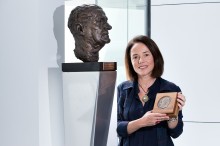
    Professor Carola Vinuesa from the John Curtin School of Medical Research has been awarded the inaugural CSL Young Florey Medal for her research into how the immune system produces antibodies to fight disease.

    “I’m very honoured and flattered,

  • New research centre set to secure food for the future

    New research centre set to secure food for the future

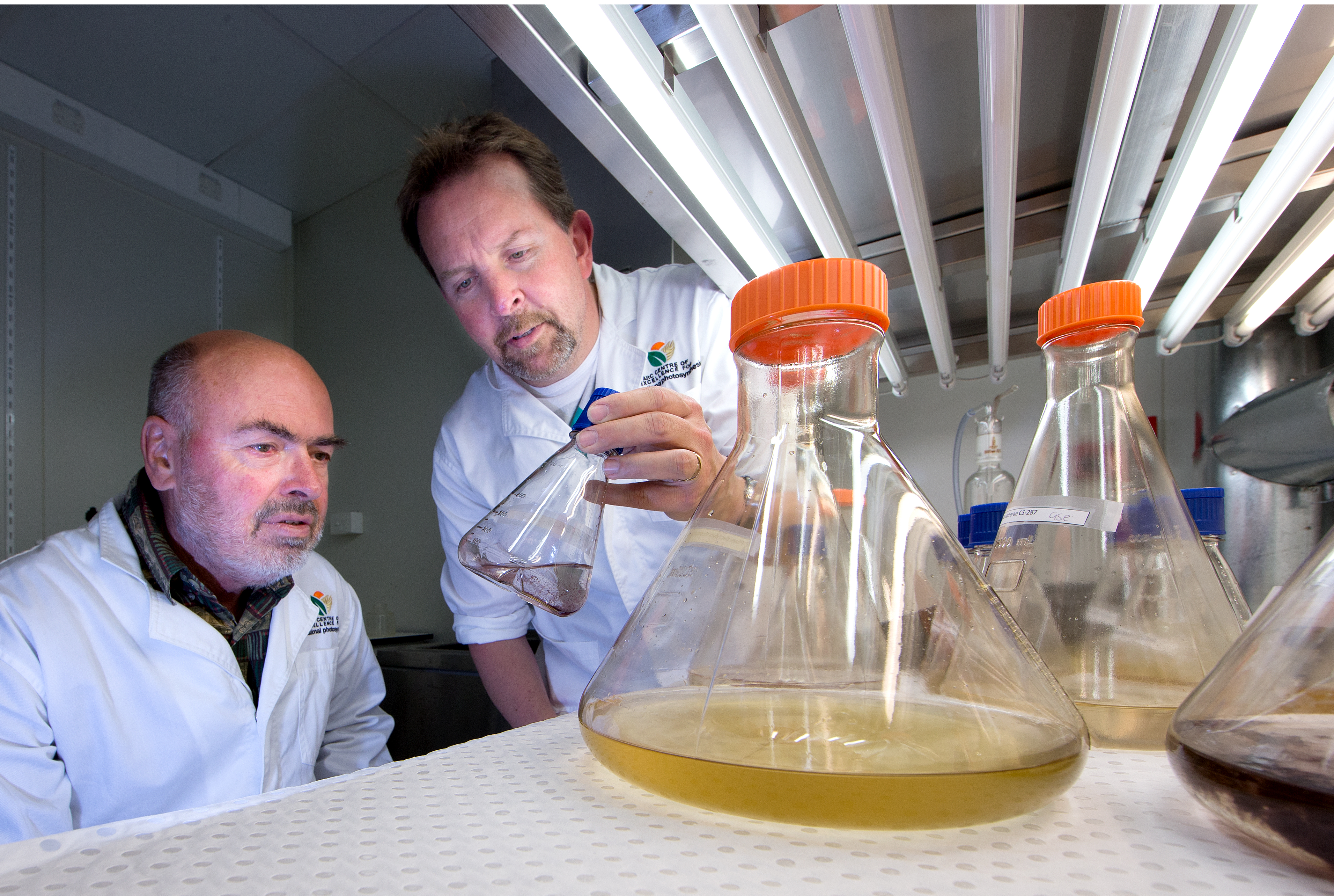
    A research centre exploring new technologies for improving crop yields to secure food supply has been launched at the Research School of Biology.

    The Australian Research Council (ARC) Centre of Excellence (CoE) for Translational Photosynthesis seeks to increase yields of major crops such as wheat and rice by improving the way that plants capture the sun’s energy through photosynthesis.

    “This is an underexploited area of science that could enable us to feed future populations. By 2050, nine billion people are expected to survive on earth with the food resources produced by plants; today’s agricultural methods will struggle to meet these demands,

  • New Animated Web Series Makes the Theory of Evolution Easy to Understand

    New Animated Web Series Makes the Theory of Evolution Easy to Understand

    When it comes to matters of broad scientific consensus, I’m generally inclined to offer provisional assent. Like everyone else, I have to rely on the expertise of others in matters outside my ken, and in many cases, this rational appeal to authority is the best one can do without acquiring the relevant qualifications and years of experience in highly specialized scientific fields.

    In the case of evolution, I happen to find the evidence and explanations nearly all biologists proffer much more persuasive than the claims—and accusations—of their mostly unscientific critics. But as we know from recent survey data, a very large percentage of Americans reject the theory of evolution, at least when it comes to humans, though it’s likely a great many of them—like myself—do not know very much about it.

    But as a layperson with an admittedly rudimentary science education, I’m always grateful for clear, simple explanations of complex ideas. This is precisely what we get in the video series Stated Clearly, which harnesses the power of web animation as an instructional tool to define what the theory of evolution is, and why it explains the observable facts better than anything else. Stated Clearly’s tagline is “science is for everyone,

  • Physicists build reversible tractor beam

    Physicists build reversible tractor beam

    Laser physicists have built a tractor beam that can repel and attract objects, using a hollow laser beam that is bright around the edges and dark in its centre.

    It is the first long-distance optical tractor beam and moved particles one fifth of a millimetre in diameter a distance of up to 20 centimetres, around 100 times further than previous experiments.

    “Demonstration of a large scale laser beam like this is a kind of holy grail for laser physicists,

  • CSIRO produces 3D heel in world first surgery

    CSIRO produces 3D heel in world first surgery

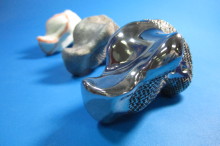
    CSIRO, St Vincent’s Hospital and Victorian biotech company Anatomics have joined together to carry out world-first surgery to implant a titanium-printed heel bone into a Melbourne man.

    Printed using CSIRO’s state-of-the-art Arcam 3D printer, the heel bone was implanted into 71-year-old Len Chandler, a builder from Rutherglen Victoria, who was facing amputation of the leg below the knee following a diagnosis of cancer of the calcaneus, or heel bone.

    St Vincent’s Hospital surgeon Professor Peter Choong was aware of CSIRO’s work in titanium 3D after reading about our work producing an orthotic horseshoe in 2013, and contacted CSIRO’s John Barnes in early June about his vision for a metallic implant which would support the body’s weight.

    At the time, CSIRO happened to be working with the Victorian-based biotech company Anatomics on metallic implant technology and CSIRO brought Anatomics into the discussion with Professor Choong to draw on their experience as a certified custom medical device manufacturer.

    Working from Anatomics’ schematics for the calcaneus heel bone, teams at Anatomics and CSIRO developed the design requirements with Professor Choong’s surgical team. Included in the design were smooth surfaces where the bone contacts other bone, holes for suture locations and rough surfaces to allow tissue adhesion. Anatomics and CSIRO produced three implant prototypes in the days before the surgery.

    In the space of two weeks, from first phone call to surgery, CSIRO and Anatomics were able to custom-design and present an implant part to the St Vincent’s surgical team, in time for the surgery on the second week of July.

    Mr Chandler returned to St Vincent’s Hospital this week for a check-up and said he was recovering well, and able to place some weight on his implant.

    “The customisation of 3D printing is good in emergency situations such as these,” a member of CSIRO’s titanium printing team Dr Robert Wilson said.

    “Custom designed implants mean job opportunities in this area as these types of surgeries become more commonplace.”

    CSIRO is working with a number of major companies and SMEs across Australia to build capacity in biotech and manufacturing.

    “3D printing is a local manufacturing process, meaning Australian companies produce implants for our own patients for our own doctors to use. We would no longer have to rely on imported parts that slow the process down and is less personal for the patient,” CSIRO’s Director of High Performance Metal Industries John Barnes said.

    “At some point in the future we expect that local for-profit businesses will have the capacity to work on projects like this, and meanwhile the CSIRO is here to help local industry grow and build momentum.
  • Lynda Barry, Cartoonist Turned Professor, Gives Her Old Fashioned Take on the Future of Education

    Lynda Barry, Cartoonist Turned Professor, Gives Her Old Fashioned Take on the Future of Education

    With college tuitions ballooning to the point of implosion, and free educational content proliferating online, the future of education is a scorching hot topic.

    So where are we heading?

    Coursera and Khan Academy? Video game-based curricula? Experience-driven microlearning?

    Or school buildings that moonlight as candy?

    So suggested one of the younger participants in a workshop led by the University of Wisconsin’s Assistant Professor of Interdisciplinary Creativity, cartoonist and author Lynda Barry (aka Professor Long-Title).

    Barry’s messianic embrace of the arts has proved popular with students of all ages. When the university’s Counterfactual Drawing Board Project invited faculty, staff, and others to consider what the “appearance, purpose, atmosphere and community of the campus

  • Australian volcanic mystery explained

    Australian volcanic mystery explained

    Scientists have solved a long-standing mystery surrounding Australia’s only active volcanic area, in the country’s southeast.

    The research explains a volcanic region that has seen more than 400 volcanic events in the past four million years.

    The 500 kilometre long region stretches from Melbourne to the South Australian town of Mount Gambier, which surrounds a dormant volcano that last erupted only 5,000 years ago.

    “Volcanoes in this region of Australia are generated by a very different process to most of Earth’s volcanoes, which occur on the edges of tectonic plates, such as the Pacific Rim of Fire