Author: Editorial Board

  • $28.8 million adds up for Indigenous students

    $28.8 million adds up for Indigenous students

    Closing the gap in Aboriginal and Torres Strait Islander achievement and employment in science, technology, engineering and mathematics (STEM) is the aim of a new CSIRO education program, funded by the BHP Billiton Foundation.

    Launched today at Parliament House by the Hon Ian Macfarlane MP, Minister for Industry, the $28.8 million, five-year project will deliver education programs, excellence awards, mentoring, summer schools and tailored university degrees, reaching students and schools across Australia.

    CSIRO Chief Executive, Dr Megan Clark said the new program would support students from primary school through to tertiary education, providing a pathway to increase Aboriginal and Torres Strait Islander representation in STEM related professions.

    “CSIRO has delivered education initiatives across Australia for over 35 years and in parallel to this, we have a dedicated Indigenous science program that not only aims to get more Indigenous scientists working in CSIRO, but also delivers science projects for Indigenous communities,

  • New app offers relief for hay fever sufferers

    New app offers relief for hay fever sufferers

    Hay fever and asthma sufferers in Canberra will soon be able to receive daily counts and forecasts of pollen levels thanks to a free app released by ANU researchers.

    Project leader Professor Simon Haberle says Canberra is a hot-spot for allergy-causing pollen, with up to one-in-five Canberrans affected.

    “Canberra pollen sufferers are in for a tough time this year, with extreme pollen counts predicted for the late October and early November period,

  • Marie Curie on Curiosity, Wonder, and the Spirit of Adventure in Science

    Marie Curie on Curiosity, Wonder, and the Spirit of Adventure in Science

    A short manifesto for the vitalizing power of discovery.

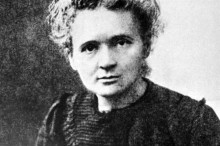
    “Few persons contributed more to the general welfare of mankind and to the advancement of science than the modest, self-effacing woman whom the world knew as Mme. Curie.

  • Study warns swift action needed to curb exponential climb in Ebola outbreak

    Study warns swift action needed to curb exponential climb in Ebola outbreak

    Investigation of new data expands information on spread of outbreak and case fatality rate.

    Unless Ebola control measures in west Africa are enhanced quickly, experts from the WHO and Imperial College, London, predict numbers will continue to climb exponentially, and more than 20 000 people will have been infected by early November, according to a new article in the New England Journal of Medicine released 6 months after WHO was first notified of the outbreak in west Africa.

    In the article, public health epidemiologists and statisticians reviewed data since the beginning of the outbreak in December 2013 to determine the scale of the epidemic, better understand the spread of the disease, and what it will take to reverse the trend of infections.

    Scale of epidemic

    Although WHO was first notified of the outbreak on 23 March 2014, investigations retroactively revealed the outbreak started in December 2013. Between 30 December 2013 and 14 September 2014, a total of 4507 cases were reported to WHO.

    The data in the study help clarify some details of who is most affected by this outbreak. For example, there have been mixed reports on whether women might be harder hit because they are more likely to care for sick, or whether it would be men who might be more likely to bury the highly-infectious dead bodies.

    “This study gave us some real insight into how this outbreak was working, for example, we learned there is no significant difference among the different countries in the total numbers of male and female case patients,

  • Building trust is key to mining’s ‘social licence’

    Building trust is key to mining’s ‘social licence’

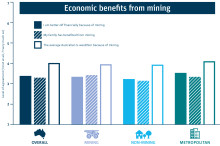
    Australians have endorsed the important role mining plays in the prosperity of the nation but there is still much to be done to bolster the industry’s acceptance, trust and support, according to a CSIRO report released today.

    Released at the International Mining and Resources Conference in Melbourne, the Australian attitudes toward mining report is based on a survey of more than 5000 people Australia-wide.

    According to lead researcher, Dr Kieren Moffat, the survey provides insights and data on community attitudes and possible ways for the sector to build its future opportunities and ‘social licence to operate’.

    A key finding is that, Australians consider that mining is a worthwhile pursuit when you weigh up all the associated benefits and costs,

  • Global carbon dioxide emissions reached 36 billion tonnes in 2013

    Global carbon dioxide emissions reached 36 billion tonnes in 2013

    Global emissions of carbon dioxide from the combustion of fossil fuels reached a new record of 36 billion tonnes last year.

    At the same time, the pace of emissions from burning fossil fuels continues to grow at a high rate.

    Executive-Director of the Global Carbon Project (GCP) and co-author of the 2014 report CSIRO’s Dr Pep Canadell said the carbon dioxide level was “unprecedented in human history”.

    Dr Canadell said fossil fuel carbon dioxide emissions are projected to increase 2.5 per cent this year, bringing the total carbon dioxide emissions from all sources above 40 billion tonnes.

    “Fossil fuel emissions in the past 10 years on average grew at 2.5 per cent per year, lower than the growth rate in the 2000s (which was 3.3 per cent per year) but higher than the growth rate in the 1990s (1 per cent),” Dr Canadell said.

    “The declining growth rate in recent years is associated with lower GDP growth compared to the 2000s, particularly in China.”

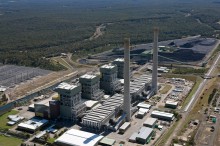
    The report shows that Australian emissions continued to decline in 2013, adding to a downward trend that began in 2009, largely due to the decline in electricity generation from coal power plants.

    The largest emitters in 2013 were China, USA, the European Union, and India, together accounting for 58 per cent of global emissions.

    Fossil fuel emissions are tracking the high end of emissions scenarios used by climate scientists to project climate change using global circulation models.

    The GCP provides an annual report of carbon dioxide emissions, land and ocean sinks and accumulation in the atmosphere, incorporating data from multiple research institutes from around the world.

    The full data and methods are published today in the journal Earth System Science Data Discussions, with associated papers in the journals Nature Geoscience and Nature Climate Change.

    Source and image.

  • A Crash Course on Psychology

    A Crash Course on Psychology

    Novelist, educator, and vlogger John Green has drawn a lot of press lately, including but not limited to a New Yorker profile by Margaret Talbot, in the wake of the film version of his popular young-adult novel The Fault in Our Stars.

    But we here can say we featured him before that magazine of cultural record did: in 2012 we posted his Crash Course in World History, and last October, his Crash Course on Literature. If you keep up with this site, you probably know Green less as a coming-of-age-tragedy-writing “teen whisperer

  • What the Science of “Sleep Paralysis

    What the Science of “Sleep Paralysis

    How a neurological nightmare illuminates the wondrous workings of the brain-body connection.

    “In both writing and sleeping,

  • Australian museums must innovate or risk becoming ‘digital dinosaurs’

    Australian museums must innovate or risk becoming ‘digital dinosaurs’

    Australia’s cultural institutions risk losing their relevance if they don’t increase their use of digital technologies and services, new research has shown.

    Released today by CSIRO, an analysis of Australia’s galleries, libraries, archives and museums (or GLAM industry) has revealed that digital innovation in the sector is inconsistent and isolated. The report provides a roadmap for the industry in order for it to maximise the potential of the digital economy.

    With Australia’s rapid uptake of online and mobile platforms, people are now choosing to access and share information in very different ways.

    According to Dr Michael Bruenig, Acting Director of CSIRO’s Digital Productivity Flagship, many of Australia’s cultural institutions have not kept pace with this change.

    “The report identified that only a few organisations have made fundamental changes to their operations that would allow them to place digital services at their core, rather than as an ‘add-on’ activity,” he said.

    The few cultural institutions that are embracing digital technology are reaping the benefits.

    “For example, it is now possible to visit the National Museum virtually via a guided robot. This innovation means school students in regional Australia are able explore exhibits and engage with the museum, when they otherwise would not have the opportunity to,” Dr Bruenig said.

    The report also showed that Australia is falling behind international best-practice in digitising over 100 million artworks, books and audio-visual items. According to Dr Bruenig, this slow progress means we risk losing public visibility of cultural and heritage material of significance.

    “The way Australia’s collections are managed varies considerably. Some progressive institutions have collections that are fully digitised and can be accessed virtually over the web. However unfortunately some of Australia’s collections are still managed through log books and card indices,” he said.

    The report outlines several recommendations that would allow the GLAM industry to take full advantage of digital technology. These include:

    (1) shifting to open access models and greater collaboration with the public

    (2) exploring new approaches to copyright management that stimulates creativity and supports creators

    (3) sharing skills, standards and approaches to digitisation building on aggregation initiatives like Trove and the Atlas of Living Australia

    (4) standardising preservation of ‘born digital’ material to avoid losing access to digital heritage

    (5) sharing capability, storage and networks between organisations in the sector, exploiting the potential of AARNet and the NBN for collection and collaboration.

    According to Dr Bruenig, by adopting these recommendations and building on some innovative examples in the sector, Australia’s GLAM industry will be in a position to embrace digital, rather than be engulfed by it.

    The report, conducted in partnership with the Smart Services CRC, is based on consultation with representatives from state, national and local galleries, libraries, archives and museums, researchers and international experts.

    Source and image.
  • New data show child mortality rates falling faster than ever

    New data show child mortality rates falling faster than ever

    New data released today by the United Nations show that under-five mortality rates have dropped by 49% between 1990 and 2013. The average annual reduction has accelerated – in some countries it has even tripled – but overall progress is still short of meeting the global target of a two-thirds decrease in under-five mortality by 2015.

    New estimates in “Levels and Trends in Child Mortality 2014” show that in 2013, 6.3 million children under five died from mostly preventable causes, around 200 000 fewer than in 2012, but still equal to nearly 17 000 child deaths each day.

    “There has been dramatic and accelerating progress in reducing mortality among children, and the data prove that success is possible even for poorly resourced countries,

  • Plastic on the coasts is ours

    Plastic on the coasts is ours

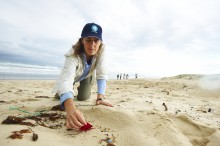
    The world’s largest collection of marine debris information has identified Australia’s coastal rubbish is mainly plastic from Australian sources.

    In a report released today, CSIRO scientist Denise Hardesty says her team surveyed sites approximately every 100 km along the Australian coastline.

    “We found about three-quarters of the rubbish along the coast is plastic,

  • William Gibson Reads Neuromancer, His Cyberpunk-Defining Novel

    William Gibson Reads Neuromancer, His Cyberpunk-Defining Novel

    With 1984’s Neuromancer, William Gibson may not have invented cyberpunk, but he certainly crystallized it. The novel exemplifies the tradition’s mandate to bring together “high tech and low life,

  • Montaigne and the Double Meaning of Meditation

    Montaigne and the Double Meaning of Meditation

    “There is no exercise that is either feeble or more strenuous … than that of conversing with one’s own thoughts.