Author: Editorial Board

  • Neanderthals and Modern Humans coexisted

    Neanderthals and Modern Humans coexisted

    Neanderthal groups lived alongside modern humans for several thousand years, an international team of scientists has found, overturning previous theories about the extinction of Neanderthals.

    The team applied a new radiocarbon dating method which revealed that Neanderthals across Europe did not all die out at one time as modern humans appeared.

    “The two groups lived in neighboring regions for several thousand years,

  • Genetic key to lupus shows potential of personalised medicine

    Genetic key to lupus shows potential of personalised medicine

    Medical researchers have used DNA sequencing to identify a gene variant responsible for causing lupus in a young patient.

    The development shows that for the first time, it is feasible for researchers to identify the individual causes of lupus in patients by using DNA sequencing, allowing doctors to target specific treatments to individual patients.

    Lupus is a chronic autoimmune disease that affects one in 700 Australians, predominantly young and middle aged women.

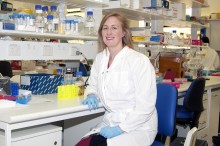
    Medical researchers at the Centre for Personalised Immunology, based at the John Curtin School of Medical Research (JCSMR), sequenced the genes of a young girl who suffered a stroke when she was four as a result of her lupus.

    “We can now target her specific disease, and make treatments that will benefit her throughout her life,

  • Stanford’s Robert Sapolsky Demystifies Depression

    Stanford’s Robert Sapolsky Demystifies Depression

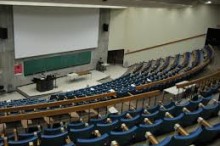
    We know that depression affects people from all walks of life. Rich. Poor. Celebs. Ordinary Joes. Young. Old.

    But, somehow after the death of Robin Williams, there’s a renewed focus on depression, and my mind turned immediately to a lecture we featured on the site way back in 2009. The lecture is by Robert Sapolsky, a Stanford biologist, who has a talent for making scientific subjects publicly accessible. A recipient of the MacArthur genius grant, Sapolsky notes that depression — currently the 4th greatest cause of disability worldwide, and soon the 2nd — is deeply biological. Depression is rooted in biology, much as is, say, diabetes. As the lecture unfolds, you will see how depression changes the body. When depressed, our brains function differently while sleeping, our stress response goes way up 24/7, our biochemistry levels change, etc. You will see that biology is at work.

    Source and image.

  • From the caves to the classroom

    From the caves to the classroom

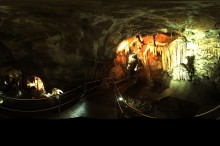
    The latest chapter in a long history of mapping technology innovation at Jenolan Caves will see students from around Australia explore the caves in virtual reality as part of Australia’s biggest school excursion.

    From classrooms around the country, students will embark on a digital journey exploring the iconic Jenolan Caves, an important scientific environment full of learning opportunities. As they progress through quests, the students will explore the surrounding environment and complete inquiry based learning tasks that test their core science skills.

    This virtual excursion is made possible by the partnership between computer scientists from CSIRO together with science education experts from 3P Learning to develop ‘immersive learning’ environments.

    It combines 3P Learning’s latest educational resource, IntoScience, with high-definition panoramic video and 3D models of real places scanned using CSIRO’s award-winning laser mapping technology, Zebedee. CSIRO’s technology is the first capable of mapping caves with lasers while continuously moving, which makes it more efficient and more detailed than traditional methods.

    Acting Flagship Director, Digital Productivity and Services, Dr Michael Bruenig said that scientists from CSIRO originally became involved in scanning the Jenolan Caves to assist ANSTO with their research into cave formation processes that required three-dimensional maps of the caves.

    “It’s exciting to see our cave models now brought to life as a virtual world that students can explore and perform their own scientific investigations in.

  • Laser makes microscopes way cooler

    Laser makes microscopes way cooler

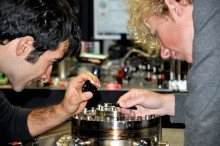
    Laser physicists have found a way to make atomic-force microscope probes 20 times more sensitive and capable of detecting forces as small as the weight of an individual virus.

    The technique, developed by researchers in the Quantum Optics Group of the Research School of Physics and Engineering, hinges on using laser beams to cool a nanowire probe to minus 265 degrees Celsius.

    “The level of sensitivity achieved after cooling is accurate enough for us to sense the weight of a large virus that is 100 billion times lighter than a mosquito,

  • River red gum – more than just a tree

    River red gum – more than just a tree

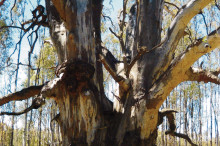
    So much more than just a tree, the river red gum has been central to the tensions between economic, social and environmental values of rivers and floodplain landscapes in Australia – perhaps more so than any other Australian plant or animal.

    Flooded Forest and Desert Creek: Ecology and History of the River Red Gum, a new CSIRO book, examines not only the ecology of one of the most iconic Australian trees, but how changes in attitudes towards it have reflected broader shifts in values of Australian society.

    Author, CSIRO’s Dr Matthew Colloff, said that given the prominence of the river red gum in Australian culture, we know surprisingly little about the ecology and life history of it.

    “The river red gum has been the subject of repeated government inquiries over its conservation, use and management. Despite this we know remarkably little about the basics of this species: its longevity; how deep its roots go; what proportion of its seedlings survive to adulthood; the diversity of organisms associated with it, and the nature of those associations,

  • Cuckoos trick other cuckoos in the race to own the nest

    Cuckoos trick other cuckoos in the race to own the nest

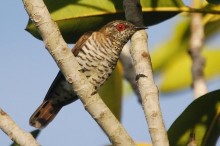
    Australian native cuckoos are engaged in an arms race, competing with each other to take over other species’ nests.

    The finding by Research School of Biology scientists gives new insights into the deceptive habits of cuckoos, which lay their eggs in other birds’ nests to dupe other mums into raising cuckoo chicks.

    “Previous research has focussed on how cuckoos try to trick their hosts,

  • Hear Michel Foucault’s Lecture “The Culture of the Self

    Hear Michel Foucault’s Lecture “The Culture of the Self

    Michel Foucault’s time in the United States in the last years of his life, particularly his time as a lecturer at UC Berkeley, proved to be extraordinarily productive in the development of his theoretical understanding of what he saw as the central question facing the contemporary West: the question of the self.

    In his 1983 Berkeley lectures in English on “The Culture of the Self,

  • How to Learn: Lewis Carroll’s Four Rules for Digesting Information and Mastering the Art of Reading

    How to Learn: Lewis Carroll’s Four Rules for Digesting Information and Mastering the Art of Reading

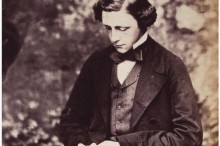
    “Mental recreation is a thing that we all of us need for our mental health.

  • Physicists create water tractor beam

    Physicists create water tractor beam

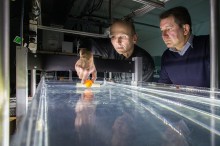
    Physicists at The Australian National University have created a tractor beam on water, providing a radical new technique that could confine oil spills, manipulate floating objects or explain rips at the beach.

    The group, led by Professor Michael Shats, discovered they can control water flow patterns with simple wave generators, enabling them to move floating objects at will.

    “We have figured out a way of creating waves that can force a floating object to move against the direction of the wave,

  • Allergy to Originality: Mark Twain and the Remix Nature of All Creative Work

    Allergy to Originality: Mark Twain and the Remix Nature of All Creative Work

    Why why all creative culture is built on “plagiarism, literary debt, appropriation, incorporation, retelling, rewriting, recapitulation, revision, reprise…

  • 5-Minute Animation Maps 2,600 Years of Western Cultural History

    5-Minute Animation Maps 2,600 Years of Western Cultural History

    Working with his colleagues, Maximilian Schich, an art historian at the University of Texas at Dallas, took Freebase (Google’s “community-curated database of well-known people, places, and things

  • New collaborations seek to solve infectious disease challenges

    New collaborations seek to solve infectious disease challenges

    Many of Australia’s leading animal and human infectious disease experts are joining forces this week to identify challenges that might benefit from greater collaboration across Australia’s research institutions.

    The Forum will be held at the Geelong high-containment facility and is a joint initiative between CSIRO’s Australian Animal Health Laboratory (AAHL) and the National Health and Medical Research Council (NHMRC).

    Professor Warwick Anderson, CEO of the NHMRC said the Forum was an important step towards managing infectious disease in Australia.

    “More than 70 per cent of new and emerging infectious diseases originate in animals, so there are great benefits to merging the collective genius from both sides to address some of the nation’s greatest infectious disease challenges.”

    The Forum’s workshops will be lead by Australia’s Chief Medical Officer – Professor Chris Baggoley, Nobel Laureate – Professor Peter Doherty, and Director of the Sydney Institute for Emerging infectious Diseases and Biosecurity – Tania Sorrell.

    This meeting of the minds will discuss emerging zoonotic disease threats, comparative medicine, and medical countermeasures including anti-microbial resistance, diagnostics and treatments.

    The workshop structure of the program will enable researchers to tease out and prioritise issues that will deliver the greatest national and global impact by combining Australia’s collective biomedical research and infrastructure capabilities.

    Dr Kurt Zuelke, CSIRO Biosecurity Flagship Director and Executive Director, AAHL said “AAHL’s extensive Physical Containment Level 4 laboratories are some of the most sophisticated in the world, which when combined with the unique research tools, models and expertise available within the facility, have great potential for human health research as well as animal health.

    With funding through the National Collaborative Research Infrastructure Strategy, we hope to facilitate greater access to this facility for fellow infectious disease researchers.”

    Source and image.
  • The journey of integrating social media and apps in your classroom

    The journey of integrating social media and apps in your classroom

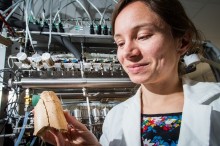
    We developed our 6 steps pedagogy of blended learning as a way to support the integration of social media and apps in lessons. The integration of social media and apps often happens nowadays though the use of tablets. The last few years we co-created with our customers a way of working with tablets using the 6 steps pedagogy of blended learning.

    In our journey with schools we train teachers in using social media and apps with their students using this pedagogy based on this 6 steps blended pedagogy. In this article we provide an example as to how this is done.

    At the start of the journey, the competence level of teachers concerning social media and ICT is checked by using an online scan and a telephone interview. At the same time we ask our participants their own learning question. What do they want to learn, what will define their level of satisfaction at the end of the course? These learning questions differ from getting to know which apps are available and how can I work with just a few tablets? How do I organise my classroom and how do I measure results using apps?

    In the first face-to-face meeting, everybody gets together and defines their own goal for development. Individual as well as collective goals are set, so schools’ general interests are also covered.

    The second step is to gather information and make a selection. Participants are facilitated by an APP-discovery session: they will get to know a few apps and start using these on a tablet right away, both as individuals as well as in groups. They also get some insight in how and where to find appropriate apps for their own classrooms. After this face-to-face session, teachers start experimenting in their own classroom. To make sure participants share their enthusiasm and ask questions, a learning platform is available to enable them to keep in touch and help one another. By doing so they use the learning platform to share ideas and to ask questions.

    In the next phase participants prepare a lesson based on the 6 steps blended pedagogy and share this with their colleagues using the learning platform. This is called learning interaction: important elements are sharing, working together, learning together and creating together. Of course, after preparing this lesson, the best way to see if it works is to actually use it and watch the reaction of the class. If possible participants of the course observe each other.

    After this process of creating and executing a lesson, a meeting is arranged in which experiences are shared by participants. Presentations show what apps and social media have been used and which didactical choices were made. Feedback during this meeting is very important. Based on this last session, a didactical repertoire for the school in total is created.

    Source and image.