Author: Editorial Board

  • Playing an Instrument Is a Great Workout For Your Brain

    Playing an Instrument Is a Great Workout For Your Brain

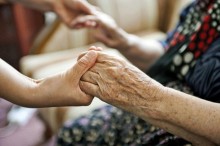
    Get me a piano teacher, stat! When I was a child, my father, enchanted by the notion that I might someday provide live piano accompaniment to his evening cocktails, signed me up for lessons with a mild-mannered widow who—if memory serves—charged 50¢ an hour.

    Had I only been forced to practice more regularly, I’d have no trouble remembering the exact price of these lessons. My memory would be a supremely robust thing of beauty. Ditto my math skills, my cognitive function, my ability to multitask.

    Instead, my dad eventually conceded that I was not cut out to be a musician (or a ballerina, or a tennis whiz…) and Mrs. Arnold was out a pupil.

    Would that I stuck with it beyond my halting versions of “The Entertainer

  • Case for a rate hike is building – Shadow RBA

    Case for a rate hike is building – Shadow RBA

    The case for the Reserve Bank of Australia to increase interest rates is building, although the central bank should leave rates unchanged after its August board meeting, The Australian National University RBA Shadow Board has found.

    “New inflation and growth data suggest that the RBA’s low interest rate setting ought to come to an end soon,

  • Take a Road Trip with Cyberspace Visionary William Gibson

    Take a Road Trip with Cyberspace Visionary William Gibson

    “I probably worry less about the real future than the average person,

  • Work begins on world-class health research facility

    Work begins on world-class health research facility

    Queensland families will have better protection against tropical diseases with work under way to build a globally significant health research institute in north Queensland.

    Science Minister Ian Walker said the new Australian Institute of Tropical Health and Medicine in Townsville would put Queensland at the forefront of tropical health nationally and internationally, part of the government’s strong plan to make Queensland Australia’s powerhouse state.

    “This institute will strengthen our tropical health defences and ability to combat biosecurity risks,

  • Townsville frog researcher awarded science grant

    Townsville frog researcher awarded science grant

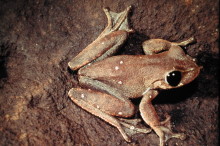
    Seven frog species could be saved from extinction by a Townsville scientist thanks to a Queensland Government grant.

    Science and Innovation Minister Ian Walkersaid Dr Alexandra Robertsfrom James Cook University’s College of Public Health, Medical and Veterinary Sciences, would use the $180,000 research grant to develop a treatment to stop a fungal disease killing the world’s frogs.

    “Dr Roberts’project is one of 24 research projects in Queensland to share in $7.18 million in research grants funding under the Accelerate program,

  • Watch World War I Unfold in a 6 Minute Time-Lapse Film: Every Day From 1914 to 1918

    Watch World War I Unfold in a 6 Minute Time-Lapse Film: Every Day From 1914 to 1918

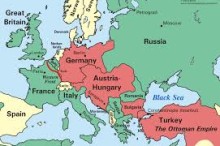
    World War I began 100 years ago, on 28 July 1914.

    The initial trigger, the assassination of Archduke Franz Ferdinand of Austria, produced something of a “domino effect,

  • CSIRO releases Spanish version of free pesticide risk tool

    CSIRO releases Spanish version of free pesticide risk tool

    Spanish-speaking farmers and regulators will be better equipped to manage the impacts of pesticides on water resources thanks to a new version of CSIRO’s popular Pesticide Impact Rating Index (PIRI) tool.

    The Australian national science agency, the CSIRO, this month, released a Spanish version of the freely available software tool, which rates the potential pollution risk of pesticides to surface and ground waters based on different land uses or industry type, at both catchment and regional scales.

    CSIRO project leader Dr Rai Kookana said that the new version of the tool vastly improves its accessibility across the globe.

    “PIRI has been successfully used in Australia for nearly a decade and, impressively, has been downloaded for use in 59 countries,

  • Map Showing Where Today’s Countries Would Be Located on Pangea

    Map Showing Where Today’s Countries Would Be Located on Pangea

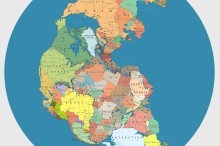
    The supercontinent of Pangea formed some 270 million years ago, during the Early Permian Period, and then began to break up 70 million years later, eventually yielding the continents we inhabit today.

    Pangea was, of course, a peopleless place. But if you were to drop today’s nations on that great land mass, here’s what it might look like. (Click on the image to view it in a much larger, high resolution format.) The map’s creator is Massimo Pietrobon, someone who playfully describes himself as “a famous explorer and cartographer of Atlantis,

  • Australia’s ageing population poses budget risks

    Australia’s ageing population poses budget risks

    Australia’s public and private economy-wide deficit could blow out to more than $400 billion by 2050 due to the nation’s ageing population, a new Australian National University report has found.

    The report by the Australian Research Council Centre of Excellence in Population Ageing Research (CEPAR), based at the Crawford School of Public Policy, provides the first National Transfer Accounts (NTA) measure for Australia, based on figures from 2009-10.

    NTA measures how each age group produces, consumes, shares, and saves resources in the economy, and gives insight into how a country’s demographics will affect its economy and finances.

    “The fiscal imbalance indicated in the 2009-10 NTA is not sustainable as the Australian population ages,

  • WHO welcomes global momentum on viral hepatitis

    WHO welcomes global momentum on viral hepatitis

    On World Hepatitis Day, 28 July, WHO welcomes new progress in tackling one of the world’s most serious diseases. Viral hepatitis – a group of infectious diseases known as hepatitis A, B, C, D, and E – affects millions of people worldwide, causing acute and chronic liver disease and killing close to 1.4 million people every year.

    “For years, viral hepatitis has been largely neglected,

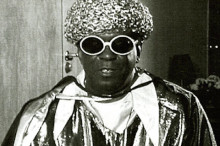
  • “The Black Man in the Cosmos

    “The Black Man in the Cosmos

    A pioneer of “Afrofuturism,

  • Stephen Fry Explains the Rules of Cricket in 10 Animated Videos

    Stephen Fry Explains the Rules of Cricket in 10 Animated Videos

    Founded in London in 1787, The Marylebone Cricket Club (MCC) began publishing The Laws of Cricket in 1788, and later became the governing body of the game.

    More than two centuries later, the MCC has passed governing responsibilities to The International Cricket Council. But it still publishes The Laws of Cricket and helps young players and casual fans learn more about the bat-and-ball game that dates back to early 16th-century England, if not before. And let’s face it, if you didn’t grow up in a country that figured into the British Empire, you can probably use a primer. Or maybe 10 animated ones narrated by actor, writer, cricket lover and occasional umpire Stephen Fry. Click the play button on the video above, and you can watch the collection of animations, covering everything from what happens when a “wicket is down

  • New material puts a twist in light

    New material puts a twist in light

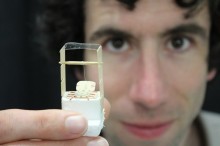
    A team from the Research School of Physics and Engineering have uncovered the secret to twisting light at will. It is the latest step in the development of photonics, the faster, more compact and less carbon-hungry successor to electronics.

    A random find in the washing basket led the team to create the latest in a new breed of materials known as metamaterials. These artificial materials show extraordinary properties quite unlike natural materials.

    “Our material can put a twist into light – that is, rotate its polarisation – orders of magnitude more strongly than natural materials,

  • Why Tattoos Are Permanent?

    Why Tattoos Are Permanent?

    For the last three decades my right ankle has been the site of a deeply botched tattoo. It was supposed to be a yin yang, but with every passing year, it looks more and more like a cancerous mole. The drunken Vietnam Vet who administered it barely glanced at the design taking shape on my once virgin skin as he chatted with a pal. I was too intimidated to say, “Um…is it just me or are you filling in the white circle?