Author: Editorial Board

  • WHO tobacco treaty makes significant progress despite mounting pressure from tobacco industry

    WHO tobacco treaty makes significant progress despite mounting pressure from tobacco industry

    The sixth session of the Conference of the parties (COP6) to the WHO Framework Convention on Tobacco Control (FCTC) concluded recently in Moscow. Several landmark decisions were adopted in the course of the six-day session, regarded as one of the most successful in the WHO FCTC’s history.

    In her opening speech, WHO Director-General Dr Margaret Chan said that “as implementation of the Framework Convention reaches new heights, the tobacco industry fights back, harder and through every possible channel, no matter how devious those channels and practices are.

  • The ancient mountains that fed early life

    The ancient mountains that fed early life

    Scientists have found evidence for a huge mountain range that sustained an explosion of life on Earth 600 million years ago.

    The mountain range was similar in scale to the Himalayas and spanned at least 2,500 kilometres of modern west Africa and northeast Brazil, which at that time were part of the supercontinent Gondwana.

    “Just like the Himalayas, this range was eroded intensely because it was so huge. As the sediments washed into the oceans they provided the perfect nutrients for life to flourish,

  • What Happens When You Take a Nobel Prize Through Airport Security

    What Happens When You Take a Nobel Prize Through Airport Security

    Winning a Nobel Prize has its perks. When you talk, people listen. And you end up doing a lot of talking. And travelling.

    Reflecting on how the Nobel Prize changed his life, Walter Gilbert (1980 winner in Chemistry) commented, “You can find yourself spending years travelling and talking right after winning.

  • Foodborne illness on the decline

    Foodborne illness on the decline

    New Australian National University research has found the incidence of foodborne illness has declined slightly and that one quarter of the 16 million cases of gastroenteritis each year are caused by food contamination.

    The research tracked the changes in foodborne illness in Australia between 2000 and 2010.

    It found the number of cases of foodborne illness fell by 17 per cent, but the number of cases of the two leading causes of hospitalisation, Salmonella and Campylobacter, increased by 24 per cent and 13 per cent respectively.

    “On average, each Australian has an episode of foodborne gastroenteritis once every five years,

  • Take Big History: A Free Short Course on 13.8 Billion Years of History, Funded by Bill Gates

    Take Big History: A Free Short Course on 13.8 Billion Years of History, Funded by Bill Gates

    Last month, The New York Times Magazine published a long piece called “So Bill Gates Has This Idea for a History Class …

  • Some Thoughts on “Privilege

    Some Thoughts on “Privilege

    To assume that one’s voice and cultural contribution don’t count because one was born into “privilege

  • What Books Do for the Human Soul: The Four Psychological Functions of Great Literature

    What Books Do for the Human Soul: The Four Psychological Functions of Great Literature

    “Writers open our hearts and minds, and give us maps to our own selves.

  • Australia examines its strengths and sees its future in iManufacturing

    Australia examines its strengths and sees its future in iManufacturing

    Australia needs to play to its strengths and transition from traditional manufacturing into new areas of competitive advantage.

    CSIRO proposes the direction for such a move in its discussion paper Equipping Australian Manufacturing for the Information Age: iManufacturing – Is Australia Ready? which aims to generate discussion among Australian industry to prepare them for the move away from 20th Century modes of production and allow them to compete on the world market.

    The CSIRO said opportunities exist both domestically and internationally in the market for high valued, niche manufactured goods and associated services produced here if Australian industry were to adopt and utilise modern information technology and develop the associated skills to make best use of it.

    Recognising the worldwide trend towards smaller batches of production, customised products, rapid prototyping, agile manufacturing processes and an emphasis on increased ‘servitisation’, the report’s authors warn that Australian manufacturers must develop appropriate business models and prepare themselves for increasingly innovative and competitive offerings in terms of price and flexibility in their domestic and international market niches.

    The discussion paper talks about businesses growing and evolving from the use of traditional IT-based technologies and into eManufacturing (dependent on cloud-based services) or progress further into iManufacturing (or informatics-linked manufacturing).

    To compete globally, the report says, enterprises need to have the right skills and tools to do business, adapt to the future, including:

    (1) develop workers which combine not only eSkills (general computer/internet abilities) but also iSkills (understanding data, connectedness, the Internet of Things, servitisation) and manufacturing expertise

    (2) encourage and develop Materialisation technologies that more rapidly turn digital, customised data into physical outputs

    (3) develop collaborations and networks at local and global scales that are not only engaged at the human communications level but are sharers of data, resources, and processes

    (4) improve supply chain interoperability and material flow efficiencies Move manufacturing industries increasingly into the service spaces – the servitisation of Manufacturing

    (5) develop appropriate business models that maximise the potential that these new technologies provide.

    Source and image.

  • Longform’s New, Free App Lets You Read Great Journalism from Your Favorite Publishers

    Longform’s New, Free App Lets You Read Great Journalism from Your Favorite Publishers

    Let us introduce you a great educational tool, which name is Longform’s New. 

    If you have managed to keep your attention span intact during this distracting information age, then you’re almost certainly familiar with Longform.org, a web site that makes it easy to find something great to read online, especially if you like reading informative, well-crafted works of non-fiction.

    Last week, Longform enhanced its service with the release of a new, free app for iPhone and iPad. It’s the “only 100% free app that filters out the internet junk and delivers nothing but smart, in-depth reads.

  • Smartphone app a life saver for heart attack patients

    Smartphone app a life saver for heart attack patients

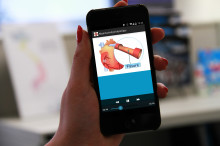
    Patients recovering from heart attacks are far more likely to complete life-saving rehabilitation if they have access to a new smartphone app developed by CSIRO, research has shown.

    A clinical trial found that cardiac patients who undertook rehabilitation in their own homes via the smartphone app were almost 30 per cent more likely to take part in their rehab program than those who had to travel to an outpatient clinic or centre.

    What’s more, those who used CSIRO’s smartphone home care delivery model – known as the Care Assessment Platform – were 40 per cent more likely to adhere to the program and almost 70 per cent more likely to see it through to completion.

    The trial results, which showed that the Care Assessment Platform model was just as clinically effective as traditional rehab, were so successful that the next generation version of the platform will soon be offered in a number of Queensland hospitals including Ipswich, Metro North and West Moreton Hospital and Health Services.

    According to Dr Mohan Karunanithi from CSIRO’s Digital Productivity Flagship, studies have clearly shown that patients who successfully complete cardiac rehabilitation following a heart attack have much better health outcomes.

    They are less likely to have another cardiac event, be readmitted to hospital or die from their condition.

    “These programs traditionally take the form of group-based exercise and educational activities and are designed to help patients return to an active, satisfying life,” Dr Karunanithi said.

    Despite the benefits, uptake is generally poor due to factors such as time constraints, accessibility, lack of referral and patient motivation.

    “The smartphone app offers another choice, overcoming one of the key barriers to patient participation and recovery. By integrating rehab with a patient’s daily life, they are more likely to complete the program and make their new healthy lifestyle permanent,” Dr Karunanithi said.

    The app features health and exercise monitoring tools, delivers motivational materials through text messages and contains multimedia that educates patients about disease symptoms and management.

    With cardiovascular disease killing one Australian nearly every 12 minutes, Rachelle Foreman, Health Director at the National Heart Foundation of Australia, is very optimistic about the potential for this new technology.

    “While more people are surviving their heart attacks, survivors need to understand they are not ‘fixed’ but are living with a chronic condition that needs to be actively managed,” Ms Foreman said.

    “Evidence shows cardiac rehabilitation programs play a huge part in helping people to recover from their heart attack, make lifestyle changes and adhere to medications to reduce their risk of another heart attack.

    “Unfortunately, more than half of patients are not referred to cardiac rehabilitation programs, so the system first needs to let patients know about the importance of such programs and then provide them with flexible options that suit their individual lifestyle and learning style.

    “Programs such as the Care Assessment Platform are great innovations that can improve access and outcomes in a cost effective way and be expanded for those in rural areas, and high risk groups including Aboriginal and Torres Strait Islander people.”

    The next step for the research team is to adapt the platform for rehabilitation for other chronic conditions such as pulmonary disease and diabetes.

    The clinical trial was conducted by CSIRO and Queensland Health through the Australian eHealth research Centre.

    It took place at The Prince Charles, Redcliffe and Caboolture hospitals and has been published in the journal Heart and reported in Nature Reviews Cardiology.

    Source and image.

  • Jane Goodall on Empathy and How to Reach Our Highest Human Potential

    Jane Goodall on Empathy and How to Reach Our Highest Human Potential

    “Only when our clever brain and our human heart work together in harmony can we achieve our true potential.

  • A sexless union to bear great fruit

    A sexless union to bear great fruit

    We have received a $14.5 million grant from the Bill & Melinda Gates Foundation to improve the productivity and incomes of smallholder farmers across Sub-Saharan Africa.

    This five year humanitarian project will develop tools to generate self-reproducing hybrid cowpea and sorghum crops to help millions of farmers become more self sufficient with higher yielding crops.

    CSIRO will use the grant to partner with other world leading research teams from Switzerland, USA, Germany and Mexico to achieve this goal.

    “Sorghum and cowpea originated in Africa and are important staple food crops, but suffer from low yields,

  • The Science of Lucid Dreaming and How to Learn to Control Your Dreams, Animated

    The Science of Lucid Dreaming and How to Learn to Control Your Dreams, Animated

    Trekking the continuum of sleep and wakefulness in a journey into metaconsciousness.

    As if the science of sleep and the emotional function of dreaming weren’t fascinating enough in and of themselves, things get even more bewildering when it comes to lucid dreaming — a dream state in which you’re able to manipulate the plot of the dream and your experience in it. But how, exactly, does that work and can you train yourself to do it? Count on AsapSCIENCE — who have previously explored such mysteries as how music enchants the brain, the neurobiology of orgasms, and the science of procrastination — to shed some light:

    (Then again, the probability that you are dreaming this very minute might be one in ten, so it might all be moot.)

    For a deeper dive into the scientific nitty-gritty of lucid dreaming, see Stephen LaBerge and Howard Rheingold’s 1991 bible Exploring the World of Lucid Dreaming and LaBerge’s follow-up, Lucid Dreaming: A Concise Guide to Awakening in Your Dreams and in Your Life.

    Then, treat yourself to this fantastic and mind-bending Radiolab episode about how one man cured himself of a recurring nightmare by learning lucid dreaming:

    Source and image.

  • Ancient sea levels give clues to natural sea rise

    Ancient sea levels give clues to natural sea rise

    Scientists have produced the first detailed record of sea levels over the past 500,000 years and spanning five ice ages, using microfossils from sediments in the Red Sea.

    The team determined accurate dates for the sea levels by linking wind-blown dust in the sediments to a climate record from stalagmites from caves in China. The research is published in the latest edition of Nature Communications.

    The more precise dating method gives scientists new insights into natural rates of sea level rise.

    “When large ice sheets melted at the end of ice ages, sea levels rose dramatically, up to 5.5 metres per century,