Author: Editorial Board

  • Australia’s biosecurity may be shocked

    Australia’s biosecurity may be shocked

    A human disease pandemic, European honey bee colonies wiped out and an invasion of a devastating wheat disease are just three potential biosecurity threats facing Australia, according to a report released this week.

    These three events alone could devastate Australia’s agricultural industries, economy and environment, and could severely alter our way of life. But, how can we ensure that we see them coming and are we prepared to respond if they occur?

    As an island nation Australia has, largely been able to maintain an enviable biosecurity status. However, experts warn that the 12 biosecurity megashocks identified in a new report – Australia’s Biosecurity Future – could turn into reality if we become complacent with our nation’s biosecurity measures.

    CSIRO Biosecurity Flagship Science Director Dr Gary Fitt said it was much better to pre-empt and avoid biosecurity issues than have to deal with the consequences.

    “Dominating the news right now is the Ebola virus crisis, which is an obvious global health concern,

  • New research centre to investigate how language works

    New research centre to investigate how language works

    A new national research centre based at ANU will investigate how language works and how it makes us who we are.

    Based at the University, the ARC Centre of Excellence for the Dynamics of Language draws together the nation’s top linguists, philosophers, psychologists and roboticists to puzzle out the complex mechanisms of human communication.

    The new centre will focus on four key areas: how languages differ, how they are learned, how the brain processes them and how they evolve.

    “We once imagined that all languages had the same basic operating system,

  • Worldwide action needed to address hidden crisis of violence against women and girls

    Worldwide action needed to address hidden crisis of violence against women and girls

    Current efforts to prevent violence against women and girls are inadequate, according to a new Series published in The Lancet. Estimates suggest that globally, 1 in 3 women has experienced either physical or sexual violence from their partner, and that 7% of women will experience sexual assault by a non-partner at some point in their lives.

    Yet, despite increased global attention to violence perpetrated against women and girls, and recent advances in knowledge about how to tackle these abuses, levels of violence against women – including intimate partner violence, rape, female genital mutilation, trafficking, and forced marriages – remain unacceptably high, with serious consequences for victims’ physical and mental health. Conflict and other humanitarian crises may exacerbate ongoing violence.

    Between 100 and 140 million girls and women worldwide have undergone female genital mutilation (FGM), with more than 3 million girls at risk of the practice every year in Africa alone. Some 70 million girls worldwide have been married before their eighteenth birthday, many against their will.

    Although many countries have made substantial progress towards criminalising violence against women and promoting gender equality, the Series authors argue that governments and donors need to commit sufficient financial resources to ensure their verbal commitments translate into real change. Even where laws are progressive, many women and girls still suffer discrimination, experience violence, and lack access to vital health and legal services.

    Action needed on causes of violence

    Importantly, reviewing the latest evidence, the authors show that not enough is being done to prevent violence against women and girls from occurring in the first place. Although resources have grown to support women and girls in the aftermath of violence (e.g., access to justice and emergency care), research suggests that actions to tackle gender inequity and other root causes of violence are needed to prevent all forms of abuse, and thereby reduce violence overall.

    “Globally, 1 in 3 women will experience intimate partner and/or sexual violence by non-partners in their lifetime, which shows that more investment needs to be made in prevention. We definitely need to strengthen services for women experiencing violence, but to make a real difference in the lives of women and girls, we must work towards achieving gender equality and preventing violence before it even starts,
  • Finding new ways to make drugs

    Finding new ways to make drugs

    Chemists have developed a revolutionary new way to manufacture natural chemicals and used it to assemble a scarce anti-inflammatory drug with potential to treat cancer and malaria.

    The breakthrough could lead to new and cheaper ways to produce rare drugs in large quantities.

    “We took small molecules and clipped them together like Lego,

  • Charles & Ray Eames’ A Communications Primer Explains the Key to Clear Communication in the Modern Age (1953)

    Charles & Ray Eames’ A Communications Primer Explains the Key to Clear Communication in the Modern Age (1953)

    You might think that a movie about information from 1953 couldn’t possibly be relevant in the age of iPhone apps and the Internet but you’d be wrong. A Communications Primer, directed by that power couple of design Charles and Ray Eames, might refer to some hopelessly quaint technology – computer punch cards, for instance – but the underlying ideas are as current as anything you’re likely to see at a TED talk. You can watch it below.

    In fact, the film made for IBM was the result of the first ever multi-media presentations that Charles Eames developed for the University of Georgia and UCLA. Using slides, music, narration and film, Eames broke down some elemental aspects of communications for the audience. Central to the film is an input/output diagram that was laid out by Claude Shannon, the father of information theory, in his 1949 book, The Mathematical Theory of Communication. As the perhaps overly soothing narrator intones, any message is transmitted by a signal through a channel to its receiver. While in the channel, the signal is altered and degraded by noise. The key to effective communication is to reduce “noise

  • Spiral laser beam creates quantum whirlpool

    Spiral laser beam creates quantum whirlpool

    Physicists at ANU have engineered a spiral laser beam and used it to create a whirlpool of hybrid light-matter particles called polaritons.

    “Creating circulating currents of polaritons – vortices – and controlling them has been a long-standing challenge,

  • WHO warns that progress towards eliminating measles has stalled

    WHO warns that progress towards eliminating measles has stalled

    WHO warned recently that progress towards the elimination of measles has stalled. The number of deaths from measles increased from an estimated 122 000 in 2012 to 145 700 in 2013, according to new data published in the WHO Weekly Epidemiological Report and the Centers for Disease Control and Prevention’s (CDC) Morbidity and Mortality Weekly Report. The estimated number of measles deaths in 2013 represents a 75% decline in mortality since 2000, significantly below the target of a 95% reduction in deaths between 2000 and 2015.

    “Poor progress in increasing measles vaccination coverage has resulted in large outbreaks of this highly contagious disease, throwing the 2015 elimination targets off-track,

  • Ocean primed for more El Niño

    Ocean primed for more El Niño

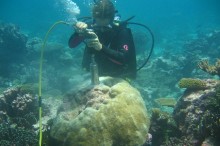
    The ocean is warming steadily and setting up the conditions for stronger El Niño weather events, a new study has shown.

    A team of US, Australian, and Canadian researchers sampled corals from a remote island in Kiribati to build a 60-year record of ocean surface temperature and salinity.

    “The trend is unmistakeable, the ocean’s primed for more El Niño events,

  • Protecting native forests more valuable than logging

    Protecting native forests more valuable than logging

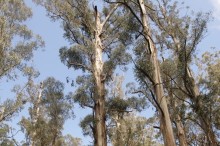
    New research has found Mountain Ash forests provide more value to the community and the global climate when protected and not logged.

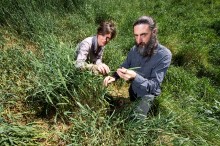
    Research scientists at the ANU, in partnership with information and communication technologists at Fujitsu Laboratories in Japan, have used long-term field data from the Central Highlands in Victoria to calculate the social, economic and environmental values of the forests after wildfire and after logging.

    “Quantifying natural resources and the services they provide for human wellbeing is important in evaluating land management decisions,

  • Mark Twain Predicts the Internet in 1898: Read His Sci-Fi Crime Story, “From The ‘London Times’ in 1904

    Mark Twain Predicts the Internet in 1898: Read His Sci-Fi Crime Story, “From The ‘London Times’ in 1904

    Most people know that Mark Twain wrote about Jim and Huckleberry Finn navigating down the Mississippi. Less well known is that he occasionally dabbled in the burgeoning genre of science fiction. His 1898 short story “The Great Dark

  • New global Malaysian studies network at ANU

    New global Malaysian studies network at ANU

    A new agreement between the ANU and the National University of Malaysia (UKM) will deepen links between Australia and Malaysia, and boost the studies of Malaysia in both Australia and around the globe.

    Witnessed by Malaysia Deputy Prime Minister YAB Tan Sri Dato’ Haji Muhyiddin Bin Haji Mohd Yassin, the Memorandum of Understanding was signed by ANU Vice-Chancellor Professor Ian Young AO in a ceremony on Wednesday.

    The MOU will increase educational links and collaboration between Australia and Malaysia, as well as pave the way for a new Global Malaysian Studies Network at the University.

    While acting as a Malaysian studies base in Australia, the network will also provide a coordination point for other universities across the globe.

    “Australia has more long-standing institutional and people-to-people ties with Malaysia than with any other Asian neighbour,

  • Scientists reveal secrets of insect evolution

    Scientists reveal secrets of insect evolution

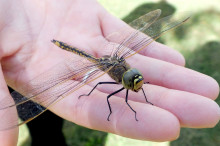
    Using genetic analysis, scientists have for the first time been able to conclusively establish that insects originated approximately 480 million years ago, and that they developed the ability to fly approximately 80 million years later.

    Published last week in Science, the study, which involved more than 100 researchers from 16 countries including five from Australia’s CSIRO, answers long-held questions about the evolution of the world’s largest and most diverse group of living things – insects.

    “Our research shows that insects originated at the same time as the earliest land-based plants, about 480 million years ago. These first insects were probably similar to today’s silverfish,

  • “Ageing well

    “Ageing well

    A major new Series on health and ageing, published in “The Lancet”, warns that unless health systems find effective strategies to address the problems faced by an ageing world population, the growing burden of chronic disease will greatly affect the quality of life of older people. As people across the world live longer, soaring levels of chronic illness and diminished wellbeing are poised to become a major global public health challenge.

    Effective health interventions increasing life expectancy

    Worldwide, life expectancy of older people continues to rise. By 2020, for the first time in history, the number of people aged 60 years and older will outnumber children younger than 5 years. By 2050, the world’s population aged 60 years and older is expected to total 2 billion, up from 841 million today. Eighty per cent of these older people will be living in low-income and middle-income countries.

    The increase in longevity, especially in high-income countries (HICs), has been largely due to the decline in deaths from cardiovascular disease (stroke and ischaemic heart disease), mainly because of simple, cost-effective strategies to reduce tobacco use and high blood pressure, and improved coverage and effectiveness of health interventions.

    Challenge of ageing healthily

    However, although people are living longer, they are not necessarily healthier than before – nearly a quarter (23%) of the overall global burden of death and illness is in people aged over 60, and much of this burden is attributable to long-term illness caused by diseases such as cancer, chronic respiratory diseases, heart disease, musculoskeletal diseases (such as arthritis and osteoporosis), and mental and neurological disorders.

    This long-term burden of illness and diminished wellbeing affects patients, their families, health systems, and economies, and is forecast to accelerate. For example, latest estimates indicate that the number of people with dementia is expected to rise from 44 million now, to 135 million by 2050.

    “Deep and fundamental reforms of health and social care systems will be required,

  • Farmers should pay for invasive weeds – researchers

    Farmers should pay for invasive weeds – researchers

    Farmers who use plant varieties that become invasive weeds should pay a levy to cover any environmental management costs under a plan put forward by researchers at The Australian National University (ANU).

    The levy is one recommendation in a new paper which aims to combat the global problem of invasive plants caused by agribusiness.

    “It’s a polluter pays principle. If their pastures become invasive, then agribusiness and farmers should be responsible for paying for any control or eradication,