Today, the whole world is trying to reduce its dependence on fossil fuels. The vast supplies of coal and oil are exhaustible after all, and given the list of pollutants they emit and their adverse impact on the environment, the tendency is absolutely understandable. The world offers us an abundance of renewable energy sources and those who see far into the future are smart enough to use them.
However, unlike the countries that want to minimize the use of fossil fuels and nuclear energy, Japan is among those that have no other options. Since the Fukushima Daiichi nuclear disaster in 2011, Japan has had to rely on other sources of energy. The country’s 48 nuclear reactors are still shut down and Japan faces an uncertain energy future. At the moment, their plans include making hydrogen the main energy source in the country. (more…)
Are you one of those who suffer from aerophobia – fear of flying? Then you won’t be too thrilled to read about the new breakthrough in the aerospace industry.Otherwise, you will probably be intrigued by the new windowless planes, planned to set off in a decade. The term “windowless planes
The benefits of using electric cars are indisputable and numerous. They help in reducing greenhouse gases as they don’t emit tailpipe pollutants. They are fast, elegant and popular. However, there are some problems that seem to be impossible to solve – and this is what makes electric cars less desirable than their internal combustion engine counterparts.
Most electric car models are quite expensive, but the thing that makes them even pricier is regular battery replacement. However, electricity is cheaper than gas and drivers who boast electric vehicles say that saving the environment is definitely worth it. (more…)
A recent discovery by a research team at Penn State University and the Carnegie Institution of Washington reminded us of the amazing, but still unrealized idea of constructing space elevators. A team of researchers discovered a new material and they say it may be used for anything – even for a space elevator.
This unbelievable discovery thrilled scientists around the world and assured them that they will finally be able to undertake space elevator construction. Until recently, building space elevators has been in the realm of science fiction. However, thanks to this discovery, it is slowly moving out of science fiction and into reality.
Nanotechnology breakthrough
John Badding, professor of Chemistry at Penn State University and Thomas Fitzgibbons, his student, announced they have discovered a way of making extra thick and strong diamond nanothreads. This material is stronger, thinner and stiffer than any other known fibers, including nanotubes and polymers.
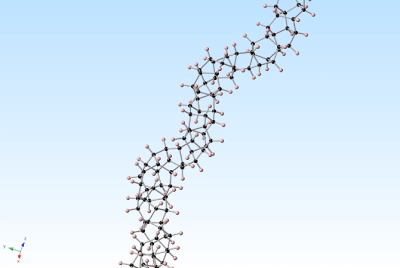
A unique, ultra thin diamond nanothread structure (Credit: John Badding lab, Penn State Univeristy)
Professor Badding and Fitzgibbons used a specialized device which compressed benzene up to 200,000 atmospheres. This caused benzene to polymerize into carbon atoms which are arranged to form the fundamental unit of a diamond’s structure. The atoms are linked in all three dimensions and linked again to four carbon atoms, forming a tetrahedron.
This is an incredible discovery, given almost a century of failed attempts to create such a strong nanomaterial. Previous carbon nanotubes were too weak and they wouldn’t have been able to make a reliable elevator ribbon (cable). These diamond nanothreads are more than 20,000 times thinner than a human hair, but just a few centimeters long. So, the next step for researchers is to create nanothreads that will be longer and more practical.
The development of the idea
Who is the first person that created the concept of space elevators? Yuri N. Artsutanov, Russian engineer, is best known as one of the pioneers of the space elevator idea. He first discussed it in 1960 in his article “To the Cosmos by Electric train
It appears there are no limits to what human intelligence can achieve. Innovation has been the hallmark of every stage of human civilization, with new and exciting gadgets being produced that have drastically transformed our way of life. The seemingly impossible has been made possible through cutting-edge scientific research and advancements in technology. Here are five substances which will shape our conversations and thoughts for many years to come, and the sheer ingenuity that has gone into making them a reality will surprise you. (more…)
Chinese scientists at the Chinese Academy of Science (CAS) have recently developed a facial-recognition payment system, which has been dubbed “with a near-perfect accuracy
For the first time ever in the entire world, a team of neuroscience research specialists have been able to successfully establish brain to brain communication between human beings over a long physical distance. Composed of four research experts between the age of 28 and 50 years old from the Harvard University’s medical school, Axilum Robotics in France and the Starlab Barcelona in Spain, the team was able to transmit simple messages over a 5000 mile distance, from one person located in India to three people in France. This was carried out without having to perform any form of surgery on the participants. (more…)
Jack Fresco is an American futurist, a self-taught industrial design engineer, inventor, author, artist, and behavioral scientist. He was born on March 13, 1916 in Brooklyn, New York. He has worked as a designer and inventor in so many fields of science, and is well know for his innovative project ‘The Venus Project’. He had been praised for his intelligence and the immense love he showed for truth, and was called the modern Da Vinci, also described as an idealist, a dreamer, an utopist and even a prophet and a genius. (more…)
Sodium bicarbonate or sodium hydrogen carbonate, better known as baking soda is a chemical compound with the formula NaHCO3 . It is primarily used in cooking and baking as a leavening agent, and as a very effective cleaning agent.
It is mined in its natural form, nahcolite, as a white or colorless carbonate mineral. As something so simple at its core, sodium bicarbonate can be rather amazing, so let’s take a look at some of its many uses:
How does baking powder work? Baking powder is a mixture of sodium bicarbonate and a weak acid, usually cream of tartar or sodium aluminum sulfate. It makes cakes and breads rise, and is superior to yeast because the chemical reaction is instant. When baking powder is mixed with a liquid, these two ingredients react to form bubbles of carbon dioxide gas. Since the reaction occurs immediately, it is best to complete your meal right away before the bubbles disappear. It’s very important to never over-mix your recipe, so that the bubbles are not stirred out of the mixture.
There are two types of baking powder: Single-acting and Double-acting. The first makes carbon dioxide bubbles as soon as you make the mixture, while double-acting produces additional bubbles when your mixture is heated in the oven. This is because of the calcium acid phosphate, which lets out a small amount of carbon dioxide when the water is added, but much more when the mixture is heated.
Personal hygiene. You probably know that sodium bicarbonate is found in many toothpaste formulas. That is because it has whitening properties and plaque-removal properties as well. Since it has anti-caries and abrasive properties, it is commonly used in some mouthwashes as well. There is a neat trick if you run out of toothpaste and need to brush your teeth: use plain baking soda with water. Because it acts as an antiseptic and neutralizes the production of acids in the mouth, it can be used as a replacement for toothpaste.
Since sodium bicarbonate is gentle, it doesn’t strip your skin of it’s protective oils like most soaps do and can be used as a substitute to soap or shampoo. If you combine three parts baking soda to one part water, you can make a gentle cleanser, yet powerful enough to eradicate even the strongest smells such as onion and garlic.
Sodium Bicarbonate as a cleaning agent. If made into a paste, combined with water, sodium bicarbonate can serve well as a cleaning agent. Whether it’s unclogging a drain, removing stubborn stains from laundry, or even acting as a deodoriser (instructions), baking soda makes a great cleaning agent because it is a mild alkali, and it can react with acids without causing any damaging reactions. This is also why it reacts erratically when combined with vinegar. Since it’s gentle, it is a good cleaning agent for chrome, steel, glass, enamel and plastic. It is great for removing tarnish from silver if mixed with warm water, and if mixed with cold water, great for removing surface rust from steel.
Because sodium bicarbonate is a natural product and practically food, it is superior to other household cleaning agents because it is non-toxic. Therefore, it is the best substance to use when cleaning food-related items, as there is no fear of accidentally poisoning your children or pets! Here are some additional instructions on how you can clean practically any item in the house using baking soda and other non-toxic cleaning substances.
Invisible ink. If you want to have some fun with sodium bicarbonate, there’s a little trick you can try: Mix equal parts baking soda and water to create the “ink
Building a robots for snow removal seemed like a good business idea to founders of Avidbots company. However it has soon proved itself to be an idea difficult to be effectively implemented. After conducting a market research at this company, results have shown that it will need a lot of effort to break through and reach the customers of this specific market. Furthermore, snow removal market was already too much segmented into distinctive sub-markets such as driveway, parking, street snow removal market etc. Not to mention the sensibility of the demand towards whether conditions and the amount of snow which may vary from year to year. (more…)
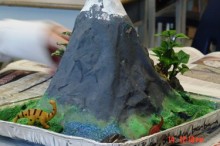
Experiments are great. What better way is there to spend time with your kids, have fun with them and teach them a thing or two about science? Even better when they’re messy and dramatic like the “volcano experiment”. As an experiment you can do at home, it’s simple, cheap, safe and fun. To learn how, follow this easy step-by-step guide.
Steven Burrill is a well recognized name in the field of science and technology, and has been actively involved in various aspects of these fields. As a founder and CEO of Burrill & Company, his influence and contributions to science and technology has been far reaching, and is responsible for great strides made in various aspects of this field.
The Burrill & Company group includes Burrill Merchant Banking, Burrill Institutional Equities, Burrill Venture Capital and Burrill International all of which have been instrumental in finance, research and exposure aspects of science and technology. These institutions have been responsible in advancing science, and making technology more accessible to people.
One of the moves that Steven Burrill has made to make technology and information more accessible to the masses is through The Journal of Life Sciences. The journal is in partnership with the California Health care Institute, and focuses on reporting on life sciences and the developments in this sector.
TJOLS has been instrumental in getting more people to take interest in science and technology, and reporting in a way that is easy to understand. Although the journal primarily appeals to biotechnology executives and healthcare professionals, more and more people are taking an interest in the journal.
Steven Burrill’s contributions to science and technology go far beyond TJOLS. He has played many roles in the field including in the National Science and Technology Medals Foundation (NSTMF) where he serves as the Chairman of the board. He also serves in numerous other boards in the science and technology industry.
It is hard to imagine an area of science and technology where Steven Burrill and The Burrill & Company group are not involved. Whether it is in funding, research or non-profit efforts for the advancement of science, you can be sure to find the name Steven Burrill. His efforts have not gone unrecognized as he has received numerous accolades and awards for his contributions to science and technology.
Starting a Biotech Company by Steven Burrill
Burrill talks about how starting a biotech company is different from starting any other company in the world.
Audio Podcast:An Entrepreneurial Perspective on the Life Sciences Industry
Steve Burrill, CEO of Burrill & Co., provides an overview of the life sciences industry, reflecting on insights he has gained throughout his career.
Researchers at University of Illinois at Chicago and Google have just introduced a new spam-fighting metric called GSRank which is a product of behavioural observation of spammer groups. The model which outperforms all existing spam fighting methods includes relationships between groups, individual activities and also observes reviewed products. It appears that flagging groups of product review spammers is easier than labelling them individually:
Basic Pattern of Fake Reviews
Observing a small group of three fake reviewers/accounts lead to the following findings:
Same product reviewed by the common group.
High rating by group members.
Narrow time window within all rated products.
Group reviewed the same set of products.
Quick to rate. Usually first or among first to review.
The first step in product review analysis is to build a reference dataset. This involves data mining followed by labelling and defining group spam behaviour indicators. Group and individual behavioural statistics are examined and ranking experiments are conducted to train the system. The evaluated results are not only fast but also highly accurate.
Practical Application
This research don’t only help stores (Amazon) and their customers but it also carries much wider potential. Search engines can now apply GSRank model to discover fake reviews and normalise their aggregate ratings for products, places and various other features.
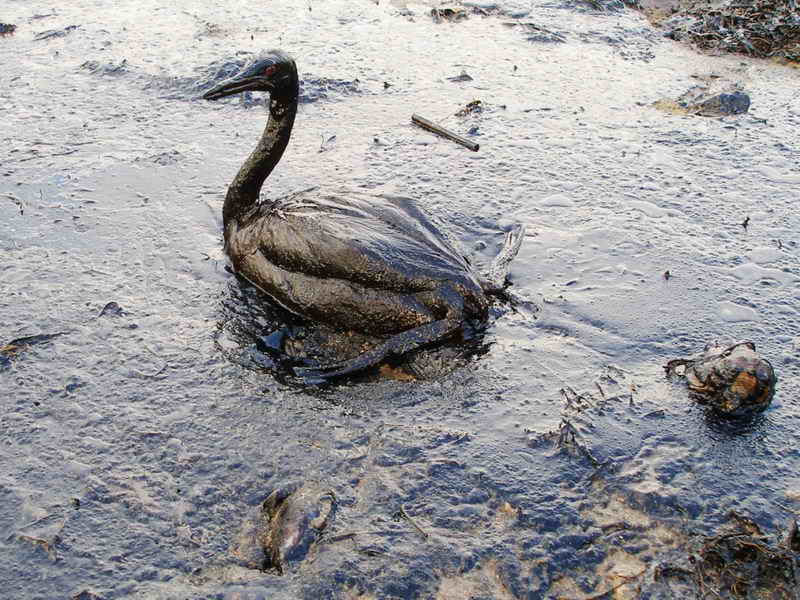
When mistakes are made by people or when people are careless that way causing leaking of oil of an oil tanker into the ocean oil spills can occur. Oil spill can also happen if equipment breaks down.
Basics:
An oil spill is the release of a liquid petroleum hydrocarbon into the environment, especially marine areas, due to human activity, and is a form of pollution. The term is mostly used to describe marine oil spills, where oil is released into the ocean or coastal waters. Oil spills may be due to releases of crude oil from tankers, offshore platforms, drilling rigs and wells, as well as spills of refined petroleum products (such as gasoline, diesel) and their by-products, heavier fuels used by large ships such as bunker fuel, or the spill of any oily refuse or waste oil. Another significant route by which oil enters the marine environment is through natural oil seeps. [1]
Oil wastes that enter the ocean come from many sources, some being accidental spills or leaks, and some being the results of chronic and careless habits in the use of oil and oil products. Most waste oil in the ocean consists of oily stormwater drainage from cities and farms, untreated waste disposal from factories and industrial facilities, and unregulated recreational boating.
Image source: aussieloans.com.au
It is estimated that approximately 706 million gallons of waste oil enter the ocean every year, with over half coming from land drainage and waste disposal; for example, from the improper disposal of used motor oil. Offshore drilling and production operations and spills or leaks from ships or tankers typically contribute less than 8 percent of the total. The remainder comes from routine maintenance of ships (nearly 20 percent), hydrocarbon particles from onshore air pollution (about 13 percent), and natural seepage from the seafloor (over 8 percent).Oil spills present the potential for enormous harm to deep ocean and coastal fishing and fisheries. The immediate effects of toxic and smothering oil waste may be mass mortality and contamination of fish and other food species, but long-term ecological effects may be worse. Oil waste poisons the sensitive marine and coastal organic substrate, interrupting the food chain on which fish and sea creatures depend, and on which their reproductive success is based. Commercial fishing enterprises may be affected permanently.Wildlife other than fish and sea creatures, including mammals, reptiles, amphibians, and birds that live in or near the ocean, are also poisoned by oil waste. [2]
The most damaging oil spill ever to occur in North American waters was the Exxon Valdez accident of 1989. More than most tanker accidents, this one was very preventable. It was caused when an intoxicated captain gave temporary command of the supertanker to an unqualified and inexperienced subordinate, who quickly erred in his navigation and ran the ship aground onto a well known reef. The spilled oil affected about 1,200 mi (1,900 km) of shoreline of Prince William Sound and its vicinity, causing especially great ecological damages in tidal and subtidal habitats. Large numbers of sea mammals and birds were also affected in offshore waters. An estimated 5,000-10,000 sea otters (Enhydra lutris) were present in Prince William Sound, and at least 1,000 of these charismatic mammals were killed by oiling. About 36,000 dead seabirds of various species were collected from beaches and other places, but the actual number of killed birds was probably in the range of 100,000-300,000 birds. At least 153 bald eagles (Haliaeetus leucocephalus) died from poisoning when they scavenged the carcasses of oiled seabirds. [3]
Petroleum hydrocarbons affect plants chemically and physically. Although plants sometime survive fouling by producing new leaves, even relatively non-toxic oils can stress or kill plants if oil physically prevents plant gas-exchange. Plant sensitivity to fouling varies among species and among populations within a species, age of the plant, and season of spill. Physical disturbance and compaction of vegetation and soil associated with clean-up activities following an oil spill appear to have detrimental effects on the US Gulf coast marshes. Other techniques, including the use of chemicals such as cleaners or bioremediation, may be necessary to address the problem. Clean-up may also be beneficial when timely removal prevents oil from migrating to more sensitive habitats. [4]
In 1986 more than 8 million liters of crude oil spilled into a complex region of mangroves, seagrasses, and coral reefs just east of the Caribbean entrance to the Panama Canal. This was the largest recorded spill into coastal habitats in the tropical Americas. Many population of plants and animals in both oiled and unoiled sites had been studied previously, thereby providing an unprecedented measure of ecological variation before the spill. Documenation of the spread of oil and its biological begun immediately. Intertidal mangroves, algae, and associated invertebrates were covered by oil and died soon after. More surprisingly, there was also extensive mortality of shallow subtidal reef corals and infauna of seagrass beds. After 1.5 years only some organisms in areas exposed to the open sea have recovered. [5]
To determine carefully the effects on the marine and estuarine benthos of Number 2 fuel oil spilled by the barge FLORIDA off West Falmouth, Massachusetts, we sampled for many months along an onshore-offshore gradient of pollution, and less intensively at unoiled sites. Analyses of hydrocarbons established that pollution was greatest and most persistent in the intertidal and subtidal zones of Wild Harbor River, less severe in degree and duration at stations farthest from shore. A variety of concurrent analyses showed that disturbance of the fauna was most severe and longest lasting at the most heavily oiled sites, and least severe but perceptible at lightly oiled stations. Patterns of disturbance were not related to granulometry of the sediments. Plants, ctustaceans, fish, and birds suffered both high mortality immediately after the spill, and physiological and behavioral abnormalities directly related to high concentrations of the fuel oil. Five years after the spill its effects on the biota were still detectable, and partly degraded #2 fuel oil was still present in the sediments in Wild Harbor River and estuary. [6]
Conclusion:
Oil spills causes great damage to eco system. The damage dometimes cannot even be repaired and that is what makes it worse. The unfortunate thing is that oil spill mostly happens because of people’s lack of care and attention.









 Steven Burrill is a well recognized name in the field of science and technology, and has been actively involved in various aspects of these fields. As a founder and CEO of Burrill & Company, his influence and contributions to science and technology has been far reaching, and is responsible for great strides made in various aspects of this field.
 Researchers at University of Illinois at Chicago and Google have just introduced a new spam-fighting metric called GSRank which is a product of behavioural observation of spammer groups. The model which outperforms all existing spam fighting methods includes relationships between groups, individual activities and also observes reviewed products. It appears that flagging groups of product review spammers is easier than labelling them individually: