Author: Milica Djekic

  • Weekly Science Picks

    Weekly Science Picks

    It’s the end of this week, so it’s our time to summarise the most incredible and fascinating news from the area of science and technology. After careful consideration, we decided to share the following highlights with you.

    Genetic Forensics Wakes a Dragon

    A genetic investigation into the illegal trade of sailfin dragons has unearthed a surprise: a new species of the rainbow-colored lizards that resemble small dinosaurs. The finding highlights just how little is known about these mysterious and threatened animals.

    Why birds can’t avoid hitting your car windscreen

    It’s not just a superstition – a bird hitting your car windscreen really is an omen of death. No, not for you, but for the poor bird. It’s estimated that at least 80 million birds are killed this way every year in the United States alone. That’s not just distressing and dangerous for drivers. It’s a potentially significant source of fatalities to some rare and endangered bird species, which is why wildlife researchers and conservationists would like to understand more about why they fail to avoid oncoming vehicles.

    Nuclear fusion breakthrough raises hopes for ultimate green energy source

    The scientists generated more energy from fusion reactions than they put into the nuclear fuel, in a small but crucial step along the road to harnessing fusion power. The ultimate goal – to produce more energy than the whole experiment consumes – remains a long way off, but the feat has nonetheless raised hopes that after decades of setbacks, firm progress is finally being made.

    New pathway for fear discovered deep within brain

    Fear is primal. In the wild, it serves as a protective mechanism, but for humans, fear is more complex. A normal amount keeps us safe. But too much fear, like PTSD, can prevent people from living healthy lives. Researchers are working to understand how the brain translates fear into action. Today, scientists announce the discovery of a new neural circuit that links the site of fear memory with a brain area that controls behavior.

    That’s all for this Weekly Science Picks. Until next time, stay curious and scientifically passionate.

  • Weekly Science Picks

    Weekly Science Picks

    It’s Sunday again! It’s our time to give a brief review of the most amazing science and technology news that have appeared on the web during this week. The task was quite challenging, but we made it. We proudly present you the top stories of this Weekly Science Picks.

    Early universe ‘warmed up’ later than previously believed: Research suggests a way to detect the earliest black holes

    A new study reveals that black holes, formed from the first stars in our universe, heated the gas throughout space later than previously thought. They also imprinted a clear signature in radio waves which astronomers can now search for. The study is a major new finding about the origins of the universe.

    Man gets bionic hand with sense of touch nine years after accident

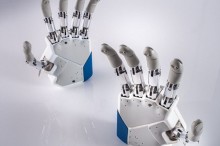
    A man who lost his left hand in a fireworks accident has described how he could feel things that he had not been able to feel for more than nine years after testing a bionic replacement with a sense of touch.

    Is praising a child good or bad for them?

    Your child presents you with their latest artistic creation. It’s a painting of a figure with very long thin legs, no body and big hair. It’s you. In the corner there’s a bit of yellow which you’re told is the Sun and beside it some patches of purple paint. If you’re being honest you’ve seen better, but as your child waits for your reaction, what do you say? “That’s amazing. It’s the best painting I’ve ever seen. It’s completely fantastic.

  • Applications of Nanotechnology in Medicine

    Applications of Nanotechnology in Medicine

    Nanotechnology can be viewed as the science and engineering included in the design, synthesis, characterization, and application of materials and devices whose smallest functional organization is on the nanometer level or one billionth of a meter. At these scales, consideration of individual molecules and interacting groups of molecules becomes important. Applications to medicine imply materials and devices designed to interact with the body at molecular scales with a high degree of specificity.

    Introduction

    Nanotechnology and nanoengineering appear to produce important scientific and technological advances in diverse fields including medicine and healthcare. Materials and devices engineered at the nanometer scale imply controlled manipulation of individual constituent molecules and atoms in how they are arranged to form the bulk macroscopic substrate. This, in turn, means that nanoengineered substrates can be designed to exhibit very specific and controlled bulk chemical and physical properties as a result of the control over their molecular synthesis and assembly. For applications to medicine and healthcare, these materials and devices can be designed to interact with cells and tissues at a molecular level with a high degree of functional specificity, thus allowing a degree of integration between technology and biological systems. Nanotechnology is not in itself a single emerging scientific discipline but rather a meeting of traditional sciences such as chemistry, physics, materials science, and biology to bring together the required collective expertise needed to develop these novel technologies.

    What is a Nanomaterial?

    Nanoscience will impact the design and fabrication of new materials with innovative properties and functions. Contributions to this field include improving the properties of plastics, ceramics, coatings, composites, fibres and many more. Nanoscience also introduces an entirely new concept in material design. As a matter of fact, nature is a great source of inspiration to materials engineers.

    The question: What is a‘nanostructured material’? must be considered. Nanostructured materials are solids or semi-solids characterized by a nano-sized inner structure. They differ from crystalline, microstructured and amorphous solids because of the scale order. In contrast, microstructured materials show structural variation only on a micron scale, whereas amorphous materials exhibit short-range order only. In nanostructured materials, the spatial order is at the nanoscale, which lies between the microscopic and the atomic scale.

    Nanostructured materials differ from conventional polycrystalline materials in the size of the structural units of which they are composed. They can exhibit properties that are drastically different from those of conventional materials. This means that in a nanostructured material there is a large proportion of surface atoms. Due to the large surface area, bulk properties become governed by surface properties. Examples of nanostructured materials are nanoporous, nanocrystalline, nanocomposite and hybrid materials.

    Methods in Nanotechnology

    Different methods for the synthesis of nanoengineered materials and devices can accommodate precursors from solid, liquid, or gas phases. In general, most synthetic methods can be classified into two main approaches: “top down

  • Weekly Science Picks

    Weekly Science Picks

    We came to the end of this week and it is our time to recount the most exciting and incredible stories from the world of science and technology. As usual, we had to make a hard decisions and after a careful consideration we decided to promote the news as follows:

    Dinosaur fossils from China help researchers describe new ‘Titan’

    Paleontologists have characterized a new dinosaur based on fossil remains found in northwestern China. The species, a plant-eating sauropod named Yongjinglong datangi, roamed during the Early Cretaceous period, more than 100 million years ago. This sauropod belonged to a group known as Titanosauria, members of which were among the largest living creatures to ever walk the earth.

    Fifth of Neanderthals’ genetic code lives on in modern humans

    The last of the Neanderthals may have died out tens of thousands of years ago, but large stretches of their genetic code live on in people today. Though many of us can claim only a handful of Neanderthal genes, when added together, the human population carries more than a fifth of the archaic human’s DNA, researchers found.

    How reintroducing wolves helped save a famous park

    Wolves had been absent from Yellowstone National Park for more than 70 years when they were reintroduced in the 1990s – and their return had some surprising benefits.

    Acid Treatment Could Provide Breakthrough Stem Cell Technique

    Scientists have found a surprisingly simple way to turn mature cells back into a primitive state. Simply giving mouse blood cells an acid bath is enough to produce so-called pluripotent cells that can develop into any cell type in the body, they report in two new papers this week. The remarkable transformation contradicts many assumptions about cell biology and may ultimately lead to new ways to treat disease and injuries.

    Please stay curious and scientifically passionate. New stories are coming soon!

  • The Best of Australian Science: January 2014

    The Best of Australian Science: January 2014

    It’s the end of January, 2014. It’s our time to summarise what we have done during this month. Basically, we are going to recount the best highlights for January.

    Here are the most exciting and most interesting articles of this month.

    Four women researchers who were overshadowed in the sciences by Danica Radovanovic

    As an advocate of women in science, I am illustrating why supporting the presence of women researchers as the voices of science today plays the crucial role, by presenting four stories of women who have changed the world in the male-dominated world of science, and still have been overlooked throughout their careers.

    Grand Engineering Challenge – Economical Solar Energy by Milica Djekic

    As a source of energy, nothing can be compared with the sun. Solar energy is so called renewable source of energy which means it has very vital and promising role on our whole civilization. Nowadays humans have to be very efficient and capable to use all these sources of renewable energy to harness our economical and social growth.

    5 Eco-friendly Inventions that Australia can be Proud of by Michelle Lee

    Australia is one of the world’s most eco-friendly countries. We have banned plastic bags in South Australia, put a tax on carbon and most homes have a government-issued recycling bin. However, much of the country’s environmental efforts happen behind the scenes – in construction, building and mining.

    Does Spacetime Have Any Time Dimension?

    The concept of time as a way to measure the duration of events is basically intuitive. Some researchers believe that this Newtonian idea of time as an absolute quantity and fourth dimension in spacetime is incorrect. They propose to replace these concepts of time with a completely new view: time as a measure of the numerical order of change.

    The Next Generation IT Security System by Milica Djekic

    Spies, communication, and secret codes! Cryptography is the art of encrypting and decrypting messages. It has existed as long as people have distrusted each other and looked for the forms of secure communication. Cryptographic techniques have evolved over the centuries. The aim is always the same – the code-makers work to stay ahead of the code-breakers. Today’s most common encryption methods are threatened by the potential creation of the quantum computer. In other words, quantum cryptography promises more secure communication than any existing technique.

    Stay curious and scientifically passionate! New stories are coming soon.

  • Grand Engineering Challenge – Economical Solar Energy

    Grand Engineering Challenge – Economical Solar Energy

    As a source of energy, nothing can be compared with the sun. Solar energy is so called renewable source of energy which means it has very vital and promising role on our whole civilization. Nowadays humans have to be very efficient and capable to use all these sources of renewable energy to harness our economical and social growth.

    Introduction

    At the moment, sun’s contribution to human energy needs is crucial. But, total solar energy market remains quite small. It covers below 1 % of total energy consumption, compared with roughly 85 % from oil, natural gas, and coal.

    Those fossil fuels cannot remain the dominant sources of energy forever. For a long-term, sustainable energy source such as solar power offers an attractive alternative. Its availability far exceeds any conceivable future energy requirements. It is environmentally clean, and its energy transfer from the sun to the Earth is free of charge.

    Many of the technologies to resolve these issues already exist. Dishes can concentrate the sun’s rays to heat fluids that drive engines and produce power which is a possible approach to solar electricity generation. Another popular method is direct production of electric current from captured sunlight.

    The efficiency of solar energy technology

    Energy consumption has been growing worldwide during the last decade. It is well known that growing population usually accelerates energy consumption. Nowadays, fossil fuels supply a huge percentage of the primary energy consumed worldwide. This fact is responsible for the global warming and climate change. On the other hand, energy is a key asset in the welfare of humankind and its development. It is also important to understand the definition of energy efficiency. In general, it is the need for rationalization and reduction of energy consumption and to which a set of actions contribute to improve its use.

    Let’s return to solar energy issue. Today’s commercial solar cells normally convert sunlight into electricity with an efficiency of only 10 % to 20 %. To make solar economically competitive, engineers must find ways to improve the efficiency of the cells and to lower their manufacturing costs.

    Basically, prospects for improving solar efficiency are promising. Current standard cells have a theoretical maximum efficiency of 31 % due to the electronic properties of the silicon material. But, new materials can evade that limit. Experimental cells have exceeded 40 % efficiency.

    Can solar energy be more economical?

    A key issue here is material purity. Current solar cell designs require high-purity, because impurities block the flow of electric charge. That problem would be avoided if charges had to travel only a short distance, through a thin layer of material.

    Another interesting thing here is an application of renewable energy in building systems. Because of its energy-efficient technology and friendly environmental benefits, building combined cooling heating and power (BCHP) system is broadly identified as an alternative for the world to meet and solve energy-related problems and environmental issues. Solar energy has been applied to BCHP systems for its compromising environmental benefits and cost saving potentials.

    Clean solar energy

    The solar power satellites concept has been around late 1968. The method of transmitting power to the earth using microwaves from the small antenna on the satellite to a much larger area on the ground is known as rectenna. The concept has again become interesting due to increased energy demand and cost.

    The space has several advantages over Earth for the collection of solar power. There is no air in the space, so satellites would receive somewhat more intense light unaffected by weather and day night cycle. This received amount of energy will be transformed in microwave energy and will be transmitted through the antenna previously place on satellite aimed at Earth.

    The solar power satellite essentially consists of 3 parts: (1) a micro wave antenna on satellite aimed at earth, (2) a huge solar collector made up of solar cells, (3) an antenna occupying large are on the earth to collect the power disadvantages for lower orbits. Satellite power and obvious choice would be to look for an orbit which maximises the use of the power system on the night side on the Earth.

    The storage of solar energy

    Many technologies offer mass-storage opportunities. New materials could greatly improve the effectiveness of capacitors, superconducting magnets, or flyweels, all of which could provide convenient power storage in many applications.

    Another possible solution to the storage problem would mimic the biological capture of sunshine by photosynthesis in plants. The plant’s way of using sunlight to produce food could be duplicated by people to produce fuel. Fuel cells have other advantages. They could be distributed widely, avoiding the vulnerabilities of centralized power generation.

    Conclusion

    One of the greatest engineering challenges nowadays is to improve solar cells, reduce their costs, and provide efficient ways to use their electricity to create storable fuel. If we resolve all this problems in the future a solar power will assert its superiority to fossil fuels as a sustainable motive force for civilization’s brilliant prosperity.

    References:

    [1] Aditya goel, Rishi P Jamdagni, N. K.Mishra, New Hope for Clean Energy through Exploring Space, IEEE, 2010.
    [2] Dr. D. Biran, Prof. A. Braunstein, Solar Electrical Systems for Communication, IEEE, 1978.
    [3] J. Galvão, S. Leitão, S. Malheiro, T. Gaio, Model of Decentralized Energy on Improving the Efficiency in Building Services, IEEE, 2010.
    [4] Jiang-Jiang Wang, He Bai, You-Yin Jing, You-Yin Jing, Economic Analysis and Optimization Design of a Solar Combined Cooling Heating and Power System in Different Operation Strategies, IEEE, 2011.

  • Weekly Science Picks

    Weekly Science Picks

    Well, it’s Sunday again. It’s our time to recapitulate all the scientific contributions, ideas, events and discoveries that have occurred in this week. To be honest, the job was quite challenging, since the science and technology market is highly competitive and unpredictable. Luckily, we made it. Now we would like to present you top stories that were published during this week.

    Are we born good or evil?

    Do humans have an innate sense of morality? If so, where does it exist in the brain and how did it get there? BBC’s Horizon shows how scientists looking into the minds of babies and criminals are rewriting our ideas of right and wrong.

    Archaeologists find remains of previously unknown pharaoh in Egypt

    The discovery of King Senebkay is the first firm evidence of a pharaonic dynasty whose existence archaeologists had suspected but never proved. About 20 previously undiscovered pharaohs may lie near Senebkay’s tomb, explained Josef Wegner, the dig’s head archaeologist.

    On the hunt for black holes

    The concept of a ‘black hole’ is one of the most curious in astrophysics. It’s a region of space-time where nothing, not even light, can escape. While there are countless studies that support the existence of this phenomenon, when it comes to actually proving black holes are real, all of the evidence is indirect.

    One Quarter of the World’s Cartilaginous Fish, Namely Sharks and Rays, Face Imminent Extinction

    Sharks and rays are at substantially higher risk of extinction than many other animals and have the lowest percentage of species considered safe. Using the IUCN Red List, the authors classified 107 species of rays (including skates) and 74 species of sharks as threatened. Just 23 percent of species were labeled as being Least Concern.

    Until next Sunday, stay thirsty for new updates from the world of science and technology.

  • Weekly Science Picks

    Weekly Science Picks

    It’s time to summarise scientific contributions for this week and to open a new chapter for new discoveries. As usual, we would like to present the headlines which marked out the current week. The task was not the simple one, but we made it. Here are the most incredible things from the world of science and technology that happened during this week.

    Answering the burning questions

    So while many of us were enjoying our summer holidays, our team of fire scientists were hard at work with researchers and volunteers from Victoria’s Country Fire Authority (CFA) to help learn more about grassfire behaviour in Australia.

    ‘Falcon cam’ reveals how the birds of prey close in for the kill

    The strategy exploits an effect called motion camouflage, where the predator does not seem to be moving from the point of view of the prey. Done well, the only clue that the bird is approaching is the gradual increase in its size.

    The last place on Earth without human noise

    A special kind of noisiness accosts passengers waiting for New York City subways. Down there, sound levels regularly exceed 100 decibels – enough to damage a person’s hearing over time. It was on one such platform that George Foy, a journalist and New York University creative writing professor, suddenly found himself losing it one day, when four trains pulled in at once. “I kind of went momentarily crazy,

  • The Next Generation IT Security System

    The Next Generation IT Security System

    Spies, communication, and secret codes! Cryptography is the art of encrypting and decrypting messages. It has existed as long as people have distrusted each other and looked for the forms of secure communication. Cryptographic techniques have evolved over the centuries. The aim is always the same – the code-makers work to stay ahead of the code-breakers. Today’s most common encryption methods are threatened by the potential creation of the quantum computer. In other words, quantum cryptography promises more secure communication than any existing technique.

    Introduction

    Quantum cryptography is focused on the unique behavior of microscopic objects which enable users to securely develop secret keys. The work on quantum cryptography was begun by Stephen J. Wiesner in the late 1960’s. The first protocol for sending a private key using quantum techniques is published in 1984 by Bennett and Brassard. The development of quantum cryptography is based on “public-key

  • Weekly Science Picks

    Weekly Science Picks

    As you all know, we proudly can say we fixed all the problems we had in the past and returned to our audience after a short break. We are continuing our work as before and for this weekly wrap up we prepared quite interesting things from the area of science and technology.

    Will drones become the future of farming?

    Robots are being used to survey crops and help farmers manage the water and chemicals they use in vast fields. Chris Anderson, the former editor-in-chief of Wired magazine, recently switched careers to move into drone manufacturing. He co-founded 3D Robotics, which is building drones in Mexico and the US which may one day keep a beady electronic eye on the food being grown for our tables.

    Y chromosome is not doomed to shrivel away to nothing, say researchers

    Reports of the coming death of the male sex chromosome are greatly exaggerated, say scientists, whose work will raise a collective cheer from at least half the population. The fate of the Y chromosome, which carries the genetic switch that sends a developing embryo down the route to maleness, has been questioned since scientists first discovered that it had lost more than 90% of its genes over millions of years of evolution.

    Here be 3D printed dragons

    Toothless, 3D printed out of titanium, came into the world at Lab 22, our additive manufacturing facility in Melbourne. The scientists there have printed some extraordinary things in the past—huge anatomically correct insects, biomedical implants and aerospace parts. So they thought a dragon was achievable.

    Surprising New Class of ‘Hypervelocity Stars’ Discovered Escaping the Galaxy

    The discovery of this new set of “hypervelocity” stars was described at the annual meeting of the American Astronomical Society this week in Washington, D.C., and is published in the Jan. 1 issue of the Astrophysical Journal.

    Please keep following us because an emerging science and technology news are coming soon.

  • Challenges of Wireless Cryptography

    Challenges of Wireless Cryptography

    As companies and individuals increasingly use wireless technologies for their significant communications, they also must be assured of security using proper cryptographic algorithms. The major fields of applications are mobile e-commerce transactions, e-mails and corporate data transaction. On the other hand, as wireless systems grow in popularity and carry valuable information, hackers are directing their attacks on these novel targets. The need for secure wireless transport of audio, video and data across wide area networks has become crucially important for almost everyone. This is a great issue because wireless devices were not originally designed with security as a top priority. Nowadays, wireless security is becoming a very important and challenging area of research and development. In this article we discuss the potentials of wireless security protocols (WEP, WPA and WPA2/802.11i) used today and security aspects of wireless communication systems as well.

    Introduction

    Mobility and broadband media services are two crucial demands of modern telecommunication networks. The fast progress in wireless communication systems, smart card technologies and personal communication systems provides new opportunities and challenges for scientist and engineers working on the security problems of new communication systems and technologies. In general, public-key cryptography offers a lot of solutions to many of concerning security problems in communication systems. However, big computational requirements have limited the use of public-key cryptography on wireless communication systems.

    Encryption mechanisms can be classified as: symmetric or asymmetric. The both are of static state. A new approach follows the stream key generation mechanism, which involves time dimension into the key generation and brings up dynamic keys, one per each data record. The symmetric key is taken into consideration, but in a dynamic streaming environment. A static key is generated once and stored at location for performing encryption later. On the other hand, a dynamic key is initialized by a central authority.

    In WLANs, privacy is obtained by data protected with encryption. Without encryption, any other standard wireless device can read all traffic in network. There are three major generations of security approaches:

    (1)   WEP (Wired Equivalent Privacy),
    (2)   WPA (Wi-Fi Protected Access),
    (3)   WPA2/802.11i (Wi-Fi Protection Access, Version 2).

    Each of these protocols can have name that is personal and enterprise template. In this article, it will be listed and explained the main sorts of wireless protocols.

    Wired Equivalent Privacy (WEP)

    Wired Equivalent Privacy (WEP) is a security algorithm for IEEE 802.11 wireless networks. Introduced in September 1999, its intention was to provide data confidentiality comparable to that of a traditional wired network. WEP is recognized thanks to the key of 10 or 26 hexadecimal digits. It is widely in use and is frequently the first security option given to users by router configuration tools.

    In the sender side, WEP uses four operations to encrypt the data (plaintext). Firstly, the secret key used in WEP algorithm is 40-bit long and has a 24-bit Initialization Vector (IV). This vector is focused to acting as the encryption/decryption key. At second, the resulting key behaves as the seed for a Pseudo-Random Number Generator (PRNG). Thirdly, the plaintext is put into a integrity algorithm and focuses using the plaintext again. Fourthly, the result of key sequence and IV will go to RC4 algorithm. In other words, a final encryption message is made by attaching the IV in front of the Cipher text.

    In the recipient side, WEP uses five operations to decrypt the received side (IV + Cipher text). Firstly, the Pre-Shared Key and IV are used to form a secret key. At second, the Cipher text and Secret Key go to CR4 algorithm and as a result there is a plaintext. At third, the IV and plaintext will separate. Fourthly, the plaintext goes to Integrity Algorithm to make a new IV and finally the new IV compared to original IV.

    Two methods of authentication may be applied to WEP: Open System authentication and Shared Key authentication. Here will be discussed WEP authentication in the Infrastructure mode which is between a WLAN client and an Access Point. All this can be applied to the Ad-Hoc mode as well. In Open System authentication, the WLAN client need not provide its credentials to the Access Point during authentication. Any client can authenticate with the Access Point and then attempt to associate. In fact, no authentication happens. WEP keys can be used for encrypting data frames. The client must have the correct keys.

    In Shared Key authentication, the WEP key is used for authentication in a four step challenge-response handshake:

    1.   The client sends an authentication request to the Access Point.

    2.   The Access Point replies with a clear-text challenge.

    3.   The client encrypts the challenge-text using the configured WEP key, and sends it back in another authentication request.

    4.   The Access Point decrypts the response. If this matches the challenge-text the Access Point sends back a positive reply.

    After all this, the pre-shared WEP key is also used for data frames encryption using RC4. At first glance, it might seem that Shared Key authentication is more secure than Open System authentication, although the latter offers no real authentication. But, it is quite the opposite. It is possible to derive the key-stream used for the handshake by capturing the challenge frames in Shared Key authentication. It has been advised to use Open System authentication for WEP authentication, rather than Shared Key authentication.

    The major weaknesses and enhancements of WEP protocol are given in reference [1] and are as follows:

    1.   WEP does not prevent forgery of packets.
    2.   WEP does not prevent replay attacks. An attacker can simply record and reply packets as desired and they will be accepted as legitimate.
    3.   WEP uses RC4 improperly. The used keys are very weak and can be brute-forced on standard computers quickly using freely available software.
    4.   WEP re-uses IVs. Many cryptanalytic methods can decrypt data without knowing the encryption key.
    5.   WEP allows an attacker to undetectably modify a message without knowing the encryption key.
    6.   Key management is lack and updating is poor.
    7.   Problem in the RC4 algorithm.
    8.   Easy forging of authentication messages.

    Implemented non-standard fixes of WEP protocol are as follows:

    I. WEP2

    This stopgap enhancement to WEP was present in some of the early 802.11i drafts. It was implementable on some (not all) hardware not able to handle WPA or WPA2, and extended both the IV and the key values to 128 bits. It was hoped to eliminate the duplicate IV deficiency as well as stop brute force key attacks. After it became clear that the overall WEP algorithm was deficient (and not just the IV and key sizes) and would require even more fixes, both the WEP2 name and original algorithm were dropped. The two extended key lengths remained in what eventually became WPA’s TKIP.

    II. WEP plus

    WEP plus, also known as WEP+, is a proprietary enhancement to WEP by Agere Systems (formerly a subsidiary of Lucent Technologies) that enhances WEP security by avoiding “weak IVs”. It is only completely effective when WEP plus is used at both ends of the wireless connection. As this cannot easily be enforced, it remains a serious limitation. It also does not necessarily prevent replay attacks, and is ineffective against later statistical attacks that do not rely on weak IVs.

    III. Dynamic WEP

    Dynamic WEP refers to the combination of 802.1x technology and the Extensible Authentication Protocol. Dynamic WEP changes WEP keys dynamically. It is a vendor-specific feature provided by several vendors such as 3Com. The dynamic change idea made it into 802.11i as part of TKIP, but not for the actual WEP algorithm.

    Wi-Fi Protected Access (WPA)

    Wi-Fi Protected Access (WPA) and Wi-Fi Protected Access II (WPA2) are two security protocols and security certification programs developed by the Wi-Fi Alliance to secure wireless computer networks.

    WPA became available in 2003. The Wi-Fi Alliance intended WPA as an intermediate measure to take the place of WEP pending the availability of the full IEEE 802.11i standard. WPA could be implemented through firmware upgrades on wireless network interface cards designed for WEP. Since the changes required in the wireless access points (APs) were more extensive than those needed on the network cards.

    The WPA protocol implements much of the IEEE 802.11i standard. Specifically, the Temporal Key Integrity Protocol (TKIP) was adopted for WPA. WPA also includes a message integrity check. This is designed to prevent an attacker from capturing, altering and/or resending data packets. This replaces the cyclic redundancy check (CRC) that was used by the WEP standard. WPA uses a message integrity check algorithm called Michael to verify the integrity of the packets.

    Wi-Fi Protection Access, Version 2 (WPA2)

    WPA2 has changed WPA. WPA2 demands testing and certification by the Wi-Fi Alliance and uses the mandatory elements of IEEE 802.11i. In particular, it introduces CCMP, which is a new AES-based encryption mode with strong security. After only several years, WPA2 certification is mandatory for all new devices to bear the Wi-Fi trademark. The Wi-Fi Alliance intended it as an intermediate measure in anticipation of the availability of the more secure and complex WPA2. WPA2 became available in 2004 and is common shorthand for the full IEEE 802.11i (or IEEE 802.11i-2004) standard.

    Conclusion

    Wireless and mobile networks are rapidly extending their capabilities. In addition to their increasing bandwidth and because of their flexibility and freedom they are becoming the communication infrastructure of choice. Wireless communication provides a user the capability of conducting commerce at anytime, with nearly anyone, from anywhere, using a mobile communication channel. This mobile communication channel can also be used as an access method to the Internet.

    References:

    1.   Cryptography and Network Security: Principles and Practice, William Stallings, Prentice-Hall, Inc., New Jersey, 1999.
    2.   Designing and Developing 802.11n Wireless Networks, Jim Geler, Cisco Systems, Inc., 2010.
    3.   Wireless Mesh Networking: Architectures, Protocols and Standards, Yan Zhang, Jijun Luo, Honglin Hu, Auerbach Publications, Taylor & Francis Group, New York, 2007.
  • A Scytale – Cryptography of the Ancient Sparta

    A Scytale – Cryptography of the Ancient Sparta

    We continue with the series of articles about cryptography. More precisely, this one can be defined as a brief review of its history and the most significant ciphering device of ancient world. The initial post about this topic can be found here.

    Going back through time, the Mankind always had the need to transform the message and to keep the information hidden. One of the oldest cryptography tools was a Spartan scytale. It is a tool used to perform a transposition cipher, consisting of a cylinder with a strip of parchment wound around it on which is written a message. The ancient Spartans and Greeks, in general, are told to have used this cipher to communicate during military campaigns.

    Scytale


    The idea of the scytale ciphering is as follows. The recipient uses a rod of the same diameter on which he wraps the parchment to read the message. It has the advantage of being fast and not prone to mistakes which is a necessary characteristic when on the battlefield. If not, it can be easily broken. Since the strip of parchment hints strongly at the method, the ciphertext would have to be transferred to something less suggestive.

    From indirect evidence, the scytale was first mentioned by the Greek poet Archilochus who lived in the 7th century B.C. The ancient Greeks used this cipher to communicate during military campaigns. Sender and recipient each had a cylinder of exactly the same radius. The sender wound a narrow ribbon of parchment around his cylinder. Then he wrote on it lengthwise. After the ribbon is unwound, the writing could be read only by a person who had a cylinder of exactly the same circumference.

    Imagine that each column wraps around the dowel one time that is the bottom of one column is followed by the top of the next column.

    For instance, the original message can be: kill king tomorrow midnight

    Wrapped message:

    k i l l k i n g
    t o m o r r o w
    m i d n i g h t

    Encoded message: ktmioi lmd lon kri irg noh gwt

    The key parameter in the scytale encryption is the number of letters that can be recorded on one wrap ribbon around the dowel. In the example, the maximum is 3, since there are 3 rows in the wrapped message. The last row was covered with blank spaces before the message was encoded. It is called the wrap parameter. If you don’t know the wrap parameter you cannot decode a message.

    In conclusion, the Spartan scytale is one of the earliest encryption devices in the history. It was used by the Spartan Military for encoding message sent between commanders. In modern cryptography techniques, the scytale can be replaced with appropriate matrix system. Using the similar approach, the message can be ciphered using that method.

  • Introduction to Cryptographic Basics

    Introduction to Cryptographic Basics

    Cryptography is the practice and study of techniques for secure communication in the presence of third parties. More generally, it is about constructing and analyzing protocols that overcome the influence of third parties and which are related to various aspects in information security such as data confidentiality, data integrity, authentication, and non-repudiation. Modern cryptography intersects the disciplines of mathematics, computer science, and electrical engineering. Applications of cryptography include ATM cards, computer passwords, and electronic commerce. In this article I introduce the Symmetry Law which can be useful for symmetric encryption of information.

    The Symmetry Law

    The symmetry of the set of the encrypted information is the characteristic that separates the set of such ciphered information into two identical or symmetric or mirrored parts. In binary logics, the symmetry is the property of XOR and XNOR functions. Some algorithms based on these two functions can produce the symmetric result. In the coming theorems all this will be explained and proved.

    Firstly, let start with the logic function XOR and XNOR and let prove their symmetry.

    Later, I will show how some ciphering algorithms based on these two functions or their combinations can be used for constructing the set of symmetric encrypted information.

    Exclusive-OR or XOR function

    Exclusive-OR or XOR function can be defined as follows. A true output (1) results if one, and only one, of the inputs to the gate is true (1). On the other hand, if both inputs are false (0) or both are true (1), a false output (0) results. Its behavior is summarized in the truth table. A way to remember XOR is “one or the other but not both”.

    The truth table of XOR function:

    xor truth table

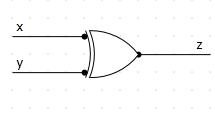
    The logic gate of XOR function is given in Figure 1.

    XOR Gate

    Figure 1. XOR gate drawn in Logic Circuit software

    As it is obvious from the truth table, an XOR function gives a set of symmetric output results for the different input combinations. That leads to conclusion that the XOR function is a symmetric function.

    Exclusive-NOR or XNOR function

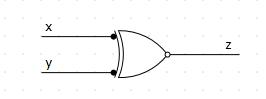
    Exclusive-NOR or XNOR function is the inverse of the exclusive-OR or XOR function. It behaves according to its truth table. A high output (1) results if both of the inputs to the gate are the same. On the other hand, if one but not both inputs are high (1), a low output (0) results.

    The truth table of XNOR function:

    xnor truth table

    The logic gate of XNOR function is shown in Figure 2.

    XNOR Gate

    Figure 2. XNOR gate designed in Logic Circuit software

    Theorem 1:

    Let assume that we observe a set of a-bit binary information, where a ≥ 3. The set of information contains different combinations of 0s and 1s. In that case, the source message can be represented using the weight coefficients. This is given in Equation (1).

    eq1

    Where:

    n – the highest value of the weight coefficient for the message; n ≥ 2,

    f – the weight coefficient for the message.

    Let also assume that an encrypted message or a cipher can be presented as array of the weight coefficients, where number of digits for the message and number of digits for the cipher are the same. This is shown in Equation (2).

    eq2

    Where:

    n – the highest value of the weight coefficient for the cipher; n ≥ 2,

    g – the weight coefficient for the cipher.

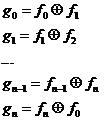
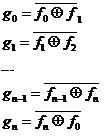
    If the following algorithm (3) is applied, as a result the symmetric or mirrored set of encrypted or ciphered information will be gotten.

    eq3

    The Proof:

    The law will be proved using the case of the set of 4-bit binary information.

    The set of 4-bit binary information:

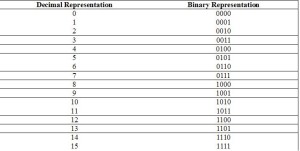
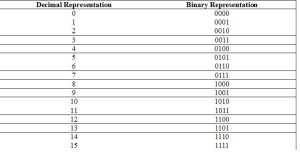
    Let observe the set of 4-bit binary information, which consists of 4 bits of information and has 2ª = 16 combinations. In this case, a number of bits or digits is a = 4. These combinations cover the set of the following decimal numbers: from 0 to 2ª – 1 = 15. All these combinations are given in Table 1 as follows.

    Table 1.

    table1

    Solution:

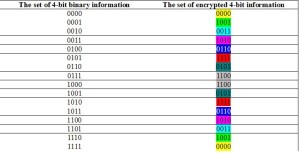
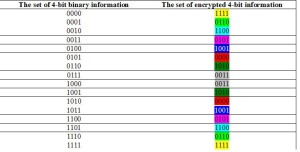
    The results of such a provided ciphering process are given in Table 2. It is obvious that the set of the encrypted information is completely symmetric or mirrored, which is the consequence of the symmetric nature of XOR logic function. Table 2 is shown as follows.

    Table 2.

    table2

    Theorem 2:

    Let assume that we observe a set of a-bit binary information, where a ≥ 3. The set of information contains different combinations of 0s and 1s. In that case, the source message can be represented using the weight coefficients. This is given in Equation (3).

    eq4

    Where:

    n – the highest value of the weight coefficient for the message; n ≥ 2,

    f – the weight coefficient for the message.

    Let also assume that an encrypted message or a cipher can be presented as array of the weight coefficients, where number of digits for the message and number of digits for the cipher are the same. This is shown in Equation (4).

    eq5

    Where:

    n – the highest value of the weight coefficient for the cipher; n ≥ 2,

    g – the weight coefficient for the cipher.

    If the following algorithm (5) is applied, as a result the symmetric or mirrored set of encrypted or ciphered information will be gotten.

    eq6

    The Proof:

    The law will be proved using the case of the set of 4-bit binary information.

    The set of 4-bit binary information:

    Let observe the set of 4-bit binary information, which consists of 4 bits of information and has 2ª = 16 combinations. In this case, a number of bits or digits is a = 4. These combinations cover the set of the following decimal numbers: from 0 to 15. All these combinations are given in Table 3 as follows.

    Table 3.

    table3


    The results of such a provided ciphering process are given in Table 4. It is obvious that the set of the encrypted information is completely symmetric or mirrored, which is the consequence of the symmetric nature of XNOR logic function. Table 4 is illustrated as follows.

    Table 4.

    table4

    Conclusions

    This article provides a brief review of the results the author got during her research. The author plans to continue her research and to publish her findings into this magazine. The initial step has been made and the facts about the Symmetry Law have been shared with the audience. This is not the final version of the law, only the initial step. As research goes further, the author will be that free to publish the results.

    Reference:

    1.   Digital Systems – Principles and Applications, Ronald J. Tocci & Neal S. Widmer, Prentice-Hall International, Inc., 1998.