Author: Milica Djekic

  • A Dynamic Encryption – The Facts

    A Dynamic Encryption – The Facts

    As we live in a very dynamic and constantly changing world, where new information and ideas are appearing and disappearing at really fast pace, we should notice that data protection and critical information security play a crucial role in maintaining our everyday’s lives. For that reason, invoking the technique of dynamic encryption could be strategically important in this digital time. In this article we should attempt to provide the answers to the following questions. What is critical information? Are we going more intelligent? Why the concept of dynamic encryption matters? What could be the future of modern cyber security? Well, let’s begin.

    What is Critical Information?

    In security practice, it is very important to define critical information as an information or data that is strategically or vitally important for some information or communication system operations. The term of critical information is strongly connected to the concept of critical infrastructure. In reality, critical infrastructure relies on critical information. What is critical infrastructure for real? Well, it’s every infrastructure that strategically means for some nation or country. For instance, here, we could include power plants, airports, telecommunication systems, the government’s departments, information or cyber infrastructure, transportation systems and so on. In other words, everything that plays a vital role in everyday’s life of the country and its people.

    We would try to explain that critical information better? At this stage, it can appear as unclear what it could represent. Firstly, it’s very significant to understand how modern technical and information systems work, because they are the best indicators of critical infrastructure trends. As it is known from nowadays engineering and computer science experience, the operation of technical systems greatly depends on computers and digital information transmission. For example, in recent power plant systems there are the computers that maintain communication and information flow within the sub-systems and that are responsible for the production of electricity. If someone would cut off the signal or try to disturb it, it would cause a great damage to the power plant functioning. For that reason, we see that information transfer as critical or vital for the operation of critical infrastructure system such as, in this case, that power plant.

    Let us summarise this part of the article. Critical information is every information transfer within digital or cyber part of some critical systems on which that system depends. The lack of communication or data exchange inside the system can cause damage or even catastrophical consequences to critical infrastructure and do harm to entire nation.

    Are we going more intelligent?

    The answer to this question is yes. Modern security systems are going very intelligent. The concept of intelligence-driven security systems is gaining popularity nowadays. Well, it’s not only up to popularity, but rather to a quite good practical results it can offer. Let’s start explaining these.

    Today’s security systems relies on intelligence. By definition, intelligence is an information with some analysis applied. In the past, an information was the one which followed operations. The modern trend requires security service to produce some intelligence which will be capable to lead the operation. How these matters in the world of cyber security? Well, try to imagine a cyber system which depends on intelligence. That cyber system can be some computer set or an entire network. As it is known, computer systems are led by the set of rules or instructions. That set is better known as an algorithm. If we attempt to apply the concept of intelligence-driven security, we would notice that we have a system which is, in this case, an algorithm that is capable to adapt to or follow the information. As we know, the previous cyber systems had the algorithm leading the information, but today the set of rules is the one which is led by intelligence.

    We will explain in the coming parts of the article how these can affect the future of cyber security. But, in total, yes. We are getting more intelligent.

    Why Dynamic Encryption Matters?

    As we see, the modern world is a very dynamic place. We are going very digital and the information are getting a normal part of our lives. Everything changes very fast and sometimes it’s quite challenging to follow all those changes. If our world is going dynamic, the logical question should be as follows: “Do we need the protection that will go dynamic as well?

  • Weekly Science Picks

    Weekly Science Picks

    Have you ever thought how our world would appear if there would be an artificial intelligence to guide us? A quite futuristic statement, isn’t it? Well, not really! That sort of intelligence is becoming our reality. It this week’s editor selection we will talk more about that phenomenon and cover much more. Sure you will appreciate this weekly review. Let’s start.

    How online ‘chatbots’ are already tricking you

    Sometimes it’s the promise of sex that fools you. Sometimes it’s because they seem wise, friendly or just funny. The bots don’t really care how they trick you – their only objective is to make you think they’re human. In fact, if you use social media or spend any time online, it’s quite possible you’ve already been a victim.

    Don’t believe the science hype – we haven’t created true AI yet

    So has some AI milestone been reached? Is Eugene Goostman the best conversation program ever created? Turing argued in 1950 that if a computer could be substituted into the old guessing game of “Am I getting notes from a man or a woman?” and no one noticed, then we should just admit computers could think and stop worrying. But Turing was not proposing a test of any sort, and in his setup, the question “Is this a machine or a person?” is never asked, because one thinks one is answering a question about sex. Once you pose the human-or-machine question directly, things start to get very odd.

    Busting the megalodon myth: did a 3m shark get eaten by an even bigger shark?

    So, what can we make of the mysterious discovery of a CSIRO shark tag washed up on a beach that had some fairly typical data recorded on it? Some are incorrectly interpreting the data and speculating that this is evidence of the existence of a megalodon, an ancient extinct species of shark that lived millions of year ago. The megalodon was huge, around 15-24 metres in length… eek. White sharks grow up to 6 m in length.

    Mining data archives yields haul of ‘red nuggets’ galaxies

    The world of astronomy has changed. An astronomer used to have to travel to a remote location and endure long, cold nights, patiently guiding a telescope to collect precious photons of light. Now, a proliferation of online archives allows astronomers to make discoveries from the comfort of their own offices. By mining such archives, a team of astronomers has found a treasure trove of ‘red nugget’ galaxies.

    That would be everything for this weekly editor’s choice. Please stay thirsty and scientifically passionate! We are coming with new stories.

  • Cyber Skills Shortage in Australia

    Cyber Skills Shortage in Australia

    As we live in the era of digital technologies, cybersecurity concerns are getting more and more frequent and serious. The Government agencies and other organisations need to protect their IT facilities while cybercrime severity increases. Similarly, as everywhere in the world, Australia is facing up these issues as well. The trend shows that the entire world including Australia is suffering cyber skills shortage.

    Introduction

    Cybercrime started off with geeky teenage computer experts hacking email accounts and bypassing basic access control mechanisms for IT networks. The industry has developed over the years, and many amateurs now practice basic hacking tactics in the cyber space. However, the IT security industry still faces a global skills gap that could take as much as twenty years to fill in some of the most developed countries of the world.

    The Defence Science and Technology Organisation is looking for new recruits to Australia’s cyber army – a task that promises to be an uphill battle as Australia struggles to produce enough computer science engineers.

    Cyber-army cuts 

    Highly skilled computer science graduates are increasingly in demand in the private sector and many industry experts believe there are not enough cyber worriers popping out of the nation’s universities.

    As it is known, having strong cyber security is critical to having a strong economy. It’s not something that should be outsourced.

    In Australia, graduates were divided between IT support workers and network engineers, the latter of which are taught to build new network defence and critical enterprise systems which Australia lacks.

    The National ICT Australia (NICTA) has warned that “Australia could miss the chance to build an internationally competitive cyber security industry if it doesn’t … create market opportunities and challenging careers for our best computer scientists and software engineers.”

    Cyber wars coming up

    By some experts, funding from priority areas such as cyber security would not be cut. But many scientists fear Australia’s investment into cyber security is leaving the nation vulnerable to unknown threats.

    According to Tom Worthington from the Faculty of Engineering and Information Technology, the next war that Australia is involved in will start in cyber space and we won’t realise we are under attack until we have real problems. Also it takes years to train people in cyber security.

    There are some cyber schooling institutions such as the new ADFA “cyber range” training centre has begun educating Australian defence forces in network security but it is understood the new cyber security centre announced under the Gillard government is waiting to get opened.

    Usually under attack

    Recently a cyber strike brought down the Australian Federal Police website, part of a series of attacks on the organisation. The group believed to be responsible is also suspected of cyber attacks against the Royal Australian Air Force, the Reserve Bank of Australia and the spy agencies ASIO and ASIS.

    The issue is that no countries invest enough in cyber security, which is a very important area, and that countries which do not invest enough are forced to rely on expertise of the major powers.

    Conclusion

    In conclusion, as an example of a good industry practice we can mention that the Australian Government has teamed up with Telstra, NBN Co and PwC to hold the Cyber Security Challenge to address a skills shortage in the number of cyber security professionals in Australia. We hope these will somehow fill the existing gap.

  • Weekly Science Picks

    Weekly Science Picks

    Good day to everyone! It’s the end of one more scientific week. Let us see what have happened during the last 7 days. First of all, this week sounds so futuristic and promises the exciting time in many areas of science and technology. The crucial questions we got at the moment are as follows. Will we eat the insects in the future? What is the tomorrow of genetics? How will the solar research look like in the coming period? Are we going quantum? Let us see what our this week’s choice says about that.

    How insects could feed the food industry of tomorrow

    Millions of maggots squirm over blackened pieces of fruit and bloody lumps of fetid flesh. A pungent stench of festering decay hovers over giant vats of writhing, feasting larvae. It’s more than enough to put most people off their lunch. Yet these juvenile flies could soon be just one step in the food chain away from your dinner plate.

    Genetic treatment using three-parent embryo may be ready in two years

    A controversial technique involving three-parent embryos, designed to prevent incurable genetic diseases, could be ready within two years but unless the government changes the law, prospective parents will be prevented from using it, scientists say.

    Our solar team sets a hot and steamy world record

    A team of solar thermal engineers and scientists at our Energy Centre in Newcastle have used the ample sunlight flooding their solar fields to create what’s called ‘supercritical’ steam – an ultra-hot, ultra-pressurised steam that’s used to drive the world’s most advanced power plant turbines – at the highest levels of temperature and pressure EVER recorded with solar power.

    Quantum criticality observed in new class of materials

    Quantum criticality, the strange electronic state that may be intimately related to high-temperature superconductivity, is notoriously difficult to study, but the first findings of a ‘quantum critical point’ in a category of materials known as ‘oxypnictides’ could lead to a broader understanding of the quantum phenomenon.

    These would be everything for this week, mates! Hope you enjoy this weekly review as I do.

  • Weekly Science Picks

    Weekly Science Picks

    One more week finishes and as usual we got new discoveries and findings from the world of science and technology. A lot of amazing things have happened, staring from new findings in medicine to amazing stories from astronomy until wonderful news from zoology. And, in addition, we should not forget the winter at the Southern Hemisphere starts today. Here we would like to present more details on all of these.

    Do animals like drugs and alcohol?

    Tales of the tipsy pachyderms go back at least two centuries. In the 1830s, a French naturalist called Adulphe Delegorgue described stories from his Zulu guides of mysteriously aggressive behaviour in male elephants after they fed on the marula fruits. “The elephant has in common with man a predilection for a gentle warming of the brain induced by fruit which has been fermented by the action of the sun,” wrote Delegorgue.

    Mars volcano may have been site for life

    Mars’s Arsia Mons volcano is nearly twice as tall as Mt Everest, yet it is only the third tallest volcano on Mars. Its northwestern flank shows erosion patterns that typify the presence of a former glacier. This has been known since the 1970s.

    Winter is coming… or is it?

    Well what can we say, from June to August the days are a bit shorter and the temperatures tend to be cooler than the other months of the year. It’s hard to be more specific than that when you have a whole continent to speak for.

    Scientists control rapid re-wiring of brain circuits using patterned visual stimulation

    Researchers have shown for the first time how the brain re-wires and fine-tunes its connections differently depending on the relative timing of sensory stimuli. In most neuroscience textbooks today, there is a widely held model that explains how nerve circuits might refine their connectivity based on patterned firing of brain cells, but it has not previously been directly observed in real time.

    Finally, we should complete our Weekly Science Picks for this week. Please stay scientifically passionate and curious. New stories are coming soon!

  • The Best of Australian Science: May 2014

    The Best of Australian Science: May 2014

    It’s the end of May, 2014. It’s our time to summarise what we have done during this month. In fact, we are going to recount the best highlights for May.

    Here are the most exciting and interesting articles of this month.

    Security Challenges in Cloud Computing by Milica Djekic

    Cloud Computing is a jargon, in other words a new computing model, in which the public Internet is used to connect to provider’s hosted network, infrastructure, platform and/or applications to leverage reliable services. Cloud has left all other distributed computing structures/mechanisms far behind both in competition and in terms of popularity and success.

    Internet Research: Skills Your Students Should Have

    Internet research is the practice of using Internet information, especially free information on the World Wide Web, in research. Internet research has had a profound impact on the way ideas are formed and knowledge is created. Common applications of Internet research include personal research on a particular subject, students doing research for academic projects and papers, and journalists and other writers researching stories.

    Artificial Gravity Swimming Pool by Michelle Lee

    The idea of taking a space holiday, once the stuff of science fiction, is no longer a far flung fantasy. The major hurdle to a viable commercial space holiday venture has long been the provision of a reusable launch system. Until an orbital launch system similar to the reusability of aircraft is developed, we will remain earthbound. Efforts to overcome this barrier have been underway since an international conference on the subject in Bremmen, Germany in 1997. More recently, the Space X reusable launch system development program has progressed to the active test program stage.

    Satellite Hacking: A Closer Look to the Sky by Milica Djekic

    Satellites are vital to sustaining the current balance in the global economy, society, and advanced militaries. As such, states are increasingly recognizing satellites as critical infrastructure. They provide a significant role in climate and natural disaster monitoring, communication, early warning systems, global broadcasting, meteorology, navigation, precision strikes, reconnaissance, remote sensing, surveillance, and the advancement of science and understanding.

    Please stay curious and scientifically passionate! New stories are coming soon.

  • Security Challenges in Cloud Computing

    Security Challenges in Cloud Computing

    Although cloud computing can help companies accomplish more by breaking the physical bonds between an IT infrastructure and its users, heightened security threats must be overcome in order to benefit fully from this new computing paradigm that offers an innovative business model for organizations to adopt IT without upfront investment. Despite the potential gains achieved from the cloud computing, the model security is still questionable which impacts the cloud model adoption. The security problem becomes more complicated under the cloud model as new dimensions have entered into the problem scope related to the model architecture, multi-tenancy, elasticity, and layers dependency stack.

    1. Introduction

    Cloud Computing is a jargon, in other words a new computing model, in which the public Internet is used to connect to provider’s hosted network, infrastructure, platform and/or applications to leverage reliable services. Cloud has left all other distributed computing structures/mechanisms far behind both in competition and in terms of popularity and success.

    The primary reason is that, any service can be scaled up or down as and when required, based on customer’s needs. Cloud offers flexibility, quick to production model, and offers capital reduction by enabling organizations to port all their data, information and infrastructure to off-site provider hosted premises.

    Cloud Computing is essentially a combination of existing technologies that are succeeding in make a paradigm shift in building and maintaining distributed computing systems making use of, multiprocessor, virtualization technology, network based distributed data storage and networking. The cloud providers have Infrastructure as a Service (IaaS), Platform as a Service (PaaS), and Software as a Service (SaaS) and many more services to offer.

    2. Cloud Computing Security Problems

    The cloud system is running in the internet and the security problems in the internet also can be found in the cloud system. The cloud system is not different the traditional system in the PC and it can meet other special and new security problems.

    The biggest concerns about cloud computing are security and privacy. The traditional security problems such as security vulnerabilities, virus and hack attack can also make threats to the cloud system and can lead more serious results because of property of cloud computing. Hackers and malicious intruder may hack into cloud accounts and steal sensitive data stored in cloud systems. The data and business application are stored in the cloud center and the cloud system must protect the resource carefully.

    Cloud computing is a technology evolution of the widespread adoption of virtualization, service oriented architecture and utility computing. over the Internet and it includes the applications, platform and services. If the systems meet the failure, fast recovery of the resource also is a problem. The cloud systems hide the details of service implementation technology and the management. The user can’t control the progress of deal with the data and the user can’t make sure the data security by themselves. The data resource storage and operation and network transform also deals with the cloud system. The key data resource and privacy data are very import for the user.

    The cloud must provide data control system for the user. The data security audit also can be deployed in the cloud system. Data moving to any authorized place you need it, in a form that any authorized application can use it, by any authorized user, on any authorized device. Data integrity requires that only authorized users can change the data and confidentiality means that only authorized users can read data. Cloud computing should provide strong user access control to strengthen the licensing, certification, quarantine and other aspects of data management.

    In the cloud computing, the cloud provider system has many users in a dynamic response to changing service needs. The users do not know what position the data and do not know which servers are processing the data. The user do not know what network are transmitting the data because the flexibility and scalability of cloud system. The user can’t make sure data privacy operated by the cloud in a confidential way. The cloud system can deploy the cloud center in different area and the data can be stored in different cloud node. The different area has different law so the security management can meet the law risk. Cloud computing service must be improved in legal protection.

    3. Cloud Computing Approaches

    To achieve efficient utilization of resources, cloud providers need to increase their resource utilization while decreasing cost. At the same time consumers need to use resources as far as needed while being able to increase or decrease resources consumption based on actual demands. The cloud computing model meets such needs via a win-win solution by delivering two key characteristics: mulit-tenancy and elasticity. Both characteristics tum out to have serious implications on the cloud model security.

    Multi-tenancy implies sharing of computational resources, storage, services, and applications with other tenants. This sharing of resources violates the confidentiality of tenants’ IT assets which leads to the need for secure multi- tenancy. To deliver secure multitenancy there should be isolation among tenants’ data and location transparency where tenants have no knowledge or control over the specific location of their resources, to avoid planned attacks that attempt to co-locate with the victim assets. In IaaS, isolation should consider VMs’ storage, processing, memory, cache memories, and networks. In PaaS, isolation should cover isolatation among running services and APIs’ calls. In SaaS isolation should isolate among transactions carried out on the same instance by different tenants and tenants’ data.

    Elasticity implies being able to scale up or down resources assigned to services based on the current demand. Scaling up and down of tenant’s resources gives the opportunity to other tenants to use the tenant previously assigned resources. This may lead to confidentiality issues.

    For example, tenant A scaled down so it releases resources, these resources are now assigned to tenant B who in turn use it to deduce the previous contents of tenant A. Moreover, Elasticity includes a service placement engine that maintains a list of the available resources from the provider’s offered resources pool. This list is used to allocate resources to services. Such placement engines should incorporate cloud consumers’ security and legal requirements such as avoid placing competitors services on the same server, data location should be within the tenants’ country boundaries Placement engines may include a migration strategy where services are migrated from physical host to another or from cloud to another in order to meet demands and efficient utilization of the resources. This migration strategy should take into account the same security constraints. Furthermore, security requirements defined by service consumers should be migrated with the service and initiates a process to enforce security requirements on the new environment, as defmed by cloud consumers, and updates the current cloud security model.

    4. Conclusion

    Cloud computing has a very fast pace of development and shows good prospects and great potential. The cloud computing is related to many areas of information management and services. The data security issue becomes more prominent than the traditional network because the data in the cloud computing environment is greatly dependent on the network and server.

    5. References:

    [1] Akhil Behl, Emerging Security Challenges in Cloud Computing, 2011 World Congress on Information and Communication Technologies, 2011
    [2] Anas BOUA Y AD, Asmae BLILA T, Nour el houda MEJHED, Mohammed EL GHAZI, Cloud computing : security challenges, IEEE, 2012
    [3] Wentao Liu, Research on Cloud Computing Security Problem and Strategy, IEEE, 2012

  • Weekly Science Picks

    Weekly Science Picks

    Here we are again with new stories and news. It took 7 days to return to you and to present you the top stories for the last week. Science and technology community was working hard for real during the previous period and here is what we have selected for you this time. Hope you will enjoy this adventure as we do.

    Ageing: The girls who never grow older

    Scientists have published several hundred theories of ageing, and have tied it to a wide variety of biological processes. But no one yet understands how to integrate all of this disparate information.

    Top 10 new species of the past year – in pictures

    The International Institute for Species Exploration has picked 10 of 18,000 species new to science in the past year, from a tiny skeleton shrimp at Santa Catalina Island in California to a translucent Croatian snail.

    Beer tasting with a cyber tongue

    Maltose or malt sugar, is a stepping stone in the process that converts the starch in barley into the alcohol and fizz in beer. Not much maltose is left at the end of the brewing process, but what there is contributes to the drink’s taste and body. Testing the levels of maltose in beer is something brewers do because too much of it can change the way the beer tastes.

    How the ‘gut feeling’ shapes fear

    We are all familiar with that uncomfortable feeling in our stomach when faced with a threatening situation. By studying rats, researchers have been able to prove for the first time that our ‘gut instinct’ has a significant impact on how we react to fear. An unlit, deserted car park at night, footsteps in the gloom. The heart beats faster and the stomach ties itself in knots. We often feel threatening situations in our stomachs. While the brain has long been viewed as the center of all emotions, researchers are increasingly trying to get to the bottom of this proverbial gut instinct.

    We came to the end of one more journey. Please stay curious and scientifically passionate until the next meeting.

  • Satellite Hacking: A Closer Look to the Sky

    Satellite Hacking: A Closer Look to the Sky

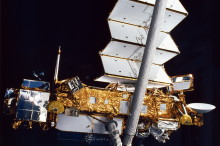
    Satellites are vital to sustaining the current balance in the global economy, society, and advanced militaries. As such, states are increasingly recognizing satellites as critical infrastructure. They provide a significant role in climate and natural disaster monitoring, communication, early warning systems, global broadcasting, meteorology, navigation, precision strikes, reconnaissance, remote sensing, surveillance, and the advancement of science and understanding.

    1. Introduction

    A significant disruption to satellite services would have damaging effects on society. Limiting the information given might be due to security concerns or a lack of attention span on the part of its intended audience; however oversimplification gives the impression that an individual hacker sitting at their computer can access satellites with a few simple keystrokes. Conversely, it might lead others to dismiss the topic as fiction when there is a credible threat that needs to be addressed.

    This article investigates key questions relevant to the topic of satellite hacking: What is the structure of satellite systems? What does it mean to ‘hack’ a satellite? And why are these systems vulnerable to hacking?

    2. The Structure of Satellite Systems

    In order to better address satellite hacking, it is first necessary to have an understanding of how satellites work. Most satellite systems conform to a broad template, which consists of the satellite itself, a tracking, telemetry, and control (TT&C) ground station, communications ground stations, and uplinks and downlinks between these ground stations and the satellite.

    The satellite itself is composed of a bus and payload. The payload is usually a collection of electronic devices specific to that satellite’s desired function. For example, a surveillance satellite would contain imaging equipment, while the payload for a communications satellite would include transponders for receiving and relaying signals such as telephone or television. The bus is the platform housing the payload; this includes equipment for manoeuvring, power, thermal regulation, and command and control.

    TT&C ground stations “perform tracking and control functions to ensure that satellites remain in the proper orbit and to monitor their performance. Communications ground stations process imagery, voice, or other data and provide, in many cases, a link to ground-based terrestrial network interconnections

  • Weekly Science Picks

    Weekly Science Picks

    One more week finishes and here we are to recapitulate what have happened during the last exciting and promising 7 days. The task was quite challenging, but after careful consideration we made it. Here we would like to present what have attracted our attention the best. Sure you will enjoy this journey.

    How extreme isolation warps the mind

    That summer, the 32-year-old had been hiking with two friends in the mountains of Iraqi Kurdistan when they were arrested by Iranian troops after straying onto the border with Iran. Accused of spying, they were kept in solitary confinement in Evin prison in Tehran, each in their own tiny cell. She endured almost 10,000 hours with little human contact before she was freed. One of the most disturbing effects was the hallucinations.

    How do you build a city in space?

    Science fiction has delivered on many of its promises. Star Trek videophones have become Skype, the Jetsons’ food-on-demand is materialising through 3-D printing, and we have done Jules Verne one better and explored mid-ocean trenches at crushing depths. But the central promise of golden age sci-fi has not yet been kept. Humans have not colonised space.

    Here’s to accidental discoveries

    What do Velcro, penicillin, the microwave and Coca-Cola have in common? They were all discovered by accident. While most accidents are best avoided, some can turn out to be pretty awesome. Take wine for instance, one of the oldest drinks known to mankind.

    High-speed solar winds increase lightning strikes on Earth

    Scientists have discovered new evidence to suggest that lightning on Earth is triggered not only by cosmic rays from space, but also by energetic particles from the sun. Researchers found a link between increased thunderstorm activity on Earth and streams of high-energy particles accelerated by the solar wind, offering compelling evidence that particles from space help trigger lightning bolts.

    These would be all for this Weekly Science Picks. Hope you have enjoyed this trip at least as we did.

  • Levels of Cyber Intelligence

    Levels of Cyber Intelligence

    When one considers the decision-making and planning necessary to conduct malicious cyber activity, it becomes easier to understand how it is not simply an “on-the-network

  • Weekly Science Picks

    Weekly Science Picks

    Here we are at the end of one more exciting and fascinating week. It’s Sunday, as you know. It’s the day when we summarise what have happened during the last 7 day. This week was amazing, indeed. We got the opportunity to enjoy many different scientific and technological contributions and right now we would like to present what have attracted our attention the most.

    Google Glass: Why the gadget faces its biggest test

    Will Google Glass catch on? With a backlash in full swing, there may be one thing that threatens the technology’s adoption more than anything else, argues Chris Baraniuk. And in the video above, BBC Click’s Spencer Kelly takes a look at how one airline is embracing the technology while some other businesses would rather ban it.

    Shrimp’s shell-smashing punch hands researchers a lead on tougher materials

    Able to withstand thousands of strikes without breaking, the marine crustacean’s “fists” have inspired a carbon-fibre composite material that is stronger and more durable than that currently used by the commercial aircraft industry. Researchers created an architecture of carbon fibres to mimic the claw’s shock-absorbing interior and then used impact testing to judge its toughness versus other composites.

    Creative ways we’re keeping fish on your plate

    Grilled with garlic, oven baked, or lightly pan fried with a hint of lemon: Blue-eye Trevalla is one of Australia’s premium seafoods, and an iconic fish species for commercial fishers and seafood lovers alike.

    Longevity gene may boost brain power: Researchers discover the gene may enhance cognitive abilities

    Scientists showed that people who have a variant of a longevity gene, called KLOTHO, have improved brain skills such as thinking, learning and memory regardless of their age, sex, or whether they have a genetic risk factor for Alzheimer’s disease. Increasing KLOTHO gene levels in mice made them smarter, possibly by increasing the strength of connections between nerve cells in the brain.

    Please stay thirsty and scientifically passionate for new stories. They will come soon.

  • Weekly Science Picks

    Weekly Science Picks

    We are at the end of one more exciting and scientifically promising week. It’s time to summarise what have happened during the last 7 days. As usual, the task was quite challenging, but we have obtained it. Here we would like to present the most interesting science and technology innovations of the week.

    Why bad inventions are good

    The answer was revealed at a recent exhibition called Fail Better, at Dublin’s Science Gallery in Ireland. The story of the NeoNurture joined contributions by inventors, athletes, explorers and even astrophysicists, who each submitted an object they thought characterised the theme of failure. It is a compendium of quashed dreams, acts of stupidity, serendipitous success, and crucially, instructive lessons about the true nature of failure.

    Neanderthals aren’t grunting, club-wielding idiots – we are

    They’ve long been maligned as grunting, club-wielding idiots, but apparently we’ve got Neanderthals all wrong. Misled by their simple tools (clubs) and simple language (grunting) we have stereotyped them as primitive beings – but this couldn’t be further from the truth. In fact, according to recent research, Neanderthals were no less intelligent than their modern human contemporaries.

    In the long run: keeping track of athletes with wearable tech

    But today’s coaches aren’t satisfied with analysing highlights footage post-match to get these stats – they want to know how fast a player runs, track exactly where they run, and collect data on the movements of all players individually and as a group in real time.

    Nearby galaxy is a ‘fossil’ from the early universe

    Scientists analyzed the chemical elements in the faintest known galaxy, called Segue 1, and determined that it is effectively a fossil galaxy left over from the early universe. Stars form from gas clouds and their composition mirrors the chemical composition of the galactic gas from which they were born.

    That’s all for this Weekly Science Picks. Please stay updated, new stories are coming soon.

  • The Best of Australian Science: April 2014

    The Best of Australian Science: April 2014

    It’s the end of April, 2014. It’s our time to summarise what we have done during this month. In fact, we are going to recount the best highlights for April.

    Here are the most exciting and interesting articles of this month.

    What is Big Data, and why it matters? by Danica Radovanovic

    Big Data refers to technology (tools and processes) and large amounts of data that is difficult to store, manage, analyse, share, and visualise with the traditional database software tools. From the semantic perspective, big data isn’t new concept at all: every time we generate data, we also generate metadata, “data about data