Author: Milica Djekic

  • Weekly Science Picks

    Weekly Science Picks

    New Sunday, new editor’s choices! In comparison with the previous one, which brought us heaps of Nobel awards, this one seems as quite peaceful and usual. But, is it? Throughout today’s selection, we will hear more about the future of Mars One project, we will also get familiar with the cyber threats of the coming times, we will learn that the kangaroos of the past were ‘made’ to walk, not jump and much more. So, let’s start this exciting journey!

    What will the internet look like in 2040?

    In March 1989 Sir Tim Berners-Lee wrote a memo that led, eventually, to the web. That was 25 years ago this year. Back in the 1980s, even the simple concept of documents which could be hyperlinked was difficult to understand. So what will digital life be like another 25 years from now? How dramatically will things have changed by 2040?

    Will Mars One’s volunteers get to live on the red planet? Yes, briefly

    When do they launch? Well, Mars One, the Dutch non-profit foundation behind the mission, says all the technology already exists, and it reckons it can launch the first preliminary expeditions in 2018. The first four settlers will take off in 2024, and land in 2025 after a seven-month journey.

    Plants absorb more CO2 than we thought, but …

    To know how much more fossils fuels we can burn while avoiding dangerous levels of climate change, we need to know how these “carbon sinks

  • A Futuristic Review of Cyber Defence

    A Futuristic Review of Cyber Defence

    Cyber age has begun in the previous century and includes everything related to the web, computers and mobile technologies. As cyberspace has been developing, some security concerns have appeared. The future of computing technologies is clear – we are going quantum. But, how would be the future of cyber defence? Let’s say, we will get all those ultra fast, quantum-based computers in the coming decades, but how would we make them be a secure place for us? There is a lot of theories, but we will present you only some of them. So, let’s start our overview.

    Whatever Your Cyber Defence is, Make it a Good One

    Today’s cyber environment is very often harmful due to a lot of threats, risks and attacks that may occur there. What we have in mind first, when we say a cyber threat, are some sorts of criminal and terrorist groups. All they normally communicate with each other through the web. But, what is quite interesting, it’s pretty difficult to break into their communication. Why is that a case?

    The answer to this question is so simple. They use a Darknet or a Deep Web to share the information, ideas and content with each other. So, what would be a Deep Web? The Deep Web is the part of the Internet that is usually invisible for regular search engines such as Google, Yahoo and so on. These search tools simply cannot index those fragments of cyberspace. That means all the communications, sharing and activities stay undetected using a normal mean of communication break ins. Luckily, there are special tools that may allow you to see what is going on under the surface. That’s what the law enforcement institutions use nowadays to gather evidence regarding these sorts of crime.

    A good defence usually include a good understanding of threats. For that reason, it is vitally important to gather as much information as you can about your harmful opponent and to understand those information at both – tactical and strategic level. An appropriate tactic normally involve identifying and linking the actors of the criminal situation, while a strategy goes below the surface and must see a background of such a situation. Only with both components included, your defence can be a good one.

    Do not Forget to be Aware of a Situation

    A good problem management requires a good understanding of a situation that happens. Many researchers believe that a situational awareness is the art we need so much in security nowadays. The situational awareness has 3 phases in its data gathering and analysis process. These are (1) perception, (2) interpretation and (3) prediction. Let us explain these better.

    The first step in a situation awareness methodology is perception. This step includes identifying and gathering the information regarding a case that has been investigated. The accuracy of such a obtained information can seriously affect the next two steps. Sometimes it’s quite complicated and time consuming to gather precise information due to disturbing environmental conditions. For that reason, it’s very important to have experienced and trained people who would be capable to deal with these.

    Once the information have been gathered, you should start with their analysis or interpretation. This phase require very skilled staffs who are able to see the meaning of and also the links between such a collected information.

    Finally, the last step here would be a prediction. It’s a quite strategic part of the task and strongly depends on how successful the previous two steps have been resolved. The prediction allows us to see the causes and effects of the situation and also understand the trends that may occur in the future.

    Quantum Computing Seeks Quantum Encryption

    From today’s perspective, our future seems as very quantum. At the moment, many scientists in the world are trying to build up the first quantum computers ever. There are many theories and research that suggest it’s feasible to make such a great innovation.

    So, if a quantum computing is getting our reality of at least something that will become a part of our lives in the coming decades, does that mean our security will also follow this trend and become quantum as well? Experts say – Yes! We will be able to do a very powerful encryption at quantum level. In other words, it will be possible to encrypt the smallest pieces of the particle. Sounds like we will be in position to encrypt a nature itself. Well, that’s exactly what the current stage of the human’s development suggests.

    The Future Relies on Intelligence

    In the previous articles here, we were discussing how the future of cyber security could look like. What we see as crucially important at this stage are intelligence led or intelligence driven systems. Many researchers predict that such an intelligence-based concept should find its place in a software engineering and computer science world. There are indications that a software of the future would be capable to provide an active self-defence. As it is known, a defence, in its essence, is about a risk management. So, it’s not that hard to imagine a cyber solution of the future which will rely on intelligence and be able to protect itself.

    Reference:

    [1] 2014 Internet Organised Crime Threat Assessment (iOCTA), The European Cybercrime Centre (EC3) at Europol, 2014

  • Weekly Science Picks

    Weekly Science Picks

    What an amazing week? The week of the Nobel prize in physics! How great is that? It’s really great, especially because the award goes for advancements in LED technologies. A team from the US and Japan share this prestigious prize. What was also funny this week is a good article on how to make a delicious pizza. That was seriously exciting although we do not have news from food science that often. So, let us tell you all these and much more through the coming stories.

    Food: How mozzarella became the perfect pizza cheese

    When you bake a batch of brownies from a box or pop a frozen pizza in the oven, you’re experiencing the work of dozens of scientists. Most people don’t think of their food as being particularly technical, but to get brownies that rise in the middle instead of slumping, or pizza that browns on top instead of turning into a sea of oil is not as simple as it might seem, especially when the food is intended to be consumed weeks or months after it’s packaged. Your dinner is the result of detailed experimentation.

    Lightbulb moment for Nobel physicists: prize awarded for inventing blue LEDs

    Shuji Nakamura, 60, at the University of California, Santa Barbara, shares the coveted prize – and 8m Swedish kronor (£690,000) – with Isamu Akasaki and Hiroshi Amano of Japan for “the invention of efficient blue light-emitting diodes which has enabled bright and energy-saving white light sources.

  • Weekly Science Picks

    Weekly Science Picks

    We came to the end of one more brilliant scientific week. What this weekly review brought us are the questions as follows. Can virtual reality make us better people? Could engineers mimic the amazing camouflage abilities of the octopus? How would Australia and STEM deal? And, finally, why wet feels wet? Please stay with us and you will discover these and much more in our newest editor’s selection.

    Can virtual reality make you a better person?

    I’m here at the Virtual Human Interaction Lab at Stanford University to see for myself just how powerful virtual reality technology has become, and I’m soon to find out that there’s some truth to the notion that virtual environments can change the way people behave in the physical world. In the day ahead, I’ll be both utterly terrified and behaving like a superhero – and the effects on my behaviour will linger for days afterwards.

    Engineers mimic the amazing camouflage abilities of the octopus

    At first glance, the thumbnail-size grids of 256 minuscule black squares seem to have nothing to do with the octopus, squid and cuttlefish that inspired them. But these hi-tech microconstructions of polymers, semiconductors, light sensors and heating elements are what you get when scientists attempt to replicate the camouflaging ability of the animal world.

    Making STEM deadly

    That’s why we’ve partnered with BHP Billiton Foundation to deliver a new education project for Aboriginal and Torres Strait Islander students that aims to increase their participation and achievement in science, technology, engineering and mathematics (also known as STEM).

    Why wet feels wet: Understanding the illusion of wetness

    Though it seems simple, feeling that something is wet is quite a feat because our skin does not have receptors that sense wetness. UK researchers propose that wetness perception is intertwined with our ability to sense cold temperature and tactile sensations such as pressure and texture.

    This week brought us great things. Hope the next one will be that amazing, too. Until the next time, please stay curious and scientifically passionate.

  • The Best of Australian Science: September 2014

    The Best of Australian Science: September 2014

    It’s the end of September, 2014 and it our time to review the top headlights for this month.

    These would be our selection for the previous period.

    A Brief Talk with Andrea Morello, a Leading Australian Quantum Physicist by Milica Djekic

    Let us introduce you a leading Australian quantum physicist and probably one of the most promising scientists in the world. His name is Andrea Morello. He is an electrical engineer and a quantum physicist. At the moment he is Associate Professor in Quantum Nanosystems at University of NSW and a Program Manager in the ARC Centre of Excellence for Quantum Computation and Communication Technology (CQC2T). His research is focused on building a quantum computer based on single spins in silicon. In addition to the research, Andrea is actively engaged in science outreach and education. So, let’s start with our talk.

    Guide to the Most Important Green Building Certification Systems in the World by Dunya

    Here in Australia, the GBCA are working towards a greener and more sustainable future. The past decade has seen tremendous growth within the building industry, as companies such as the GBCA and others have been working towards designing and creating a greater percentage of buildings that are certified as green and sustainable. When looking at how this has been accomplished, there are a plethora of green building certification systems throughout Australia and all over the world that have helped to create a new standard of quality within the industry. Here’s a brief look at what some of these systems are.

    Fun Facts about Baking Soda and Its Uses by Josip

    Sodium bicarbonate or sodium hydrogen carbonate, better known as baking soda is a chemical compound with the formula NaHCO3 . It is primarily used in cooking and baking as a leavening agent, and as a very effective cleaning agent.

    How to protect your critical information? by Milica Djekic

    A modern cyber security can be defined as a process of maintaining an acceptable level of cyber risk. So, security is about a risk management. It’s a never-ending process which requires you to invest new and new efforts in order to keep thing secure. Bad guys will always do bad things and good guys should find a way to respond to all of that. There are a lot of malicious persons in a cyber world – hackers, criminals, terrorist and security is the one which would be ahead of all in order to protect us from harm.

    Kids love the volcano experiment by Josip

    Experiments are great. What better way is there to spend time with your kids, have fun with them and teach them a thing or two about science? Even better when they’re messy and dramatic like the “volcano experiment

  • Weekly Science Picks

    Weekly Science Picks

    New Sunday, new editor’s selection stories. This week brought the spring to the Southern Hemisphere and the fall to the Northern Hemisphere. It also encouraged us with a lot of new research efforts, studies and discoveries. Right now we would like to present you how the spacecraft of the future would appear, how beautiful Australia’s nature is, why we should believe in an artificial intelligence and much more. So, let’s begin our journey!

    What the inside of a spaceship might really look like

    The starship Enterprise has got to be one of the most beautiful fictional spacecraft ever created. But imagine beaming aboard (and I bet many BBC Future readers have) and living there. At first the pristine corridors, groovy minimalist furniture, view screens and food replicators would seem impossibly exciting.

    ‘Gravitational waves’ may have been space dust

    Researchers at Harvard University called a press conference in March to reveal that they had spotted the cosmic signature of ripples in space left over from the spectacular expansion of the early universe. The dramatic claim was hailed as one of the most important scientific discoveries of the century and promised a new era of physics.

    Mining and biodiversity: are they getting along?

    The greatest threats to biodiversity from mining come from the cumulative impacts of the infrastructure required for mining operations—roads, ports, pipelines, shipping etc. Science can help to assess any potential implications for biodiversity from mining development so that impacts can be better managed and rehabilitation and offsetting efforts can be more effective.

    Artificial intelligence that imitates children’s learning

    The computer programs used in the field of artificial intelligence (AI) are highly specialized. They can for example fly airplanes, play chess or assemble cars in controlled industrial environments. Scientists have now created an AI program that can learn how to solve problems in many different areas. The program is designed to imitate certain aspects of children’s cognitive development.

    Hope you have enjoyed this weekly review as we did. Until the next meeting, please stay thirsty and scientifically driven.

  • A Brief Talk with Andrea Morello, a Leading Australian Quantum Physicist

    A Brief Talk with Andrea Morello, a Leading Australian Quantum Physicist

    Let us introduce you a leading Australian quantum physicist and probably one of the most promising scientists in the world. His name is Andrea Morello. He is an electrical engineer and a quantum physicist. At the moment he is Associate Professor in Quantum Nanosystems at University of NSW and a Program Manager in the ARC Centre of Excellence for Quantum Computation and Communication Technology (CQC2T). His research is focused on building a quantum computer based on single spins in silicon. In addition to the research, Andrea is actively engaged in science outreach and education. So, let’s start with our talk.

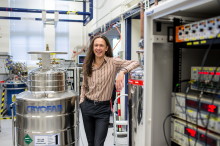
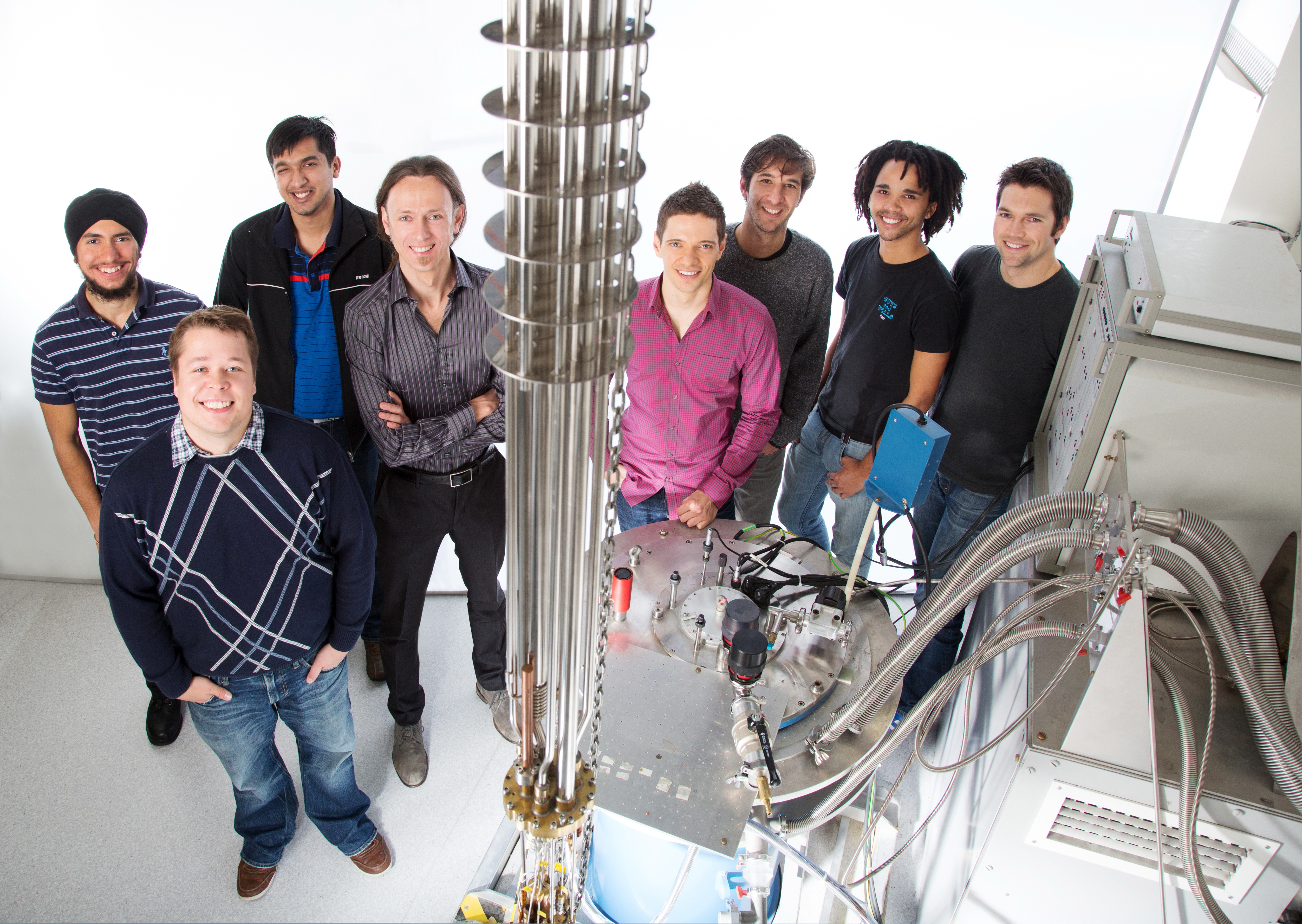
    Morello Team - No-21

    (1) Well, Andrea, we had a brief conversation before this interview and you introduced something about the projects you work on. Could you, please, take a closer look at what you do and explain to our audience what a quantum computing is and how quantum systems work?

    A quantum computer is a machine that performs calculations, but stores and elaborates the information into “quantum-bits

  • Weekly Science Picks

    Weekly Science Picks

    It’s amazing how diverse this week has been. It brought us a lot of exciting stories, but, for this occasion, we choose only several of them. For example, what especially attracted our attention are some news from physics, the science of mindfulness, the facts about Ebola and very surprising findings about a death of Richard III. Well, it’s our time to present you all these interesting information. Let’s start with our review.

    Resilience: How to train a tougher mind

    Tuesday, 11 September 2001. Lisa Siegman was in her first year as principal of Public School 3 (PS 3) in downtown Manhattan. Up on the fourth floor, the fifth-graders’ classroom looked directly towards the World Trade Center. “They had a perfect view of the towers,

  • How to protect your critical information?

    How to protect your critical information?

    In a today’s world of constantly increasing cyber threats, we should try to figure out how to stay secure and protected. Cyber systems are not the places which bring you benefits only; they can also be the cause of a lot of concerns. A modern world became too sensitive on cyber threats, so what we need at the moment are good strategies and techniques on how to handle all that. A novel cyber security proposes three steps in a good cyber defence. They are prevention, monitoring and incident response. We plan to discuss all these in the coming lines. So, let’s begin!

    Cyber Security – the Facts

    A modern cyber security can be defined as a process of maintaining an acceptable level of cyber risk. So, security is about a risk management. It’s a never-ending process which requires you to invest new and new efforts in order to keep thing secure. Bad guys will always do bad things and good guys should find a way to respond to all of that. There are a lot of malicious persons in a cyber world – hackers, criminals, terrorist and security is the one which would be ahead of all in order to protect us from harm.

    In a recent time, there are a lot of speculations in public on how potential cyber threats could affect us. There are more than 2 billions internet users in the world and from that point of view things are getting quite complicated. In the reality, everything based on emerging technologies can be affected – beginning from your PC, over electricity network, until satellite communications.

    For such a reason, a good defence is something that we vitally need. That defence must be capable to put threats under control. It’s a hard task; it requires an investment of a lot of efforts, but it’s the only one that can offer as a long-term solution to the problem. It’s like putting things into order within some disordered environment. An entropy is something that exponentionally increases in this Universe, so we are supposed to work hard to make some parts of our reality organised. The same analogy can be done with a cyber environment. If we let a cyber system deal on its own, it will get disordered and insecure.

    Why are Things Getting too Critical?

    There is an infrastructure that is especially sensitive to threat. We call such an infrastructure the critical or the vital one. If anything would happen to that infrastructure, that would be a harm to entire country or nation. Good examples of those are telecommunications systems, traffic infrastructure, data centres, electricity systems and so on. The problem with such systems is they are so important for a normal everyday life of some place. The threat to that infrastructure could affect lives of many people.

    In that sense, it is crucially significant to understand the threat in order to get protected from it. There are a lot of techniques and methods to get familiar with the issue. Modern security systems are mostly intelligence-driven, which means operations are well-prepared, information are well-analysed and strategies are well-developed. Things can appear as too critical at the beginning as there is not enough information provided, but as we are getting a better understanding of threat, our defence is getting clearer.

    The Protection Scenarios

    As mentioned above, there are three protection scenarios used nowadays. These are (1) prevention, (2) monitoring and (3) incident-response. A prevention is about avoiding bad things to happen to your system. On the other hand, a monitoring includes following and analysing what goes on within your environment, while an incident-response is the most complicated step and means how good you will react to protect your system as it is under attack.

    Only a cyber system with all three activities combined can say for itself it is secure enough. The majority of current cyber environments follow this pattern.

    Few Words at the End

    As threats in our world are developing, security systems are progressing and getting better and smarter. The task of a good security is to always stay ahead a threat. This can seem as challenging through some phases of defence, but, at the end, good guys beat bad guys.

    Reference:

    [1] Scott Charney, Rethinking the Cyber Threat: A Framework and Path Forward, Microsoft, 2009

  • Weekly Science Picks

    Weekly Science Picks

    Here we are at the end of one more amazing week. It’s Sunday again and we are supposed to review what happened during the last 7 days. For example, have you ever wondered how night shifts could affect you? This week is definitely a week of the museums. Did you know these days we had an Australian Museum Eureka Award or the Science Museum in London is to open a gallery devoted to mathematics? Finally, did you notice that media are too violent at present and all those can impact your mind? So, let’s begin!

    Is working at night bad for you?

    In some jobs, working the night shift is unavoidable. There are hospitals to run, planes to fly and shops to keep open as we move towards a 24-hour society. With careful planning and a bit of peace during the daytime, it is possible to work all night and still get eight hours sleep the follow day. Some people will even tell you they don’t mind and that they get used to working in this way. But can their bodies ever become fully accustomed to working to a clock turned upside down? And, more worryingly, is nocturnal labour bad for your health?

    Science Museum unveils £5m plan for ‘world’s foremost’ mathematics gallery

    The layout of the new permanent gallery, which will open in late 2016, is inspired by mathematical ideas. A plane will be suspended from the ceiling and the position of the displays will follow the lines of aerodynamic flow around it. Lines representing a turbulence field from the plane’s flight will form the basis of a curved surface dividing the gallery into different spaces.

    Eureka, they’ve done it

    More than 2 200 years ago, legend has it, Archimedes got into a bath and had a lightbulb moment. He worked out that you could use the amount of water it displaces to measure the volume of an irregularly-shaped object. He was supposedly so excited about this that he jumped out, and ran, dripping wet and naked, down the street yelling ‘Eureka!’ (Ancient Greek for ‘I’ve found it’).

    Impact of violent media on the brain: Depends on each individual’s brain circuitry, study finds

    With the longstanding debate over whether violent movies cause real world violence as a backstop, a study has found that each person’s reaction to violent images depends on that individual’s brain circuitry, and on how aggressive they were to begin with.

    Until the next meeting, please stay curious and scientifically passionate. The new stories are coming soon.

  • Weekly Science Picks

    Weekly Science Picks

    It seems this first week in September brings us very interesting stories. The Northern Hemisphere is going to autumn and the Southern Hemisphere is going to spring, so let us see what we can offer for this editor’s choice. Quite exciting week, we must confirm. For instance, you may be wondering how the colour red warps the mind or why we have a boom in modern population. For this occasion, we would like to present all those and much more, so let’s begin.

    How the colour red warps the mind

    Today, shades of scarlet are linked with power, aggression, and sex – from the vermilion of the British Queen’s royal regalia to the gaudy neon of Amsterdam’s red–light district. And those associations may not be coincidence. A new branch of science called “colour psychology

  • Weekly Science Picks

    Weekly Science Picks

    New Sunday, new editor’s selections stories. Well, let us see what would be the most promising and exciting news of this week. This weekly presentation covers many different areas from Australia’s biodiversity, over the idea of artificial human blood, until a nice whale migration story. Sure you will enjoy this week’s review. So, let’s begin.

    Artificial blood that’s better than the real thing

    Each week on the BBC World Service programme The Forum, a global thinker from the worlds of philosophy, science, psychology or the arts is given a minute to put forward a radical, inspiring or controversial idea – no matter how improbable – that they believe would change the world.

    Been whale watching lately? Scientists want your snaps to tell migration story

    Scientists are studying the migration to better understand the recovering population. Peta Beeman, a researcher from Southern Cross University, is turning to citizen science to help gather data.

    Can we feed the world and save our species?

    There is a range of intensities of primary production in Australia today. Hunting and gathering and use of fire to manipulate the abundance of native species is at the lowest end of the spectrum, then livestock grazing of native pastures, right through to complete replacement of native species for intensive cropping and forestry plantation (the latter requiring inputs in the way of fertilisers, machinery, chemicals etc.). The more intensive the production method, the more food and fibre can be produced per unit area, but with greater impact on biodiversity. Less intensive production methods provide opportunities for native species to coexist with production.

    What lit up the universe?

    New research shows we will soon uncover the origin of the ultraviolet light that bathes the cosmos, helping scientists understand how galaxies were built. The study by cosmologists shows how forthcoming astronomical surveys will reveal what lit up the cosmos.

    Here we are at the end of one more amazing journey. Until the next time, please stay curious and scientifically passionate.

  • The Best of Australian Science: August 2014

    The Best of Australian Science: August 2014

    It’s the end of August, 2014 and it our time to review the top headlights for this month.

    This would be our selection for the previous period.

    From the caves to the classroom

    From classrooms around the country, students will embark on a digital journey exploring the iconic Jenolan Caves, an important scientific environment full of learning opportunities. As they progress through quests, the students will explore the surrounding environment and complete inquiry based learning tasks that test their core science skills.

    Genetic key to lupus shows potential of personalised medicine

    Medical researchers at the Centre for Personalised Immunology, based at the John Curtin School of Medical Research (JCSMR), sequenced the genes of a young girl who suffered a stroke when she was four as a result of her lupus.

    A Good Defence is about Understanding Cyber Threats by Milica Djekic

    In the era of the Internet and emerging technologies, we are supposed to deal with different sorts of cyber threats, risks and attacks. This modern time brought a lot of advantages to the Human Kind, but also some fast-spreading and increasing security issues. It seems we are connected with the risk more than ever before. Cyber environment may appear as so friendly and convenient, but for real it brings a lot of nightmares to its visitors. In this article, we discuss all the disadvantaging things you can face up in cyberspace and also suggest why cyber security and a good undersigning of the problem is so important for a good defence. So, let’s start.

    Multi-Coloured Vision by Lizz Rice

    Colour is our eye’s interpretation of light reflecting off objects. The different colours we see are different wavelengths of light. Colour-specific photoreceptors in the retina of our eyes, cones, translate the wavelengths into what we see as colour.

    Interview: Simon Phipps, a computer scientist and open source advocate by Danica Radovanovic

    One could call Simon Phipps a real eclectic geek, having in mind his background and activism globally: from campaigning for digital liberties, open data, open source software and political transparency, through his columns at InfoWorld to presidenting at the Open Source Initiative.

    That’s basically our choice for August. Please stay tuned, new stories are coming soon.

  • Weekly Science Picks

    Weekly Science Picks

    It seems we are around one more Sunday in this month. We left behind us one more fascinating and promising week and now, with the full confidence, we would like to recapitulate what have happened during the last 7 days. We are just wondering if anyone could predict that the amateur in genetics may give such a great contribution. What also dragged our attention is a story on how children’s drawing can affect their intelligence later in their life. Quite amazing, is not it? So, let’s start with our presentation of the previous week.

    The amateur geneticist who surprised science

    This was in 2002, and Kim, then 44 years old, was already an accomplished endurance athlete. She cycled, ran, climbed and skied through the Rockies for hours every day, and was a veteran of Ironman triathlons. She’d always been the strong one in her family. When she was four, she would let her teenage uncles stand on her stomach as a party trick. In high school, she was an accomplished gymnast and an ardent cyclist. By college, she was running the equivalent of a half marathon on most days. It wasn’t that she was much of a competitor, exactly – passing someone in a race felt more deflating than energising. Mostly Kim just wanted to be moving.

    Ebola-affected countries should start screening all passengers, says WHO

    There is a low risk of the Ebola virus being transmitted during air travel because unlike infections such as influenza or tuberculosis, it is not spread by breathing air and airborne particles from an infected person, the World Health Organisation said. Nonetheless, all travellers are urged to routinely wash their hands and anyone with an illness consistent with the virus should not be allowed to travel unless it is part of an appropriate medical evacuation.

    Ghostbusting in the Gulf

    The Gulf of Carpentaria off Australia’s northern coast has one of the highest rates of abandoned fishing nets, or so-called ghostnets, anywhere in the world. In fact, up to three tonnes of netting washes ashore each year for every kilometre of coastline.

    Children’s drawings indicate later intelligence, study shows

    How 4-year-old children draw pictures of a child is an indicator of intelligence at age 14, according to a new study. The researchers studied 7,752 pairs of identical and non-identical twins and found that the link between drawing and later intelligence was influenced by genes.

    These would be the end of our today’s talk. Hope you have enjoyed this trip as we did.