Author: Milica Djekic

  • A Good Defence is about Understanding Cyber Threats

    A Good Defence is about Understanding Cyber Threats

    In the era of the Internet and emerging technologies, we are supposed to deal with different sorts of cyber threats, risks and attacks. This modern time brought a lot of advantages to the Human Kind, but also some fast-spreading and increasing security issues. It seems we are connected with the risk more than ever before. Cyber environment may appear as so friendly and convenient, but for real it brings a lot of nightmares to its visitors. In this article, we discuss all the disadvantaging things you can face up in cyberspace and also suggest why cyber security and a good undersigning of the problem is so important for a good defence. So, let’s start.

    What is Cyber Security?

    In the ancient China, there was the belief that our world had been governed by two opposite forces. Yin and Yang. The force of the offence and the force of the defence. It has been believed that world could be in harmony only if those two forces are in balance.

    Similarly, a modern experts see security as a balance between attack and defence. Cyber security is also about balance, but in cyber means. Sometime it may happen that a cyber system loses its balance. Some of the forces – either attack or defence can make advantage. In such a case, it is crucially important for a system to return its balance. That ability to return lost balance is called stability. This claim also has its origins in mathematics and can be proved through precise equations.

    So, what would be the point of cyber? How can we define that term? Cyber is everything about the web, mobile devices and computers. It’s quite commercial terms and means many different things to many different people. Basically, there is no universal definition of cyber. Very often, cyber security is named as cyber. Well, if we say cyber, we may mean cyber security by that. Quite exciting, is not it? Indeed. Let’s continue with our talk.

    Cyber Threats – How Bad are They?

    Some define cyber threat as a person or organization intending to cause harm at cyber level. It is usually believed that there can be a lot of cyber risks and attacks in cyberspace. The main risks that cyber community experience nowadays are (1) cyber crime, (2) cyber espionage, (3) cyber warfare and (4) activism. Further, we would try to illustrate and understand those sorts of threats.

    Let’s start with cyber crime. What is it? Cyber crime is every sort of illegal activity obtained on computer or network which aim is to get money. At the beginning of cyber era, cyber crime was about breaking into someone’s computer, making changes into that system and leaving. Right now, it’s about the money. It’s about stealing credit cards, confidential information, passwords and so on in order to take advantage. Cyber crime commonly can be discovered using cyber forensics diagnostics.

    On the other hand, cyber espionage is about information regarding someone’s activities which are gathered secretly through some sort of cyber devices. This sort of activity can have a different background and can be distinguished as economic and military. It’s obvious what would collecting of information in secret mean in terms of economic interest and what in terms of military goals.

    The next term to get explained here would be cyber warfare. Sounds spectacular, but it’s not. It’s something that occurs in the world every single day. There are a lot of state and non-state programs which aim is to do sabotage or cause harm to computers or equipment of certain individuals or groups. Also, there are a lot of such malware like viruses or worms in the world which are created to prevent the state or organization from terrorism, organized crime, hackers, etc. The well-known advanced threat of today are those which cannot be detected easily. Some of the examples are Stuxnet, Flame, Shamoon, and so on.

    Finally, we should say several words about activism. Activism is none of above. It’s also about computer breach, but with a goal to show that you are capable of doing that, to send some social or political message, to embarrass your target, etc. It’s about people who can do that and who will do that, just to show they can.

    Cyber Metrics – How it Matters?

    Cyber metrics can be defined as a set of measurements that can be applied in order to control, understand and, in terms of threat, defend your cyber system. It’s about finding a quantitative values of certain cyber parameters such as a number of infections, data breach rate, amount of viruses in the system and so on. Metrics can be expressed through numbers, percentages or averages.

    Once all the quantities of cyber system are detected and measured, it is possible to analyse those data and to present them through graphs, statistics or models. Cyber metrics is a great stuff because it can support us in controlling, understanding and defending a cyber environment. It’s, basically, the key factor in defence.

    In order to obtain a good cyber metrics, it is recommended to follow the best industrial practice which will support you in metrics and models preparation. For that purpose, the following steps could be applied: (1) defining the metrics program goals and objectives, (2) deciding which metrics to generate, (3) developing strategies for generating the metrics, (4) establishing benchmarks and targets and (5) determining how the metrics would be reported.

    Finally, threat metrics is about measuring threat. As given before, threat is an individual or organization which intends to do harm. It seems a bit of hard to measure such an abstract term. Maybe we should have a closer look at what cyber threat is for real. Basically, it’s about a potential or possibility to some cyber harm to occur. So, throughout that perspective we should observe cyber threat metrics and its modelling.

    Understanding and Defence – Why Can They Go Together?

    At the end, we should explain clearly why understanding of the problem and defence can go together. Well, this is something that we can get intuitively, is not it? Better we understand the issue, threat, risk, better we will find a way to protect against it. It’s similar like a warfare. If you understand your enemy, you will have a better chance to defeat him. Additionally, understanding is only a key thing, but your capabilities, technology, ability to learn and adopt will decide how will win the war.

    References:

    [1] Mark Mateski, Cassandra M. Trevino, Cynthia K. Veitch, John Michalski, J. Mark Harris, Scott Maruoka, Jason Frye, Cyber Threat Metrics, Sandia National Laboratories, 2012
    [2] Scott Charney, Rethinking the Cyber Threat: A Framework and Path Forward, Microsoft, 2009
    [3] Shirley C. Payne, A Guide to Security Metrics, SANS Institute, 2007

  • Weekly Science Picks

    Weekly Science Picks

    What an amazing week! A lot of things have happened over the last 7 days. For instance, did you know that a woman won an outstanding Fields Medal in mathematics for the first time after 50 years? How brilliant is that? Also, we have noticed there is some progress in discovering an Ebola medication. In other words, there is still hope we will find that treatment and heal the sick around the world. In this weekly review, we also return to the time when the earliest animals lived and at the beginning of the Universe. So, let’s start with our newest journey.

    Big Bang: How the Universe was created

    “You just won’t believe how vastly, hugely, mind-bogglingly big space is,

  • Weekly Science Picks

    Weekly Science Picks

    One more amazing week has finished and here we are to share with you the best stories by our selection. This week offers quite good news, but not that spectacular as we have from time to time. Through the following descriptions we intent to provide you with our this week’s choice. Hope you will enjoy this very interesting journey.

    The last man to walk on the Moon

    More than 40 years on, you might imagine Cernan has had enough of talking about the Moon. But it seems Apollo astronauts never retire and, at 80, he is still passionate about America’s past space glories and the future of human space exploration.

    Human brain subliminally judges ‘trustworthiness’ of faces

    Researchers in the US found that brain activity changed in response to how trustworthy a face appeared to be when the face in question had not been consciously perceived.

    Fighting back against species loss

    There are many troubling threats to our native biodiversity in Australia, two of the biggest being the loss and fragmentation of native habitats and the impact of invasive species. Native species also suffer as a result of poor grazing and fire management regimes, over harvesting, pollution and disease.

    Scientists change butterflies wing color in just six generations

    Scientists have chosen the most fleeting of mediums for their groundbreaking work on biomimicry: They’ve changed the color of butterfly wings. In so doing, they produced the first structural color change in an animal by influencing evolution. The discovery may have implications for physicists and engineers trying to use evolutionary principles in the design of new materials and devices.

    These would be all for this weekly review. Please stay curious and scientifically driven. We are coming with new stories soon.

  • Weekly Science Picks

    Weekly Science Picks

    We are around the first Sunday in this exciting month of August. For this occasion, we have selected very interesting stories, but the main focus should be on the frightening fact that our world could suffer a new Ebola epidemic. The crucial problem is this sever and deathly illness could spread around through air travel. This is a very serious information which may concern all of us. So, let’s start with this week’s top news.

    Ebola: How easily do germs spread on planes?

    Are plane cabins hotbeds of disease? Frequent flyers are often on guard against sneezing or coughing co-passengers, in fear of catching what they have. And the possibility that much more serious epidemics or pandemics could spread by air travel has been a worry for years, whether it is avian flu, Sars or tuberculosis.

    Secret language of penguins decoded

    African penguins communicate feelings such as hunger, anger and loneliness through six distinctive vocal calls, according to scientists who have observed the birds’ behaviour in captivity.

    Coal seam gas emissions lower than US: first Australian study

    One of the most common questions Australians ask about coal seam gas is whether the gas wells leak – and if so, how much? In the first Australian study of its kind, new CSIRO research now gives an indication of how much those “fugitive emissions

  • The Best of Australian Science: July 2014

    The Best of Australian Science: July 2014

    Here we are at the end of one more exciting July and we would like to present you a brief review for this month. A lot of that have happened during the last 31 days and we would like to provide you with the top stories for the previous period.

    Hope you will enjoy this journey. So, let’s start with our monthly review.

    The Health of the Honey Bee by Lizz Rice

    The delicate state of the European honeybee (Apismellifera) can be traced back to 2006, when the mysterious Colony Collapse Disorder (CCD) began wiping them out. Adult honey bees went missing from their hives, and no bodies were to be found. Since, apiaries have struggled – the US reports a yearly loss of about 30% – leaving the future of the honey bee in a precarious position.

    Biological agent closing in on weedy rampant escapee

    Sticky snakeroot, Mexican devil or Crofton weed – call it what you want – since the early 1900s this weed has been causing grief in Australia. But now the release of a new biological control agent brings some hope.

    Australia’s ageing population poses budget risks

    The report by the Australian Research Council Centre of Excellence in Population Ageing Research (CEPAR), based at the Crawford School of Public Policy, provides the first National Transfer Accounts (NTA) measure for Australia, based on figures from 2009-10.

    How Mature is Your Cyber Security Model? by Milica Djekic

    In the previous articles, we’ve been discussing cyber security throughout different angles and perspectives, but we’ve never talked about its maturity model and how it’s important in the modern world. First of all, we should define what the term cyber security means. As it is known, security represents a process of maintaining an acceptable level of risk. So, does that mean that, by the same definition, cyber security is a process of maintaining an acceptable level of cyber risk? Basically, that’s exactly what it does. In this article, we will try to define a cyber security maturity model, explain approaches to cyber operations and introduce some maturity levels. Well, let’s start with our story.

    That would be all for this monthly editor’s selection. Please stay thirsty and scientifically passionate. The new stories are coming soon.

  • How Mature is Your Cyber Security Model?

    How Mature is Your Cyber Security Model?

    In the previous articles, we’ve been discussing cyber security throughout different angles and perspectives, but we’ve never talked about its maturity model and how it’s important in the modern world. First of all, we should define what the term cyber security means. As it is known, security represents a process of maintaining an acceptable level of risk. So, does that mean that, by the same definition, cyber security is a process of maintaining an acceptable level of cyber risk? Basically, that’s exactly what it does. In this article, we will try to define a cyber security maturity model, explain approaches to cyber operations and introduce some maturity levels. Well, let’s start with our story.

    Introduction

    At the beginning, we should try to explain why maturity is so important in terms of security or even cyber security. Also, we believe, at this stage, it’s not completely clear what we mean by maturity or its model. So, what do you think a maturity could represent in terms of cyber security? When we say something is mature, what we mean by that? In this case, a cyber security model has a certain level of maturity if it can obtain a high level of its operations in terms of its human recourses, processes and technology. Well, if we wish a high level of maturity of any cyber system, we need it being capable to provide highly controlled and reliable processes, get driven by highly skilled and motivated people and supported with the cutting-edge technology.

    Further, what we could mention is that this is not the fact in the real world. In the reality, a lot of enterprises suffer some difficulties and they are not able to obtain a competitive level of cyber maturity. In fact, the reason for that is the world’s lobber market is facing up some sort of crisis if it comes to cyber professionals, so only small percentage of cyber systems can say for themselves that they are mature. Experts believe this gap can be covered only within few decades.

    So, what are the challenges that we face up today? Firstly, a modern world has a lack of capable cyber professionals and, consequently, if we do not have experts to manage their tasks, our working process cannot be covered appropriately as well. In other words, developed countries have an advantage if we talk about modern technology, but if there are not enough competitive people to use those technological solutions and to maintain processes through them, the problem must get obvious. The reason why we suffer a cyber skills shortage is that a cyber security career is highly challenging and quite difficult and requires a lot of investment and hard work in order to get ready to contribute on the market.

    The Best Approaches to Cyber Operations

    As it is known, traditional approaches to Cyber Operations are proving to be inadequate against today’s increasingly sophisticated cyber threats. Too often, governments and businesses find themselves one step behind attackers, reacting to rather than anticipating each new threat. It is obvious that a new approach to Cyber Operations is required, one that is proactive, dynamic, adaptive, and recognizes that cyber security occurs within a cyber ecosystem of multiple, interdependent actors who also are potential partners in combating cyber threats.

    That new approach to Cyber Operations builds on principles and practices of other communities to create a response lifecycle that integrates four operational functions:

    (1) Anticipation. Understanding existing vulnerabilities and emerging threats to develop proactive contingency plans for responding in network time—seconds and minutes—to a cyber event.
    (2) Awareness. Implementing automated systems and processes to provide a complete, accurate, real-time understanding of the health and status of networks.
    (3) Action. Initiating response plans to anomalies and attacks by coordinating activities to achieve a unified, dynamic network defence that minimizes the impact and facilitates rapid recovery.
    (4) After-Action. Determining what happened, who did it, how they did it, and incorporating the lessons learned to create future plans and responses that are adaptive.

    It is critical that organisations develop these essential functions to improve operational effectiveness. Once organisations have internally matured, they can more deeply collaborate externally with others in the cyber ecosystem.

    What Do We Mean by Maturity Level?

    Let’s start with the maturity levels in the cyber security. Each of the maturity levels in the cyber model have been assigned a name indicative of the types of threats and activities being addressed at the level.

    The first level is labelled “Security Aware

  • Weekly Science Picks

    Weekly Science Picks

    It seems we came to the end of one more impressive and fascinating week. Just to summarise in brief – it was so exciting and amazing. For instance, did you know that Australia got so unique and special wildlife? Something that you cannot see anywhere else in the world. So, that’s the reason more to be proud because you are Australian. Secondly, there are some findings regarding human’s genetics which are very promising as well. And finally, did you know that there are some indications that you can learn while you are in sleep? So great, is not it? Well, let’s begin our today’s review.

    Can you learn in your sleep?

    The idea of learning as you sleep was once thought very unlikely, but there are several ways – both low- and hi-tech – to try to help you acquire new skills as you doze. While there is no method that will allow you to acquire a skill completely from scratch while you are unconscious, that doesn’t mean that you still can’t use sleep to boost your memory. During the night, our brain busily processes and consolidates our recollections from the day before, and there could be ways to enhance that process.

    Less than 10% of human DNA has functional role, claim scientists

    More than 90% of human DNA is doing nothing very useful, and large stretches may be no more than biological baggage that has built up over years of evolution, Oxford researchers claim.

    How did Australia’s plants and animals get to be so unique?

    Australia is known for its weird and wonderful critters and plant life – the kangaroo, platypus, Banksias, wattles, emu… the list could go on and on. But how did these icons come to evolve in the ways that they did? Science can help us piece together the story.

    Pesticide linked to three generations of disease: Methoxychlor causes epigenetic changes

    Researchers say ancestral exposures to the pesticide methoxychlor may lead to adult onset kidney disease, ovarian disease and obesity in future generations.

    Hope you’ve enjoyed this journey as we did. Please stay tuned; new stories are coming very soon.

  • Weekly Science Picks

    Weekly Science Picks

    Here we have a new great opportunity to present you the breaking stories of this week. We would proudly like to mention the things as follows. Firstly, did you know that mind reading technologies are becoming our reality? Sure you all are impressed with this fact. Also, we got some incredible news about malaria and its therapy. In conclusions, there are very exciting updates in terms of astronomy and cosmology. So, let’s begin this amazing journey.

    Neuroscience: ‘I can read your mind’

    Gallant, a researcher at the University of California, Berkeley, has a brain decoding machine – a device that uses brain scanning to peer into people’s minds and reconstruct what they’re seeing. If mind-reading technology like this becomes more common, should we be concerned? Ask Gallant this question, and he gives a rather unexpected answer.

    Breakthrough made in quest for new malaria drugs as resistance fears grow

    Australian researchers have made a major breakthrough in the race to find new medicines to eliminate malaria, as resistance increases to the only drug left to treat the disease.

    From critters to creeks – everything you need to know about our sunburnt country

    Whether it’s bagging a barramundi, eye-balling an emu, or sitting under a snow gum, Australians love getting out amongst nature, and our scientists are no different. For nearly 90 years we’ve been counting, tracking, measuring, recording, and analysing Australia’s amazing plants and animals. And in that time, you’ll be glad to hear we’ve learnt a thing or two. In fact, we’ve learnt so much we’ve written a whole book about them!

    Is the universe a bubble? Let’s check: Making the multiverse hypothesis testable

    Scientists are working to bring the multiverse hypothesis, which to some sounds like a fanciful tale, firmly into the realm of testable science. Never mind the Big Bang; in the beginning was the vacuum. The vacuum simmered with energy (variously called dark energy, vacuum energy, the inflation field, or the Higgs field). Like water in a pot, this high energy began to evaporate — bubbles formed.

    Indeed, it was a wonderful time to meet with you all again and to share this fascinating facts. Until the next meeting, please stay thirsty and scientifically curious.

  • Weekly Science Picks

    Weekly Science Picks

    Oh, dear! Can you imagine just few moments ago we were writing the last week’s review and right now we are at the beginning of one more exciting and fascinating editor’s selection? Time passes so quickly, does not it? We can not explain how suddenly we appeared into this Sunday. Well, it’s strange, but let’s start. Firstly, have you ever wondered why people bite their nails? A wired habit, is not it? The habit no one should be proud of. Or, for instance, did you know that antioxidants can accelerate cancers? These are only top stories for this week. We are coming with much more, so please enjoy our journey!

    Why do we bite our nails?

    Lately I’ve been wondering what makes someone an inveterate nail-biter like me. Are we weaker willed? More neurotic? Hungrier? Perhaps, somewhere in the annals of psychological research there could be an answer to my question, and maybe even hints about how to cure myself of this unsavoury habit.

    HIV ‘cure’ girl still has virus

    An American girl born with HIV and in remission for years despite stopping treatment is showing signs that she still has the virus and therefore is not cured. The news is a setback to hopes that very early doses of powerful drugs might eliminate the infection that causes Aids.

    Bush food, people, country and all things

    The Arrente people are the traditional owners of a vast expanse of land that surrounds Alice Springs, rich with mountain ranges, waterholes and gorges. Their long history with the region has given the Arrente community a deep knowledge and understanding of the landscape and natural environment.

    How antioxidants can accelerate cancers, and why they don’t protect against them

    Two cancer researchers have proposed why antioxidant supplements might not be working to reduce cancer development, and why they may actually do more harm than good. Their insights are based on recent advances in the understanding of the system in our cells that establishes a natural balance between oxidizing and anti-oxidizing compounds. These compounds are involved in so-called redox (reduction and oxidation) reactions essential to cellular chemistry.

    Until the next meeting, please stay thirsty and scientifically passionate. The new stories are coming soon!

  • Weekly Science Picks

    Weekly Science Picks

    It seems we come to the end of this week before we left the previous one. Time has passed so quickly, has not it? We just turned around ourselves and we are at the end of one more week of such an amazing month of July. Let us see what this fascinating week brought to us. This week’s selections appear as pretty attractive, but what dragged our attention the best is the story about hypnosis or how to get possessed by someone’s else mind. Quite spooky, is not it? Also we like the stories regarding astronomy discoveries, human history findings and much more. Well, let’s begin!

    Hypnosis: The day my mind was ‘possessed’

    “The engineer has developed a way of taking control of your thoughts from the inside. He does this because he is fascinated by mind control, and wants to apply the most direct method of controlling your thoughts. He is doing this to advance his research into mind control. You will soon be aware of the engineer inserting his thoughts.

  • The Best of Australian Science: June 2014

    The Best of Australian Science: June 2014

    It’s the end of June, 2014. It’s our time to summarise what we have done during this month. In fact, we are going to recount the best highlights for June.

    Here are the most exciting and interesting articles of this month.

    Interview: Henry Story, a Social Web architect and Polymath by Danica Radovanovic

    Henry Story studied Analytic Philosophy at Kings College London, Computing at Imperial College, worked for AltaVista where he developed the BabelFish machine translation service, worked at Sun Microsystems on Blogging platforms and the development of the Social Web where he developed the decentralised identity and authentication protocol known as WebID, which is under standardisation at the W3C (World Wide Web Consortium). He contributed to the Atom syndication format at the IETF (The Internet Engineering Task Force), to the Linked Data Protocol at the W3C, and is currently writing an Open Source platform for co-operating systems in Scala based on all those standards.

    The Vaccination Debate: Answers to Common Questions about Vaccination Safety by Dunya

    Vaccinations are not mandatory in Australia, yet it is relatively standard for most children to be vaccinated against diseases such as polio, hepatitis and meningitis. However, in recent years questions have been raised about whether the problems outweigh the advantages of vaccinations, sparking intense debate amongst parents, scientists and the general public.

    A Brief Overview of Strategic Intelligence by Milica Djekic

    We live in a world driven by hyper-competition where the supply of businesses exceeds the demand. In order for an organisation to survive in such an aggressively competitive environment, a better understanding of its competition and competitive forces that affect its success is required. Companies should know how to remain competitive and how to anticipate and react to changes inside and outside of their industries. In order to manage such an achievement firms should have a process in place for turning data into actionable intelligence, from which strategic and tactical decisions can derive.

    New Advances in HIV Research by Dunya

    Around the world, over 35 million people are living with HIV/AIDS, and over 2 million new cases are reported every year. All this for a disease that was only first discovered in 1981. (WHO, 2013) It’s clear that something needs to be done, and fortunately millions of dollars are being put into HIV research. The research being done can largely be broken up into three categories: prevention, treatment and cure.

    A Dynamic Encryption – The Facts by Milica Djekic

    As we live in a very dynamic and constantly changing world, where new information and ideas are appearing and disappearing at really fast pace, we should notice that data protection and critical information security play a crucial role in maintaining our everyday’s lives. For that reason, invoking the technique of dynamic encryption could be strategically important in this digital time. In this article we should attempt to provide the answers to the following questions. What is critical information? Are we going more intelligent? Why the concept of dynamic encryption matters? What could be the future of modern cyber security? Well, let’s begin.

    Please stay curious and scientifically passionate! New stories are coming soon.

  • Weekly Science Picks

    Weekly Science Picks

    Here we are at the end of one more impressive scientific week. The things appear as quite dramatic in this weekly review. Have you ever tried to imagine how that would work if you could experience a time freeze effect? Well, that’s not only the Matrix movie fiction, that’s our reality. Right now, the neuroscience is trying to explain such a phenomenon. It seems it’s about some tricks with consciousness. Does that mean our perception defines our reality, as Morpheus suggested to Neo. Well, maybe. At this stage, we just wanted to encourage your curiosity. Please keep thinking on these… Let’s start with this week editor’s selection.

    Neuroscience: The man who saw time freeze

    It’s easy to assume that time flows at the same rate for everybody, but experiences like Baker’s show that our continuous stream of consciousness is a fragile illusion, stitched together by the brain’s clever editing. By studying what happens during such extreme events, researchers are revealing how and why the brain plays these temporal tricks – and in some circumstances, they suggest, all of us can experience time warping.

    How we created spooky experimental music in a superconductor lab

    Superconductivity was first observed in mercury in 1911. Mercury superconducts at −269C, which is just four degrees above absolute zero. This is a bit cold to be of widespread practical use, and so scientists scrambled to discover new superconductors that work at higher temperatures. In the decades that followed, we discovered that most of the elements in the periodic table superconduct, and some alloys do too.

    Going with the throughflow

    The Indonesian Throughflow is a series of ocean currents linking the Pacific and Indian Oceans. It carries water from the Pacific to the Indian Ocean through the passages and straits of the Indonesian Archipelago.

    New device allows brain to bypass spinal cord, move paralyzed limbs

    For the first time ever, a paralyzed man can move his fingers and hand with his own thoughts thanks to a new device. A 23-year-old quadriplegic is the first patient to use Neurobridge, an electronic neural bypass for spinal cord injuries that reconnects the brain directly to muscles, allowing voluntary and functional control of a paralyzed limb.

    Hope you’ve enjoyed this Weekly Science Picks as we did. Our aim is to accelerate your minds to think faster and better. Until the next time, please stayed tuned.

  • A Brief Overview of Strategic Intelligence

    A Brief Overview of Strategic Intelligence

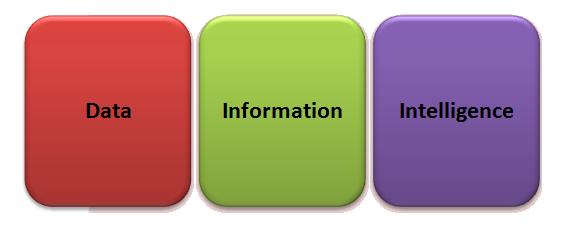
    We live in a world driven by hyper-competition where the supply of businesses exceeds the demand. In order for an organisation to survive in such an aggressively competitive environment, a better understanding of its competition and competitive forces that affect its success is required. Companies should know how to remain competitive and how to anticipate and react to changes inside and outside of their industries. In order to manage such an achievement firms should have a process in place for turning data into actionable intelligence, from which strategic and tactical decisions can derive.

    Introduction

    Competitive Intelligence (CI) is often defined as knowledge and foreknowledge about the external operating environment of the organization. The purpose of CI is to facilitate proactive decision-making by producing the needed business information into actionable form and making it available at the right time. The orientation and utilization of CI is tactical and to some extent strategic.

    Strategic Intelligence is a type of Competitive Intelligence produced for strategic purposes. Customers of SI include individuals involved in strategic decision-making. From the process perspective, Strategic Intelligence can be seen as a part of Competitive Intelligence as it is also a systematic and continuous process with a purpose to facilitate decision-making with needed and timely intelligence input delivered in actionable form.

    the-process-of-intelligence

    Figure 1. The process of intelligence

    The major difference between SI and CI is that SI actions focus strictly on supporting strategic decision-making by monitoring aspects with strategic significance.

    Users of SI are primarily individuals involved in strategy development. Additionally, a SI time horizon is broad and the focus is on all significant events: past, present and future events. In short, Strategic Intelligence can be defined as:

    “A systematic and continuous process of producing needed intelligence of strategic value in an actionable form to facilitate long-term decision-making

  • Weekly Science Picks

    Weekly Science Picks

    Here we are again! It’s our turn to provide you with the best highlights for the last week. A lot of things have happened during the last 7 days, but what have attracted our attention the most are the stories which come as follows. An interesting question we can notice here is related to the future of the robotics. Try to imagine that your boss is, for instance, a machine. How cool would that be? Sounds futuristic? Well, yes and no. We are already going that way… Let us show you how and much more. Fasten your seatbelts and we can start.

    Are we about to see the rise of robot bosses?

    The idea that robots and algorithms will take jobs is a common concern about the future. As Bill Gates argued earlier this year: “20 years from now, labour demand for lots of skill sets will be substantially lower.