Author: Milica Djekic

  • Weekly Science Picks

    Weekly Science Picks

    It’s time to summarise scientific contributions for this week. As usual, we would like to present the headlines which marked out the current week. The task was not the simple one, but we made it. Here are the most incredible things from the world of science and technology that have happened during this week.

    Reading the minds of the ‘dead’

    “Imagine you wake up, locked inside a box,

  • Weekly Science Picks

    Weekly Science Picks

    Indeed, it’s Sunday again. But, it’s not only Sunday. It’s Easter for all Christians all over the globe. Happy Easter to everyone! Also, it’s our time to recapitulate what have happened in this week. To be honest, the task was quite challenging, since the science and technology market is highly competitive and unpredictable. Luckily, we made it. Now we would like to present you top stories that were published during this week.

    The crashes that changed plane designs forever

    Sacrifices were made in great numbers in the early days of powered flight. Aeroplanes suffered a catalogue of catastrophic construction and engineering failures compounded by bad weather and pilot error. These tragedies were part of a long and fraught process that helped make flying as safe as it is today.

    Nasa Kepler telescope discovers planet believed to be most Earth-like yet found

    A newly discovered planet may be the most Earth-like yet found in another solar system, scientists believe. Kepler-186f is almost the same size as the Earth and occupies its star’s “habitable zone” where temperatures are mild enough to allow liquid surface water.

    Ancient viruses sound scary, but there’s no need to panic

    The researchers raised concerns that drilling in the permafrost may expose us to many more pathogenic viruses. Should we be worried about being infected from the past? Can human viruses survive in this permafrost environment and come back to wreak havoc?

    ‘Dressed’ laser aimed at clouds may be key to inducing rain, lightning

    The adage “Everyone complains about the weather but nobody does anything about it” may one day be obsolete if researchers further develop a new technique to aim a high-energy laser beam into clouds to make it rain or trigger lightning. Other possible uses of this technique could be used in long-distance sensors and spectrometers to identify chemical makeup.

    Until next meeting, please stay thirsty for new updates from the world of science and technology.

  • Weekly Science Picks

    Weekly Science Picks

    Well, it’s Sunday again. It’s our time to recapitulate all the scientific contributions, ideas, events and discoveries that have occurred in this week. To be honest, the job was quite challenging, since the science and technology market is highly competitive and unpredictable. Luckily, we made it. Now we would like to present you top stories that were published during this week.

    Nanostructures with applications in infrared and terahertz ranges

    Scientists have created a compound semiconductor of nearly perfect quality with embedded nanostructures containing ordered lines of atoms that can manipulate light energy in the mid-infrared range. More efficient solar cells, less risky and higher resolution biological imaging, and the ability to transmit massive amounts of data at higher speeds are only a few applications that this unique semiconductor will be able to support.

    Baking bread by the numbers

    If we had to name who’s involved in bread making, most of us would probably identify the baker, the farmer who grows the wheat and maybe even the miller who grinds the wheat into flour. But how many people would think of the humble statistician? Dr Emma Huang would – and she’s eager to prove their worth in the process.

    Try stargazing wherever you are

    The first “wow” moment of my stargazing adventure took place before I had even looked through a telescope. Staring up at the cloudy night sky one cold March evening, I spotted a bright pinprick of light to the south-west. “Which star is that?” I asked Seb Jay, the astronomer who was going to teach me to stargaze and who was, at that moment, busy setting up a pair of telescopes in my back garden.

    ‘I have lived underwater’

    The first night Deron Burkepile spent underwater was over 10 years ago, but the memory is still fresh in his mind. He remembers getting suited up — a couple of scuba tanks on his back, extra safety gear hanging from his rig—and stepping to the back of the boat. “You’re used to getting off the boat and coming back in an hour, maybe two at most,

  • Weekly Science Picks

    Weekly Science Picks

    We have come to the end of one more week and it’s time to summarise what has happened during this week. As usual, the task was quite challenging, but we made it. Here is the review of the most exiting and fascinating news from the world of science and technology.

    Do coffee and tea really dehydrate us?

    They enjoy the taste and the fact that the caffeine wakes them up. But when we’re exhorted to drink six or eight glasses of water a day, it’s usually emphasised that drinks like coffee and tea don’t count towards your daily liquid total because they’re dehydrating. Or so we’re told. What’s the evidence?

    Mind-controlled robotic suit to debut at World Cup 2014

    Shortly before 5pm local time on 12 June at Arena Corinthians in São Paulo, a young paraplegic Brazilian will stand up from a wheelchair, walk over to midfield, and take a kick in the opening ceremony of the 2014 World Cup.

    Saving daylight

    Not that “adjusting

  • The Best of Australian Science: March 2014

    The Best of Australian Science: March 2014

    It’s the end of March, 2014. It’s our time to summarise what we have done during this month. In fact, we are going to recount the best highlights for March.

    Here are the most exciting and interesting articles of this month.

    How to Remain Cyber Safe?

    Over the decades security experts all around the world have been debating what sort of protection is the most suitable for a PC. So, what do you think you should do to keep your computer cyber safe?

    Grand Engineering Challenge – Providing Energy from Fusion by Milica Djekic

    Fusion is a process by which two light nuclei join together (fuse) to form a heavier nucleus, and in doing so release considerable energy. Achieving this requires high temperatures such as those that drive the fusion processes which power the sun and stars. The aim of fusion research and development is to create conditions on earth which are sufficient to generate many fusion reactions which may be harnessed to produce large amounts of thermal and/or electrical power.

    10 Tips for Making Online Video a Joined-Up Experience

    Today, video plays an ever-increasing role in education. However, there is a major difference between an ad hoc, disjointed approach to video and a joined-up approach that sees video embraced as an integral part of university life.

    International Conference on Digital Discrimination and Social Networks Online by Danica Radovanovic

    It was a wonderful opportunity and space for interaction, discussion, learning and exchange of ideas and experiences: for social workers, academics, researchers, educators, Internet experts, NGOs, activists, young people and anyone interested in the issues surrounding discrimination on the Internet, especially in regards to social networking sites.

    Please stay curious and scientifically passionate! New stories are coming soon.

  • Weekly Science Picks

    Weekly Science Picks

    It’s Sunday again! It’s our time to give a brief review of the most amazing science and technology news that have appeared on the web during this week. The task was quite challenging, but we made it. We proudly present you the top stories of this Weekly Science Picks.

    Will we ever… travel in wormholes?

    The universe is huge. Travelling at light speed to the nearest star would take more than four years. Venturing to the other side of the galaxy? More than 100,000 years. So what’s an intrepid space traveller to do?

    Airliners should broadcast location every 15 minutes, says Inmarsat expert

    Inmarsat, which analysed the eight satellite “pings” from the missing MH370 to determine that it crashed in the southern Indian Ocean, already offers a service which costs $1 per hour to provide rapid updates. This service were used by Air France, and helped rescue services determine where flight 447 crashed into the sea off Brazil.

    What on earth is urban mining?

    There is a wealth of valuable metals – gold, silver, copper, rare earths – that can be extracted, processed and reused from products, which is what we call ‘urban mining’. This saves energy, water and landfill, but it could also deliver benefits to our national economy.

    Autism begins in pregnancy, according to study: Cortical layers disrupted during brain development in autism

    Researchers have published a study that gives clear and direct new evidence that autism begins during pregnancy. The researchers analyzed 25 genes in post-mortem brain tissue of children with and without autism. These included genes that serve as biomarkers for brain cell types in different layers of the cortex, genes implicated in autism and several control genes.

    That’s all for this Sunday. Until next meeting, stay thirsty for new scientific stories.

  • Weekly Science Picks

    Weekly Science Picks

    We have come to the end of one more week and it’s time to summarise what has happened during this week. As usual, the task was quite challenging, but we made it. Here is the review of the most exiting and fascinating news from the world of science and technology.

    Want to learn quicker? Use your body

    Ever got to grips with a problem? Picked up a new skill? Grasped a difficult concept? The language of learning is full of references to parts of the body outside the brain. Perhaps that’s because these phrases hint at something deeper. Researchers are discovering that learning is easier, quicker and more long-lasting if lessons involve the body as well as the mind – whether it’s gesturing with the arms or moving around a room. Can these insights enhance teaching and learning in the future? And should it inform the way technology is employed in the classroom?

    Gravitational waves give Nobel prize committee another headache

    A team of American astronomers announced that they had detected the tell-tale signature of “cosmic inflation” using an experiment called Bicep2 – a telescope located under the clear skies of the south pole.

    When disaster strikes: the science of oil spills

    To do this, in addition to monitoring and letting the contaminated site recover on its own, there are three main oil spill countermeasure techniques used: mechanical recovery, for example capturing the spreading oil on booms and pumping oil back into barrels (always the first preference); burning the oil off the water’s surface; and applying chemical dispersants to break up the oil into small droplets within the water column which become diluted at sea to harmless levels and subsequently broken down naturally, by bacteria.

    Humans can distinguish at least one trillion different odors

    Humans are capable of discriminating at least one trillion different odors, new research shows. Scientists determined that our sense of smell is prepared to recognize this vast olfactory palette after testing individuals’ ability to recognize differences between complex odors mixed in the laboratory. It has been said for decades that humans were limited to distinguishing only 10,000 different odors.

    That’s all for this Weekly Science Picks. Until next meeting, stay thirsty for new scientific stories.

  • Weekly Science Picks

    Weekly Science Picks

    Well, it’s Sunday again. It’s our time to recapitulate all the scientific contributions, ideas, events and discoveries that have occurred in this week. To be honest, the job was quite challenging, since the science and technology market is highly competitive and unpredictable. Luckily, we made it. Now we would like to present you top stories that were published during this week.

    How to learn like a memory champion

    For most of his 20s, Ed Cooke had been hovering around the top 10 of the World Memory Championships. His achievements included memorising 2,265 binary digits in 30 minutes and the order of 16 packs of playing cards in just an hour. But at the age of 26, he was getting restless, and wanted to help others to learn like him. “The memory techniques take a certain discipline,” he says. “I wanted a tool that would just allow you to relax into learning.”

    Take that, space junk! Australian scientists to zap debris with lasers

    It may sound like science fiction but an Australian team is working on a project to zap orbital debris with lasers from Earth to reduce the growing amount of space junk that threatens to knock out satellites with a “cascade of collisions

  • Grand Engineering Challenge – Providing Energy from Fusion

    Grand Engineering Challenge – Providing Energy from Fusion

    Fusion is a process by which two light nuclei join together (fuse) to form a heavier nucleus, and in doing so release considerable energy. Achieving this requires high temperatures such as those that drive the fusion processes which power the sun and stars. The aim of fusion research and development is to create conditions on earth which are sufficient to generate many fusion reactions which may be harnessed to produce large amounts of thermal and/or electrical power.

    Introduction

    Although fusion energy and its potential for unlimited energy production with minimal environmental impacts is attractive for meeting our future energy needs, the high cost and uncertainty of developing a commercial fusion power technology and the uncertainty of it competitiveness with other existing and future power technologies do not present a clear direction for our current involvement in fusion energy research and development.

    Measuring the economic and environmental value of fusion energy is complex as such a measurement cannot be carried out simply by understanding the capability and characteristics of fusion technology alone without the connection of this technology to all aspects of the economy both national and international. All energy supply technologies, from existing fossil fuel to renewable technologies, must be considered and depletable resources such as fossil and uranium fuels must be tracked.

    The cost of the technology, more specifically the cost of electricity from this technology, relative to other existing and future power technologies will be the primary factor in fusion’s ability to penetrate the energy market. Also the time in which the fusion power technology is available is important if the benefit is to be captured in the near future and if environmental impacts such as global climate change dictate early action in controlling greenhouse gas emissions.

    What is fusion?

    Fusion is the energy source for the sun. To be sure, producing power from fusion here on Earth is much more challenging than in the sun. There, enormous heat and gravitational pressure compress the nuclei of certain atoms into heavier nuclei, releasing energy. Earthbound reactors cannot achieve the high pressures of the sun’s interior.

    Deuterium is a relatively uncommon form of hydrogen, but water — each molecule comprising two atoms of hydrogen and one atom of oxygen — is abundant enough to make deuterium supplies essentially unlimited. Oceans could meet the world’s current energy needs for literally billions of years.
    Tritium, on the other hand, is radioactive and is extremely scarce in nature. That’s where lithium comes in.

    Can we control a fusion reaction?

    Human-engineered fusion has already been demonstrated on a small scale. The challenges facing the engineering community are to find ways to scale up the fusion process to commercial proportions, in an efficient, economical, and environmentally benign way.

    While other approaches to fusion are being studied, the most advanced involves using magnetic forces to hold the fusion ingredients together. ITER will use this magnetic confinement method in a device known as a tokamak, where the fuels are injected into and confined in a vacuum chamber and heated to temperatures exceeding 100 million degrees. Under those conditions the fusion fuels become a gas-like form of electrically charge matter known as a plasma.

    What are the barriers to making fusion reactors work?

    For one thing, materials will be needed that can withstand the assaults from products of the fusion reaction. Deuterium-fusion reactions produce helium, which can provide some of the energy to keep the plasma heated. But the main source of energy to be extracted from the reaction comes from neutrons, which are also produced in the fusion reaction.

    Not only will the neutrons deposit energy in the blanket material, but their impact will convert atoms in the wall and blanket into radioactive forms. Materials will be needed that can extract heat effectively while surviving the neutron-induced structural weakening for extended periods of time.

    Building full-scale fusion-generating facilities will require engineering advances to meet all of these challenges, including better superconducting magnets and advanced vacuum systems. The European Union and Japan are designing the International Fusion Materials Irradiation Facility, where possible materials for fusion plant purposes will be developed and tested.

    Will fusion energy be safe?

    From a safety standpoint, it poses no risk of a runaway nuclear reaction — it is so difficult to get the fusion reaction going in the first place that it can be quickly stopped by eliminating the injection of fuel. And after engineers learn how to control the first generation of fusion plasmas, from deuterium and tritium fuels, advanced second- or third-generation fuels could reduce radioactivity by orders of magnitude.

    The good news is that the first round of challenges are clearly defined, and motivations for meeting them are strong, as fusion fuels offer the irresistible combination of abundant supply with minimum environmental consequences.

    Conclusion

    In support of a large-scale expansion of humankind into the solar system, fusion system performance at the levels discussed would provide numerous advantages fur space propulsion arid power: (1) Higher specific power values than projected for nuclear or solar electric propulsion, (2) Higher, more flexible specific impulses than chemical, solar, or fission systems can achieve, allowing efficient long-range transportation, and (4) Net-energy-producing fuel, available throughout the solar system. The symbiosis between large-scale space development and fusion energy seems clear, and the key question is not if each will be developed but whether the time frames are consistent.

    References:

    [1] K.R. Schultz, Why Fusion?, IEEE CONTROL SYSTEMS MAGAZINE, 2006
    [2] Sándor Zoletnik, Modeling and Simulation Needs in Fusion Energy Research (Invited Paper), IEEE, 2007
    [3] Son H. Kim, John Clarke & Jae Edmonds, THE ECONOMIC VALUE OF FUSION ENERGY, IEEE, 1996

     

  • Weekly Science Picks

    Weekly Science Picks

    We came to the end of this week and it is our time to recount the most exciting and incredible stories from the world of science and technology. As usual, we had to make a hard decisions and after a careful consideration we decided to promote the news as follows:

    Can Facebook make you sad?

    Not so long ago a new form of communication swept the world, transforming life in ways unimagined just a few years before. One commentator heralded it as “the greatest means of communication ever developed by the mind of man

  • Weekly Science Picks

    Weekly Science Picks

    It’s Sunday again! It’s our time to give a brief review of the most amazing science and technology news that have appeared on the web during this week. The task was quite challenging, but we made it. We proudly present you the top stories of this Weekly Science Picks.

    Body bacteria: Can your gut bugs make you smarter?

    Far from being freeloading passengers, many of these microbes actively help digest food and prevent infection. And now evidence is emerging that these tiny organisms may also have a profound impact on the brain too. They are a living augmentation of your body – and like any enhancement, this means they could, in principle, be upgraded. So, could you hack your microbiome to make yourself healthier, happier, and smarter too?

    Geoengineering side effects could be potentially disastrous, research shows

    Science academies around the world as well as some climate activists have called for more research into geoengineering techniques, such as reflecting sunlight from space, adding vast quantities of lime or iron filings to the oceans, pumping deep cold nutrient-rich waters to the surface of oceans and irrigating vast areas of the north African and Australian deserts to grow millions of trees. Each method has been shown to potentially reduce temperature on a planetary scale.

    Proteins to plastics: chemistry as a dynamic discipline

    Chemistry is the most central of scientific disciplines and underpins the physical, material and biological world. Opportunities are abundant in the field of chemistry, as most major advances take place at the interface of two or more disciplines and chemistry sits at the core of trans-disciplinary research.

    Water detected in a planet outside our solar system

    Water has been detected in the atmosphere of a planet outside our solar system with a new technique that could help researchers to learn how many planets with water, like Earth, exist throughout the universe. The team of scientists that made the discovery detected the water in the atmosphere of a planet as massive as Jupiter that is orbiting the nearby star tau Boötis.

    That’s all for this time. Please stay thirsty for new scientific stories and news!

  • The Best of Australian Science: February 2014

    The Best of Australian Science: February 2014

    It’s the end of February, 2014. It’s our time to summarise what we have done during this month. Basically, we are going to recount the best highlights for February.

    Here are the most exciting and most interesting articles of this month.

    Mars Colony Development: Mars One Supplier Update by Ashton Jones

    All of the greatest explorations undertaken by humanity have been hindered by unexpected variables, the Mars One mission is no exception. The first settlers on Mars are currently projected to begin colonization in 2025, making homo sapiens an inter-planetary species. With so much progress and many promising suppliers to propel the mission there are plenty of reasons to be excited!

    Offices Tech Tools That Will Transform Our Future by Michelle Lee

    With technology expanding at incredibly rapid rates and businesses today under constant pressure to perform and keep up with the global economy, technological tools and appliances are reaching new levels of innovation.

    Advances in the Robotics Industry: DARPA Robotics Challenge Trials by Dunya

    Every year it seems a new movie comes out that tells a story of robots going out of control and taking over the world. In reality, some of the world’s brightest minds are developing robots and software to help assist humans in a range of important work, including surgery, bomb detection and natural disaster assistance.

    Discovering Cyber Forensics by Milica Djekic

    Cyber forensics is a new and fast growing field that involves carefully collecting and examining electronic evidence that not only assesses the damage to a computer as a result of an electronic attack, but also to recover lost information from such a system to prosecute a criminal. With the growing importance of computer security today and the seriousness of cyber crime, it is important for computer professionals to understand the technology that is used in cyber forensics.

    Ten tools for social media practioners by Danica Radovanovic

    Whether you are a web creator, blogger, engineer, educator, journalist, marketing specialist or a scientist, with ever-emerging opportunities to share information on digital platforms, the importance to keep digital skills up-to-date is vital.

    Please stay curious and scientifically passionate! New stories are coming soon.

  • Weekly Science Picks

    Weekly Science Picks

    We have come to the end of one more week and it’s time to summarise what has happened during this week. As usual, the task was quite challenging, but we made it. Here is the review of the most exiting and fascinating news from the world of science and technology.

    Science and Religion, Genome Cryptography, and the Coolest Science Fact

    Last week, thousands of scientists gathered in Chicago, Illinois, to share their latest research with the world. Here are some of our favorite stories from the meeting, held each year by AAAS, which publishes Science.

    Is this whale-shaped plane the future of airliners?

    Spotting an Airbus A380 at an airport can still create great excitement. The giant, double-decker plane can seat between 500 and 850 people, depending on how much space is given to space-saving economy class, and how much goes to higher-paying passengers with all that extra leg room. It’s an aviation giant, the biggest passenger-carrying aircraft ever to fly the skies.

    Asteroid 2000 EM26: ‘potentially hazardous’ space rock to fly close to Earth

    But it is defined as a potentially hazardous near-Earth object (NEO) large enough to cause significant damage in the event of an impact. Scientists estimate the asteroid, travelling at 27,000mph, is 270 metres (885ft) wide.

    Why does the brain remember dreams?

    Some people recall a dream every morning, whereas others rarely recall one. In a new study, research shows that the temporo-parietal junction, an information-processing hub in the brain, is more active in high dream recallers. Increased activity in this brain region might facilitate attention orienting toward external stimuli and promote intrasleep wakefulness, thereby facilitating the encoding of dreams in memory.

    That’s all for this Weekly Science Picks. Until next meeting, stay thirsty for new scientific stories.

  • Discovering Cyber Forensics

    Discovering Cyber Forensics

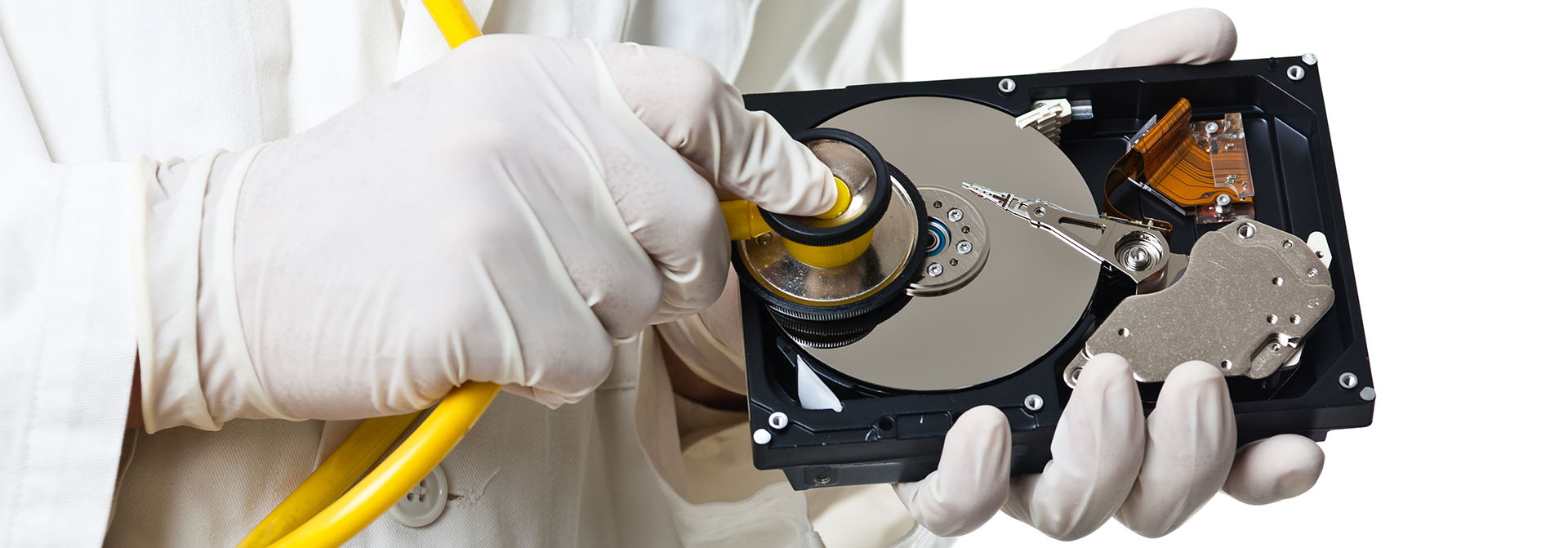
    Cyber forensics is a new and fast growing field that involves carefully collecting and examining electronic evidence that not only assesses the damage to a computer as a result of an electronic attack, but also to recover lost information from such a system to prosecute a criminal. With the growing importance of computer security today and the seriousness of cyber crime, it is important for computer professionals to understand the technology that is used in cyber forensics.

    Introduction

    Cyber forensics involves the preservation, identification, extraction, documentation and interpretation of computer data.

    The three main steps in any computer forensic investigation are acquiring, authenticating, and analyzing of the data. Acquiring the data mainly involves creating a bit-by-bit copy of the hard drive. Authentication is the ensuring that the copy used to perform the investigation is an exact replica of the contents of the original hard drive. Analysis of the data is the most important part of the investigation since this is where incriminating evidence may be found.

    Part of the analysis process is spent in the recovery of deleted files. The job of the investigator is to know where to find the remnants of these files and interpret the results. Any file data and file attributes found may yield valuable clues. If deleted data could not be recovered through the use of common forensic tools, more sensitive instruments can be used to extract the data.

    Data recovery is only one aspect of the forensics investigation. Tracking the hacking activities within a compromised system is also important. With any system that is connected to the Internet, hacker attacks are as certain as death and taxes. It is impossible to completely defend against all attacks. As soon as a hacker successfully breaks into a computer system the hacker begins to leave a trail of clues and evidence that can be used to piece together what has been done and sometimes can even be used to follow a hacker home. Computer forensics can be employed on a compromised system to find out exactly how a hacker got into the system, which parts of the system were damaged or modified.

    Image source: http://www.datasector.hr
    Image source: http://www.datasector.hr

    What is Cyber Forensics?

    If you manage or administer information systems and networks, you should understand computer forensics. Forensics is the process of using scientific knowledge for collecting, analyzing, and presenting evidence to the courts. Forensics deals primarily with the recovery and analysis of latent evidence. Latent evidence can take many forms, from fingerprints left on a window to DNA evidence recovered from blood stains to the files on a hard drive.

    Because computer forensics is a new discipline, there is little standardization and consistency across the courts and industry. As a result, it is not yet recognized as a formal “scientific