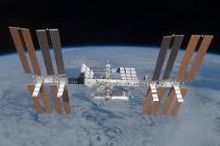
This past week NASA announced that in 2015 they would be sending two astronauts to the International Space Station (ISS) for a year-long mission. This is an expected, and necessary step in the preparation for human spaceflight to Mars. If we are to have human explorers on the surface of Mars, we need to understand the effects on humans of long-term space travel. At the moment trips to the ISS last on average 5-6 months. A mission to Mars may take 6-8 months, plus an extended time on the planet, and a 6-8 month return trip. In reality astronauts could be sent on missions of 2 years or longer.
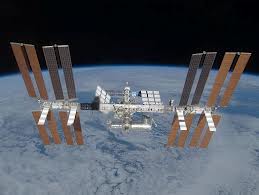
Astronauts are exposed to a number of conditions in space that can pose serious health risks, especially if exposure takes place over a long period of time. There are lots of hazards and risks for humans in space, including: ascent and descent accidents; space sickness; debris collisions; micrometeorites; hazardous and toxic gas leaks on the spacecraft; EVA (Extra Vehicular Activity) accidents; sudden unexpected illness and the list goes on. Today I’m talking about the specific issues that affect astronauts during long distance flights. (By the way I use the term ‘astronaut’ as a general term, which includes astronauts from various nations, including cosmonauts from Russia, and teikonauts from China.)
Some of the major issues for astronauts during long duration space flights include:
Exposure to radiation – Astronauts live and work well above the protective atmosphere of earth, so they are subject to the full force of the sun’s radioactive output as well as high energy cosmic rays that originate outside of our solar system. Long distance missions do not have the benefit of Earth’s protective atmosphere and magnetic field. Material shielding is effective against low energy radiation, but may create damaging secondary radiation for higher energy particles. The ISS uses aluminium to protect the spacecraft and crew. As the thickness of the shielding material increases, the probability that the particle will survive with enough energy to damage human issue is decreased. Low levels of radiation generally do not pose a significant health risk to astronauts, however the effects of radiation are cumulative, so long term exposure increases the lifetime risk to astronauts. Crews of future long duration interplanetary missions will have to travel through the Van Allen radiation belts, and be exposed to more galactic cosmic rays, and as a result will be exposed to higher levels of radiation than those remaining in Earth’s orbit. Increased and prolonged exposure to radiation has serious health consequences for astronauts, including cancer, leukaemia, heart disease, and damage to the central nervous system.
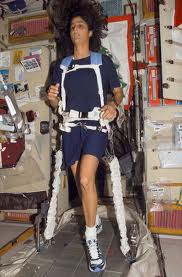
Muscle atrophy – Our muscles, bones and organs have adapted to work in the environment we inhabit, which is exposed to the effects of gravity. When exposed to an environment where there is little or no gravity, our muscles, bones and organs begin to lose condition – becoming more problematic the longer the astronaut is in space. On Earth, our muscles are constantly working against gravity. In space there is no force of gravity for muscles to work against, so astronauts will lose muscle tone. Loss of muscle tone starts to occur shortly after launch, and continues whilst the astronaut is in a reduced-gravity environment. During longer missions, muscles may atrophy, and astronauts may experience uncontrolled muscle twitching, and a loss of fine motor control. The loss of muscle tone, strength and control can be mitigated with regular exercise during the mission.
Cardiovascular damage – When in space, the body no longer needs to maintain the powerful heart muscles needed on Earth, so heart tissue begins to shrink. In space, astronauts experience a redistribution of body fluids, which results in changes to cardiovascular physiology. The heart doesn’t have to work as hard pumping blood in a microgravity environment as it does on earth so crew members are encouraged to undertake aerobic exercise as part of their daily routine, in addition to exercises designed specifically to maintain as much muscle tone as possible. Whist exercise is beneficial, it appears that it cannot reverse the process, but can help slow it down.
Bone density – In microgravity, the lack of impacts in weight bearing exercise means that newly created bone tissue is not incorporated into bones as normal, so as bone tissue is created it is absorbed into the system, not used as it would be on Earth. This results in high calcium levels elsewhere in the body, which can lead to significant health issues. Studies have revealed a significant loss of calcium from weight bearing bones of astronauts. This is a concern for astronauts as it suggests a risk of renal stone formation on long duration missions. Density in such bones as the pelvis and legs decreases by approximately 1 to 2 percent a month on average, which presents concerns for astronauts during long haul missions. Unfortunately exercise does not seem to reduce the level of bone loss, but is beneficial for many other issues as discussed previously.
Hyperarousal – Don’t worry – it’s not what you think! Astronauts may experience hyperarousal, their reaction to a changed schedule, working under pressure, sleep deprivation, and the excitement of being in space. Hyperarousal can cause insomnia, disrupt the appetite, result in impaired concentration, cognitive dysfunction, and decreased co-ordination. Fatigue is often a side effect of hyperarousal, as is anorexia and sudden weight loss. Over time space agencies have developed strategies to deal with hyperarousal, including giving crews adequate rest time, control over some of their tasks, adequate leisure time, and regular contact with family and friends.
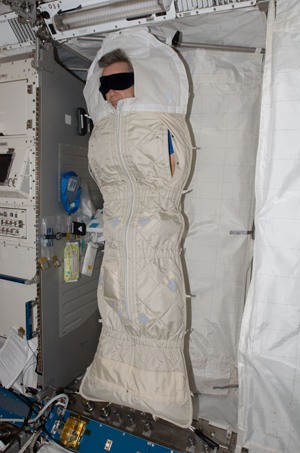
Sleep deprivation – The amount and quality of sleep experienced in space is poor for a number of reasons including: variable cycles of ‘day’ and ‘night’; poor illumination during daytime hours in the space craft; environment outside the windows at the ‘wrong’ time of day; hectic work schedule; noise of the spacecraft; altered diet; and the physical challenge of sleeping in space. Sleep deprivation may compromise the immune system, which whilst not a significant issue during short term missions, is a potentially debilitating condition during long-term missions. Sustained physical stress over a long term period may result in an immune system that is so compromised that the body is unable to fight serious infections. Precautions include wearing sleeping masks and earplugs, anchoring themselves down to sleep, maintaining a steady routine of work and sleep, and using shades and other devices to block out the windows.
Psychological Issues – Working away from friends and family, and working with people from other cultures presents a number of psychological and social challenges. The psychological welfare of a crew of astronauts is critical to the success of a space mission. Interpersonal relationships during a mission may be a significant source of psychological stress. Crews do many things in space to try to maintain a sense of ‘normalcy’ during long stays in space. When crews aren’t required to work, they are encouraged to undertake other activities, which include reading, listening to music, writing e-mails and letters to family and friends, and exercising. In 2007 American astronaut Sunita Williams ran the Boston Marathon on the treadmill in the ISS, completing the race in just over 4 hours. During low earth orbit missions crews receive periodic care packages from their family with CDs, DVDs, books, magazines, photos, and letters. In addition to the packages, the ISS also has library lockers that contain music, books, and videos.
Over the last 40 years humanity has overcome enormous social, technical and physical challenges to put humans into space. When Yuri Gagarin became the first human in space by orbiting the Earth for 108 minutes on the 12th of April 1961, very little was known about the space environment and how it would affect humans. Just over 40 years later we now have a permanent presence in space with the introduction of the ISS into low Earth orbit. We know a lot about the physiology and psychology of humans in space, and have made space a relatively comfortable existence for astronauts. The future of space exploration may include human missions to other planets within our solar system, such as Mars. Before any long-term exploration of Mars could be contemplated, further research is needed in a number of areas to ensure the safety, and longevity of all crew members during the mission and beyond.