Category: Internet

  • New Internet Exchange Point Launched 16 November in Kinshasa, Democratic Republic of the Congo

    New Internet Exchange Point Launched 16 November in Kinshasa, Democratic Republic of the Congo

    [Washington, D.C. and Geneva, Switzerland] — A new Internet Exchange Point (IXP) was launched on 16 November in Kinshasa, Democratic Republic of the Congo (DRC). The Kinshasa IXP (KINIX) was funded through the Internet Society’s Community Grants Programme and managed by the DRC ISP Association (ISPA-DRC), as part of its DRC-IX project, which aims to establish IXPs in Kinshasa, Lubumbashi, and Goma.

    KINIX will serve as a catalyst for innovation and development of Internet services and applications in the DRC, and will support Government efforts to implement E-government services and lower the cost of developing local hosting and application development.  The presence of KINIX will improve local Internet resilience by eliminating the dependence on international connectivity for local Internet services and Internet-based communications.

    DRC is largely dependent on satellite connectivity for its Internet access. As the DRC waits to get connected to the West Africa Cable System, the time to access locally hosted content will be reduced significantly from over 500ms to less than 50ms through KINIX.

    Initially, KINIX will connect six Internet Service Providers (ISPs): AfriNET, Cielux, Cybernet, Global Broadband Solutions, Microcom, and Vodacom.  Twenty-six (26) engineers from these ISPs, including the regulator (ARPTC); Central Bank of Congo; local universities; and the tax, customs and revenue authorities among others have received technical, hands-on training prior to the launch through the Internet Society Africa Interconnection and Traffic Exchange (ITE) programme. The training sponsored by the Internet Society, and in partnership with Netnod and Jaguar Network, will also enable the network providers in the DRC to prepare their networks for interconnection with the rest of the world once the submarine cable connection is activated.

    The Internet Society’s Africa Interconnection and Traffic Exchange programme has been actively supporting the development of IXPs and regional interconnection in the region. The programme aims to have 80% of Internet traffic exchanged in Africa by 2020, keeping local traffic local. This objective has been boosted by the appointment of the Internet Society to implement the African Union’s African Internet Exchange System (AXIS) programme, http://www.internetsociety.org/axis-announcement.
    Source

  • Analysys Mason Study Demonstrates How the Fundamental Sustainability of the Internet Extends to Developing Countries

    Analysys Mason Study Demonstrates How the Fundamental Sustainability of the Internet Extends to Developing Countries

    Analysys Mason’s new study published this week entitled ‘How the Internet continues to sustain growth  and innovation’ reveals how the market forces that have always ensured the sustainability of the Internet in developed countries also extend to developing countries.

    Analysys Mason (www.analysysmason.com) is a global specialist in telecoms, media and technology (TMT). The Internet Society (www.internetsociety.org) commissioned Analysys Mason to study the impact of increased demand for new Internet services and concerns about the sustainability of the ensuing growth.

    The new study shows how, in the past, Internet challenges have been continually met in developed countries, based on a combination of new technology and investment to increase capacity, and changing business models to distribute content. Further, the report shows how investment and innovation are already addressing new demands in developing countries today.

    “Challenges in the past followed the increase in demand from the first commercial web browsers, and the widespread take-up of Internet video. Today, concerns about the sustainability of the Internet in developed countries have arisen from the increased availability of mobile broadband services,

  • Weekly Science Picks

    Weekly Science Picks

    So much science, so little time… – Photo credit, Leo Reynolds

    Sigh, my photo caption sums it all up…

    But here are the news stories that caught my eye and I hope you find them interesting as well. Maybe reading them will inspire your own work or to dig deeper for answers. In any case, enjoy!


    This is one of my favorite topics because it offers up rampant debate on so many topics – society, education, cognition. You’re just going to have to read it for yourself.

    This Is Your Brain on the Internet (Maybe) by Kyle Hill

    So what is the Internet doing to our thinking? It is hard to say. Current research has a hard time keeping up with the break-neck pace of online culture, and only the more conventional mediums like television and newspapers have been evaluated in any rigorous sense.


    Newspapers might be old school, but they do have an online media presence as well these days. This article was published in The Australian this week and concerns Australia’s own CSIRO. Genetically modified crops and foods have been a part of our collective diet for many years, whether or not some want to admit it. And they are here to stay. I am of the opinion that they play an important role in our food security given a number of ever changing variables in our environment. The usual characters are depicted in this piece and it will be interesting to follow this story and hear the response from CSIRO.

    Scientists Wary of CSIRO GM Crop by Adam Cresswell

    SCIENTISTS from three countries are warning a CSIRO-led push to make Australia the first nation in the world to introduce genetically modified wheat crops could pose a significant health threat to humans and other animals.


    If you haven’t heard, NYC Mayor Mike Bloomberg has banned sugary soft drink sales in cups larger than 16 0z. in his efforts to personally tackle the obesity epidemic. I feel some disclaimers are in order: One, this story did appear on www.bloomberg.com, but you could have found it in a variety of online publications; and two, I serve on the Mayor’s Best Practices Partnership to identify strategies to combat childhood obesity. That being said, I find the details of the ban interesting as you can see in the quote below. I personally do not see the need for a a 32 oz. soda, but people who want their sugary fix will do some quick addition, carry more cans or bottles and walk to get more refills. Oh, how long must we wait for data on this?!

    NYC Health Panel Backs Bloomberg Ban on Super-Size Sodas by Henry Goldman and Leslie Patton

    Restaurants, movie theaters and other outlets have six months to comply or face a $200 fine each time there’s a violation, the health department said. The ban doesn’t apply to convenience stores and groceries that don’t act primarily as purveyors of prepared foods, which are regulated by New York state. The rules do allow consumers to buy as many of the smaller drinks as they want and to get refills.


    To continue with the discussion on obesity, this is an interesting read which once again highlights the genetics vs. environment debate.

    What’s the Main Cause of Obesity – Our Genes or the Environment? from ScienceDaily with resources from the BMJ (British Medical Journal)

    The ongoing obesity epidemic is creating an unprecedented challenge for healthcare systems around the world, but what determines who gets fat?


    And one last article that I thought was noteworthy, and a bit on the strange side by the title:

    Chemists Develop Nose-Like Array to ‘Smell’ Cancer from ScienceDaily, findings appear in the current issue of the journal ACS Nano

    The chemist says, “Smell ‘A’ generates a pattern in the nose, a unique set of activated receptors, and these are different for every smell we encounter. Smell ‘B’ has a different pattern. Your brain will instantly recognize each, even if the only time you ever smelled it was 40 years ago. In the same way, we can tune or teach our nanoparticle array to recognize many healthy tissues, so it can immediately recognize something that’s even a little bit ‘off,’ that is, very subtly different from normal. It’s like a ‘check engine’ light, and assigns a different pattern to each ‘wrong’ tissue. The sensitivity is exquisite, and very powerful.”

  • Reducing the Digital Divide: Internet Society Supports Establishment of Internet Exchange Points across Africa

    Reducing the Digital Divide: Internet Society Supports Establishment of Internet Exchange Points across Africa

    [Johannesburg, South Africa –23 August 2012] – The Internet Society  announced that it has been selected by the African Union (AU) to conduct community mobilization and technical aspects workshops to support the establishment of Internet Exchange Points (IXPs) in AU Member States as part of the African Internet Exchange System (AXIS) project.  The AXIS project aims at keeping Africa’s Internet traffic local to the continent by providing capacity building and technical assistance to facilitate the establishment of National Internet Exchange Points and Regional Internet Exchange Points in Africa. The project is funded by the Euro-Africa Infrastructure Fund and the Government of Luxembourg.

    The Internet Society is committed to organizing 60 community mobilization and technical aspects workshops in 30 African countries.  To this effect, the Internet Society will also contribute its own resources for the implementation of this component of the AXIS project.
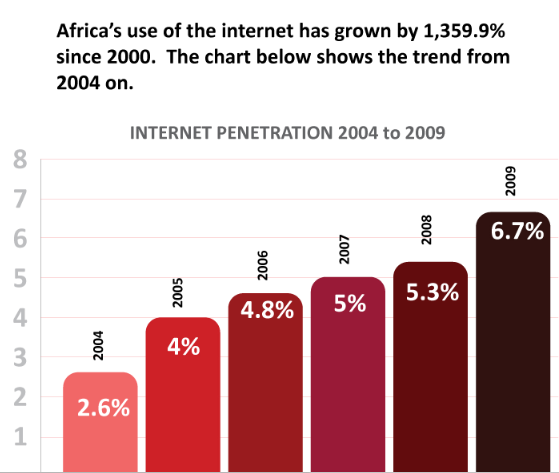
    Africa's use of the internet by Jon Gosier (Flickr)
    Currently, much of Africa’s Internet traffic is routed through Internet exchange points external to the African continent.  As countries establish their own IXPs, Internet traffic will be routed locally, creating a downward pressure on costs and stimulating growth in and distribution of local Internet content.  Through the AXIS project, the interests of the AU and the Internet  Society, working with other African Internet organizations such as AfriNIC, AfNOG and AftLD, will be realized in this collaborative effort to assist in the development of a more locally operated and, hence, more robust and economically accessible pan-African Internet.
    Moctar Yedaly, Head of Information Society Division, African Union Commission, commented, “Africa is paying overseas carriers to exchange ‘local’ (continental) traffic. This is both a costly as well as an inefficient way of handling inter-country exchange of Internet traffic. Independent analysis has shown that Africa pays over US$600 Million to developed countries every year for inter-African traffic exchange that is carried outside the continent. We are therefore pleased that the African Internet Exchange System project will address this challenge by facilitating optimization of Internet traffic to support intra-continental traffic flows in Africa.

  • Internet Society’s African Peering and Interconnection Forum Provides Opportunities for Regional Internet Growth

    Internet Society’s African Peering and Interconnection Forum Provides Opportunities for Regional Internet Growth

    AfPIF-3 Highlights Regional Interconnection – Addressing Africa’s Internet Transit Deficit

    © Internet Society/Shoot the Earth/ Nyani Quarmyne

    [Washington, D.C. and Geneva, Switzerland –13 August 2012] – The third African
    Peering and Interconnection Forum (AfPIF-3), organized by the Internet Society, will
    be held 22-24 August 2012 in Johannesburg, South Africa. A multistakeholder forum,
    AfPIF aims to foster national and cross-border interconnection opportunities where
    key stakeholders, including infrastructure and service providers, Internet Exchange
    Points (IXPs), regulators, and policy makers can share experiences, hear from
    experts, and advance peering and interconnection arrangements.

    According to recent research, nearly all peering and interconnection agreements are
    forged at regional and global peering forums around the world. A unique regional
    forum, AfPIF facilitates discussions on infrastructure challenges, including
    terrestrial capacity issues, national and regional IXP development, local content
    development, and international peering. AfPIF provides a venue for productive
    technical discussions and business relationships that can be forged to augment
    Internet infrastructure and services in Africa.

    Keynotes and panel sessions will cover topics that address Africa’s Internet transit
    deficit, including Peering Negotiations and Strategies for Operators, Peering and
    Transit Economics, Landlocked Countries and Cross-border Regulatory Reality,
    Exploring the Content Business in Africa, and Attracting Global Content via Regional
    IXPs.

    “AfPIF has established itself as a strategic event for conducting business in
    Africa,

  • Call for Papers “Big Data, Big Questions, or, Accounting for Big Data

    Call for Papers “Big Data, Big Questions, or, Accounting for Big Data

    Call for Papers “Big Data, Big Questions, or, Accounting for Big Data

  • Radio quiet, please!

    Radio quiet, please!

    Originally conceived over 20 years ago, there’s a project being undertaken by scientists and engineers across the whole world to help us all better understand the mysteries of the galaxy and the very beginnings of the Universe. It’s estimated to be completed by around 2024,costing $1.85 billion AUS (€1.5 billion). Once completed, it’s set to be the most complex and technologically advanced machine ever built by humanity. It will use enough optic fibre to wrap twice around the Earth and will need a computer capable of performing 10^18 operations per second – about three million times the number of stars in our galaxy. It will produce over 980 Exabytes of data every day (equivalent to about 15 million 64GB iPods) and to cope with that, it will need to handle data transfer rates over 10 times as high as the current global internet traffic. No, it isn’t a starship. But it might just be the next best thing.

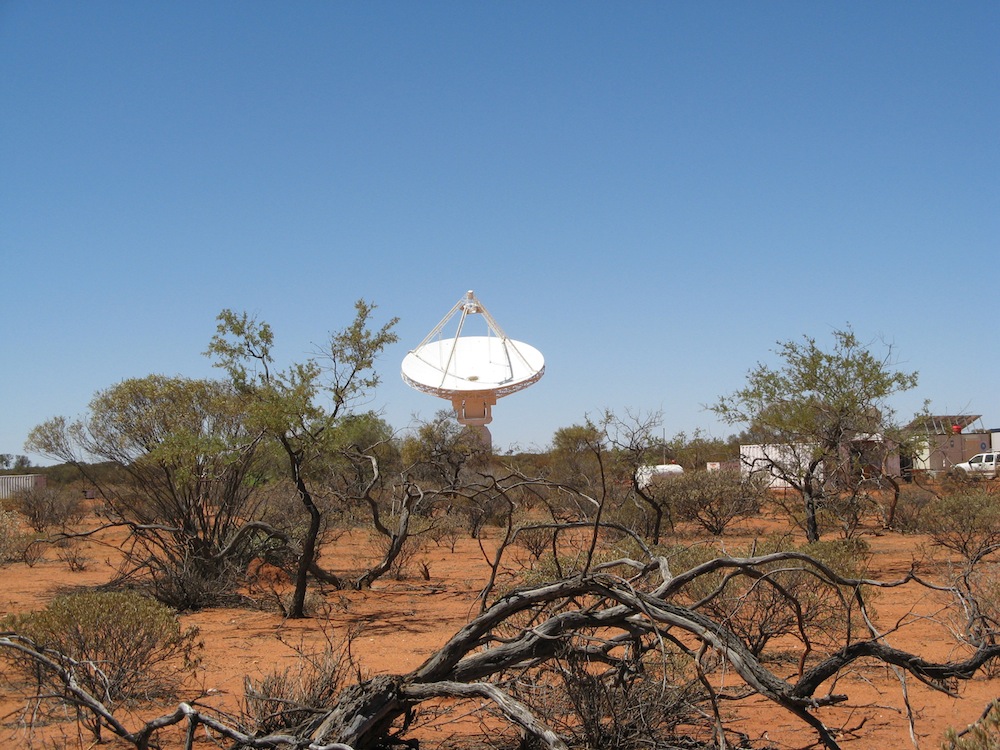
    One of the first components of the SKA, constructed in Western Australia. Credit: Dave DeBoer, CSIRO.

    The Square Kilometre Array (SKA) is one of the most ambitious scientific projects ever devised, and when completed it will comprise a huge number of telescope antennae which will work as one to form a single radio telescope so powerful that it could detect an airport radar on a planet 50 light years away. The sensitivity of any telescope is defined by the area it uses to collect data. With optical telescopes, this is the size of the mirror, and with radio telescopes it’s typically the size of the dish. The SKA gets its name because when fully constructed, all of the detectors and antennae that make it up will have a combined area of one square kilometre, or one million square metres. To put that properly into perspective, the Green Bank Telescope is currently the largest steerable single dish radio telescope, and its area is just under 8000 square metres.

    Being astronomy’s answer to the large hadron collider, the SKA is a staggeringly large international collaboration. I was lucky enough to attend a major meeting regarding the planning of the SKA (the headquarters are to be based here in the UK in Manchester), and the myriad different languages and nationalities represented was impressive to say the least. Over 24 major organisations from countries spanning 5 continents are involved in the project, ranging from universities to industrial engineering companies. New technologies, both software and hardware, are still being developed as a result of this project. Based on the huge data storage and transfer requirements of a machine as complex as the SKA, many of those new technologies are likely to feed straight back into society by offering profound improvements to computing resources like the internet. In fact, as the world’s largest project for sorting and storing data, the SKA is expected to be literally bigger than Google!

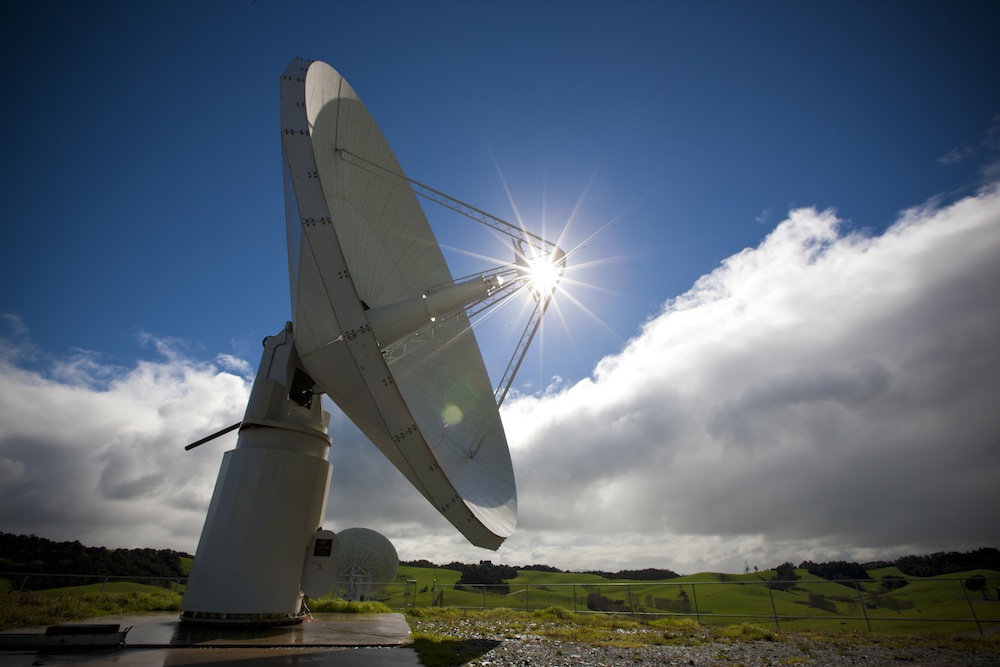
    The Warkworth antenna in New Zealand – an important part of early SKA science. Credit: Alex Wallace.

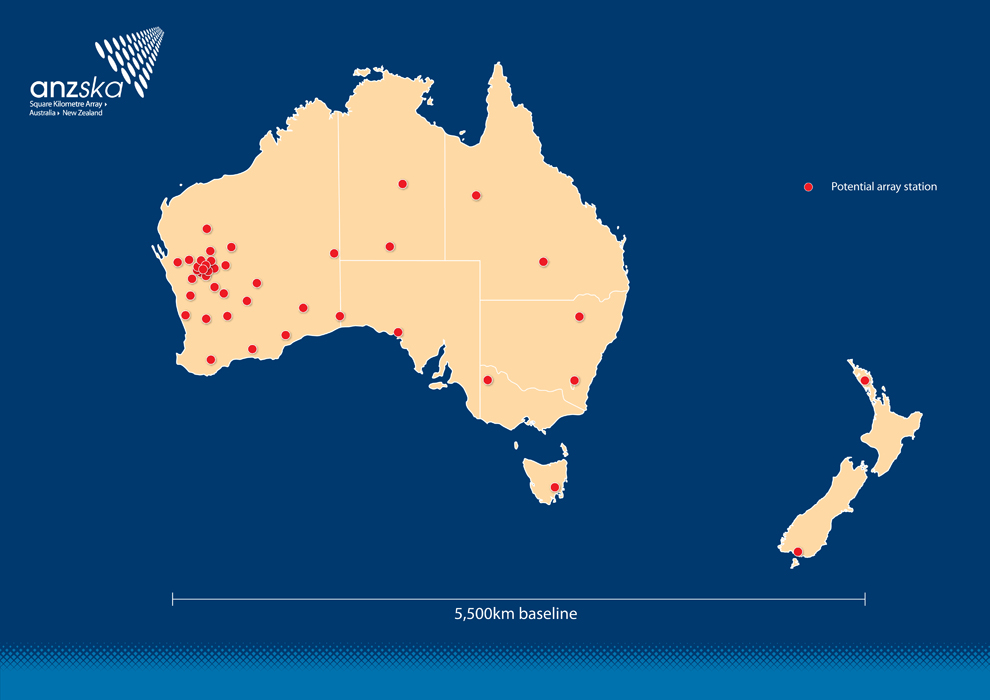
    The most difficult decision, understandably, has been where precisely to build it. Humanity has an unfortunate tendancy to fill the atmosphere of our planet with noise, bouncing radio waves to and fro and filling the air with radio frequency chatter. A radio telescope array this sensitive needs to be placed somewhere quiet to gain the full benefits, and the most recent decision has been to effectively split the SKA into two components, to be built in Southern Africa and Australia. While this may seem like an odd thing to do, it actually makes perfect sense. The SKA actually has three types of antenna operating at different frequencies. Intended to cover a huge range of radio frequencies (from 70 to 100000 MHz), three types of antenna are needed, because no single technology can actually operate across such a wide range. So the decision was made to build the lowest frequency detectors across Australia, centred at Murchison in outback Western Australia. Murchison is blessed with being one of the few places on our planet which isn’t flooded with FM radio at the low end of the frequency scale. From a radio astronomer’s point of view, it’s the quietest place on Earth.

    This is set to be complemented by the higher frequency steerable dishes which are set to be constructed across Africa. Both South Africa and Australia have put extensive efforts into developing the SKA, and Australian-developed technology is still set to be implemented in the African telescopes. This will mean a huge influx to the African astronomical community and numerous African nations won’t lose out on the economic boost from contributing to such a prestigious project. It’s an ideal situation where everyone wins.

    All in all, it’s an exciting time to be an astronomer. An epic project like this is likely to attract all manner of researchers from across the world to both continents. Just maybe, it could also finally help us to answer the really big questions, like how the galaxy formed, how the Universe began, and whether or not there’s anyone else out there.

    A map of prospective SKA sites. Credit: anzska
  • Networking the Solar System

    Networking the Solar System

    When the human race inevitably expands off planet Earth, we’ll naturally want to take our internet with us – over the past 15 years or so, the internet really has become an integral part of our lives! In fact, even as you’re reading this, 300 gigawatts of electricity worldwide will have been used to transfer 640 terabytes of information across the internet to 1.5 billion desktop computers and a further billion mobile devices. In the time you’ve taken to read this paragraph, over 200 million e-mails have been sent, 6 million Facebook pages have been loaded, 1.3 million YouTube videos have been watched, and 100,000 people have posted an update to their twitter accounts.

    Astronaut Tracy Caldwell Dyson enjoying a view from the ISS Cupola window.

    Inspite of its sprawling extent on our planet though, the internet’s first step off-world was able to fit inside just 1120 bytes. On January 22, back in 2010, astronaut TJ Creamer made a small but important piece of internet history by being the first human being ever to post to a twitter feed from orbit. Astronauts had been updating twitter feeds while in orbit for some time, but they had previously always relayed their messages via NASA back here on Earth. Since 2010, however, the International Space Station (ISS) has been upgraded to have its own internet connection. Intended for personal use by astronauts and still routed through ground based systems at NASA for security, this is how e-mails, blog posts and twitter updates are sent back home. All the same, even though it might seem a long way away, the ISS is relatively nearby in low Earth orbit.

    Things start to become more complicated when you consider travelling further afield, because whether we like it or not, we can’t cheat special relativity. The speed of light is the fastest any interplanetary communication (or anything, for that matter) can travel. The Moon is still close enough that interaction is possible in almost real time. Sending a message to someone on the Moon would involve a delay of a little under three seconds. Good enough to hold a conversation, but with gamers here on Earth complaining about latencies higher than 600 milliseconds, you’re obviously not going to be able to play Halo or Warcraft against a friend over that kind of distance. Travel as far as Mars and the problem becomes even more pronounced, with delays of anywhere between 3 and 22 minutes, depending on exactly where Mars is in relation to Earth. Minutes turn to hours as you continue to travel outwards (transmissions from Voyager 2 currently take over 13 hours to reach us). All things considered, using an interplanetary internet sounds like a rather good idea for communication over distances like these. While phonecalls to Mars would be essentially impossible, delays between responses to e-mails and tweets are fairly routine. You could quite easily have a twitter conversation with someone over on a neighbouring planet.

    Preparing for the future, NASA and Google teamed up a few years ago to develop a new internet protocol designed to be used in space. Called Disruption-Tolerant Networking (DTN), it’s designed to work a bit differently to the internet we’re all familiar with. While our familiar TCP/IP systems rely on a constant connection to transfer data, this is obviously unfeasible in deep space. While a DTN network would still operate using a series of nodes passing information from machine to machine, the way ground-based networks do, each node needs to hold onto the data being transmitted until it has a confirmation that the message has been safely passed on.

    SpaceX believe it should be possible to send people to Mars within 20 years.

    With a steadily accumulating collection of spacecraft in various parts of the solar system. Google’s Vint Cerf has expressed plans to use these old pieces of hardware, many of which have long since completed their original missions, as nodes in what will become an interplanetary internet. Indeed, spacecraft have already transmitted data amongst themselves en route back to Earth. ESA’s Mars Express probe, for instance, has served as a relay between Earth and vehicles landing on Mars, and is set to do so again when NASA’s Curiosity rover arrives at the red planet later this year. In an interview with networkworld.com last year, Cerf is quoted as  saying “…if they are still functionally operable — they have power, computer, communications — they can become nodes in an interplanetary backbone. So what can happen over time, is that we can literally grow an interplanetary network that can support both man and robotic exploration.” He continued to explain how, while all space missions to date have involved point-to-point communications, future space missions will likely require “a richer communications network.” This also has an added plus that an interplanetary network infrastructure will allow scientists to receive more data from deep space missions than is currently possible.

    With many astronauts already maintaining active twitter feeds from orbit, it has to be said that similar social networks may well play an important role in communications in the future. By the time that role is needed, a network infrastructure will likely be in place for it to operate on. A company like Google, processing petabytes of data and serving hundreds of millions of queries for an index containing billions of websites every day, is certainly qualified to help set up a computer network on interplanetary scales. Maybe in the future when people talk about Google Mars, they might mean it literally!

    Image credits: NASA/Tracy Caldwell Dyson (top), SpaceX (bottom)

  • Measuring Network Performance with M-Lab

    Measuring Network Performance with M-Lab

    Measurement Lab is an open platform for researchers to deploy Internet measurement tools. By enhancing Internet transparency, M-Lab helps sustain a healthy, innovative Internet. What this explanatory video to learn why M-Lab is important to researchers, network engineers and policy makers. M-Lab is a collaborative effort founded in 2009 by Googler Vint Cerf and a number of network researchers and industry partners, including Google.

    M-Lab’s goal is to provide researchers, consumers, policymakers, and anyone else who wants good, intelligible information about the Internet,  with open data about network performance.

    The nuts and bolts of M-Lab start with a widely-distributed server platform maintained and managed by the M-Lab Collaborative. These servers are purpose-built to support broadband measurement, and are consistently deployed to exact specifications. This means that the data they collect is consistent — important when you’re contrasting global network performance. Researchers host open-source, active broadband measurement tools on these servers, and users access these tools, run tests, and get real-time information on their network performance. Each time a user runs a test (about 200,000 times a day), data is collected and put into the public domain. So far, it’s 516 terabytes and growing.


    M-Lab is a head-to-tail solution for high quality, open data. And the best part is that it’s all open. From the testing methodology described in the open source code of the tools, to the server documentation, to the data collected, scientists and others can vet exactly what is being measured, how it’s measured, and what precisely this says about networks and performance. M-Lab’s momentum is generated by working together from a shared source of data to progress the state of networks.

     Source.

  • Sensitizing National Agricultural Research System on Free Open Source Software

    Sensitizing National Agricultural Research System on Free Open Source Software

    Courtesy Véronique Fritière

    The food grain production in India is reaching an all-time record of 252.56 million tonnes for the year 2011-12. However, as per the report of Sainath (2012) the daily per capita availability of food grains has fallen from 474.9 grams during 1992-96 to 440.4 grams during 2007-2010. This needs a great attention as the population is increasing and there is growing demand for food and nutritional requirements in the country. The one of the United Nation‘s ‘Millennium Development Goals‘ is reduction of extreme poverty and hunger in the world. Hence, it is the responsibility of the country’s National Agricultural Research System (NARS) to make interventions in the sustainable agriculture and to feed its burgeoning population with the recommended nutritional requirements.

    When we see at the Indian agriculture, it is rainfed and is very much dependent on the monsoon. Apart from this, it is also facing tough competition from various biotic and abiotic factors and global climatic changes. Marketing of the produce is also a big challenge due to volatile local and global markets. The NARS having the responsibility for the agricultural research, education and extension is looking at the possible interventions for sustainable agriculture and food security. It needs to advise the farmers and policy makers at various levels in the value chain of agricultural production. As agriculture being the principal occupation in the country, timely communication of agricultural information assumes a greater priority as it would help in taking informed decisions. Therefore, use of Information and Communication Technologies (ICTs) in NARS, assumes an important role in all the efforts towards sustainable food production and food security.

    Increased use of ICTs would benefit farming in making available the right information at right time. However, the affordability of hardware and software had become the major constraints for the wide adoption of ICTs in the developing countries and in India. This situation could easily be overcome by the adoption of Free Open Source Software (FOSS) products/applications. The FOSS applications developed by the community developers/programmers, who believe in the philosophy that the software should be freely available to all in world to modify, improve, adapt and share. The adoption of FOSS would increase the access to ICTs by overcoming the price barrier compared to the expensive commercial/proprietary software packages. The FOSS products which are built on open standards and protocols allow sharing of information/knowledge across all the technologies and help in collaborating with everyone in the country and world. The advantage with the FOSS is that there would be flexibility in choosing wide variety of software flavors and could migrate from one platform to another easily.

    In NARS, however the use/adoption of FOSS products/applications is minimal. Even if at all they are being used, it is because of convenience and not because of FOSS philosophy. Many of the institutions in NARS don’t train its students during their degree programmes and train their staff by capacity building programmes because of lack awareness and availability of FOSS trainers in the system. Many believe and argue that proprietary software is easy to use and they are more secure when compared to FOSS and moreover they say that they would get commercial technical support for all the proprietary software. In the NARS since the first establishment of Agricultural Research Information System units which are now renamed as Agricultural Knowledge Management Units (AKMU) centers, had established ICT infrastructure with proprietary software and now they are hesitating to switch over to FOSS. And the decision makers in the institutions prefer to be in the system they are familiar with rather than exploring the available FOSS products. When funds are earmarked for the procurement of software and progress is measured in terms of the money spent, the institutions continue to use proprietary software in NARS.

    Under National Agricultural Innovation Project (NAIP) Component – I, though considerable efforts have been made for the use and development of FOSS products, not many of the institutions have adopted the application of FOSS. As it can be seen that under the AGROWEB-Digital Dissemination System for Indian Agricultural Research (ADDSIAR) project, though there is a mention of use of open source software for content management, not all the projects partners have adopted/used FOSS. In the ADDSIAR project, the ICAR could built its website on Drupal; and the IARI and NAARM institutes could built their websites on Joomla. The NAARM had used Moodle for its e-learning initiatives for its students. The other projects in which we could see use and adoption of FOSS are the ‘Rice Knowledge Management Portal’ (RKMP) by DRR and ‘Agropedia‘ being developed on AgriDrupal under NAIP project lead by IIT Kanpur. It is surprising that under another NAIP project, Strengthening Statistical Computing for NARS proprietary software SAS is being used for training & capacity building NARS researchers but there is no use of FOSS statistical software ‘R‘. In the precision farming and plant genetic resource conservation and exploration projects too, where Geographic Information Systems (GIS) software is extensively used, there is no mention of using FOSS software like OSGeo which could be effectively used. However, in most of the GIS trainings programmes, commercial proprietary software is used rather than FOSS. In the Project Information & Management System of ICAR, to add the projects, one has to use only Internet Explorer and other Internet browsers do not work.

    In NARS, about 100 scholarly societies are registered and they publish scholarly journals and organize conferences, seminars, and symposiums. All of them uses email for the paper submission and makes available them in printed books/CD-ROMs to all the attendees. However, the non attendees never get access to the abstracts, papers, and proceedings. When, the conference proceedings are managed and made available online, then the there would be greater reach of information and research outputs. The FOSS products from Public Knowledge Project’s Open Conference Systems (OCS) and Open Journal Systems (OJS) could effectively used by these scholarly societies for the conference and journal publication. In NARS, only KAU‘s Journal of Tropical Agriculture, UASD‘s Karnataka Journal of Agricultural Sciences and ‘Indian Agricultural Research Journals‘ of ICAR’s  NAIP project are using OJS and OCS is never used till date. Similarly the FOSS products viz., AgriDrupal, AgriOcean DSpace and VocBench from the ‘Agricultural Information Management Standards‘ of Food and Agricultural Organization could be used in NARS for the knowledge dissemination. During the past year, we could only see only one short course on FOSS in development of agricultural information and communication management system organized by CIRG.

    This shows that NARS needs sensitization and capacity building in use and application of FOSS in agricultural research. For this, a new initiative FOSKIARD (Free and Open Software and Knowledge Initiatives in Agricultural Research for Development) has been taken up by FOSS evangelists in NARS. It intends to conduct sensitization & capacity building workshops at various institutes of NARS and impress upon the NARS managers for the need of creation of central AKMU computer labs with FOSS operating systems like Ubuntu. From the workshops it is expected that the agricultural researchers, FOSS developers, free knowledge advocates and legal experts can meet, interact and could work for the development of applications of FOSS products relevant to agriculture for sharing agricultural information and research outputs for public good.

  • Global Web, Society and Knowledge at #WWW2012

    Global Web, Society and Knowledge at #WWW2012

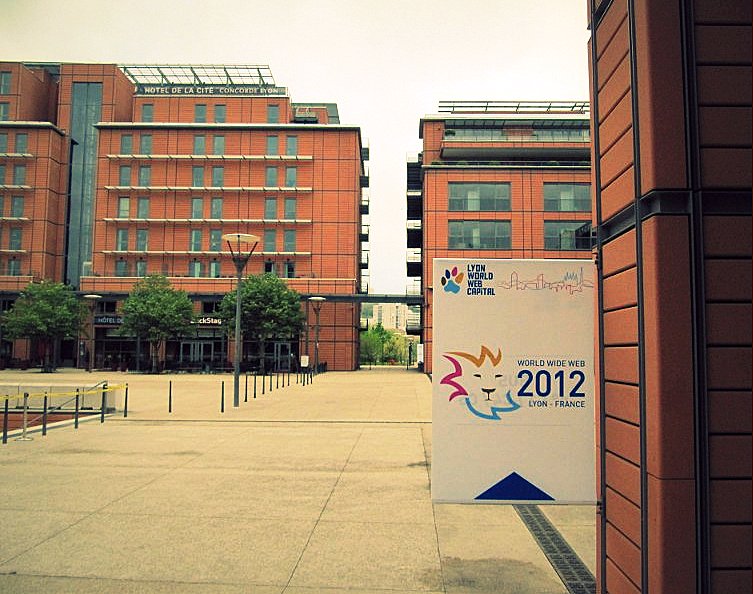
    The 21st International World Wide Web Conference, (#WWW2012) for web professionals is over. Lyon convention center (Lyon, France) gathered many prominent computer and social science specialists, web and mobile technologies creators, internet researchers and scholars, developers, users and commercial ventures – actively engaging, interacting, writing, and communicating on web, Internet, social media, digital technologies, and emerging applications.

    Recently finished #WWW2012 conference offered numerous workshops, sessions, tutorials, interesting  keynotes from 16 – 20 April 2012 in Lyon, France on different topics, and in particular on a global concern in information-communication and web technologies in our society. The main theme of the WWW2012 is Society and Knowledge, and Future direction of the Web , and through numerous sessions and presentations it covered social, technological,  and philosophical issues, which are critical web research subjects at the moment, as well as the actual topic of Internet and democracy, free access to services, freedom of expression, regulation and censorship, control and copyright.

    #www2012, Lyon Convention Center, Cité de Congrès. Photo credit: D. Radovanovic

    Topics ranging from Web Search (information retrieval, ranking, relevance feedback, interactive search), Web Mining (clustering, classification, and summarization of Web data, predicting trends from web content, Web measurements, Web evolution), Social Networks (user-driven recommender systems, link prediction, social search, social mining, analysis of reputation), Data and Content Management, Semantic Web, Video on Web, as well as the topics on Security, Privacy, Trust and Abuse on the Internet were covered from different perspectives and approaches, but all related to the evolution of the Web.

    I am selective here with some presentations, workshops, and papers since it was physically impossible to be present parallel at all events and tracks (see below some stats section on papers being presented). I didn’t count the number of participants at the conference, but I can estimate more than 2,000 participants in total.  These are just some of my thoughts jotted down on workshops, sessions, and presentations as Part I of the #WWW2012 highlights.

    Making Sense of Micro posts: Big things come in small packages

    As I wrote earlier this year for the second time around I was in the Program Committee for the #MSM12 or Making Sense of Microposts workshop at #WWW2012 that offered up a very interesting pool of presentations and papers.  In particular I would point out the keynote by Greg Ver Steeg – Information Theoretic Tools for Social Media who talked about interesting information theoretic measures for social media and how can we estimate these quantities, e.g., how well one user’s activity can predict another’s.  He also presented techniques for estimating entropies (the case for spatio-temporal events, for textual information, etc.)  You can find Greg’s presentation slides here.

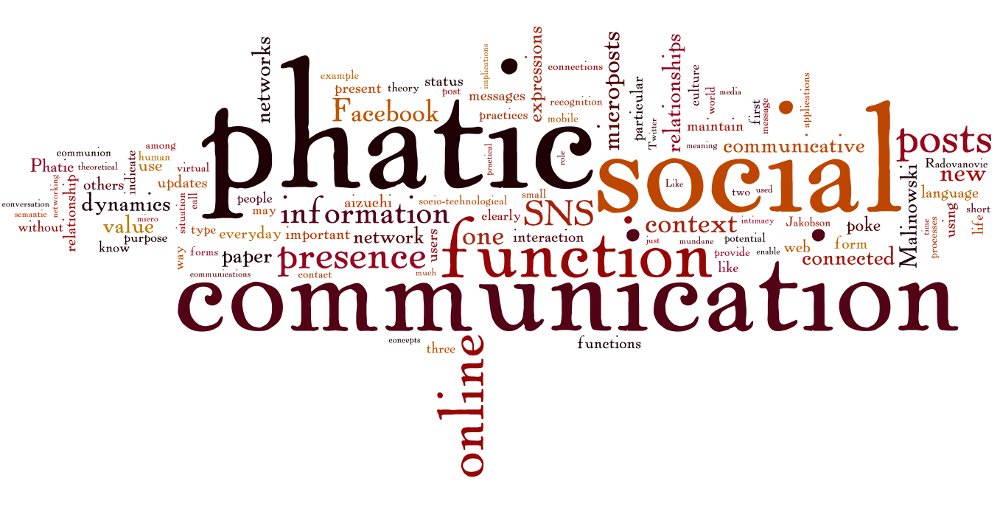
    My role at the #WWW2012 was also as a presenter of a research paper Small talk in the Digital Age: Making Sense of Phatic Posts. I was giving a talk on the phatic communication, and phatic posts – why tweets and Facebook updates on weather, food, and other trivia are very useful both for online communities and human relationships, and for the sustainability of the social network systems. I wrote earlier about here, here (The Scientific American), and here. Other interesting papers on microposts, sentiment analysis and semantics, information extraction, visualisation, search and networks – could be here found and downloaded.

    The award for best paper went to the authors of the paper: Alleviating Data Sparsity for Twitter Sentiment Analysis. The authors presented the semantic feature set where they extract semantically hidden concepts from tweets and then incorporate them into classi

  • Discovering Fake Consumer Reviews With GSRank

    Discovering Fake Consumer Reviews With GSRank

    spam-formulaResearchers at University of Illinois at Chicago and Google have just introduced a new spam-fighting metric called GSRank which is a product of behavioural observation of spammer groups. The model which outperforms all existing spam fighting methods includes relationships between groups, individual activities and also observes reviewed products. It appears that flagging groups of product review spammers is easier than labelling them individually:

    Basic Pattern of Fake Reviews

    Observing a small group of three fake reviewers/accounts lead to the following findings:

    1. Same product reviewed by the common group.
    2. High rating by group members.
    3. Narrow time window within all rated products.
    4. Group reviewed the same set of products.
    5. Quick to rate. Usually first or among first to review.

    The first step in product review analysis is to build a reference dataset. This involves data mining followed by labelling and defining group spam behaviour indicators. Group and individual behavioural statistics are examined and ranking experiments are conducted to train the system. The evaluated results are not only fast but also highly accurate.

    Practical Application

    This research don’t only help stores (Amazon) and their customers but it also carries much wider potential. Search engines can now apply GSRank model to discover fake reviews and normalise their aggregate ratings for products, places and various other features.

    References

    [1] Mukherjee, A., Liu, B., Glance, N., – Spotting Fake Reviewer Groups in Consumer Reviews, WWW 2012, April 16–20, 2012, Lyon, France.

  • The World Wide Web 2012: Making Sense of Microposts

    The World Wide Web 2012: Making Sense of Microposts

    The World Wide Web 2012 conference is hosted this year in Lyon, France, from April 16 to 20, and will feature many prominent figures of the Web, internet technologies, and computer science. Earlier this year I wrote about it, both in the role as a PC member at one of the workshops and as an author. Now, I am very pleased to share that my paper I wrote with one of my colleagues for The World Wide Web 2012 #WWW12 conference – got accepted!  Proceedings of the paper could be found here.

    The paper examines one of the very popular social and communication dynamics on social networks and media, and it will be published for the ACM SIG Proceedings.  In the paper I am arguing that the little things you think are pointless and does not have a practical information value  – posts on Facebook and Twitter, Flickr comments, fav’s, the likes, the pokes and the tweets about food, weather, the mundane brief status updates – all turn out to have a vital social and communication value  that even merits a new phrase – “phatic-posts

  • Technology and the Meaning of Life

    Technology and the Meaning of Life

    Modern Times, Charlie Chaplin (1936)

    The endless cycle of idea and action,
    Endless invention, endless experiment,
    Brings knowledge of motion, but not stillness;
    Knowledge of speech, but not of silence;
    Knowledge of words, and ignorance of the Word.

    Where is the Life we have lost in living?
    Where is the wisdom we have lost in knowledge?
    Where is the knowledge we have lost in information?

    – T. S. Elliot


    We uncouple technologies, such as computing and road building, from our deepest human values. The questions asked by T. S. Elliot become irrelevant as we refuse to acknowledge the human context.

    Students at universities become mainly focused on “practical knowledge” that leads to high paid jobs. The values by which we guide our technological development and application become afterthoughts. We must wonder if technology now controls human life more than humans control technology.

    Information technology is valued above wisdom. There is no “wisdom technology”. It’s easier to understand information technology then wisdom. A high school student can quickly grasp computer programming, but it takes almost an entire lifetime to mature to wisdom. People who think of themselves as wise because they have read some books are dangerous. Wisdom is lived, not mastered as procedures and facts that can be scored on an exam sheet.

    Data and information are the “atomic” components of knowledge. These components don’t make a lot of sense by themselves. Water is composed of molecules, which are in turn composed of atoms of hydrogen and oxygen. We could say that molecules are like information and atoms (a level further down) are like data. But such an understanding does not allow us to understand the “wetness” of water. Wetness is an emergent phenomenon that is experienced by sentient human beings. When we look at a friend, we just don’t see atoms and molecules, we see a friend.

    Meaning is the real food of human life. Our real task is to arrange education, family, society, moral training, technology and economic arrangements in way that allows meaningful human life to unfold for as many people as possible. Clearly, we have remarkable technologies. But do we have enough meaning?

    _________________
    Image: Charlie Chaplin, ‘Modern Times’, classic silent movie, 1936. Worth locating a copy for viewing.