
The Internet revolutionised the way we live, learn, communicate and the way we do our business.Today, most of us can’t and won’t imagine our lives without it and we take the existence of the Internet for granted. Younger generations may not be aware of this fact – but us who were born in the 70s and 80s had no other means of communication except letters, telegrams and bulky desk phones when we were teenagers! No Wikipedia, MMO games, email, YouTube videos, social networks, liking, sharing and online courses – just good old books, face to face socialising and playing movies on our VHS player. The Internet has become an ultimate worldwide broadcast “entity
Category: Internet
-

A Futuristic Review of Cyber Defence
Cyber age has begun in the previous century and includes everything related to the web, computers and mobile technologies. As cyberspace has been developing, some security concerns have appeared. The future of computing technologies is clear – we are going quantum. But, how would be the future of cyber defence? Let’s say, we will get all those ultra fast, quantum-based computers in the coming decades, but how would we make them be a secure place for us? There is a lot of theories, but we will present you only some of them. So, let’s start our overview.
Whatever Your Cyber Defence is, Make it a Good One
Today’s cyber environment is very often harmful due to a lot of threats, risks and attacks that may occur there. What we have in mind first, when we say a cyber threat, are some sorts of criminal and terrorist groups. All they normally communicate with each other through the web. But, what is quite interesting, it’s pretty difficult to break into their communication. Why is that a case?
The answer to this question is so simple. They use a Darknet or a Deep Web to share the information, ideas and content with each other. So, what would be a Deep Web? The Deep Web is the part of the Internet that is usually invisible for regular search engines such as Google, Yahoo and so on. These search tools simply cannot index those fragments of cyberspace. That means all the communications, sharing and activities stay undetected using a normal mean of communication break ins. Luckily, there are special tools that may allow you to see what is going on under the surface. That’s what the law enforcement institutions use nowadays to gather evidence regarding these sorts of crime.
A good defence usually include a good understanding of threats. For that reason, it is vitally important to gather as much information as you can about your harmful opponent and to understand those information at both – tactical and strategic level. An appropriate tactic normally involve identifying and linking the actors of the criminal situation, while a strategy goes below the surface and must see a background of such a situation. Only with both components included, your defence can be a good one.
Do not Forget to be Aware of a Situation
A good problem management requires a good understanding of a situation that happens. Many researchers believe that a situational awareness is the art we need so much in security nowadays. The situational awareness has 3 phases in its data gathering and analysis process. These are (1) perception, (2) interpretation and (3) prediction. Let us explain these better.
The first step in a situation awareness methodology is perception. This step includes identifying and gathering the information regarding a case that has been investigated. The accuracy of such a obtained information can seriously affect the next two steps. Sometimes it’s quite complicated and time consuming to gather precise information due to disturbing environmental conditions. For that reason, it’s very important to have experienced and trained people who would be capable to deal with these.
Once the information have been gathered, you should start with their analysis or interpretation. This phase require very skilled staffs who are able to see the meaning of and also the links between such a collected information.
Finally, the last step here would be a prediction. It’s a quite strategic part of the task and strongly depends on how successful the previous two steps have been resolved. The prediction allows us to see the causes and effects of the situation and also understand the trends that may occur in the future.
Quantum Computing Seeks Quantum Encryption
From today’s perspective, our future seems as very quantum. At the moment, many scientists in the world are trying to build up the first quantum computers ever. There are many theories and research that suggest it’s feasible to make such a great innovation.
So, if a quantum computing is getting our reality of at least something that will become a part of our lives in the coming decades, does that mean our security will also follow this trend and become quantum as well? Experts say – Yes! We will be able to do a very powerful encryption at quantum level. In other words, it will be possible to encrypt the smallest pieces of the particle. Sounds like we will be in position to encrypt a nature itself. Well, that’s exactly what the current stage of the human’s development suggests.
The Future Relies on Intelligence
In the previous articles here, we were discussing how the future of cyber security could look like. What we see as crucially important at this stage are intelligence led or intelligence driven systems. Many researchers predict that such an intelligence-based concept should find its place in a software engineering and computer science world. There are indications that a software of the future would be capable to provide an active self-defence. As it is known, a defence, in its essence, is about a risk management. So, it’s not that hard to imagine a cyber solution of the future which will rely on intelligence and be able to protect itself.
Reference:
[1] 2014 Internet Organised Crime Threat Assessment (iOCTA), The European Cybercrime Centre (EC3) at Europol, 2014
-

How to protect your critical information?
In a today’s world of constantly increasing cyber threats, we should try to figure out how to stay secure and protected. Cyber systems are not the places which bring you benefits only; they can also be the cause of a lot of concerns. A modern world became too sensitive on cyber threats, so what we need at the moment are good strategies and techniques on how to handle all that. A novel cyber security proposes three steps in a good cyber defence. They are prevention, monitoring and incident response. We plan to discuss all these in the coming lines. So, let’s begin!
Cyber Security – the Facts
A modern cyber security can be defined as a process of maintaining an acceptable level of cyber risk. So, security is about a risk management. It’s a never-ending process which requires you to invest new and new efforts in order to keep thing secure. Bad guys will always do bad things and good guys should find a way to respond to all of that. There are a lot of malicious persons in a cyber world – hackers, criminals, terrorist and security is the one which would be ahead of all in order to protect us from harm.
In a recent time, there are a lot of speculations in public on how potential cyber threats could affect us. There are more than 2 billions internet users in the world and from that point of view things are getting quite complicated. In the reality, everything based on emerging technologies can be affected – beginning from your PC, over electricity network, until satellite communications.
For such a reason, a good defence is something that we vitally need. That defence must be capable to put threats under control. It’s a hard task; it requires an investment of a lot of efforts, but it’s the only one that can offer as a long-term solution to the problem. It’s like putting things into order within some disordered environment. An entropy is something that exponentionally increases in this Universe, so we are supposed to work hard to make some parts of our reality organised. The same analogy can be done with a cyber environment. If we let a cyber system deal on its own, it will get disordered and insecure.
Why are Things Getting too Critical?
There is an infrastructure that is especially sensitive to threat. We call such an infrastructure the critical or the vital one. If anything would happen to that infrastructure, that would be a harm to entire country or nation. Good examples of those are telecommunications systems, traffic infrastructure, data centres, electricity systems and so on. The problem with such systems is they are so important for a normal everyday life of some place. The threat to that infrastructure could affect lives of many people.
In that sense, it is crucially significant to understand the threat in order to get protected from it. There are a lot of techniques and methods to get familiar with the issue. Modern security systems are mostly intelligence-driven, which means operations are well-prepared, information are well-analysed and strategies are well-developed. Things can appear as too critical at the beginning as there is not enough information provided, but as we are getting a better understanding of threat, our defence is getting clearer.
The Protection Scenarios
As mentioned above, there are three protection scenarios used nowadays. These are (1) prevention, (2) monitoring and (3) incident-response. A prevention is about avoiding bad things to happen to your system. On the other hand, a monitoring includes following and analysing what goes on within your environment, while an incident-response is the most complicated step and means how good you will react to protect your system as it is under attack.
Only a cyber system with all three activities combined can say for itself it is secure enough. The majority of current cyber environments follow this pattern.
Few Words at the End
As threats in our world are developing, security systems are progressing and getting better and smarter. The task of a good security is to always stay ahead a threat. This can seem as challenging through some phases of defence, but, at the end, good guys beat bad guys.
Reference:
[1] Scott Charney, Rethinking the Cyber Threat: A Framework and Path Forward, Microsoft, 2009
-

A Good Defence is about Understanding Cyber Threats
In the era of the Internet and emerging technologies, we are supposed to deal with different sorts of cyber threats, risks and attacks. This modern time brought a lot of advantages to the Human Kind, but also some fast-spreading and increasing security issues. It seems we are connected with the risk more than ever before. Cyber environment may appear as so friendly and convenient, but for real it brings a lot of nightmares to its visitors. In this article, we discuss all the disadvantaging things you can face up in cyberspace and also suggest why cyber security and a good undersigning of the problem is so important for a good defence. So, let’s start.
What is Cyber Security?
In the ancient China, there was the belief that our world had been governed by two opposite forces. Yin and Yang. The force of the offence and the force of the defence. It has been believed that world could be in harmony only if those two forces are in balance.
Similarly, a modern experts see security as a balance between attack and defence. Cyber security is also about balance, but in cyber means. Sometime it may happen that a cyber system loses its balance. Some of the forces – either attack or defence can make advantage. In such a case, it is crucially important for a system to return its balance. That ability to return lost balance is called stability. This claim also has its origins in mathematics and can be proved through precise equations.
So, what would be the point of cyber? How can we define that term? Cyber is everything about the web, mobile devices and computers. It’s quite commercial terms and means many different things to many different people. Basically, there is no universal definition of cyber. Very often, cyber security is named as cyber. Well, if we say cyber, we may mean cyber security by that. Quite exciting, is not it? Indeed. Let’s continue with our talk.
Cyber Threats – How Bad are They?
Some define cyber threat as a person or organization intending to cause harm at cyber level. It is usually believed that there can be a lot of cyber risks and attacks in cyberspace. The main risks that cyber community experience nowadays are (1) cyber crime, (2) cyber espionage, (3) cyber warfare and (4) activism. Further, we would try to illustrate and understand those sorts of threats.
Let’s start with cyber crime. What is it? Cyber crime is every sort of illegal activity obtained on computer or network which aim is to get money. At the beginning of cyber era, cyber crime was about breaking into someone’s computer, making changes into that system and leaving. Right now, it’s about the money. It’s about stealing credit cards, confidential information, passwords and so on in order to take advantage. Cyber crime commonly can be discovered using cyber forensics diagnostics.
On the other hand, cyber espionage is about information regarding someone’s activities which are gathered secretly through some sort of cyber devices. This sort of activity can have a different background and can be distinguished as economic and military. It’s obvious what would collecting of information in secret mean in terms of economic interest and what in terms of military goals.
The next term to get explained here would be cyber warfare. Sounds spectacular, but it’s not. It’s something that occurs in the world every single day. There are a lot of state and non-state programs which aim is to do sabotage or cause harm to computers or equipment of certain individuals or groups. Also, there are a lot of such malware like viruses or worms in the world which are created to prevent the state or organization from terrorism, organized crime, hackers, etc. The well-known advanced threat of today are those which cannot be detected easily. Some of the examples are Stuxnet, Flame, Shamoon, and so on.
Finally, we should say several words about activism. Activism is none of above. It’s also about computer breach, but with a goal to show that you are capable of doing that, to send some social or political message, to embarrass your target, etc. It’s about people who can do that and who will do that, just to show they can.
Cyber Metrics – How it Matters?
Cyber metrics can be defined as a set of measurements that can be applied in order to control, understand and, in terms of threat, defend your cyber system. It’s about finding a quantitative values of certain cyber parameters such as a number of infections, data breach rate, amount of viruses in the system and so on. Metrics can be expressed through numbers, percentages or averages.
Once all the quantities of cyber system are detected and measured, it is possible to analyse those data and to present them through graphs, statistics or models. Cyber metrics is a great stuff because it can support us in controlling, understanding and defending a cyber environment. It’s, basically, the key factor in defence.
In order to obtain a good cyber metrics, it is recommended to follow the best industrial practice which will support you in metrics and models preparation. For that purpose, the following steps could be applied: (1) defining the metrics program goals and objectives, (2) deciding which metrics to generate, (3) developing strategies for generating the metrics, (4) establishing benchmarks and targets and (5) determining how the metrics would be reported.
Finally, threat metrics is about measuring threat. As given before, threat is an individual or organization which intends to do harm. It seems a bit of hard to measure such an abstract term. Maybe we should have a closer look at what cyber threat is for real. Basically, it’s about a potential or possibility to some cyber harm to occur. So, throughout that perspective we should observe cyber threat metrics and its modelling.
Understanding and Defence – Why Can They Go Together?
At the end, we should explain clearly why understanding of the problem and defence can go together. Well, this is something that we can get intuitively, is not it? Better we understand the issue, threat, risk, better we will find a way to protect against it. It’s similar like a warfare. If you understand your enemy, you will have a better chance to defeat him. Additionally, understanding is only a key thing, but your capabilities, technology, ability to learn and adopt will decide how will win the war.
References:
[1] Mark Mateski, Cassandra M. Trevino, Cynthia K. Veitch, John Michalski, J. Mark Harris, Scott Maruoka, Jason Frye, Cyber Threat Metrics, Sandia National Laboratories, 2012
[2] Scott Charney, Rethinking the Cyber Threat: A Framework and Path Forward, Microsoft, 2009
[3] Shirley C. Payne, A Guide to Security Metrics, SANS Institute, 2007 -

Cyber Skills Shortage in Australia
As we live in the era of digital technologies, cybersecurity concerns are getting more and more frequent and serious. The Government agencies and other organisations need to protect their IT facilities while cybercrime severity increases. Similarly, as everywhere in the world, Australia is facing up these issues as well. The trend shows that the entire world including Australia is suffering cyber skills shortage.
Introduction
Cybercrime started off with geeky teenage computer experts hacking email accounts and bypassing basic access control mechanisms for IT networks. The industry has developed over the years, and many amateurs now practice basic hacking tactics in the cyber space. However, the IT security industry still faces a global skills gap that could take as much as twenty years to fill in some of the most developed countries of the world.
The Defence Science and Technology Organisation is looking for new recruits to Australia’s cyber army – a task that promises to be an uphill battle as Australia struggles to produce enough computer science engineers.
Cyber-army cuts
Highly skilled computer science graduates are increasingly in demand in the private sector and many industry experts believe there are not enough cyber worriers popping out of the nation’s universities.
As it is known, having strong cyber security is critical to having a strong economy. It’s not something that should be outsourced.
In Australia, graduates were divided between IT support workers and network engineers, the latter of which are taught to build new network defence and critical enterprise systems which Australia lacks.
The National ICT Australia (NICTA) has warned that “Australia could miss the chance to build an internationally competitive cyber security industry if it doesn’t … create market opportunities and challenging careers for our best computer scientists and software engineers.”
Cyber wars coming up
By some experts, funding from priority areas such as cyber security would not be cut. But many scientists fear Australia’s investment into cyber security is leaving the nation vulnerable to unknown threats.
According to Tom Worthington from the Faculty of Engineering and Information Technology, the next war that Australia is involved in will start in cyber space and we won’t realise we are under attack until we have real problems. Also it takes years to train people in cyber security.
There are some cyber schooling institutions such as the new ADFA “cyber range” training centre has begun educating Australian defence forces in network security but it is understood the new cyber security centre announced under the Gillard government is waiting to get opened.
Usually under attack
Recently a cyber strike brought down the Australian Federal Police website, part of a series of attacks on the organisation. The group believed to be responsible is also suspected of cyber attacks against the Royal Australian Air Force, the Reserve Bank of Australia and the spy agencies ASIO and ASIS.
The issue is that no countries invest enough in cyber security, which is a very important area, and that countries which do not invest enough are forced to rely on expertise of the major powers.
Conclusion
In conclusion, as an example of a good industry practice we can mention that the Australian Government has teamed up with Telstra, NBN Co and PwC to hold the Cyber Security Challenge to address a skills shortage in the number of cyber security professionals in Australia. We hope these will somehow fill the existing gap.
-

Security Challenges in Cloud Computing
Although cloud computing can help companies accomplish more by breaking the physical bonds between an IT infrastructure and its users, heightened security threats must be overcome in order to benefit fully from this new computing paradigm that offers an innovative business model for organizations to adopt IT without upfront investment. Despite the potential gains achieved from the cloud computing, the model security is still questionable which impacts the cloud model adoption. The security problem becomes more complicated under the cloud model as new dimensions have entered into the problem scope related to the model architecture, multi-tenancy, elasticity, and layers dependency stack.
1. Introduction
Cloud Computing is a jargon, in other words a new computing model, in which the public Internet is used to connect to provider’s hosted network, infrastructure, platform and/or applications to leverage reliable services. Cloud has left all other distributed computing structures/mechanisms far behind both in competition and in terms of popularity and success.
The primary reason is that, any service can be scaled up or down as and when required, based on customer’s needs. Cloud offers flexibility, quick to production model, and offers capital reduction by enabling organizations to port all their data, information and infrastructure to off-site provider hosted premises.
Cloud Computing is essentially a combination of existing technologies that are succeeding in make a paradigm shift in building and maintaining distributed computing systems making use of, multiprocessor, virtualization technology, network based distributed data storage and networking. The cloud providers have Infrastructure as a Service (IaaS), Platform as a Service (PaaS), and Software as a Service (SaaS) and many more services to offer.
2. Cloud Computing Security Problems
The cloud system is running in the internet and the security problems in the internet also can be found in the cloud system. The cloud system is not different the traditional system in the PC and it can meet other special and new security problems.
The biggest concerns about cloud computing are security and privacy. The traditional security problems such as security vulnerabilities, virus and hack attack can also make threats to the cloud system and can lead more serious results because of property of cloud computing. Hackers and malicious intruder may hack into cloud accounts and steal sensitive data stored in cloud systems. The data and business application are stored in the cloud center and the cloud system must protect the resource carefully.
Cloud computing is a technology evolution of the widespread adoption of virtualization, service oriented architecture and utility computing. over the Internet and it includes the applications, platform and services. If the systems meet the failure, fast recovery of the resource also is a problem. The cloud systems hide the details of service implementation technology and the management. The user can’t control the progress of deal with the data and the user can’t make sure the data security by themselves. The data resource storage and operation and network transform also deals with the cloud system. The key data resource and privacy data are very import for the user.
The cloud must provide data control system for the user. The data security audit also can be deployed in the cloud system. Data moving to any authorized place you need it, in a form that any authorized application can use it, by any authorized user, on any authorized device. Data integrity requires that only authorized users can change the data and confidentiality means that only authorized users can read data. Cloud computing should provide strong user access control to strengthen the licensing, certification, quarantine and other aspects of data management.
In the cloud computing, the cloud provider system has many users in a dynamic response to changing service needs. The users do not know what position the data and do not know which servers are processing the data. The user do not know what network are transmitting the data because the flexibility and scalability of cloud system. The user can’t make sure data privacy operated by the cloud in a confidential way. The cloud system can deploy the cloud center in different area and the data can be stored in different cloud node. The different area has different law so the security management can meet the law risk. Cloud computing service must be improved in legal protection.
3. Cloud Computing Approaches
To achieve efficient utilization of resources, cloud providers need to increase their resource utilization while decreasing cost. At the same time consumers need to use resources as far as needed while being able to increase or decrease resources consumption based on actual demands. The cloud computing model meets such needs via a win-win solution by delivering two key characteristics: mulit-tenancy and elasticity. Both characteristics tum out to have serious implications on the cloud model security.
Multi-tenancy implies sharing of computational resources, storage, services, and applications with other tenants. This sharing of resources violates the confidentiality of tenants’ IT assets which leads to the need for secure multi- tenancy. To deliver secure multitenancy there should be isolation among tenants’ data and location transparency where tenants have no knowledge or control over the specific location of their resources, to avoid planned attacks that attempt to co-locate with the victim assets. In IaaS, isolation should consider VMs’ storage, processing, memory, cache memories, and networks. In PaaS, isolation should cover isolatation among running services and APIs’ calls. In SaaS isolation should isolate among transactions carried out on the same instance by different tenants and tenants’ data.
Elasticity implies being able to scale up or down resources assigned to services based on the current demand. Scaling up and down of tenant’s resources gives the opportunity to other tenants to use the tenant previously assigned resources. This may lead to confidentiality issues.
For example, tenant A scaled down so it releases resources, these resources are now assigned to tenant B who in turn use it to deduce the previous contents of tenant A. Moreover, Elasticity includes a service placement engine that maintains a list of the available resources from the provider’s offered resources pool. This list is used to allocate resources to services. Such placement engines should incorporate cloud consumers’ security and legal requirements such as avoid placing competitors services on the same server, data location should be within the tenants’ country boundaries Placement engines may include a migration strategy where services are migrated from physical host to another or from cloud to another in order to meet demands and efficient utilization of the resources. This migration strategy should take into account the same security constraints. Furthermore, security requirements defined by service consumers should be migrated with the service and initiates a process to enforce security requirements on the new environment, as defmed by cloud consumers, and updates the current cloud security model.
4. Conclusion
Cloud computing has a very fast pace of development and shows good prospects and great potential. The cloud computing is related to many areas of information management and services. The data security issue becomes more prominent than the traditional network because the data in the cloud computing environment is greatly dependent on the network and server.
5. References:
[1] Akhil Behl, Emerging Security Challenges in Cloud Computing, 2011 World Congress on Information and Communication Technologies, 2011
[2] Anas BOUA Y AD, Asmae BLILA T, Nour el houda MEJHED, Mohammed EL GHAZI, Cloud computing : security challenges, IEEE, 2012
[3] Wentao Liu, Research on Cloud Computing Security Problem and Strategy, IEEE, 2012 -

Levels of Cyber Intelligence
When one considers the decision-making and planning necessary to conduct malicious cyber activity, it becomes easier to understand how it is not simply an “on-the-network
-
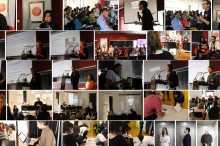
International Conference on Digital Discrimination and Social Networks Online
Recently, I had a chance to attend and participate at the ICUD International Conference: Digital Discrimination and Social Networks that took place takes on March 13 and 14, 2014 in Barcelona, Spain. The ICUD Project aims to Creatively Unveil hidden forms of Discrimination on the Internet, especially on social network sites such as Facebook, and provide practical tools to combat discrimination online. This project is lead by www.asceps.org, and is co-funded by the European Union’s DG Justice: Fundamental Right and Citizenship programme.
It was a wonderful opportunity and space for interaction, discussion, learning and exchange of ideas and experiences: for social workers, academics, researchers, educators, Internet experts, NGOs, activists, young people and anyone interested in the issues surrounding discrimination on the Internet, especially in regards to social networking sites.
Complex topics like teen usage of Internet tools and social networks, racial discrimination, digital divides, network strategy against discrimination, hate speech, online gaming communities, LGBT issues, presence and representations of women online, youth and identity were discussed during the two-day conference.
Each session, talk, workshop and panel contributed to the ICUD conference and discussion, I’m selecting here few of them, for other details please see the references.
Game Over Hate: Building Better Online Gaming Communities
A project and an initiative Game Over Hate (Germany/Portugal) that was presented during the first day of the conference – had the goal to tackle hate in online gaming environments and to foster inclusive gaming communities.
Participants had a chance to discuss the most profitable branch of the entertainment industry (video games), the massive online communities that exist around it and how everything comes together in a world of hate speech, trolling and rape culture.
In this workshop there was a discussion about the role of the internet as both entertainment and as an alternative to offline socialisation by looking at the impact, size and scope of the new online gaming communities. Through interaction, some stereotypes about games were unmasked. There was an interesting discussion on how players interact online, what types of games they play and what happens when so many people cooperate and compete online.
In an effort to understand this, workshop leaders look into cases from different communities, such as Anita Sarkeesian (FeministFrequency), Phil Fish (FEZ), Carolyn Petit (GameSpot), Zoe Quinn (Depression Quest), and “Fat, Ugly or Slutty
-
Ten tools for social media practioners
Whether you are a web creator, blogger, engineer, educator, journalist, marketing specialist or a scientist, with ever-emerging opportunities to share information on digital platforms, the importance to keep digital skills up-to-date is vital.
Here’s our list of top ten online useful tools for helping and fostering digital literacy skills on web, in everyday work.
Buffer Business Tools
If you are a content creator, writer or analyst on the web, the best features Buffer has to offer that can help with your increasingly complex social publishing needs are: the analytics and reporting for business customers. Buffer also added graphs so you can visualize your stats and you can compare post types, like posts per day and clicks or retweets.
Beside the fact that Buffer have an option to add multiple team members and more social accounts in your team, there is a Business analytics now offering integration with Google Analytics as well. This option enables much easier to track and report on your specific marketing campaigns, or those of your clients. More at: https://bufferapp.com/
Image source: http://blog.bufferapp.com/introducing-buffer-for-business-the-most-simple-powerful-social-media-tool-for-your-business

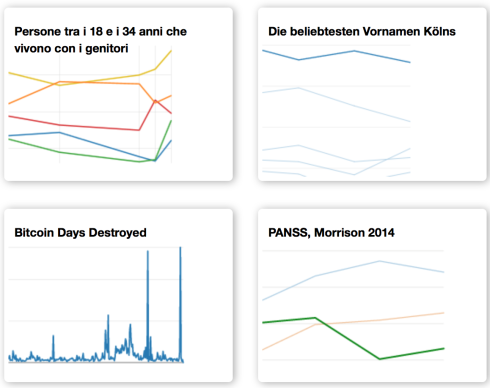
Datawrapper
Datawrapper is a great open source tool helping anyone to create simple, correct and embeddable charts in minutes, for visualising large datasets. This tool reduces the time needed to create a correct chart and embed it into any website from hours to seconds. You can clean up your data, upload it and choose from numerous interactive formats to help you create the content and tell your story. The hosted service is free, or you can install it on your own server for maximum control. You can even make the data downloadable for interested readers and clients. More at: http://datawrapper.de
Google Media Tools
Google’s Media Tools present a toolbox of exciting digital tools that can enhance newsgathering and exposure across television, radio, print and online, suitable for journalists, reporters, web content creators, and those involved in social media analytics. These tools feature range from Develop & Publish, learning how to visualize data using Google Maps, improving your audience engagement through Google+, Google Earth Pro to Advanced Search, that provide an advanced super powered search capabilities, and allows you to filter your results by region, keyword and time. More at: http://www.google.com/get/mediatools/
LinkedIn Instream Ads
LinkedIN Sponsored Updates enables you to put custom in-stream content in front of the specific LinkedIn professionals your business wants to work with.
Assuming you already have a Company Page and that you are publishing regular updates to your followers, the next step is to turn on the LinkedIn Sponsored Updates option that provides a native solution for rapidly increasing awareness and shaping the perception of your brand, products, and services.
More at: http://business.linkedin.com/marketing-solutions/content-marketing/sponsored-updates.html

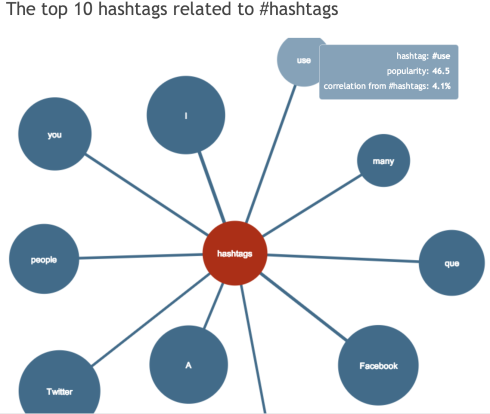
Hashtagify.me – The Most Advanced Twitter Hashtags Search Engine
Hashtafigy is a free tool that promotes the best use of hashtags by finding and understanding them in a quick, intuitive, visual way. Hashtags are one of the best ways to find and reach the right audience for your message on social media, and this tool helps innovators with the visualisation of Twitter hashtags related to a particular tag.
Hashtagify.me allows you to search among 26,995,169 Twitter hashtags and quickly find the best ones for your need based on their popularity, relationships, languages, influencers and other metrics.
School of Data
School of Data brings free online tutorials, courses and tools for those who are working with data and open data. School of Data works to empower civil society organisations, journalists, analysts, scientists, researchers, and citizens with the skills they need to use data effectively. Many of the groups who are closest to the problems currently “lack the skills to use data effectively — and even an awareness of the potential of data for their work. School of Data’s mission is to teach people how to gain powerful insights and create compelling stories using data.
-

Social media and mobile technologies in bridging digital divides
Digital inequalities such as digital divides are a big issue in the information society, potentially influencing engagement in political, social, and educational life. They create marginalized, excluded groups who do not have access to the Internet, to information, or maybe to the necessary skills for using these devices and social applications. At some point, these people will not be able to engage fully in social, economic or political life.
The notion of being social on the Web is constantly evolving since we are connected not only via computers but also via mobile phones and other handheld devices. There is no doubt that these technologies, along with social media and apps, help to bridge the present digital divides, by providing an interactive and engaging platform for otherwise excluded voices, globally.
However, it is still a challenge, not only to make those technologies available everywhere, but also to create programs and initiatives for educating, engaging, empowering and interacting so that those digital gaps would break down or at least lessen.Despite the way in which social media and mainstream news like to talk about ‘’new digital divides’’, they are not new at all. From my own research in the field (a new the book where I contributed with the chapter), it seems that the core issue is not always about technology as a liberator (that breaks down the digital divide), but that the central issues are about social power, access to information and skills (even to the level of fundamental literacy).
Opening up the access to knowledge and its deployment in everyday work and education is crucial for producing the results and fostering the competences of the members of one’s society. Access to information is the key to an individual’s position in society.
We are all participating on a daily basis in a networked world and we are the creators and the producers of the content online, all together in the same hyper-connected world where the issues and patterns of inclusion and exclusion need to be observed and addressed.Although there is still limited access to the Internet in some developing countries, connectivity continues to grow and mobile technology and social media applications are playing vital roles in shaping the trends of social activism and raising awareness, in the context of freedom of expression and giving citizens a voice to address social issues. According to the International telecommunications Union, about 70% of mobile phone users are in developing countries, mostly in the global South – making mobile devices the
-
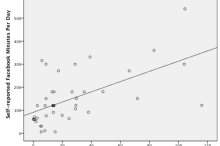
Study on actual and self-reported measures of Facebook use
A cross-post ∞. Thanks to prof. Rey Junco, a faculty associate at the Berkman Center for Internet and Society.
If you are a regular reader of this blog, you likely already know that there is a growing body of research that examines how college students use Facebook and the outcomes of such use. For instance, researchers have examined how Facebook use is related to various aspects of the college student experience including learning, student engagement, multitasking, political activity, life satisfaction, social trust, civic engagement, and political participation, development of identity and peer relationships, and relationship building and maintenance.
All of the previous research has relied on self-reported measures of Facebook use (that is, survey questions). We know from research in other areas of human behavior that there are significant differences between actual and self reported behaviors. One of my favorite examples is a study where researchers found that up to 50% of self-reported non-smoking head and neck cancer patients were indeed smoking as measured by exhaled carbon monoxide levels and levels of a nicotine metabolite in their blood.
As you might imagine, differences between self-reported and actual uses of Facebook could drastically change or even negate findings of how Facebook use is related to the aforementioned outcomes. My latest paper published in Computers in Human Behavior, Comparing actual and self-reported measures of Facebook use examines these differences.
Here is what I did: I paid students to allow me to install a monitor on their computers for one month. I also surveyed them to ask them how much time they spent on Facebook and how many times they logged in to the site. I also monitored/asked about other forms of tech/social media use (like Twitter and email).
Here is what I found: As you can see in the scatterplot below, there was a significant positive correlation between self-reported and actual Facebook use (Pearson’s r = .587, p < .001).

However, and here is the really interesting part, students significantly overestimated the amount of time they spent on Facebook. They reported spending an average of 149 minutes per day on Facebook which was significantly higher than the 26 minutes per day they actually spent on the site (t(41) = 8.068, p < .001).
What is going on? In the paper, I go into much more detail about why there is such a large and significant difference between actual and self-reported Facebook use, as well as why the two are significantly correlated. In brief:
- It could be that self-report questions aren’t specific enough to capture frequency of Facebook usage. Students may interpret a question asking “how much time do you spend on Facebook each day?
- It could be that self-report questions aren’t specific enough to capture frequency of Facebook usage. Students may interpret a question asking “how much time do you spend on Facebook each day?
-

Linux.conf.au 2013: ‘Nerdvana’ in Canberra
During the last week of January, approximately 700 IT professionals and enthusiastic hobbyists descended on Canberra to jointly create an intensive learning experience. Each year the call goes out across the intertubes to gather together open source geeks for Linux Conference Australia. Linux.conf.au, or simply LCA, is one of the largest open source conferences in the southern hemisphere, and one of the most highly-regarded conferences of its kind in the world. I was excited to attend LCA2013, as it was my first LinuxConf, despite being involved to a modest degree in the Linux and open source community for at least the last 15 years.
Most days, the programme commenced with a keynote address by an IT industry luminary who had made a significant contribution to computer technology and open source. At every keynote address, the lower level of ANU’s Llewellyn Hall was packed with delegates, each toting a selection of wifi- or 3G-enabled devices. While I saw a healthy 55Mbps idle capacity on the Internet link provided by conference organisers (ably assisted by the network engineers at AARNET), once the assembled cohort of digital natives hit the link, all of that that capacity was rapidly utilised. 🙂
The conference was opened on the Monday by Bdale Garbee, recently-retired Open Source & Linux Chief Technologiest at Hewlett-Packard, and a long-time contributor to the Debian Linux distribution. (Read Kelly Burnes’ article about Bdale at LCA2013, where you can also watch our video interview.)
On the Tuesday, Radia Perlman enchanted the audience with her talk on the folklore of networking. Radia has been instrumental in developing several key networking protocols that underpin the interconnectedness of computers that we now take for granted. She gave a highly-technical yet accessible talk laced with humour and even nerdy poetry. (You can read my thoughts on Radia at LCA2013, and watch our video interview.)
-

Open Internet: UN Human Rights Day’s Spotlight on Inclusion and Participation
The open Internet can give voice to the voiceless.
Photo used under Creative Commons from WWF-Canon / Fernado Zarur [Geneva, Switzerland] – The Internet Society joined world-wide celebrations of the United Nations Human Rights Day and welcomed its focus on inclusion and the right of all people to participate in public life and make their voices heard.
The Internet, in just a few years, has emerged as a major platform for communication and expression, amplifying the voices of more than two billion people around the world. The open and global network offers the potential for greater inclusion in public issues and provides a platform for individuals to influence the decisions that shape their communities.
“The open and unencumbered Internet has become a key means by which people can share, receive, and impart information across frontiers,

Internet Society: Global Internet User Survey Reveals Attitudes, Usage, and Behavior
A worldwide survey of more than 10,000 Internet users in 20 countries conducted by the Internet Society revealed attitudes towards the Internet and user behavior online. The Global Internet User Survey is one of the broadest surveys of Internet user attitudes on key issues facing the Internet. This year’s survey covered areas such as how users manage personal information online, attitudes toward the Internet and human rights, censorship, and the potential for the Internet to address issues such as economic development and education.
“Today’s online users have high expectations for the Internet and its impact on our lives and society, while also expressing concerns over censorship and excessive governmental controls,” said Lynn St. Amour, President and CEO of the Internet Society. “As part of realizing the Internet Society’s vision of an Internet that is for everyone, this survey uniquely focuses on users and their experiences, attitudes, and opinions on how to meet the challenges and opportunities facing the Internet and society in general. We are committed to the Internet’s continued open growth and evolution, not only for those who enjoy the Internet today, but until everyone is able to access and benefit from an open Internet.”
Key Findings
Key findings from this year’s survey cover a broad range of topics.
The Internet and Human Rights:
- Eighty-three percent of respondents agreed or agreed strongly that access to the Internet should be considered a basic human right.
- Eighty-nine percent agreed or agreed strongly that Internet access allows freedom of expression on all subjects, and 86 percent agreed or agreed strongly that freedom of expression should be guaranteed.
- Sixty percent of respondents agreed or agreed strongly that Internet access has contributed significantly to civil action and political awareness in their country.
Internet censorship:
- Thirty percent of users agreed strongly that censorship currently exists on the Internet.
- Sixty-six percent of respondents agreed or agreed strongly that governments in countries with no Internet censorship have a responsibility to keep the Internet free of censorship in countries where the Internet is being censored/controlled/shut down.
- More than 70 percent of users agreed or agreed strongly that more government involvement would make the Internet too controlled or would limit content they can access.
- More than two-thirds agreed or agreed strongly that increased government control would inhibit the growth of the Internet and/or stifle innovation.
Online privacy and identity:
- Even when users know they are sharing personal data with a site or service, most users (80 percent) do not always read privacy policies and a significant fraction (12 percent) of respondents admitted that they never read privacy policies.
- Of users who logged into online services, only half reported that they logged out.
- Nineteen percent of respondents were aware of circumstances in which personal data was used in a way they did not expect. The most commonly reported consequences were: unsolicited communications, stolen personal data, private data becoming public, impersonation, and financial loss.
The Internet and economic and societal issues:
- Nearly two-thirds of respondents agreed or agreed strongly that the Internet would play a significant role in solving global problems, including reducing child mortality (63 percent), improving maternal health (65 percent), eliminating extreme poverty and hunger (61 percent), and preventing the trafficking of women and children (69 percent).
- An even higher percentage of respondents agreed or agreed strongly that the Internet would increase global trade and economic relationships (81 percent), improve the quality of education (80 percent), and improve emergency response during a natural disaster (77 percent).
- A majority of respondents felt strongly that the Internet plays a significant role in making improvements to business, science, and technology in areas such as: expanding the availability of goods and services (66 percent), allowing entrepreneurs to conduct business across all countries (65 percent), and advancing science and technology and creating a technologically recognized workforce (61 percent).
Attitudes towards the Internet:
- Ninety-eight percent of users agreed or strongly agreed the Internet is essential for their access to knowledge and education.
- More than 80 percent agreed or agreed strongly that the Internet plays a positive role for their individual lives as well as society at large.
- Nearly 75 percent of users strongly agreed that access to the Internet allows them to seek any information that interests them.
General Internet usage:
- Internet users nearly universally (96 percent) indicated they accessed the Internet at least once a day.
- More than 90 percent of Internet users surveyed globally indicated they use social media, with a majority (60 percent) using it daily, an increase of 10 percent over 2011.
- Connection speed (73 percent) and reliability (69 percent) ranked slightly above more affordable monthly fees (68 percent) among factors that would increase usage. Other factors included more content in their local language (50 percent) and more online availability of government and/or community services (49 percent)
The Internet Society’s Global Internet User Survey (GIUS) provides reliable information relevant to issues important to the Internet’s future. As an ongoing effort, the survey provides information, informs and supports the activities of the global Internet Society community, and makes the data it collects openly available for all. While other ICT surveys focus on economic, infrastructure, or other Internet use indicators, the GIUS focuses on users, which are the source of innovation that has driven the Internet’s development, evolution, and dramatic growth over the past four decades. The first GIUS in 2011 gathered the responses of 6,088 Internet users in 11 countries.
This year, the GIUS was conducted on behalf of the Internet Society from July to August 2012 by Redshift Research, a leading business market research firm. The survey questionnaire engaged 10,789 Internet users in 20 countries: Argentina, Brazil, Chile, China, France, Germany, India, Indonesia, Italy, Kenya, Peru, Philippines, Poland, Russia, Saudi Arabia, South Africa, South Korea, Spain, UAE, and the United States. Of the respondents, 53 percent were male and 47 percent were female. Results from the survey varied across countries; future reports will provide additional insight into these variations.
The complete questionnaire, full results—including results by country—and more information on survey methodology are available at: http://www.internetsociety.org/survey