Tag: australia

  • Radio quiet, please!

    Radio quiet, please!

    Originally conceived over 20 years ago, there’s a project being undertaken by scientists and engineers across the whole world to help us all better understand the mysteries of the galaxy and the very beginnings of the Universe. It’s estimated to be completed by around 2024,costing $1.85 billion AUS (€1.5 billion). Once completed, it’s set to be the most complex and technologically advanced machine ever built by humanity. It will use enough optic fibre to wrap twice around the Earth and will need a computer capable of performing 10^18 operations per second – about three million times the number of stars in our galaxy. It will produce over 980 Exabytes of data every day (equivalent to about 15 million 64GB iPods) and to cope with that, it will need to handle data transfer rates over 10 times as high as the current global internet traffic. No, it isn’t a starship. But it might just be the next best thing.
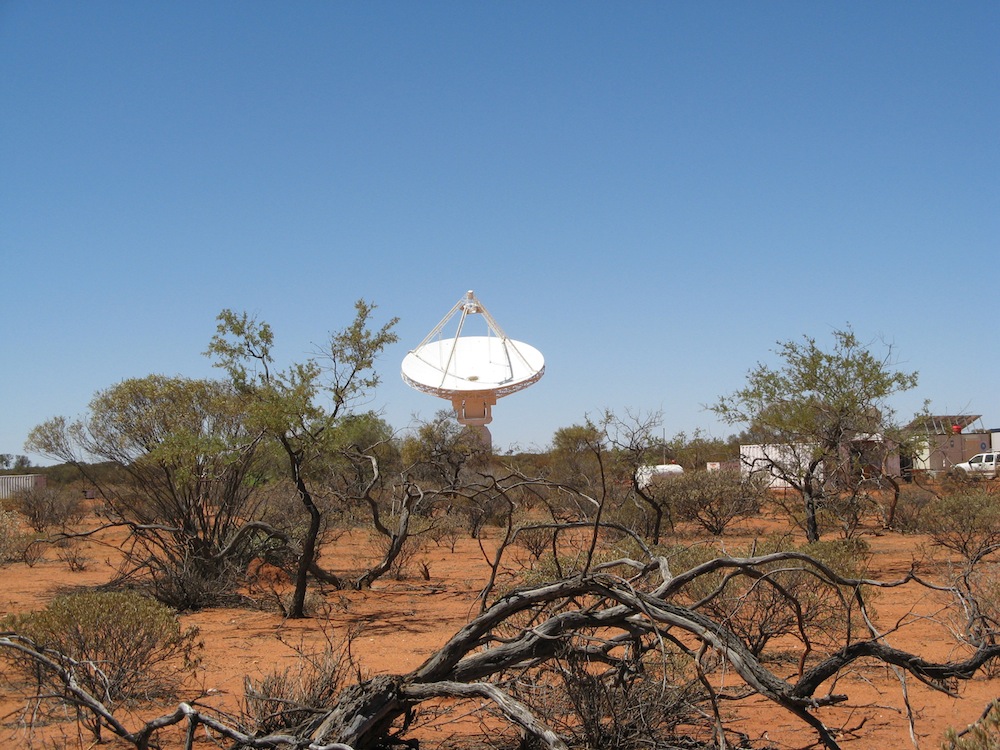
    One of the first components of the SKA, constructed in Western Australia. Credit: Dave DeBoer, CSIRO.

    The Square Kilometre Array (SKA) is one of the most ambitious scientific projects ever devised, and when completed it will comprise a huge number of telescope antennae which will work as one to form a single radio telescope so powerful that it could detect an airport radar on a planet 50 light years away. The sensitivity of any telescope is defined by the area it uses to collect data. With optical telescopes, this is the size of the mirror, and with radio telescopes it’s typically the size of the dish. The SKA gets its name because when fully constructed, all of the detectors and antennae that make it up will have a combined area of one square kilometre, or one million square metres. To put that properly into perspective, the Green Bank Telescope is currently the largest steerable single dish radio telescope, and its area is just under 8000 square metres.

    Being astronomy’s answer to the large hadron collider, the SKA is a staggeringly large international collaboration. I was lucky enough to attend a major meeting regarding the planning of the SKA (the headquarters are to be based here in the UK in Manchester), and the myriad different languages and nationalities represented was impressive to say the least. Over 24 major organisations from countries spanning 5 continents are involved in the project, ranging from universities to industrial engineering companies. New technologies, both software and hardware, are still being developed as a result of this project. Based on the huge data storage and transfer requirements of a machine as complex as the SKA, many of those new technologies are likely to feed straight back into society by offering profound improvements to computing resources like the internet. In fact, as the world’s largest project for sorting and storing data, the SKA is expected to be literally bigger than Google!
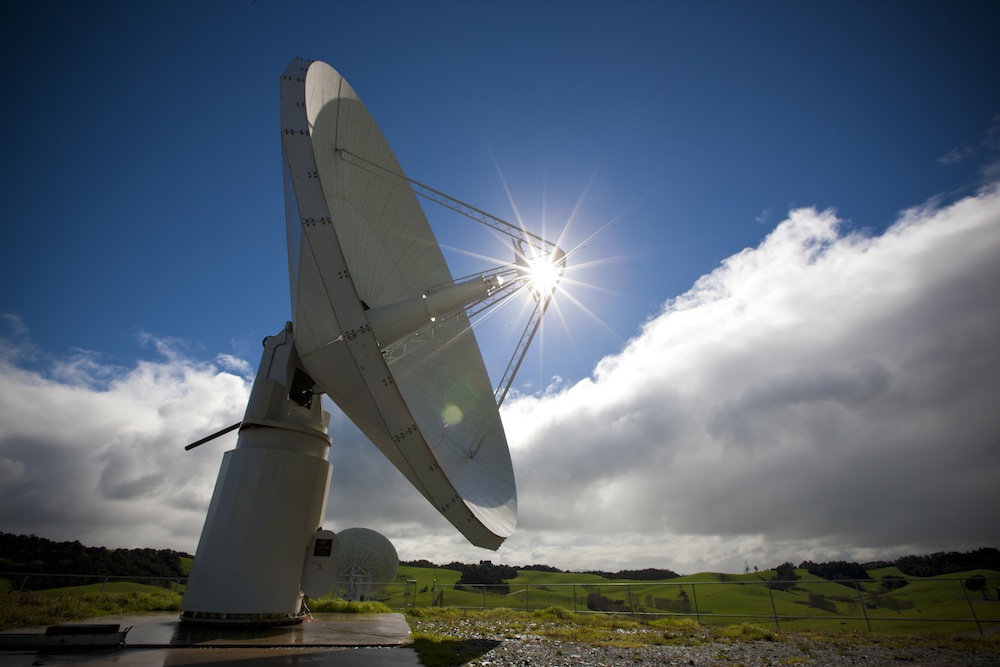
    The Warkworth antenna in New Zealand – an important part of early SKA science. Credit: Alex Wallace.

    The most difficult decision, understandably, has been where precisely to build it. Humanity has an unfortunate tendancy to fill the atmosphere of our planet with noise, bouncing radio waves to and fro and filling the air with radio frequency chatter. A radio telescope array this sensitive needs to be placed somewhere quiet to gain the full benefits, and the most recent decision has been to effectively split the SKA into two components, to be built in Southern Africa and Australia. While this may seem like an odd thing to do, it actually makes perfect sense. The SKA actually has three types of antenna operating at different frequencies. Intended to cover a huge range of radio frequencies (from 70 to 100000 MHz), three types of antenna are needed, because no single technology can actually operate across such a wide range. So the decision was made to build the lowest frequency detectors across Australia, centred at Murchison in outback Western Australia. Murchison is blessed with being one of the few places on our planet which isn’t flooded with FM radio at the low end of the frequency scale. From a radio astronomer’s point of view, it’s the quietest place on Earth.

    This is set to be complemented by the higher frequency steerable dishes which are set to be constructed across Africa. Both South Africa and Australia have put extensive efforts into developing the SKA, and Australian-developed technology is still set to be implemented in the African telescopes. This will mean a huge influx to the African astronomical community and numerous African nations won’t lose out on the economic boost from contributing to such a prestigious project. It’s an ideal situation where everyone wins.

    All in all, it’s an exciting time to be an astronomer. An epic project like this is likely to attract all manner of researchers from across the world to both continents. Just maybe, it could also finally help us to answer the really big questions, like how the galaxy formed, how the Universe began, and whether or not there’s anyone else out there.
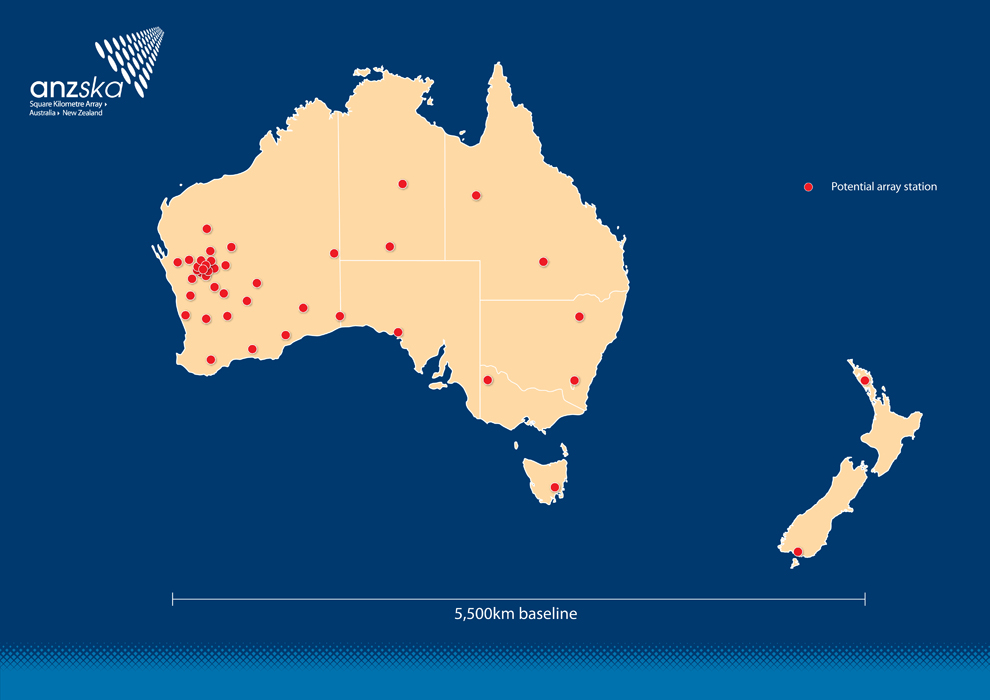

    A map of prospective SKA sites. Credit: anzska
  • 2012 Victoria Fellowships Open for Expanded Prestigious Science Awards

    2012 Victoria Fellowships Open for Expanded Prestigious Science Awards

    Minister for Innovation, Services and Small Business Louise Asher today announced applications are now open for the 2012 Victoria Prize for Science and Innovation, and the 2012 Victoria Fellowships.
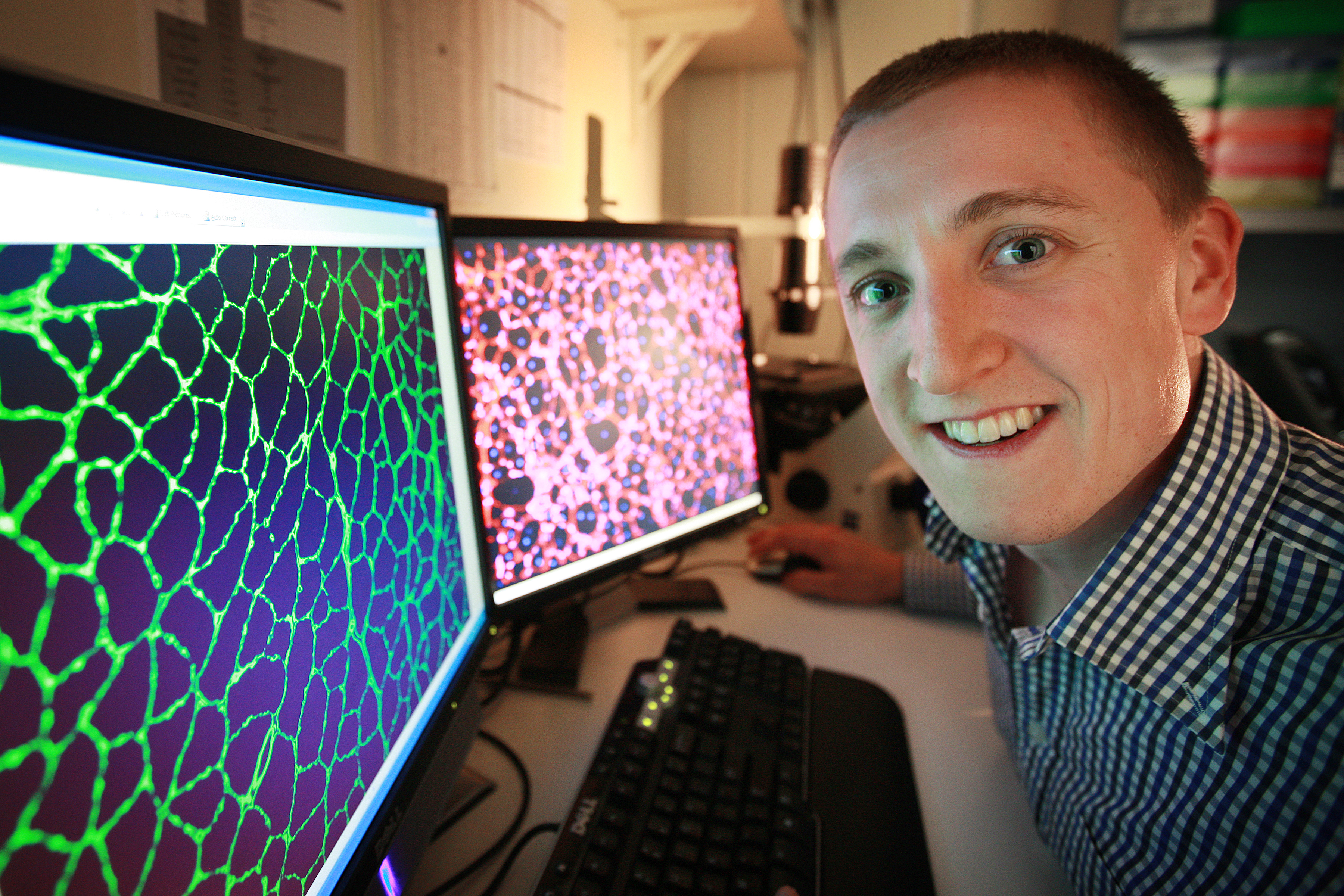
    Ms Asher said the Victorian Coalition Government was committed to supporting discovery and development in research and innovation, and had doubled the number of Victoria Prize and Victoria Fellowships on offer. “The Coalition Government believes there is immense scientific and research talent to reward and promote in Victoria and that is why we made an election commitment to double the number of awards,

  • Victoria’s Leading Postgraduate Health and Medical Researchers Recognised

    Victoria’s Leading Postgraduate Health and Medical Researchers Recognised

    Premier Ted Baillieu and Minister for Health David Davis today announced that Dr Stefan Gehrig has been awarded the prestigious Premier‟s Award for Health and Medical Research for 2012. The Premier‟s Award for Health and Medical Research recognises and honours the achievements of Victoria‟s early career health and medical researchers.
    Mr Baillieu said Dr Gehrig won the award from a highly competitive field of young Victorian researchers for his far-reaching investigation into Duchenne muscular dystrophy (DMD).

    “Dr Gehrig discovered that increasing levels of a specific protein in muscles has the potential to treat DMD – a severe and progressive muscle wasting disease,

  • Saving Australia’s Koalas

    Saving Australia’s Koalas

    In an emergency room at Beerwah, Queensland, the phone rings almost 100 times a day.
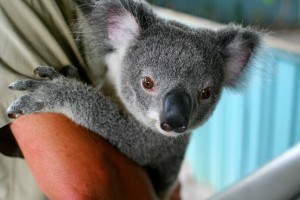
    The emergency room is one at the Australian Wildlife Hospital, providing veterinary care for sick and injured wildlife — admitting anywhere in the region of 30 different species on a daily basis — with injuries resulting from accidents, acts of deliberate cruelty, or conflict.

    Arethusa came into the emergency room suffering from fractured ribs and internal abdominal bleeding. Frodo came in with a gunshot wound, sustaining a fractured skull and significant damage to the stomach and intestines. Travis and his mother were run over by a hit and run vehicle.

    These four were koalas, but the hospital deals in animals common to the Australian landscape — from Brushtail Possums to Bearded Dragons.

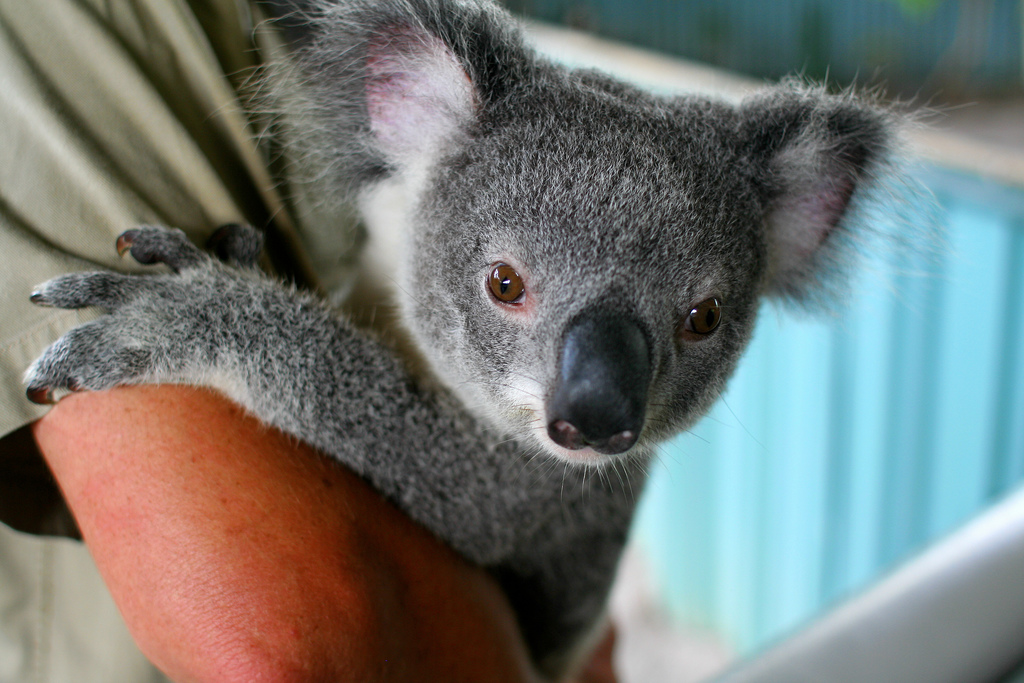
    The koalas themselves, cute cuddly creatures, with a sleepy demeanour, renowned as a representation of Australia have recently been in the news for being endangered and for a curious case of koala chlamydia. Koalas are in serious decline, suffering from many of the effects the veterinarians at the Australian Wildlife Hospital see on a daily basis — as well as habitat destruction, domestic dog attacks, bushfires and disease. The Australian Koala Foundation estimates that there are less than 80,000 koalas left in the wild, possibly as few as 43,000.

    Over the past few years researchers have been distilling and putting together a case to add another reason for koala decline to the list. Roughly 600 koalas per year are seen to at the hospital, and most present with other primary conditions. A number of koalas, however, have presented at the hospital with serious illness associated with regenerative anaemia and now trypanosome infections.

    The trypanosome is a parasite we commonly associate with African Trypanosomiasis (as well Chagas disease). In reality, the trypanosome also infects rats, cattle, and even kangaroos.

    To say little is known about systemic and blood parasites of native wildlife in Australia would be an understatement. Researchers are only just beginning to understand the diversity of trypanosomes in Australian marsupials. Much is still to be learnt. Their evolutionary biology, transmission, and resulting potential impact on the wildlife. The possibility that indigenous wildlife trypanosomes can act as a reservoir for human pathogenic infections is all to be seen.

    What we do know is that, in Australia, the introduction of trypanosomes are as a direct result of human activities. Being almost certainly responsible for introducing trypanosomes from one wildlife population to another. The vector — what transmits the parasite from animal to animal — of Australian trypanosomes is not known. Although, researchers have the flea in mind as the usual suspect.

    To date around 10 trypanosome species and genotypes have been identi

  • New Associate EMBO Member from Australia

    New Associate EMBO Member from Australia

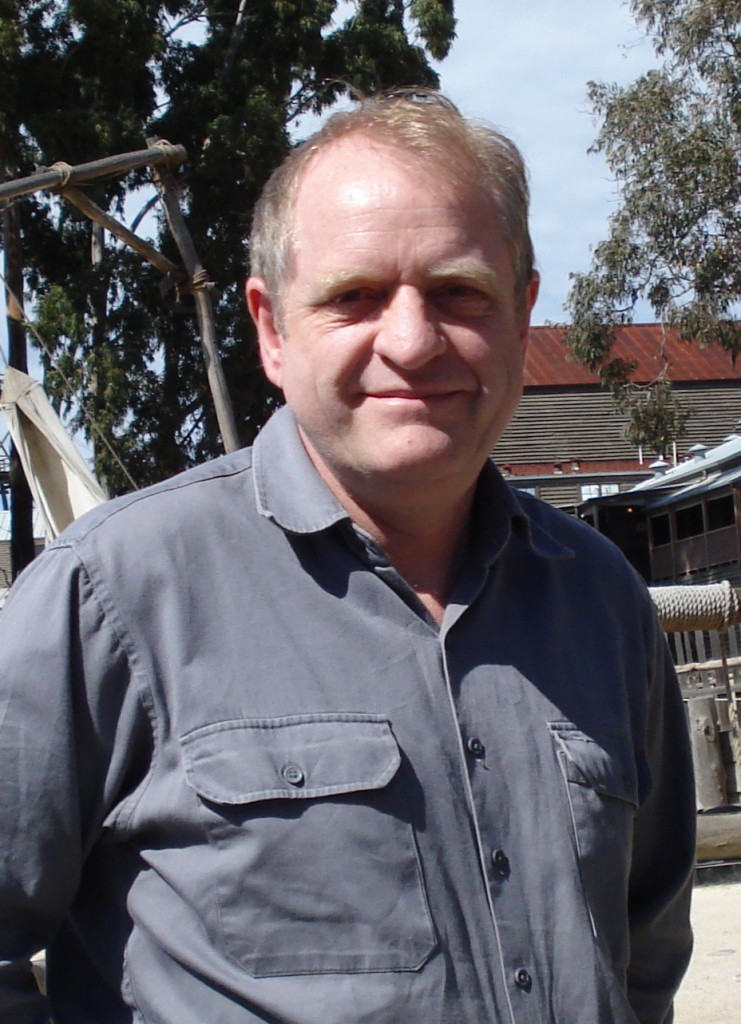
    New Associate EMBO Member from Australia – professor David L. Vaux

    Fifty-five life scientists from Europe and around the world, on 9 May 2012 in  Heidelberg, Germany, were recognised by EMBO (Excellence in Life Sciences) for their excellence in research. Forty-eight of the researchers are from Europe and neighbouring countries while seven scientists from Argentina, Australia, South Korea and the United States join as Associate Members. In total, EMBO membership now comprises almost 1,550 life scientists in the international scientific community.

    EMBO elects new members annually on the basis of scientific excellence. The new members represent a broad cross-section of the life sciences. The latest scientists to join the group come from 17 different countries and include 13 female scientists recognized for their contributions to life science research.

    The new Associate Member from Australia is professor David L. Vaux, Walter and Eliza Hall Institute, Parkville. Prof. Vaux is best known for identifying the proto-oncogene bcl-2 as an inhibitor of cell death, thus launching the field of molecular biology of apoptosis (programmed cell death). Read more about his research division Cell Signalling and Cell Death and his research overview, interests, and selected publications.

    The selected researchers will help shape the direction of the life sciences in Europe and beyond by their involvement with the activities of the organization. EMBO Members provide scientific input such as acting on advisory editorial boards of the four scientific journals of the organization, serving on selection committees for EMBO Programmes and giving general advice to the scientific community.

    A list of all new EMBO Members and Associate Members accompanies this announcement [link].

  • Australian team nominated for European Inventor Award

    Australian team nominated for European Inventor Award

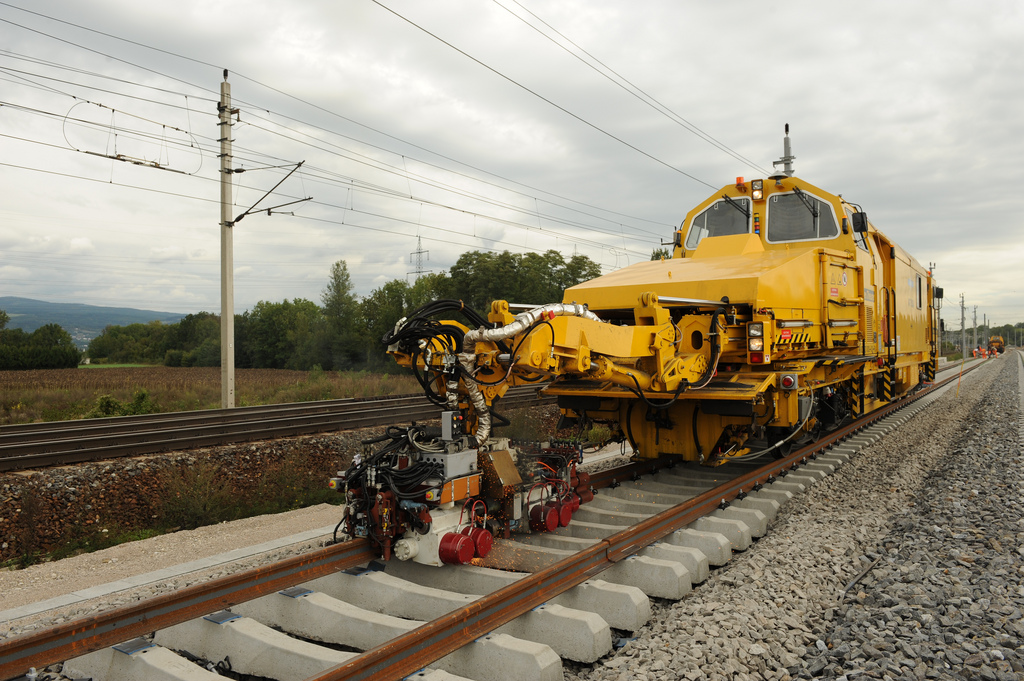
    Dr. Josef Theurer is nominated in the category Lifetime achievement for his railway track-laying machines

    Dr. John O’Sullivan and team nominated by European Patent Office for paving the way for Wi-Fi. Australian scientists laid world standard in modern communication and licence out their invention all over the globe.

    Battistelli: “The innovation led by Dr. O’Sullivan and team has impacted on our daily life to an extent that only few inventions have achieved before.

  • 60 second science: Engaging with the ‘Youtube Generation’

    60 second science: Engaging with the ‘Youtube Generation’

    Being one of the International judges for the International Science Video Competition, I have talked with Brendan O’Brien, the convenor of the  “60 second science“.

    What is “60 second science”?

    60SecondScience is a fully online International Video Competition sponsored by the Department of Education (DEECD-Innovation Next Practice Division), Victoria, Australia. Since its first iteration in 2008, it has enjoyed relentless growth and appeal, from 30 Victorian school-only participants, to over 300 science videos uploaded in 2011, with over 400 registering from 22 countries. The competition links directly to required student outcomes over a number of Science, Citizenship and ICT Standards. Valuable prizes are distributed each year, as determined by a prestigious International panel of judges.

    Why is this competition used in the Science Classrooms?

    Teachers can engage the interests and skills of students in a way that increases the depth of their science knowledge as they hone their multimedia skills.  Many of today’s students are an entrenched part of  the ‘youtube generation’ and are more than comfortable with being producers of content, whereas other generations were comfortable as mere consumers of content. Many students are ‘over’ powerpoint reports by the time they get to secondary settings, and are happy to shoot video on their smart-phones, flipcams, videocameras or webcams. The competition is easily adapted to be used not as an add-on, but as a contingent element within the existing science curriculum.

    How is this Video competition used in Secondary/High School Science Classrooms?

    A.     Teachers give students the option of making a 60second video to demonstrate their understanding of a topic or unit of work they are studying/researching in any area of the secondary science curriculum. Eg Newton’s Laws, The States of Matter, Forces, Chemistry. Projectile Motion, Chemical Bonding,  This is often done as an alternative to producing a written report, poster or Powerpoint.

    B.     Teachers give the student teams the option to make a ‘prac report video’ instead of the standard ‘written’ prac report. Eg. The Law of Reflection, Heart-rate, Thermal expansion, Displacement Reactions.
    In both cases, students are required to research deeply and collaborate closely to refine their understandings and condense their knowledge to convey their key concepts and ideas into the 60second format.

    Students work with their teacher on a particular science topic or integrated study unit, and produce a video over a number of weeks as part of their weekly routine. This can be used as a science teaching strategy at any grade level. E.g. Grade 1 Temperature, Grade 3 Capillary Action, Grade 4 Mould on Bread, Grade 6 Plant Osmosis

    How does “60 second science” support Multicultural Classrooms?

    The LOTE Divisions encourage entrants to use Languages Other Than English. Eg Chinese, French, Cantonese, Malayalam, Italian.

    There are several divisions such as International Open – for professional/amateur film-makers, teachers, non-school-age citizens, International primary / elementary school division, International secondary / high school division, International LOTE – with English sub-titles and spoken in a Language Other Than English; as well as the Best Cinematography – for videos in any Division, Best Animation – for videos in any Division and for the others. The ‘Winner’ gets a Certificate and an offer of free online video production and science workshop for teachers and students.

    You can register for the competition by 1 August 2012, and upload videos by 26 August 2012. Please find all other details and contact the convenor on the official web site.