Tag: australia

  • Weekly Science Picks

    Weekly Science Picks

    Another week, another collection of weekly science picks! Those of us over here in Northern Europe have been enjoying snowy weather this past few days, with more expected on the way. At the same time, many of us have been keeping a concerned eye on the recent events in Australia – the bush fires being among them.
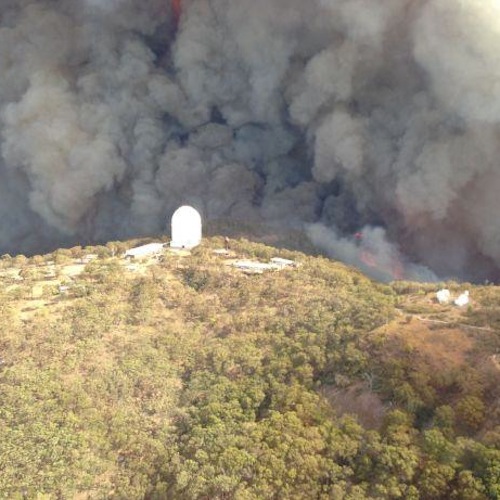
    The Anglo-Australian Telescope in peril

    Among the many areas hit by the fires was Siding Spring Observatory. While some buildings were destroyed and others damaged, all of the telescopes appear to be ok. Details on the entire event from a first hand perspective are given by astronomer Amanda Bauer on her blog, Astropixie.

    SSO: As the smoke clears

    from all accounts i’ve received, heard, and read, the area surrounding coonabarabran  is a “disaster zone,” which is heart-breaking news.  fire service crews will be working overnight, taking advantage of milder conditions, to put containment lines around the edges of the fire, hoping to protect coona before the winds change.


    Orion, the spacecraft being developed to replace the Space Shuttle and ease the pressure on Russia’s Soyuz craft, has been a troubled undertaking. As with virtually all NASA projects lately, it’s been hampered by repeated budgetary problems. The latest development in the story is that Europe has now formally agreed to assist in developing the Orion craft, with the long term goal of deep space missions, to the Moon and Mars.


    Europe and US agree details for Orion astronaut spacecraft


    The current plan calls for Europe to build the prototype module for 2017 and a number of components that would be needed for the second vehicle in 2021, although a formal go-ahead to complete this additional model is some years off.


    Depressingly, there is still an obvious gender gap in science, though it’s at least heartening to know that this is an issue which some are paying serious attention to. Many are going what they can to fix the problem, while others are disappointingly willing to argue that nothing should be done. One article which caught my eye this week was written by an anonymous senior scientist, arguing that we should be taking a more aggressive approach to tackling this problem. I for one, wholeheartedly agree!


    Sexual discrimination in science: why we must act now


    Can it be that women are treated less fairly than men? A deceptively simple piece of research led by Jo Handelsman at Yale University has recently suggested that they are… I should point out here that there was no statistically significant difference between the responses from male or female faculty, nor were there differences between levels of faculty, suggesting this is not a hierarchical bias.


    Back in space, new plans for the International Space Station involve blowing something up. Nevada-based Bigelow Aerospace have been contracted to develop an inflatable habitat module for the space station, with the intention of using the new SpaceX Dragon craft to send it up into orbit. Private companies are evidently becoming major players in human spaceflight.


    NASA buys blow-up habitat for space station astronauts


    Bigelow hopes the tests done in orbit will prove that inflatable capsules are safe and reliable for space tourists and commercial research, an idea almost as old as NASA itself. The space agency began investigating the concept of expandable spacecraft in 1958. Space stations like this would be easier to launch and assemble than those with metal components, so would be cheaper.


    On a final note, while many of us tend to consider invertebrate animals as being inferior, there’s evidence that some of them may be more self aware than we give them credit for. While some research has concluded that fish don’t feel pain in any meaningful way, crustaceans like crabs and prawns probably do. It’s probably about time we extended the laws on humane treatment of animals to cover invertebrates too.


    Why crustaceans might be feeling crabby


    A study has revealed that the shore crab, a close relative of the species we use for food, responds to electric shocks and then goes on to avoid them. Previous research has shown that prawns and hermit crabs also react to painful situations.
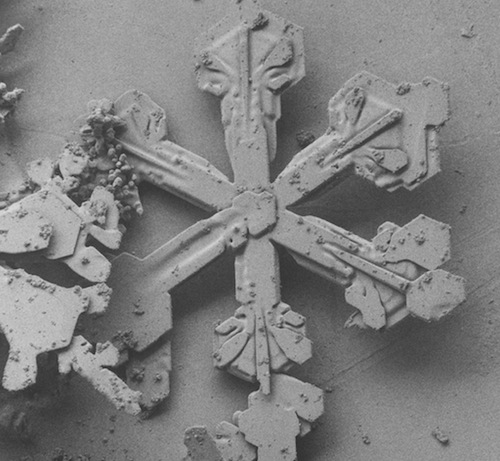
    Snow!

    Whether you’re dealing with fire or ice nearby, stay safe and have a good week!

    Image credits:
    Top – NSW Rural Fire Service
    Bottom – Electron Microscopy Unit, Beltsville Agricultural Research Center, Maryland.
    Featured – ESA
  • Unknown Corals of the Deep

    Unknown Corals of the Deep

    Corals are some of the most beautiful things to be found under the sea, blossoming in clusters like gardens off tropical coasts worldwide. Easily the grandest display is to be found in Australia with the Great Barrier Reef, and it seems that the reef may contain even more diversity than was once thought. The latest surveys have found Australian corals thriving at depths far greater than was ever before thought possible.

    The Ribbon Reef lies near the Torres Strait at the edge of the Australian continental shelf, and certain parts of it are normally very difficult to get to. The University of Queensland’s Seaview Survey has been fastidiously charting the waters off the Australian coast with a diving robot, and were extremely fortunate to be able to use an unusually calm day to explore the windward side of the reef – normally a perilous exercise due to huge waves and cyclones. Exploring the depths of the reef, they found a huge surprise.

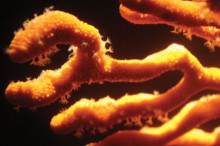
    While deepwater corals are known in other parts of the world, their appearance in the waters here was a surprise. At a depth of 125 metres, in dark waters where very little sunlight ever reaches, they found corals. Corals which had only been recorded at depths of 70 metres previously, giving Ove Hoegh-Guldberg, the chief scientist of the team, reason to suspect that the finding may be able to give a deeper understanding of how coral reefs spawn and grow.

    Hoegh-Guldberg is also quoted as saying, “What’s really cool is that these corals still have photosynthetic symbionts that supposedly still harvest the light,” which is especially remarkable because the waters in which these corals have been found are so inky and dark that human divers would have trouble seeing without artificial illumination. As well as photosynthesis, shallow water corals have reproductive cycles which are synchronised by the phases of the moon. With so little moonlight being able to penetrate to the depths at which these corals live, their spawning patterns are presently a complete mystery. It could be that these corals lead a lifestyle very different to their shallow water brethren.

    The deepwater corals have also fared far better in the storms which have caused massive damage to the shallower parts of the reef. The team are now investigating how conditions such as ocean acidification and global warming are affecting these deeper reef dwellers.

    The Seavew Survey has proven to be extremely successful so far, with a number of specimens which they’re currently investigating. Some species they’ve found are thought to be previously unknown in Australia, and others may even be newly discovered species. Hoegh-Guldberg summed up the team’s discoveries quite succinctly with the statement, “We are yet to discover many corners of the Earth.” Indeed we are. It’s exciting to know that there’s still more for us to discover about our planet!

    Image credit: InvaderXan/flickr

  • The Oldest Fossils in the World

    The Oldest Fossils in the World

    Life has existed on planet Earth for a long time. Precisely how long, however, is a question which many are still searching for an answer to. The most recently discovered piece in that puzzle may put us another step closer to finally answering that. Discovered in Pilbara, Western Australia, are what are quite probably the oldest fossils discovered on Earth so far!

    At approximately 3.49 billion years old, these fossils come from a time long before complex organisms like us existed. Before evolution forged living things into the structures we recognise around us today, and before distinctions like “plant” and “animal” had even been drawn, our world was populated by bacteria and other single celled life. In fact, on a cosmological timescale, this wasn’t long after our planet had formed.

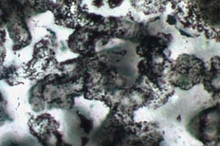
    Being left by bacteria, these fossils appear as little more than patterns left behind in sandstone, but after careful analysis they’ve been found to very definitely be fossils and not simply mineral formations. Discovered in some of the best preserved sedimentary rocks on Earth, at Strelley Pool in Pilbara, these fossils offer a fascinating glimpse at some of the oldest known life on Earth. Excitingly, as well as the discovery of this life, these is some evidence that it may have had some organisation to it as well.

    Found preserved in quartz sand grains, the fossils show several cell-like structures all of a similar size, much like bacterial colonies still found on Earth today. The age of these fossils can also be estimated with some precision, due to the rocks in which they were found. These particular rocks were formed between two volcanic successions, which means that their age can be determined down to a few tens of millions of years!

    Interestingly enough, any life this old would have been living without any oxygen – oxygen wasn’t abundant in Earth’s atmosphere until around 2.4 billion years ago. It’s quite likely then, that these bacteria had a metabolism based around sulfur, just like bacteria found in marshes and other oxygen-poor environments in the world today.

    The most exciting implications behind this find are those for life on other planets. If life could form so soon on planet Earth, it means that life might well have existed on other planets in the solar system too. Venus before it developed its hellish greenhouse effect and Mars before it lost all of its water, may have been home to similar primitive life. While few are hopeful of finding life on our neighbouring planets today, it still gives hope of discovering fossils as we continue to explore them. For astrobiologists hoping to find life on planets outside our solar system, it means that where life develops, it may occur quite soon after planets form.

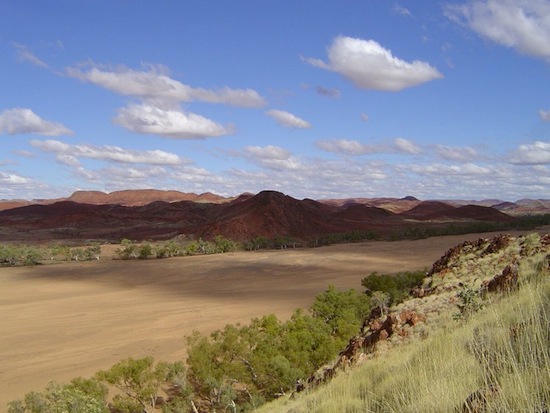
    Some of the oldest rocks on Earth

    Image credits: Top – D. Wacey/UWA, Bottom – Abigail Ailwood

  • The Highlights of 2012

    The Highlights of 2012

    As 2012 draws to a close and the new year begins, now is a good time to wrap things up and recapitulate the year just passed. It’s been an exciting year with plenty of interesting happenings in science, technology, and education. Despite the fact that we aren’t especially keen on top 10 lists (because all of our authors are fantastic and inspirational), here are a few of the highlights from the past year. We hope you enjoy them!

    Mr Boson, I presume…? / A Brand New Boson

    The news that CERN had detected a signature matching the much sought after Higgs boson was the biggest news this year in physics. While physicists at the LHC still aren’t 100% certain what they’ve found, one thing is for certain – they’ve definitely discovered something never before seen, and it definitely seems to match what’s expected for the Higgs boson. Now it’s up to the theorists to work out if this will confirm existing theories, or if it will require brand new physics to be devised to explain it!

    “It’s a bit like spotting a familiar face from afar,

  • SoilMapp: one small step for apps one giant leap for soil science

    SoilMapp: one small step for apps one giant leap for soil science

    Australia’s national soil databases can now be accessed in real time online through a new iPad app called SoilMapp.

    The new app provides open access to the best and most up-to-date information for soil at any location in the country within a matter of seconds.

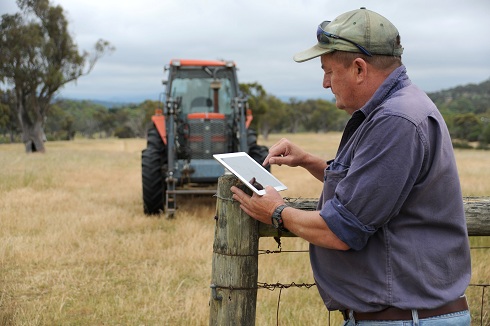
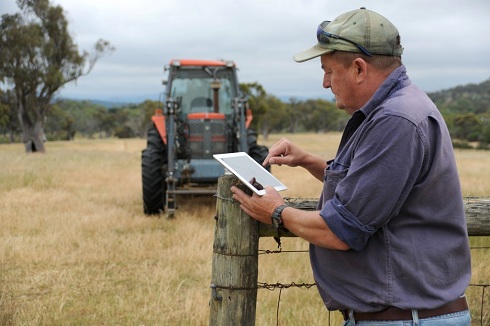
    The SoilMapp for iPad will allow farmers and others to access real time information about their soils from in the field.

    Information such as soil depth, acidity, salinity, soil carbon, soil water holding capacity and other attributes will help land managers, farmers and rural advisors make on-the-spot, decisions about how to more effectively manage their land.
    This mobile device technology will deliver detailed scientific information on soils directly into the hands of farmers, rural consultants, agronomists, and potentially other soil enthusiasts like real estate agents, hobby farmers and keen bushwalkers.

    The app has been developed by the Australian Collaborative Land Evaluation Program (ACLEP) and CSIRO, with funding from the Grains Research and Development Corporation (GRDC), because understanding soils is essential for sustaining healthy, natural environments and productive agricultural landscapes.

    CSIRO’s Mike Grundy said soils are one of the most important building blocks of our agricultural and ecological systems and are a precious natural asset.

    “They sustain food production, biodiversity, water quality and play a key role in human health. Understanding the characteristics of soil allows us to ensure we make decisions about its management to ensure maximum productivity and maintain or improve its health for today and future generations,” Mr Grundy said.

    SoilMapp is the first app developed by CSIRO and it is being launched at the Joint Australian and New Zealand Soil Science Conference in Hobart on Tuesday, in time for World Soil Day on Wednesday. The app taps into soil information from the Australian Soil Resource Information System (ASRIS) and APSoil, the database behind the farming systems model, the Agricultural Production Systems SIMulator (APSIM), which is used worldwide.

    Both these databases are stocked with contributions from thousands of individuals and organisations including the Australian Government Department of Agriculture, Fisheries and Forestry (DAFF), state and territory agencies responsible for land resource assessment, Geoscience Australia, and soil research and industry groups. The databases contain information about approximately 85,000 samples from nearly 15,000 locations, some dating back to the 1950s.

    “There’s a lot of information about Australian soils stored in these two databases and the beautiful thing about SoilMapp is that it provides a user friendly mechanism for accessing that information in real time, on location,” Mr Grundy said.

    “Although that information is already available through the web, it is now of far more use to famers or consultants working out on the land because it can be at your fingertips in the field, and at no cost. Importantly, as our soil agencies improve their data collections, SoilMapp will provide access to later releases,” he said.

    Senior Agronomist Steve Richmond from Kerin Landmark Rural said the app will be a welcome addition to his decision making toolkit when speaking with growers.

    “By understanding the soil’s characterisation, water holding capacity and amount of organic carbon, we can make calculations about how much nitrogen to use on certain crops. This could lead to improvements in fertiliser use efficiency as well helping prevent soil acidification from the overuse of nitrogen. That provides a productivity benefit as well as environmental and economic benefits,” Mr Richmond said.

    “Farmers are the custodians of vast tracts of Australia, and the decisions they make daily will impact on the short and long term future of this country’s ability to feed itself, meet growing global demands and to sustain its natural beauty. The more informed we can be when making these decisions, the greater benefit we can deliver for both productivity and environmental health. It’s a win-win,” he said.

    While SoilMapp for iPad currently accesses Australian information, other users may soon be able to get the benefit of this technology, with CSIRO exploring the possibility of working with partners in New Zealand, Indonesia and the Pacific Island countries to widen the scope of SoilMapp.

    SoilMapp was developed by CSIRO through the Australian Collaborative Land Evaluation Program (ACLEP) and the Grains Research and Development Corporation (GRDC) project Doing it better, doing it smarter — managing soil water in Australian agriculture.

    SoilMapp for iPad will be available from the App Store soon.

    Media are invited to attend the Joint Australian and New Zealand Soil Science Conference on Monday and Tuesday to use SoilMapp and speak with the researchers that developed it.

    Find out more about SoilMapp for iPad: soil information at your fingertips.

    Media and image source.

  • Hands on Science in the Early Years

    Hands on Science in the Early Years

    Hands on science activities to engage students in scientific inquiry and investigation are key in the early years to develop skills and knowledge in all areas of science. No one knows this better than Mrs Suzanne Clarke who is the founder of the mini-scammers science club at Mitchelton State School, a feeder club for SC@M (Science Club at Mitchie).

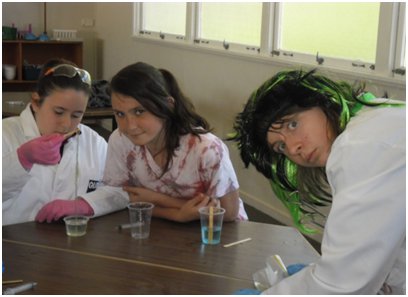
    Hands on learning in the early years.

    Established just this year, the junior science club encourages students in the early years to formulate hypothesis, carry out experiments and discuss their findings with their peers directly mirroring the similar process used in later years. Student work in multi-aged groups to manipulate materials and equipment, generate solutions and compare their results. As Mrs Clarke highlights “this method of discovery learning engages all children and promotes the use of multiple intelligences

  • The Gender Myth and Science. Our Response at SC@M

    The Gender Myth and Science. Our Response at SC@M

    Girls are just not as good at science as boys. Men do hard sciences, women do soft sciences. Gender stereotypes have existed long-term throughout the spectrum of sciences. Most people have witnessed it first-hand. Patients question expert female doctors, yet implicitly trust their male counterparts. Laboratories are full of female scientists with male leads. Why do we trust the judgement of men in science before females? Just where do these gender stereotypes come from and when do children start believing in them?

    SC@M (Science Club at Mitchelton State School) began mid-2012, attracting 45 students from Grades 4-7. Of the applicants, 21 were girls, 24 were boys with their ages ranging from 9-12 years. Included in the SC@M application process, students were asked a series of gender and science related questions to elicit their current opinions. Not surprisingly, some of our SC@M applicants did indeed hold some gender stereotypical views, which were compelling to examine. Unexpectedly, it was a minority of applicants that held these views.

    Question 1:  Boys understand science easier than girls. Do you agree with this statement? Why or why not?

    Agree             n = 15 Disagree               n =30
    Boys like it moreBoys listen more, girls talk too muchAll the famous scientists seem to be maleMost scientists on TV are male Boys and girls learn the sameGirls listen better so they understand moreBoth girls and boys can be good at scienceYou just have to work hard

     
    Question 2:  Men are better at science jobs than women. Do you agree with this statement? Why or why not?

    Agree            n = 12 Disagree             n = 33
    Women are not as good at maths Most scientists are men Men are braver Men think it’s more fun

    Men can deal with more energy correlations and stuff

    Boys do technology stuff

    They are equal, we have equal rights It just depends on how hard you push yourself Men may be stronger but science doesn’t require strength I have only ever been taught science by ladies

    Notably, of the children who agreed with these statements, several described the dominance of male scientists portrayed by the media. Doesn’t every Australian know of Dr. Karl? He hosts radio talk-back science shows and Sleek Geeks on ABC TV, is the science-guru guest on numerous morning shows and the author of over 30 books. Many would consider Dr Karl as the face of Australian science. This misrepresentation of science and gender subtly endorses the view that boys are simply better at science.

    It was pleasing to note that the majority of our applicants disagreed with these statements and most suggested that science was accessible to both genders. Given current research suggests girl’s interest in science diminishes towards late high school, it would be worthwhile to re-examine this same cohort of children at a later stage to determine any change.

    Question 3: Currently there are more men in some science jobs (like engineering) than women. Why do you think this is so?

    Typical responses
     Men like it more. Women don’t want to get dirty.Men are stronger.Boys just like building things.

    Women have a family.

    It’s too hard for girls.

    Girls like dancing and other jobs.

    Women are more suited to caring and developing jobs like childcare and nursing.

    There has always been more men in engineering.

    Although 75% of applicants thought that science was accessible for them, the majority of children responded with gender-biased statements when responding to Question 3. Sadly, none of the applicants provided an opposing side. Women are under-represented in engineering fields and other physical sciences. We need strategies to encourage girls to enter these fields, not allow them to simply accept that “it is just too hard for girls

  • OKFN Australia Group re-launching again

    OKFN Australia Group re-launching again

    The Open Knowledge Foundation is dedicated to promoting the creation, sharing and application of Open Knowledge in the Digital Age.

    Yesterday, a working group at OKFN Australia gathered data geeks from around the country. The opening the Australian chapter of the Open Knowledge Foundation happened via a Google hang-out. The group includes internet public servants, data scientists, data visualisation specialists,  data journalists, and others dedicated to the idea that, when it comes to knowledge and information, open is better.
    OKFN Au is a community initiative to create a bridge between the many and varied open knowledge communities in Australia, including hackers, data journalists, scientists, Gov 2.0 and open data peeps, knowledge and change management enthusiasts and civil society.

    OKFN Au is part of the global OKFN community, established originally in the UK. It brings together people interested and active in opening up and using data to create and share knowledge.

    The goal of OKFN Au is to support, promote and bring together the active and diverse open knowledge communities in Australia. Member communities come from a variety of backgrounds where open knowledge is already being practically applied. Australia has some well established tech communities, research groups, open government communities, emerging data journo communities and loads more that could all benefit through being connected to each other, even if just peripherally. It makes it easier to understand the breadth and skills of our community which, in turn, makes it easier to connect with each other and collaborate on common goals or projects.

    Check out the OKFN Au site for more information.

    Image source.

  • What do polls and climate change have in common? It’s not what you think! Brian Schmidt at TEDx Canberra

    What do polls and climate change have in common? It’s not what you think! Brian Schmidt at TEDx Canberra

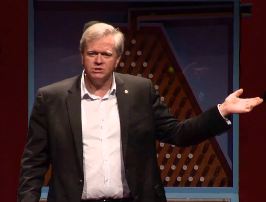
    Here’s the talk by our own Nobel Prize winner Brian Schmidt at the recent TEDx Canberra. He talks about the certainty in uncertainty, showing how credible statistical analysis can reveal unexpected results.

    You may be surprised…

  • Best of Science blogging – September 2012

    Best of Science blogging – September 2012

    Lot of events happening this September and I’m looking forward to share with you some wonderful articles and interesting posts, interviews for you to read. We have weekly science blogging picks with the guest editor each week, now it’s almost a tradition called #ScienceSunday, you can search for it on Google Plus as well.  We are coming out soon with the new design for the Australian Science and some new interesting initiatives.

    Contact us if you’d like to join our team of science and tech bloggers and authors – please read the Editor’s note, also if you’re interested in Weekly Science Picks scroll down the article to find about it more. The Australian Science recap of the September 2012:
    Lighting the Imagination in Science by Kelly Burnes

    Let’s think about the role of imagination in science. The process of imagination is on display everywhere in an early childhood classroom. But by the time they reach middle school, students seem to burn out and tire of science. Where is the imagination? What is driving the curiosity?

    Got Science? Australian Science on Display at Mitchelton State School is part two of the previous article by Kelly, an interview with Mitchelton State School staff :

     McIntyre indicated that in addition to exposing children to science, it’s also essential “to develop the attributes of curiosity that are necessary to the investigations around science.

  • Botanist Wins Prestigious Nature Conservancy Award to Work on Grass Trees

    Botanist Wins Prestigious Nature Conservancy Award to Work on Grass Trees

    24 September 2012.  MEDIA RELEASE

    Botanist Todd McLay has won the 2012 prestigious Australian Conservation Taxonomy Award to delve further into the mysteries of the iconic Xanthorrhoea genus ­ or, Australia¹s native grass trees.

    PHOTO CREDIT: © Ted Wood

    The Nature Conservancy and The Thomas Foundation launched the award last year to foster research by young scientists into important taxonomic works with significant implications for conservation in Australia.

    Dr James Fitzsimons, director of conservation with The Nature Conservancy, said the $10,000 award would be used to ³interpret the evolutionary history of the grass tree with a view to underpinning conservation in the global  biodiversity hotspot of Western Australia.²

    ³The last major look at the Xanthorrhoea family was in 1986 for the Flora of Australia, and it showed a level of uncertainty about some aspects of the grass tree. We urgently need to learn more about its biological make-up in order to better protect it.²

    Mr McLay, a postgraduate student at the University of Melbourne, will assess and revise the species-level taxonomy of Xanthorrhoea in Western Australia, including the identification of potentially undescribed species.

    Two species of Xanthorrhoea ­ thortonii and nana ­ are found in the Great Western Woodlands, the world¹s largest intact temperate woodland. These species are biogeographically distinct from other recognised species of grass trees that grow in the subregions of western Australia.

    ³Knowing what species exist and their ecological requirements are essential elements of conservation and we are confident that Mr McLay, with his passion for plants, will help provide more answers,² Dr Fitzsimons said.

    The Australian Conservation Taxonomy Award was presented to Mr McLay at the Australasian Systematic Botany Society conference. The award is administered by the Australasian Systematic Botany Society.

    The Thomas Foundation was established in 1998 by David Thomas and his wife, Barbara. The conservation of biodiversity has always been part of the Foundation¹s focus. The Foundation adopts a strategic planning approach to its grant making and considers its grants to be investments in forming social capital. The Foundation¹s mission is ³Arresting the decline of biodiversity in Australia and encouraging others to do likewise.²

    About The Nature Conservancy One of the world¹s largest science-based conservation organisations, The Nature Conservancy delivers large-scale conservation projects across Australia. The NGO is currently influencing conservation over nearly 30
    million hectares of Indigenous lands across northern Australia¹s vast savannas from the Kimberley to Cape York and Central Australia¹s arid lands. The Nature Conservancy is working with Indigenous groups and other key partners and has helped to protect more than 6 million hectares of lands and waters in Australia since 2000. This includes securing 29 high priority additions to the National Reserve System, including some of the largest private protected areas in Australia.

    Media inquiries: John Myers ­ 03 9818 8540 or mediawise@mediawise.net.au

  • We Support the Petition to End the Faroe Islands’ Whale & Dolphin Slaughter

    We Support the Petition to End the Faroe Islands’ Whale & Dolphin Slaughter

    Thousands of signatures have now been presented in person to the Faroe Islands Government. Add your voice to this petition to keep up the demand until this cruel whale slaughter is banned.

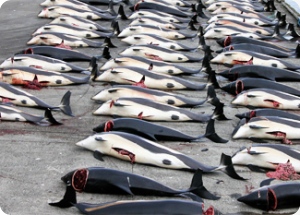
    Hundreds of pilot whales are slaughtered every year on the Faroe Islands, a small group of islands north of Europe. Faroe men go out with boats to drive these animals into a fjord using nets to block their way back to sea. The whales then beach themselves, or are pulled ashore with a blunt hook lodged in their blowholes. Once beached and defenceless these whales are killed by having their spinal cords and major blood vessels cut. It can take up to three and a half minutes for a whale to eventually die.
    Other than pilot whales, several species of dolphins are also killed using these same methods.

    Due to the harsh climate that makes it difficult to grow food on the Faroe Islands, the meat and blubber of these animals was once an important part of the diet of the Faroe people. But nowadays their food supply is diverse and plentiful, the cruel whale and dolphin hunt continues primarily for the sake of ‘tradition’.

    Please show the Faroe Islands that the international community is strongly opposed to this cruel slaughter by signing this petition to the Faroe Islands Prime Minister. Petition Tally by  August 16 2012: 81,718 signatures.

  • Social networks and culture among dolphins

    Social networks and culture among dolphins

    Recently published research in Nature Communications ‘Social networks reveal cultural behaviour in tool-using using dolphins‘ is exploring social networks of dolphins. In particular, it finds evidence for homophily on a learned skill which leads that there’s an exclusion and cultural contagion even among cetaceans.

    Abstract

    Animal tool use is of inherent interest given its relationship to intelligence, innovation and cultural behaviour. Here we investigate whether Shark Bay bottlenose dolphins that use marine sponges as hunting tools (spongers) are culturally distinct from other dolphins in the population based on the criteria that sponging is both socially learned and distinguishes between groups. We use social network analysis to determine social preferences among 36 spongers and 69 non-spongers sampled over a 22-year period while controlling for location, sex and matrilineal relatedness. Homophily (the tendency to associate with similar others) based on tool-using status was evident in every analysis, although maternal kinship, sex and location also contributed to social preference. Female spongers were more cliquish and preferentially associated with other spongers over non-spongers. Like humans who preferentially associate with others who share their subculture, tool-using dolphins prefer others like themselves, strongly suggesting that sponge tool-use is a cultural behaviour.

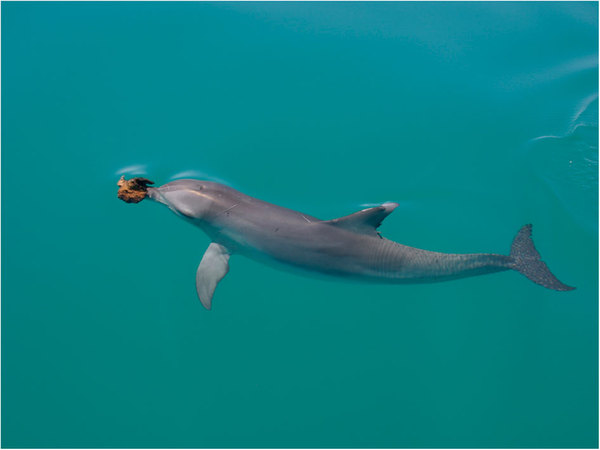
    Photo by Ewa Krzyszczyk; http://www.monkeymiadolphins.org.
    For centuries, philosophers and scientists have debated whether cultural behaviour distinguishes Homo from all other taxa12. Whether non-human animals have at least rudimentary culture is contested, partly because scholars disagree on the definition of culture and/or what type of supporting evidence is needed2. To empirically investigate whether or not a given species has ‘culture,’ the term must be operationally defined. Regardless of discipline, scholars agree that some form of social learning is a prerequisite and that culture is a source of uniformity within groups and differences between groups3, but the consensus ends here. Social learning is defined as learning (behaviour matching) that is influenced by observation of, or interaction with another animal or its products45. Some definitions of culture require more complex cognitive social learning mechanisms, such as pedagogy, theory of mind and imitation67. In most animal culture studies, examination of behavioural variation within and between groups is fairly straightforward as animals are either geographically or socially segregated2. However, ‘group’ is not easily defined in all animal societies. Like humans, Shark Bay bottlenose dolphins live in an open community, characterized by high fission–fusion dynamics where members maintain long-term preferential bonds, but associations are temporally and spatially variable across minutes, days and years8. The question is therefore whether dolphins that use sponge tools (spongers) to extract prey910 exhibit homophily (the tendency to associate with similar others), based on this socially learned foraging tactic1011.

    In Shark Bay, Australia, a subset of the community of Indo-Pacific bottlenose dolphins (Tursiops sp.) procure and wear basket sponges on their beaks while lightly scouring the seafloor for prey in deep (8–13 m) channels (Fig. 1)9101112. Sponging is the best-documented case of tool use by wild cetaceans and is unique among wildlife in that only a small subset of the population uses tools. This exceptional case of tool-use heterogeneity allows us to test for preferential affiliation based on tool-use. To date, 55 dolphins have been documented habitually using sponges in the eastern gulf of Shark Bay12, although sponging also occurs in the western gulf13. Only calves of spongers become spongers (24 offspring to date), but 8 offspring of spongers never adopted sponging. Sponging is a solitary activity, but calves accompany their mothers during sponging and vertical social learning is strongly implicated as the primary mechanism of transmission101114, consistent with mitochondrial DNA analysis1315

    Full paper link.

  • The Devil’s Technology

    The Devil’s Technology

    Biotechnology is rarely considered to be good for the environment. In fact, environmental campaigners frequently claim that genetically modified organisms represent a major threat to biodiversity and ecosystems. However, the study of the Tasmanian Devil Facial Tumour disease (DFTD) using genetic technologies is an example where biotechnology has been used to create a definite environmental benefit.
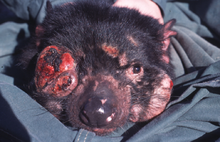
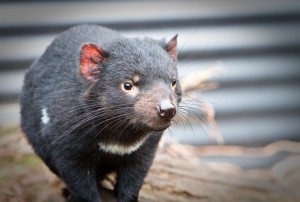
    The Tasmanian Devil (Sarcophilius harrisi) is Australia’s largest surviving carnivore and endemic to the island of Tasmania. DFTD induces cancerous tumours on the face and inside the mouth of affected animals which die within months. The condition was first observed in north-eastern Tasmania in 1996. DFTD, like other cancers, is caused when mutations within a cell prompt it to switch from normal function into tumorous growth. Cancers are considered non-contagious as the tumour is contained within the body and is unable to spread to alternative hosts. Furthermore, the immune system of any alternative host would normally recognise any foreign tumour cells that managed to invade the body, and quickly kill them before the disease becomes established. However, the DFTD is exceptional in that it is readily transmitted between individuals of the same species, and this has resulted in the disease rapidly sweeping across the island and threatening the entire species with extinction.

    In order to better understand the DFTD, an international team of scientists has sequenced the entire genome of the Tasmanian Devil and identified mutations underlying DFTD. The results were recently published in the scientific journal Cell. This biotechnological research surprisingly identified that none of the tumours originated in any of the hosts examined. Instead, they were able to trace them all back to one cancerous cell from within a female devil, possibly in the early 1990s. This radical and unusual tumour had developed the ability to jump from individual to individual in a uniquely contagious manner, so spreading the disease across the species.

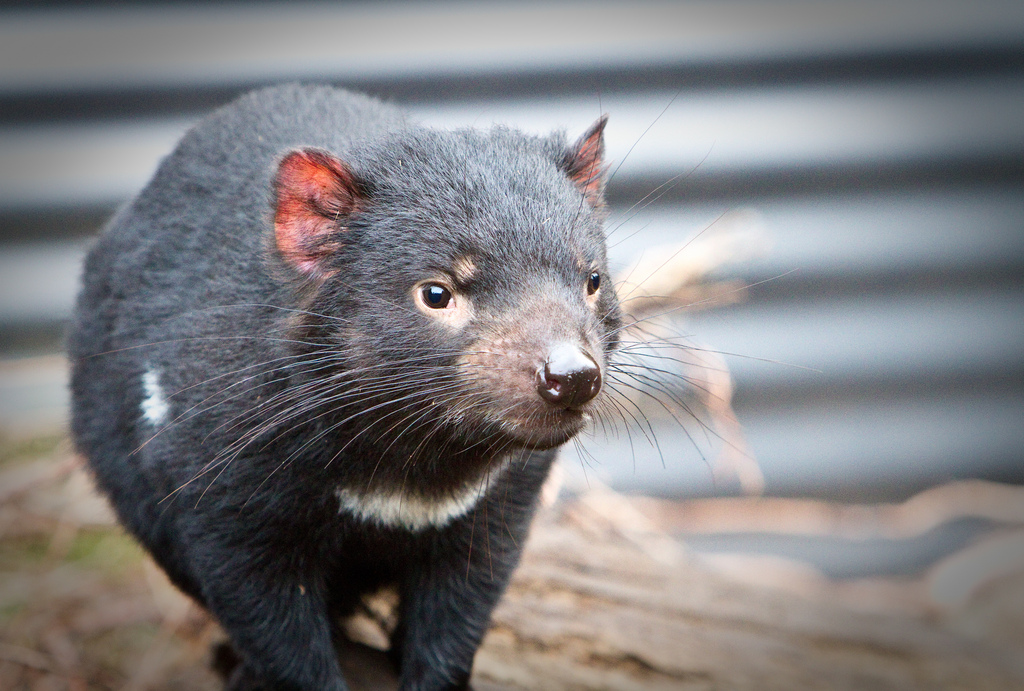
    The Tasmanina devil facial tumour.

    Using the genetic sequence information, the researchers were able to discount the involvement of a virus in the transmission of DFTD. Instead they were able to identify a new and radical form of transmission. Devils often bite each other in the face during eating and feeding behaviours. During biting, fragments of tumour from an affected individual become implanted in an almost vampiric manner in a new and healthy individual.

    The scientists also discovered that the DFTD tumour carries a mutation in a gene that plays a critical role in regulating the host’s immune reaction. From this, they concluded that the tumour cells are able to interfere with the host’s immune system immediately after implantation, The disrupted immune system is unable to kill the tumour, thereby ensuring the survival of the disease in the new individual.

    The results of this study have provided valuable insight into the management of the DFTD and the conservation of the Tasmanian Devil. Because the condition is only transmitted through the bite from a diseased individual, the disease can be effectively controlled by quarantining healthy populations from diseased. The condition will then be naturally eliminated as diseased individuals die off from within the affected population. Such a policy has already been implemented with the Tasmanian Department of Primary Industries, Water and Environment who have been identifying and quarantining disease free populations within the island. Individuals from the protected population may then be re-introduced into the Tasmanian Devil’s former habitat once the disease threat has passed.

    Despite the frequently cited threats that biotechnology poses to the environment, the application of gene sequencing technologies to the DFTD is an example of how biotechnology might be adopted to solve major environmental problems. In fact, the outcome of this gene sequencing project has contributed to a management plan that might yet save the Tasmanian Devil from extinction and conserve an important component of Australia’s unique biodiversity.

    Image source