Being responsible for picking the week’s most interesting science stories is a fun and fascinating challenge. It pushes to me to look beyond my own interests and explore what others find compelling. So I trust you find my ‘science making news’ selection of interest and delight; explore the quantum, human, off-world and mathematical highs of the week.
On the human scale an international team of scientists has been investigating the antibiotic properties of sweat. More precisely they discovered how a natural antibiotic called dermcidin, produced by our skin when we sweat, is a highly efficient tool to fight tuberculosis germs and other dangerous bugs.
Their results could contribute to the development of new antibiotics that control multi-resistant bacteria.
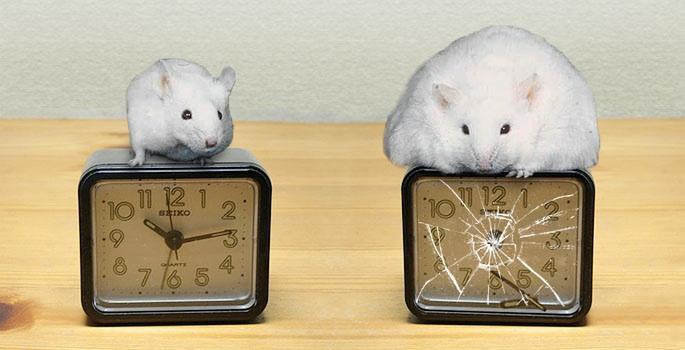
The benefits of a good nights sleep once again are news. Researchers have shown that the disruption in the body’s circadian rhythm can lead not only to obesity, but can also increase the risk of diabetes and heart disease.
Our study confirms that it is not only what you eat and how much you eat that is important for a healthy lifestyle, but when you eat is also very important.
Disruption of body’s circadian clock increases risk of obesity, diabetes and heart disease. (Credit: Daniel Dubois, Vanderbilt University)
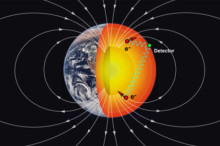
At the quantum scale, the particle physicists are at it again. Not content with discovering the Higgs Boson they are shedding light (pardon the pun) on a possible 5th force in nature. In a breakthrough physicists have established new limits on what scientists call “long-range spin-spin interactions” between atomic particles. These interactions have been proposed by theoretical physicists but have not yet been seen. If a long-range spin-spin force is found, it not only would revolutionize particle physics but might eventually provide geophysicists with a new tool that would allow them to directly study the spin-polarized electrons within Earth.
The most rewarding and surprising thing about this project was realizing that particle physics could actually be used to study the deep Earth.
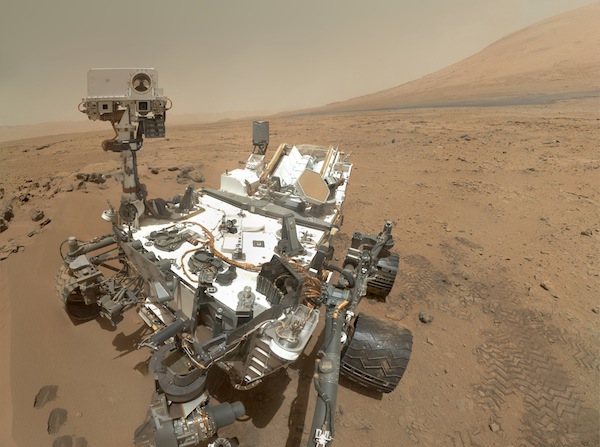
The latest news from Mars is that curiosity has relayed new images that confirm it has successfully obtained the first sample ever collected from the interior of a rock on another planet.
Many of us have been working toward this day for years. Getting final confirmation of successful drilling is incredibly gratifying. For the sampling team, this is the equivalent of the landing team going crazy after the successful touchdown.
To wrap up with one further piece of geek excitement. On January 25th at 23:30:26 UTC, the largest known prime number, 257,885,161-1, was discovered on Great Internet Mersenne Prime Search (GIMPS) volunteer Curtis Cooper’s computer. The new prime number, 2 multiplied by itself 57,885,161 times, less one, has 17,425,170 digits. With 360,000 CPUs peaking at 150 trillion calculations per second, 17th-year GIMPS is the longest continuously-running global “grassroots supercomputing”project in Internet history.
Until next week’s Australian Science review, go geekily crazy and enjoy your weekend.
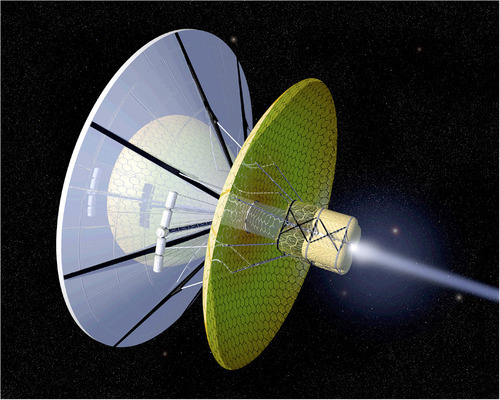
Massive objects moving at near light speeds do not occur naturally in the universe as we know it. If we detect such objects it is a reasonable to assume they are artificial artifacts from advanced intelligent life. This according to Garcia-Escartin and Chamorro-Posada, authors of a recent paper, is a low-cost, sure-fire way of searching for intelligent life outside earth.
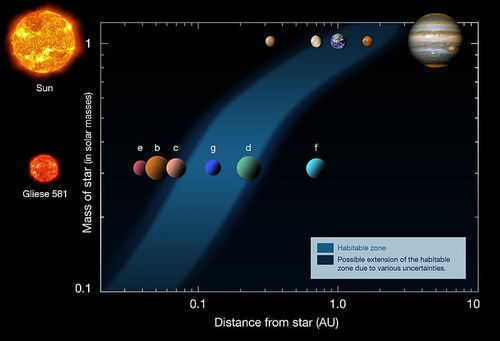
The habitable zone of Gliese 581 compared with our Solar System’s habitable zone. Image credit NASA.
Searching for life beyond earth is a grand and varied enterprise.
For a start we can look for exoplanets that fall inside the habitable zone of a star. A planet found in this zone may fulfill the requirements for life: liquid water, energy, elements and other nutrients, and appropriate physical conditions. Though we have located many exoplanets in recent times they are far from earth – many light years distant. For example one star system, Gliese 581, is 20.3 light years away (192,048,720,000,000 kilometres). With three planets in its habitable zone, we know nothing about conditions on them. The techniques used to find them can tell us nothing about their ecology – if any. Being in a habitable zone does not guarantee life. It is only in recent years that we have realised how inhospitable Venus and Mars are to life – despite being in our habitable zone.
By looking for alien signals or transmissions, as in the SETI programme, we extend our search from ‘possible life’ to intelligent life. For advanced civilisations we look for artificial illumination or interstellar probes.
Let’s face it though, to know we are not alone will require quite good proof for most of us (apart from the misguided minority of UFO believers), and especially for the skeptical scientists.
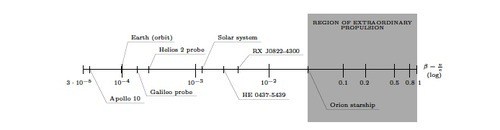
The intriguing proposition of Garcia-Escartin and Chamorro-Posada is based on three ideas. The first is that anything travelling faster than 3.3% of light speed (5,935,890 kilometres per hour) is artificial. All known natural objects travel slower than this speed, as do our current space probes. This speed was chosen as it is the estimated speed of the nuclear propulsion ship proposed by Freeman Dyson in the Orion project. Although the propulsion technology is feasible today the technological and economic hurdle of creating such a craft is way beyond our current means. Although it is certainly not inconceivable to achieve such interstellar travel in the next 100 years.
Scales of speed with respect to the speed of light in vacuum (logarithmic scale). The fastest man-made objects are in the range of velocities from 1/100,000 c to 1/1,000 c. Examples are the fastest manned ship, Apollo 10 on entry, the Galileo probe during its descent into Jupiter and the solar probe Helios 2. For comparison, we have included the average speed of Earth during its orbit around the Sun and the motion of the Solar System with respect to the cosmic microwave background frame. The fastest natural objects, like hypervelocity star HE 0437-5439 and neutron star RX J0822-4300, move in the scale of 1/1,000 c-1/100 c. We define a region of extraordinary propulsion (REP) for speeds which would point to an artificial object. The REP starts at the estimated speed for the nuclear propulsion Orion ship, which could be built with present human technology. Source original paper, Cornell University.
You are possibly thinking about now: “Doesn’t the mass of an object increases massively as its speed approaches light speed?” You would be correct, this consequence of Einstein’s theory of special relativity is demonstrated quite satisfactorily in particle accelerators around the world. To cover this the authors next identify a consequence of relativity theory: relativistic effects amplify the light reflected from a body travelling at near light speed – in some key situations. Allowing for the detection of ‘small’ objects.
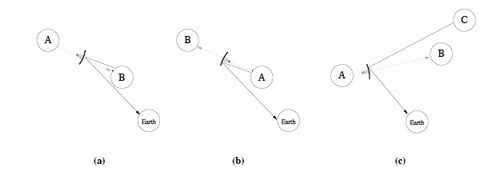
This brings in the authors third criteria. Interstellar travel will be from one star system to another. The reflected-light magnifying effect would be greatest for the cases where earth is almost in line with the departure stellar system and the destination stellar system.
Earth’s position with respect to the ship’s trajectory. (a) Earth receives the light from the destination star reflected from an approaching ship. (b) Earth receives the light from the origin star reflected from an outbound ship. (c) Earth receives the light from a third star, which is reflected from the ship at an angle. Source original paper, Cornell University.
The authors propose to limit the first search to star systems that are reasonably close to each other (no further than 10 light years apart) to maximise the probability of stellar travel opportunities. Considering that Gliese 581, for example, is greater than 20 light years distance from us, I suggest that this criteria is too limiting.
The paper is an interesting, if not compelling, proposition. The authors do calculate what size an artifact would need to be, travelling at their minimum speed (3.3% light speed), to be detected at the distance of one of our closer stellar neighbours. Could such an artifact be detected by the Hubble or James Webb space telescopes, for example? What is the probability of success of such an experiment, compared to say the SETI experiments?
One idea I did find interesting is by focussing on detecting light reflected from ships, we do not need to assume any intention by the interstellar travellers to communicate with us. The ‘signal’ is independent of alien psychology. It is also independent of propulsion technology – we aren’t looking for any ‘signature’ of any particular technology, known or unknown.
It is an interesting paper. I’m not sure they have presented a compelling enough case to convince a funding body – yet.
This fascinating video, narrated by Leonard Nemoy, gives you a glimpse into the origins of our solar system and NASA Dawn mission’s journey to Vesta & Ceres and its hope to unveil clues as to what was going on at the very beginning of our solar system’s formation!
NASA’s Dawn mission is a spacecraft designed to collect data from the asteroid belt. The ship itself is a marvel. Outfitted with massive solar panel wings that can power it for years, Dawn converts xenon gas into plasma, which it propels from its engine at speeds up to 78,000 miles per hour (or 21 miles per second) for maximum acceleration. In fact, Dawn is the fastest ship NASA has ever launched. Even at top speeds, Dawn required four years to reach its first stop, the asteroid Vesta, the brightest asteroid in the solar system and the only one visible to the naked eye. Departing Earth in 2007, the ship reached Vesta in July of 2011 and departed last September for the asteroid Ceres, which it will reach in February of 2015. Via OpenCulture.
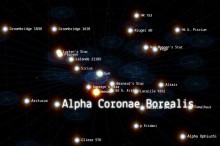
For those visually driven – please take a look at the beautiful interactive map of our stellar neighborhood. With over 100,000 stars in an interactive visualisation, you can take a walk through the stellar neighborhood.
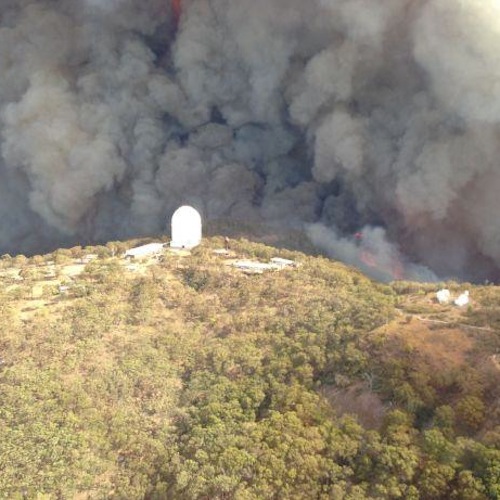
Another week, another collection of weekly science picks! Those of us over here in Northern Europe have been enjoying snowy weather this past few days, with more expected on the way. At the same time, many of us have been keeping a concerned eye on the recent events in Australia – the bush fires being among them.
Among the many areas hit by the fires was Siding Spring Observatory. While some buildings were destroyed and others damaged, all of the telescopes appear to be ok. Details on the entire event from a first hand perspective are given by astronomer Amanda Bauer on her blog, Astropixie.
from all accounts i’ve received, heard, and read, the area surrounding coonabarabran is a “disaster zone,” which is heart-breaking news. fire service crews will be working overnight, taking advantage of milder conditions, to put containment lines around the edges of the fire, hoping to protect coona before the winds change.
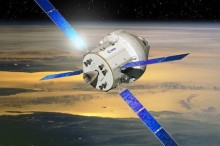
Orion, the spacecraft being developed to replace the Space Shuttle and ease the pressure on Russia’s Soyuz craft, has been a troubled undertaking. As with virtually all NASA projects lately, it’s been hampered by repeated budgetary problems. The latest development in the story is that Europe has now formally agreed to assist in developing the Orion craft, with the long term goal of deep space missions, to the Moon and Mars.
The current plan calls for Europe to build the prototype module for 2017 and a number of components that would be needed for the second vehicle in 2021, although a formal go-ahead to complete this additional model is some years off.
Depressingly, there is still an obvious gender gap in science, though it’s at least heartening to know that this is an issue which some are paying serious attention to. Many are going what they can to fix the problem, while others are disappointingly willing to argue that nothing should be done. One article which caught my eye this week was written by an anonymous senior scientist, arguing that we should be taking a more aggressive approach to tackling this problem. I for one, wholeheartedly agree!
Can it be that women are treated less fairly than men? A deceptively simple piece of research led by Jo Handelsman at Yale University has recently suggested that they are… I should point out here that there was no statistically significant difference between the responses from male or female faculty, nor were there differences between levels of faculty, suggesting this is not a hierarchical bias.
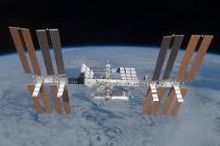
Back in space, new plans for the International Space Station involve blowing something up. Nevada-based Bigelow Aerospace have been contracted to develop an inflatable habitat module for the space station, with the intention of using the new SpaceX Dragon craft to send it up into orbit. Private companies are evidently becoming major players in human spaceflight.
Bigelow hopes the tests done in orbit will prove that inflatable capsules are safe and reliable for space tourists and commercial research, an idea almost as old as NASA itself. The space agency began investigating the concept of expandable spacecraft in 1958. Space stations like this would be easier to launch and assemble than those with metal components, so would be cheaper.
On a final note, while many of us tend to consider invertebrate animals as being inferior, there’s evidence that some of them may be more self aware than we give them credit for. While some research has concluded that fish don’t feel pain in any meaningful way, crustaceans like crabs and prawns probably do. It’s probably about time we extended the laws on humane treatment of animals to cover invertebrates too.
A study has revealed that the shore crab, a close relative of the species we use for food, responds to electric shocks and then goes on to avoid them. Previous research has shown that prawns and hermit crabs also react to painful situations.
Whether you’re dealing with fire or ice nearby, stay safe and have a good week!
Image credits:
Top – NSW Rural Fire Service
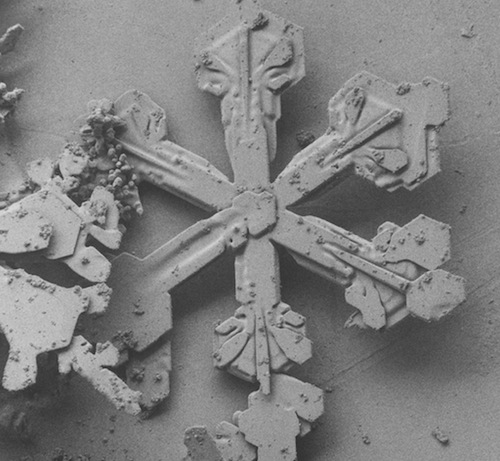
Bottom – Electron Microscopy Unit, Beltsville Agricultural Research Center, Maryland.
Featured – ESA
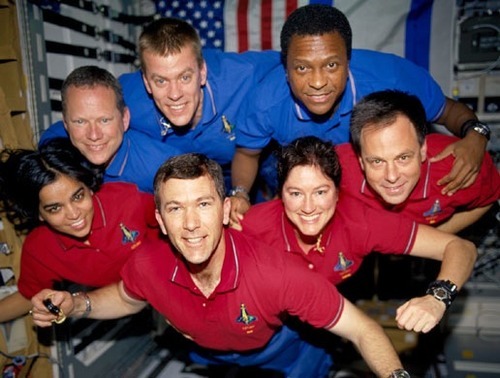
The 28th and last flight (STS-107) of the space shuttle Columbia was ten years ago. Launched on January 16, 2003 Columbia was destroyed at about 0900 EST on February 1, 2003 while re-entering the atmosphere after its 16-day scientific mission. The destruction of the shuttle killed all seven astronauts on board.
The traditional “in-flight” picture of the crew. This picture was taken from a camera recovered from the crash debris. Photo credit NASA.
An illustrious career
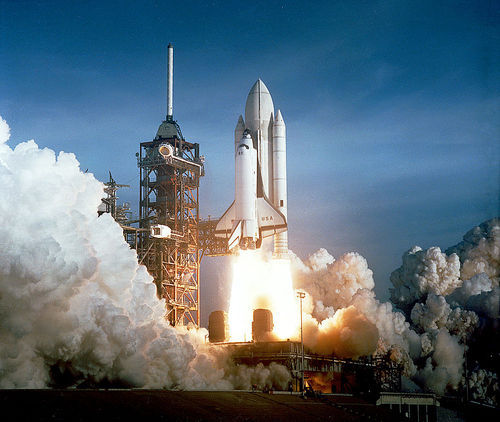
Columbia was the first of the space shuttles to fly, it was successfully launched on April 12, 1981, the 20th anniversary of the first human spaceflight by Yuri Gagarin in Vostok 1, and returned on April 14, 1981, after orbiting the Earth 36 times. The first flight of Columbia (STS-1) was commanded by John Young, a Gemini and Apollo veteran who was the ninth person to walk on the Moon in 1972, and piloted by Robert Crippen, a rookie astronaut who served as a support crew member for the Skylab and Apollo-Soyuz missions.
Columbia has an illustrious career as part of the US space program, featuring many ‘firsts’. It was the first true manned spaceship. It was also the first manned vehicle to be flown into orbit without benefit of previous unmanned “orbital” testing; the first to launch with wings using solid rocket boosters. It was also the first winged reentry vehicle to return to a conventional runway landing, weighing more than 99-tons as it was braked to a stop on the dry lakebed at Edwards Air Force Base, California.
NASA PHOTO: The April 12, 1981 launch at Pad 39A of STS-1, just seconds past 7 a.m., Columbia carries astronauts John Young and Robert Crippen into an Earth orbital mission scheduled to last for 54 hours, ending with unpowered landing at Edwards Air Force Base in California.
Its second flight, STS-2 on November 12, 1981 marked the first re-use of a manned space vehicle. A year later it became the first 4-person space vehicle – bumping this to six on its sixth flight (STS-9) on November 28, 1983. This flight also featured both the first flight of the reusable laboratory ‘Spacelab’ and the first non-American astronaut on a space shuttle, Ulf Merbold. STS-93, launched on July 23, 1999, was commanded by Eileen Collins, the first female Commander of a US spacecraft.
Space Shuttle Columbia flew 28 flights, spent 300.74 days in space, completed 4,808 orbits, launched 8 satellites and flew 201,497,772 km in total, including its final mission. Its penultimate flight (STS-109) was the third of the highly publicised servicing and upgrade flights to the Hubble Space Telescope.
The fatal flight
The rockets fire. Amidst the thundering fiery roar the shuttle lifts majestically from the launch pad. Unnoticed at the time, at 81.9 seconds after launch a foam insulating block disintegrates upon hitting the leading edge of the shuttles left-wing. The launch continues as scheduled. One hour after launch Columbia was in orbit and the crew began to configure it for their 16-day mission in space.
The next day, routine analysis of high-resolution video from the tracking cameras reveals the debris strike. Multiple groups within the mission team review the tapes. They assess the possibility of damage and decide that an image is required of the wing. They make a request to the NASA ground management for imaging of the wing in-orbit.
However, it was considered “of low concern” that the carbon matrix could be damaged by the foam block. The engineers were over-reacting. The Space shuttle Program managers declined to get the Columbia imaged – or alert the shuttle crew. In fact the crew were told that the impact was a “turn-around issue”, something they had seen before and would be a maintenance check only. Titanic-like the mission continued.
Scientifically the mission was great success. The shuttle crew worked around the clock to ensure that maximum scientific value was achieved. Including an investigation of the web-spinning abilities of the Golden orb spider under low gravity. An experiment designed by students from Glen Waverley Secondary College, in Melbourne Australia.
The morning of re-entry all appears calm and normal in the mission control room. As re-entry started the crew are seen to be in good spirits and looking forward to coming home.
Then while travelling at Mach 24.1, during the 10-minute fiery re-entry, when the leading edge reaches temperatures in excess of 1550 Celsius, the damaged thermal protection panels on the wing overheated – then failed catastrophically. The wing and shuttle disintegrating.
The nearly 84,000 pieces of debris from the shuttle are stored in a 16th floor office suite in the Vehicle Assembly Building at the Kennedy Space Center.
Two other died in the search for the debris: Jules Mier (Debris Search Pilot) and Charles Krenek (Debris Search Aviation Specialist).
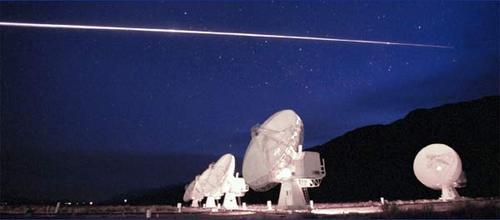
NASA PHOTO: Final descent, Columbia streaking over the Owens Valley Radio Observatory in Big Pine, California
Is spaceflight perilous? Or an unforgiving adventure?
It is rather remarkable that NASA had launched men into space sixteen times during the the Mercury and Gemini programs without a casualty – although there had been some scary moments.
Compared to the cramped and tiny Mercury capsule the Apollo command module was, in spaceflight terms, a luxury liner. So when a spark ignited the oxygen atmosphere of the Apollo 1 capsule on January 27, 1967 killing three astronauts it was shocking for both NASA and the public. The last communication from the Apollo 1 capsule was not revealed for a long time to the public:
Fire! We’ve got a fire in the cockpit! We’ve got a bad fire…..get us out. We’re burning up…..
The last sound was a scream, shrill and brief. After this nothing at NASA would be quite the same again.
The fatal Apollo 1 fire was also unexpected. At the time of the fire the crew of Gus Grissom, John Young and Roger Chaffee were perched atop an empty Saturn V rocket involved in routine testing of the capsule control systems.
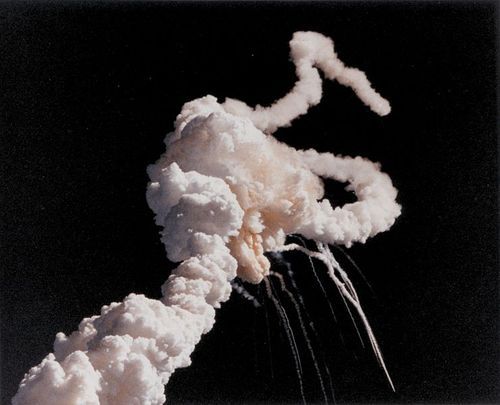
The 1986 Challenger disaster was equally shocking – and far more public. The explosion 73 seconds after lift off claimed shuttle crew and vehicle. The cause of explosion was determined to be an o-ring failure in the right solid rocket booster. Cold weather was determined to be a contributing factor. The subsequent investigation and changes delayed the next shuttle launch to late 1988.
Space Shuttle Challenger’s smoke plume after its in-flight breakup, resulting in its crash and the deaths of all seven crew members. Photo credit NASA.
You could say that space exploration in itself is not inherently dangerous. But to an even greater degree than aviation, it is terribly unforgiving of any carelessness, incapacity or neglect. Gus Grissom has been quoted as saying during the pioneering Mercury missions:
If we die we want people to accept it. We hope that if anything happens to us it will not delay the program. The conquest of space is worth the risk of life.
I’m not sure that Gus Grissom would have accepted these deaths as an acceptable risk of human spaceflight.
By now, I think it’s safe to say that if you’re reading this, it means the world didn’t end on Friday. Which is rather a good thing, because a lot of interesting things have been happening recently! Even though I’ve been busy as can be, writing papers and trying to finish off a thesis there have still been a few fascinating little gems to catch my eye in the news this week…
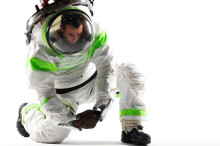
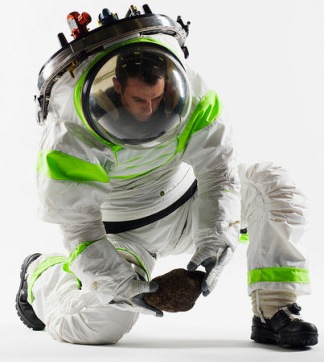
Firstly, NASA have announced a new prototype space suit, with new and improved technology. Intended to be easier to put on, amongst other things, the most exciting part of the news is that these new suits are intended for deep space missions, focussing on safety “during spacewalks and potential surface activities”! Oh, but there’s just one thing which everyone’s noticed…
Nasa’s New Space Suit Looks Exactly Like Buzz Lightyear
Nasa said one of the key differences was that the new suit has a one-piece design, into which the wearer crawls in through a hole in the back, as opposed to the trousers-top-helmet version currently in use on the International Space Station.
Meanwhile, in Switzerland, physicists have been puzzled by the results they’ve seen from the LHC. While there’s now little doubt that they’ve detected a signature which matches what they’d expect from “a Higgs-like boson”, it seems like there’s more going on than they realised…
Two Higgs Bosons? CERN Scientists Revisit Large Hadron Collider Particle Data
Yesterday researchers at the Atlas experiment finally updated the two-photon results. What they seem to have found is bizarre—so bizarre, in fact, that physicists assume something must be wrong with it. Instead of one clean peak in the data, they have found two.
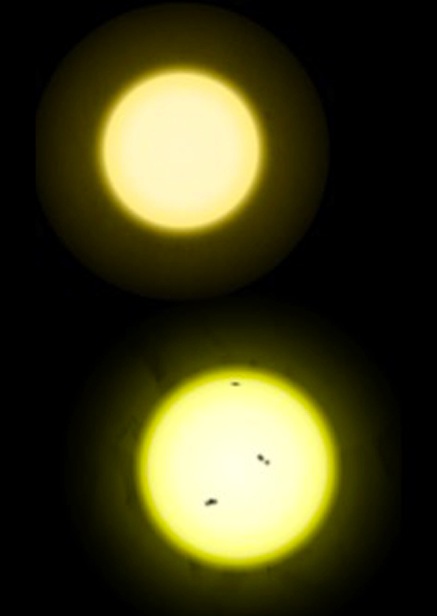
The Sun, is slightly larger and more active than Tau Ceti. Credit: R.J. Hall/Wikimedia Commons
Finally, one star near to Earth which has always garnered much attention from science fiction writers is Tau Ceti – right in our neighbourhood at a mere 12 light years away. For a long time, many have speculated on the potential for life-sustaining worlds around the Sun’s slightly more orange neighbour, and now it looks like there may well be. While we’re still waiting for confirmation, there may be 5 planets around Tau Ceti, and two of those might be candidates for sustaining life!
Nearby Tau Ceti may host two planets suited to life
The highlight of this alien solar system is Tau Ceti e, which has a mass of over four Earths and a year just under half as long as ours. It orbits in the star’s habitable zone, the region where liquid water is thought to exist. “It is in the right place to be interesting,” says [Hugh] Jones.
Short but sweet, that’s all for this week. I hope everyone has a lovely Christmas (or whichever of this season’s holidays and festivals you choose to celebrate). See you next time!
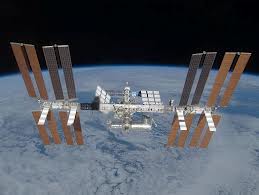
This past week NASAannounced that in 2015 they would be sending two astronauts to the International Space Station (ISS) for a year-long mission. This is an expected, and necessary step in the preparation for human spaceflight to Mars. If we are to have human explorers on the surface of Mars, we need to understand the effects on humans of long-term space travel. At the moment trips to the ISS last on average 5-6 months. A mission to Mars may take 6-8 months, plus an extended time on the planet, and a 6-8 month return trip. In reality astronauts could be sent on missions of 2 years or longer.
The ISS as it orbits Earth. Photo credit NASA.
Astronauts are exposed to a number of conditions in space that can pose serious health risks, especially if exposure takes place over a long period of time. There are lots of hazards and risks for humans in space, including: ascent and descent accidents; space sickness; debris collisions; micrometeorites; hazardous and toxic gas leaks on the spacecraft; EVA (Extra Vehicular Activity) accidents; sudden unexpected illness and the list goes on. Today I’m talking about the specific issues that affect astronauts during long distance flights. (By the way I use the term ‘astronaut’ as a general term, which includes astronauts from various nations, including cosmonauts from Russia, and teikonauts from China.)
Some of the major issues for astronauts during long duration space flights include:
Exposure to radiation – Astronauts live and work well above the protective atmosphere of earth, so they are subject to the full force of the sun’s radioactive output as well as high energy cosmic rays that originate outside of our solar system. Long distance missions do not have the benefit of Earth’s protective atmosphere and magnetic field. Material shielding is effective against low energy radiation, but may create damaging secondary radiation for higher energy particles. The ISS uses aluminium to protect the spacecraft and crew. As the thickness of the shielding material increases, the probability that the particle will survive with enough energy to damage human issue is decreased. Low levels of radiation generally do not pose a significant health risk to astronauts, however the effects of radiation are cumulative, so long term exposure increases the lifetime risk to astronauts. Crews of future long duration interplanetary missions will have to travel through the Van Allen radiation belts, and be exposed to more galactic cosmic rays, and as a result will be exposed to higher levels of radiation than those remaining in Earth’s orbit. Increased and prolonged exposure to radiation has serious health consequences for astronauts, including cancer, leukaemia, heart disease, and damage to the central nervous system.
Muscle atrophy – Our muscles, bones and organs have adapted to work in the environment we inhabit, which is exposed to the effects of gravity. When exposed to an environment where there is little or no gravity, our muscles, bones and organs begin to lose condition – becoming more problematic the longer the astronaut is in space. On Earth, our muscles are constantly working against gravity. In space there is no force of gravity for muscles to work against, so astronauts will lose muscle tone. Loss of muscle tone starts to occur shortly after launch, and continues whilst the astronaut is in a reduced-gravity environment. During longer missions, muscles may atrophy, and astronauts may experience uncontrolled muscle twitching, and a loss of fine motor control. The loss of muscle tone, strength and control can be mitigated with regular exercise during the mission.
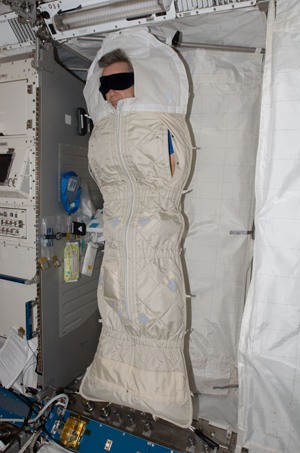
Astronaut Robert Thirsk, asleep in his sleeping quarters in the ISS. Photo credit NASA.
Cardiovascular damage – When in space, the body no longer needs to maintain the powerful heart muscles needed on Earth, so heart tissue begins to shrink. In space, astronauts experience a redistribution of body fluids, which results in changes to cardiovascular physiology. The heart doesn’t have to work as hard pumping blood in a microgravity environment as it does on earth so crew members are encouraged to undertake aerobic exercise as part of their daily routine, in addition to exercises designed specifically to maintain as much muscle tone as possible. Whist exercise is beneficial, it appears that it cannot reverse the process, but can help slow it down.
Bone density – In microgravity, the lack of impacts in weight bearing exercise means that newly created bone tissue is not incorporated into bones as normal, so as bone tissue is created it is absorbed into the system, not used as it would be on Earth. This results in high calcium levels elsewhere in the body, which can lead to significant health issues. Studies have revealed a significant loss of calcium from weight bearing bones of astronauts. This is a concern for astronauts as it suggests a risk of renal stone formation on long duration missions. Density in such bones as the pelvis and legs decreases by approximately 1 to 2 percent a month on average, which presents concerns for astronauts during long haul missions. Unfortunately exercise does not seem to reduce the level of bone loss, but is beneficial for many other issues as discussed previously.
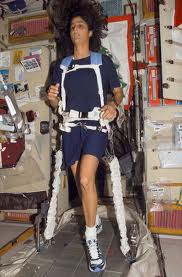
Sunita Williams exercising on the ISS. Photo credit NASA.
Hyperarousal – Don’t worry – it’s not what you think! Astronauts may experience hyperarousal, their reaction to a changed schedule, working under pressure, sleep deprivation, and the excitement of being in space. Hyperarousal can cause insomnia, disrupt the appetite, result in impaired concentration, cognitive dysfunction, and decreased co-ordination. Fatigue is often a side effect of hyperarousal, as is anorexia and sudden weight loss. Over time space agencies have developed strategies to deal with hyperarousal, including giving crews adequate rest time, control over some of their tasks, adequate leisure time, and regular contact with family and friends.
Sleep deprivation – The amount and quality of sleep experienced in space is poor for a number of reasons including: variable cycles of ‘day’ and ‘night’; poor illumination during daytime hours in the space craft; environment outside the windows at the ‘wrong’ time of day; hectic work schedule; noise of the spacecraft; altered diet; and the physical challenge of sleeping in space. Sleep deprivation may compromise the immune system, which whilst not a significant issue during short term missions, is a potentially debilitating condition during long-term missions. Sustained physical stress over a long term period may result in an immune system that is so compromised that the body is unable to fight serious infections. Precautions include wearing sleeping masks and earplugs, anchoring themselves down to sleep, maintaining a steady routine of work and sleep, and using shades and other devices to block out the windows.
Psychological Issues – Working away from friends and family, and working with people from other cultures presents a number of psychological and social challenges. The psychological welfare of a crew of astronauts is critical to the success of a space mission. Interpersonal relationships during a mission may be a significant source of psychological stress. Crews do many things in space to try to maintain a sense of ‘normalcy’ during long stays in space. When crews aren’t required to work, they are encouraged to undertake other activities, which include reading, listening to music, writing e-mails and letters to family and friends, and exercising. In 2007 American astronaut Sunita Williams ran the Boston Marathon on the treadmill in the ISS, completing the race in just over 4 hours. During low earth orbit missions crews receive periodic care packages from their family with CDs, DVDs, books, magazines, photos, and letters. In addition to the packages, the ISS also has library lockers that contain music, books, and videos.
Over the last 40 years humanity has overcome enormous social, technical and physical challenges to put humans into space. When Yuri Gagarin became the first human in space by orbiting the Earth for 108 minutes on the 12th of April 1961, very little was known about the space environment and how it would affect humans. Just over 40 years later we now have a permanent presence in space with the introduction of the ISS into low Earth orbit. We know a lot about the physiology and psychology of humans in space, and have made space a relatively comfortable existence for astronauts. The future of space exploration may include human missions to other planets within our solar system, such as Mars. Before any long-term exploration of Mars could be contemplated, further research is needed in a number of areas to ensure the safety, and longevity of all crew members during the mission and beyond.
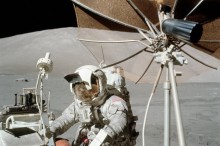
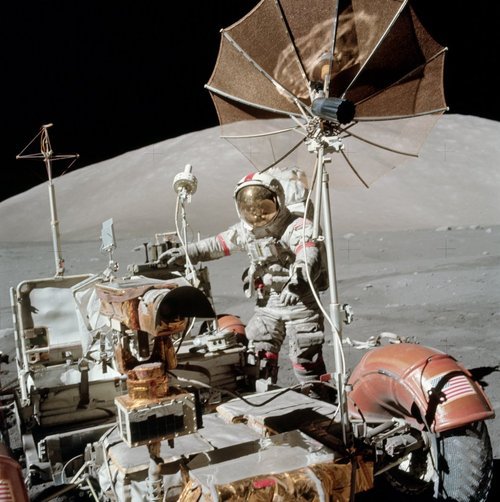
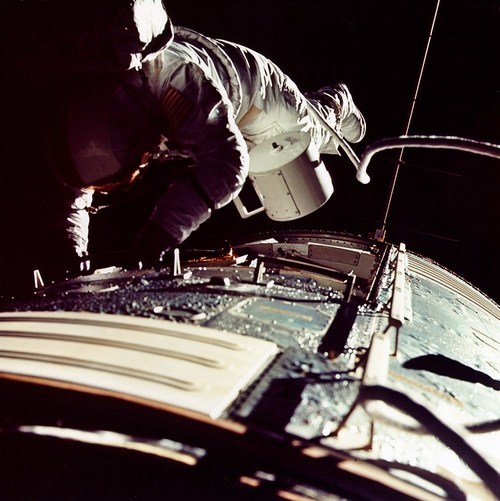
Apollo 17 Commander, Eugene Cernan, next to the lunar rover. Image credit NASA.
After kangaroo hopping back to the lunar rover, Eugene and Jack drove back to the lunar module, Challenger. There they dusted each other off and loaded the last of their 100kg of lunar rock samples. Jack cleaned up inside While Eugene parked the rover a kilometre and a half away so the takeoff could be televised. Then hopping and skipping in the low lunar gravity he made the most of his last moments on the moon. Once back at the lunar module, one foot on the Challenger’s landing pad, Eugene Cernan lifted his other from the moon, and said:
As I take these last steps from the surface for some time to come, I’d just like to record that America’s challenge of today has forged man’s destiny of tomorrow.
The next day, December 14, 1972, they blasted off from the moon, ending the sixth and last human exploration of the moon for the 20th century.
The last of the lunar Apollos
The Apollo program was a child of the cold war between the USA and Soviet Russia. It was invigorated by President Kennedy’s 1961 challenge to put man on the moon and return him safely before the decade was over. Once the landing of Apollo 11 was achieved in July 1969, the Apollo and NASA budgets came under savage scrutiny. It was the time of the war in Vietnam, budget problems for the 1972 fiscal year and followed the scare of Apollo 13.
The final two scheduled Apollo missions, 18 and 19, were finally cancelled in September 2, 1970. Apollo 20 had already been cancelled on January 2 so that its Saturn V rocket could be used as the launch vehicle for the Skylab space-station in 1973.
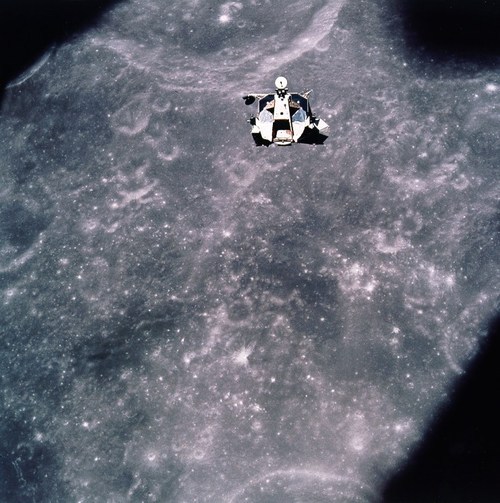
The first part of the return journey as the Lunar module, Challenger, approaches Apollo 17 Command Service Module, America, after blasting off the lunar surface. Photo credit NASA
The Apollo program was an incredible, successful human feat. It remains the only program to have placed humans beyond low-earth orbit and onto another celestial body. Apollo 8 was the first manned spacecraft to orbit another celestial body, while Apollo 11 landed the first humans on another world. The program returned 382 kg of lunar rocks and soil to Earth, contributing to the understanding of lunar geology.
It laid the foundation for NASA’s current human spaceflight capability, and funded construction of its Johnson Space Center and Kennedy Space Center. Apollo also spurred advances in many areas of technology incidental to rocketry and manned spaceflight and the start of huge opportunities for technology transfer, leading to more than 1,500 successful spinoffs related to areas as disparate as heart monitors, solar panels, and cordless innovation. More recently, we’ve seen a fledgling private-sector American space industry complete its first cargo delivery to the international space station.
Stepping up, walking tall
There is a marvelous fascination with human exploration. The Apollo missions are a great representation of that drive and curiosity. Apollo 17 astronauts, Eugene Cernan, Harrison Schmitt and Ron Evans, exemplified those attributes.
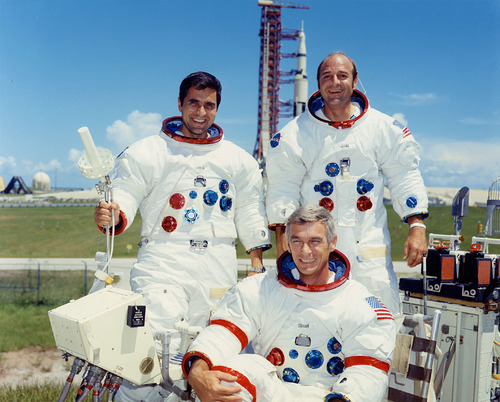
Publicity shot of the Apollo 17 crew with their Saturn V vehicle in the background. (L-R): jack Schmitt, Eugene Cernan (seated) and Ron Evans.
Eugene Cernan is ‘Captain America’ to a tee. A US Navy pilot who, like much of America, was caught up in the early space race. In 1962 he watched, captivated, on TV the launch of John Glenn. Who in the third manned Mercury capsule became the first American to orbit the earth. Cernan at the time lacked the coveted ‘test-pilot’ wings to be selected in the September 1962 second group of astronauts, which included Apollo 11 commander, Neil Armstrong. Cernan was picked, in October 1963, for the third astronaut group – which included the other Apollo 11 astronauts Buzz Aldrin and Michael Collins.
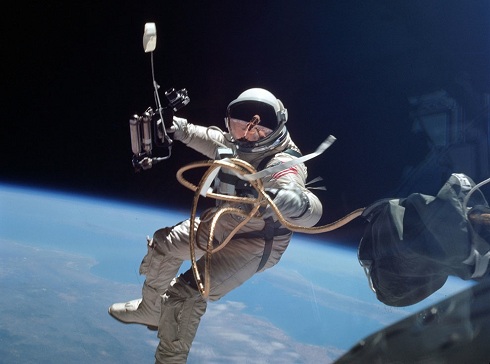
Cernan became the second American astronaut, after Ed White on June 3 1965, to perform an extra-vehicular activity – a spacewalk. His Gemini 9 spacewalk lasted 2 hours and nine minutes, travelling 57,600 km, and rated as one most difficult achievements of his life. The brutal mechanics of Newton’s third law in action in space making seemingly simple tasks into exhausting and challenging experiences, resulting in fogging his helmet and pushing his heart rate to 188 bpm. His experiences made NASA rethink the training required for future extra-vehicular activities.
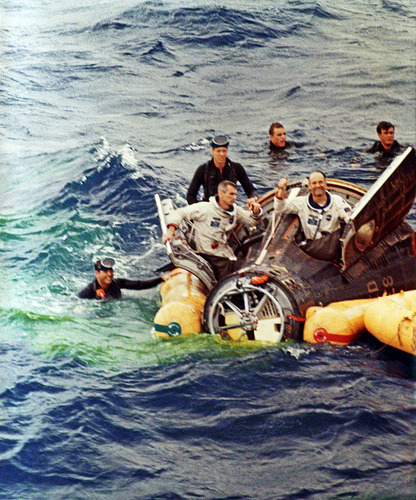
Gemini 9 splashdown with Eugene Cernan (L) and a smiling Tom Stafford (R).
On January 27, 1967 Tom Stafford, John Young and Cernan were in an altitude chamber “trying to bring a new, untried, stubborn spacecraft up to launch standards”. Meanwhile, in an identical craft, Apollo 1 astronauts veteran Gus Grissom, first American spacewalker Ed White and Cernan’s closest friend the rookie Roger Chaffee, were conducting similar tests atop a Saturn rocket at Cape Kennedy. Minutes later they were dead, killed in a fire – a tragedy stunning the close-knit space community.
In May 1969, Cernan, as part of the Apollo 10 crew along with Tom Stafford and John Young achieved a number of records and a “dry-run” for the Apollo 11 landing two months later. As befitting a crew of test pilots they set the record for the highest speed attained by a manned vehicle at 39,897 km/h during the return from the Moon on May 26, 1969 and hold the record of being the humans who have traveled to the farthest point away from home, some 408,950 kilometres. Cernan and Stafford came within 15.6km of the lunar surface in their lunar module Snoopy.
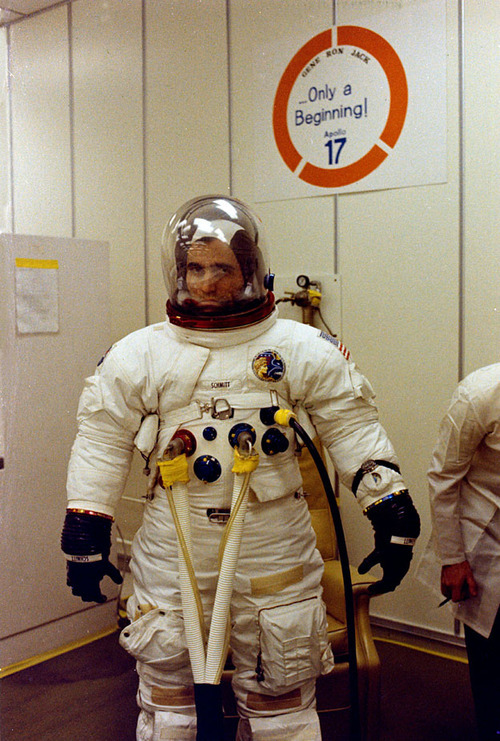
Jack Schmitt being suited up for dress rehearsal prior to launch. Photo credit NASA.
Harrison “Jack” Schmitt is a geologist and one of the NASA group 4 astronauts, “the scientists“, that were announced on June 28, 1965. His and their story is worthy of is own post, coming in January 2013.
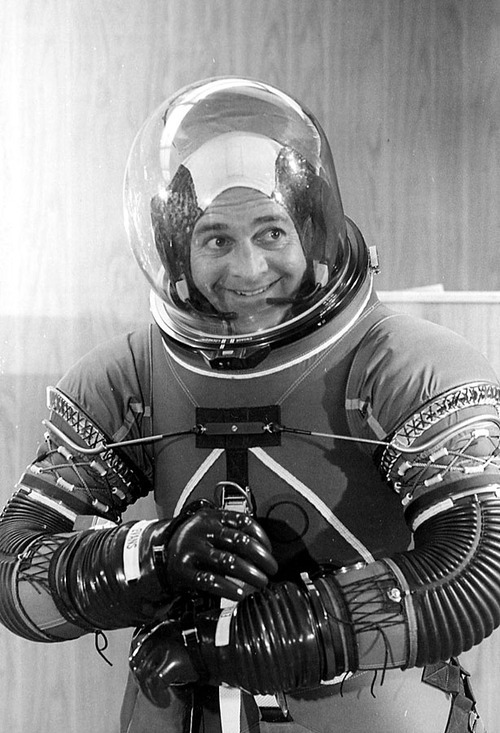
Ron Evans having a suit fitting during the pre-launch phase. Photo credit NASA.
Ron Evans was picked as a Command Module specialist from the beginning of his NASA career. Chosen in April 1966, one of the group 5 astronauts, he was support crew for Apollo 1 and back-up command module pilot for Apollo 14. I found him notable for his almost invisibility in memoirs of the time. In both Deke Slayton’s and Eugene Cernan’s fascinating autobiographies Ron Evans is there an accepted, uncontroversial part of the missions, without a strong personality, extremely competent – obviously the perfect man for the pilot seat of the command module America.
Adventures in the Taurus-Littrow valley
A moon landing was the payoff for all the hard-work, according to Cernan, “the ultimate dream for any pilot.” Following the tradition began by Neil Armstrong on Apollo 11, Cernan, as Commander, was first out on the moon. As he skipped around Schmitt quipped, “Hey, whose been tracking up my lunar surface?” and then stepped out onto a geologist’s paradise – the moon.
The primary objectives for Apollo 17 were: to sample lunar highland material older than the impact that formed Mare Imbrium and investigate the possibility of relatively young volcanic activity in the same vicinity. The Taurus-Littrow valley was selected with the prospects of finding highland material in the valley’s north and south walls and the possibility that several craters in the valley surrounded by dark material could be linked to volcanic activity
Cernan and Schmitt had a three-day lunar surface stay, conducting three periods of extra-vehicular activity, either moonwalking or driving around in the third Lunar Roving Vehicle. They amassed over 22 hours on the surface during these periods in which they collected lunar samples and deployed scientific instruments.
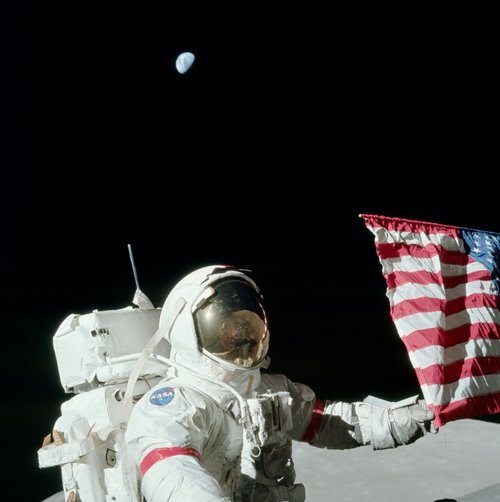
Eugene Cernan on the first EVA, suits still pristine and the Earth above his head. Evocative shot by Jack Schmitt. Photo credit NASA.
The largest haul of lunar rocks was collected by the two moon-walkers as well as deploying the Apollo lunar surface experiments package (ALSEP), a feature of all manned lunar missions. The stations ran from deployment until they were turned off on 30 September 1977 due to: budgetary considerations, the power packs could not run both the transmitter and any other instrument, and the ALSEP control room was needed for the attempt to reactivate Skylab.
They also carried out gravimeter experiments to learn about the moon’s internal structure. The gravimeter was used to obtain readings at the landing site in the immediate vicinity of the lunar module, as well as various locations on the mission’s roving routes.
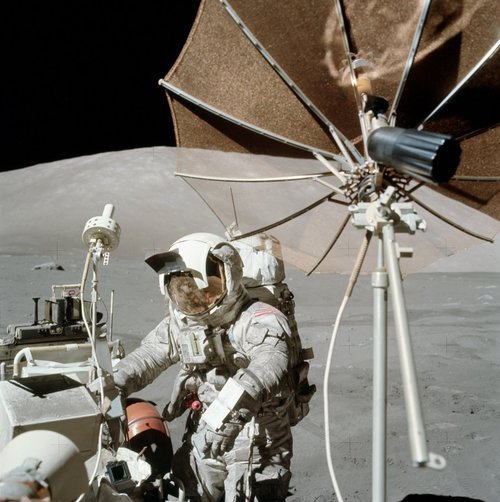
Eugene Cernan next to the lunar rover vehicle. Photo credit NASA.
Meanwhile the command module also housed a series of scientific experiments. A special bay housed three experiments (as well as cameras and altimeter) for use in lunar orbit: a lunar sounder, an infrared scanning radiometer, and a far-ultraviolet spectrometer. The film canisters were recovered by Ron Evans in a spacewalk after docking with the returned lunar module.
Ron Evans on his space-walk to retrieve film canisters from the outside of the service module prior to separation of the command module and return to earth. Photo credit NASA.
Splashdown in the Pacific on December 19, 1972 brought this “first phase” of human space exploration to a close – I now wait for the second phase to begin and wonder who might it be?
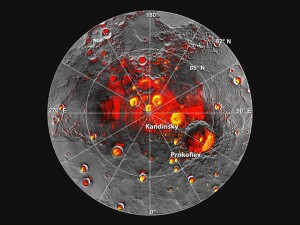
MESSENGER detected the presence of polar ice on Mercury. The spots shown in yellow are craters containing ice. Source: Image Credit: NASA/Johns Hopkins University Applied Physics Laboratory/Carnegie Institution of Washington/National Astronomy and Ionosphere Center, Arecibo Observatory
Water – the source of all life. It’s been found on what we have believed for many moons to be that little hot-tempered planet named Mercury. It seems the celestial body has a shady side, a split personality perhaps; one side ferociously hot, while its polar opposite features some craters of ice. NASA scientists have unequivocally confirmed the presence of water on the planet. Ready for a swim? Ice-skating may be more appropriate.
The Finding
Rarely does consensus on discoveries such as this occur. Three methods, neutron spectrometry, near-infrared reflectance and thermal models from MESSENGER, were used to conclude and confirm the presence of water and organic material on Mercury.
The duality of Mercury is somewhat perplexing; can you imagine living on a planet with a temperature range between -223C and 427C? It is in these shaded, cold regions, those that never see the sun, where the ice lies bare and exposed. However, data from MESSENGER also show that frozen water is found in slightly warmer areas. It lies buried beneath a dark material, an insulator of some sort covering it, and there’s a lot of it. Estimates put the amount of water ice on Mercury between 100 billion and 1 trillion metric tons. That’s enough water to cover an area the size of Washington, D.C., 3.2 kilometers deep.
Where Did the Water Come From?
Much the way Earth came to have water and organic material, it is thought that comet impacts and asteroid strikes created the same organic building blocks of life on Mercury. At last Thursday’s news conference, researchers were bouncing around all sorts of hypotheses on what this discovery could mean for life in other parts of our solar system. Messenger principal investigator Sean Solomon, of Columbia University’s Lamont-Doherty Earth Observatory said “there’s a lot of water out there, as there is a lot of water around other stars, but at substantial distance. “The solar system is “a soggy place ” according to Jim Green, director of NASA’s Planetary Science Division. Green went on to explain his enthusiasm with that statement, indicating “it really bodes well for us to continue on the exploration, following the water and its signs throughout the solar system.” How water was brought to Earth and Mercury, were probably brought to other planets.
With any good find, come more questions…
These observations, while extraordinary, can only heighten our curiosity about Mercury and the rest of the galaxy. Is the dark material in the polar craters on Mercury mainly organic compounds? If so, what sorts of chemical reactions has that organic material undergone? Is this the same material that gave rise to life on our planet? Are there regions on Mercury that have both liquid water and organic compounds? Only by continued exploration of space can we hope to find answers to these questions.
Life as we know it, will probably not be found on Mercury given its ultra-thin atmosphere and proximity to the sun. The discovery of water ice and dark organic material can still inform the hunt for organisms beyond Earth and help scientists piece together the puzzle of how life began on our planet. We still do not fully understand the beginnings of life and the chemical reactions associated with those beginnings on our own planet.
Last week’s discovery of water and organic material on Mercury will indicate we have a lot to learn. Hopefully, it opens up vast areas of research that radiate outward, showing the connections of our segmented universe. How we see view and study other planets has great value for how we analyze and safeguard ours. For instance, what are the implications for planetary warming (climate change)? What can the ice trapped beneath the organic carbon material tell us? The thermostat of astrobiology has just been ratcheted up a notch.
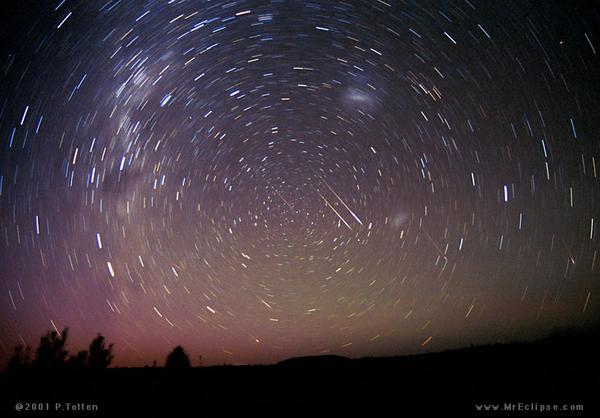
Ah, the weekend! Time to kick back, relax, and look back over everything that’s happened over the past few days. And I’m rather happy to say that some quite interesting things have happened, including the Leonid meteor shower which peaked on Friday night (though if you step outside after dark and watch the sky, you may still see a few stragglers). So what else has caught my eye this week, science-wise?
Well first off, the Curiosity Rover has been busy over on the planet next door. I can’t help but find everything about the Curiosity rover exciting, especially as it’s paving the way for actual manned exploration to another planet. As many people will agree, no matter how sophisticated a rover can be, it will never be as good as a team of properly equipped geologists exploring a site in person. As it turns out, this idea just came a step closer to being reality…
The findings demonstrate that Mars’ atmosphere, though just 1 percent as thick as that of Earth, does provide a significant amount of shielding from dangerous, fast-moving cosmic particles.
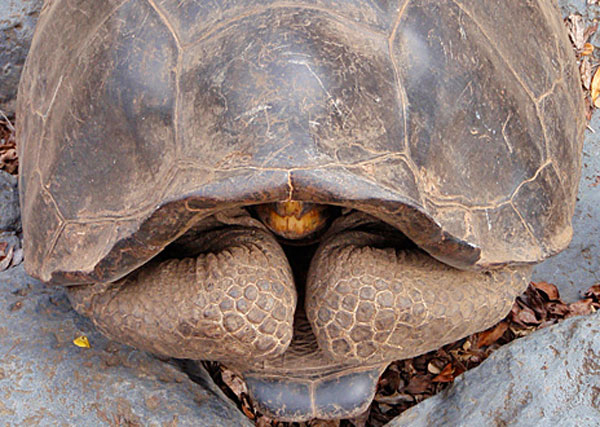
Some people may recall the death of an aged tortoise nicknamed Lonesome George, so called because he was thought to be the last surviving member of his species. I know I do, and was rather saddened by it. While it may be an inescapable part of the way life on our planet works, there’s something quite humbling about being forced to simply watch a species go extinct and not be able to do anything about it. But then, was George’s death really the end of the story? As it happens, perhaps not…
“These giant tortoises are of crucial importance to the ecosystems of the Galapagos Islands, and the reintroduction of these species will help preserve their evolutionary legacy,” said Danielle Edwards, postdoctoral research associate at Yale and lead author on the study.
Lisa Grossman at New Scientist discusses the phenomenon of rogue planets – planets roaming interstellar space after being forcibly ejected from their home systems. It’s a concept which I’ve thought about in great detail in the past, as have many others, including astrophysicists, astrobiologists, and science fiction authors.
The wanderers are no longer gravitationally linked, but they are headed in the same direction. “Like when you kick a clod of sand, the grains don’t stick together anymore but they have the same common motion,” Delorme says.
In chemistry, I’ve always held a certain fascination with noble gas compounds. Molecules formed from atoms which aren’t supposed to react and form molecules always seemed rather exotic and curious. Several of these compounds have been predicted involving Xenon, one of the heaviest noble gasses. And there may be a lot of Xenon trapped inside the Earth this way…
“In addition to providing a likely solution to the missing xenon paradox and clarifying essential aspects of xenon chemistry, our study may result in practical applications,” says [Artem R.] Oganov. “For example, the ability of xenon to form strong chemical bonds with oxygen and other elements, and to be trapped in crystalline defects, suggests their use as non-classical luminescence centers and active sites for catalysis”.
And to end on a humourous note, XKCD wrote a comic this week describing the Apollo Spacecraft and Saturn V rockets using only the 1000 most commonly used words in the English language. The result was slightly hilarious and rather enlightening about how often writers like myself use words which aren’t in that top 1000. A testament to XKCD’s popularity is how many people in the online space and astronomy communities mentioned it – including at least one astronaut!
Lots of fire comes out here. This end should point toward the ground if you want to go into space. If it starts pointing toward space you are having a bad problem and you will not go into space today.
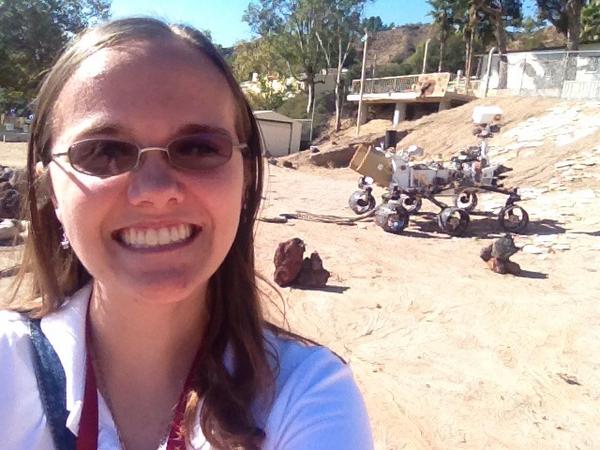
Keri Bean in the NASA JPL Mars Yard, with the Curiosity test-bed twin ‘Maggie’
Keri Bean is a meteorologist specialising in the atmospherics of other planets. She is on the team operating the Curiosity Rover for NASA’s Mars Science Laboratory mission. Prior to MSL, Keri has had roles in the missions for other Mars rovers Spirit and Opportunity, a prototype Moon rover, the Phoenix Mars Lander, and the Hubble Space telescope. And she’s just 25 years old! That’s a pretty incredible CV to rack up already.
In this interview, Keri talks with me about her work on MSL and the other missions, plus how and why she got into space science. It all started when a tornado hit her pre-school.
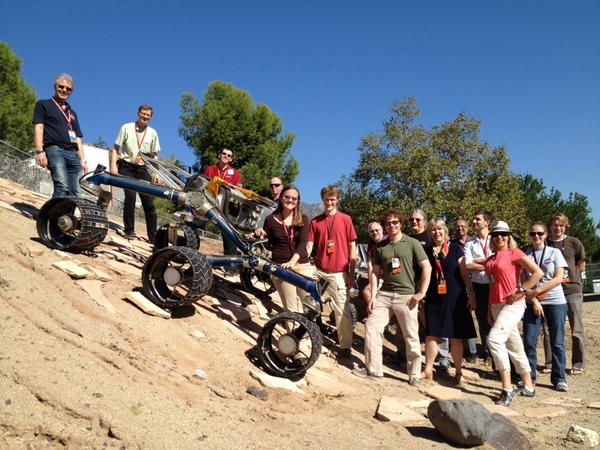
Keri (centre) with many of the MSL team and ‘Scarecrow’, the other Curiosity test rover (Scarecrow is lighter than Curiosity so that it mirrors the lower Mars gravity).
A GIF of the partial solar eclipse by Mars moon Phobos, as captured by the Curiosity rover—an image capture task coordinated by Keri.
A photo of Phobos (highly zoomed it, and hence quite grainy) taken by Curiosity just after dusk on 21 September using one of its Mastcams, showing its ‘potato’ shape.
The ‘Chariot’ Lunar rover prototype for which Keri worked on camera design (and which James May managed to have a minor accident with when filming an episode of Top Gear!).
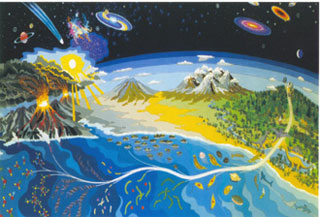
Although the question of extraterrestrial life is very old, the concept of full-blown cosmic evolution – the connected evolution of planets, stars galaxies and life on Earth and beyond – is much younger. In a rather breathtaking paper, Steven Dick formerly of the Aerospace History at the National Air & Space Museum places his arguments for cosmic evolution. Dick traces the idea from its roots in the 19th century theories of Pierre-Simon Laplace and Robert Chambers through its philosophical, astronomical, and biological upbringing to the present day. He examines evolution, the worldview that it had become in the 1950s and 1960s and how it had permeated culture in numerous ways and different cultures in diverse ways. Dick cautions us though noting “we need to remember that ‘culture’ is not monolithic and that ‘impact’ is a notoriously vague term.”
In addition to the impact of our new understanding on culture, cosmic evolution also provides a window on long-term human destiny, asserts Dick. He presents this idea via three scenarios, the: the physical , biological, and postbiological universe. Life is unique to earth in the physical universe scenario, and the options flow from this situation – think of Isaac Asimov’s Foundation series. We will certainly interact with extraterrestrials in the biological universe – here cosmic evolution commonly ends in life, mind and intelligence. Cultural evolution in a biological universe may replace biologicals with artificial intelligence creating what Dick calls a postbiological universe. We do not know yet, which of these is our reality, that is one of the challenges of astrobiology, maintains Dick.
In a second ‘big-picture’ paper Marcelo Gleiser presents his four ages of astrobiology. For Gleiser the influx of astrophysical data, particularly on the prevalence of exoplanets “indicates that there are plenty of potentially life-bearing platforms within our galaxy.” He then presents the ‘history’ of life in the universe in terms of the steps needed for matter to have sequentially self-organised into more and more complex structures. His sequence is best viewed as a prelude to the physical or biological universe scenarios of Dick. Gleiser’s fourth age, the Cognitive Age (the age of thinking biomolecules), really addresses whether we are unique or not i.e. which of Dick’s two scenarios, the physical or biological are reality. Gleiser’s first three ages: physical, the creation of stars and planets from atomic nuclei; chemical, in which elements organise into biomolecules; and thirdly biological, in which living creatures of growing complexity form from biomolecules. the papers by Dick and Gleiser are both papers heady and exhilarating conceptual reads.
Jorge Horvath and Douglas Galante accept the premiss that life exists, and then argue we need to take high-energy astrophysical events seriously. Scientists and the public account for meteor impacts in both academic studies, science-fiction writing and film – not so for events such as supernovae, gamma-ray bursts and flares. They show that these events are more frequent than asteroid strikes and that the effects are non-negligible (academic speak for potentially fatal to planet based species). They conclude that just because we have not yet been wiped out by such events can be seen as either a measure of earthlife’s resilience or a threat we are statistically yet to encounter.
My attention was captured by two other papers from the proceedings. Martin Brasier and David Wacey address the problem of studying life in deep space – comparing it to study of life remote in time. This view is pertinent, as it is non-trivial for scientists to determine what is a viable signal of extinct life. The authors develop a set of protocols and then apply these to earth samples, of varying ages. They do this to show how we could interpret similar samples, where much of the desirable information (the context) has been filtered out during the process of transmission (either physical or data) across vast distances of space, or time or both (as is likely on Mars). Even 10 years ago these questions were moot, but we have learned much over the recent past about metabolic pathways and living microbial systems. Brasier and Wacey conclude that there is still work required on pseudo-fossils, structures that arise naturally within complex physico-chemical systems, so that we can confidently agree on signs of life that are remote in space and time.
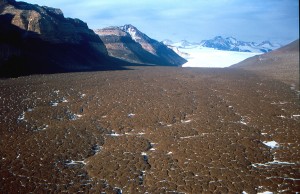
The Dry Valleys in Antarctica. Photo credit: NASA
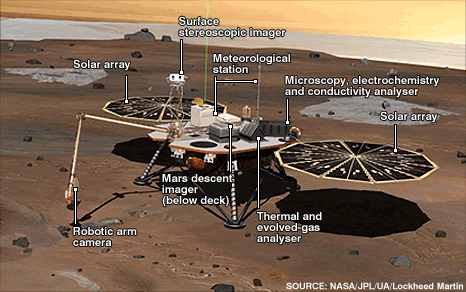
My final pick is an experimental paper that looks at the ExoMars mission. The European Space Agency and (initially NASA ) ExoMars mission is scheduled for launch in 2018 – specifically to detect life signatures on the surface and subsurface of Mars. This probe will carry, for the first time, a Raman spectrometer, a technique with proven ability to determine the spectral signals of key biochemicals. The authors support these assertions by assessing samples acquired from Arctic and Antarctic cold deserts and a meteorite crater. These terrestrial environments are similar to those found on Mars. The experimental results presented in this paper demonstrate that it will be possible using this technique to assess and detect spectral signals of extra-terrestrial (Mars in this case) extremophilic life signatures.
The Soviet Union launched Sputnik 1 into an elliptical low Earth orbit on October 4, 1957. This surprise precipitated the space age and triggered the space race. The success ushered in new technological, political, military, and scientific developments.
On April 12, 1961, Yuri Gagarin became the first person in history to leave the Earth’s atmosphere and venture into space. His flight aboard a Soviet Vostok rocket lasted 108 minutes, at the end of it he had ignited the manned space race.
Who were men who responded to these Soviet firsts, launching America into space and then onto the moon?
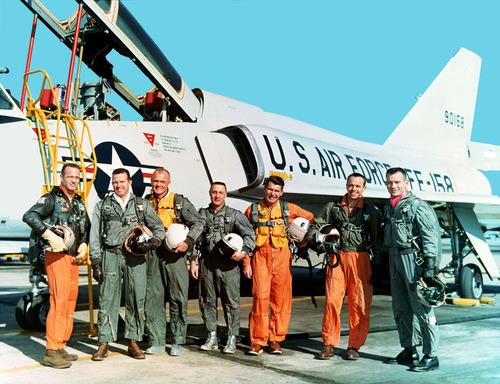
NASA selected the first US astronauts, the Original Seven (also referred to as the Mercury Seven and Astronaut Group 1), on April 9, 1959. This was the only astronaut group with members who flew on all classes of NASA manned orbital spacecraft of the 20th century — Mercury, Gemini, Apollo, and the Space Shuttle.
The Mercury Seven stand in front of a F-106 Delta Dart. Photo credit NASA.
The first American launched into space was Alan Shepard, followed by Gus Grissom. Their ballistic flights were followed by orbital flights by John Glenn then Scott Carpenter, each managing three orbits. Wally Schirra made six orbits and Gordon Cooper completed the Mercury project with 22 orbits. Cooper was the first American travelling in space for over a day and the last American to be launched solo into Earth orbit. Deke Slayton, was grounded in 1962 due to a heart arrhythmia, but reinstated in 1972 and flew on the Apollo-Soyuz Test Project in 1975.
The New Nine. Back row: See, McDivitt, Lovell, White, & Stafford. Front row: Conrad, Borman, Armstrong, & Young. Photo credit NASA.
With the announcement of the Gemini program and planning of the Apollo program a second group of astronauts were selected by NASA and announced on September 17, 1962. The New Nine augmented the original Mercury 7. While the original seven had been selected to accomplish the simpler task of orbital flight, the new challenges of rendezvous and lunar landing led to the selection of candidates with advanced engineering degrees (for four of the New Nine) as well as test pilot experience.
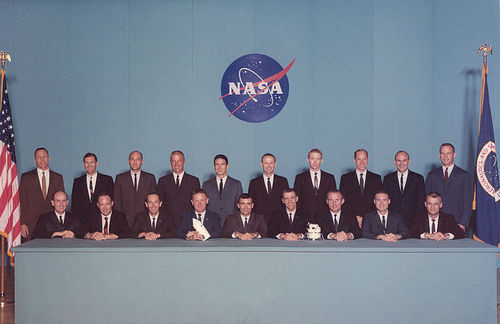
The Fourteen (seated, left to right) Aldrin, Anders, Bassett, Bean, Cernan, and Chaffee. Standing (left to right) are Collins, Cunninham, Eisele, Freeman, Gordon, Schweickart, Scott and Williams. Photo credit NASA.
Group 3 was the first group to include candidates with no test pilot background. They are the only ones of the first 19 NASA astronaut groups to have no members at all fly on the Space Shuttle.
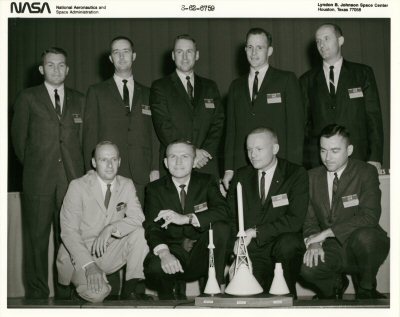
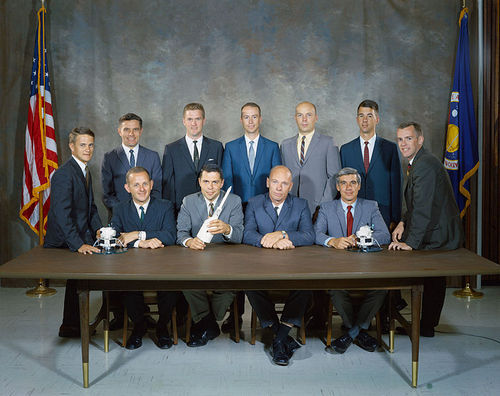
The fourth group of astronauts, the Scientists, selected by NASA in June 1965, came as a rude shock to the existing astronauts. While the astronauts of the previous three groups were required to have college and some advanced degrees, they were chosen for their test pilot expertise. The six members of this group, on the other hand, were chosen for their research and academic backgrounds. Doctorate degrees were required and minimum flight time requirements were waived for this group.
Scientist-Astronauts: Front row, L-R: Michel, Schmitt, and Kerwin. Back row, L-R: Garriot, and Gibson. Photo credit NASA.
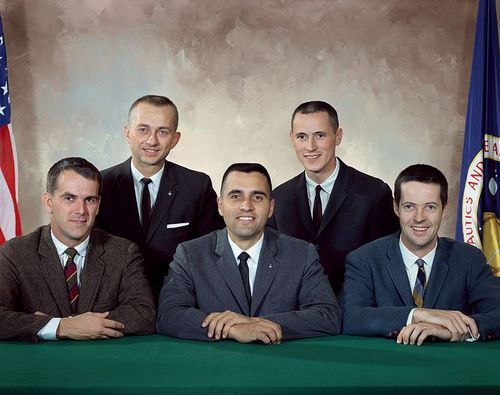
John Young labelled the next astronaut group, selected by NASA in April 1966, the “Original Nineteen” in parody of the original seven Mercury astronauts. Of the six Lunar Module Pilots that walked on the Moon, three came from this group (Charles M Duke Jr, James B Irwin, and Edward D Mitchell). This group is also distinctive in being the only time when NASA hired a person into the astronaut corps who had already earned astronaut wings, X-15 pilot Joseph “Joe” H Engle.
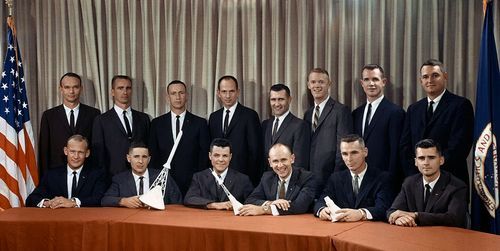
The final group of this era, the second group of scientist-astronauts, were appointed by NASA on August 11, 1967. They were labelled the “excess Eleven” with only five, including the first Australian born astronaut Philip Chapman, given formal assignments in the Apollo Program, and these were all non-flying. These were: Joseph P Allen, Chapman, Anthony W England, Karl G Henize, and Robert A R Parker. Chapman resigned from NASA in July 1972 due to lack of space-flight opportunities. Three others, Donald L Holmquest, Anthony A Llewellyn, and Brian T O’Leary resigned earlier from the group for various reasons.
The Excess Eleven civilian scientists. Seated at the table, L to R: Chapman, Parker, Thornton, and Llewellyn. Standing, L to R: Allen, Henize, England, Holmquest, Musgrave, Lenoir, and O'Leary. Photo credit NASA.
Assignments for the group were delayed by the requirement to spend a full year to become qualified as jet pilots (as were the Group 4 scientists before them). This requirement for scientists to be trained as jet pilots was eventually lifted with the creation of the Mission Specialist position in the Shuttle Program. The seven members (Allan, England, Henize, William “Bill” Lenoir, Story Musgrave, Parker, and William E Thornton) of Group 6 who stayed with the program after Apollo went on to form the core of Shuttle Mission Specialists, accomplishing a total of 15 flights.
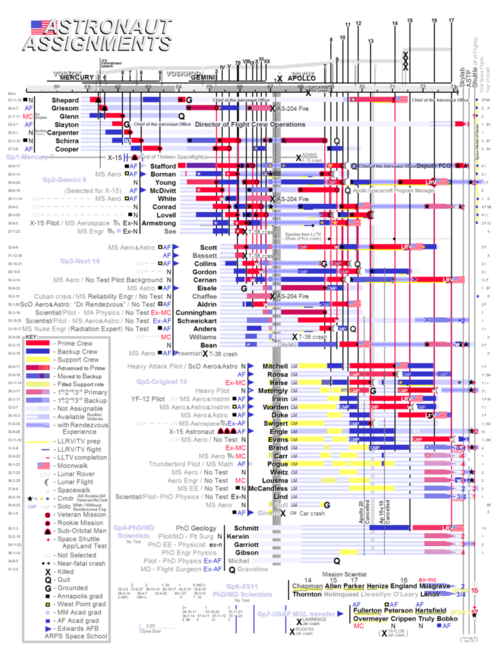
This chart organizes each NASA astronaut group by order of their assignment to fly. Codes as explained in the legend illustrate each person's skills and accomplishments. Image credit: Tdadamemd
In all 66 men became NASA astronauts during this first era of manned space exploration. No women were included – although there was an unofficial group called the First Lady Astronaut Trainees– not being jet test pilots there were ineligible to become astronauts.
Was this a “boys’ own adventure”? Was this a period of great social upheaval in the USA? Did this era cement in the US politicians and public the image of supremacy and isolationism in space endeavors? Yes, is the answer to all three questions.
There are a myriad of stories from these groups’ exploits. These stories have a contemporary relevance as we reach an era of: new commercial space opportunities (leisure, exploration and mining), new entrants (China and India), and find the US and Europe hampered by self-imposed budget challenges and hurdles.
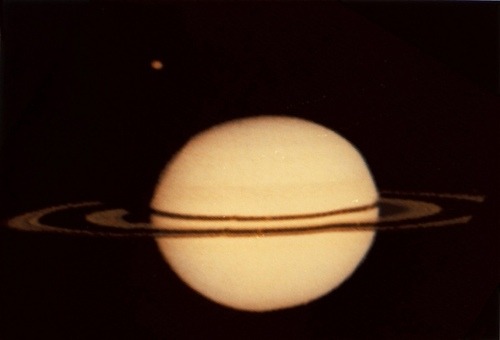
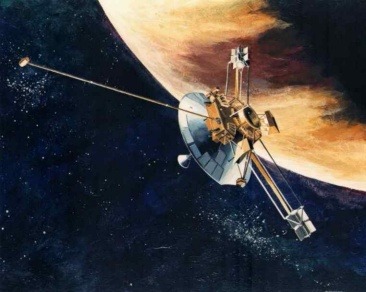
Pioneer 10 and 11unveiled the solar system during the golden-age of robotic exploration. Their missions were a success; Pioneer 10 threading the asteroid belt to provide our first close view of Jupiter and its moons, Pioneer 11 catapulting past Jupiter and foraying through the plane of Saturn’s rings.
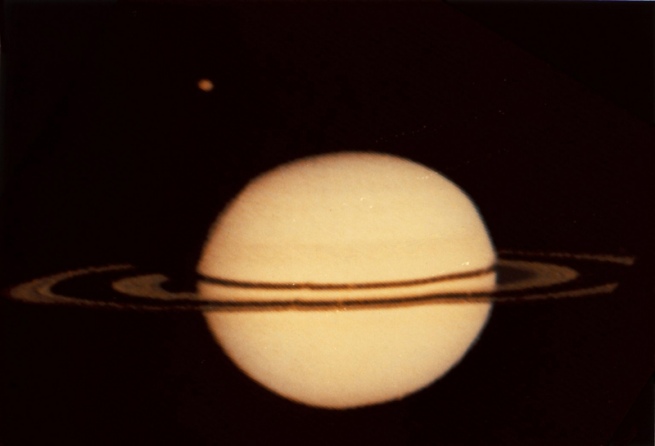
Saturn and its moon Titan imaged by Pioneer 11 in 1979. Photo credit NASA/JPL.
The Pioneers, true to their name, kept travelling – out of the solar system – into space legend. We lost communication with Pioneer 11 in 1995, and with Pioneer 10 in 2003 when it had reached a distance 80 times further than the Earth from the Sun. Some years prior to this, when the probes had traveled only one quarter of this distance, scientists realized both were thousands of kilometres closer to the Sun than expected.
Space exploration depends on precise measurements of every factor involved in the mission – particularly distance. Beams of radio waves were sent and bounced off the Pioneer spacecraft to measure the probes’ movement. The distance to the spacecraft and its speed were calculated from the photons’ round trip time and their Doppler shift (the frequency change you hear as an ambulance siren approaches and then recedes from you).
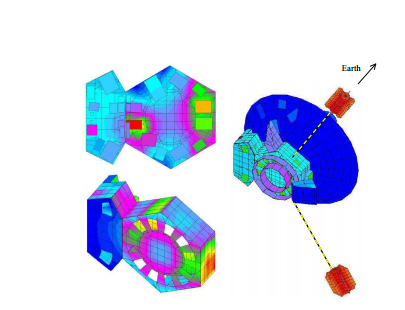
Gas leakage, measurement error or other mundane reasons might explain the Pioneer anomaly. Heat, unevenly radiating off the probes, slowing their voyage, is proposed by Jet Propulsion Lab scientists, in a new Physical Review Letters article, to account for the anomaly. After constructing a finite-element thermal model of the two spacecraft, the authors modeled the effects of thermal recoil forces on Pioneer 10 at various distances from the Sun.
Finite element analysis of thermal radiation from Pioneer 10. Image credit JPL.
A second paper in a sister journal, Physical Review D, proposes a totally different cause and conclusion. Flat (neither expanding nor contracting) background spacetime with a solar system gravitationally isolated from the rest of the Universe is the cornerstone of current theory. The new study extends this theoretical concept, formalizing the description of particles and photons moving in the gravitational field of a localized astronomical system now embedded in an expanding universe.
The proposed changes to the astrophysics theory are mathematically complex, the paper is densely populated with “post-Newtonian cosmological field equations” – the conclusions though are emphatically clear. Terms, proportional to the local expansion of the universe, are missing from the equations of light propagation currently used by space navigation centres for fitting distance and speed observations of satellites and celestial bodies. With this correction the Pioneer anomaly disappears; the photons were moving faster than expected from the theory, the spacecraft were actually travelling the correct speed.
NASA New Horizons space probe. Image credit NASA/JPL.
So which of these two competing papers explains the Pioneer anomaly? Which will solve this nagging problem and be of benefit to future interstellar travel? We may need to wait beyond 2015 to find an answer. With no new Pioneer data, proof will rely on measurement from NASA’s New Horizons mission, launched in 2006 and set to reach Pluto in 2015.