Tag: physics

  • Weekly Science Picks

    Weekly Science Picks

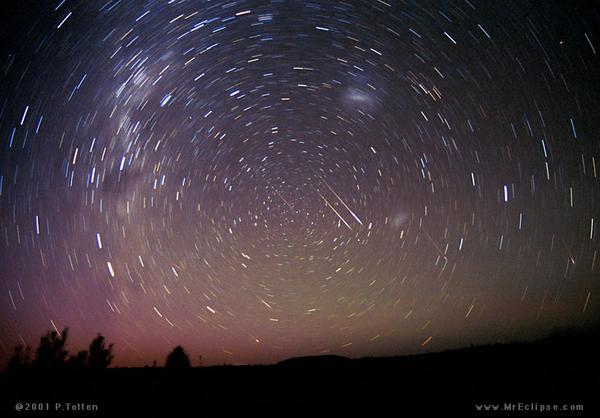
    Ah, the weekend! Time to kick back, relax, and look back over everything that’s happened over the past few days. And I’m rather happy to say that some quite interesting things have happened, including the Leonid meteor shower which peaked on Friday night (though if you step outside after dark and watch the sky, you may still see a few stragglers). So what else has caught my eye this week, science-wise?
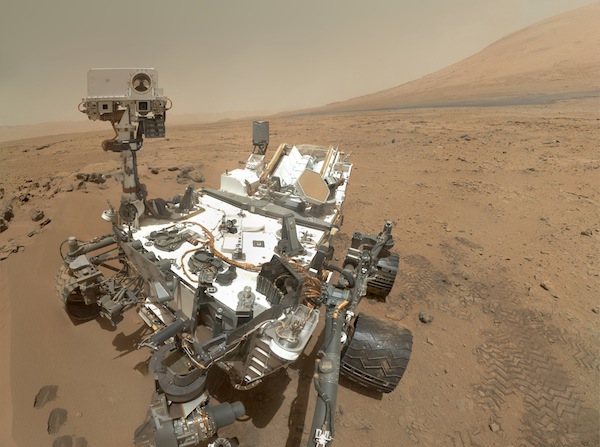
    Well first off, the Curiosity Rover has been busy over on the planet next door. I can’t help but find everything about the Curiosity rover exciting, especially as it’s paving the way for actual manned exploration to another planet. As many people will agree, no matter how sophisticated a rover can be, it will never be as good as a team of properly equipped geologists exploring a site in person. As it turns out, this idea just came a step closer to being reality…

    Astronauts Could Survive Mars Radiation, Curiosity Rover Finds

    The findings demonstrate that Mars’ atmosphere, though just 1 percent as thick as that of Earth, does provide a significant amount of shielding from dangerous, fast-moving cosmic particles.


    Some people may recall the death of an aged tortoise nicknamed Lonesome George, so called because he was thought to be the last surviving member of his species. I know I do, and was rather saddened by it. While it may be an inescapable part of the way life on our planet works, there’s something quite humbling about being forced to simply watch a species go extinct and not be able to do anything about it. But then, was George’s death really the end of the story? As it happens, perhaps not…

    DNA tests show Lonesome George may not have been last of his species

    “These giant tortoises are of crucial importance to the ecosystems of the Galapagos Islands, and the reintroduction of these species will help preserve their evolutionary legacy,” said Danielle Edwards, postdoctoral research associate at Yale and lead author on the study.
     

    Lisa Grossman at New Scientist discusses the phenomenon of rogue planets – planets roaming interstellar space after being forcibly ejected from their home systems. It’s a concept which I’ve thought about in great detail in the past, as have many others, including astrophysicists, astrobiologists, and science fiction authors.

    Astrophile: Lonely planet roams with stellar outcasts

    The wanderers are no longer gravitationally linked, but they are headed in the same direction. “Like when you kick a clod of sand, the grains don’t stick together anymore but they have the same common motion,” Delorme says.


    In chemistry, I’ve always held a certain fascination with noble gas compounds. Molecules formed from atoms which aren’t supposed to react and form molecules always seemed rather exotic and curious. Several of these compounds have been predicted involving Xenon, one of the heaviest noble gasses. And there may be a lot of Xenon trapped inside the Earth this way…

    Professor predicts stable compounds of oxygen and ‘inert’ gas xenon

    “In addition to providing a likely solution to the missing xenon paradox and clarifying essential aspects of xenon chemistry, our study may result in practical applications,” says [Artem R.] Oganov. “For example, the ability of xenon to form strong chemical bonds with oxygen and other elements, and to be trapped in crystalline defects, suggests their use as non-classical luminescence centers and active sites for catalysis”.


    And to end on a humourous note, XKCD wrote a comic this week describing the Apollo Spacecraft and Saturn V rockets using only the 1000 most commonly used words in the English language. The result was slightly hilarious and rather enlightening about how often writers like myself use words which aren’t in that top 1000. A testament to XKCD’s popularity is how many people in the online space and astronomy communities mentioned it – including at least one astronaut!

    xkcd: Up Goer Five

    Lots of fire comes out here. This end should point toward the ground if you want to go into space. If it starts pointing toward space you are having a bad problem and you will not go into space today.
     

    Hope you’re having a good weekend!

     

  • Weekly Science Picks

    Weekly Science Picks

    It’s been an interesting week for science news, and I’ve been lucky enough to be asked to give this week’s science picks! This made me spend a little while sipping contemplatively on a cup of vanilla iced coffee and wondering where to even start…

    The articles I’ve selected are, of course, slanted towards my own (rather geeky) interests, but all the same I hope you find them all as fascinating as I did!


    First up, the news that Star Trek style warp drives may actually be possible, at least in theory, made me exclaim “Oh wow!” out loud. Fortunately, people who spend any time with me are generally used to me talking to myself while staring at a computer screen…

    Warp Drive May be More Feasible than Thought

    “Everything within space is restricted by the speed of light. But the really cool thing is space-time, the fabric of space, is not limited by the speed of light.”
    – Richard Obousy, president of Icarus Interstellar


    Artists impression of Mimivirus, the first giant virus to be discovered. Image Credit: InvaderXan/Wikimedia Commons

    From the vastness of space to life under the microscope, biologists have been debating for years whether or not viruses qualify as a form of life. The latest evidence is that they may indeed be a life form in their own right, and an old one at that!

    Giant Viruses are Ancient Living Organisms

    They found that many of the most ancient protein folds in living organisms were present in the giant viruses, which “offers more evidence that viruses are embedded in the fabric of life,” Caetano-Anollés said.


    Heritage Daily had a fascinating article about the archaeology of the future, and what precisely our distant descendents may one day think of us and the way we lived…

    The Archaeology of the Future

    The point is that most of what survives will not be determined by conscious decisions on our part. This may not be for want of trying, as shown by the current popularity of time capsules. The most impressive of these must be the KEO satellite, due to be launched in 2014 and to return to Earth 50,000 years later.


    And speaking of what we know of the past, it’s been shown again and again that our primitive relatives, the neanderthals, were likely not the brainless savages they’re often depicted to be. Evidence suggests that neanderthals liked to collect bird feathers as ornaments.

    Neanderthals Used Feathers as ‘Personal Ornaments’

    “I think this is the tip of the iceberg,” said Prof Finlayson: “It is showing that Neanderthals simply expressed themselves in media other than cave walls. The last bastion of defence in favour of our superiority was cognition.” Neanderthals, he said, may have been “different”, but “their processes of thinking were obviously very similar”.


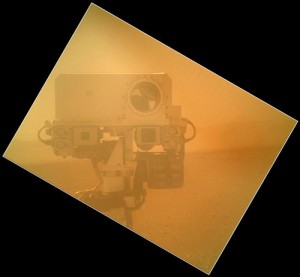
    Curiosity self-portrait. Image Credit: NASA/JPL-Caltech/Malin Space Science Systems

    As the Curiosity rover settles into its new home in Gale Crater on our neighbouring planet, one small worry is growing in the backs of the minds of certain NASA scientists. Could a blunder on the part of some engineers lead to Curiosity contaminating the surface of Mars with Earth life?

    Drill Bits on Rover Could Contaminate Mars

    John D. Rummel, a professor of biology at East Carolina University, said, partly in jest: “It will be a sad day for NASA if they do detect ice or water. That’s because the Curiosity project will most likely be told, ‘Gee, that’s nice. Now turn around.’ “


    And finally, planet hunters are scouring the sky for exoplanets. Astrobiologists are hoping to soon be able to look into the atmospheres of those planets in search of life signs, in the form of certain molecules created by living organisms. But could they be fooled by those molecules coming from somewhere else?

    Meteors Might Add Methane to Exoplanet Atmospheres

    One key gas astrobiologists looking for extraterrestrial life would concentrate on would be oxygen […] Another possibility would be methane, a colorless, odorless, flammable organic gas that microbes on Earth produce. Seeing both together in an exoplanet’s atmosphere might be an especially significant sign of life, since they would both ordinarily remove each other from the atmosphere without something like life to constantly replenish them.


    Have a good weekend!

  • The smoking guns of dying stars

    The smoking guns of dying stars

    VY Canis Majoris, the largest known star in our galaxy, with it's huge smoky clouds of gas and dust being lost into interstellar space. Credit: NASA, ESA, and R. Humphreys (University of Minnesota)

    The ancient Greeks once believed that the heavens were immutable. A vast starry vista, eternally unchanging above our heads. But we now know this to be untrue in the slightest. A lot has changed since then, however, and over the past few hundred years, astronomers have unfurled ever increasing knowledge of the lives of stars. Look out across a starry night sky and you can see stars in all stages of their lives, from brightly burning newborn stars, to ageing giants in their final gasping breaths. As stars near the ends of their lives, they begin to shine a rich red colour as they expand and dramatically increase in size.

    As red giants, these stars are burning the last of their fuel, and as they do so they begin to sputter and gasp. Just as a candle flame does when it starts to burn out, red giant stars flicker – though for these, the largest stars in the universe, those flickers can take thousands of years each. These final bursts of energy are known as thermal pulses, and they mark the star’s final days. During the last couple of million years of its life, a red giant star will lose incredble amounts of material to interstellar space. Even when not caught mid-pulse, these stars lose several times the mass of our planet every year. And the puzzle of exactly how they do so has been recently been unravelled by a team of astronomers led by researchers at the University of Sydney.

    All stars emit a stellar wind – a steady stream of particles being constantly accelerated outwards by the star. Even the Sun emits its own solar wind (with a speed measured at 535 kilometres per second as I write this). The wind from red giant stars is slightly different. As the star loses more mass, stellar material cools and condenses into dust. This dust then catches starlight which is so intense near to the star that it actually pushes that dust outwards. This effect, known as radiation pressure, causes the tiny reflective dust grains to act like minute sails and accelerates them away. Each dust grain is tiny compared to the kind of dust we find on our bookshelves, much more like fine smoke than any dust we’d recognise. Instead of being called stardust, it could easily be called starsmoke!

    “The winds that stream from the upper atmosphere of the red giant stars are responsible for removing massive amounts of matter. The grains that we have discovered here will come as a real shock to the accepted wisdom in the field. They are both much larger and much closer to the stellar surface than anyone expected.” said Barnaby Norris, a PhD student at the University of Sydney, and lead author on the research published earlier this year in Nature.

    This stardust emitted by these smoky smouldering old stars is transparent, not unlike finely powdered glass. The implications of this stardust being detected to close to an ageing star could help us to better understand the processes that occur in stars as they die, and how they manage to lose such prodigous amounts of mass so rapidly. As Norris said, “Hopefully our findings will help to illuminate a key step in the grand cycle as matter is expelled from stars into the galaxy only to seed new generations of stellar and planetary birth.”

    On a final poetic note, all of the chemical elements essential to life are created within stars, before being seeded back into the cosmos when stars die. This means that this condensing stardust contains the fundamental raw materials needed for life to eventually form. As Carl Sagan so often used to muse, we are literally made of stardust.

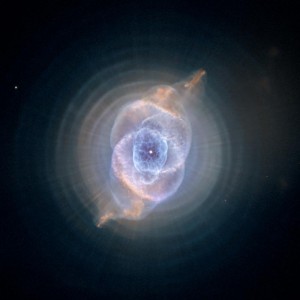
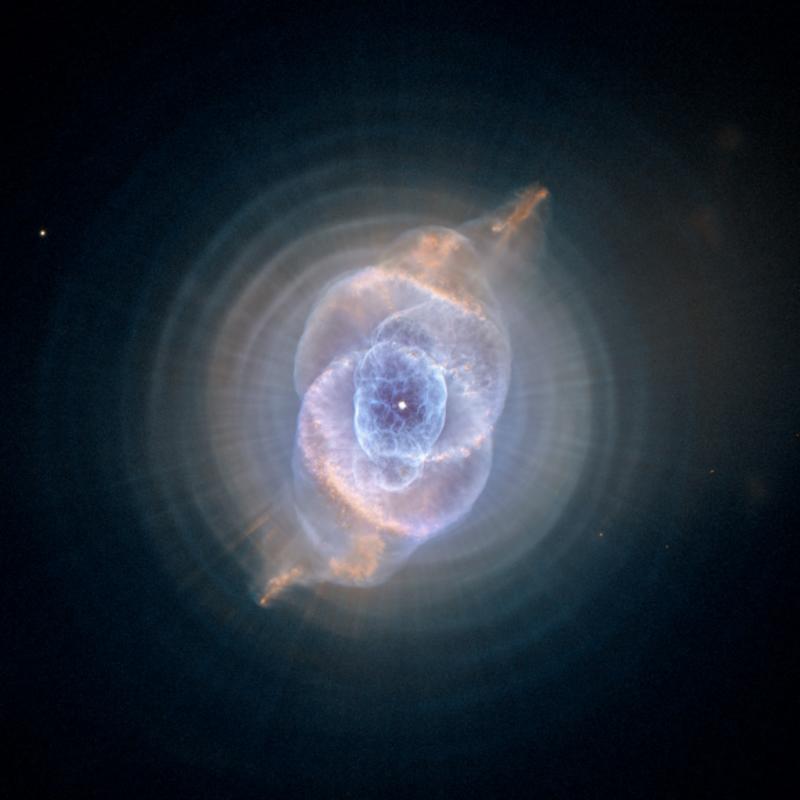
    The Cat's Eye nebula, a star which has now ended its life and is casting its outer layers into the cosmos. The concentric rings show material lost as stellar wind during the star's final thermal pulses.. Credit: ESA, NASA, HEIC and The Hubble Heritage Team (STScI/AURA)
  • A brand new boson?

    A brand new boson?

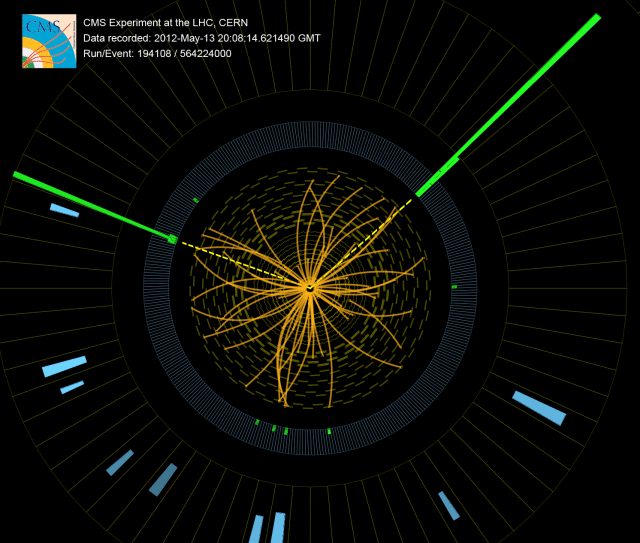
    It’s official. As was the subject of a press conference here in Europe this morning, the LHC has discovered a new particle. Is it the much talked about Higgs boson? Evidently it’s far too early to say with certainty. But whatever it is, it’s a brand new subatomic particle, it’s consistent with a Higgs boson signature, and it’s enough to make CERN physicists quite excited.Whatever it may turn out to be, it’s brand new and never seen before.

    This is physics at its most fundamental. The standard model of particle physics is probably our best depiction of how the universe operates at subatomic scales, but our picture is incomplete. A jigsaw puzzle with missing pieces which must still be searched for. One of those pieces is a piece so basic that for a long time it was simply overlooked. Why do objects have mass at all? The existence of the Higgs boson in the Standard Model seeks to address that question. It posits that all the universe is filled with a so-called Higgs Field. Any particles, protons or neutrons for instance, passing through that field will interract with it, and it will interract via Higgs bosons. Any particle which exists in this field will effectively be surrounded by a cluster of these Higgs bosons. The more bosons, the stronger the interraction, and the more massive that particle will be.

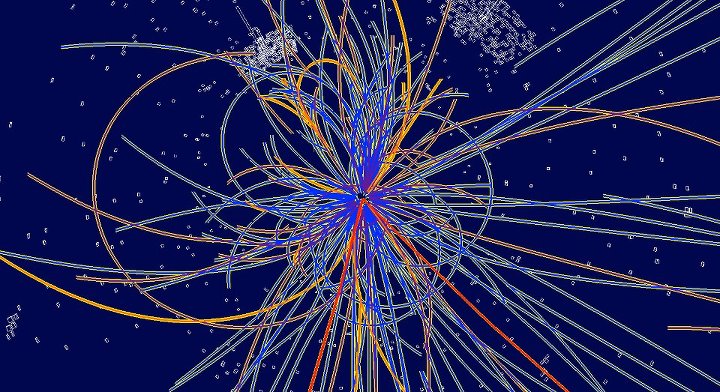
    Simulation of Higgs Boson decay.

    But exactly what it is that’s been discovered is still being analysed. Amid a press conference full of journalists asking pointed questions about “the Higgs boson”, scientists were noticeably hesitant to outright say that this is what they’ve discovered. And for good reason too, because science doesn’t work like that, no matter how many people might want to run through the streets naked shouting ‘Eureka’. In all of this, only one thing is certain – a new particle has been discovered with a mass of approximately 126 giga electron volts (126 GeV), with a statistical significance of 4.9 standard deviations (4.9 σ).

    Peter Higgs himself, declined to make any comment twice during the conference, simply stating that it would not be appropriate to answer detailed questions at this stage. The other members of the panel too, agree that it’s very difficult to say anything definitively right now and that “Higgs-like” would be a better description of what they’ve found. It’s compatible with a Higgs boson detection, but the “uncertainties are still large”. While definitely being “consistent with a Higgs boson”, interestingly it’s noted that they cannot say if this is the Higgs boson (i.e. the one required by the Standard Model), rather at this stage it may be a Higgs boson. Scientifically speaking, it’s far better to only make statements on what’s known to be true, rather than to make brash announcements which may prove to be incorrect a few months later.

    Whatever happens after the months of data analysis which are due to follow is that we’re set to unravel a lot more about the fundamentals of the universe. This discovery is on the very edge of human understanding. It may help to refine our knowledge of the Standard Model of particle physics, or it may hint that this particular Higgs boson is not a part of the standard model – a prospect which ATLAS experiment director Fabiola Gianotti seemed visibly quite excited by.

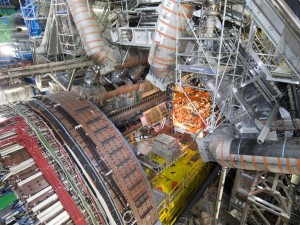
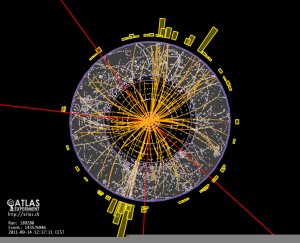
    The ATLAS instrument, a detector in the LHC.

    Rolf Heuer stressed the fact that the most exciting thing here is the fact that they have a discovery of something brand new, perhaps suggesting that we shouldn’t get too caught up in our expectations and simply enjoy the excitement of there being something never before seen in physics in the process of being analysed. Moreover, this could be the very first fundamental scalar particle, and the first gauge boson which actually has any mass. If it does turn out to be a Higgs boson, then this holds the additional thrill that this particle has a relationship to the state of the universe itself, embodying the substance to all other particles which exist.

    In the meantime, as the LHC prepares to power down for a couple of years of maintenance, this discovery will certainly stoke the fires of curiosity in thousands of scientists worldwide. The data are still being picked apart too, for things which are completely unknown. Perhaps even more brand new physics is still waiting to be found. It’s an exciting time in physics right now!

  • The Higgs boson does exist: New particle observed at 125 GeV

    The Higgs boson does exist: New particle observed at 125 GeV

    Australian researchers helped design and build parts of the ATLAS detector and helped analyse the results.

    Researchers using two huge detectors at the Large Hadron Collider announced the results of their searches at a joint scientific seminar in Geneva and Melbourne, where the International Conference on High Energy Physics is being held.

    In a joint seminar today at CERN and the “ICHEP 2012

  • Mr Boson, I presume…?

    Mr Boson, I presume…?

    ATLAS proton-proton event containing four muons

    When Peter Higgs steps out onto the tarmac at an airport near the franco-swiss border, it will probably be with equal parts trepidation and elation.

    CERN, the European Organization for Nuclear Research, and the world’s leading laboratory for particle physics, is to hold a scientific seminar on July 4th, with Peter Higgs in attendance, to deliver the latest update in the search for the Higgs boson — the famed “God Particle