Category: News

  • New report shows universities crucial to ACT economy

    New report shows universities crucial to ACT economy

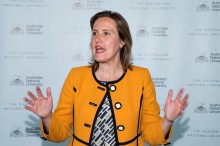
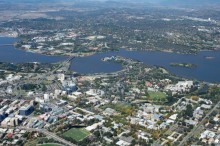
    A new report by Deloitte Access Economics, commissioned by The Australian National University (ANU) and the University of Canberra (UC), found the two leading institutions contributed more than $1.7 billion of activity to the ACT economy.

    The report underlines Canberra’s strength as a university town and demonstrates the importance of the higher education sector to the economy.

    It found that in 2012 around 38,000 students were enrolled at the two universities, accounting for 92 per cent of the tertiary students in the ACT and pushing down the ACT median age to 35 years, lower than every other state except the Northern Territory.

    The report also found every dollar of expenditure on the universities returned 80 cents of value to the local economy, and one in nine people in the ACT were university staff or students.“Canberra is Australia’s top university town, and this comprehensive report shows the benefits to the economy and society of having two great universities in the national capital,

  • Orion Test Flight a Critical Step on NASA’s Journey to Mars

    Orion Test Flight a Critical Step on NASA’s Journey to Mars

    America embarks on a long-lasting trip to Mars this Thursday.

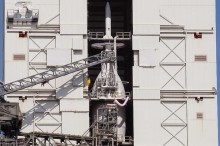
    Orion’s maiden flight, Exploration Flight Test-1 (EFT-1), slated to test spacecraft’s crucial systems is a critical first step on our journey to destinations beyond Earth never before visited by humans, like asteroids and Mars. “Everyone is very excited about this mission,

  • Australia’s living skin bared in stunning three dimensions

    Australia’s living skin bared in stunning three dimensions

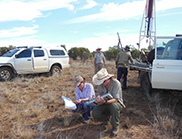
    Australia’s vast and complex land surface has been exposed in new ways thanks to the most comprehensive nation-wide digital maps of our soils and landscapes yet produced.

    The entire country is now represented as a digital grid with two billion ‘pixels’ that are about 90 by 90 metres, down to a depth of two metres below the surface.

    The Soil and Landscape Grid of Australia, launched today at the National Soil Science Conference in Melbourne, is the result of a partnership between CSIRO, the University of Sydney, several federal, state and territory government agencies and the Terrestrial Ecosystem Research Network (TERN).

    The Grid draws information from the partner agency databases weaving together both historical and current data generated from sampling, laboratory sensing, modelling and remote sensing.

    The Grid also includes estimates of reliability and is designed to integrate new data in the future – even data generated by technology that has not yet been invented.

    Soil and landscape attributes such as soil water, nutrients and clay, affect the sustainability of Australia’s natural resources and the profitability of sectors such as agriculture, mining and infrastructure.

    CSIRO Research Director Mike Grundy said the Grid had already woven together hundreds of millions of dollars’ worth of past soil and landscape science into a new ‘digital tapestry’.

    “The research community has known we need better ways to make this diverse information available; new science and technology has let us make the most of the rich data we have,” Mr Grundy said.

    “From exploring new land use options, to making the most of water, to finding habitats for endangered native species, this technology has applications we are only just beginning to imagine.”

    The Grid will be beneficial to a wide range of applications and users including urban and regional planners, land managers, farming groups, scientists and engineers.

    Alexandra Gartmann, CEO at Foundation for Rural & Regional Renewal and former CEO of Birchip Cropping Group, has worked with rural industries for almost two decades. Ms Gartmann said she was excited by the new technology.

    “Knowledge is power, and our agricultural industries have a very narrow margin for error these days, so the more knowledge to reduce poor decisions, the better,” Ms Gartmann said.

    “Agribusiness will benefit from this technology, both at the farm scale — with data to inform production models and risk management decisions — and industry scale, as it draws together many years of past research and knowledge for future investment decisions.

    “The Soil and Landscape Grid is a huge leap forward. With its national datasets and consistent and comparable data, it has huge potential for regional development, informing planning and decision-making.”

    Source and image.
  • Scientists confirm new bird species in Indonesia

    Scientists confirm new bird species in Indonesia

    Scientists have confirmed a new bird species found in the tropical rainforests on the Indonesian island of Sulawesi.

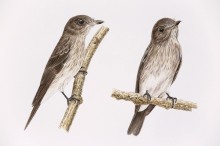
    The Sulawesi Streaked Flycatcher (Muscicapa sodhii) lives in the forest canopy of the rugged hills of Sulawesi, and has heavily streaked underparts and relatively short wings.

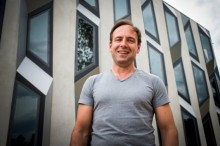
    Ding Li Yong, a PhD student at the Fenner School of Environment and Society, was part of an international team which described the bird as a new species.

    “As a kid I was inspired by the great naturalists Darwin and Wallace, and the early explorers who risked their lives by leaving the comforts of Europe for the tropics to collect specimens for science,

  • Weekly Science Picks

    Weekly Science Picks

    It’s Sunday… Hurray! It’s our time to review what have happened during the last 7 days. This time we bring you the most exciting stories from biology, nature and wildlife. So, let’s start our tour!

    Grey seals identified as killers behind mystery harbour porpoise deaths

    Using DNA analysis of the the bite wounds, a Dutch team examined 721 porpoises that were stranded between 2003 and 20013 along the Dutch coastline and found that nearly one in five had been killed by seals. That makes the seals the major cause of harbour porpoise deaths in the Netherlands, alongside being killed as fishing bycatch.

    Turtles and dinosaurs: Scientists solve reptile mysteries with landmark study on the evolution of turtles

    A team of scientists has reconstructed a detailed ‘tree of life’ for turtles. Next generation sequencing technologies have generated unprecedented amounts of genetic information for a thrilling new look at turtles’ evolutionary history. Scientists place turtles in the newly named group ‘Archelosauria’ with their closest relatives: birds, crocodiles, and dinosaurs.

    Exploring the ocean’s hidden depths

    We know so little about the depths of our oceans that they might as well exist on another planet. The majority of the sea floor has never been visited by humans. As to what lives and feeds and breeds down there in the icy depths, it remains best left to our imagination.

    The thorny issue threatening the coral reefs of Pilbara

    The Great Barrier Reef is a global icon and something of a heavyweight in the natural world. If it was a movie it would be a Spielberg-directed Hollywood blockbuster starring Hugh Jackman and Angelina Jolie. Its cousin, Ningaloo Reef, off Australia’s western coast, is something of a poor relation in a branding sense, but still holds a relative degree of fame. It would be more your ‘straight-to-video’ sort of flick.

    That would be all for this week’s choice. Please stay curious and scientifically passionate. We promise you a great stuff in the coming period.

  • Australia’s biosecurity may be shocked

    Australia’s biosecurity may be shocked

    A human disease pandemic, European honey bee colonies wiped out and an invasion of a devastating wheat disease are just three potential biosecurity threats facing Australia, according to a report released this week.

    These three events alone could devastate Australia’s agricultural industries, economy and environment, and could severely alter our way of life. But, how can we ensure that we see them coming and are we prepared to respond if they occur?

    As an island nation Australia has, largely been able to maintain an enviable biosecurity status. However, experts warn that the 12 biosecurity megashocks identified in a new report – Australia’s Biosecurity Future – could turn into reality if we become complacent with our nation’s biosecurity measures.

    CSIRO Biosecurity Flagship Science Director Dr Gary Fitt said it was much better to pre-empt and avoid biosecurity issues than have to deal with the consequences.

    “Dominating the news right now is the Ebola virus crisis, which is an obvious global health concern,

  • New research centre to investigate how language works

    New research centre to investigate how language works

    A new national research centre based at ANU will investigate how language works and how it makes us who we are.

    Based at the University, the ARC Centre of Excellence for the Dynamics of Language draws together the nation’s top linguists, philosophers, psychologists and roboticists to puzzle out the complex mechanisms of human communication.

    The new centre will focus on four key areas: how languages differ, how they are learned, how the brain processes them and how they evolve.

    “We once imagined that all languages had the same basic operating system,

  • Worldwide action needed to address hidden crisis of violence against women and girls

    Worldwide action needed to address hidden crisis of violence against women and girls

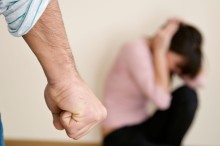
    Current efforts to prevent violence against women and girls are inadequate, according to a new Series published in The Lancet. Estimates suggest that globally, 1 in 3 women has experienced either physical or sexual violence from their partner, and that 7% of women will experience sexual assault by a non-partner at some point in their lives.

    Yet, despite increased global attention to violence perpetrated against women and girls, and recent advances in knowledge about how to tackle these abuses, levels of violence against women – including intimate partner violence, rape, female genital mutilation, trafficking, and forced marriages – remain unacceptably high, with serious consequences for victims’ physical and mental health. Conflict and other humanitarian crises may exacerbate ongoing violence.

    Between 100 and 140 million girls and women worldwide have undergone female genital mutilation (FGM), with more than 3 million girls at risk of the practice every year in Africa alone. Some 70 million girls worldwide have been married before their eighteenth birthday, many against their will.

    Although many countries have made substantial progress towards criminalising violence against women and promoting gender equality, the Series authors argue that governments and donors need to commit sufficient financial resources to ensure their verbal commitments translate into real change. Even where laws are progressive, many women and girls still suffer discrimination, experience violence, and lack access to vital health and legal services.

    Action needed on causes of violence

    Importantly, reviewing the latest evidence, the authors show that not enough is being done to prevent violence against women and girls from occurring in the first place. Although resources have grown to support women and girls in the aftermath of violence (e.g., access to justice and emergency care), research suggests that actions to tackle gender inequity and other root causes of violence are needed to prevent all forms of abuse, and thereby reduce violence overall.

    “Globally, 1 in 3 women will experience intimate partner and/or sexual violence by non-partners in their lifetime, which shows that more investment needs to be made in prevention. We definitely need to strengthen services for women experiencing violence, but to make a real difference in the lives of women and girls, we must work towards achieving gender equality and preventing violence before it even starts,

  • Weekly Science Picks

    Weekly Science Picks

    Here we are at the end of one more exciting and fascinating week. It’s our time to summarise what have happened during the previous 7 days. The focus of today’s editor’s selection would be on psychology, neuropsychological and medical research. So, let’s start our journey!

    Psychology: How many senses do we have?

    We often talk of having five senses as a universal truth. In reality, there may be more – or fewer – depending on the way you look at the question. Christian Jarrett explains the controversy.

    Smokers learn to cut down while they sleep

    Any smoker can tell you how hard it is to kick the habit. Nicotine is one of the most addictive drugs that we know of, and smoking is one of the deadliest of habits, killing more than 5 million annually. Smokers are well aware of the risks, and every year more than one third of them make at least one attempt to stop, but only 2-3% manage to do so.

    Training can lead to synesthetic experiences: Does learning the ‘color of’ specific letters boost IQ?

    A new study has shown for the first time how people can be trained to ‘see’ letters of the alphabet as colors in a way that simulates how those with synesthesia experience their world.

    Less Talk, More Therapy

    Settled on her table that first day, I explained to her that I’d had many intractable physical problems in the last several years, the most recent being a pain in my knee that no medical professional could make heads or tails of. I couldn’t sit cross-legged on the floor or rise up out of a full squat, and I’d feel a sharp stab whenever I slipped that leg into my jeans. Some yoga practitioners that my husband knew had recommended I see her about this.

    Thank you so much for your attention. We are coming with new stories soon!

  • Finding new ways to make drugs

    Finding new ways to make drugs

    Chemists have developed a revolutionary new way to manufacture natural chemicals and used it to assemble a scarce anti-inflammatory drug with potential to treat cancer and malaria.

    The breakthrough could lead to new and cheaper ways to produce rare drugs in large quantities.

    “We took small molecules and clipped them together like Lego,

  • Charles & Ray Eames’ A Communications Primer Explains the Key to Clear Communication in the Modern Age (1953)

    Charles & Ray Eames’ A Communications Primer Explains the Key to Clear Communication in the Modern Age (1953)

    You might think that a movie about information from 1953 couldn’t possibly be relevant in the age of iPhone apps and the Internet but you’d be wrong. A Communications Primer, directed by that power couple of design Charles and Ray Eames, might refer to some hopelessly quaint technology – computer punch cards, for instance – but the underlying ideas are as current as anything you’re likely to see at a TED talk. You can watch it below.

    In fact, the film made for IBM was the result of the first ever multi-media presentations that Charles Eames developed for the University of Georgia and UCLA. Using slides, music, narration and film, Eames broke down some elemental aspects of communications for the audience. Central to the film is an input/output diagram that was laid out by Claude Shannon, the father of information theory, in his 1949 book, The Mathematical Theory of Communication. As the perhaps overly soothing narrator intones, any message is transmitted by a signal through a channel to its receiver. While in the channel, the signal is altered and degraded by noise. The key to effective communication is to reduce “noise

  • Spiral laser beam creates quantum whirlpool

    Spiral laser beam creates quantum whirlpool

    Physicists at ANU have engineered a spiral laser beam and used it to create a whirlpool of hybrid light-matter particles called polaritons.

    “Creating circulating currents of polaritons – vortices – and controlling them has been a long-standing challenge,

  • WHO warns that progress towards eliminating measles has stalled

    WHO warns that progress towards eliminating measles has stalled

    WHO warned recently that progress towards the elimination of measles has stalled. The number of deaths from measles increased from an estimated 122 000 in 2012 to 145 700 in 2013, according to new data published in the WHO Weekly Epidemiological Report and the Centers for Disease Control and Prevention’s (CDC) Morbidity and Mortality Weekly Report. The estimated number of measles deaths in 2013 represents a 75% decline in mortality since 2000, significantly below the target of a 95% reduction in deaths between 2000 and 2015.

    “Poor progress in increasing measles vaccination coverage has resulted in large outbreaks of this highly contagious disease, throwing the 2015 elimination targets off-track,

  • Ocean primed for more El Niño

    Ocean primed for more El Niño

    The ocean is warming steadily and setting up the conditions for stronger El Niño weather events, a new study has shown.

    A team of US, Australian, and Canadian researchers sampled corals from a remote island in Kiribati to build a 60-year record of ocean surface temperature and salinity.

    “The trend is unmistakeable, the ocean’s primed for more El Niño events,