Category: News

  • Weekly Science Picks

    Weekly Science Picks

    Welcome at the end of one more exciting and this time, we could say, historically amazing week. Namely, these days we are witnessing a highly interesting ESA’s mission called Rosetta. For such a reason, this week’s review will be dedicated to that mission and some space science and industry stories. So, let’s go through the top news of this week.

    Are we sending aliens the right messages?

    By broadcasting formulae of aromatic chemicals, she says, aliens could reconstruct all sorts of whiffs that help to define life on Earth: animal blood and faeces, sweet floral and citrus scents or benzene to show our global dependence on the car. This way intelligent life forms on distant planets who may not see or hear as we do, says Paterson, could explore us through smell, one of the most primitive and ubiquitous senses of all.

    Philae lander sends back first ever image from comet

    The picture shows the cracked, bumpy surface in monochrome, with one of Philae’s three legs in the bottom left of the frame. It is not yet clear whether the leg in the image is actually touching the surface. What is certain is that Philae is not level, and may be wedged into a pit.

    The Adventures of Rosetta and Philae

    The giant antenna dishes of the Canberra Deep Space Communication Complex are supporting the European Space Agency’s Rosetta spacecraft, relaying data that the refrigerator-sized Philae probe has commenced its descent to the unknown surface of Comet 67-P Churyumov-Gerasimenko.

    Intergalactic ‘wind’ is stripping galaxies of star-forming gas

    Astronomers have provided the first direct evidence that an intergalactic ‘wind’ is stripping galaxies of star-forming gas as they fall into clusters of galaxies. The observations help explain why galaxies found in clusters are known to have relatively little gas and less star formation when compared to non-cluster or ‘field’ galaxies.

    These would be all for this week. Thank you so much for your attention. We are coming with new stories soon!

  • Protecting native forests more valuable than logging

    Protecting native forests more valuable than logging

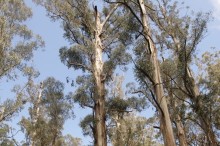
    New research has found Mountain Ash forests provide more value to the community and the global climate when protected and not logged.

    Research scientists at the ANU, in partnership with information and communication technologists at Fujitsu Laboratories in Japan, have used long-term field data from the Central Highlands in Victoria to calculate the social, economic and environmental values of the forests after wildfire and after logging.

    “Quantifying natural resources and the services they provide for human wellbeing is important in evaluating land management decisions,

  • Mark Twain Predicts the Internet in 1898: Read His Sci-Fi Crime Story, “From The ‘London Times’ in 1904

    Mark Twain Predicts the Internet in 1898: Read His Sci-Fi Crime Story, “From The ‘London Times’ in 1904

    Most people know that Mark Twain wrote about Jim and Huckleberry Finn navigating down the Mississippi. Less well known is that he occasionally dabbled in the burgeoning genre of science fiction. His 1898 short story “The Great Dark

  • New global Malaysian studies network at ANU

    New global Malaysian studies network at ANU

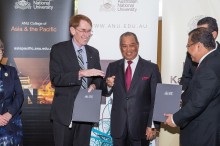
    A new agreement between the ANU and the National University of Malaysia (UKM) will deepen links between Australia and Malaysia, and boost the studies of Malaysia in both Australia and around the globe.

    Witnessed by Malaysia Deputy Prime Minister YAB Tan Sri Dato’ Haji Muhyiddin Bin Haji Mohd Yassin, the Memorandum of Understanding was signed by ANU Vice-Chancellor Professor Ian Young AO in a ceremony on Wednesday.

    The MOU will increase educational links and collaboration between Australia and Malaysia, as well as pave the way for a new Global Malaysian Studies Network at the University.

    While acting as a Malaysian studies base in Australia, the network will also provide a coordination point for other universities across the globe.

    “Australia has more long-standing institutional and people-to-people ties with Malaysia than with any other Asian neighbour,

  • Scientists reveal secrets of insect evolution

    Scientists reveal secrets of insect evolution

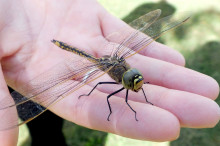
    Using genetic analysis, scientists have for the first time been able to conclusively establish that insects originated approximately 480 million years ago, and that they developed the ability to fly approximately 80 million years later.

    Published last week in Science, the study, which involved more than 100 researchers from 16 countries including five from Australia’s CSIRO, answers long-held questions about the evolution of the world’s largest and most diverse group of living things – insects.

    “Our research shows that insects originated at the same time as the earliest land-based plants, about 480 million years ago. These first insects were probably similar to today’s silverfish,

  • “Ageing well

    “Ageing well

    A major new Series on health and ageing, published in “The Lancet”, warns that unless health systems find effective strategies to address the problems faced by an ageing world population, the growing burden of chronic disease will greatly affect the quality of life of older people. As people across the world live longer, soaring levels of chronic illness and diminished wellbeing are poised to become a major global public health challenge.

    Effective health interventions increasing life expectancy

    Worldwide, life expectancy of older people continues to rise. By 2020, for the first time in history, the number of people aged 60 years and older will outnumber children younger than 5 years. By 2050, the world’s population aged 60 years and older is expected to total 2 billion, up from 841 million today. Eighty per cent of these older people will be living in low-income and middle-income countries.

    The increase in longevity, especially in high-income countries (HICs), has been largely due to the decline in deaths from cardiovascular disease (stroke and ischaemic heart disease), mainly because of simple, cost-effective strategies to reduce tobacco use and high blood pressure, and improved coverage and effectiveness of health interventions.

    Challenge of ageing healthily

    However, although people are living longer, they are not necessarily healthier than before – nearly a quarter (23%) of the overall global burden of death and illness is in people aged over 60, and much of this burden is attributable to long-term illness caused by diseases such as cancer, chronic respiratory diseases, heart disease, musculoskeletal diseases (such as arthritis and osteoporosis), and mental and neurological disorders.

    This long-term burden of illness and diminished wellbeing affects patients, their families, health systems, and economies, and is forecast to accelerate. For example, latest estimates indicate that the number of people with dementia is expected to rise from 44 million now, to 135 million by 2050.

    “Deep and fundamental reforms of health and social care systems will be required,

  • Weekly Science Picks

    Weekly Science Picks

    It’s Sunday! Maybe some of you are not that happy for that, because it’s the end of the weekend, but for us it’s our time to provide you with a new editor’s selection for this week. The task was very interesting and exciting. We got an opportunity to present at once amazing stories from biology, space industry, neuroscience and much more. So, let’s review this week’s choice.

    The solar explorer built with dead animal bones

    When I meet him in his office at Airbus Defence and Space in Stevenage, a non-descript industrial town some an hour’s drive north of London, Chris Draper is sitting at his desk idly flicking a long narrow strip of what looks like cooking foil. Smooth burnished metal on one side, ridged matt black on the other, the thin material makes a crinkly noise as he twists it back and forth.

    Prehistoric ‘groundhog’ identified by scientists

    US lead scientist Dr David Krause, from Stony Brook University in New York, said: “We know next to nothing about early mammalian evolution on the southern continents. This discovery, from a time and an area of the world that are very poorly sampled, underscores how very little we know. No paleontologist could have come close to predicting the odd mix of anatomical features that this cranium exhibits.

  • Farmers should pay for invasive weeds – researchers

    Farmers should pay for invasive weeds – researchers

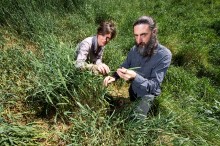
    Farmers who use plant varieties that become invasive weeds should pay a levy to cover any environmental management costs under a plan put forward by researchers at The Australian National University (ANU).

    The levy is one recommendation in a new paper which aims to combat the global problem of invasive plants caused by agribusiness.

    “It’s a polluter pays principle. If their pastures become invasive, then agribusiness and farmers should be responsible for paying for any control or eradication,

  • How to Dance Your Dissertation: See the Winning Video in the 2014 “Dance Your PhD

    How to Dance Your Dissertation: See the Winning Video in the 2014 “Dance Your PhD

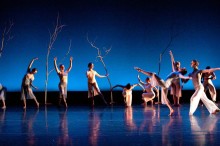
    We’ve seen how modern dance can explain key concepts in statistics (e.g. correlation and sampling error). So why couldn’t dance also illustrate the conclusions of a plant biology doctoral dissertation?

    Uma Nagendra, a graduate student at the University of Georgia, has just won the 2014 edition of the “Dance Your Ph.D.

  • ANU receives $35 million research funding boost

    ANU receives $35 million research funding boost

    The ANU has won more than $35 million in prestigious Australian Research Council (ARC) grants for 90 projects, enabling world-class research across the university.

    “These grants allow the ANU to build on its strengths and further enhance the University’s reputation as a world-leader in research,

  • Bowel cancer cases halve after screening

    Bowel cancer cases halve after screening

    The incidence of bowel cancer is dramatically lower after screening, a new report has found.

    Research involving 200,000 people found that people who had had bowel cancer screening had a 44 per cent lower risk of developing the disease in the four years following screening.

    “This is great news for the community – those who take part in screening and don’t have colorectal cancer have a substantially lower risk of developing the disease over the subsequent years,

  • WHO updates personal protective equipment guidelines for Ebola response

    WHO updates personal protective equipment guidelines for Ebola response

    As part of WHO’s commitment to safety and protection of healthcare workers and patients from transmission of Ebola virus disease, WHO has conducted a formal review of personal protective equipment (PPE) guidelines for healthcare workers and is updating its guidelines in context of the current outbreak.

    About the PPE guidelines

    These updated guidelines aim to clarify and standardize safe and effective PPE options to protect health care workers and patients, as well as provide information for procurement of PPE stock in the current Ebola outbreak. The guidelines are based on a review of evidence of PPE use during care of suspected and confirmed Ebola virus disease patients.

    The Guidelines Development Group convened by WHO included participation of a wide range of experts from developed and developing countries, and international organizations including the United States Centers for Disease Control and Prevention, Médecins Sans Frontières, the Infection Control Africa Network and others.

    “These guidelines hold an important role in clarifying effective personal protective equipment options that protect the safety of healthcare workers and patients from Ebola virus disease transmission,

  • Man Hauls a Piano Up a Mountain in Thailand and Plays Beethoven for Injured Elephants

    Man Hauls a Piano Up a Mountain in Thailand and Plays Beethoven for Injured Elephants

    If we’ve featured Jazz for Cows on Open Culture, then why not Classical Music for Elephants?

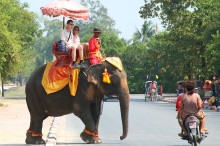
    Actually, they’re not just any elephants featured above. They’re old, injured, handicapped, sometimes blind elephants who live in the mountains of Thailand. And the gentleman playing a slow movement from Beethoven’s “Pathétique Sonata

  • Weekly Science Picks

    Weekly Science Picks

    One more exciting week is finishing and here what we have to present you this Sunday. We had amazingly interesting 7 days with lot of new discoveries, findings and research. This time we can proudly say we got extraordinary stories from the world of quantum physics, geology, biology and even some nice pieces of scientific information from Australia. We are so excited to share all these with you… Are you excited to hear from us as well? So, let’s start our tour!

    Are there ‘oceans’ hiding inside the Earth?

    We know more about the surface of Mars than we do the mantle of the planet we live on. As little as 30kms (19 miles) below the surface – the distance between the centre of London and Heathrow Airport – the continental crust turns into the Earth’s mantle, a layer some 2,900km (1,800 miles) thick that surrounds the Earth’s molten outer core.

    Scientists grow miniature human stomachs from stem cells

    Scientists have grown miniature human stomachs from stem cells as a way of studying gastric diseases such as ulcers and stomach cancer and in the future creating tissue to repair patients’ stomachs.

    Shale gas, coal seam gas… what’s the difference?

    In Australia, hydraulic fracturing – a technique that increases the rate of gas flow for extraction – is used in CSG production 20-40% of the time, whereas in shale gas production it’s used every time.

    Can the wave function of an electron be divided and trapped?

    Electrons are elementary particles — indivisible, unbreakable. But new research suggests the electron’s quantum state — the electron wave function — can be separated into many parts. That has some strange implications for the theory of quantum mechanics.

    Please stay curious and scientifically passionate! New stories are coming shortly.