Category: News

  • Weekly Science Picks

    Weekly Science Picks

    Here we are at the end of one more amazing week. It’s Sunday again and we are supposed to review what happened during the last 7 days. For example, have you ever wondered how night shifts could affect you? This week is definitely a week of the museums. Did you know these days we had an Australian Museum Eureka Award or the Science Museum in London is to open a gallery devoted to mathematics? Finally, did you notice that media are too violent at present and all those can impact your mind? So, let’s begin!

    Is working at night bad for you?

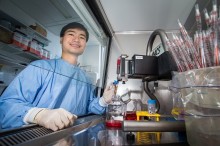
    In some jobs, working the night shift is unavoidable. There are hospitals to run, planes to fly and shops to keep open as we move towards a 24-hour society. With careful planning and a bit of peace during the daytime, it is possible to work all night and still get eight hours sleep the follow day. Some people will even tell you they don’t mind and that they get used to working in this way. But can their bodies ever become fully accustomed to working to a clock turned upside down? And, more worryingly, is nocturnal labour bad for your health?

    Science Museum unveils £5m plan for ‘world’s foremost’ mathematics gallery

    The layout of the new permanent gallery, which will open in late 2016, is inspired by mathematical ideas. A plane will be suspended from the ceiling and the position of the displays will follow the lines of aerodynamic flow around it. Lines representing a turbulence field from the plane’s flight will form the basis of a curved surface dividing the gallery into different spaces.

    Eureka, they’ve done it

    More than 2 200 years ago, legend has it, Archimedes got into a bath and had a lightbulb moment. He worked out that you could use the amount of water it displaces to measure the volume of an irregularly-shaped object. He was supposedly so excited about this that he jumped out, and ran, dripping wet and naked, down the street yelling ‘Eureka!’ (Ancient Greek for ‘I’ve found it’).

    Impact of violent media on the brain: Depends on each individual’s brain circuitry, study finds

    With the longstanding debate over whether violent movies cause real world violence as a backstop, a study has found that each person’s reaction to violent images depends on that individual’s brain circuitry, and on how aggressive they were to begin with.

    Until the next meeting, please stay curious and scientifically passionate. The new stories are coming soon.
  • Montaigne and the Double Meaning of Meditation

    Montaigne and the Double Meaning of Meditation

    “There is no exercise that is either feeble or more strenuous … than that of conversing with one’s own thoughts.

  • Reshaping philanthropy with major gift to ANU

    Reshaping philanthropy with major gift to ANU

    Entrepreneurs Michelle Melbourne and Phillip Williamson are redefining the shape of modern philanthropy with a major new donation to the University.

    The couple, both ANU graduates, have given a gift in kind by donating high-technology software to help the University streamline its complex administration processes.

    The gift from their Canberra-based company Intelledox is worth more than $1 million, but has the potential to save the ANU millions more as the software is used to digitalise manual paper-based processes.

    “Phil and I are both passionate alumni, and it is such a great privilege and an honour to be able to share the technology we’ve invented with our alma mater,

  • How Languages Evolve: Explained in a Winning TED-Ed Animation

    How Languages Evolve: Explained in a Winning TED-Ed Animation

    Language. It’s as adaptable as Darwin’s finches.

    It’d be interesting to know how the Internet changes the game. Seems like it would go a long way toward democratizing the process by which lingo gets mingled.

    Alex Gendler’s TED-Ed lesson, winningly animated by Igor Coric, rolls back the clock to a time when communal groups would subdivide and strike out on their own, usually in order to beef up the food supply.

    This sort of geographic and temporal separation was bound to take a toll, linguistically. Evolution is need-based. Vocabulary and pronunciation eventually betray the specifics of the speaker’s surroundings, their circumstances and needs.

    It takes some forensics to figure out how, or, even if, various languages relate to each other. A cunning linguist (forgive me) will also have the power to fill in historical gaps, by identifying words that have been borrowed from neighboring cultures, as well as more transient acquaintances.

    As a little experiment, look at the way you talk! Those of us without royal blood or a stick up our heinies tend to speak a mongrel patois custom tailored by our own experience. A little bit of regionalism, some professional jargon, a few colorful words gleaned from life’s characters, lines from long ago entertainments deployed as if the references were fresh.

    I’ll bet a linguist would have a field day with you, Bub.

    Even if you’re the most straightforward conversationalist on the planet, the people who can’t understand a word you say would greatly outnumber those who can.

    Maybe we should all “speak Mandarin,

  • Weakness in malaria parasite fats could see new treatments

    Weakness in malaria parasite fats could see new treatments

    A new study has revealed a weak spot in the complex life cycle of malaria, which could be exploited to prevent the spread of the deadly disease.

    It found female malaria parasites put on fat differently to male ones.

    “The study opens potential new ways to combat malaria,

  • Three Essential Qualities For All Serious Novelists (And Runners)

    Three Essential Qualities For All Serious Novelists (And Runners)

    We’ve brought you a wealth of Haruki Murakami lately, and for good reason. Not only does the wildly popular Japanese novelist have a new novel out, he also has an upcoming novella, The Strange Library, a 96-page story about, well, a “strange trip to the library,

  • Weekly Science Picks

    Weekly Science Picks

    It seems this first week in September brings us very interesting stories. The Northern Hemisphere is going to autumn and the Southern Hemisphere is going to spring, so let us see what we can offer for this editor’s choice. Quite exciting week, we must confirm. For instance, you may be wondering how the colour red warps the mind or why we have a boom in modern population. For this occasion, we would like to present all those and much more, so let’s begin.

    How the colour red warps the mind

    Today, shades of scarlet are linked with power, aggression, and sex – from the vermilion of the British Queen’s royal regalia to the gaudy neon of Amsterdam’s red–light district. And those associations may not be coincidence. A new branch of science called “colour psychology

  • First WHO report on suicide prevention

    First WHO report on suicide prevention

    More than 800 000 people die by suicide every year – around one person every 40 seconds, according to WHO’s first global report on suicide prevention, published today. Some 75% of suicides occur in low- and middle-income countries.

    Pesticide poisoning, hanging and firearms are among the most common methods of suicide globally. Evidence from Australia, Canada, Japan, New Zealand, the United States and a number of European countries reveals that limiting access to these means can help prevent people dying by suicide. Another key to reducing deaths by suicide is a commitment by national governments to the establishment and implementation of a coordinated plan of action. Currently, only 28 countries are known to have national suicide prevention strategies.

    Suicide is a global phenomenon

    Suicide occurs all over the world and can take place at almost any age. Globally, suicide rates are highest in people aged 70 years and over. In some countries, however, the highest rates are found among the young. Notably, suicide is the second leading cause of death in 15-29 year-olds globally.

    “This report is a call for action to address a large public health problem which has been shrouded in taboo for far too long

  • Somebody, the New App That Connects Strangers in the Real World

    Somebody, the New App That Connects Strangers in the Real World

    Having owned an iPhone for all of one month, I’m still a bit leery of all it can purportedly do for me. Convenience is great, but I’m not sure I’m ready to cede control of all the little tasks, challenges, and puzzles my own imperfect brain has been handling more or less well for nearly half a century.

    I don’t hate blundering. And I really like interacting with librarians, local residents, and strangers who might be willing to use my camera to take a group photo in a restaurant or scenic location.

    Filmmaker Miranda July’s just released Somebody is, I suspect, something of a niche app.

    If you cringe at the idea of flash mobs, Improv Everywhere, and audience interactive theater, it is most definitely not for you.

    It’s absolutely perfect for me (or will be once I get up to speed on my touchscreen.)

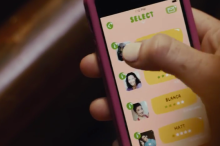
    Basically, you take a selfie, create a profile, and wait for a stranger to select you to deliver a live message as his or her proxy. In addition to trawling the area for the designated recipient, you may be called upon to weep, hug, or get on your knees to get that message across.

    Will you make a new friend? Probably not, but you will definitely share a moment.

    And because no good deed goes unrewarded, your performance will be open to the vagaries of customer review, a humiliation July does not shy from in the promotional video above.

    Is this app for real?

    Yes, especially if you live in LA, New York, or another culturally rich Somebody hotspot.

    If you don’t—or if receiving a message delivered, in all likelihood, by a tech savvy hipster, makes your flesh crawl—you can still enjoy the film as a comment on our digital existence, as well as a reflection of July’s ongoing desire to connect.

    Source and image.

  • New funds to bolster ANU clean energy research

    New funds to bolster ANU clean energy research

    The ANU will enhance its position as a leader in clean energy research after receiving $9 million in new funding for five major research and development projects.

    The Australian Renewable Energy Agency (ARENA) has announced details of the research funding, designed to help make renewable energy more affordable and to boost the amount of clean energy produced in Australia.

    “This funding announcement by ARENA will enhance the research capability of the ANU solar research programs, and will also substantially improve opportunities for training of PhD students and early career researchers,

  • WHO calls for stronger action on climate-related health risks

    WHO calls for stronger action on climate-related health risks

    Previously unrecognized health benefits could be realized from fast action to reduce climate change and its consequences. For example, changes in energy and transport policies could save millions of lives annually from diseases caused by high levels of air pollution. The right energy and transport policies could also reduce the burden of disease associated with physical inactivity and traffic injury.

    Measures to adapt to climate change could also save lives around the world by ensuring that communities are better prepared to deal with the impact of heat, extreme weather, infectious disease and food insecurity.

    First ever global conference

    These are two key messages being discussed at the first-ever global conference on health and climate, which opens today at WHO headquarters in Geneva. The conference brings together over 300 participants, including government ministers, heads of UN agencies, urban leaders, civil society and leading health, climate and sustainable-development experts.

    The health sector needs to act quickly and assertively to promote climate-smart strategies, climate and health experts warn.

    “The evidence is overwhelming: climate change endangers human health,

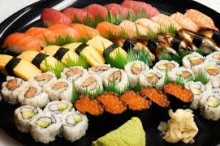
  • The Right and Wrong Way to Eat Sushi: A Primer

    The Right and Wrong Way to Eat Sushi: A Primer

    Vice.com’s food channel, Munchies, spent time with Naomichi Yasuda and learned the dos and don’ts of eating sushi. And they kindly summarized some practices that are permitted and verboten.

    (1) It’s okay to use your fingers to eat cut sushi rolls.
    (2) Don’t combine ginger and sushi, or ginger and soy sauce. Ginger is a palate cleanser in between bites.
    (3) When dipping sushi into soy sauce, dip fish-side down.
    (4) Never shake soy sauce off of sushi. That’s like shaking your wanker in public.

    The video above just begins to scratch the surface. If you head over to TheSushiFAQ, you can find a long list of rules and suggestions that will round out your sushi-eating etiquette. Here are some additional tips to keep in mind: Never put wasabi directly in the shoyu dish. And know that Sashimi is only to be eaten with your chopsticks, not with your hands.

    Source and image.

  • Singing astronaut inspects space engineering projects

    Singing astronaut inspects space engineering projects

    Astronaut Chris Hadfield has inspected projects to clean up space junk, and space engineering projects, at the University’s advanced Instrumentation and Technology Centre at Mount Stromlo.

    Commander Hadfield shot to fame when a film clip of him singing David Bowie’s Space Oddity from the International Space Station went viral.

    Mount Stromlo is home to a project to track and clean up hundreds of thousands of pieces of debris floating in orbit, which pose significant dangers to space exploration and satellites.

    “One of the risks of living on a spaceship is impact with debris. Mitigation is the key,

  • Weekly Science Picks

    Weekly Science Picks

    New Sunday, new editor’s selections stories. Well, let us see what would be the most promising and exciting news of this week. This weekly presentation covers many different areas from Australia’s biodiversity, over the idea of artificial human blood, until a nice whale migration story. Sure you will enjoy this week’s review. So, let’s begin.

    Artificial blood that’s better than the real thing

    Each week on the BBC World Service programme The Forum, a global thinker from the worlds of philosophy, science, psychology or the arts is given a minute to put forward a radical, inspiring or controversial idea – no matter how improbable – that they believe would change the world.

    Been whale watching lately? Scientists want your snaps to tell migration story

    Scientists are studying the migration to better understand the recovering population. Peta Beeman, a researcher from Southern Cross University, is turning to citizen science to help gather data.

    Can we feed the world and save our species?

    There is a range of intensities of primary production in Australia today. Hunting and gathering and use of fire to manipulate the abundance of native species is at the lowest end of the spectrum, then livestock grazing of native pastures, right through to complete replacement of native species for intensive cropping and forestry plantation (the latter requiring inputs in the way of fertilisers, machinery, chemicals etc.). The more intensive the production method, the more food and fibre can be produced per unit area, but with greater impact on biodiversity. Less intensive production methods provide opportunities for native species to coexist with production.

    What lit up the universe?

    New research shows we will soon uncover the origin of the ultraviolet light that bathes the cosmos, helping scientists understand how galaxies were built. The study by cosmologists shows how forthcoming astronomical surveys will reveal what lit up the cosmos.

    Here we are at the end of one more amazing journey. Until the next time, please stay curious and scientifically passionate.