Category: News

  • Robots to ResQu rainforests from purple plague

    Robots to ResQu rainforests from purple plague

    Australia’s rare and precious rainforests, like the iconic Daintree, could have an unexpected aerial ally in the battle against weeds – autonomous helicopters.

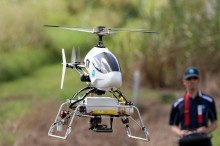
    Two Project ResQu helicopters developed by CSIRO completed trial flights near Cairns, locating weeds like the dreaded ‘purple plague’, or Miconia calvescens, faster and more reliably than ever.

    Developed by robotics researchers at CSIRO, in partnership with Biosecurity Queensland, the unmanned helicopters found weeds using sophisticated imaging technology. The helicopters are safer and a more convenient way of mapping weeds in remote and difficult terrain.

    CSIRO Biosecurity Flagship Science Director, Dr Gary Fitt, said access to dense rainforests was difficult for people but all-too-easy for weeds which get carried in by animals or blown in from gardens or farms.

    “Miconia is among the worst of a number of weeds that pose a significant threat to Australia’s precious rainforest remnants,

  • Everyday Economics: A New Course by Marginal Revolution University Where Students Create the Syllabus

    Everyday Economics: A New Course by Marginal Revolution University Where Students Create the Syllabus

    In 2012, Tyler Cowen and Alex Tabarrok, two econ professors at George Mason University, launched Marginal Revolution University (otherwise known as MRUniversity) which delivers free, interactive courses in the economics space.

    During its early days, MRUniversity created courses on The Great Economists, Development Economics, International Trade, and The Economic History of the Soviet Union. And now it’s creating a somewhat unconventional new course called Everyday Economics. The course tries to show how economics impacts people’s day-to-day lives. And, rather suitably, MRUniversity is inviting its students — everyday people around the globe — to vote for topics the course should cover. It’s what’s called a “student-driven

  • Water and sunlight the formula for sustainable fuel

    Water and sunlight the formula for sustainable fuel

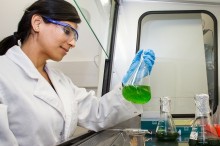
    An ANU team has successfully replicated one of the crucial steps in photosynthesis, opening the way for biological systems powered by sunlight which could manufacture hydrogen as a fuel.

    “Water is abundant and so is sunlight. It is an exciting prospect to use them to create hydrogen, and do it cheaply and safely,

  • How Rockets Really Work

    How Rockets Really Work

    The chemistry of ridable explosions.

    In recounting the riveting experience of what it’s like to launch on a Space Shuttle, pioneering astronaut Sally Ride vividly recalled how “the shuttle leaps off the launch pad in a cloud of steam and a trail of fire.

  • Neanderthals and Modern Humans coexisted

    Neanderthals and Modern Humans coexisted

    Neanderthal groups lived alongside modern humans for several thousand years, an international team of scientists has found, overturning previous theories about the extinction of Neanderthals.

    The team applied a new radiocarbon dating method which revealed that Neanderthals across Europe did not all die out at one time as modern humans appeared.

    “The two groups lived in neighboring regions for several thousand years,

  • Weekly Science Picks

    Weekly Science Picks

    It seems we are around one more Sunday in this month. We left behind us one more fascinating and promising week and now, with the full confidence, we would like to recapitulate what have happened during the last 7 days. We are just wondering if anyone could predict that the amateur in genetics may give such a great contribution. What also dragged our attention is a story on how children’s drawing can affect their intelligence later in their life. Quite amazing, is not it? So, let’s start with our presentation of the previous week.

    The amateur geneticist who surprised science

    This was in 2002, and Kim, then 44 years old, was already an accomplished endurance athlete. She cycled, ran, climbed and skied through the Rockies for hours every day, and was a veteran of Ironman triathlons. She’d always been the strong one in her family. When she was four, she would let her teenage uncles stand on her stomach as a party trick. In high school, she was an accomplished gymnast and an ardent cyclist. By college, she was running the equivalent of a half marathon on most days. It wasn’t that she was much of a competitor, exactly – passing someone in a race felt more deflating than energising. Mostly Kim just wanted to be moving.

    Ebola-affected countries should start screening all passengers, says WHO

    There is a low risk of the Ebola virus being transmitted during air travel because unlike infections such as influenza or tuberculosis, it is not spread by breathing air and airborne particles from an infected person, the World Health Organisation said. Nonetheless, all travellers are urged to routinely wash their hands and anyone with an illness consistent with the virus should not be allowed to travel unless it is part of an appropriate medical evacuation.

    Ghostbusting in the Gulf

    The Gulf of Carpentaria off Australia’s northern coast has one of the highest rates of abandoned fishing nets, or so-called ghostnets, anywhere in the world. In fact, up to three tonnes of netting washes ashore each year for every kilometre of coastline.

    Children’s drawings indicate later intelligence, study shows

    How 4-year-old children draw pictures of a child is an indicator of intelligence at age 14, according to a new study. The researchers studied 7,752 pairs of identical and non-identical twins and found that the link between drawing and later intelligence was influenced by genes.

    These would be the end of our today’s talk. Hope you have enjoyed this trip as we did.
  • Genetic key to lupus shows potential of personalised medicine

    Genetic key to lupus shows potential of personalised medicine

    Medical researchers have used DNA sequencing to identify a gene variant responsible for causing lupus in a young patient.

    The development shows that for the first time, it is feasible for researchers to identify the individual causes of lupus in patients by using DNA sequencing, allowing doctors to target specific treatments to individual patients.

    Lupus is a chronic autoimmune disease that affects one in 700 Australians, predominantly young and middle aged women.

    Medical researchers at the Centre for Personalised Immunology, based at the John Curtin School of Medical Research (JCSMR), sequenced the genes of a young girl who suffered a stroke when she was four as a result of her lupus.

    “We can now target her specific disease, and make treatments that will benefit her throughout her life,

  • Stanford’s Robert Sapolsky Demystifies Depression

    Stanford’s Robert Sapolsky Demystifies Depression

    We know that depression affects people from all walks of life. Rich. Poor. Celebs. Ordinary Joes. Young. Old.

    But, somehow after the death of Robin Williams, there’s a renewed focus on depression, and my mind turned immediately to a lecture we featured on the site way back in 2009. The lecture is by Robert Sapolsky, a Stanford biologist, who has a talent for making scientific subjects publicly accessible. A recipient of the MacArthur genius grant, Sapolsky notes that depression — currently the 4th greatest cause of disability worldwide, and soon the 2nd — is deeply biological. Depression is rooted in biology, much as is, say, diabetes. As the lecture unfolds, you will see how depression changes the body. When depressed, our brains function differently while sleeping, our stress response goes way up 24/7, our biochemistry levels change, etc. You will see that biology is at work.

    Source and image.

  • From the caves to the classroom

    From the caves to the classroom

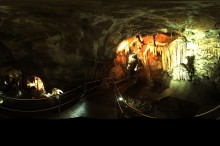
    The latest chapter in a long history of mapping technology innovation at Jenolan Caves will see students from around Australia explore the caves in virtual reality as part of Australia’s biggest school excursion.

    From classrooms around the country, students will embark on a digital journey exploring the iconic Jenolan Caves, an important scientific environment full of learning opportunities. As they progress through quests, the students will explore the surrounding environment and complete inquiry based learning tasks that test their core science skills.

    This virtual excursion is made possible by the partnership between computer scientists from CSIRO together with science education experts from 3P Learning to develop ‘immersive learning’ environments.

    It combines 3P Learning’s latest educational resource, IntoScience, with high-definition panoramic video and 3D models of real places scanned using CSIRO’s award-winning laser mapping technology, Zebedee. CSIRO’s technology is the first capable of mapping caves with lasers while continuously moving, which makes it more efficient and more detailed than traditional methods.

    Acting Flagship Director, Digital Productivity and Services, Dr Michael Bruenig said that scientists from CSIRO originally became involved in scanning the Jenolan Caves to assist ANSTO with their research into cave formation processes that required three-dimensional maps of the caves.

    “It’s exciting to see our cave models now brought to life as a virtual world that students can explore and perform their own scientific investigations in.

  • Laser makes microscopes way cooler

    Laser makes microscopes way cooler

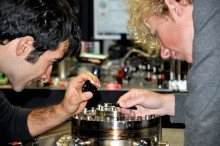
    Laser physicists have found a way to make atomic-force microscope probes 20 times more sensitive and capable of detecting forces as small as the weight of an individual virus.

    The technique, developed by researchers in the Quantum Optics Group of the Research School of Physics and Engineering, hinges on using laser beams to cool a nanowire probe to minus 265 degrees Celsius.

    “The level of sensitivity achieved after cooling is accurate enough for us to sense the weight of a large virus that is 100 billion times lighter than a mosquito,

  • River red gum – more than just a tree

    River red gum – more than just a tree

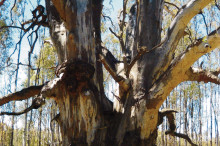
    So much more than just a tree, the river red gum has been central to the tensions between economic, social and environmental values of rivers and floodplain landscapes in Australia – perhaps more so than any other Australian plant or animal.

    Flooded Forest and Desert Creek: Ecology and History of the River Red Gum, a new CSIRO book, examines not only the ecology of one of the most iconic Australian trees, but how changes in attitudes towards it have reflected broader shifts in values of Australian society.

    Author, CSIRO’s Dr Matthew Colloff, said that given the prominence of the river red gum in Australian culture, we know surprisingly little about the ecology and life history of it.

    “The river red gum has been the subject of repeated government inquiries over its conservation, use and management. Despite this we know remarkably little about the basics of this species: its longevity; how deep its roots go; what proportion of its seedlings survive to adulthood; the diversity of organisms associated with it, and the nature of those associations,

  • Weekly Science Picks

    Weekly Science Picks

    What an amazing week! A lot of things have happened over the last 7 days. For instance, did you know that a woman won an outstanding Fields Medal in mathematics for the first time after 50 years? How brilliant is that? Also, we have noticed there is some progress in discovering an Ebola medication. In other words, there is still hope we will find that treatment and heal the sick around the world. In this weekly review, we also return to the time when the earliest animals lived and at the beginning of the Universe. So, let’s start with our newest journey.

    Big Bang: How the Universe was created

    “You just won’t believe how vastly, hugely, mind-bogglingly big space is,

  • Cuckoos trick other cuckoos in the race to own the nest

    Cuckoos trick other cuckoos in the race to own the nest

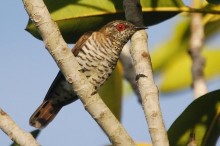
    Australian native cuckoos are engaged in an arms race, competing with each other to take over other species’ nests.

    The finding by Research School of Biology scientists gives new insights into the deceptive habits of cuckoos, which lay their eggs in other birds’ nests to dupe other mums into raising cuckoo chicks.

    “Previous research has focussed on how cuckoos try to trick their hosts,

  • Hear Michel Foucault’s Lecture “The Culture of the Self

    Hear Michel Foucault’s Lecture “The Culture of the Self

    Michel Foucault’s time in the United States in the last years of his life, particularly his time as a lecturer at UC Berkeley, proved to be extraordinarily productive in the development of his theoretical understanding of what he saw as the central question facing the contemporary West: the question of the self.

    In his 1983 Berkeley lectures in English on “The Culture of the Self,