Category: News

  • CSIRO releases Spanish version of free pesticide risk tool

    CSIRO releases Spanish version of free pesticide risk tool

    Spanish-speaking farmers and regulators will be better equipped to manage the impacts of pesticides on water resources thanks to a new version of CSIRO’s popular Pesticide Impact Rating Index (PIRI) tool.

    The Australian national science agency, the CSIRO, this month, released a Spanish version of the freely available software tool, which rates the potential pollution risk of pesticides to surface and ground waters based on different land uses or industry type, at both catchment and regional scales.

    CSIRO project leader Dr Rai Kookana said that the new version of the tool vastly improves its accessibility across the globe.

    “PIRI has been successfully used in Australia for nearly a decade and, impressively, has been downloaded for use in 59 countries,

  • Map Showing Where Today’s Countries Would Be Located on Pangea

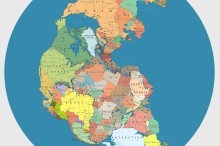
    Map Showing Where Today’s Countries Would Be Located on Pangea

    The supercontinent of Pangea formed some 270 million years ago, during the Early Permian Period, and then began to break up 70 million years later, eventually yielding the continents we inhabit today.

    Pangea was, of course, a peopleless place. But if you were to drop today’s nations on that great land mass, here’s what it might look like. (Click on the image to view it in a much larger, high resolution format.) The map’s creator is Massimo Pietrobon, someone who playfully describes himself as “a famous explorer and cartographer of Atlantis,

  • Weekly Science Picks

    Weekly Science Picks

    It seems we came to the end of one more impressive and fascinating week. Just to summarise in brief – it was so exciting and amazing. For instance, did you know that Australia got so unique and special wildlife? Something that you cannot see anywhere else in the world. So, that’s the reason more to be proud because you are Australian. Secondly, there are some findings regarding human’s genetics which are very promising as well. And finally, did you know that there are some indications that you can learn while you are in sleep? So great, is not it? Well, let’s begin our today’s review.

    Can you learn in your sleep?

    The idea of learning as you sleep was once thought very unlikely, but there are several ways – both low- and hi-tech – to try to help you acquire new skills as you doze. While there is no method that will allow you to acquire a skill completely from scratch while you are unconscious, that doesn’t mean that you still can’t use sleep to boost your memory. During the night, our brain busily processes and consolidates our recollections from the day before, and there could be ways to enhance that process.

    Less than 10% of human DNA has functional role, claim scientists

    More than 90% of human DNA is doing nothing very useful, and large stretches may be no more than biological baggage that has built up over years of evolution, Oxford researchers claim.

    How did Australia’s plants and animals get to be so unique?

    Australia is known for its weird and wonderful critters and plant life – the kangaroo, platypus, Banksias, wattles, emu… the list could go on and on. But how did these icons come to evolve in the ways that they did? Science can help us piece together the story.

    Pesticide linked to three generations of disease: Methoxychlor causes epigenetic changes

    Researchers say ancestral exposures to the pesticide methoxychlor may lead to adult onset kidney disease, ovarian disease and obesity in future generations.

    Hope you’ve enjoyed this journey as we did. Please stay tuned; new stories are coming very soon.

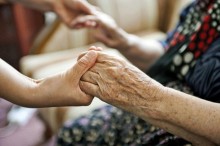
  • Australia’s ageing population poses budget risks

    Australia’s ageing population poses budget risks

    Australia’s public and private economy-wide deficit could blow out to more than $400 billion by 2050 due to the nation’s ageing population, a new Australian National University report has found.

    The report by the Australian Research Council Centre of Excellence in Population Ageing Research (CEPAR), based at the Crawford School of Public Policy, provides the first National Transfer Accounts (NTA) measure for Australia, based on figures from 2009-10.

    NTA measures how each age group produces, consumes, shares, and saves resources in the economy, and gives insight into how a country’s demographics will affect its economy and finances.

    “The fiscal imbalance indicated in the 2009-10 NTA is not sustainable as the Australian population ages,

  • WHO welcomes global momentum on viral hepatitis

    WHO welcomes global momentum on viral hepatitis

    On World Hepatitis Day, 28 July, WHO welcomes new progress in tackling one of the world’s most serious diseases. Viral hepatitis – a group of infectious diseases known as hepatitis A, B, C, D, and E – affects millions of people worldwide, causing acute and chronic liver disease and killing close to 1.4 million people every year.

    “For years, viral hepatitis has been largely neglected,

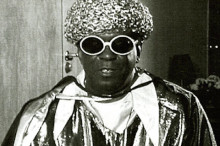
  • “The Black Man in the Cosmos

    “The Black Man in the Cosmos

    A pioneer of “Afrofuturism,

  • Stephen Fry Explains the Rules of Cricket in 10 Animated Videos

    Stephen Fry Explains the Rules of Cricket in 10 Animated Videos

    Founded in London in 1787, The Marylebone Cricket Club (MCC) began publishing The Laws of Cricket in 1788, and later became the governing body of the game.

    More than two centuries later, the MCC has passed governing responsibilities to The International Cricket Council. But it still publishes The Laws of Cricket and helps young players and casual fans learn more about the bat-and-ball game that dates back to early 16th-century England, if not before. And let’s face it, if you didn’t grow up in a country that figured into the British Empire, you can probably use a primer. Or maybe 10 animated ones narrated by actor, writer, cricket lover and occasional umpire Stephen Fry. Click the play button on the video above, and you can watch the collection of animations, covering everything from what happens when a “wicket is down

  • New material puts a twist in light

    New material puts a twist in light

    A team from the Research School of Physics and Engineering have uncovered the secret to twisting light at will. It is the latest step in the development of photonics, the faster, more compact and less carbon-hungry successor to electronics.

    A random find in the washing basket led the team to create the latest in a new breed of materials known as metamaterials. These artificial materials show extraordinary properties quite unlike natural materials.

    “Our material can put a twist into light – that is, rotate its polarisation – orders of magnitude more strongly than natural materials,

  • Why Tattoos Are Permanent?

    Why Tattoos Are Permanent?

    For the last three decades my right ankle has been the site of a deeply botched tattoo. It was supposed to be a yin yang, but with every passing year, it looks more and more like a cancerous mole. The drunken Vietnam Vet who administered it barely glanced at the design taking shape on my once virgin skin as he chatted with a pal. I was too intimidated to say, “Um…is it just me or are you filling in the white circle?

  • Weekly Science Picks

    Weekly Science Picks

    Here we have a new great opportunity to present you the breaking stories of this week. We would proudly like to mention the things as follows. Firstly, did you know that mind reading technologies are becoming our reality? Sure you all are impressed with this fact. Also, we got some incredible news about malaria and its therapy. In conclusions, there are very exciting updates in terms of astronomy and cosmology. So, let’s begin this amazing journey.

    Neuroscience: ‘I can read your mind’

    Gallant, a researcher at the University of California, Berkeley, has a brain decoding machine – a device that uses brain scanning to peer into people’s minds and reconstruct what they’re seeing. If mind-reading technology like this becomes more common, should we be concerned? Ask Gallant this question, and he gives a rather unexpected answer.

    Breakthrough made in quest for new malaria drugs as resistance fears grow

    Australian researchers have made a major breakthrough in the race to find new medicines to eliminate malaria, as resistance increases to the only drug left to treat the disease.

    From critters to creeks – everything you need to know about our sunburnt country

    Whether it’s bagging a barramundi, eye-balling an emu, or sitting under a snow gum, Australians love getting out amongst nature, and our scientists are no different. For nearly 90 years we’ve been counting, tracking, measuring, recording, and analysing Australia’s amazing plants and animals. And in that time, you’ll be glad to hear we’ve learnt a thing or two. In fact, we’ve learnt so much we’ve written a whole book about them!

    Is the universe a bubble? Let’s check: Making the multiverse hypothesis testable

    Scientists are working to bring the multiverse hypothesis, which to some sounds like a fanciful tale, firmly into the realm of testable science. Never mind the Big Bang; in the beginning was the vacuum. The vacuum simmered with energy (variously called dark energy, vacuum energy, the inflation field, or the Higgs field). Like water in a pot, this high energy began to evaporate — bubbles formed.

    Indeed, it was a wonderful time to meet with you all again and to share this fascinating facts. Until the next meeting, please stay thirsty and scientifically curious.

  • Tour the World’s Street Art with Google Street Art

    Tour the World’s Street Art with Google Street Art

    By far the most enjoyable part of our recent family trip to London was the afternoon my young son and I spent in Shoreditch, groping our way to No Brow, a comics shop I had noticed on an early morning stroll with our hostess.

    Our route was evidence that I had forgotten the coordinates, the street name, the name of the shop… Eventually, I realized we were lost, and that is where the real fun began, as we retraced our steps using street art as bread crumbs.

    Ah right, there’s that rooftop mushroom installation!

    And there’s that Stik figure…

    After a while, a FedEx man took pity on us, ruining our fun by steering us toward the proper address..

    I’m not sure I could ever duplicate our trail, but I enjoy trying with Google Street Art. Armchair travelers can use it to project themselves to the heart of ephemeral, possibly illegal exhibitions all over the globe,.

    Bogotá… Paris… New York’s legendary 5 Pointz, before the landlord clutched and whitewashed the entire thing in the dead of night. Each up close photo bears a highly informational caption, much more than you’d find in the street itself. Think of it as an after-the-fact digital museum. It’s appropriate, given the ephemeral nature of the work. An online presence is its best shot at preservation.

    Those of us with something to contribute can add to the record with a user gallery or by tagging our photos with #StreetArtist.

    Source and image.

  • Space Engineering facility takes off

    Space Engineering facility takes off

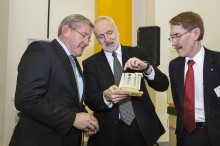
    Australian space scientists will no longer need to go offshore to build satellites, following the completion of the Advanced Instrumentation and Technology Centre (AITC) at The Australian National University.

    The Minister for Industry, Ian Macfarlane officially opened the Centre.

    “Australia is doubly blessed because Mt Stromlo also has a long heritage of combining scientific and engineering excellence to design, manufacture and test the high precision instruments which support cutting edge research that I think we often take for granted in Australia but which we should always be proud of,

  • New theory turns cancer on its head

    New theory turns cancer on its head

    A new theory of how cancer works could lead to the next generation of treatments of the disease. The theory suggests that cancer forms when recently evolved genes are damaged, and cells have to revert to using older, inappropriate genetic pathways.

    Astrobiologists Dr Charley Lineweaver from The Australian National University and Professor Paul Davies from Arizona State University teamed up with oncologist Dr Mark Vincent from the University of Western Ontario to develop the new model.

    “The rapid proliferation of cancer cells is an ancient, default capability that became regulated during the evolution of multicellularity about a billion years ago,