Category: News

  • A Threat to Internet Freedom

    A Threat to Internet Freedom

    A couple weeks back, we mentioned that Brian Knappenberger had released his new documentary about Aaron Swartz, The Internet’s Own Boy, under a Creative Commons license, making it free to watch online.

    He now returns with a short op-doc for The New York Times. It’s called A Threat to Internet Freedom, and it explains why preserving Net neutrality remains “critically important for the future of Internet freedom and access.

  • Weekly Science Picks

    Weekly Science Picks

    Oh, dear! Can you imagine just few moments ago we were writing the last week’s review and right now we are at the beginning of one more exciting and fascinating editor’s selection? Time passes so quickly, does not it? We can not explain how suddenly we appeared into this Sunday. Well, it’s strange, but let’s start. Firstly, have you ever wondered why people bite their nails? A wired habit, is not it? The habit no one should be proud of. Or, for instance, did you know that antioxidants can accelerate cancers? These are only top stories for this week. We are coming with much more, so please enjoy our journey!

    Why do we bite our nails?

    Lately I’ve been wondering what makes someone an inveterate nail-biter like me. Are we weaker willed? More neurotic? Hungrier? Perhaps, somewhere in the annals of psychological research there could be an answer to my question, and maybe even hints about how to cure myself of this unsavoury habit.

    HIV ‘cure’ girl still has virus

    An American girl born with HIV and in remission for years despite stopping treatment is showing signs that she still has the virus and therefore is not cured. The news is a setback to hopes that very early doses of powerful drugs might eliminate the infection that causes Aids.

    Bush food, people, country and all things

    The Arrente people are the traditional owners of a vast expanse of land that surrounds Alice Springs, rich with mountain ranges, waterholes and gorges. Their long history with the region has given the Arrente community a deep knowledge and understanding of the landscape and natural environment.

    How antioxidants can accelerate cancers, and why they don’t protect against them

    Two cancer researchers have proposed why antioxidant supplements might not be working to reduce cancer development, and why they may actually do more harm than good. Their insights are based on recent advances in the understanding of the system in our cells that establishes a natural balance between oxidizing and anti-oxidizing compounds. These compounds are involved in so-called redox (reduction and oxidation) reactions essential to cellular chemistry.

    Until the next meeting, please stay thirsty and scientifically passionate. The new stories are coming soon!

  • Fusion energy facility promises clean energy

    Fusion energy facility promises clean energy

    The search for star power – fusion – has received a major boost with the launch of the Australian Plasma Fusion Research Facility (APFRF) at The Australian National University.

    The facility includes Australia’s largest fusion experiment, the newly upgraded H1, which will now be able to heat fusion experiments to temperatures hotter than the core of the sun.

    The facility also includes a new machine, MagPIE, which will accelerate research into extreme materials to be used in future experiments involving even higher temperatures and radiation levels.

    Senator Zed Seselja pressed the button to initiate a 30,000 degrees Celsius fusion experiment in H1 to conclude the launch.

    “This facility and its fine team have a reputation for world-class innovation and research excellence,

  • Read Online J.K. Rowling’s New Harry Potter Story: The First Glimpse of Harry as an Adult

    Read Online J.K. Rowling’s New Harry Potter Story: The First Glimpse of Harry as an Adult

    Quick note: Earlier this year, J. K. Rowling began writing new stories about the 2014 Quidditch World Cup Finals for Pottermore, the website for all things Harry Potter.

    Today, she followed up with a story that takes the form of an article published in The Daily Prophet: “Dumbledore’s Army Reunites at Quidditch World Cup Final

  • Could this revolutionise the way you give feedback?

    Could this revolutionise the way you give feedback?

    In 2000, I saw someone using screen capture software for the first time. Screen capture allows you to record the screen of your computer as if you had a camera pointing at the screen. It also records your voice.

    So you can open up your student’s work onto the screen, mark and highlight their work, turn on the screen capture software and then record yourself correcting their paper. The resulting video, can then be sent to students who can listen and watch the video. You will find some examples here and here. In 2006 I used the idea with a group of 11 students studying English. The feedback was very positive and I realised that the idea had enormous potential. My work was covered by the Times Higher and then led onto various awards, an appearance on TV and was even included in a report handed to the UK government. I have presented the idea in 26 countries around the world.

    My original work was done using Techsmith Camtasia but though it is a technology I use extensively, it is not ideal for the feedback idea. I prefer JING, which is a free tool and basically does the whole process of recording, compressing and making ready for distribution in one click. Research is growing and in Canada, Jérémie Sérror worked extensively with JING and found it be to very popular with his students. In Norway Peter Mathisen looked at using the idea across different subjects and in the UK the Open University used the idea on distance learning courses. They all highlight the following:

    [1] Much more feedback can be provided. Teachers are able to elaborate and develop points.
    [2] More personal. Students like hearing the voice.
    [3] Multimodal delivery. Perhaps useful for dyslexic students.
    [4] Very versatile. Can be used in a whole range of subjects and contexts.
    [5] Good for developing stronger bonds with students. Especially relevant to distance learning courses.

    JING is incredibly easy to use and you can download the software and start working with it in minutes. My help videos have been watched something like a 100,000 times. You do need a good internet connection and so do your students. Anyone can view the videos you create, so sharing is easy. I really suggest you give it a try; it can really impact on your teaching and learning.

    Source and image.

  • WHO targets elimination of TB in over 30 countries

    WHO targets elimination of TB in over 30 countries

    WHO nowadays, together with the European Respiratory Society (ERS), presented a new framework to eliminate tuberculosis (TB) in countries with low levels of the disease. Today there are 33* countries and territories where there are fewer than 100 TB cases per million population.

    The framework outlines an initial “pre-elimination

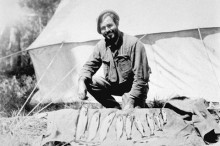
  • Ernest Hemingway’s Summer Camping Recipes

    Ernest Hemingway’s Summer Camping Recipes

    With regard to writing, Ernest Hemingway was a man of simple tastes.

    Were I to employ a metaphor, I’d describe Hem as the kind of guy who’d prefer an unadorned plum from William Carlos Williams’ icebox to Makini Howell’s Pesto Plum Pizza with Balsamic Arugula.

    Don’t mistake that metaphor for real life, however. Judging by his 1920 Toronto Star how-to on maximizing comfort on camping vacations, he would not have stood for charred weenies and marshmallows on a stick. Rather, a little cookery know-how was something for a man to be proud of:

    “…a frying pan is a most necessary thing to any trip, but you also need the old stew kettle and the folding reflector baker.

  • Isaac Asimov on Optimism vs. Cynicism about the Human Spirit

    Isaac Asimov on Optimism vs. Cynicism about the Human Spirit

    Why cynicism is, above all, a disservice to our own happiness.

    “As long as there is one upright man, as long as there is one compassionate woman,

  • Weekly Science Picks

    Weekly Science Picks

    It seems we come to the end of this week before we left the previous one. Time has passed so quickly, has not it? We just turned around ourselves and we are at the end of one more week of such an amazing month of July. Let us see what this fascinating week brought to us. This week’s selections appear as pretty attractive, but what dragged our attention the best is the story about hypnosis or how to get possessed by someone’s else mind. Quite spooky, is not it? Also we like the stories regarding astronomy discoveries, human history findings and much more. Well, let’s begin!

    Hypnosis: The day my mind was ‘possessed’

    “The engineer has developed a way of taking control of your thoughts from the inside. He does this because he is fascinated by mind control, and wants to apply the most direct method of controlling your thoughts. He is doing this to advance his research into mind control. You will soon be aware of the engineer inserting his thoughts.

  • New insights into pain relief drugs

    New insights into pain relief drugs

    Scientists from the Research School of Biology have opened the door to a new world of pain treatments with their discovery of the exact way that pain relief drugs, such as anaesthetics, work on the body.

    Dr Ben Corry and Lewis Martin developed a detailed computer model that revealed for the first time how benzocaine, a local anaesthetic, and phenytoin, an anti-epilepsy drug, enter into nerve cells and prevent the pain signals being transmitted to the brain.

    “By understanding how the current range of drugs work we can best design the next generation, to better treat conditions such as chronic pain, epilepsy and cardiac arrhythmia,

  • Biological agent closing in on weedy rampant escapee

    Biological agent closing in on weedy rampant escapee

    The tenacious and troublesome Crofton weed (Ageratina adenophora), as it is commonly known, has been running rampant in eastern coastal Australia since it ‘escaped’ from being an ornamental plant in Sydney gardens.

    It has taken hold on Lord Howe Island, a World Heritage Area, where it is found mainly in non-accessible areas, making manual removal and herbicide control impractical.

    Crofton weed is a serious environmental weed that has invaded agricultural lands as well as 150 reserves in NSW managed by the National Parks and Wildlife Service (NPWS).  It reduces the ecological value of bush land but also affects grazing land on farms by diminishing their carrying capacity.

    The weed spread rapidly during the 1940s and 1950s creating dense infestations, particularly along waterways and disturbed areas, inhibiting native regeneration and threatening several vulnerable or endangered native species and communities, including those on Lord Howe Island.

    The new biological control agent is a rust fungus that originates from Mexico (where Crofton weed is native) and works by infecting the young leaves and stems of the plant, stunting development and disrupting its ability to reproduce.

    Dr Louise Morin, plant pathologist from CSIRO’s Biosecurity Flagship, is leading the Crofton weed rust fungus release program.

    “The release of this fungus in Australia is exciting because it could make a big difference in the management of Crofton weed populations,


  • The Speech Accent Archive: The English Accents of People Who Speak 341 Different Languages

    The Speech Accent Archive: The English Accents of People Who Speak 341 Different Languages

    Over the years, I’ve met with several foreign speaking partners.

    Through conversation, I learn their language — Spanish, Korean, Japanese — and they learn mine — English. Many of them first got serious about their study of that more-or-less-international tongue with the goal of completely eliminating their native accent which, while demonstrably possible, takes so much additional effort as an adult that I’ve always advised them to just spend that time learning another language (or two) instead. Many, of course, come to that conclusion themselves, realizing that English speakers all over the world have created a legitimate culture of speaking English in all kinds of different ways, with all kinds of different accents, whether or not they learned the language from childhood. But it still makes one wonder: how many different accents do people speak it in? And what do they all sound like? Wonder no longer, for we have The Speech Accent Archive, created by Steven H. Weinberger of George Mason University’s Linguistics department, who introduces it in the video below.

    The site, “established to uniformly exhibit a large set of speech accents from a variety of language backgrounds,

  • Picasso on Intuition, How Creativity Works, and Where Ideas Come From

    Picasso on Intuition, How Creativity Works, and Where Ideas Come From

    “To know what you’re going to draw, you have to begin drawing.

  • Jean-Paul Sartre Rejects the Nobel Prize in Literature in 1964: “It Was Monstrous!

    Jean-Paul Sartre Rejects the Nobel Prize in Literature in 1964: “It Was Monstrous!

    In a 2013 blog post, the great Ursula K. Le Guin quotes a London Times Literary Supplement column by a “J.C.,