Category: News

  • Weekly Science Picks

    Weekly Science Picks

    Here we are at the end of one more impressive scientific week. The things appear as quite dramatic in this weekly review. Have you ever tried to imagine how that would work if you could experience a time freeze effect? Well, that’s not only the Matrix movie fiction, that’s our reality. Right now, the neuroscience is trying to explain such a phenomenon. It seems it’s about some tricks with consciousness. Does that mean our perception defines our reality, as Morpheus suggested to Neo. Well, maybe. At this stage, we just wanted to encourage your curiosity. Please keep thinking on these… Let’s start with this week editor’s selection.

    Neuroscience: The man who saw time freeze

    It’s easy to assume that time flows at the same rate for everybody, but experiences like Baker’s show that our continuous stream of consciousness is a fragile illusion, stitched together by the brain’s clever editing. By studying what happens during such extreme events, researchers are revealing how and why the brain plays these temporal tricks – and in some circumstances, they suggest, all of us can experience time warping.

    How we created spooky experimental music in a superconductor lab

    Superconductivity was first observed in mercury in 1911. Mercury superconducts at −269C, which is just four degrees above absolute zero. This is a bit cold to be of widespread practical use, and so scientists scrambled to discover new superconductors that work at higher temperatures. In the decades that followed, we discovered that most of the elements in the periodic table superconduct, and some alloys do too.

    Going with the throughflow

    The Indonesian Throughflow is a series of ocean currents linking the Pacific and Indian Oceans. It carries water from the Pacific to the Indian Ocean through the passages and straits of the Indonesian Archipelago.

    New device allows brain to bypass spinal cord, move paralyzed limbs

    For the first time ever, a paralyzed man can move his fingers and hand with his own thoughts thanks to a new device. A 23-year-old quadriplegic is the first patient to use Neurobridge, an electronic neural bypass for spinal cord injuries that reconnects the brain directly to muscles, allowing voluntary and functional control of a paralyzed limb.

    Hope you’ve enjoyed this Weekly Science Picks as we did. Our aim is to accelerate your minds to think faster and better. Until the next time, please stayed tuned.
  • Leo Tolstoy’s Family Recipe for Macaroni and Cheese

    Leo Tolstoy’s Family Recipe for Macaroni and Cheese

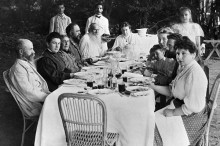
    In 1874, Stepan Andreevich Bers published The Cookbook and gave it as a gift to his sister, countess Sophia Andreevna Tolstaya, the wife of the great Russian novelist, Leo Tolstoy.

    The book contained a collection of Tolstoy family recipes, the dishes they served to their family and friends, those fortunate souls who belonged to the aristocratic ruling class of late czarist Russia. Almost 150 years later, this cookbook has been translated and republished by Sergei Beltyukov. Available in an inexpensive Kindle format ($3.99), Leo Tolstoy’s family recipe book features dozens of recipes, everything from Tartar Sauce and Spiced Mushrooms (what’s a Russian kitchen without mushrooms?), to Stuffed Dumplings and Green Beans à la Maître d’Hôtel, to Coffee Cake and Viennese Pie. The text comes with a translation, too, of Russian weights and measures used during the period. One recipe Mr. Beltyukov provided to us (which I didn’t see in the book) is for the Tolstoy’s good ole Mac ‘N’ Cheese dish. It goes something like this:

    Bring water to a boil, add salt, then add macaroni and leave boiling on light fire until half tender; drain water through a colander, add butter and start putting macaroni back into the pot in layers – layer of macaroni, some grated Parmesan and some vegetable sauce, macaroni again and so on until you run out of macaroni. Put the pot on the edge of the stove, cover with a lid and let it rest in light fire until the macaroni are soft and tender. Shake the pot occasionally to prevent them from burning.

    We’ll leave you with bon appétit! — an expression almost certainly heard in the homes of those French-speaking Russian aristocrats.

    Source and image.

  • New Dean for ANU College of Engineering and Computer Science

    New Dean for ANU College of Engineering and Computer Science

    Quantum optics specialist and ANU alumna Professor Elanor Huntington has been appointed Dean of the ANU College of Engineering and Computer Science (CECS).

    Professor Huntington is the current Head of the School of Engineering and Information Technology at UNSW Canberra, located at the Australian Defence Force Academy. She completed her PhD in experimental quantum optics at ANU in 2000.

    “I’m delighted to be joining ANU as Dean. It’s an exciting time to be joining the team,

  • Bush Capital could lose its old trees

    Bush Capital could lose its old trees

    The bush capital is losing its large old native trees so fast it may have none left within 120 years, an ANU study has found.

    Researchers have surveyed trees in green spaces across Canberra and projected their future numbers.

    “We predict there will be a considerable decline in the number of large old trees in the next few centuries under current tree management practices,

  • How to Draw Bugs Bunny?

    How to Draw Bugs Bunny?

    Bugs Bunny, that carrot-chomping, cross-dressing rascal, might have been created by Tex Avery in the 1940 cartoon A Wild Hare, but he really came into his own under the direction of Chuck Jones.

    In cartoons like What’s Opera, Doc and Rabbit Season, Jones refined Bugs’ character, turning him into someone who was witty, resourceful and, most of all, cool. Whether or not he was going up against Elmer Fudd, Yosemite Sam or Marvin the Martian, Bugs always seemed to have the upper hand. Jones once compared Bugs with his vain, self-aggrandizing rival Daffy Duck by saying, “Bugs is who we want to be. Daffy is who we are.

  • How the Great Barrier Reef survived colder temperatutes

    How the Great Barrier Reef survived colder temperatutes

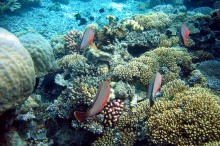
    The Great Barrier Reef grew during the last ice age, even though the water temperatures were four to five degrees colder than today, a team of international scientists has found.

    “It was right at the colder limit of what corals can take, but the reef grew and developed from there,

  • Weekly Science Picks

    Weekly Science Picks

    Here we are again! It’s our turn to provide you with the best highlights for the last week. A lot of things have happened during the last 7 days, but what have attracted our attention the most are the stories which come as follows. An interesting question we can notice here is related to the future of the robotics. Try to imagine that your boss is, for instance, a machine. How cool would that be? Sounds futuristic? Well, yes and no. We are already going that way… Let us show you how and much more. Fasten your seatbelts and we can start.

    Are we about to see the rise of robot bosses?

    The idea that robots and algorithms will take jobs is a common concern about the future. As Bill Gates argued earlier this year: “20 years from now, labour demand for lots of skill sets will be substantially lower.

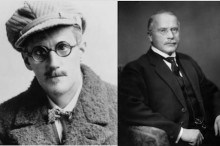
  • Carl Jung Writes a Review of Joyce’s Ulysses and Mails It To The Author (1932)

    Carl Jung Writes a Review of Joyce’s Ulysses and Mails It To The Author (1932)

    Feelings about James Joyce’s Ulysses tend to fall roughly into one of two camps: the religiously reverent or the exasperated/bored/overwhelmed. As popular examples of the former, we have the many thousand celebrants of Bloomsday—June 16th, the date on which the novel is set in 1904.

    These revelries approach the level of saints’ days, with re-enactments and pilgrimages to important Dublin sites. On the other side, we have the reactions of Virginia Woolf, say, or certain friends of mine who left wry comments on Bloomsday posts about picking up something more “readable

  • Public health specialists on standby for disasters

    Public health specialists on standby for disasters

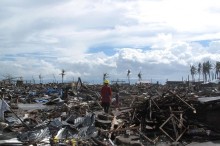
    A flying squad of public health specialists has been officially launched in Melbourne, bringing together Australia’s best experts who can rush to emergencies and disasters around the country and the world to stop the spread of infectious disease.

    The group of specialist epidemiologists has already shown its value, with several experts sent to respond to Typhoon Haiyan in the Philippines in 2013, where they played a key role monitoring community’s health and stopping epidemic-prone disease from spreading and killing more people.

    “The aftermath of a major disaster can often be a dangerous time,

  • A Testing Time for Future Teachers

    A Testing Time for Future Teachers

    By new regulations, all teaching students in NSW will have to pass a ”tough” literacy and numeracy test before they can graduate, because there are concerns some new teachers struggle to explain maths and grammar concepts to their students.

    The new online test will be introduced by 2016. Students who fail it will not be allowed to complete their final practical assessment in the classroom, which would stop them graduating.

    Education Minister Adrian Piccoli said he expected high standards of teaching graduates and the new test would ensure every student graduating from a teaching course in NSW had adequate literacy and numeracy skills.

    NSW would be the first state to set such a test, with a complete introduction planned for 2016 after trials this year and next. Students would be able to sit the test as many times as they wish – a little bit like your driver’s test. If students are failing because they don’t have the requisite knowledge, that would not be a reason to change the test.

    As part of improving teacher quality, students starting a teaching degree from school will also need three Band 5 Higher School Certificate results, one of which must be English.

  • ‘Green’ treatment removes harmful metals from mining wastewater

    ‘Green’ treatment removes harmful metals from mining wastewater

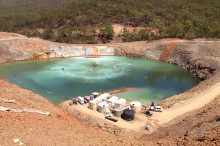
    A new cost-effective technology to treat mining wastewater and reduce sludge by up to 90 per cent has been used for the first time at a commercial mine.

    The technology, called Virtual Curtain, was used to remove metal contaminants from wastewater at a Queensland mine and the equivalent of around 20 Olympic swimming pools of rainwater-quality water was safely discharged.

    Sludge is a semi-solid by-product of wastewater treatment and reducing the amount produced has huge environmental and economic benefits.

    “Our treatment produced only a fraction of the sludge that a conventional lime-based method would have and allowed the mine water to be treated in a more environmentally sound way,

  • Weekly Science Picks

    Weekly Science Picks

    Have you ever thought how our world would appear if there would be an artificial intelligence to guide us? A quite futuristic statement, isn’t it? Well, not really! That sort of intelligence is becoming our reality. It this week’s editor selection we will talk more about that phenomenon and cover much more. Sure you will appreciate this weekly review. Let’s start.

    How online ‘chatbots’ are already tricking you

    Sometimes it’s the promise of sex that fools you. Sometimes it’s because they seem wise, friendly or just funny. The bots don’t really care how they trick you – their only objective is to make you think they’re human. In fact, if you use social media or spend any time online, it’s quite possible you’ve already been a victim.

    Don’t believe the science hype – we haven’t created true AI yet

    So has some AI milestone been reached? Is Eugene Goostman the best conversation program ever created? Turing argued in 1950 that if a computer could be substituted into the old guessing game of “Am I getting notes from a man or a woman?” and no one noticed, then we should just admit computers could think and stop worrying. But Turing was not proposing a test of any sort, and in his setup, the question “Is this a machine or a person?” is never asked, because one thinks one is answering a question about sex. Once you pose the human-or-machine question directly, things start to get very odd.

    Busting the megalodon myth: did a 3m shark get eaten by an even bigger shark?

    So, what can we make of the mysterious discovery of a CSIRO shark tag washed up on a beach that had some fairly typical data recorded on it? Some are incorrectly interpreting the data and speculating that this is evidence of the existence of a megalodon, an ancient extinct species of shark that lived millions of year ago. The megalodon was huge, around 15-24 metres in length… eek. White sharks grow up to 6 m in length.

    Mining data archives yields haul of ‘red nuggets’ galaxies

    The world of astronomy has changed. An astronomer used to have to travel to a remote location and endure long, cold nights, patiently guiding a telescope to collect precious photons of light. Now, a proliferation of online archives allows astronomers to make discoveries from the comfort of their own offices. By mining such archives, a team of astronomers has found a treasure trove of ‘red nugget’ galaxies.

    That would be everything for this weekly editor’s choice. Please stay thirsty and scientifically passionate! We are coming with new stories.

  • Unlocking the genetic code of the eucalypt

    Unlocking the genetic code of the eucalypt

    Scientists have sequenced the genetic code of the eucalypt for the first time, revealing how the Australian icon became the world’s favourite hardwood.

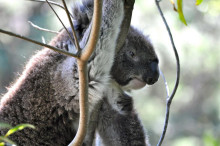
    The work also gives insights into the formation of the complex essential oils produced by eucalypts, which can help koala preservation efforts, minimise pest damage to plantations and could one day lead to eucalypt oils being a base for jet fuel.

    “The genetic code will help us understand a foundation species for the Australian eco-system and how it affects other species, from fungi through to the koala,