Category: News

  • A telescope is born

    A telescope is born

    It may look like just dots on a page, but an image of distant galaxies taken last week represents a huge step forward for CSIRO’s Australia SKA Pathfinder (ASKAP) radio telescope in Western Australia.

    ASKAP is developing and proving technologies for the international Square Kilometre Array (SKA) telescope, which will start construction in Australia and South Africa in 2018. The image shows that ASKAP is now working as a fully fledged radio telescope after just a few months of commissioning.

    Chief of CSIRO Astronomy and Space Science Dr Lewis Ball is leading a delegation of scientists and engineers presenting the results in Europe.

    “These ASKAP results are generating great excitement in the office of the SKA Organisation in Manchester, UK, and at an SKA science meeting currently taking place in Italy, because they clearly demonstrate the revolutionary potential of CSIRO’s new phased array feed technology,” Dr Ball said.

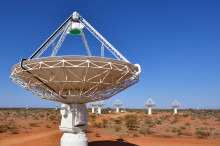
    Initial commissioning of ASKAP is being done with six of the telescope’s 36 antennas.

    “ASKAP is now functioning properly as an aperture-synthesis telescope,” CSIRO’s Dr David McConnell, who leads the ASKAP Commissioning and Early Science team, ACES, said.

    “We’ve never had a telescope like this before. We can see that the novel aspects of its design really do work, and that it will outperform a conventional telescope.”

    Dr McConnell said when the ASKAP commissioning team saw the new image, they “practically fell off their chairs”.

    The image, of a region of sky near the south celestial pole, is the equivalent of a black and white photo, but made from radio waves.

    This image covers 10 square degrees on the sky — 50 times larger than the full Moon — and was made from nine overlapping regions (‘beams’) captured simultaneously.

    The quality of the image vindicates ASKAP’s two novel features: ‘phased array feeds’ — new technology developed by CSIRO — and a special axis of rotation on each antenna.

    The phased array feeds act as ‘radio cameras’, allowing the telescope to see large areas of sky at once.

    “This image shows that the phased array feeds are stable over the 12 hours it takes to make an observation like this,” Dr McConnell said.

    “Now we can start to use the other advantages of phased array feeds, such as changing the beam size and shape for particular kinds of observations.”

    As the telescope tracks radio sources, the phased array feed is kept in a fixed orientation to the sky, thanks to a special axis of rotation built into each ASKAP antenna.

    “With a conventional telescope we would have expected artefacts from bright sources at the edges of each beam,” Dr McConnell said.

    “With ASKAP we don’t get that, because the phased array feed is held at a constant angle to the stars.”

    The dynamic range of the image was 50,000:1, which would be a good result from a mature telescope, let alone one in commissioning.

    Even at this early stage, ASKAP was able to make the new image twice as fast as any comparable telescope in the Southern Hemisphere.

    When completed, ASKAP will be able to survey the sky 25 times faster still, and will be the world’s premier survey telescope for centimetre-wavelength radio astronomy.

    ASKAP has also made a ‘snapshot’ of a single galaxy, NGC 253, from radio waves emitted by neutral atomic hydrogen gas (HI), the fuel for making stars. This is the telescope’s first image of the HI in a galaxy.

    The image captures both the intensity of the radio waves — how much HI is present in each region — and how the galaxy is rotating — which parts are approaching us, and which receding.

    “If the first image was like a black-and-white photo, this one could be compared to a colour photo,” Dr McConnell said.

    “What we’re looking for here is the equivalent of ‘colour balance’ — if there’s a proper balance of the radio waves at all the different frequencies used in the image.

    “Happily, that balance is good. The image compares very well with one made by our established Compact Array telescope.”

    Acknowledging CSIRO’s achievement with ASKAP, Australian SKA Project Director Professor Brian Boyle said “the future of radio astronomy has arrived”.

    The phased array feeds (PAFs) used for these commissioning tests are of the so-called ‘first generation’ design. Procurement is now under way for even better ‘second generation’ PAFs, which tests have shown will meet their ambitious performance targets. The PAF design last year won awards for innovation from Engineers Australia and the technology is expected to find applications outside radio astronomy.


    Source and image.

  • Putting a value on environmental change

    Putting a value on environmental change

    The value of the global environment to human well-being, health and livelihoods fell by around US$20 trillion (A$21.5 trillion) a year between 1997 and 2011 due to loss of wetlands, coral reefs and tropical forests, a new study from a team of international researchers has found.

    The study, published in Global Environmental Change, found the total value of global ecosystem services in 2011 was US$124.8 trillion (A$134 trillion) a year, down from $US145 trillion a year in 1997. That compares to global GDP of just $US75.2 trillion in 2011.

    Global ecosystem services measure the value of ecological systems to human well-being, on top of the usual economic measures contained in gross domestic product (GDP) figures.

    “Nature is not just a pretty place. Nature is a large and important part of the real economy which adds to human well-being,

  • Investment in midwifery can save millions of lives of women and newborns

    Investment in midwifery can save millions of lives of women and newborns

    A report released today by UNFPA, the United Nations Population Fund together with the International Confederation of Midwives (ICM), WHO and partners reveals that major deficits in the midwifery workforce occur in 73 countries where these services are most desperately needed. The report recommends new strategies to address these deficits and save millions of lives of women and newborns.

    The 73 African, Asian and Latin American countries represented in the “State of the World’s Midwifery 2014: A Universal Pathway – A Woman’s Right to Health” suffer 96% of the global burden of maternal deaths, 91% of stillbirths and 93% of newborn deaths, but have only 42% of the world’s midwives, nurses and doctors. The report urges countries to invest in midwifery education and training to contribute to closing the glaring gaps that exist. Investments in midwifery education and training at agreed international standards can yield – as a study from Bangladesh shows – a 1,600% return on investment.

    “Midwives make enormous contributions to the health of mothers and newborns and the well-being of entire communities. Access to quality health care is a basic human right. Greater investment in midwifery is key to making this right a reality for women everywhere,” said Dr. Babatunde Osotimehin, UNFPA Executive Director.

    Midwives have a crucial role to play in the achievement of the Millennium Development Goals (MDGs) 4 (decrease child death) and 5 (increase maternal health). When educated to international standards and within a fully functional health system, they can provide about 90% of the essential care to women and newborns and can potentially reduce maternal and newborn deaths by two thirds. Despite a steady decline in maternal deaths in the 73 countries that are covered in the report – dropping yearly by 3% since 1990 – and newborn deaths – decreasing by 1.9% per year since 1990 – there is more these countries need to do to address the severe shortage of midwifery care.

    “Midwives are central to midwifery care and the lives of women and newborn babies. The report precedes the Lancet Special Series on Midwifery, which together with the report will provide the evidence to guide all policy-makers in their quest to end preventable maternal and newborn deaths,

  • What’s in the sheep genome? Wool see

    What’s in the sheep genome? Wool see

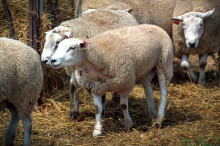
    After eight years of work, researchers have completed the first sequencing of the entire sheep genome.

    Scientists from CSIRO led an international research team to complete the sequencing, which could lead to more effective breeding strategies and new approaches to the management of sheep in Australia and around the world.

    With about 70m head of sheep in Australia and 1bn globally, the sequencing of the genome could have a massive impact for the rural economy given that sheep are a major source of meat, milk and wool products.

    “We investigated the completed genome to determine which genes are present in a process called gene annotation, which resulted in an advanced understanding of the genes involved in making sheep the unique animals that they are,

  • Weekly Science Picks

    Weekly Science Picks

    Good day to everyone! It’s the end of one more scientific week. Let us see what have happened during the last 7 days. First of all, this week sounds so futuristic and promises the exciting time in many areas of science and technology. The crucial questions we got at the moment are as follows. Will we eat the insects in the future? What is the tomorrow of genetics? How will the solar research look like in the coming period? Are we going quantum? Let us see what our this week’s choice says about that.

    How insects could feed the food industry of tomorrow

    Millions of maggots squirm over blackened pieces of fruit and bloody lumps of fetid flesh. A pungent stench of festering decay hovers over giant vats of writhing, feasting larvae. It’s more than enough to put most people off their lunch. Yet these juvenile flies could soon be just one step in the food chain away from your dinner plate.

    Genetic treatment using three-parent embryo may be ready in two years

    A controversial technique involving three-parent embryos, designed to prevent incurable genetic diseases, could be ready within two years but unless the government changes the law, prospective parents will be prevented from using it, scientists say.

    Our solar team sets a hot and steamy world record

    A team of solar thermal engineers and scientists at our Energy Centre in Newcastle have used the ample sunlight flooding their solar fields to create what’s called ‘supercritical’ steam – an ultra-hot, ultra-pressurised steam that’s used to drive the world’s most advanced power plant turbines – at the highest levels of temperature and pressure EVER recorded with solar power.

    Quantum criticality observed in new class of materials

    Quantum criticality, the strange electronic state that may be intimately related to high-temperature superconductivity, is notoriously difficult to study, but the first findings of a ‘quantum critical point’ in a category of materials known as ‘oxypnictides’ could lead to a broader understanding of the quantum phenomenon.

    These would be everything for this week, mates! Hope you enjoy this weekly review as I do.

  • Stephen Hawking Reveals the Conditions That Could Lead to England’s Victory at The World Cup

    Stephen Hawking Reveals the Conditions That Could Lead to England’s Victory at The World Cup

    Speaking at the Savoy Hotel in London, physicist Stephen Hawking told a crowd: “Ever since the dawn of civilisation, people have not been content to see events as unconnected and inexplicable.

  • Supercritical solar – new frontier for power generation

    Supercritical solar – new frontier for power generation

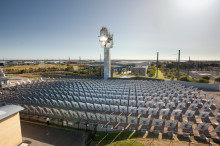
    CSIRO has used solar energy to generate hot and pressurised ‘supercritical’ steam, at the highest temperatures ever achieved in the world outside of fossil fuel sources.

    Supercritical steam is a breakthrough for solar energy and means that one day the sun could be used to drive the most advanced power stations in the world, currently only driven by coal or gas.

    CSIRO’s Energy Director, Dr Alex Wonhas said this milestone is a game-changer for the renewable energy industry.

    “It’s like breaking the sound barrier; this step change proves solar has the potential to compete with the peak performance capabilities of fossil fuel sources.

    “Instead of relying on burning fossil fuels to produce supercritical steam, this breakthrough demonstrates that the power plants of the future could instead be using the free, zero emission energy of the sun to achieve the same result,” Dr Wonhas said.

    Supercritical solar steam is water pressurised at enormous force and heated using solar radiation. Around 90 per cent of Australia’s electricity is generated using fossil fuel, but only a small number of power stations are based on the more advanced supercritical steam.

    The world record, set in May this year, was at a pressure of 23.5 megapascals (a measure of force per unit area), and temperatures up to 570 degrees Celsius. It is the combination of pressure and temperature demonstrated at scale that makes this such a breakthrough for solar power.

    Commercial solar thermal power plants around the world use subcritical steam, operating at similar temperatures but at lower pressure. If these plants were able to move to supercritical steam, it would increase the efficiency and help to lower the cost of solar electricity.

    The $9.7 million research program is supported by the Australian Renewable Energy Agency (ARENA) and is part of a broader collaboration with Abengoa Solar, the largest supplier of solar thermal electricity in the world. CSIRO and Abengoa Solar, with support from ARENA, are developing advanced solar storage to provide solar electricity at any time, day or night.

    The breakthrough was made at the CSIRO Energy Centre, Newcastle, home to Australia’s low emission and renewable energy research. The Centre includes two solar thermal test plants featuring more than 600 mirrors (heliostats) directed at two towers housing solar receivers and turbines.

    Although there is still work to be done before this technology is ready for commercialisation, ARENA CEO Ivor Frischknecht acknowledged the significant achievement saying it demonstrates the importance of research and development.

    “This breakthrough brings solar thermal energy a step closer to cost competitiveness with fossil fuel generated power,” said Mr Frischknecht.

    Source and image.

  • Media Education Futures: Coding skills not enough in an information society

    Media Education Futures: Coding skills not enough in an information society

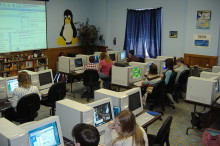
    The need to learn coding as one of the civic skills needed in the 21st century has been particularly emphasised in the Western world.

    Whether coding skills should be included in the new national core curriculum is debated in Finland where IT companies have even organised coding clubs for children. However, the conclusion of the international conference Media Education Futures held at the University of Tampere, Finland, on 7 – 9 May was that coding skills alone are not enough in information societies.

    The conference brought together over 140 researchers, teachers and policymakers in the field of media education from 26 countries. According to the research results presented at the conference, for young people to develop the critical awareness they increasingly need in information societies, technical skills must be supported by pedagogy. Critical thinking is also based on creativity which is one of the starting points for competitiveness in all fields, even in the creative industries. The conference also called for increasing multidisciplinary cooperation in order to develop research in this field.

    The Media Education Futures Conference was co-organised by the School of Education and School of Communication, Media and Theatre, University of Tampere where the Media Education Master Program has been established earlier.

    At the MEF conference, it was also announced that a new International Master’s Degree Programme in Media Education (120 ECTS) will start in 2015 at the University of Tampere. The essential focus will be centred on developing expertise in the discipline of media education formed by media literacy linked to information and communication technology in learning, media production and critical thinking in media saturated societies. The emphasis encourages the development of conceptual awareness and practical skills that are necessary for competence in reading and writing media, also creating suitable learning environments.

    Source and image.

  • Technology deal secures commercial RAFT agent supply

    Technology deal secures commercial RAFT agent supply

    The global polymer industry will soon have access to commercial quantities of RAFT agents, thanks to a new licensing arrangement between Boron Molecular and CSIRO.

    Under the terms of the agreement announced today, Boron Molecular will have the right to mass-manufacture and sell RAFT chain transfer agents globally for both R&D and commercial purposes.

    CSIRO’s reversible addition-fragmentation chain transfer (RAFT) technology is a powerful method that allows users to tailor polymer properties with unprecedented control.

    Up until now companies have only been able to access much smaller ‘research’ quantities of the agent for R&D evaluation.

    With access to commercial volumes of RAFT agents, it is expected that the uptake of the technology in key markets will accelerate significantly, including in the biomedical, personal care, agriculture and the industrial and chemical sectors.

    Boron Molecular Director Zoran Manev said the agreement would allow the company to expand its expertise and manufacturing base.

    “This agreement with CSIRO broadens the scope of our business and enables us to offer, for the first time, RAFT agents to the marketplace. We are pleased to be able to offer quality agents in larger quantities for both evaluation and commercial purposes, and at competitive prices.

    “We expect that this will expedite the development of new polymer-derived products for a variety of markets,

  • Australians respect science but don’t know the details

    Australians respect science but don’t know the details

    A new report has found Australians have extremely positive attitudes about science and technology, although they’re not always clear about the details.

    The report, entitled How do Australians engage with science? presents preliminary findings from a national survey, designed by Dr Suzette Searle from the Australian National Centre for the Public Awareness of Science.

    The survey found 80 per cent of participants agreed that science was very important to solving many of the problems facing us as a society today, yet only 49 per cent could name an Australian achievement in science and technology.

    “It’s clear that most Australians think scientific research makes an important contribution to the economy, that they see careers in science as good careers, that they engage with information about science and technology frequently and recognise science and technology as part of everyday life,

  • Weekly Science Picks

    Weekly Science Picks

    One more week finishes and as usual we got new discoveries and findings from the world of science and technology. A lot of amazing things have happened, staring from new findings in medicine to amazing stories from astronomy until wonderful news from zoology. And, in addition, we should not forget the winter at the Southern Hemisphere starts today. Here we would like to present more details on all of these.

    Do animals like drugs and alcohol?

    Tales of the tipsy pachyderms go back at least two centuries. In the 1830s, a French naturalist called Adulphe Delegorgue described stories from his Zulu guides of mysteriously aggressive behaviour in male elephants after they fed on the marula fruits. “The elephant has in common with man a predilection for a gentle warming of the brain induced by fruit which has been fermented by the action of the sun,” wrote Delegorgue.

    Mars volcano may have been site for life

    Mars’s Arsia Mons volcano is nearly twice as tall as Mt Everest, yet it is only the third tallest volcano on Mars. Its northwestern flank shows erosion patterns that typify the presence of a former glacier. This has been known since the 1970s.

    Winter is coming… or is it?

    Well what can we say, from June to August the days are a bit shorter and the temperatures tend to be cooler than the other months of the year. It’s hard to be more specific than that when you have a whole continent to speak for.

    Scientists control rapid re-wiring of brain circuits using patterned visual stimulation

    Researchers have shown for the first time how the brain re-wires and fine-tunes its connections differently depending on the relative timing of sensory stimuli. In most neuroscience textbooks today, there is a widely held model that explains how nerve circuits might refine their connectivity based on patterned firing of brain cells, but it has not previously been directly observed in real time.

    Finally, we should complete our Weekly Science Picks for this week. Please stay scientifically passionate and curious. New stories are coming soon!

  • The Animals of Chernobyl

    The Animals of Chernobyl

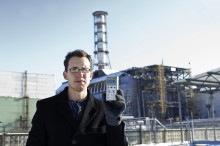
    In 1986, the number 4 reactor at the Chernobyl nuclear power plant blew up in what is now Ukraine.

    The site spewed a cloud of radioactive material that spread over much of Europe. The area immediately around Chernobyl received more than 400 times the radiation as Hiroshima and won’t be safely inhabitable for about 20,000 years. The government set up a 1,000 square mile exclusion zone around the site. While short visits to the zone are possible without too much danger, living there is not advisable. Cancer is a real problem for the couple hundred elderly stalwarts who still make the zone their home.

    Within the zone, nature has taken its own course, dismantling the Soviet-era brutalist tenements of the surrounding abandoned cities and turning it into what at first blush looks more and more like a prelapsarian Eden. The truth proves to be more complicated.

    Dr. Timothy Mousseau, a biologist from the University of South Carolina, has been examining the wildlife around Chernobyl for fifteen years. He’s discovered that the radiation that has been bathing the area for almost 30 years is changing nature. As you can see in the New York Times Op-Doc video above, birds are developing tumors, bugs have abnormal spots and spider webs seem much more freeform than usual.

    Source and image.

  • Cycling’s Tour de Campus

    Cycling’s Tour de Campus

    ANU will celebrate the use of pedal power to fund world-class cancer research on Tuesday with a special cycling Tour de Campus.

    The event will welcome cyclist Chris Gruar to the University as he completes one of the final legs of a 45,000km charity bike ride from England to Sydney.

    Chris, 28, left England in March 2012 on a world cycling expedition to raise money for the Association for International Cancer Research (AICR), which funds cancer research around the world, including at the ANU Research School of Biology.

    He aims to raise $30,000 for AICR in memory of his mother who died of cancer.

    ANU cyclists of all abilities are invited to join Chris on a special campus cycling tour at 10am on Tuesday, to be led by ANU cancer researcher Dr Richard Callaghan, followed by a morning tea to hear Chris talk about his journey.

    Dr Callaghan will also talk about his research into multidrug resistance in cancer chemotherapy treatments, which benefits from a grant of around $300,000 from AICR. The grant funds Dr Callaghan’s lab and three PhD students who are working on cancer research.

    To learn more about Chris’ journey visit cycling4cancer.wordpress.com.

    The tour starts at Sullivans Creek Bridge and finishes at the Wolfgang Buttress sculpture in the Research School of Biology Courtyard. Riders will be asked to make a gold coin donation.

    A detailed map of the cycling route can be found here.

    Source and image.

  • Weekly Science Picks

    Weekly Science Picks

    Here we are again with new stories and news. It took 7 days to return to you and to present you the top stories for the last week. Science and technology community was working hard for real during the previous period and here is what we have selected for you this time. Hope you will enjoy this adventure as we do.

    Ageing: The girls who never grow older

    Scientists have published several hundred theories of ageing, and have tied it to a wide variety of biological processes. But no one yet understands how to integrate all of this disparate information.

    Top 10 new species of the past year – in pictures

    The International Institute for Species Exploration has picked 10 of 18,000 species new to science in the past year, from a tiny skeleton shrimp at Santa Catalina Island in California to a translucent Croatian snail.

    Beer tasting with a cyber tongue

    Maltose or malt sugar, is a stepping stone in the process that converts the starch in barley into the alcohol and fizz in beer. Not much maltose is left at the end of the brewing process, but what there is contributes to the drink’s taste and body. Testing the levels of maltose in beer is something brewers do because too much of it can change the way the beer tastes.

    How the ‘gut feeling’ shapes fear

    We are all familiar with that uncomfortable feeling in our stomach when faced with a threatening situation. By studying rats, researchers have been able to prove for the first time that our ‘gut instinct’ has a significant impact on how we react to fear. An unlit, deserted car park at night, footsteps in the gloom. The heart beats faster and the stomach ties itself in knots. We often feel threatening situations in our stomachs. While the brain has long been viewed as the center of all emotions, researchers are increasingly trying to get to the bottom of this proverbial gut instinct.

    We came to the end of one more journey. Please stay curious and scientifically passionate until the next meeting.